
A clever modular wheel ecosystem with strong hardware, useful dash-sharing, and broad driving style coverage… BUT it got weird.
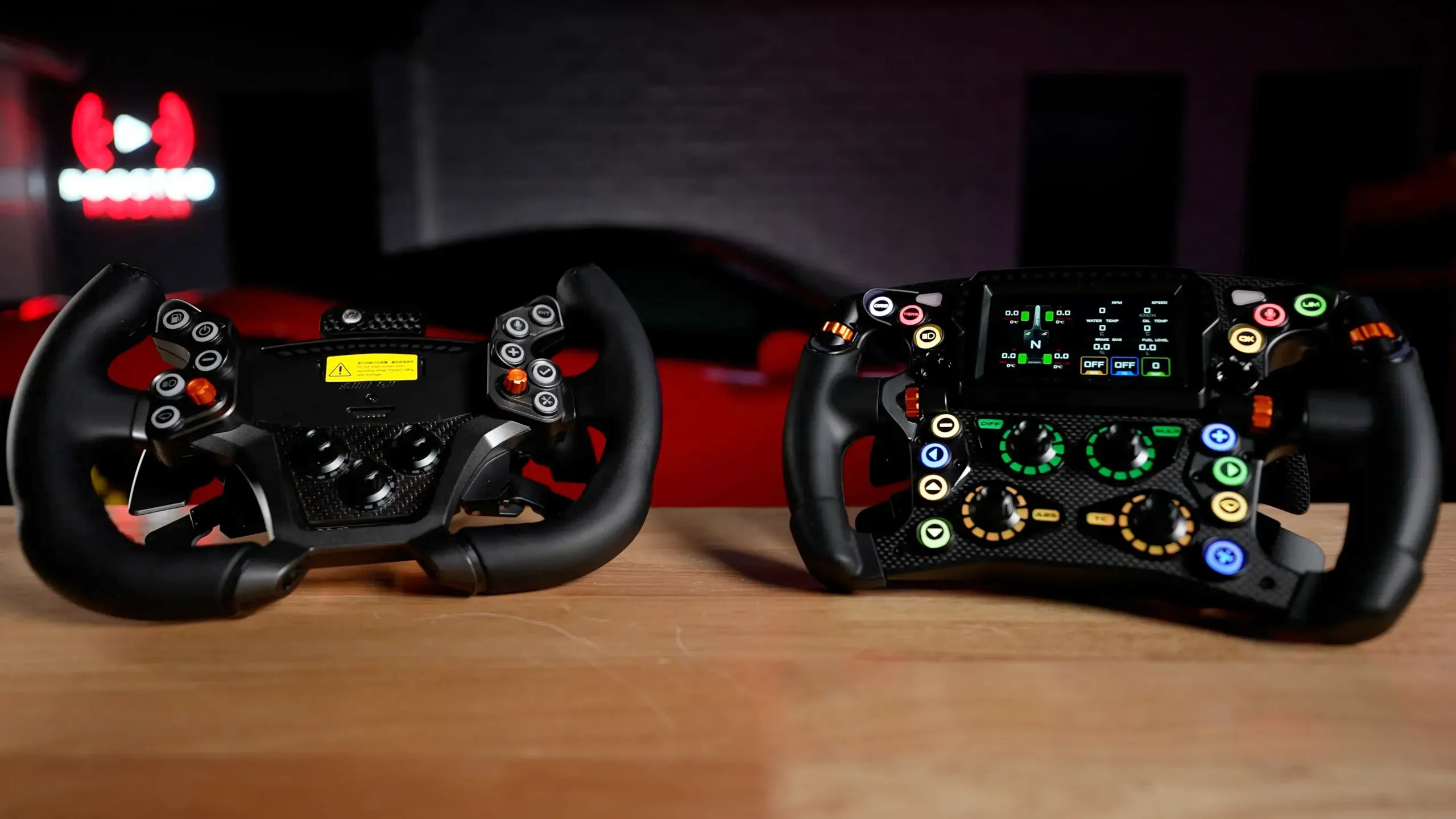
Simagic’s Zeus Series is one of the more interesting steering wheel launches we have seen recently, not just because there are three new wheels, but because of the way the whole system is intended to work.
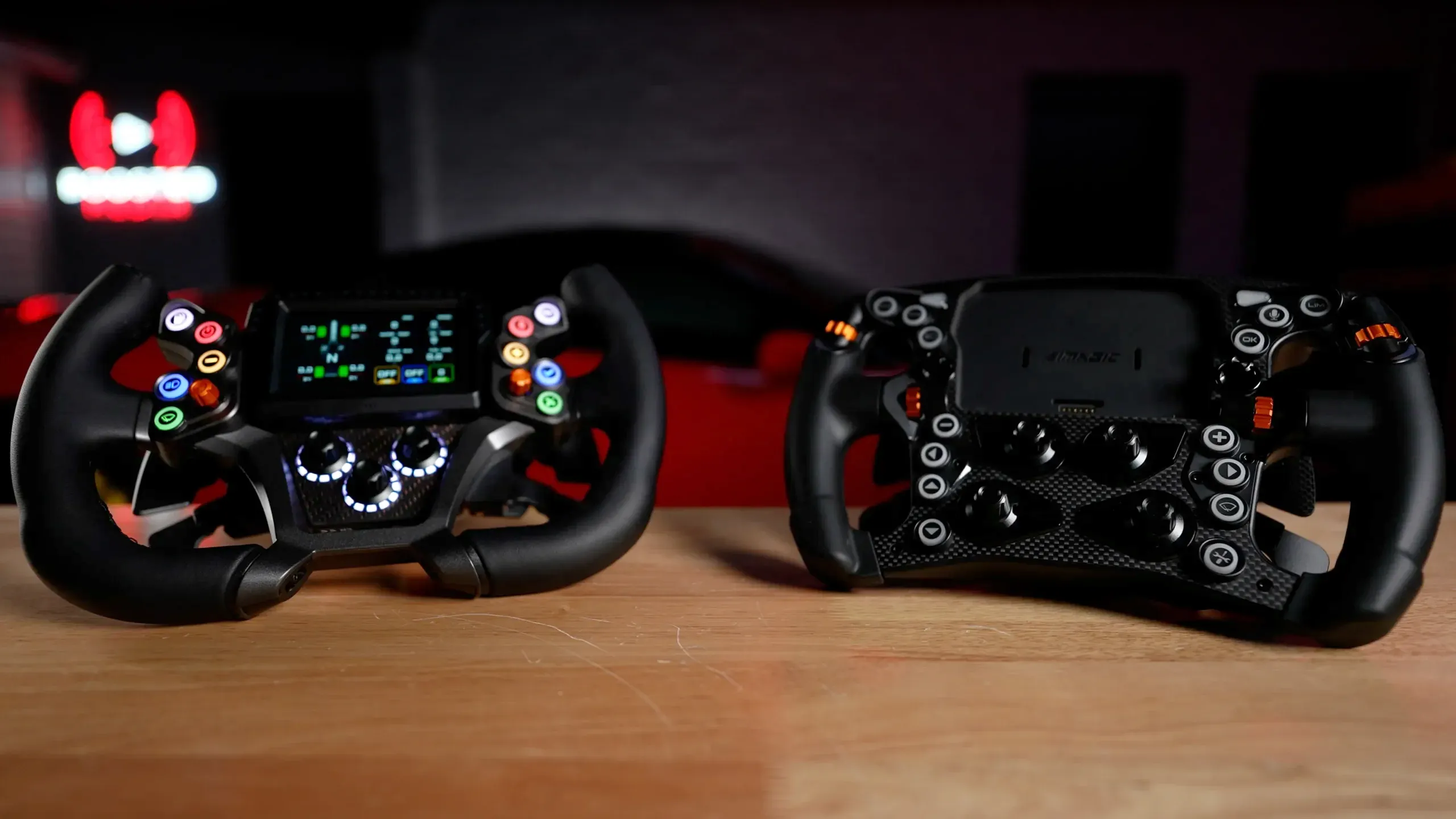
The lineup includes the Zeus Formula, Zeus GT, and Zeus Sport. Each one targets a different type of driving, but they are all built around the same core idea: modularity. You can buy the wheels with or without Simagic’s MagicDash 4 display, and if you own more than one Zeus wheel, you don’t need to buy a separate dash for each one. The display can be removed from one wheel and dropped into another.
That is a genuinely useful idea. Wheel-mounted displays can add a lot to the experience, especially for formula, prototype, and GT-style driving, but they also add cost. Being able to buy one dash and share it across multiple wheels makes a lot of sense.
The catch is that the Zeus ecosystem is not as simple as the concept sounds. Between the MagicDash 4, MagLink Pro, MagLink Pro Xtend, AirLink, MagDock, Alpha bases, Alpha EVO bases, third-party wheelbases, USB connection options, and SimHub support, there is quite a lot to understand before you buy.
So the real question is not just whether the Zeus wheels are good to drive. They are. The more important question is whether the modular ecosystem makes sense for your rig.

Simagic Zeus Sport Steering Wheel
Get 3% Off with DISCOUNT CODE: BOOSTED
6 Reseller Offers
Simagic Zeus Sport Steering Wheel
Price History
Simagic Zeus GT Steering Wheel
Get 3% Off with DISCOUNT CODE: BOOSTED
6 Reseller Offers
Simagic Zeus GT Steering Wheel
Price History
Simagic Zeus Formula Steering Wheel
Get 3% Off with DISCOUNT CODE: BOOSTED
6 Reseller Offers
Simagic Zeus Formula Steering Wheel
Price History
If our reviews have helped you find the right sim racing gear, using the links on this page is a great way to support us at no extra cost, and you may even save with our discount codes. This is available across a huge range of brands and gear we’ve reviewed.

COMPATIBILITY and WHAT YOU NEED
Before we get into pricing, it is worth clarifying how these wheels actually connect, because this is the part of the Zeus ecosystem that can become confusing very quickly.
In the simplest configuration, if you are buying one of these wheels without the MagicDash 4 and running it on a SIMAGIC Alpha EVO wheelbase, there is not much to worry about. You attach the wheel via the quick release, and it works as expected.
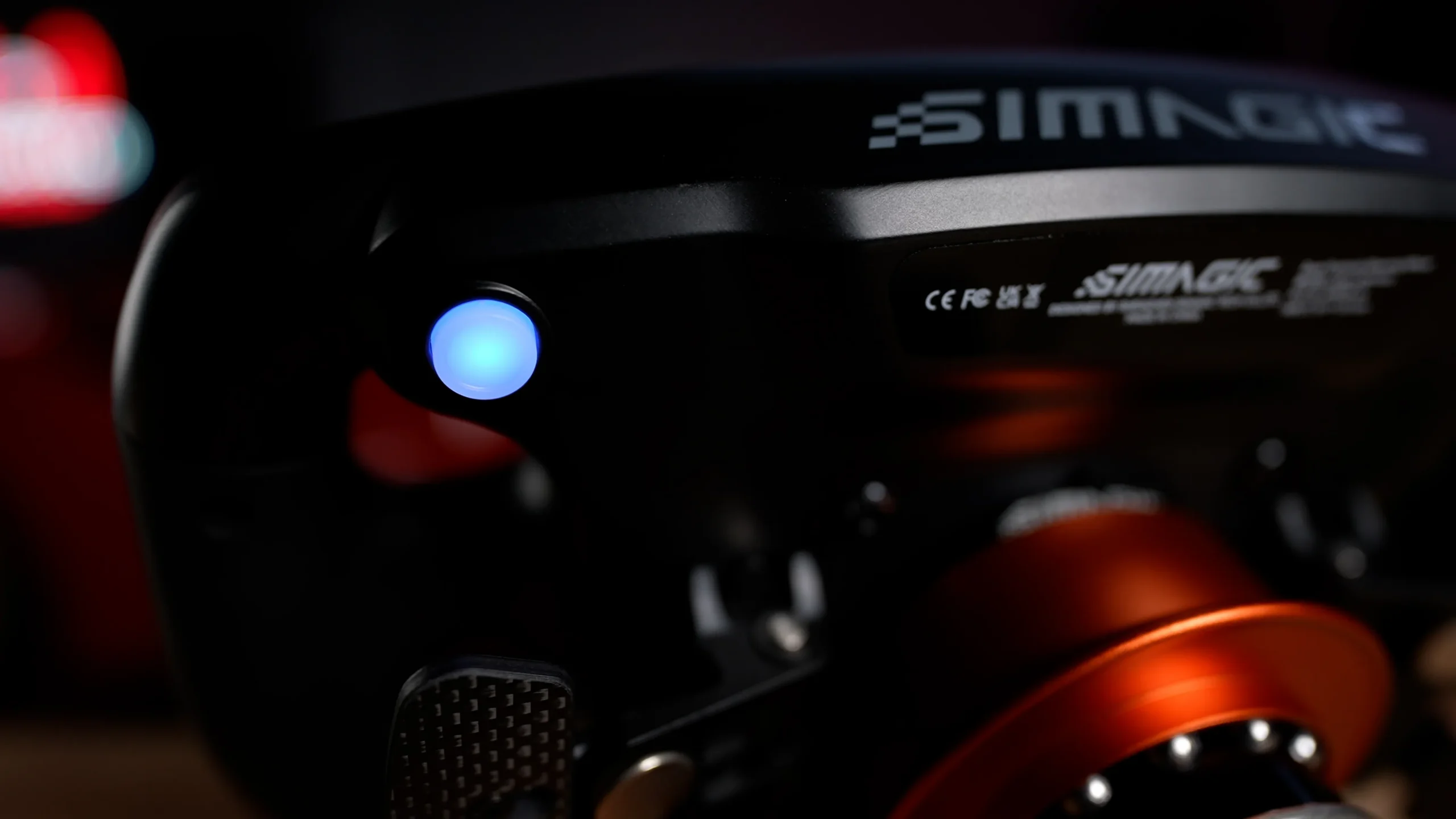
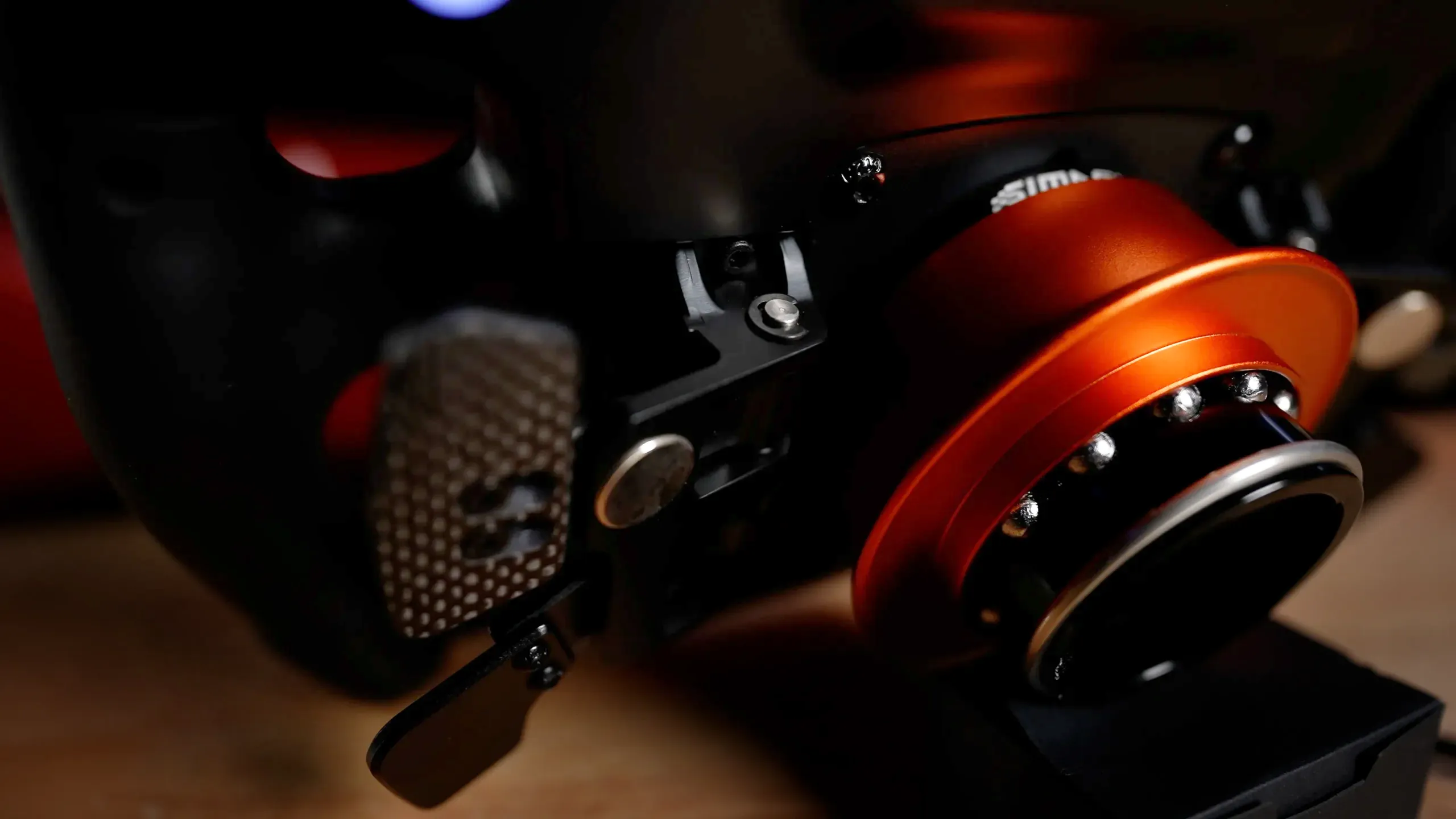
If you want to run one of the Zeus wheels without the dash on a third-party wheelbase, things change. There is a USB-C port on the back of the wheel, but that is really intended for things like firmware updates rather than as the ideal day-to-day connection while racing. The more appropriate solution is MagLink Pro, which replaces the rear USB-C plate with a magnetic connector and gives you a more robust wired connection back to the PC.
For older Simagic Alpha wheelbases, the situation is a little different. That setup requires either the Maglink Pro or MagLink Pro Xtend connection path, which allows data and power to be injected through the wheelbase-side arrangement rather than simply relying on the newer EVO-style wireless connection. The Maglink Pro Xtend is handy if you have multiple Simagic wheels and don’t want to install individual MagLink Pro’s on each wheel. But it does add considerable length to the stem which could impact your monitor and wheelbase mounting significantly.
Once the MagicDash 4 is added, there are more possibilities. If you are happy to run a physical connection to the wheel, the MagLink Pro approach can work regardless of the wheelbase you are using. That makes the system fairly open, especially for people running non-Simagic wheelbases.
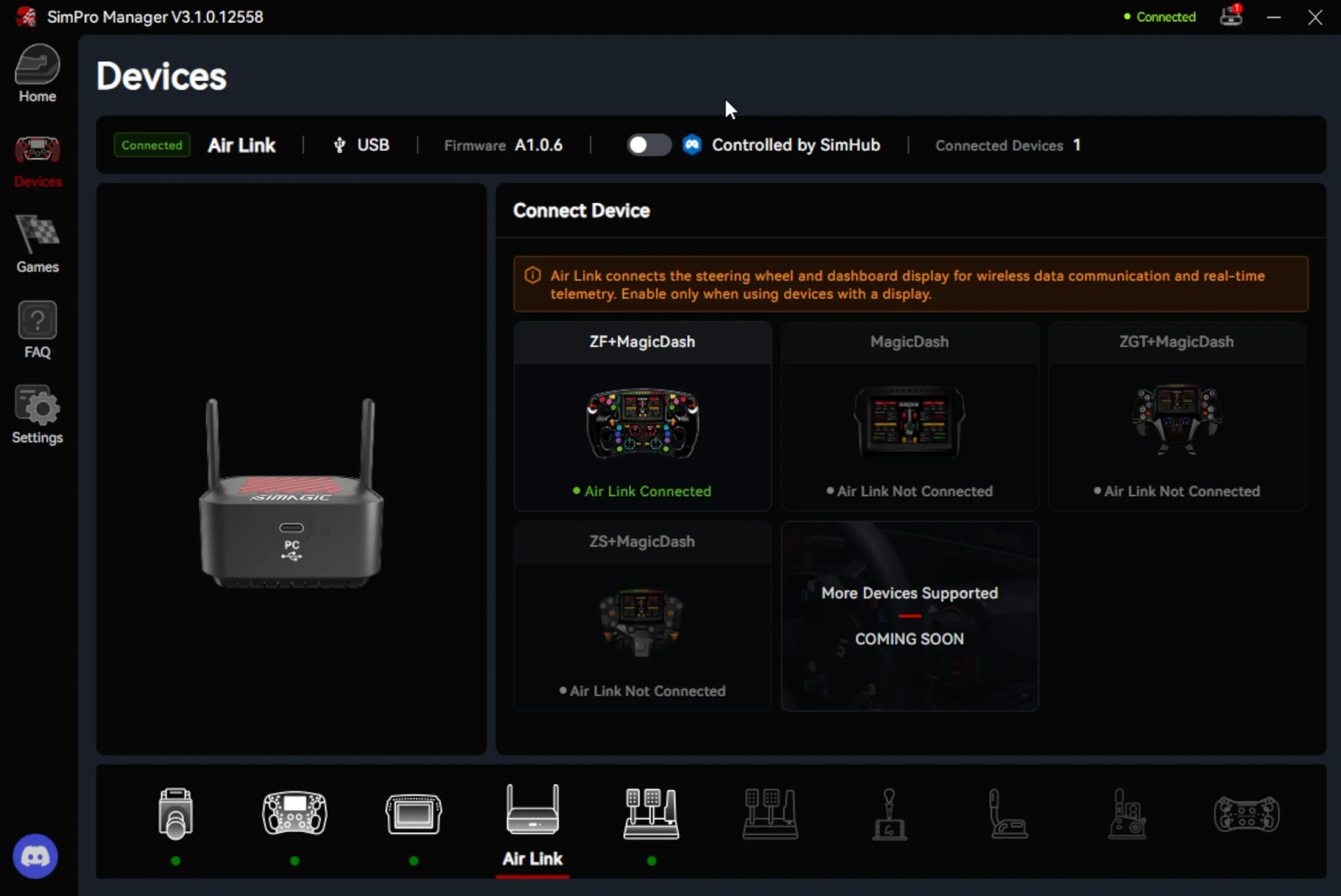
If you are using an Alpha EVO wheelbase and want a fully wireless wheel-and-dash setup, then AirLink comes into the picture. This is needed to make the MagicDash 4 work wirelessly through that ecosystem path. That requirement caused some controversy when the system was first announced, because some early buyers were not expecting to need another accessory to make the dash work in the way they understood it would. Simagic has since moved to address that by bundling or re-imbursing the relevant hardware depending on purchase timing and configuration, but it still adds another layer to understand.

There is also MagDock, which allows the MagicDash 4 to be mounted separately to the front of a wheelbase. That can make sense if you want to use the dash as a standalone display, or if you want the option to move it between a fixed dash position and one of the Zeus wheels.
The other important compatibility detail is software-related. The MagicDash 4 itself can work with SimHub, which is good to see. However, if you want SimHub control over the LEDs on the wheel, the connection method matters. When connected through the Simagic wireless/wheelbase path, wheel LED control is handled through SimPro Manager rather than SimHub. To get full SimHub LED control of the wheel, you need to connect via USB or MagLink Pro.
That is the part buyers really need to understand. Simagic has made the Zeus wheels broadly compatible, and that is a good thing, but the path you choose affects hardware requirements, software behaviour, and ultimately value.
Zeus Wheel + MagicDash 4 Bundle
Get 3% Off
DISCOUNT CODE: BOOSTED

Simagic MagLink Pro
Get 3% Off
DISCOUNT CODE: BOOSTED
Simagic Maglink Pro Xtend
Get 3% Off
DISCOUNT CODE: BOOSTED
Simagic AirLink Wireless Hotspot
Get 3% Off
DISCOUNT CODE: BOOSTED
VALUE
At the time of filming, the Zeus Formula is priced at US$499 without the dash, or US$669 with the MagicDash 4. The Zeus GT is US$349 without the dash, or US$509 with it. The Zeus Sport is the cheapest of the three at US$329 without the dash, or US$469 with the dash. You can also buy the MagicDash 4 separately for US$199.
If you are looking at more than one Zeus wheel, the shared dash concept starts to make a lot more sense. Instead of buying multiple wheels with built-in displays, you can buy one MagicDash 4 and move it between wheels as needed. For someone who wants a Formula or GT wheel for race cars and a Sport wheel for road, rally, or drift use, that can save a meaningful amount of money.
There are also optional rims and paddle modules to consider. The Zeus GT has interchangeable rim options, with additional rims priced at US$49. The Zeus Sport has a wider selection of replacement rims, priced at US$89, covering different shapes, sizes, and grip materials. Optional paddle modules are also available, including three-paddle and push-pull configurations. The Zeus wheels come with the 2-paddle set which is listed as an extra for $55 but is not needed when purchasing a Zeus wheel.
Flexibility is a strength, but it also makes the buying process more complicated than it should be. Depending on your wheelbase and how you want the dash and LEDs to function, you may need MagLink Pro, MagLink Pro Xtend, AirLink, or MagDock. SIMAGIC has tried to cover a lot of different use cases, but the result is an ecosystem that can feel overwhelming before you have even started driving.
Judged purely by the hardware though, the Zeus wheels are priced competitively for a wheel of this quality and feature set.
Simagic MagicDash 4 Display
Get 3% Off
DISCOUNT CODE: BOOSTED
Simagic Zeus Sport Replacement Rims
Get 3% Off
DISCOUNT CODE: BOOSTED
Simagic Zeus GT Replacement Rims
Get 3% Off
DISCOUNT CODE: BOOSTED
Features
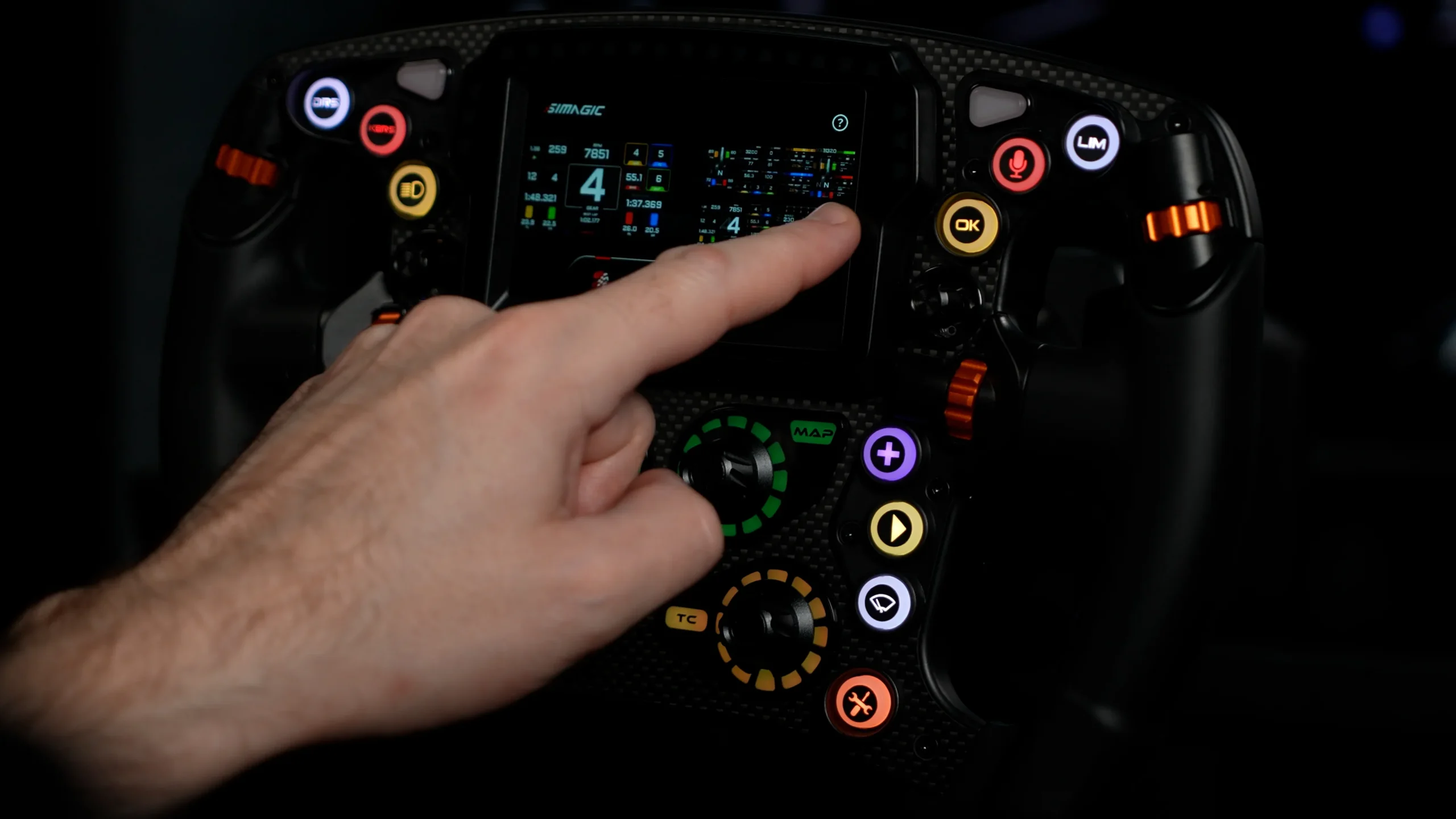
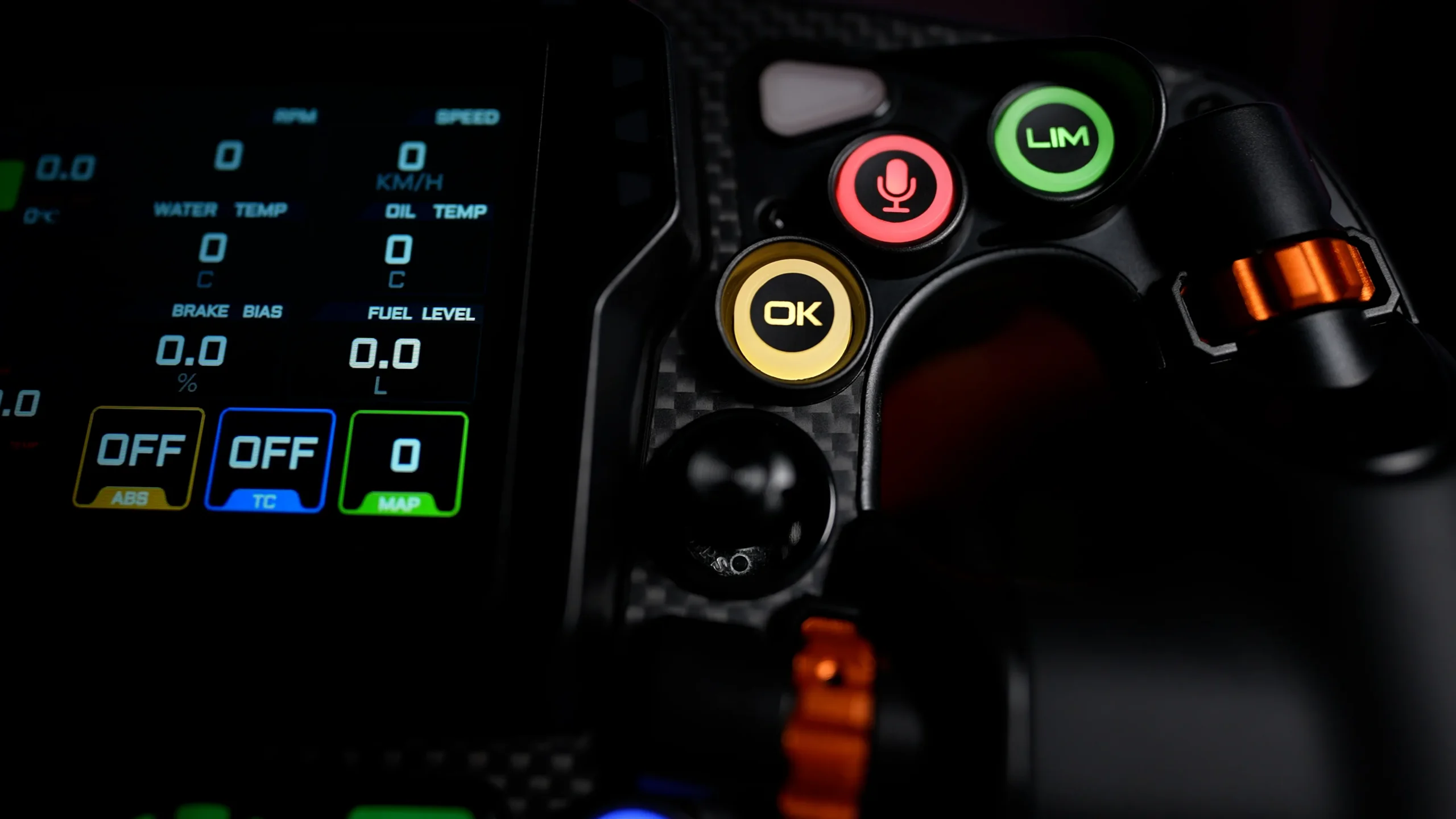
All three wheels can work with the MagicDash 4, and that is the headline feature of the ecosystem. The dash can be fitted into the wheel, removed, and swapped into another Zeus wheel. It can also be mounted separately onto your Simagic Alpha Evo wheelbase, or using MagDock on other bases, which gives it some additional flexibility outside the wheel itself.
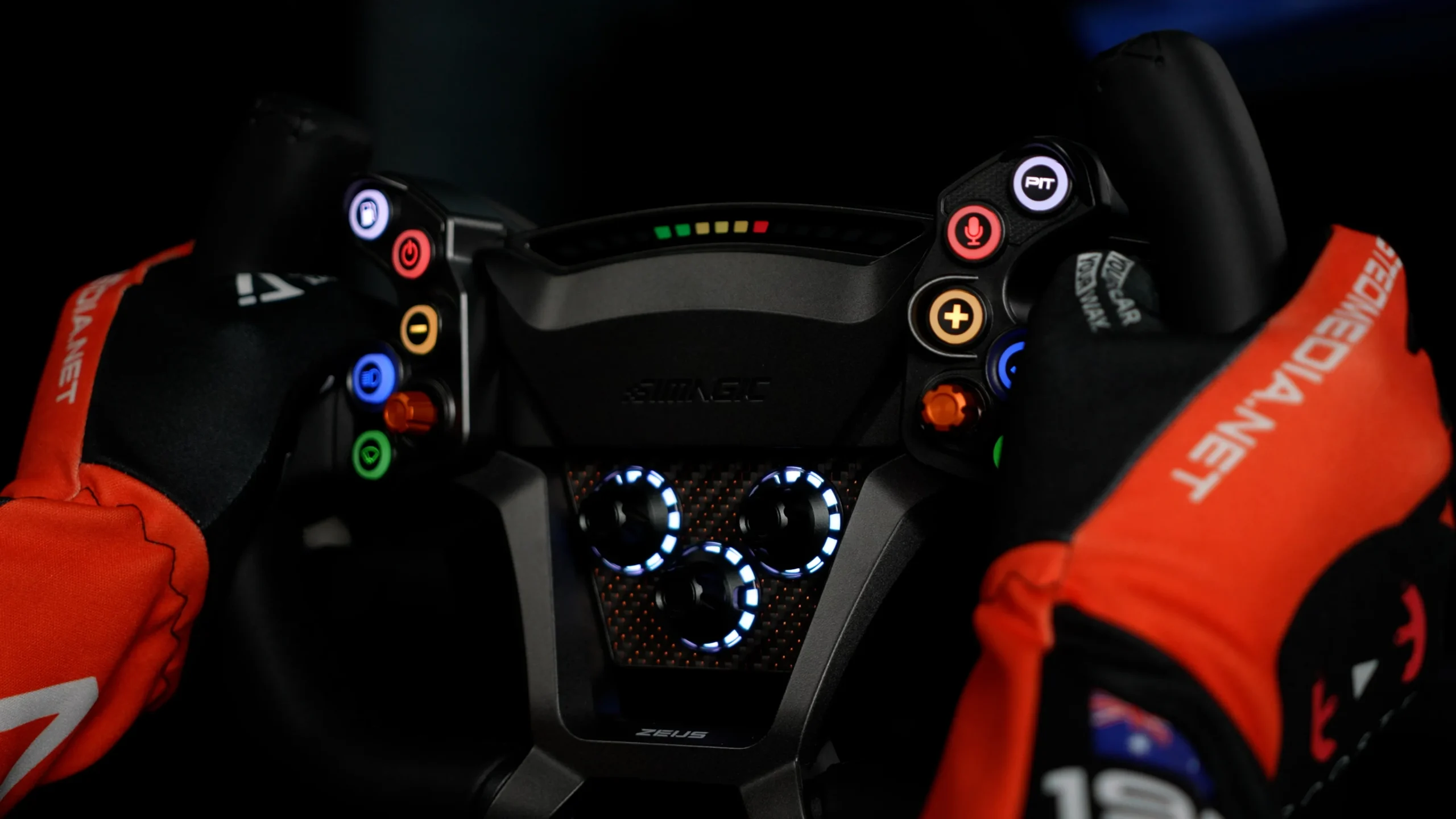
There is also extensive RGB lighting across the lineup, including backlit buttons, LED strips, flag LEDs, and configurable lighting effects. The Formula loses its main top LED strip when the dash is removed, which is a shame. The GT and Sport both retain an LED strip behind the dash area, so they look and function as more complete wheels than the Formula Wheel without a dash.
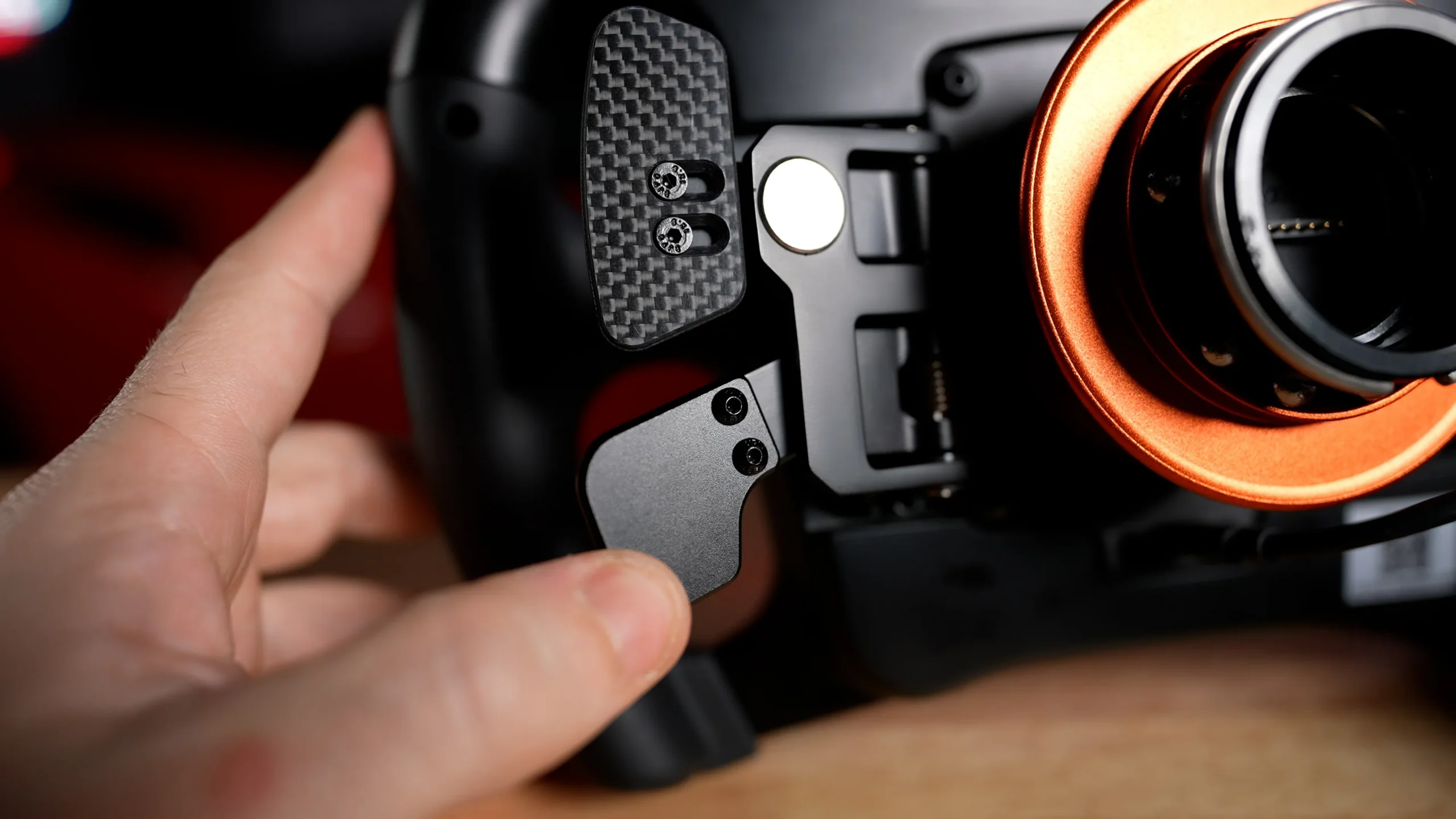
The paddle system is modular as well. The standard setup includes magnetic shifters and analogue paddles, with optional three-paddle and push-pull paddle modules available. The push-pull option is particularly relevant for the Sport wheel, where rally-style driving is a more natural use case.
So feature-wise, there is a lot here. The Zeus wheels are not just conventional wheels with a screen bolted in. The real selling point is the modular system around them.
Zeus Formula
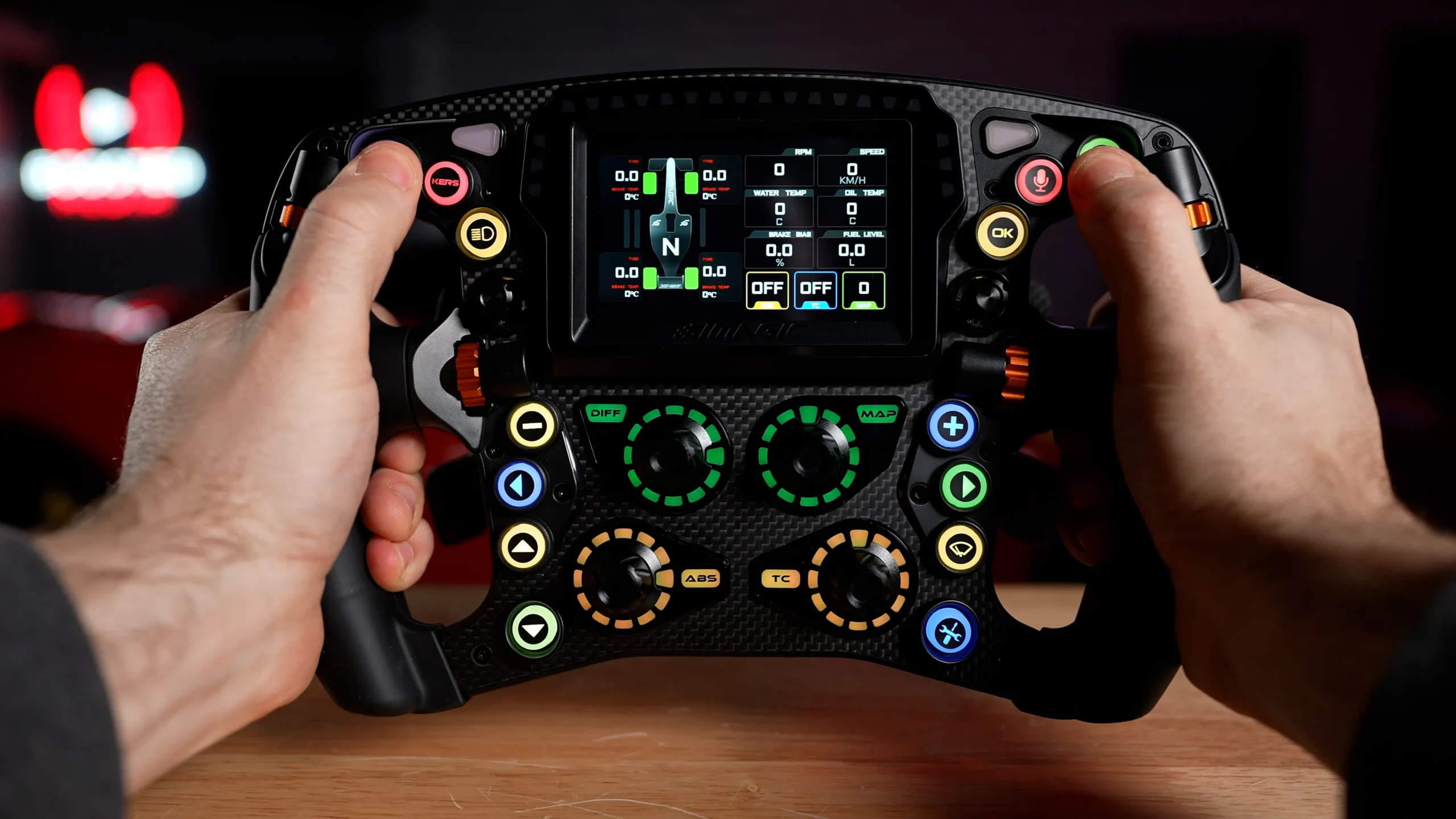
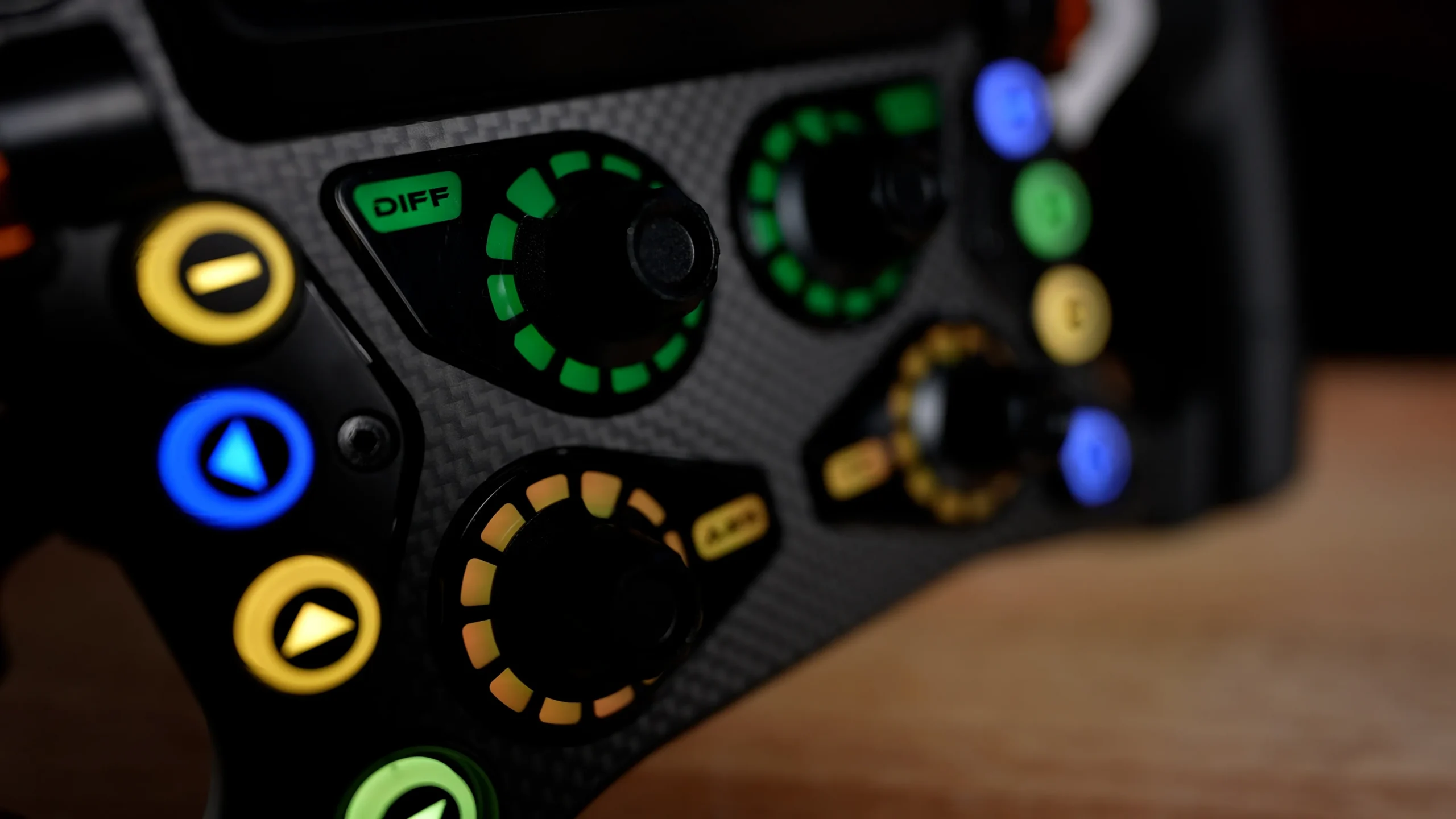
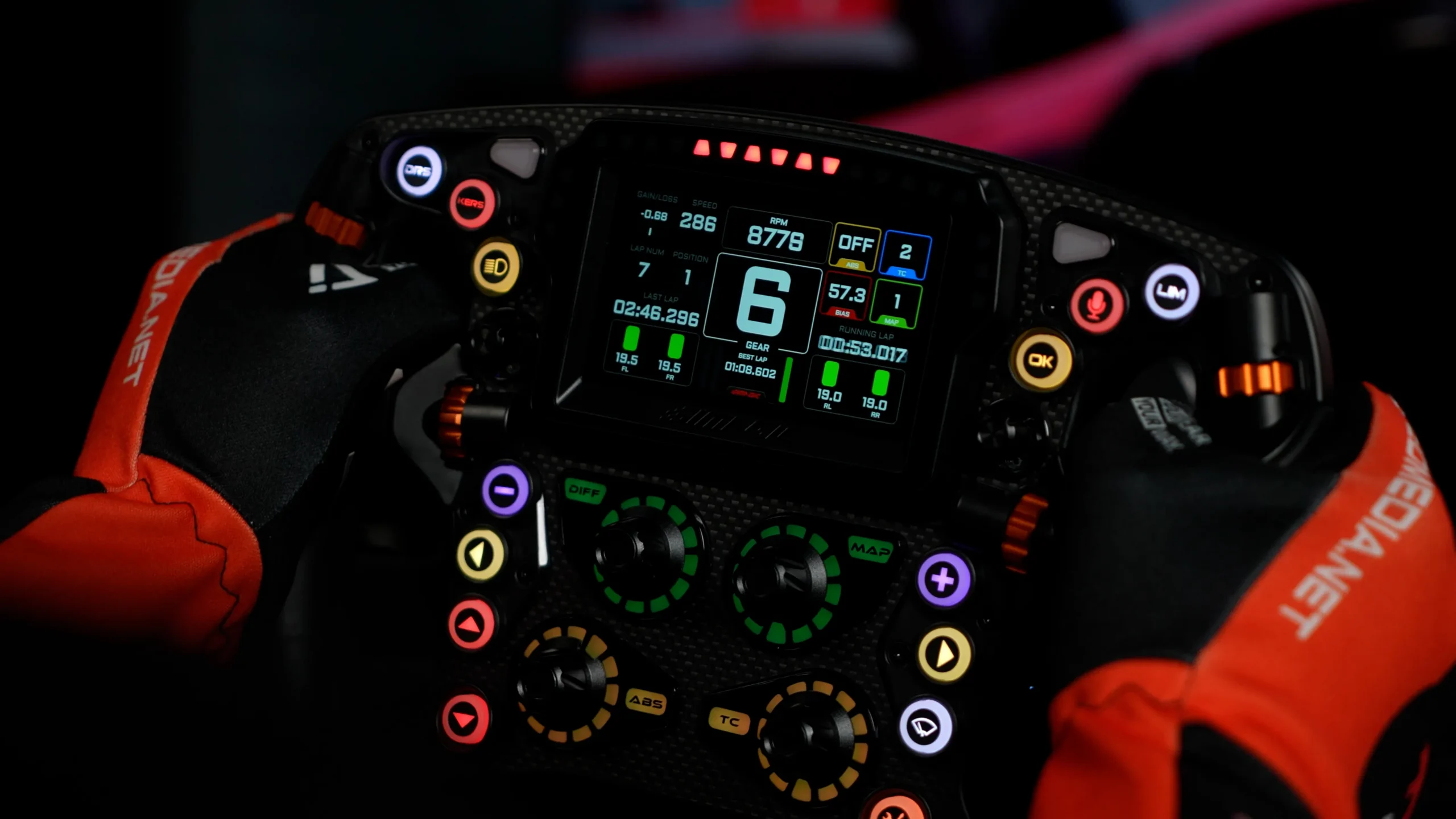
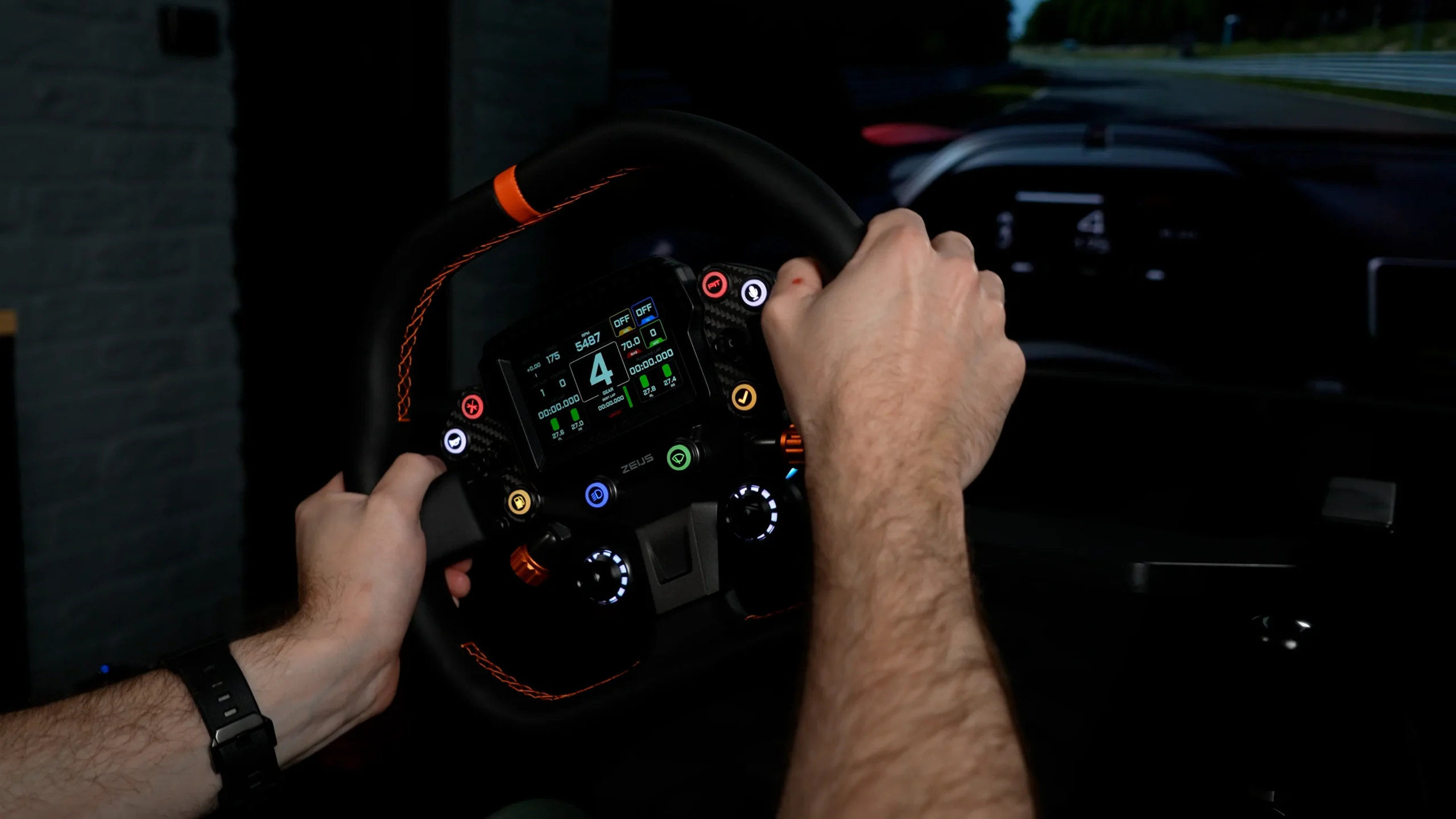
The Zeus Formula is the most focused of the three. It is a 280mm formula-style wheel aimed primarily at open-wheel, prototype, and high downforce race car use, although it can also work well for GT3 and GT4 driving. A dense control layout with 14 front-facing push buttons, two rear buttons, four front rotary encoders, four thumb encoders, and two seven-way switches add up to 92 physical inputs on the Formula wheel, and in practice there is enough control here to be limited only by your imagination and dedication to mapping buttons in-game.
Zeus GT
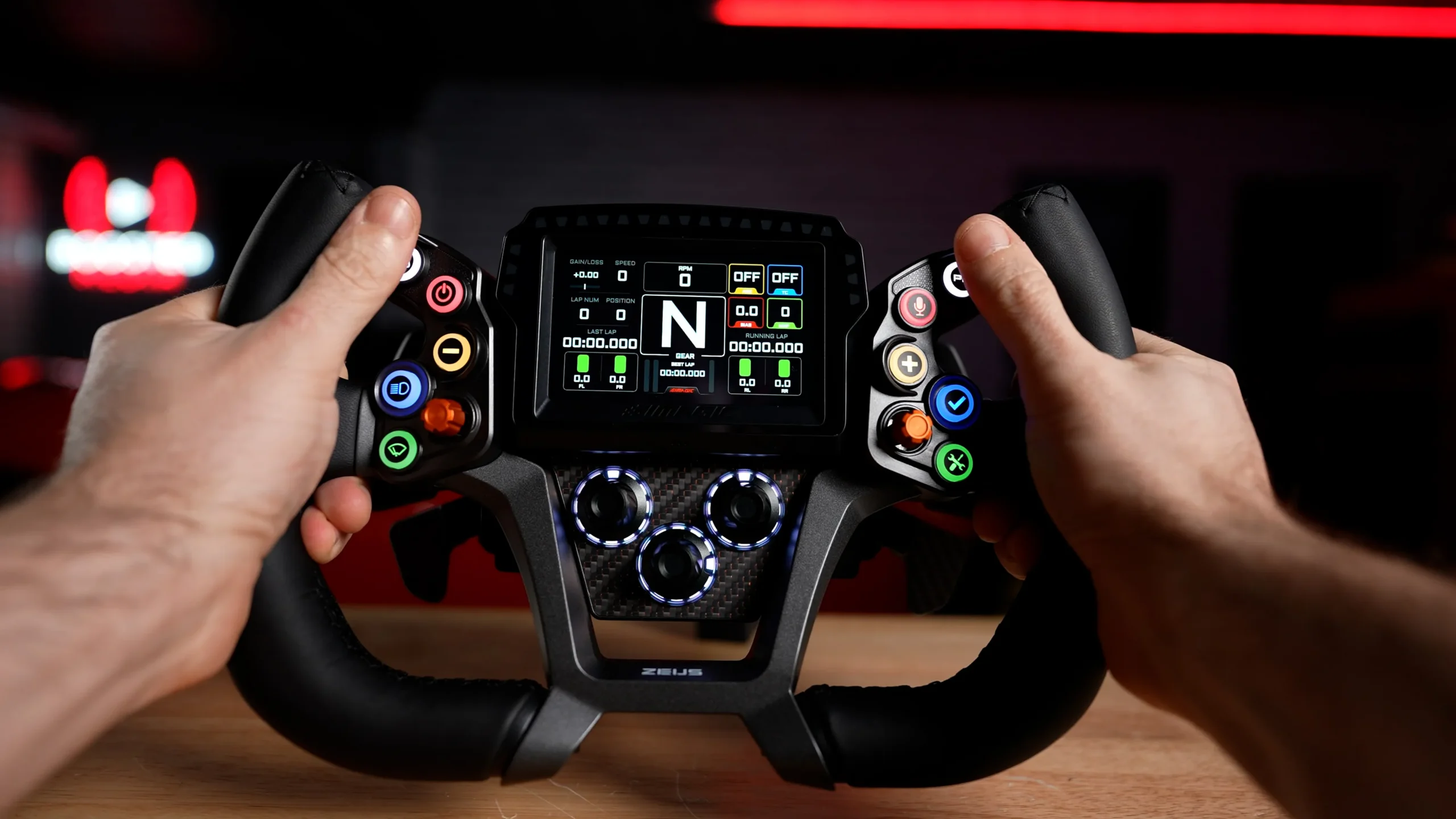
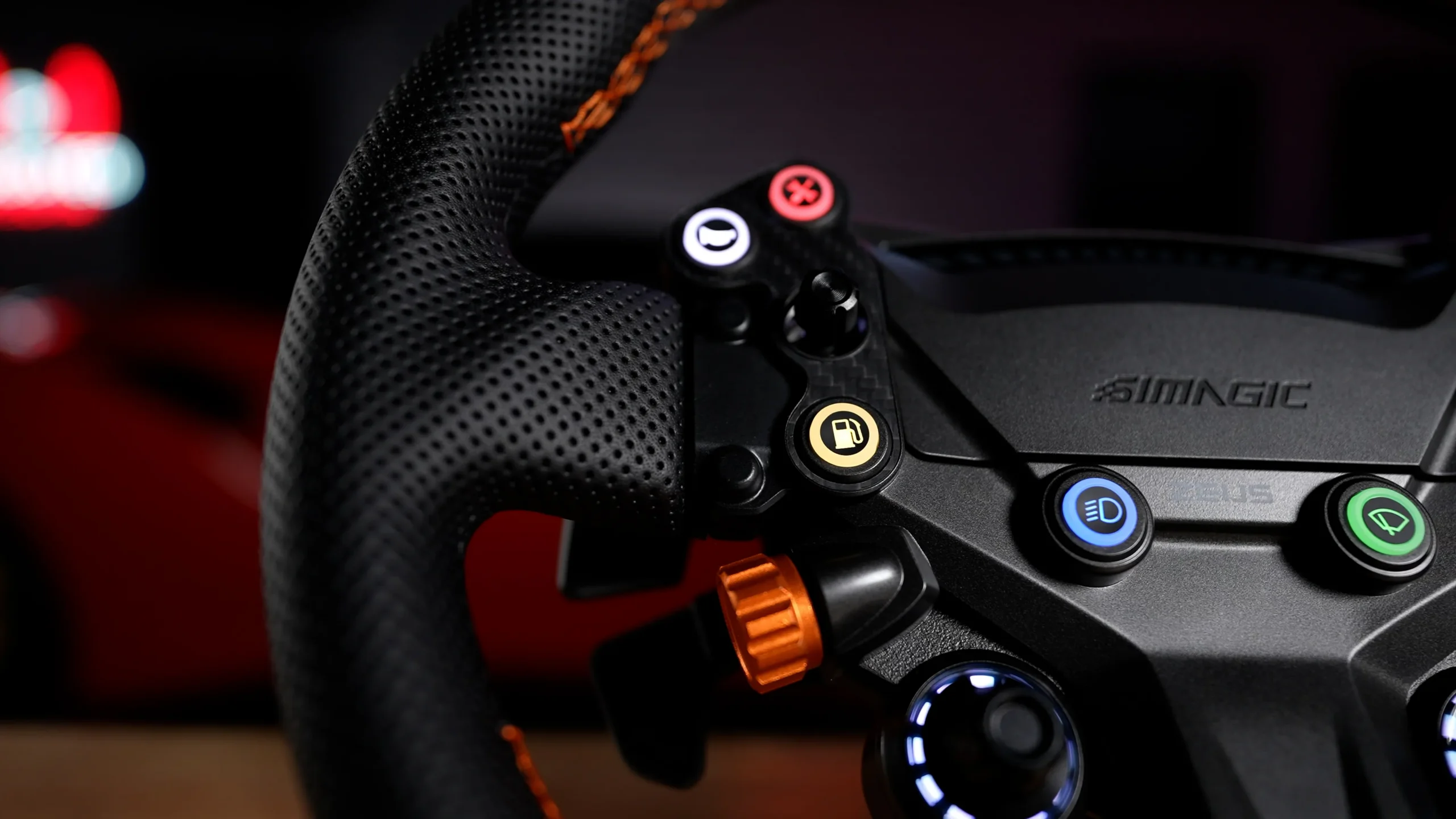
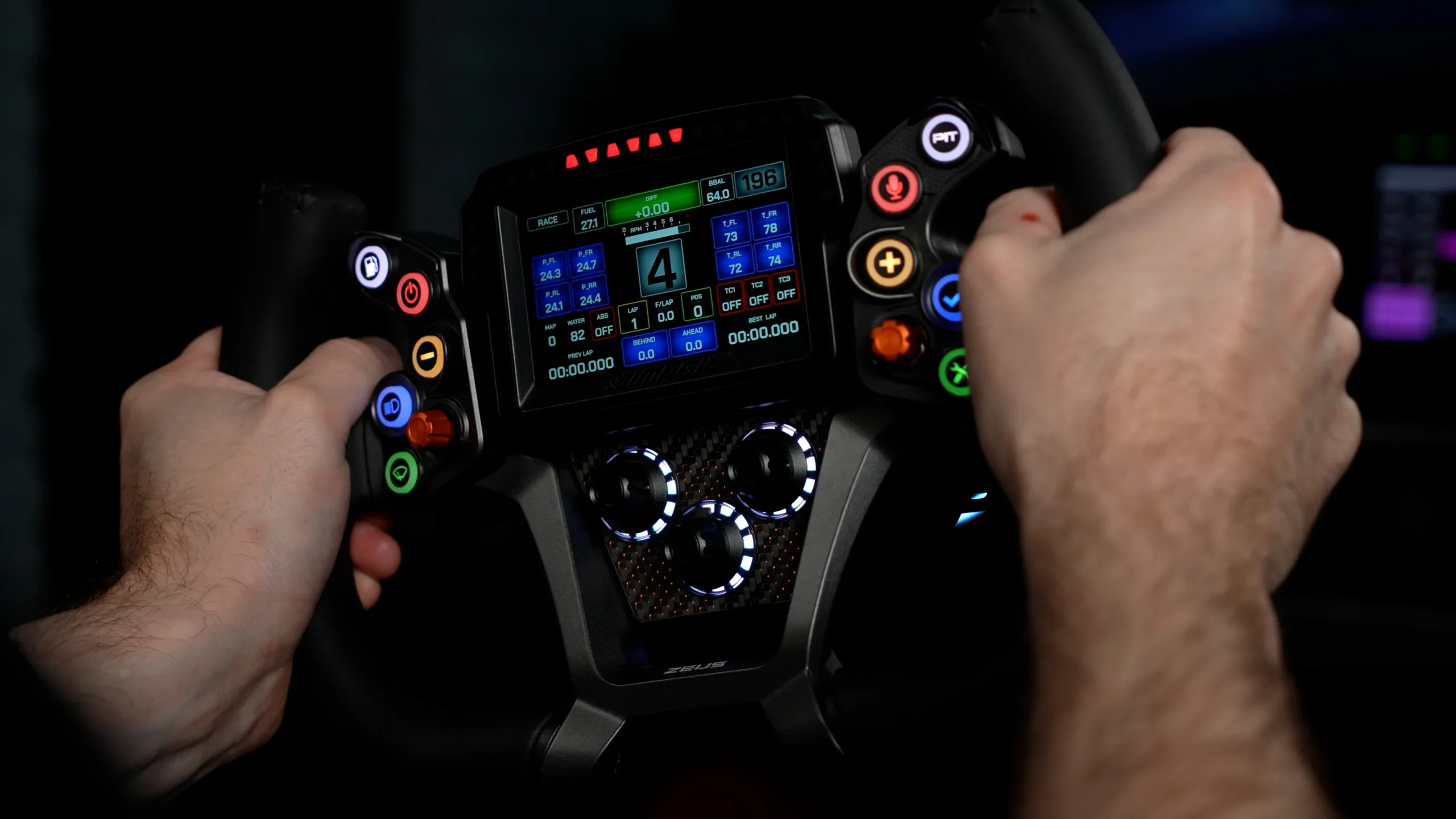
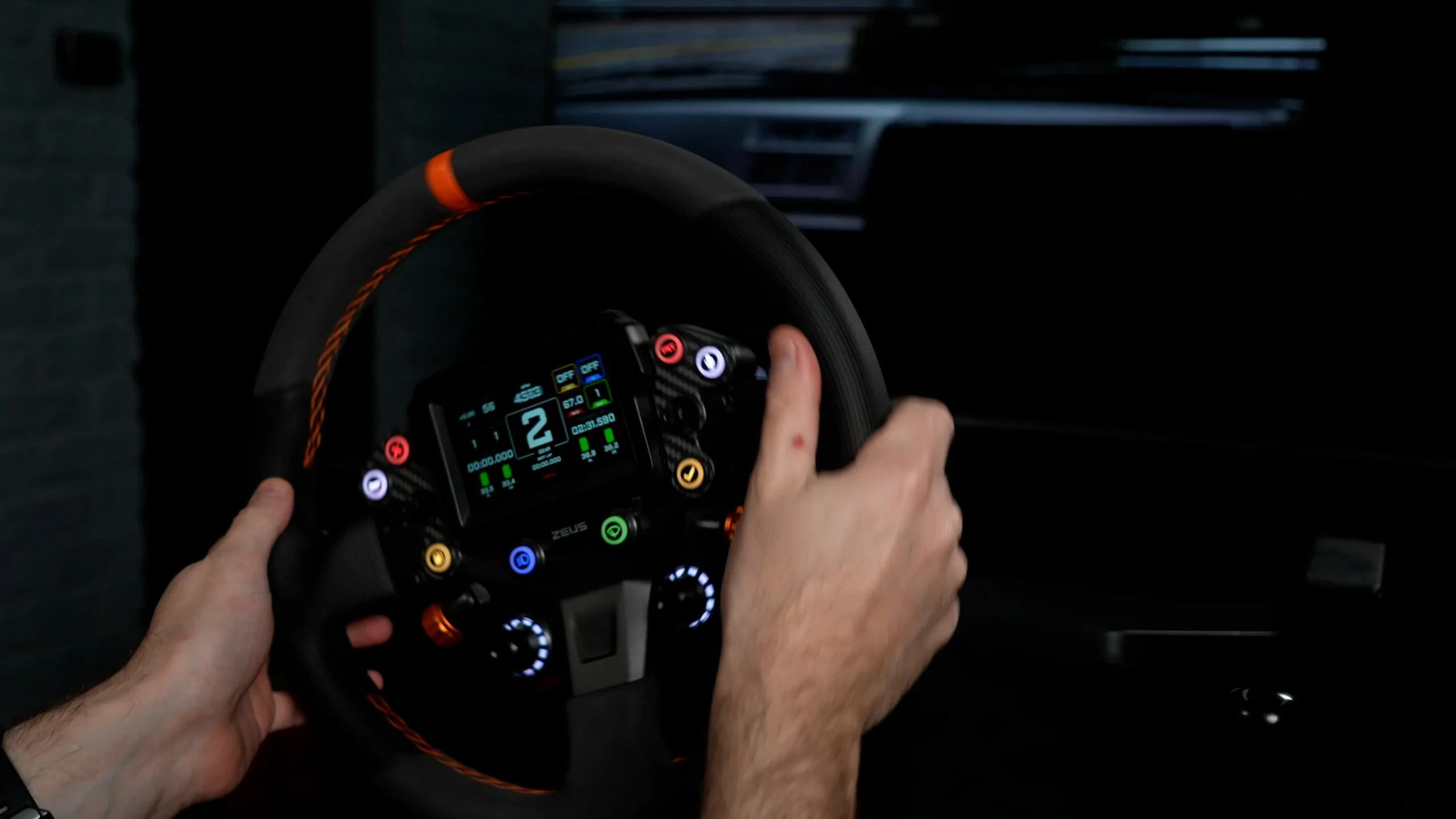
The Zeus GT sits in the middle of the range. It has a more open GT-style shape, with either a 300mm open-top rim or a larger 320mm rim option. It is more versatile than the Formula, and could suit everything from GT and formula-style driving through to some road car use, where the 280mm Formula wheel can feel too twitchy. The control set is reduced compared with the Formula, with fewer rotary encoders and no thumb encoders, which is one of the more obvious omissions.
Zeus Sport
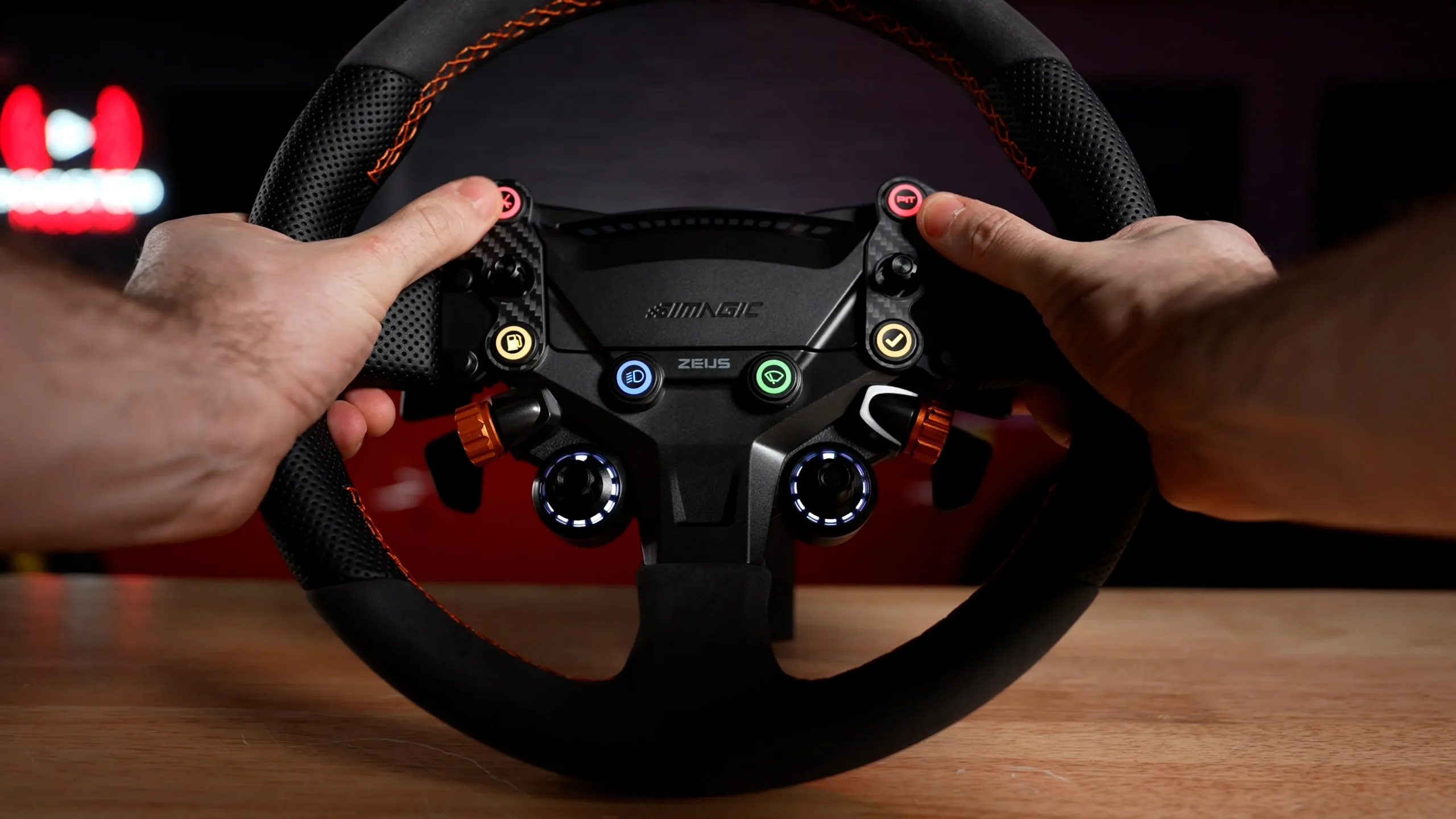
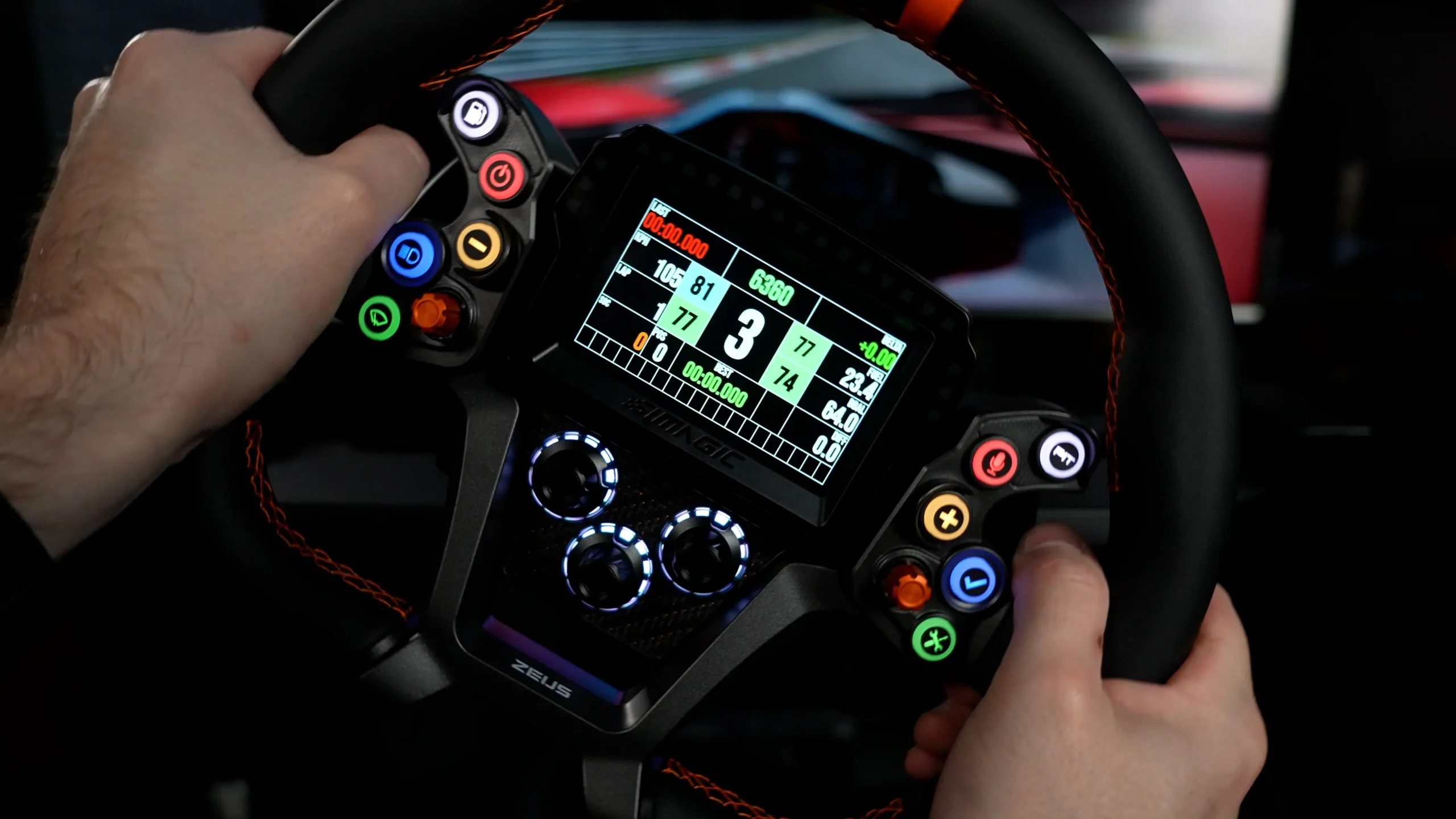
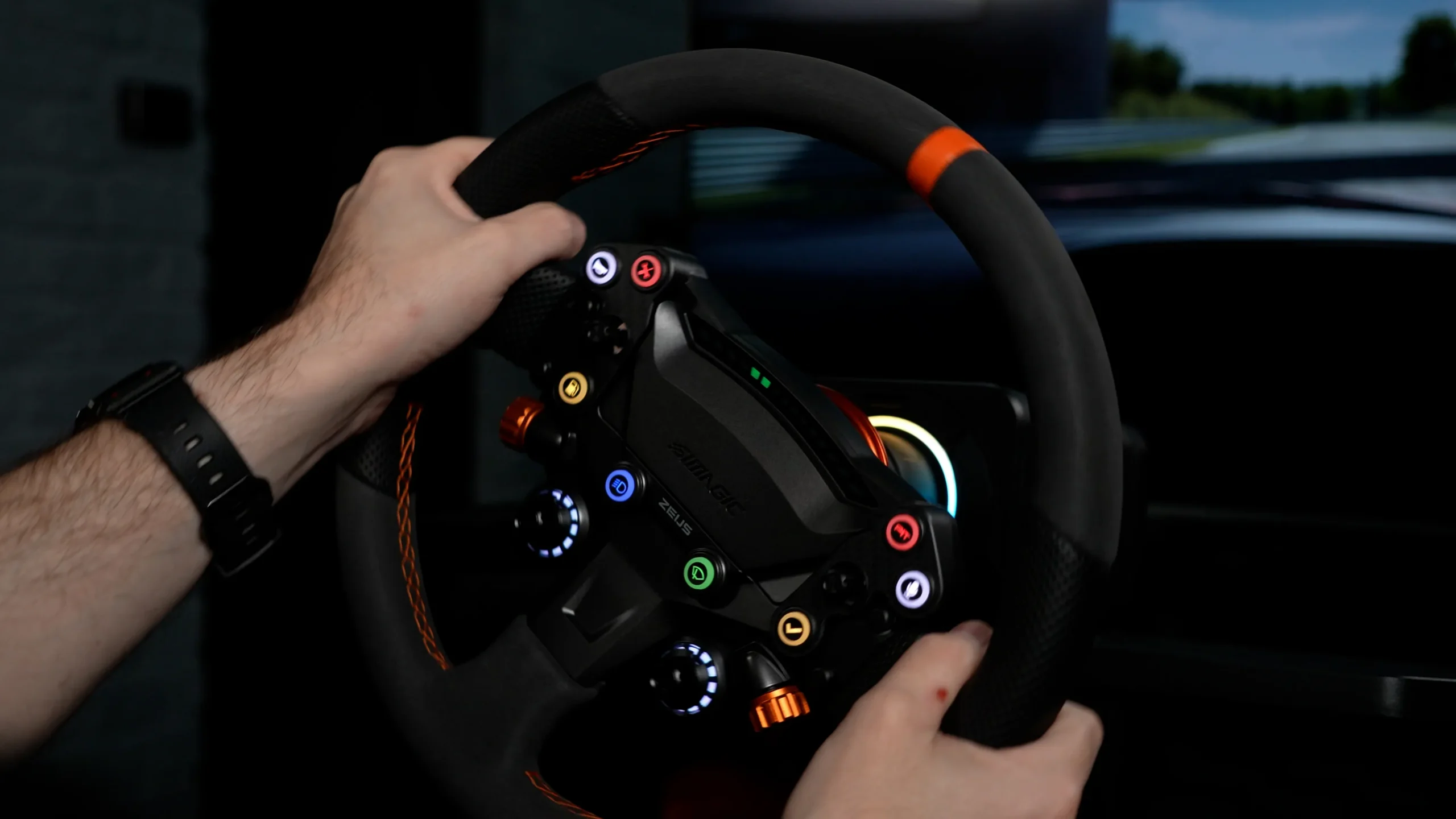
The Zeus Sport is the most versatile model. It is effectively a button plate-style wheel with a range of interchangeable rims with leather and suede versions ranging from 310mm to 330mm, including round, D-shaped, square-style, and rally-style options. That makes it the most adaptable choice for road cars, drifting, rally, and general-purpose driving.
Build Quality
Build quality is generally strong across all three wheels, although there are a few details that make it clear these are still being built to a price.
The Zeus Formula feels the most serious of the three. The 5mm carbon fibre face plate is genuinely rigid, and there were no meaningful issues with flex in testing. The machined aluminium rear housing also gives it a solid, substantial feel. The grips are a fairly firm rubberised material. They are not especially soft or luxurious, and they can pick up some dirt and debris from your hands, but they feel perfectly usable, especially if you drive with gloves.
Buttons have a nice, snappy action, similar in feel to some Cube Controls wheels, although there is a small amount of movement in the button caps. Under high vibration and kerb strikes, that can lead to a little bit of rattle. It is not a major issue, but it is worth mentioning.
The GT wheel is also better than expected from a rigidity perspective. The main frame is metal, and both rim options felt solid in use. Some of the button housings are plastic, which would have been nicer in metal, but it does not appear to create any meaningful functional issue. The small carbon fibre inlay is cosmetic rather than structural, but it does lift the presentation.
The Zeus Sport follows a similar pattern. The rear housing is aluminium, the fascia is plastic with carbon fibre inlays, and the interchangeable rim system felt solid across all options. The GT and Sport were noticeably more rigid than the similar style MOZA CS Pro wheel reviewed recently, despite using an interchangeable rim design.
The shifters are one of the strongest parts of the build. The Formula uses carbon fibre paddles, and the action is crisp, quiet, and well damped. The GT and Sport use plastic shifter paddles, but they still feel good in normal use. They are also very quiet, which matters more than people sometimes realise if you are racing in an apartment, shared room, or late at night.
There was one quality control concern on the tested Sport sample: the left thumb encoder was very slightly bent causing it to rotate slightly off axis. It did not affect operation or cause any rubbing. This should be treated as a sample-specific issue rather than a broad conclusion, but it is still the sort of thing Simagic should be catching before products leave the factory.
Overall, though, the Zeus wheels feel well made for the money. They are not flawless, and there are some visible cost-saving decisions, but the core structure, shifter feel, and rigidity are all strong.
DRIVING EXPERIENCE
Once you get past the compatibility and setup decisions, the Zeus wheels are very easy to get along with on track.
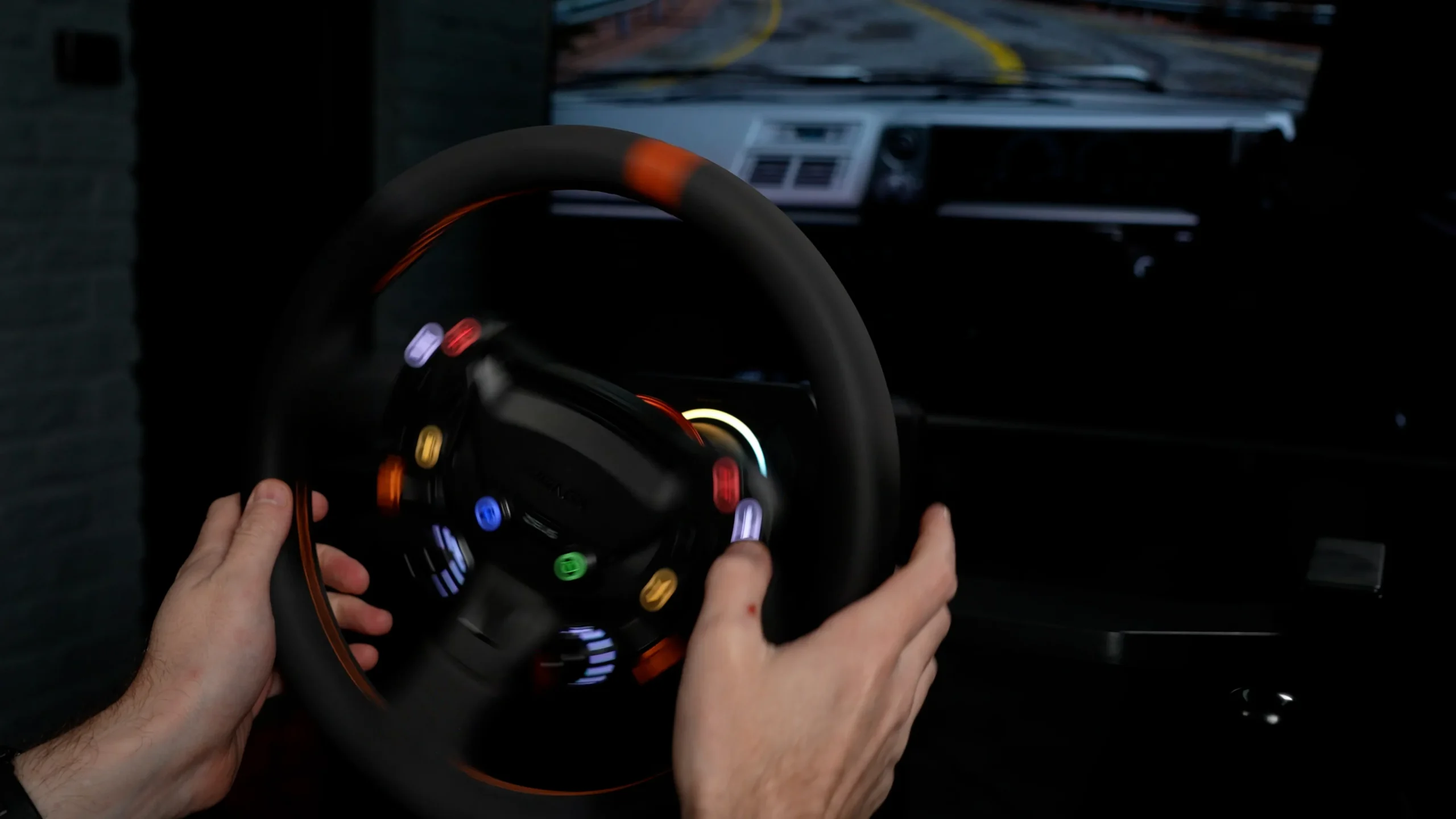
The strongest impression across all three is that nothing feels compromised in the actual driving. The wheels are well balanced, the shifters are quiet and positive, the button placement is logical, and the interchangeable dash does not feel like an afterthought once it is installed. Even with high vibration settings and detailed force feedback, the dash stayed firmly seated in the wheels without creaking, rattling loose, or disconnecting.
The Formula Wheel feels the sharpest and most direct of the three, as you would expect from a 280mm wheel. That smaller diameter gives it a responsive feel, which suits formula cars, prototypes, and other high-downforce cars well, while also minimising the effect of rotational mass and leverage on force feedback detail when paired with lower-powered bases. For modern race cars where you want quick inputs and plenty of controls within reach, this is the most focused option in the range.
The GT is the more relaxed race-style wheel. The 300mm rim gives you a little more leverage and stability than the Formula, while still feeling compact enough for GT and open-wheel style driving. The 320mm rim naturally slows things down slightly and makes the wheel feel more suited to road cars. The lack of thumb encoders is the main thing I missed here, rather than anything about the way the wheel drives.
The Sport is the one that changes character the most depending on the rim fitted. With the smaller or more road-focused rims, it works well for general driving, street cars, drifting, and rally. With the larger rims, you get the expected increase in leverage and a slightly more damped feel through the force feedback. That is not a criticism of the wheel itself, just the normal trade-off when you fit a larger and heavier rim. If you are running a lower-torque setup, I would be more careful about rim choice here than I would with the Formula or GT. On stronger direct drive bases, all three felt solid and composed.
The thumb cut-outs on the Formula and some GT configurations are on the smaller side, so drivers with larger hands may find them a little tight. I did not have any real issues personally, but it is worth being aware of if you usually struggle with compact grips.
The only driving-related concern outside the wheels themselves is the MagicDash 4 when mounted directly to an Alpha EVO wheelbase. The magnetic retention there is not especially strong, and it can be moved fairly easily by hand. On a static rig that may never matter, but on a motion rig or a setup with aggressive transducers, I would want to keep an eye on it.
As wheels, though, the Zeus lineup is very convincing. The Formula, GT, and Sport each have a clear purpose, and none of them feel like they are just filling a gap in the catalogue. The real decision is less about whether they drive well, and more about which shape best suits the cars you spend the most time in.
SOFTWARE
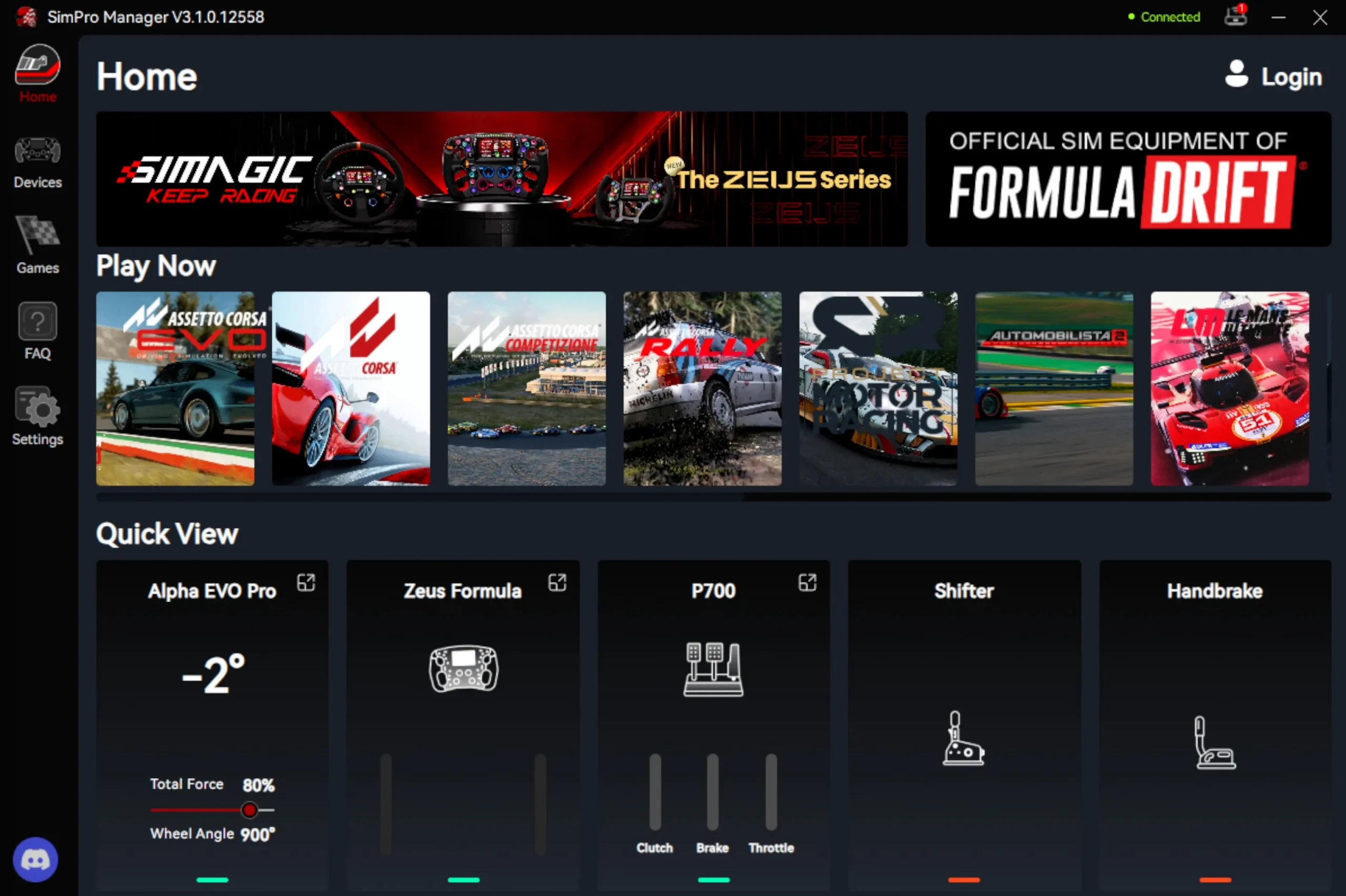
Simagic’s SimPro Manager handles the wheels, dash, lighting, firmware updates, and connected devices. If you are already running Simagic gear, that means everything appears in one place, which is convenient.
Once the hardware is connected, the software side is mostly straightforward. Devices were detected without additional driver issues, and swapping between wheels and dashes worked as expected.
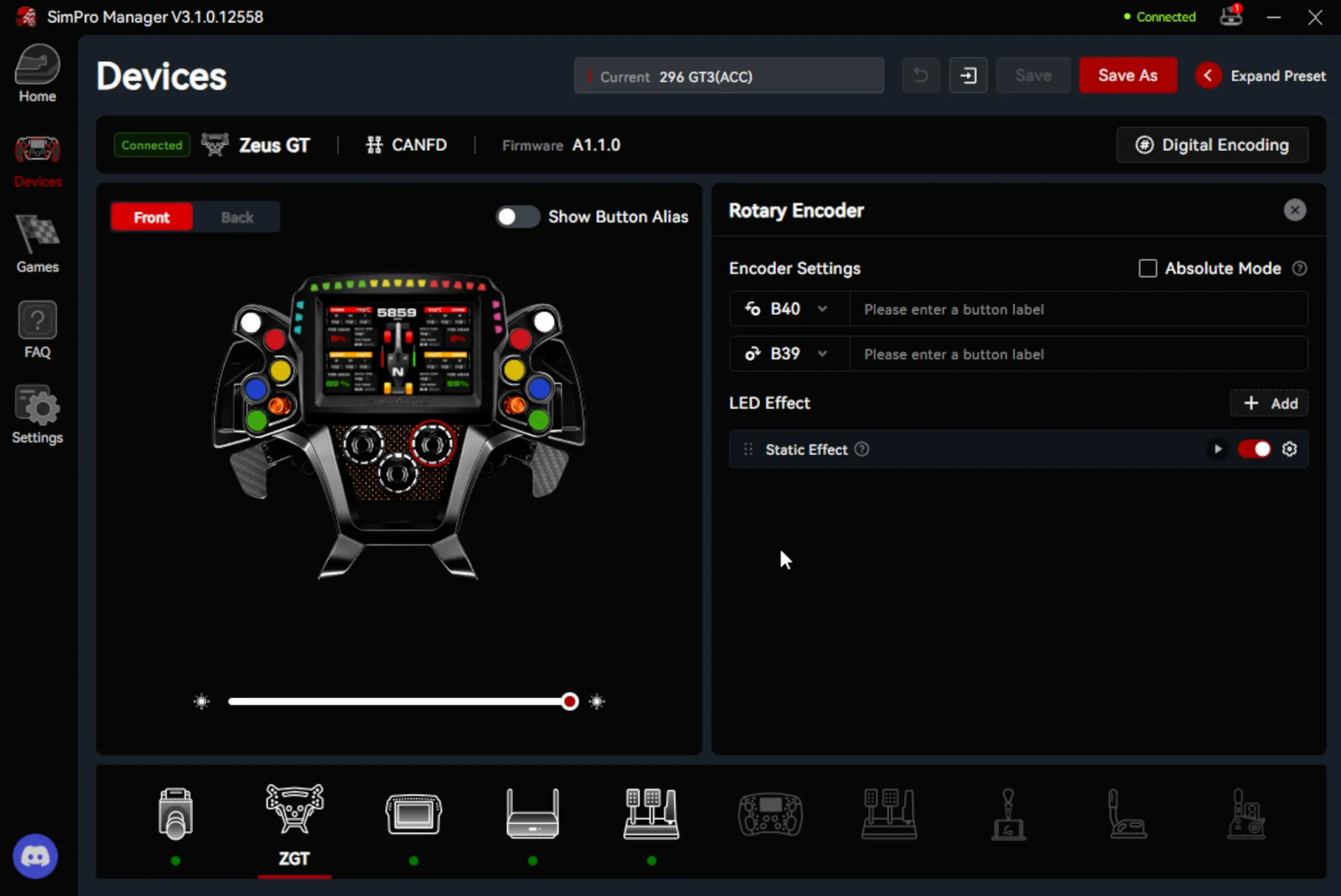
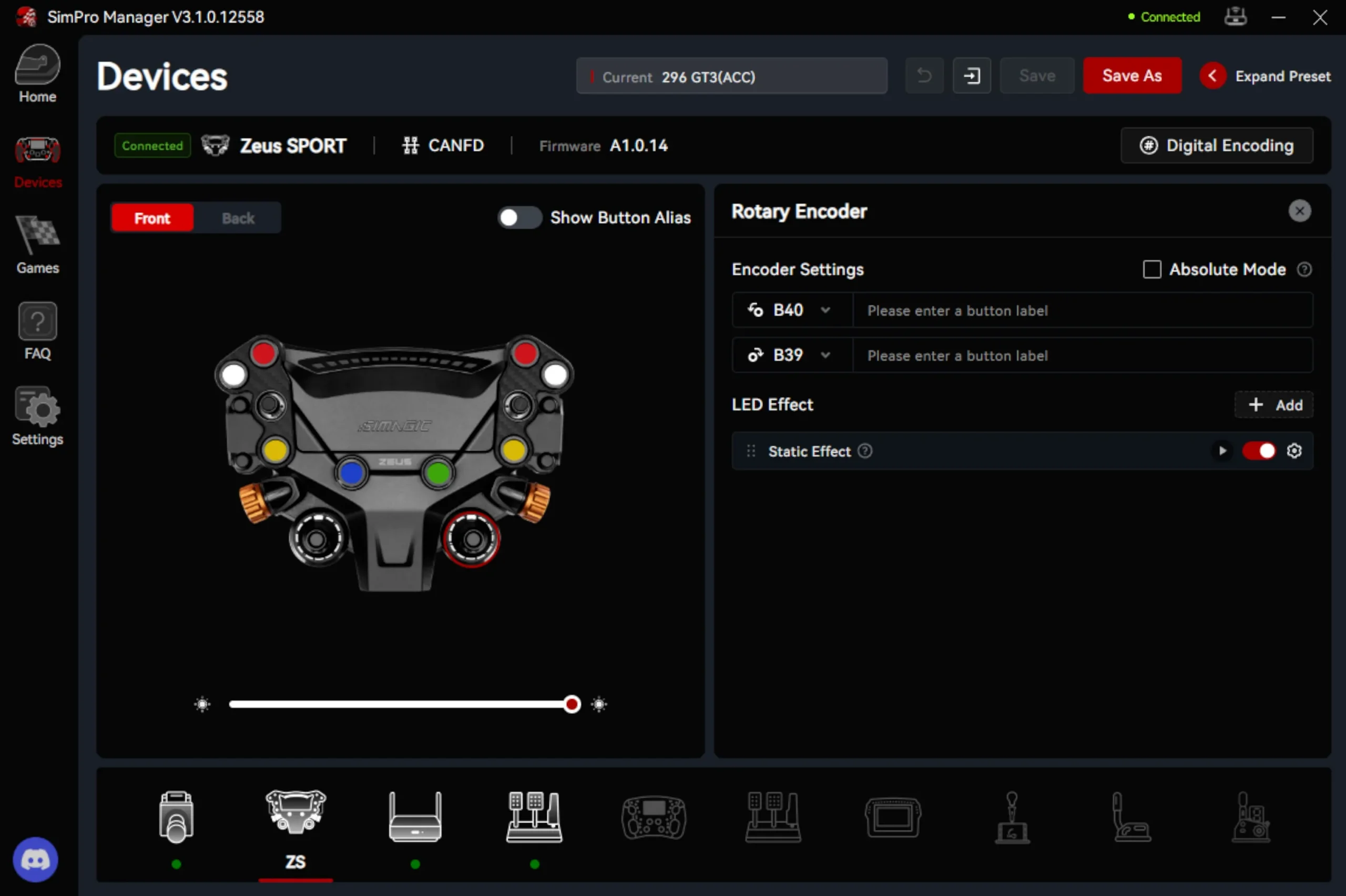
Button mapping is reasonably flexible. You can assign button numbers to individual controls, which allows you to build different profiles for different cars without needing to constantly remapping controls inside the game. For example, you could swap ABS and traction control assignments between profiles while keeping the sim itself mapped the same way.
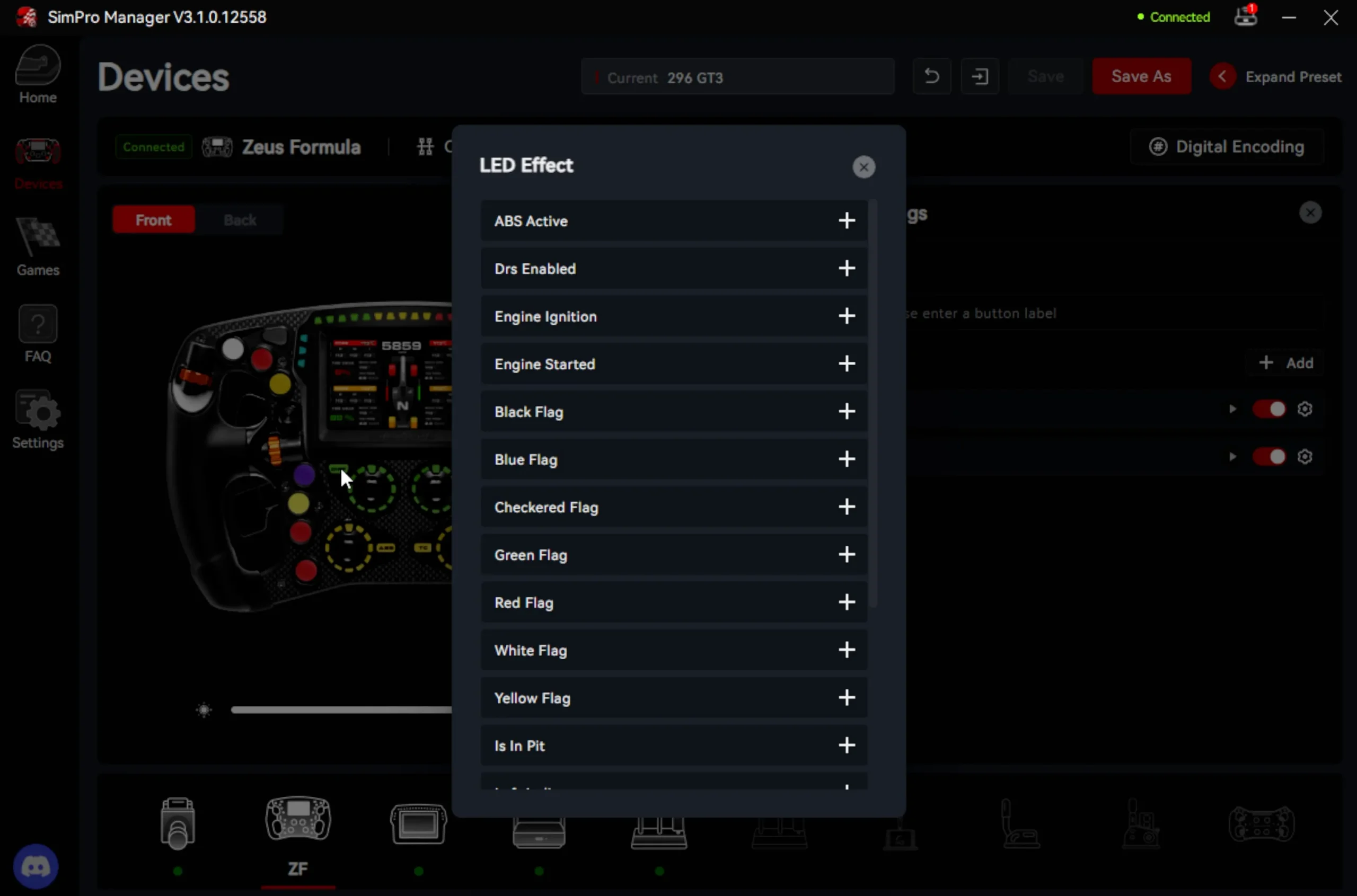
Lighting control inside SimPro Manager is also better than basic. You can set static colours, blinking behaviour, telemetry-based effects, and priority layers. That means you can have a button normally lit in one colour, then change colour when a pit limiter, ABS, traction control, or other condition is active. Rotary encoder lighting can also show selected positions using segmented LEDs, which is genuinely useful.
The limitation is that SimPro Manager still does not give you the same depth as SimHub. And as covered earlier, the connection method matters. To get full SimHub LED control of the wheel, it needs to be connected via USB-C or MagLink Pro. If you are using the Simagic AirLink path, wheel LED control remains within SimPro Manager only.
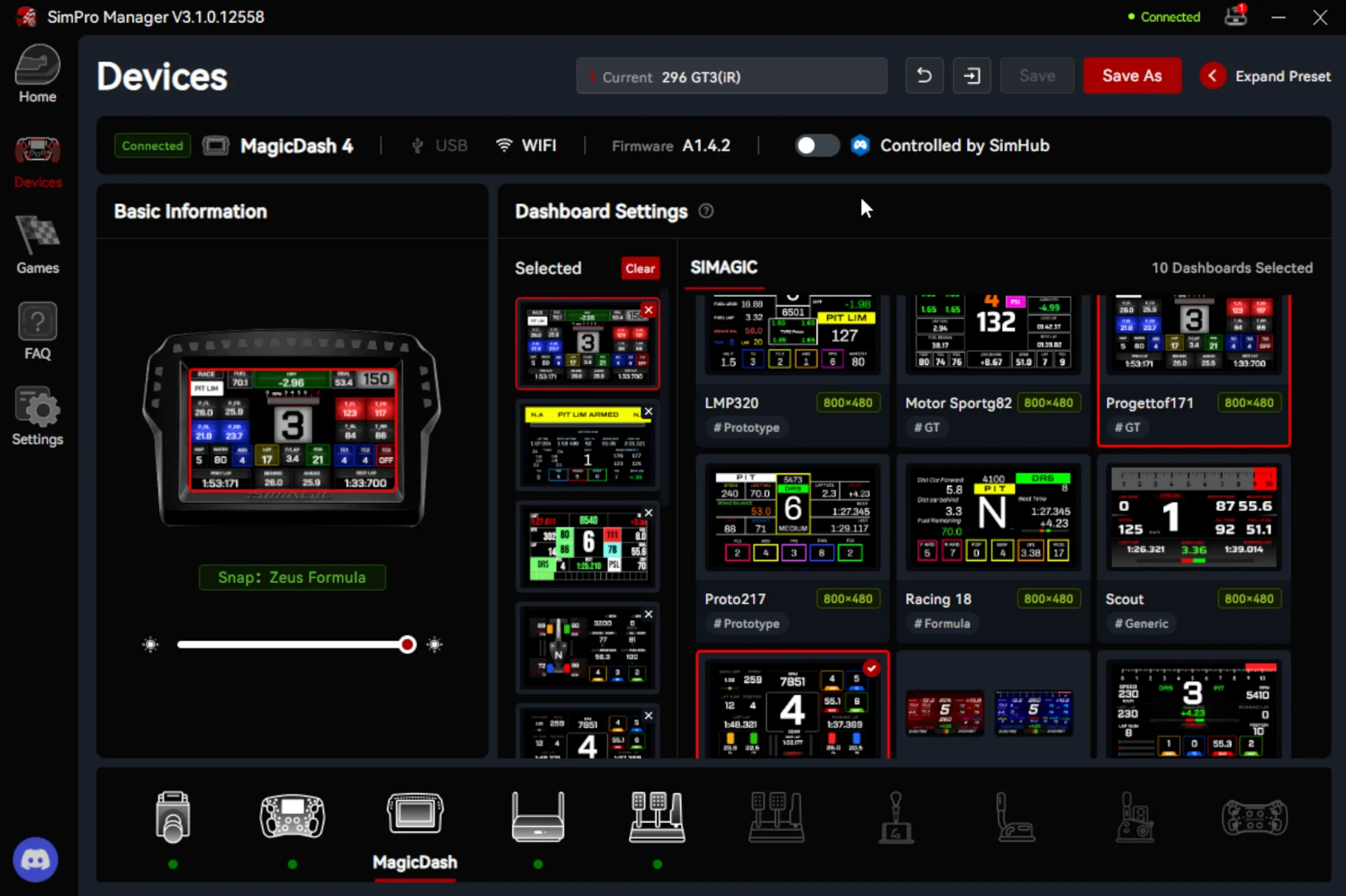
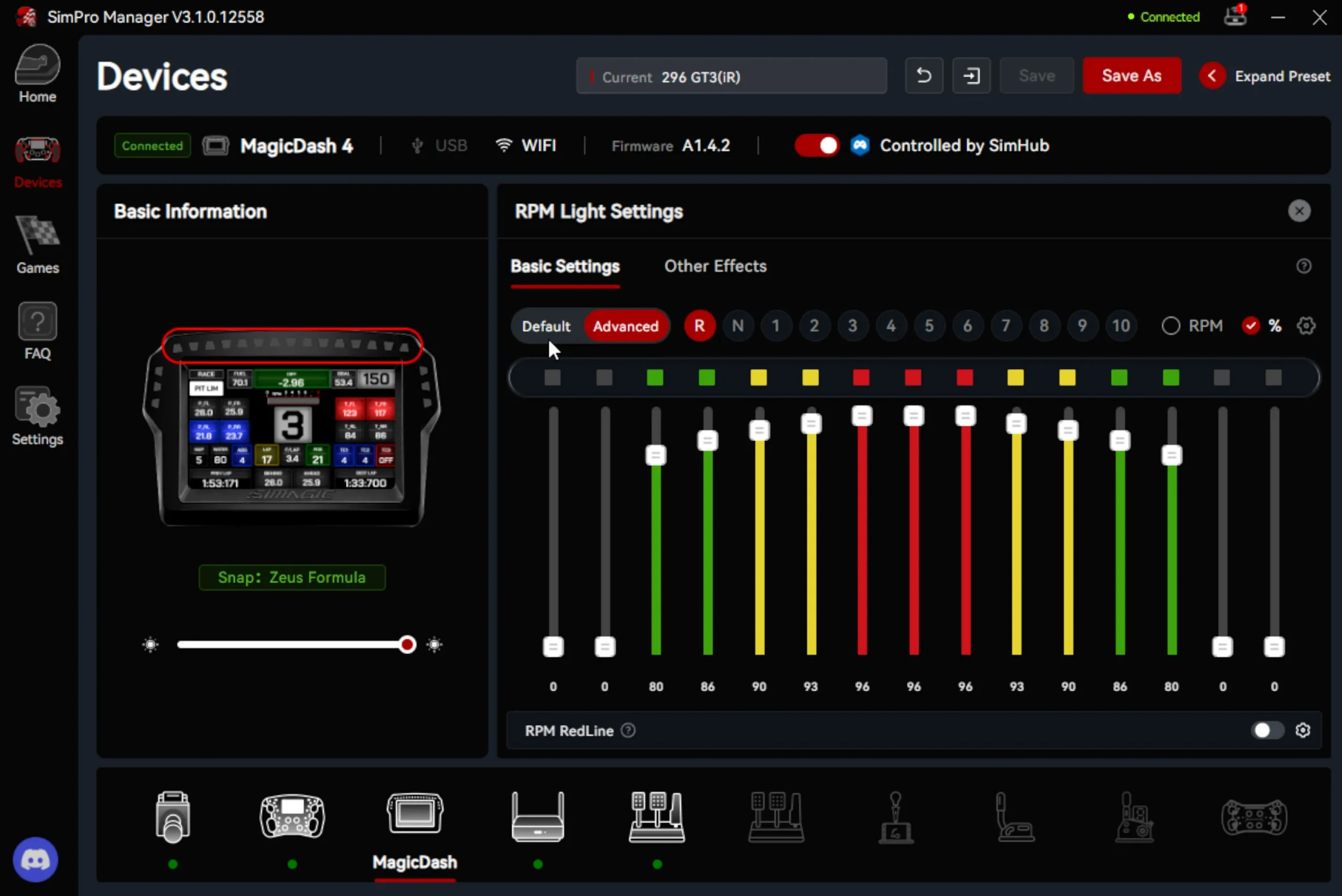
The MagicDash 4 itself is more flexible. It can run SIMAGIC’s own dashboard pages, or it can be switched into SimHub mode. That is a major advantage over ecosystems where the wheel display is locked to the manufacturer’s own software. There is a decent selection of built-in Simagic dash layouts, although at the time of filming, there was not the same level of custom dash creation available inside SimPro Manager as you get from SimHub.
The touchscreen functionality is also worth mentioning. Swiping up from the bottom of the display gives access to dash selection, settings, brightness, firmware information, and mouse mode. The mouse mode effectively turns the dash into a small touchpad, and with current firmware is smooth and responsive. It will not replace a proper mouse or trackball for everyone, but it is a clever addition and could be genuinely useful on some rigs.
So the software is in parts quite good. The issue is that the best software experience depends heavily on how the wheel is connected, and that adds another layer of decision-making to an already complicated ecosystem.
Conclusion
The SIMAGIC Zeus Series is a tricky one to summarise, because the hardware is easier to recommend than the ecosystem is to explain.
As steering wheels, the Zeus Formula, Zeus GT, and Zeus Sport are all strong products. The Formula is a focused 280mm race wheel with excellent rigidity, a huge number of inputs, useful thumb encoders, quiet shifters, and a serious overall feel. The GT is more versatile, especially with the choice of rim sizes, although the lack of thumb encoders is disappointing. The Sport is the broadest of the three, with enough rim options to cover road cars, rally, drifting, GT driving, and general-purpose use.
The MagicDash 4 is the key idea that ties everything together. Being able to buy one dash and move it between multiple wheels is genuinely smart. It saves money, reduces duplication, and gives the Zeus ecosystem a point of difference against wheels where every display is permanently built in.
But the surrounding ecosystem needs work. Simagic has tried to make these wheels compatible with Alpha EVO bases, older Alpha bases, third-party wheelbases, wheelbase-mounted dash setups, wheel-mounted dash setups, wired setups, and wireless setups. That flexibility is valuable, but the result is a lot of accessories, connection paths, and confusion.
For some users, especially those running third-party wheelbases and connecting via MagLink Pro, the Zeus wheels may actually be cleaner to integrate than expected. For existing Simagic users, the story is oddly more complicated. Depending on how you connect the wheel, you may lose SimHub LED control, need an AirLink, or need to think carefully about how the dash is mounted.
That does not make the Zeus Series bad. Far from it. The wheels themselves are well judged, the modular dash system is genuinely useful, the driving experience is strong, and the pricing can make a lot of sense if you are buying into the system properly.
If you want one simple standalone dashboard, there are cleaner options. If you want one wheel and do not care about the modular dash, the value is more straightforward but less distinctive. If you want multiple wheels, one shared display, good SimHub flexibility, and broad driving coverage, the Zeus ecosystem becomes much more compelling.
Pros
- Clever shared MagicDash 4 modular display system
- Strong coverage across Formula, GT, and Sport driving styles
- Good value if using one dash across multiple wheels
- Zeus Formula feels very rigid and serious
- Zeus Sport is highly versatile with multiple rim options
- Quiet, well-damped shifter feel
- MagicDash 4 supports SimHub
- Built-in touchscreen mouse mode is genuinely clever
- SimPro Manager offers useful profile and lighting control
Cons
- Compatibility and accessory requirements are confusing
- SIMAGIC’s buying/configuration guidance needs to be clearer
- Full SimHub LED control depends on connection method
- Existing SIMAGIC users may not get the cleanest integration
- Formula looks less finished without the dash installed
- Formula loses its main top LED strip when the dash is removed
- Zeus GT lacks thumb encoders
- Sport sample had a very slightly bent thumb encoder
- Standalone MagicDash 4 value is less compelling outside the Zeus wheel ecosystem


Related Articles

Bavarian SimTec Alpha, Delta and Omega PRO V2 – Detailed Review
After six months with most of BavarianSimTec’s range, we look at what separates the Alpha, Delta and Omega PRO V2 wheels, and if they live up to the hype and price.

MOZA CS Pro and KS Pro Sim Racing Wheels – Detailed Review
Two feature rich mid-level MOZA wheels that cover a huge range of driving styles, with strong ergonomics, good software depth, but a few details that
Fanatec Wheel Hub: A Useful Fix For A Self-Created Problem
What Is The Fanatec Wheel Hub? The Fanatec Wheel Hub is a QR2-based adapter for fitting third-party steering wheels to Fanatec wheel bases. It does
Fanatec ClubSport Formula V3 – Detailed Review
A smarter and more usable evolution of Fanatec’s long-running Formula wheel, even if it still is not the bigger leap many sim racers had been
Simagic Alpha Evo Direct Drive Wheel Bases – Detailed Review
The Simagic Alpha Evo wheel bases are arguably one of the most exciting direct drive lineups to hit the market in quite some time. With
MOZA Racing Lamborghini Revuelto Sim Racing Wheel – DETAILED REVIEW
Officially licensed and instantly recognisable, the MOZA Racing Lamborghini Revuelto wheel brings genuine road car character to sim racing. MOZA has been releasing products at
NEWSLETTER
Stay up to date with new releases And major updates
Thanks. Please check your email to confirm your subscription.
Sim RACING
Discount Codes
Also Sells
Ascher Racing, Gomez Sim Industries, SRBReseller For
Pro Simrig, Simagic, Qubic System, Cobra, SparcoAlso Sells
Alien Mods, Asetek, Buttkicker, Cammus, Conspit, Cube Controls, D-Box, Heusinkveld, LeoXZ, Moza Flight Gear, Moza Racing, Racebox, Simagic, Sim Motion Premium Chassis, SimNet, Unreal Racing, VNM SimulationsAlso Sells
Fanatec, MOZA Racing, 3DRap, Another Way, Ascher Racing, Asetek SimSports, Asus, Bavarian SimTec, BDH Race Sim, Brook Raslution, ButtKicker, Conspit, Cooler Master, Cube Controls, D-BOX, Dayton Audio, Delta Sim-Tech, DOF Reality, Elgato, Esportsim, GSI, Heusinkveld, HORI, KGL Creation Lab, Leoxz, MME Motorsport, MOZA FlightSim, Next Level Racing, Nitro Concepts, Novus, O-Rouge, Overpower, P1SIM, Pimax, Playseat, Prosimu, PXN, Qubic System, Racing Components, Res-Tech, Rexing, Sabelt, SG Racing, Sim Factory, Sim-Lab, Sim Racing Studio, Simagic, Simforge, Simgrade, SimRep, Simucube, Simufy, Simtrecs, SimXPro, Soelpec, Sparco, Thrustmaster, TREQ, Venym, VIRPIL Controls, VNM Simulation, VPG Sim, VRSReseller For
BavarianSimTec, Sabelt, Qubic System, MME SimSportReseller For
Cube Controls, Asetek SimSports, Conspit, Outlet ItemsAlso Sells
Ascher Racing, Base Performance Simulators, BDH Race Sim Hardware, Buttkicker, Cube Controls, D-BOX Technologies, Delta Sim-Tech, Gomez Sim Industries, Heusinkveld, IgniT0N Controls, Max Papis Innovations, MME Motorsport, Moza Racing, P1Sim, Playseat, Precision Sim Engineering, Qubic System, Simucube, Sparco, Thrustmaster, VNM Simulation, VPG SimAlso Sells
Cube Controls, D-Box, Meca Sim Hardware, Moza Racing, RichD-PC, Sigma Integrale, Simagic, Simucube, Playseat, Conspit, Imsim, GTRacing, Elgato, PimaxAlso Sells
BavarianSimTec, Conspit, Cooler Master, Cube Controls, DOF Reality, Moza, Pimax, Qubic System, Racebox, Restech, Sigma Integrale, SimucubeReseller For
Fanatec, Next Level Racing, Cube Controls, Thrustmaster, Asetek, Moza, Buttkicker, BJ Racing, Turtle BeachMORE REVIEWS and Discounts


If these Sim Racing Reviews have helped you find the best racing simulator gear for your sim rig, please consider using the affiliate links on this website. By purchasing through these links, a small commission will come back to Boosted Media at no additional cost to you. This is how Boosted Media keeps providing content to the Sim Racing community.
About The Authors
-

Will Ford operates Boosted Media with his brother Tom and is the on-camera host and technical lead behind the channel’s sim racing hardware reviews.
With a background in electrical engineering, adult education, and automotives, he combines hands-on product evaluation with practical technical analysis and a passion for motorsport and sim racing to explain how sim racing hardware performs in the real world, and is one of the most experienced people on the planet when it comes to reviewing Sim Racing Hardware.
-
Tom Ford operates Boosted Media with his brother Will and produces all Boosted Media sim racing videos and written articles. A true motorsport fanatic with a professional background in engineering and media, he works closely with Will across testing and analysis, turning extensive product evaluations into clear, practical reviews and buying advice for sim racers.