
An Adjustable, Heavy-Duty Entry into the Flight & Combat Sim Market
MOZA has been making some serious moves in the flight simulation space recently, and their latest entry — the MRP Rudder Pedals — aims to take on an already competitive market dominated by long-standing options from Winwing and Thrustmaster.
At first glance, the MRP pedals look the part. They’re solid, aggressively styled, and offer a healthy amount of adjustment. There’s also an optional hydraulic damper available, which immediately positions these pedals as something a little more serious than your average entry-level option.
But looks and feature lists only tell part of the story. After spending many hours flying with them across multiple simulators, the real question is: how do they actually feel, and do they justify their price? Let’s dig in.

By purchasing through links on this page you’ll be supporting Boosted Media at no additional cost to you! This option is available for a huge range of Sim Racing gear.


Pricing
Pricing (Before Shipping)
- MOZA MRP Rudder Pedals:
$599 AUD / $349 USD - Adjustable Damper (Optional):
$129 AUD / $65 USD
Total with damper:
$728 AUD / $414 USD (before shipping)
This puts the MRP pedals squarely in the mid end of the rudder pedal market, especially once the damper is added.
What’s in the Box
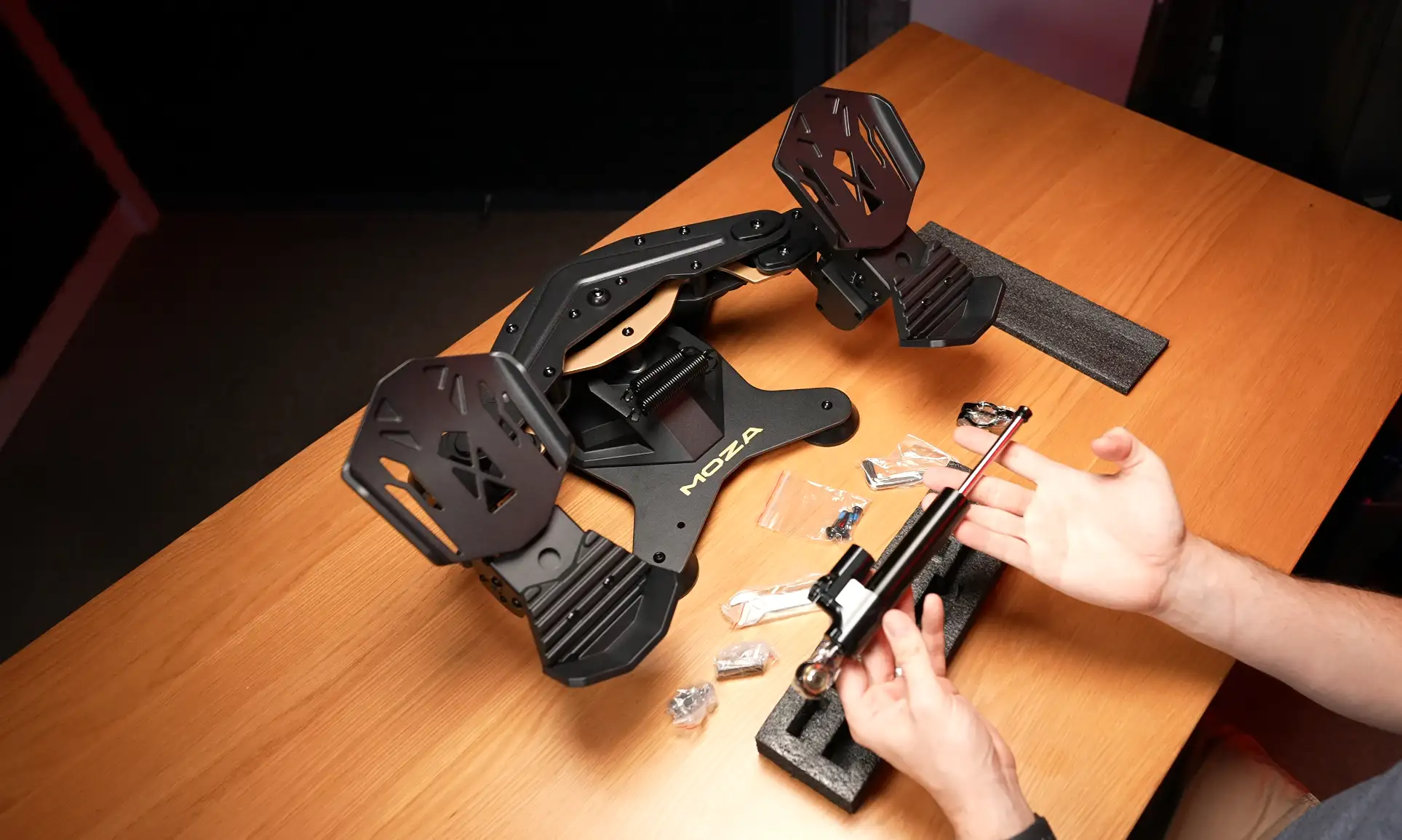
Inside the box you’ll find:
- MOZA MRP Rudder Pedals (light assembly required)
- USB Type-A to Type-B cable
- Transit data cable
- Tool kit (hex keys, bolts, nut driver, and spanner)
- Printed manual covering setup and software basics
MOZA continues their trend of including everything you need to get up and running without hunting for tools.
Build & Design
Some minor assembly is required out of the box, mainly attaching the top and bottom sections of the left and right footrests.
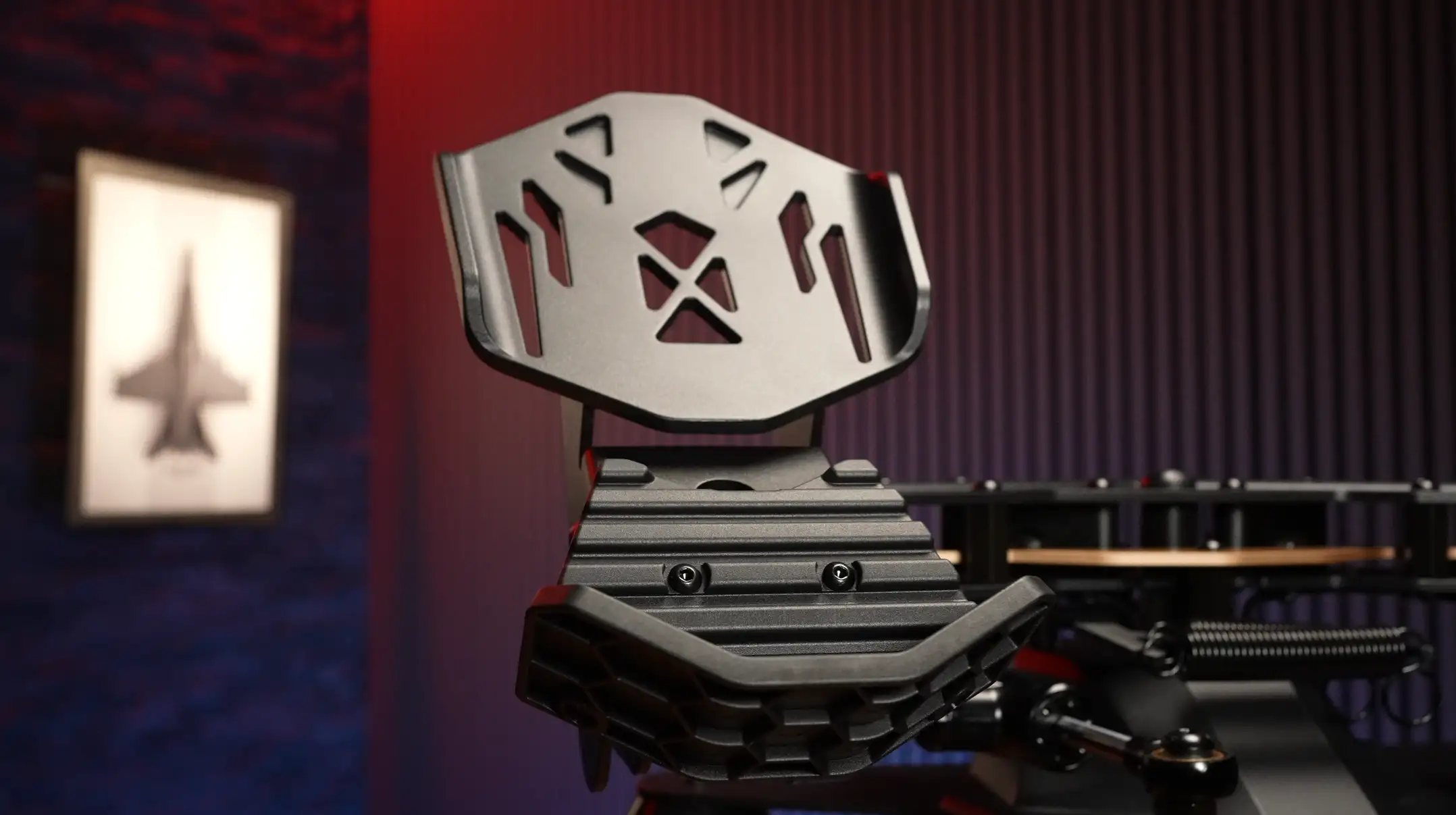
Visually, the MRP pedals lean heavily into a military / futuristic aesthetic. A predominantly matte black finish is broken up by a champagne-gold arm that adds a nice contrast without looking flashy. It’s a design that feels deliberate and very much in line with modern combat-sim hardware.
Material choice is reassuring throughout. The outer structure uses powder-coated aluminium alloy, while steel is used internally in areas requiring additional strength. Everything feels rigid and confidence-inspiring underfoot.
From a sensing perspective, MOZA has gone with Hall sensors on:
The main rudder axis
Both brake pedals
This ensures smooth, contactless input with long-term durability.
Movement & Adjustment
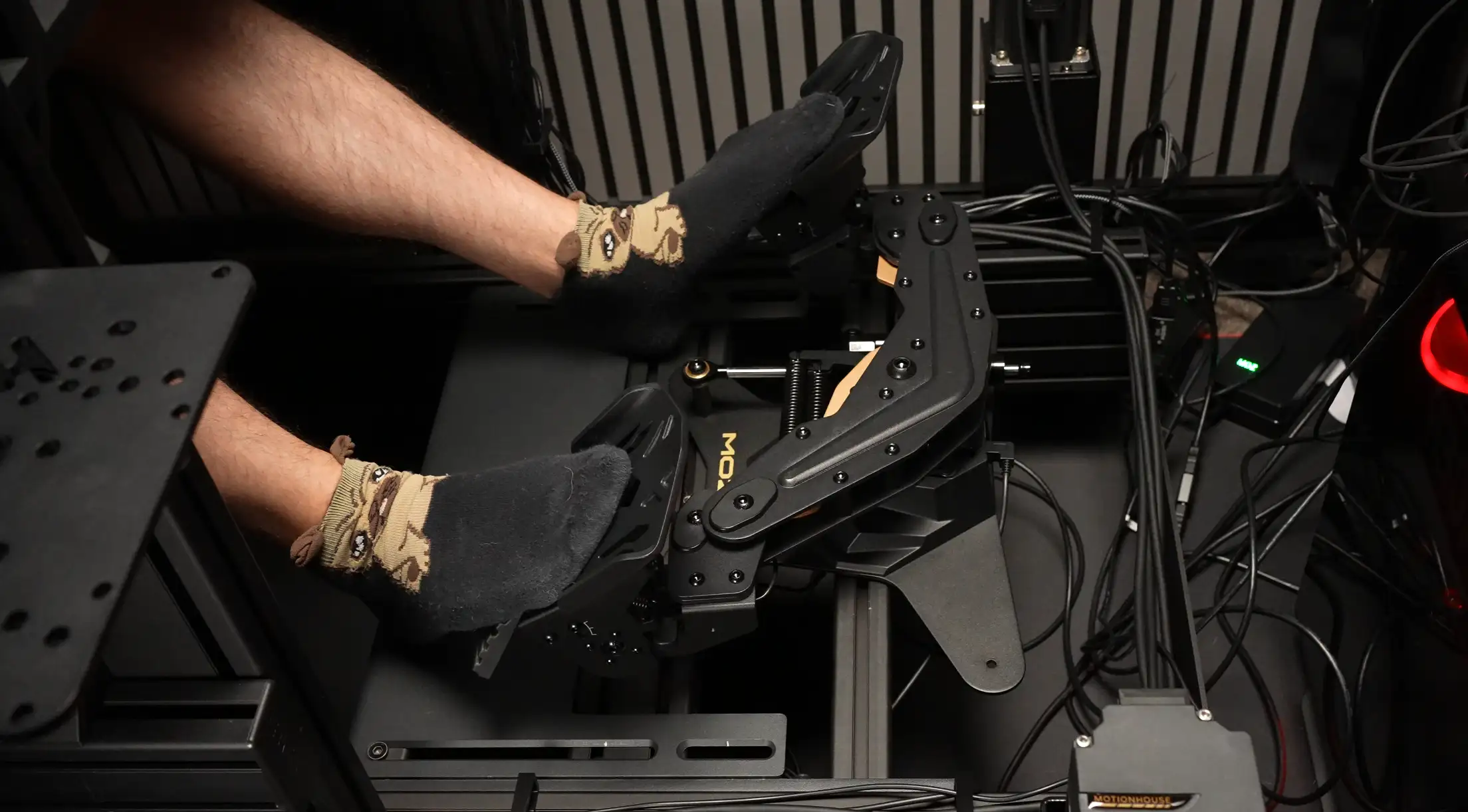
The MRP pedals offer approximately ±30 degrees of rotation, resulting in around 30 cm of total rudder travel. Travel limits are adjustable via hex screws located at the rear of the unit, using the included tools. Unlike linear designs such as the Thrustmaster TPR — which move straight forward and back — the MRP uses a rotational, arc-based movement around a central pivot point. This design choice gives the pedals a different feel underfoot, especially noticeable when transitioning between aircraft types. Underneath the unit are four removable rubber feet. On hard surfaces like tile, they work well, but on carpet there’s noticeable movement due to the lack of aggressive grip teeth. Once mounted to a sim rig, however, the pedals are completely solid with zero movement.Resistance & Springs
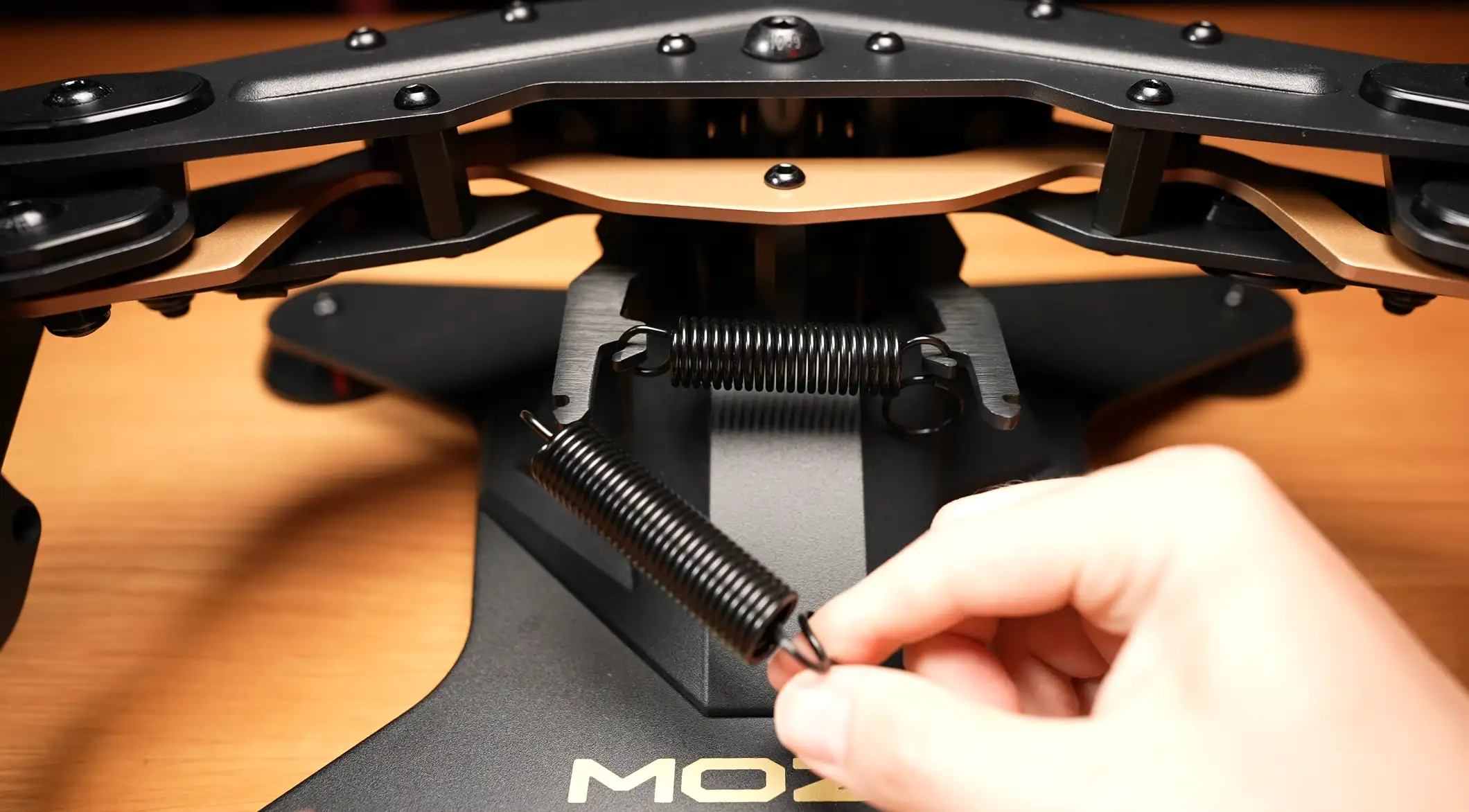
Spring tension is configurable, with measured forces roughly as follows:- Large spring: ~6.5 kg / 14.3 lb
- Small spring: ~3.5 kg / 7.7 lb
- With the larger spring installed, effective force settles around 3–3.5 kg in use
Connectivity
Connectivity is straightforward and flexible:- USB Type-B port for standard PC connection (through the included USB Type-B to A cable)
- Transit data port for daisy-chaining with MOZA hardware such as:
- AB6 base
- AB9 base
- AY210 force-feedback yoke
Brake Pedals
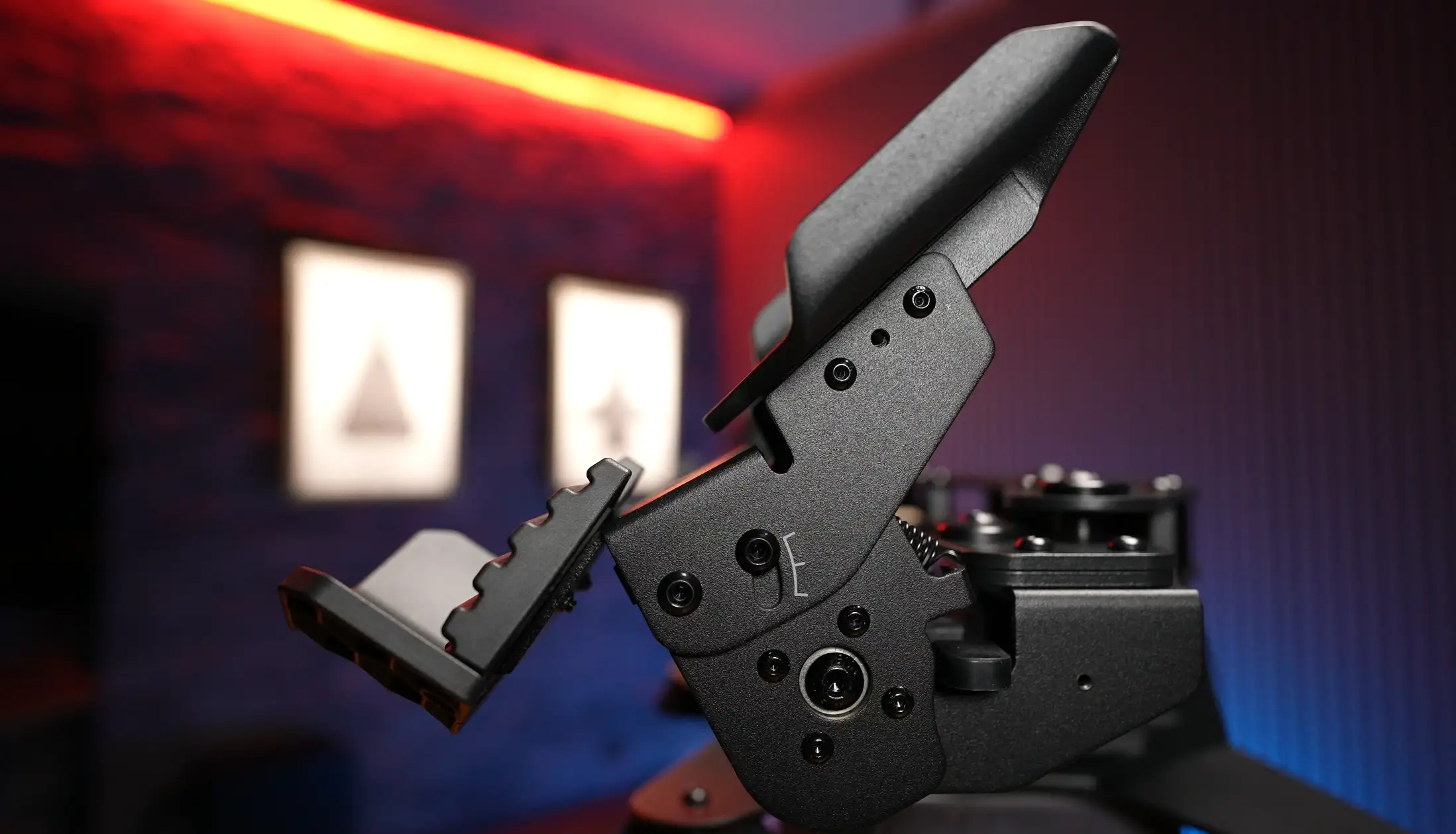
The brake pedals offer angle adjustment of approximately ±25 degrees, with a total brake travel of around 20 degrees. Resistance is provided by fixed springs with no preload adjustment.
This puts brake feel roughly in line with other pedals in this category, such as the Winwing Orion and Thrustmaster TPR. Braking works consistently, but feedback is minimal — something worth noting if you prioritise nuanced toe-brake feel.
It will feel very different to a MOZA sim racing brake pedal and definitely an area I wish MOZA had really tried to expand on rather than simply what we have in the market today on most other sets in this price range.
Optional Hydraulic Damper
The optional damper is easy to install, requiring the supplied metal risers and bolts to mount it to the left swing arm. Installation is straightforward, though it’s worth threading the cylinder through the rear brace before tightening everything down. Once installed, the damper becomes one of the defining features of the MRP pedals. Adjustment is handled via a side knob, and it offers a very wide resistance range — from light damping all the way to a point where movement becomes extremely heavy. At higher settings, the pedals resist returning to centre and stay exactly where you leave them. While I didn’t measure the exact force required, the added weight dramatically changes how the pedals feel, particularly in helicopter operations.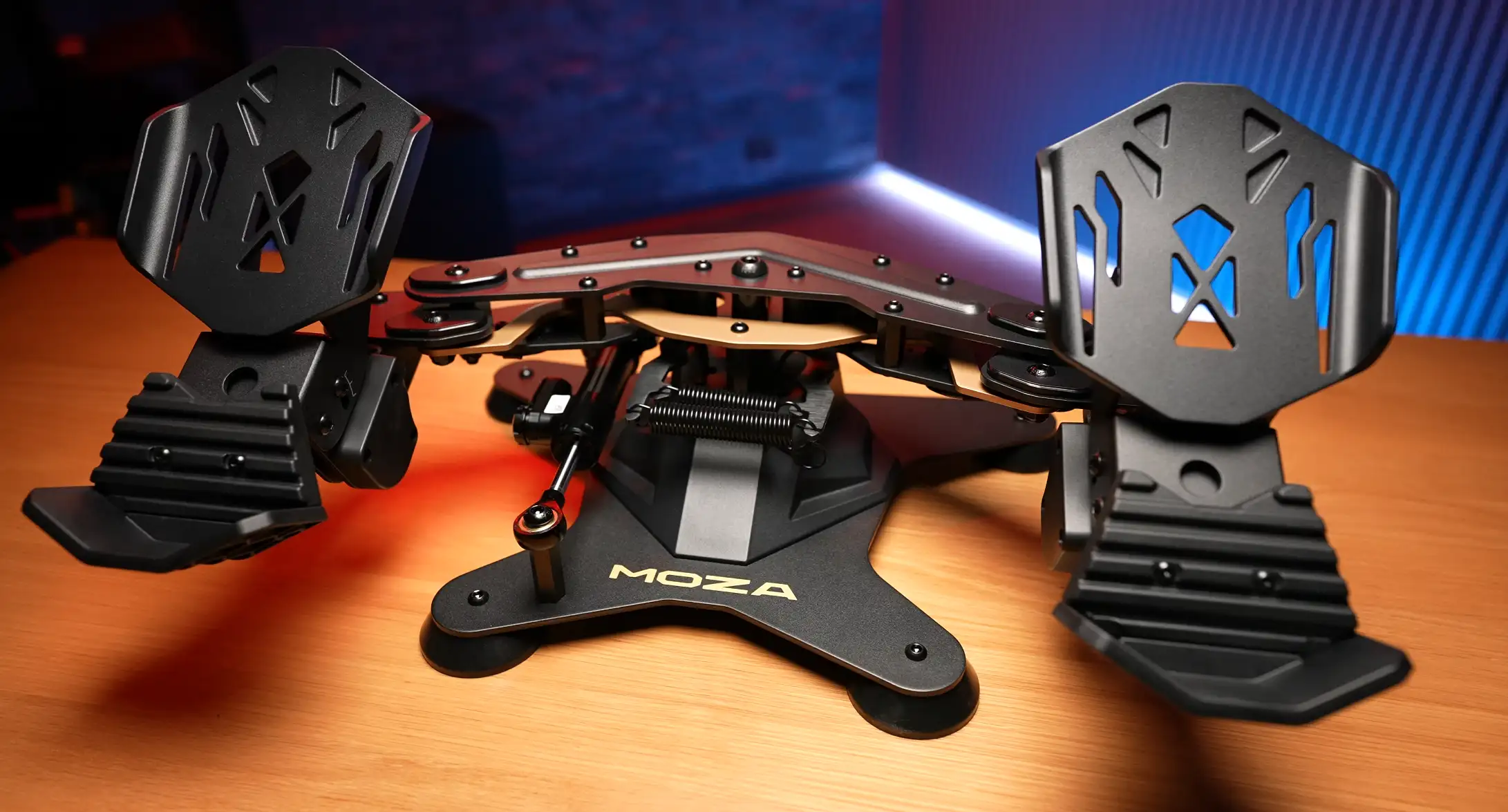
In-Sim Performance
Helicopters (DCS World)
With helicopters — particularly the Apache and Huey in DCS — the MRP pedals really shine when paired with the damper. Unlike some competing dampers that still allow movement with minimal toe pressure, the MOZA setup requires deliberate foot input and stays planted when pressure is released. The result is a much more immersive and controlled experience, encouraging precise pedal work rather than constant micro-corrections. I found myself spending noticeably more time flying helicopters as a result.Fixed-Wing & Carrier Ops
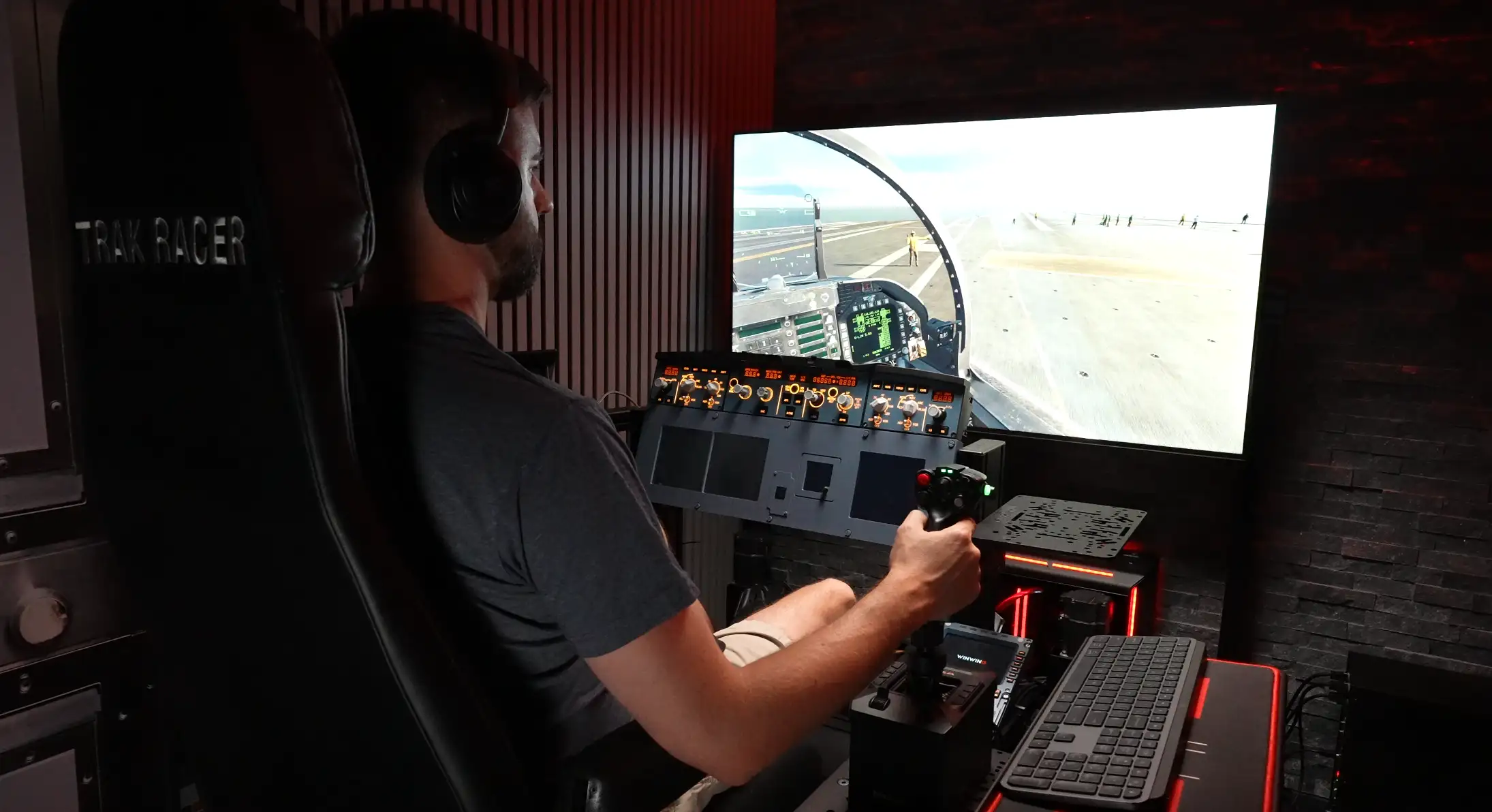
Switching to the F/A-18 Hornet, taxiing on the carrier deck felt confident even with nose-wheel steering set to high. The rudder axis remains smooth, and with a balanced combination of springs and damper tension, the pedals provide both weight and predictable centring. On landing rollouts, rudder authority is exactly as expected. Brake performance is serviceable, though the lack of tactile feedback reminds you that this is a spring-based system rather than a load-cell solution.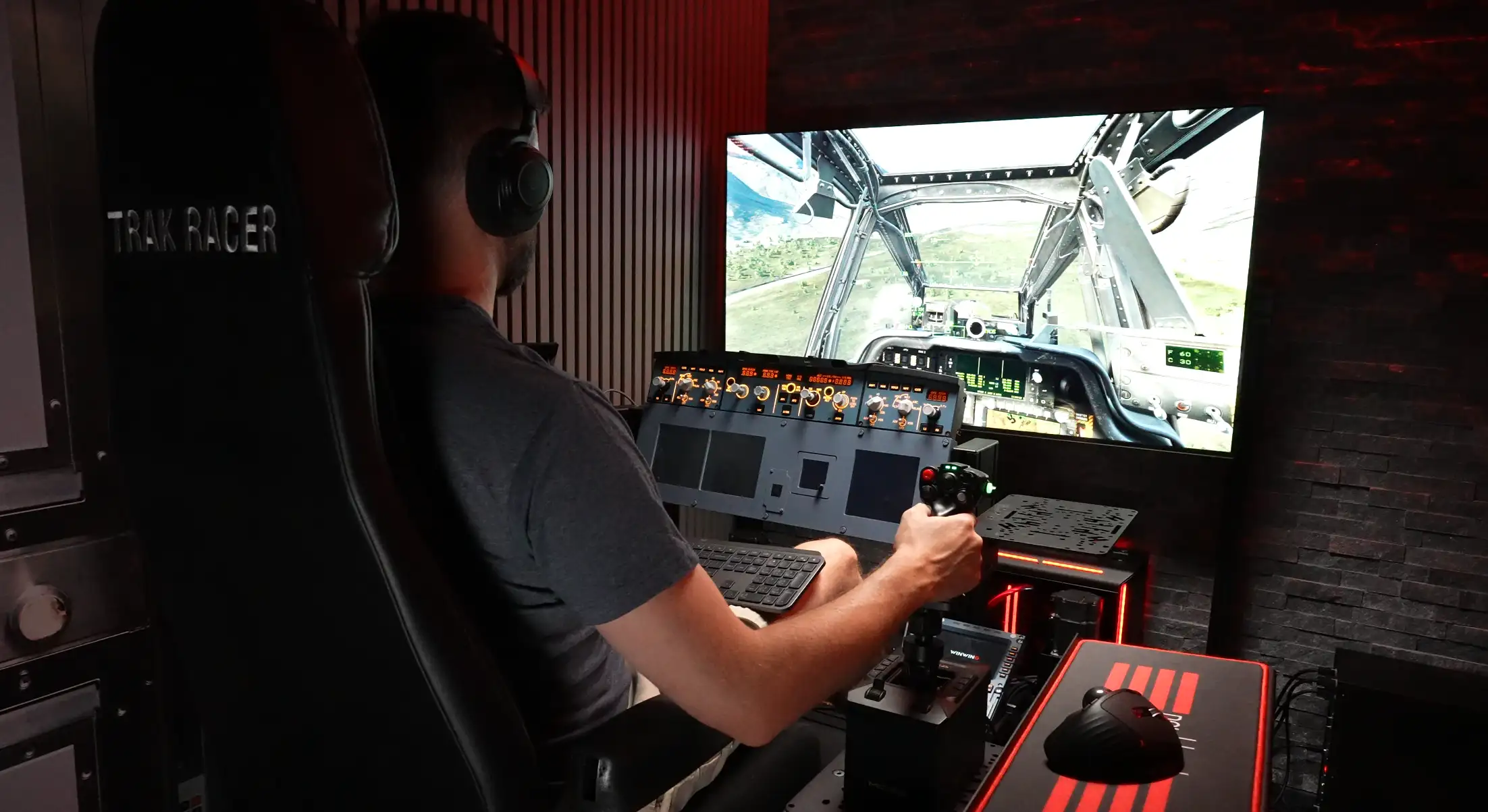
Comfort & Long-Term Use
One area worth mentioning is the foot stops at the base of the pedals. Over longer sessions, these can become uncomfortable. Removing them allows your feet to rest lower on the base plate, which I found significantly more comfortable for extended flights.
Mounting options are well thought out, with removable rubber pads and included spacers that prevent interference with underside bolt heads when hard-mounting to a rig.
Final Thoughts
The MOZA MRP Rudder Pedals are a strong, well-built entry into the mid end rudder pedal market. They look great, offer meaningful adjustability, and — with the optional damper installed — deliver a level of control and immersion that works exceptionally well for helicopters and precision flying.
Brake feel is on the simpler side, given MOZA’s success on the other side of the fence with sim racing, surely we can see some of that tech like loadcell brake pedals coming to flight simulation? Carpet users may want to hard-mount or modify the base for stability, but overall the package feels cohesive and thoughtfully designed.
For pilots already invested in the MOZA ecosystem, or those looking for a rugged, modern alternative to established options from Winwing or Thrustmaster, the MRP pedals are absolutely worth a close look.
As always at Boosted Media, these impressions come from hands-on testing and real flight time — no scripts, no co-pilots, just time in the sim and honest feedback.
NEWSLETTER
Stay up to date with new releases And major updates
Thanks. Please check your email to confirm your subscription.
Sim RACING
Discount Codes
Also Sells
Ascher Racing, Gomez Sim Industries, SRBReseller For
Pro Simrig, Simagic, Qubic System, Cobra, SparcoAlso Sells
Alien Mods, Asetek, Buttkicker, Cammus, Conspit, Cube Controls, D-Box, Heusinkveld, LeoXZ, Moza Flight Gear, Moza Racing, Racebox, Simagic, Sim Motion Premium Chassis, SimNet, Unreal Racing, VNM SimulationsAlso Sells
Fanatec, MOZA Racing, 3DRap, Another Way, Ascher Racing, Asetek SimSports, Asus, Bavarian SimTec, BDH Race Sim, Brook Raslution, ButtKicker, Conspit, Cooler Master, Cube Controls, D-BOX, Dayton Audio, Delta Sim-Tech, DOF Reality, Elgato, Esportsim, GSI, Heusinkveld, HORI, KGL Creation Lab, Leoxz, MME Motorsport, MOZA FlightSim, Next Level Racing, Nitro Concepts, Novus, O-Rouge, Overpower, P1SIM, Pimax, Playseat, Prosimu, PXN, Qubic System, Racing Components, Res-Tech, Rexing, Sabelt, SG Racing, Sim Factory, Sim-Lab, Sim Racing Studio, Simagic, Simforge, Simgrade, SimRep, Simucube, Simufy, Simtrecs, SimXPro, Soelpec, Sparco, Thrustmaster, TREQ, Venym, VIRPIL Controls, VNM Simulation, VPG Sim, VRSReseller For
BavarianSimTec, Sabelt, Qubic System, MME SimSportReseller For
Cube Controls, Asetek SimSports, Conspit, Outlet ItemsAlso Sells
Ascher Racing, Base Performance Simulators, BDH Race Sim Hardware, Buttkicker, Cube Controls, D-BOX Technologies, Delta Sim-Tech, Gomez Sim Industries, Heusinkveld, IgniT0N Controls, Max Papis Innovations, MME Motorsport, Moza Racing, P1Sim, Playseat, Precision Sim Engineering, Qubic System, Simucube, Sparco, Thrustmaster, VNM Simulation, VPG SimAlso Sells
Cube Controls, D-Box, Meca Sim Hardware, Moza Racing, RichD-PC, Sigma Integrale, Simagic, Simucube, Playseat, Conspit, Imsim, GTRacing, Elgato, PimaxAlso Sells
BavarianSimTec, Conspit, Cooler Master, Cube Controls, DOF Reality, Moza, Pimax, Qubic System, Racebox, Restech, Sigma Integrale, SimucubeReseller For
Fanatec, Next Level Racing, Cube Controls, Thrustmaster, Asetek, Moza, Buttkicker, BJ Racing, Turtle BeachRelated Articles

MOZA MGX1000 Review
The G1000 is one of the most recognisable glass-cockpit systems in general aviation, and for many flight simmers it is also one of the most

MOZA MA3F Electronic Flight Control Modules Review 2026
Completing MOZA’s Airbus Cockpit The Flight Control Unit is arguably one of the busiest areas of an Airbus cockpit. Long before the aircraft reaches cruise,

MOZA MA3F Flight Computer Display Review 2026
A Premium Airbus MCDU That Keeps Getting Better The MCDU is arguably the heart of any Airbus cockpit. Before the engines are even started it’s
Thrustmaster HOTAS Warthog Review (2026): Revisiting a Flight Sim Legend
Few flight simulation products have achieved the legendary status of the Thrustmaster HOTAS Warthog. Released in 2010, it arrived at a time when most simmers
MOZA AB6 vs AB9 – FLIGHT Force Feedback Base Review
If your desk is held together with hope, hot glue, and a dream — this might be a difficult read. On one side we have
Trak Racer Flight Simulator Seat Review
A Good Budget Flight Sim Seat? If you’re building a flight simulator cockpit, one of the most overlooked parts of the setup is the seat.
MORE REVIEWS and Discounts


If these Sim Racing Reviews have helped you find the best racing simulator gear for your sim rig, please consider using the affiliate links on this website. By purchasing through these links, a small commission will come back to Boosted Media at no additional cost to you. This is how Boosted Media keeps providing content to the Sim Racing community.
About The Author
-

Sean is a pilot with over two decades of experience in aviation and senior technology roles within Airlines and Non-Profit sectors. He's a lifelong flight simmer and avid VR user, blending his passion for flying with cutting-edge technology. From cockpit to virtual skies, Sean loves all things Tech and Aviation.