
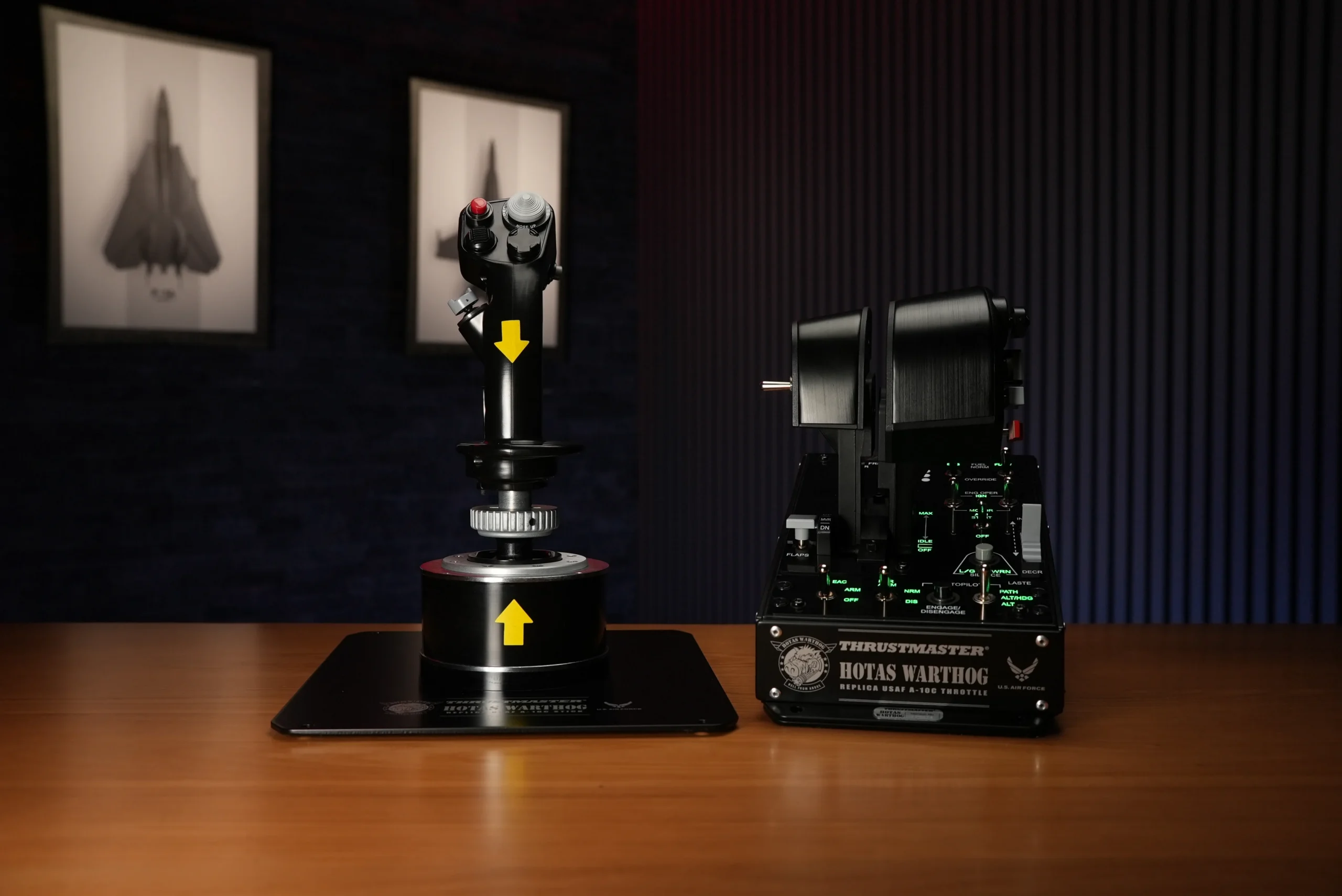
Few flight simulation products have achieved the legendary status of the Thrustmaster HOTAS Warthog. Released in 2010, it arrived at a time when most simmers were flying with lightweight plastic controllers and suddenly offered something very different: metal construction, Hall Effect sensors, dual throttles and an authentic A-10 inspired control layout.
For many enthusiasts, the Warthog became the benchmark against which every HOTAS that followed would be measured.
Sixteen years later, the Warthog remains on sale largely unchanged. But while the Warthog has stayed the same, the flight simulation market certainly hasn’t. Today we have cam-based gimbals, adjustable springs, force feedback systems, modular ecosystems and more switches than some small aircraft. So rather than asking whether the Warthog was good, because we already know it was, the real question is whether this legend still deserves a place on your desk in 2026.
Pricing
| Product | AUD | USD | EUR |
|---|---|---|---|
| HOTAS Warthog | $700 | $499 | €550 |
| Flight Stick | $470 | $190 | €230 |
| Dual Throttle | $360 | $280 | €365 |

By purchasing through links on this page you’ll be supporting Boosted Media at no additional cost to you! This option is available for a huge range of Sim Racing gear.
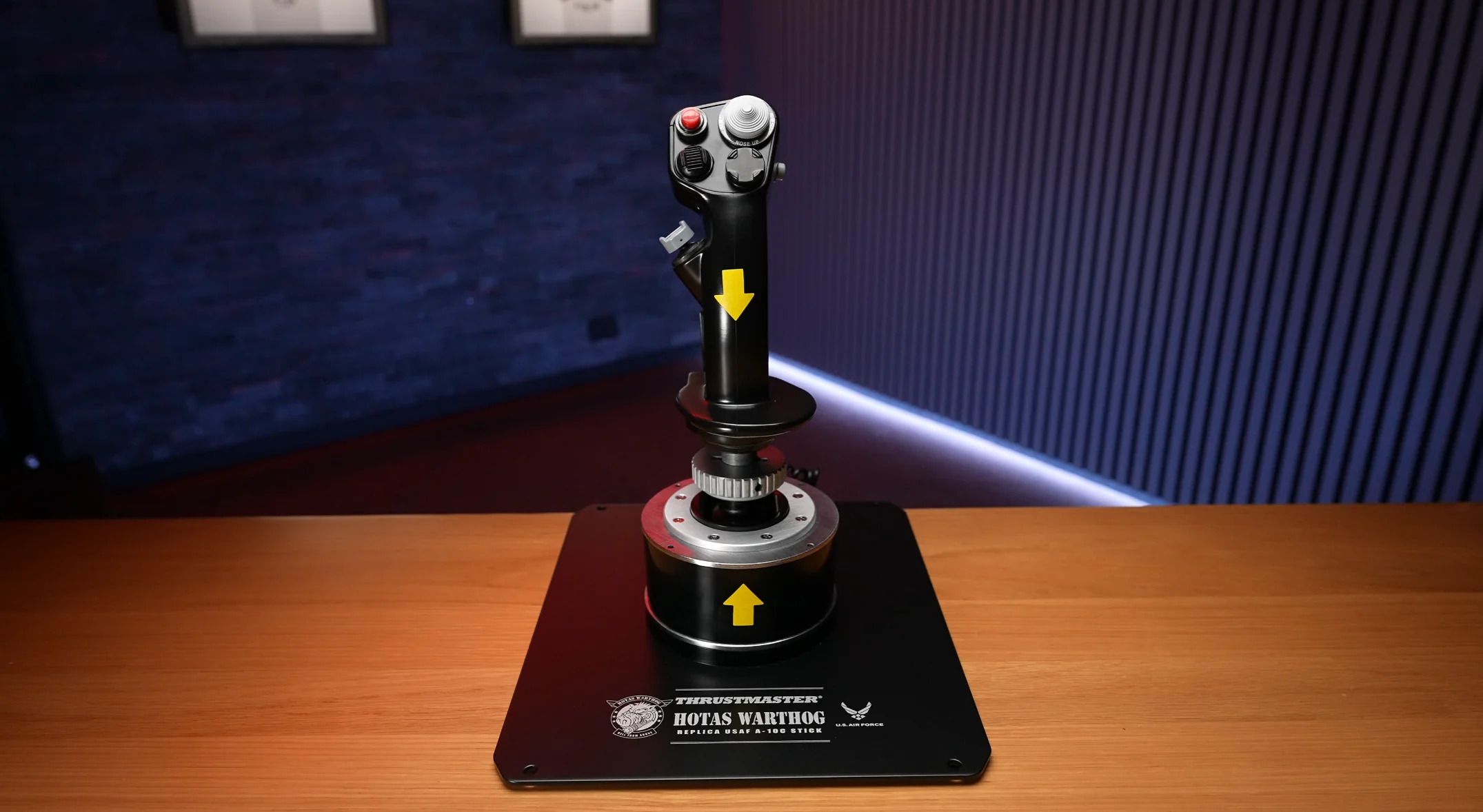
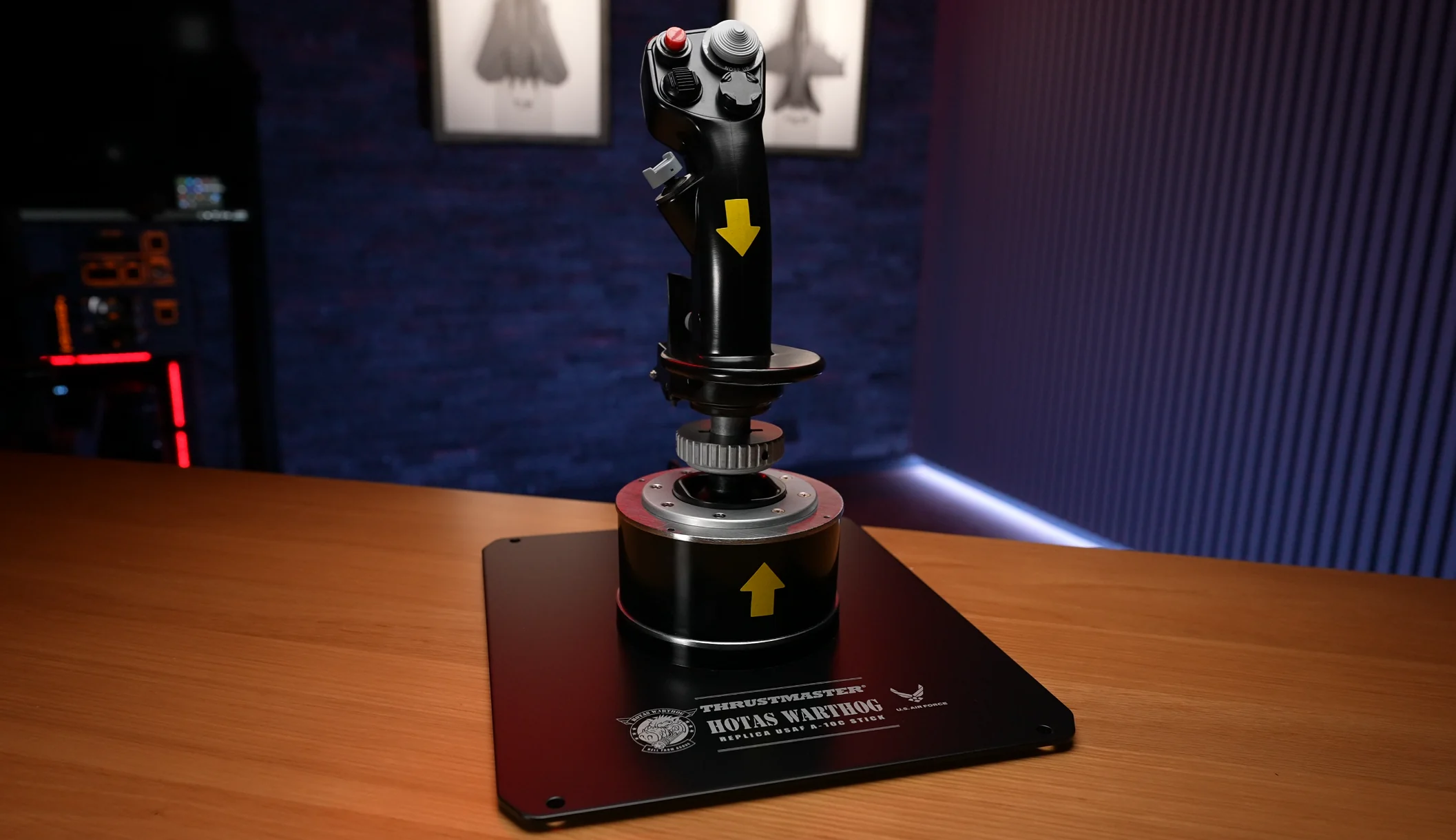
The Warthog Stick
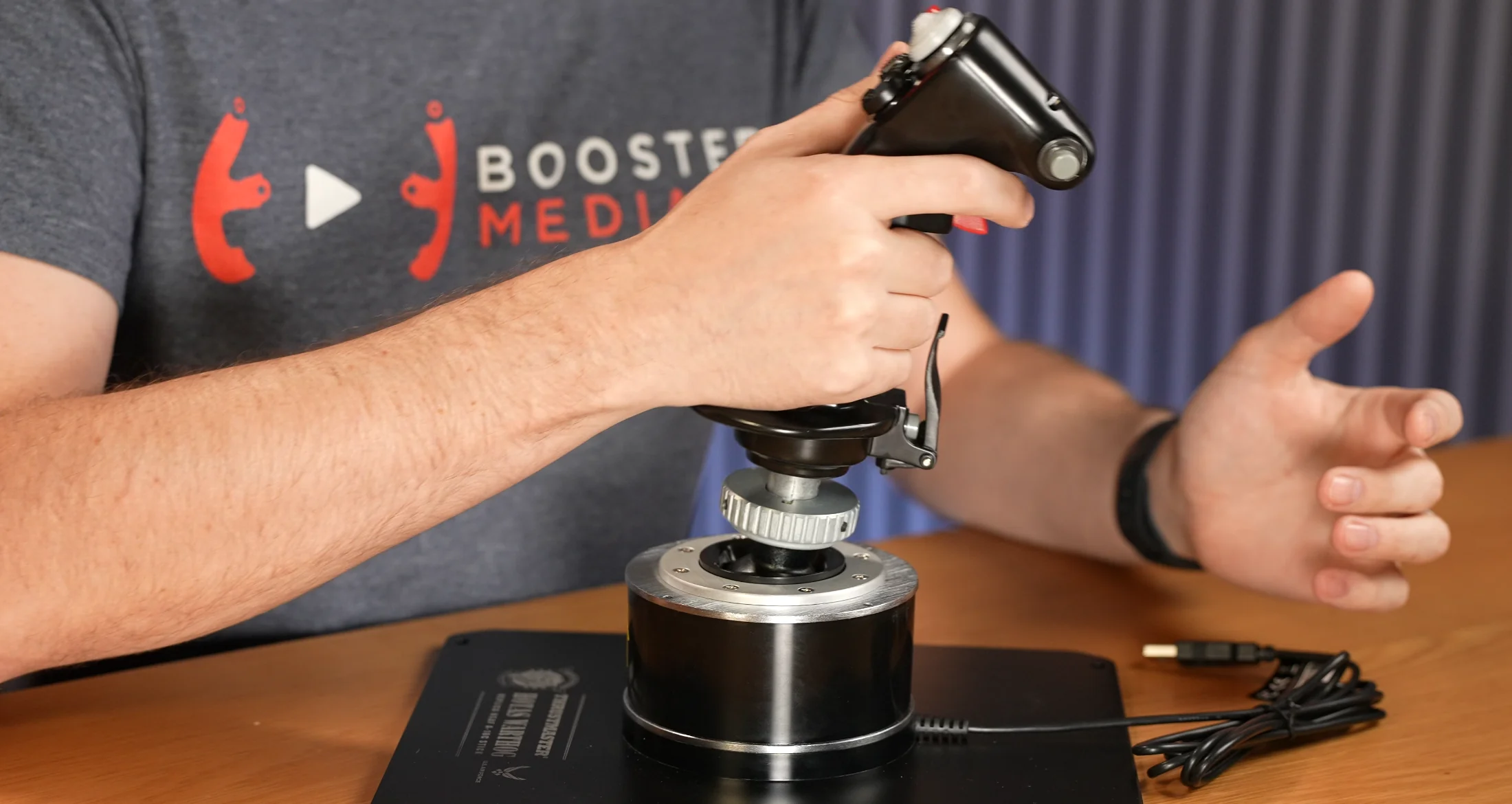
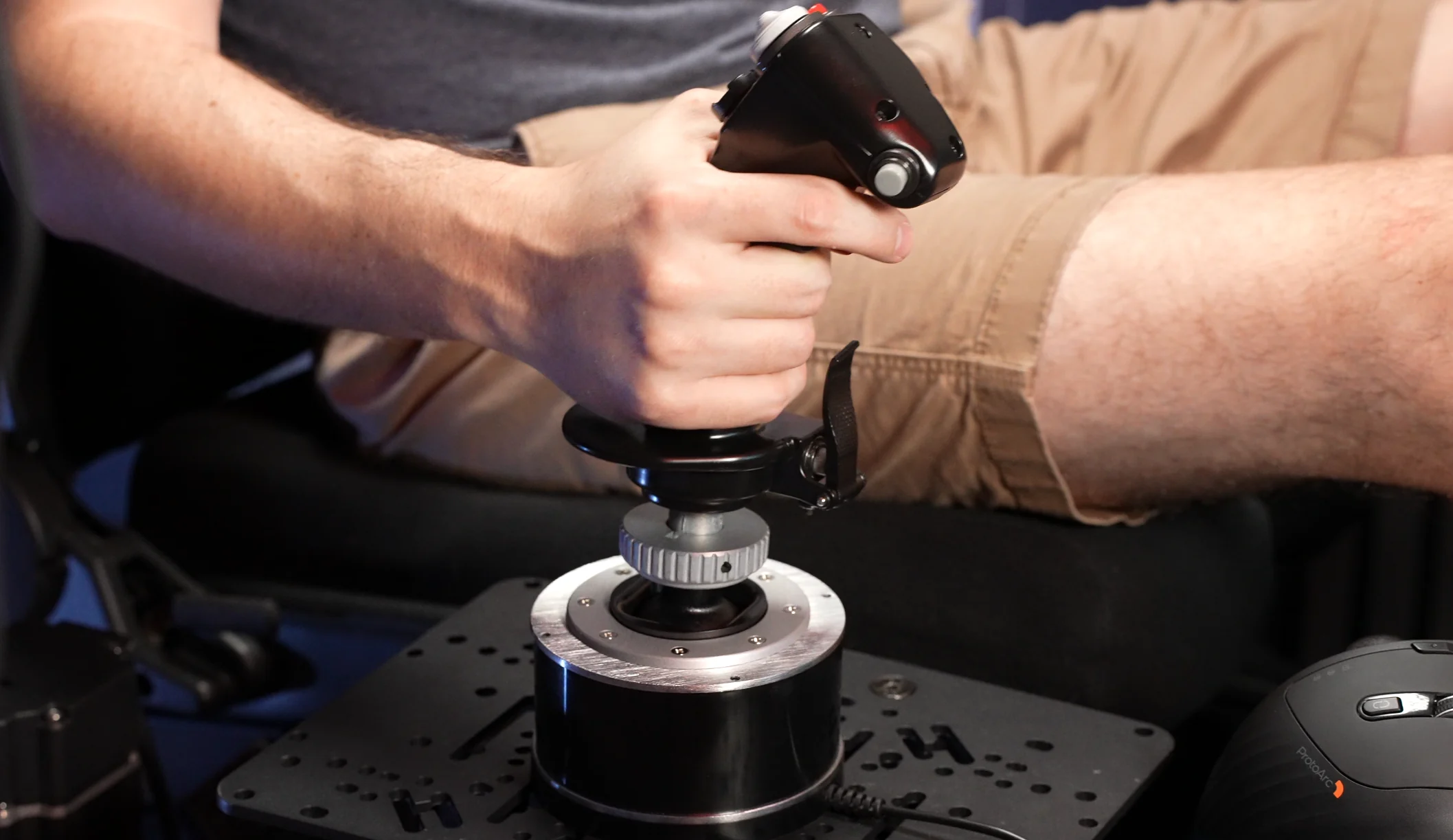
Even after all these years, the grip remains one of the strongest aspects of the entire package. Weighing just over one kilogram, it immediately feels substantial in the hand. The predominantly metal construction still impresses, while the A-10 inspired control layout remains one of the most intuitive military HOTAS designs ever produced.
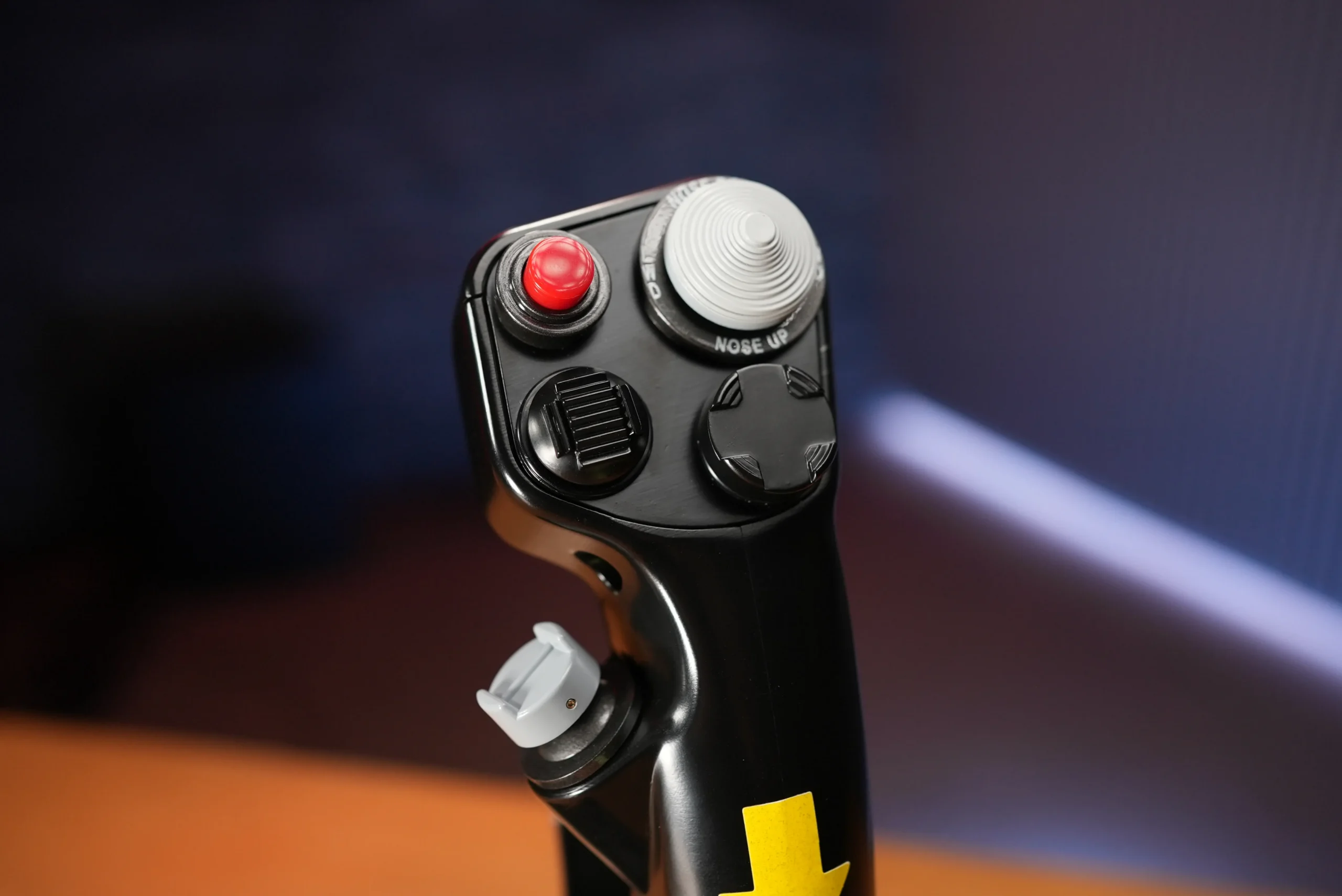
Stick Controls
- 2-stage trigger
- 8-way trim hat
- 4-way DMS
- 4-way TMS
- 4-way CMS with push
- Weapon release button
- Master mode buttons
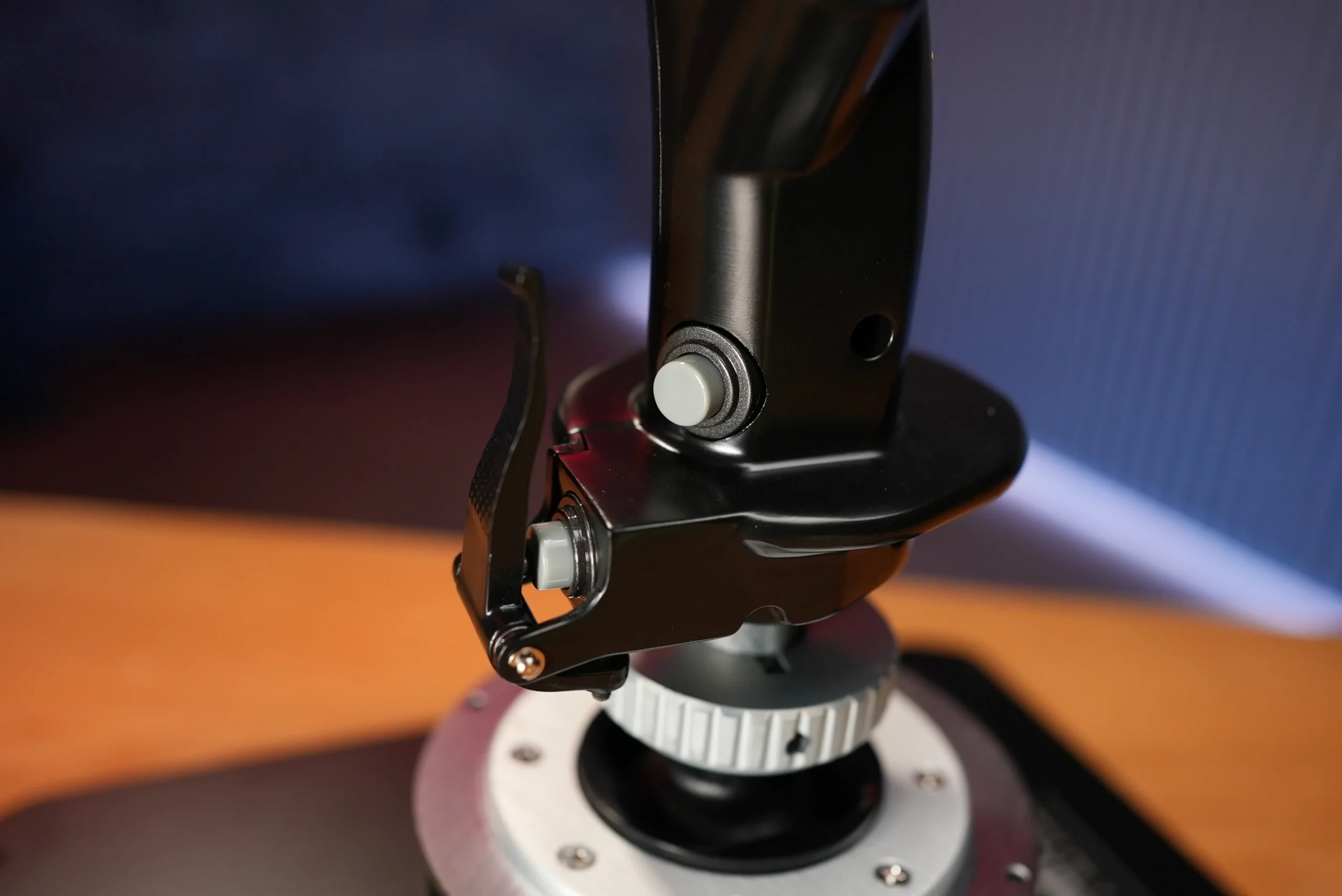
- Paddle switch and pinky switch
The two-stage trigger feels excellent, and every major HOTAS function is positioned within easy reach. Trim, target management, data management, countermeasures and weapon release controls all sit exactly where you’d expect them to be.
Ergonomics
Ergonomically there are signs of age. Palm support isn’t adjustable and there is no twist axis. However, neither of these detract significantly from the overall experience. The grip still feels fantastic and remains one of the nicest joystick grips I’ve used.
The Base: Where History Meets Reality
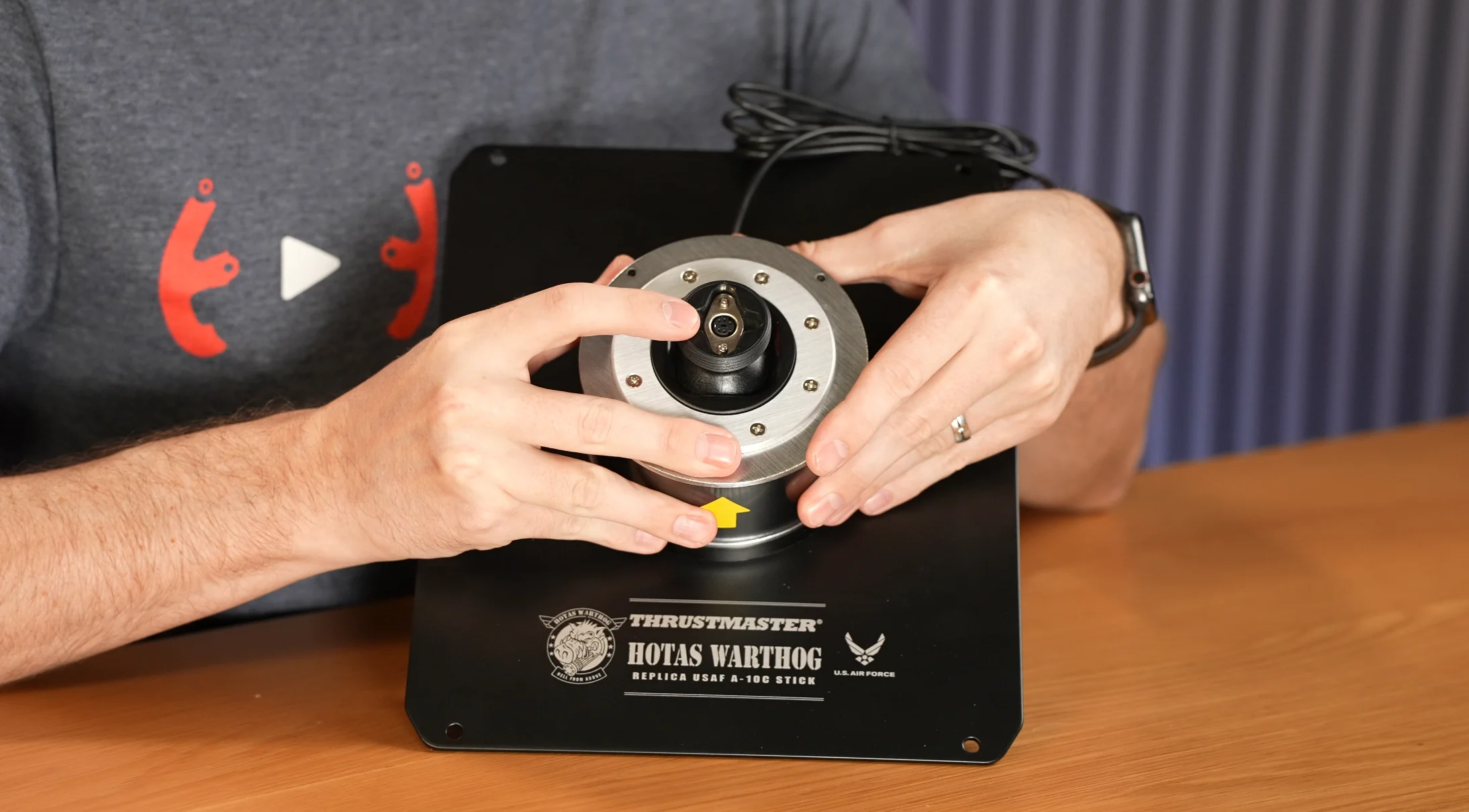
The joystick base is where the Warthog built its reputation. Hall Effect sensors and 16-bit precision were genuinely revolutionary in 2010. Each axis can detect 65,536 positions, allowing extremely fine movement detection and eliminating many of the wear issues associated with traditional potentiometers.
Even in 2026, the sensor technology remains perfectly competitive. The surprise is that the sensors are not the part that has aged. The mechanics are.
The Warthog uses an older ball-style gimbal design incorporating a plastic articulation sphere rather than the adjustable cam-and-spring systems found in modern enthusiast products. Unlike newer bases, there are no interchangeable cams, spring options or damping adjustments.
The result is a stick that still feels solid but exhibits a pronounced centre detent. During normal flying I barely noticed it. During precision flying, however, it becomes much harder to ignore.
To appreciate the Warthog properly, you need to remember the market it launched into. Many simmers were still flying with products such as the Logitech Extreme 3D Pro, Saitek X52 series and various CH Products controllers.
Hall Effect sensors were not common. Metal construction was not common. Near full-scale military replicas were certainly not common.
When Thrustmaster combined all of those features into a single package, the Warthog genuinely felt like the future. It wasn’t simply another controller. It felt like cockpit hardware.
Today those features are far more common, but that doesn’t diminish how significant the product was when it arrived.
The Dual Throttle
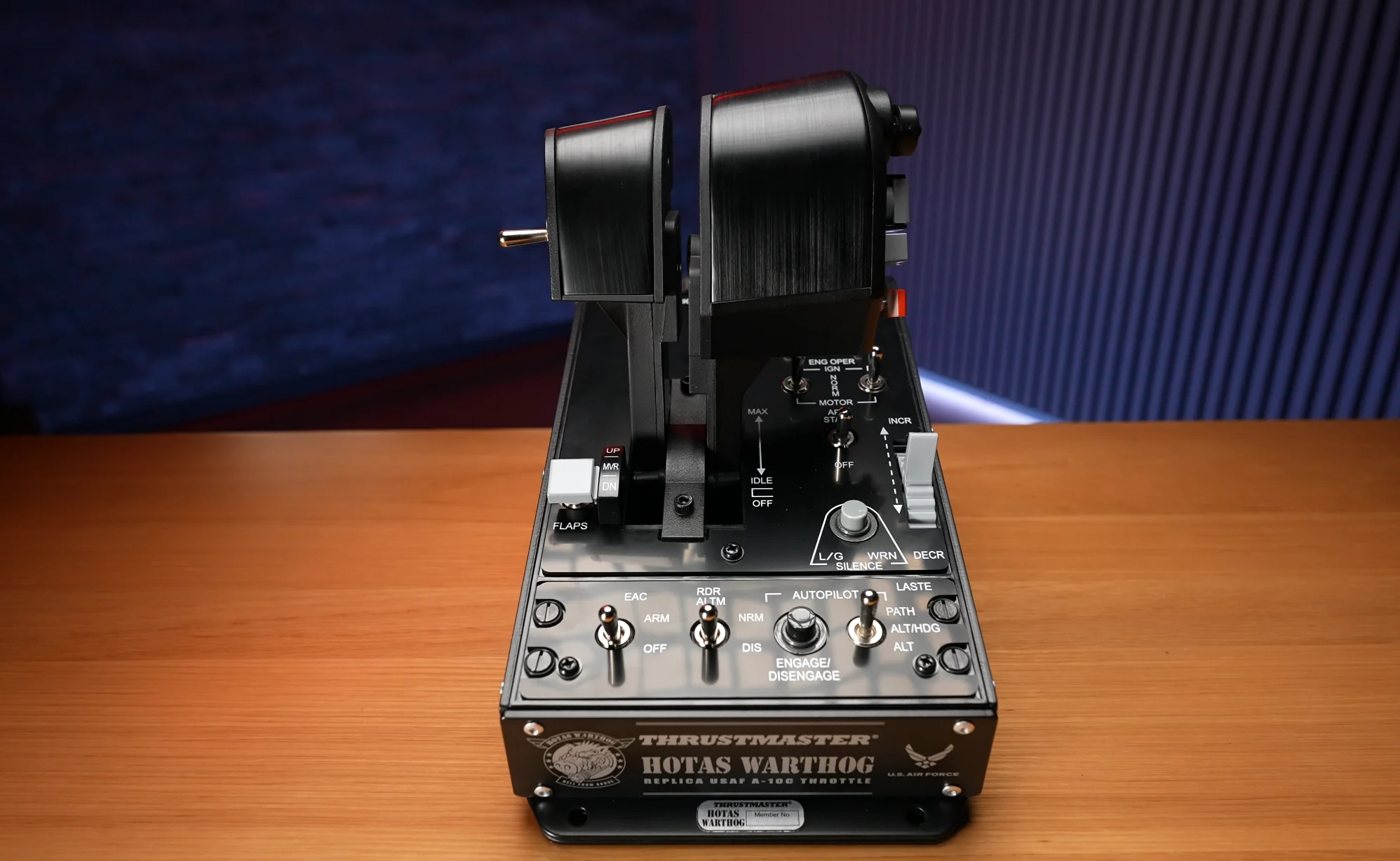
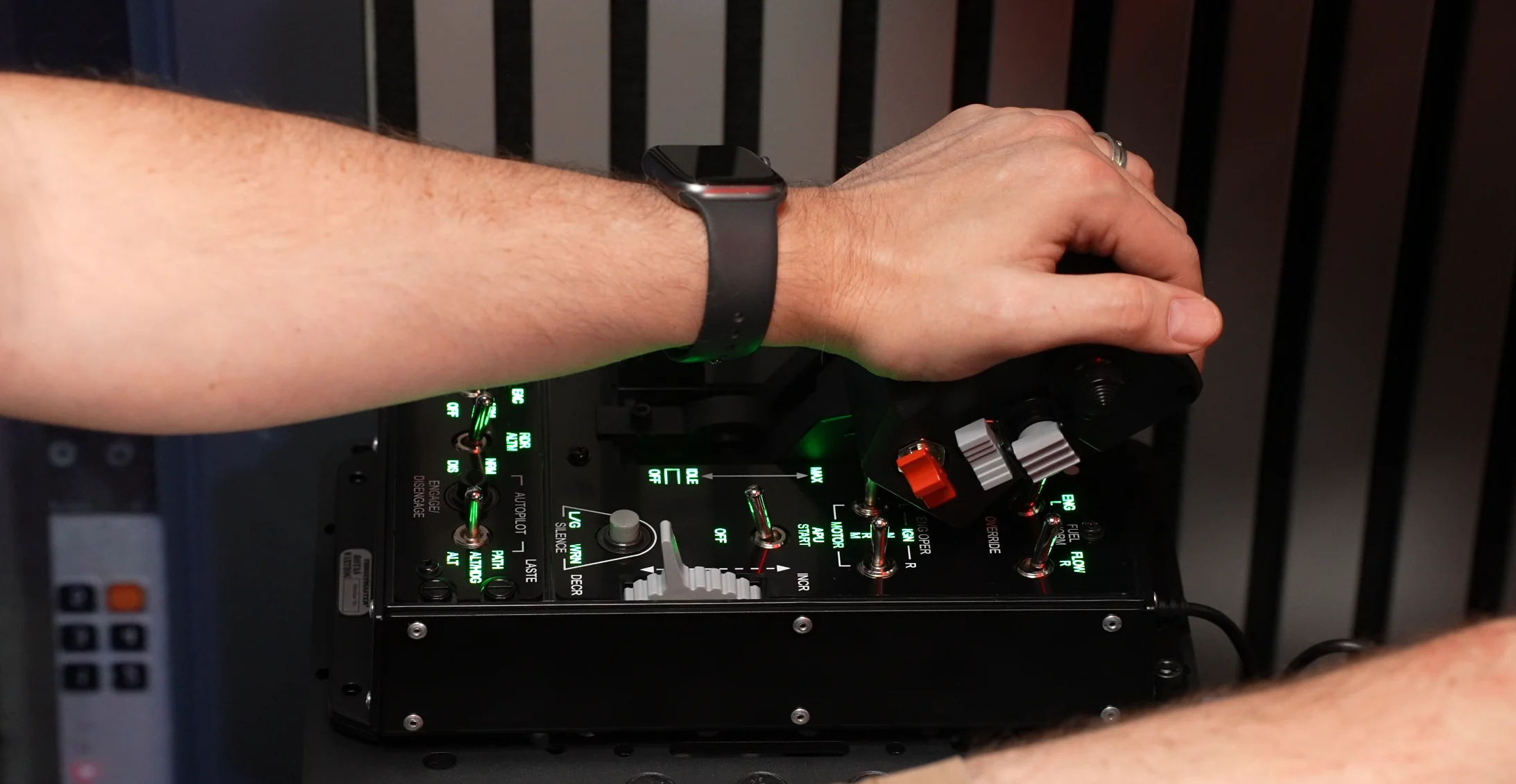
At nearly 4.3 kilograms, the dual throttle remains one of the heaviest consumer throttle systems available. It feels incredibly planted on a desk and shows virtually no tendency to move during operation.
| Control | Type |
|---|---|
| MIC Switch | 4-Way + Push |
| Speed Brake | 3-Position Spring Return |
| Boat Switch | 3-Position |
| China Hat | 3-Position Spring Return |
| Coolie Hat | 8-Way |
| Slew Control | Axis + Push |
| Red Push Button | Push Button |
| Pinky Switch | 3-Position |
| Flaps Switch | 3-Position |
| Fuel Flow Switches | 2 x 2-Position |
| Engine Operate Switches | 2 x 3-Position |
| APU Start | 2-Position |
| Autopilot Selector | 3-Position |
| Autopilot Engage | Push Button |
| Gear Warning Silence | Push Button |
| Slider Axis | Potentiometer |
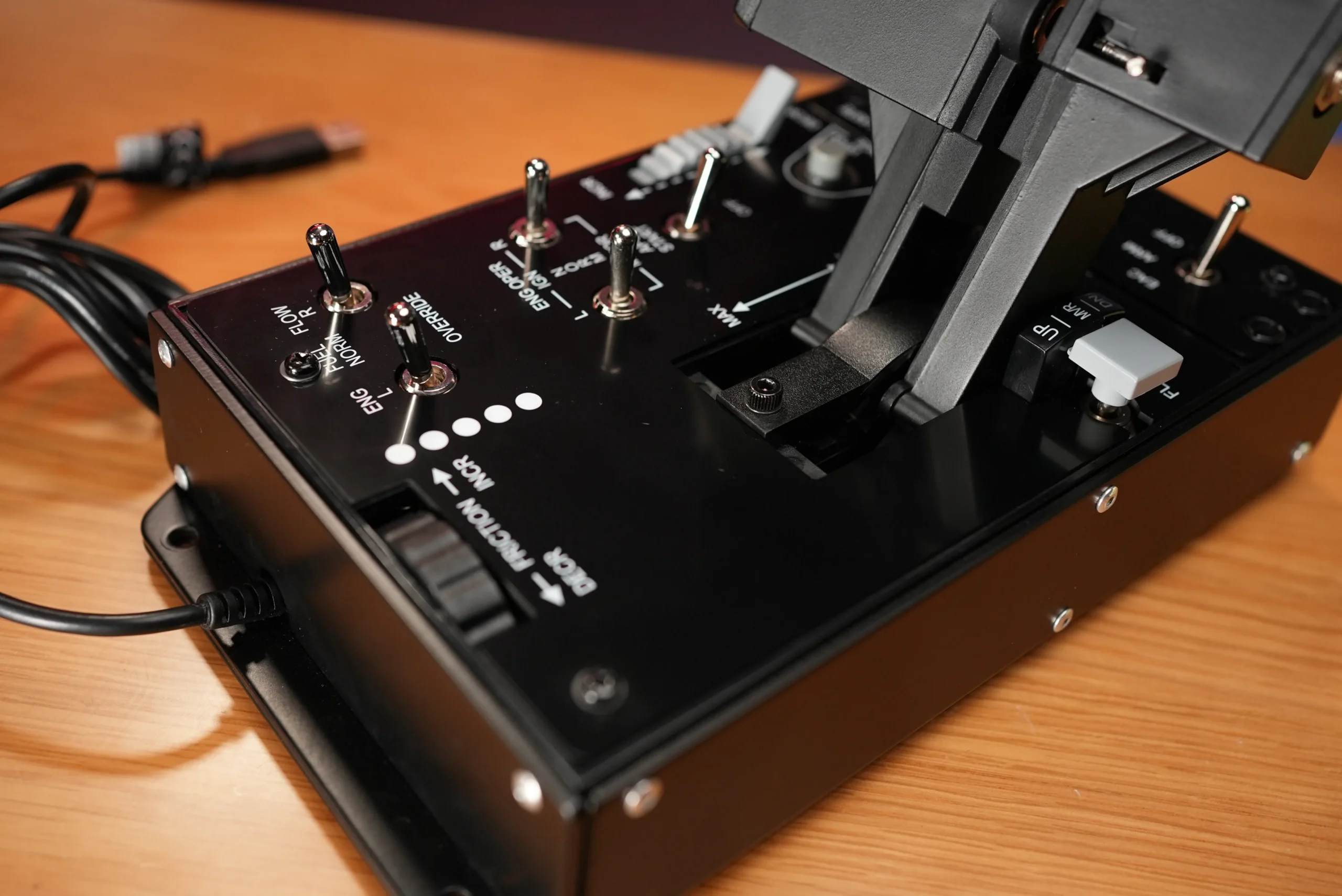
| Friction Control | Rotary Knob (not bindable) |
The movement itself remains smooth and consistent throughout the range. Thrustmaster uses 14-bit Hall Effect sensors providing 16,384 positions of resolution, which is more than sufficient for throttle control.
The highlight continues to be the idle cutoff gates. Just like the real A-10, the throttles must be physically lifted over a gate before entering shutdown. It is a small detail, but one that adds a huge amount of immersion during startup and shutdown procedures.
The optional afterburner detent insert also adds versatility for aircraft such as the F/A-18.
While the throttle remains enjoyable to use, this is where some of the design’s age becomes apparent.
Compared to modern offerings from Winwing and MOZA, the base feels surprisingly sparse. There is a significant amount of unused panel space that modern manufacturers would almost certainly fill with additional switches, encoders and controls.
To be fair, this is largely because the Warthog is attempting to faithfully replicate the real A-10 throttle quadrant. A replica is a replica. However, buyers evaluating it purely as a flight simulation controller may find themselves wanting more functionality.
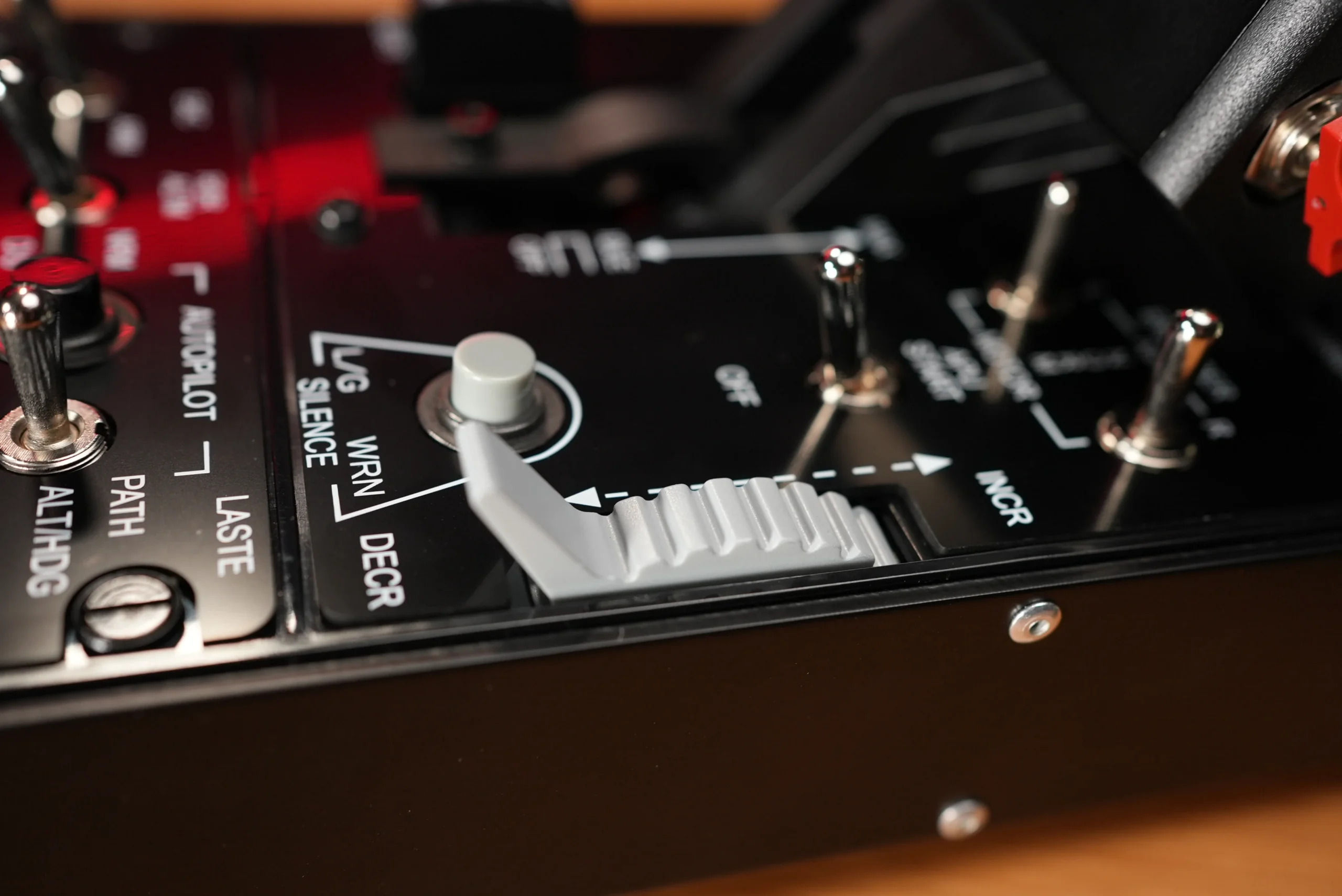
The grey slider on the right side of the base also remains a weak point. During testing I assigned it to zoom and experienced the same minor fluctuations I remembered from owning the product over a decade ago. It’s not a major issue, but it is one of the few components that genuinely feels outdated.
There is also noticeable lateral play in the throttle handles. It doesn’t impact normal operation, but it does slightly detract from the premium feel.
Software
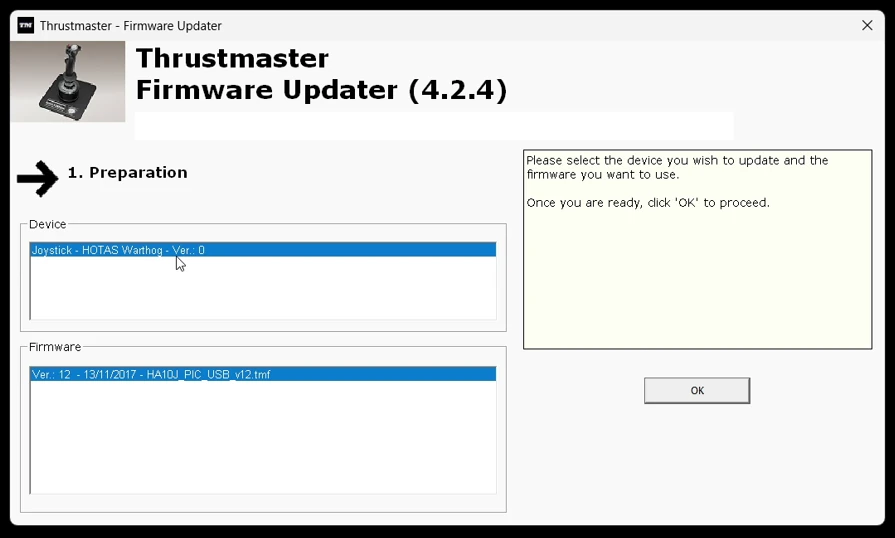
Software support proved to be the weakest part of the experience. The firmware updater failed to correctly update the stick during testing, while TARGET software refused to function correctly under Windows 11.
Thankfully, this isn’t a major issue for most users. DCS, Microsoft Flight Simulator and X-Plane all recognise the hardware directly, meaning many owners will never need to launch TARGET at all.
Compared to modern ecosystems from companies like MOZA, however, the software side of the Warthog feels very dated.
Flying Experience
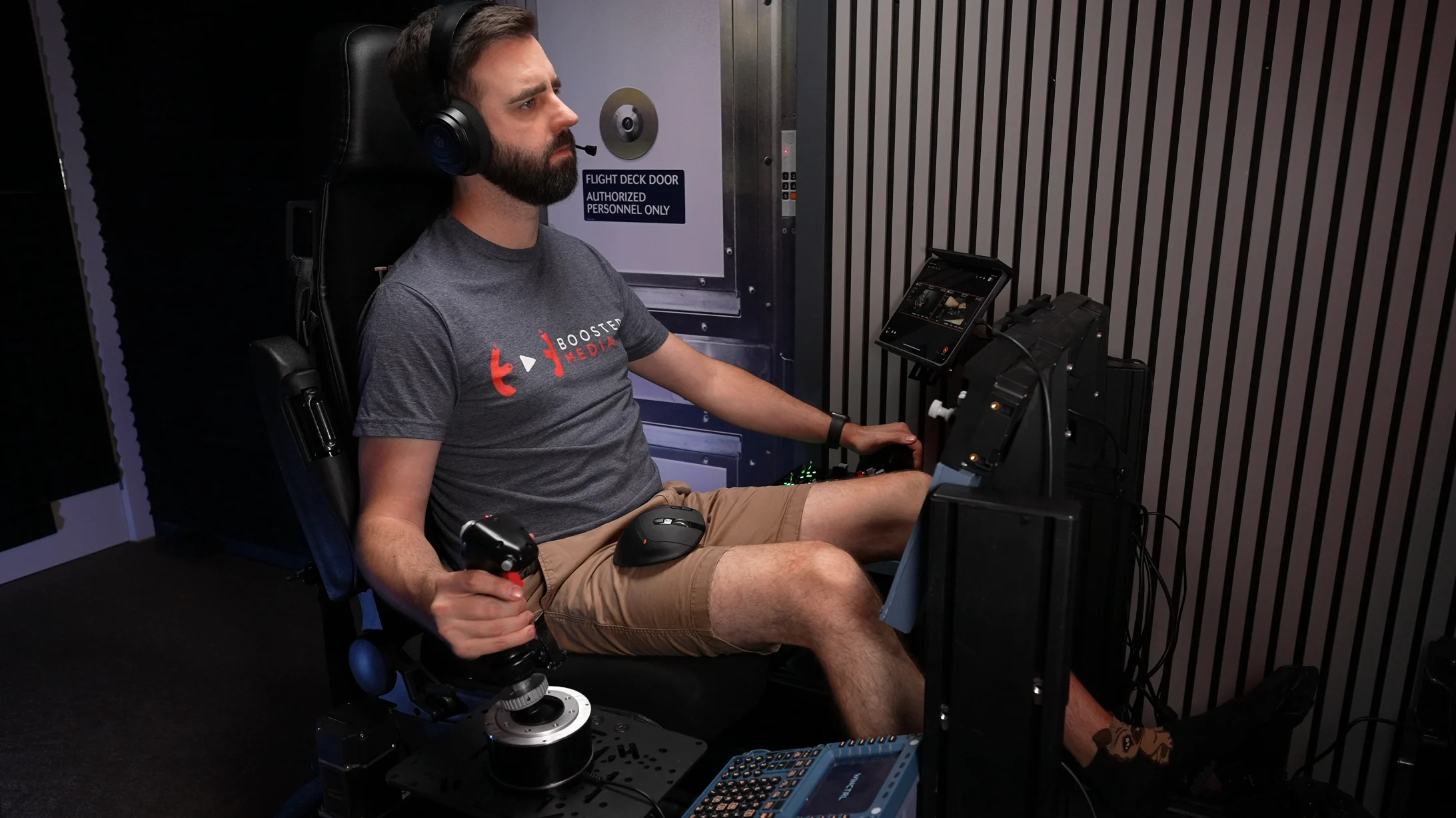
Flying the A-10C brought back a flood of memories. The HOTAS layout remains superb and the aircraft felt exactly as I remembered. Weapon employment is intuitive, gun runs are enjoyable and the stick delivered precise control during general maneuvering.
The throttle performed equally well. The shutdown gates remain a joy to use and the sideways play I noticed during inspection disappeared entirely once I was focused on flying.
Switching to the F/A-18 Hornet highlighted the limitations of the base more clearly. Air-to-air refuelling remains one of my personal nemeses, and it quickly exposed the pronounced centre detent.
During refuelling you’re constantly making tiny corrections. What I found was that the force required to break out of centre would often result in a larger control input than intended. Instead of smoothly easing the aircraft into position, I would find myself correcting the correction, and then correcting the correction to the correction.
This isn’t something I particularly noticed during normal flying. But when you’re trying to delicately slide a probe into a basket while questioning your life choices, it becomes much more obvious.
It’s also the sort of scenario where modern cam-based systems and adjustable spring configurations provide a noticeable advantage.
Verdict
Returning to the Warthog after so many years was a fascinating experience But It hasn’t aged quite as well as I expected.
It’s a bit like revisiting a restaurant you loved as a kid. You spend years remembering how amazing it was, telling everyone about it and building it up in your head. Then you finally go back and realise it isn’t bad at all. In fact, it’s still pretty good. It’s just that a lot of newer restaurants have opened since your last visit. That’s how I feel about the Warthog.
The grip remains fantastic. The throttle still offers some wonderfully immersive interactions. The Hall Effect sensors remain competitive and the overall build quality continues to impress.
But the market has moved on. Today we have cam-based gimbals, adjustable springs, force feedback systems, modular ecosystems and significantly more flexibility. When placed alongside those modern alternatives, the Warthog’s age begins to show.
Yet none of that changes its legacy.
The reason you’re reading this now is because the Warthog was so good that people are still buying it sixteen years after launch. Most gaming hardware struggles to remain relevant for three years. The Warthog survived multiple generations of competitors and helped shape the enthusiast flight simulation market we enjoy today.
If you’re buying your first premium HOTAS in 2026, there are stronger options available.
But if you’re looking for a piece of flight simulation history that still delivers a genuinely enjoyable A10 experience, the Warthog absolutely earns its legendary status.
The Warthog isn’t the future anymore, but it absolutely helped create it.
7/10
NEWSLETTER
Stay up to date with new releases And major updates
Thanks. Please check your email to confirm your subscription.
Sim RACING
Discount Codes
Also Sells
Ascher Racing, Gomez Sim IndustriesAlso Sells
Ascher Racing, Base Performance Simulators, BDH Race Sim Hardware, ButtKicker, Cube Controls, D-BOX, Delta Sim-Tech, Gomez Sim Industries, Heusinkveld, ignitiON Controls, Max Papis Innovations, MME Motorsport, Moza, P1Sim, PlaySeat, Precision Sim Engineering, Qubic System, Simucube, Sparco, Thrustmaster, VNM Simulation, VPG SimAlso Sells
Alien Mods, Asetek, ButtKicker, CAMMUS, Conspit, Cube Controls, D-BOX, Heusinkveld, LeoXZ, Moza, Racebox, Simagic, Simnet, Unreal Racing, VNM SimulationAlso Sells
3DRAP, ANOTHER WAY, Ascher Racing, Asetek, BavarianSimTec, BDH Race Sim Hardware, ButtKicker, Conspit, Cooler Master, Cube Controls, D-BOX, Dayton Audio, Delta Sim-Tech, DOF Reality, Elgato, ESPORTSIM SRL, Fanatec, Gomez Sim Industries, Heusinkveld, HORI, KGL Creation Lab, LeoXZ, MME Motorsport, Moza, Next Level Racing, Nitro Concepts, NOVUS, O-ROUGE, P1Sim, Pimax, PlaySeat, Prosimu, PXN, Qubic System, Raslution, ResTech, Rexing, Sabelt Sim Racing, SG Racing, SIM FACTORY, Sim Racing Studio, Sim-Lab, Simagic, SIMFORGE, SIMGRADE, SimRep Engineering, SIMTRECS, Simucube, Simufy, SIMXPRO, SOELPEC, Sparco, Thrustmaster, VIRPIL, VNM Simulation, VPG Sim, VRSAlso Sells
BavarianSimTec, MME Motorsport, Qubic System, Sabelt Sim RacingAlso Sells
Ascher Racing, Asetek, BDH Race Sim Hardware, ButtKicker, Conspit, D-BOX, Dayton Audio, Fanatec, Heusinkveld, Moza, Nitro Concepts, Pimax, PlaySeat, Qubic System, Rexing, Sabelt Sim Racing, Sim-Lab, Simagic, Simucube, VNM Simulation, VPGAlso Sells
Cobra, PRO SIMRIG, Qubic System, Simagic, SparcoAlso Sells
Asetek, BJR, ButtKicker, Cube Controls, Fanatec, Moza, Next Level Racing, Thrustmaster, Turtle BeachAlso Sells
Asetek, Conspit, Cube Controls, SIMGRADEAlso Sells
BavarianSimTec, Conspit, Cooler Master, Cube Controls, DOF Reality, Moza, Pimax, Qubic System, Racebox, ResTech, Sigma Integrale Motion Systems, SimucubeAlso Sells
Conspit, Cube Controls, D-BOX, Elgato, Moza, Pimax, PlaySeat, Sigma Integrale Motion Systems, Simagic, Simucube By purchasing through links on this page you’ll be supporting Boosted Media at no additional cost to you! This option is available for a huge range of Sim Racing gear.



Thrustmaster TCA Yoke Pack Boeing Edition – Detailed Review
What is it? The Thrustmaster TPR Pendular Rudder is a suspended high quality pendular mechanical rudder system for flight simulation. Featuring Hall Effect magnetic sensors
Thrustmaster TPR Pendular Rudder Pedals – DETAILED REVIEW
What is it? The Thrustmaster TPR Pendular Rudder is a suspended high quality pendular mechanical rudder system for flight simulation. Featuring Hall Effect magnetic sensors

Thrustmaster Viper TQS Mission Pack Review
What is it? The Thrustmaster Viper TQS Throttle offers F-16 Viper enthusiasts a detailed replica, while the Mission Pack version enhances functionality with additional buttons,

Thrustmaster AVA FA-18 Hornet Flightstick Review
What is it? The Thrustmaster AVA FA-18 Hornet Flightstick is a well crafted 1:1 scale replica of the famous FA-18 flight stick. Priced from $950
MORE REVIEWS and Discounts


If these Sim Racing Reviews have helped you find the best racing simulator gear for your sim rig, please consider using the affiliate links on this website. By purchasing through these links, a small commission will come back to Boosted Media at no additional cost to you. This is how Boosted Media keeps providing content to the Sim Racing community.
About The Author
-

Sean is a pilot with over two decades of experience in aviation and senior technology roles within Airlines and Non-Profit sectors. He's a lifelong flight simmer and avid VR user, blending his passion for flying with cutting-edge technology. From cockpit to virtual skies, Sean loves all things Tech and Aviation.