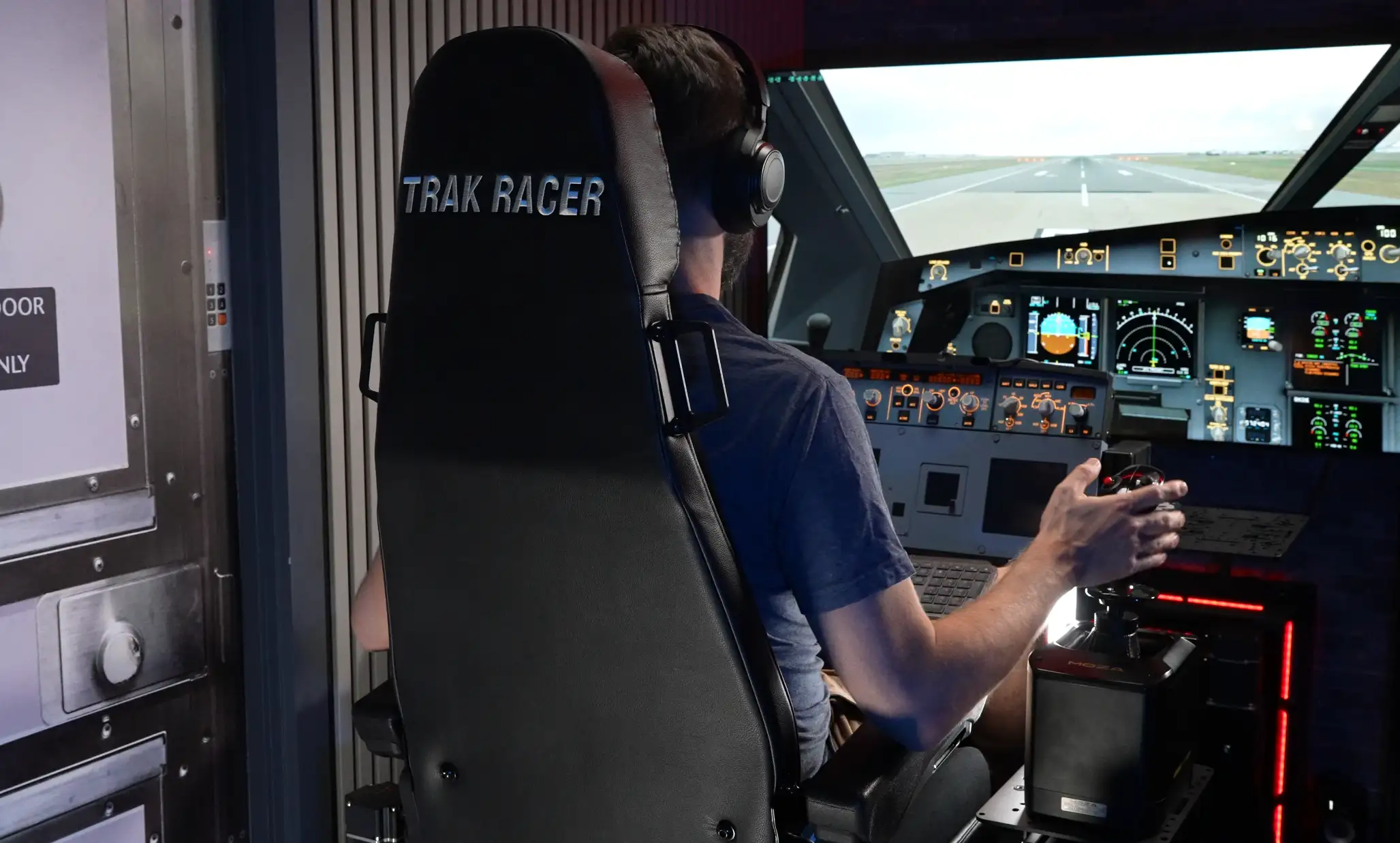
A Good Budget Flight Sim Seat?
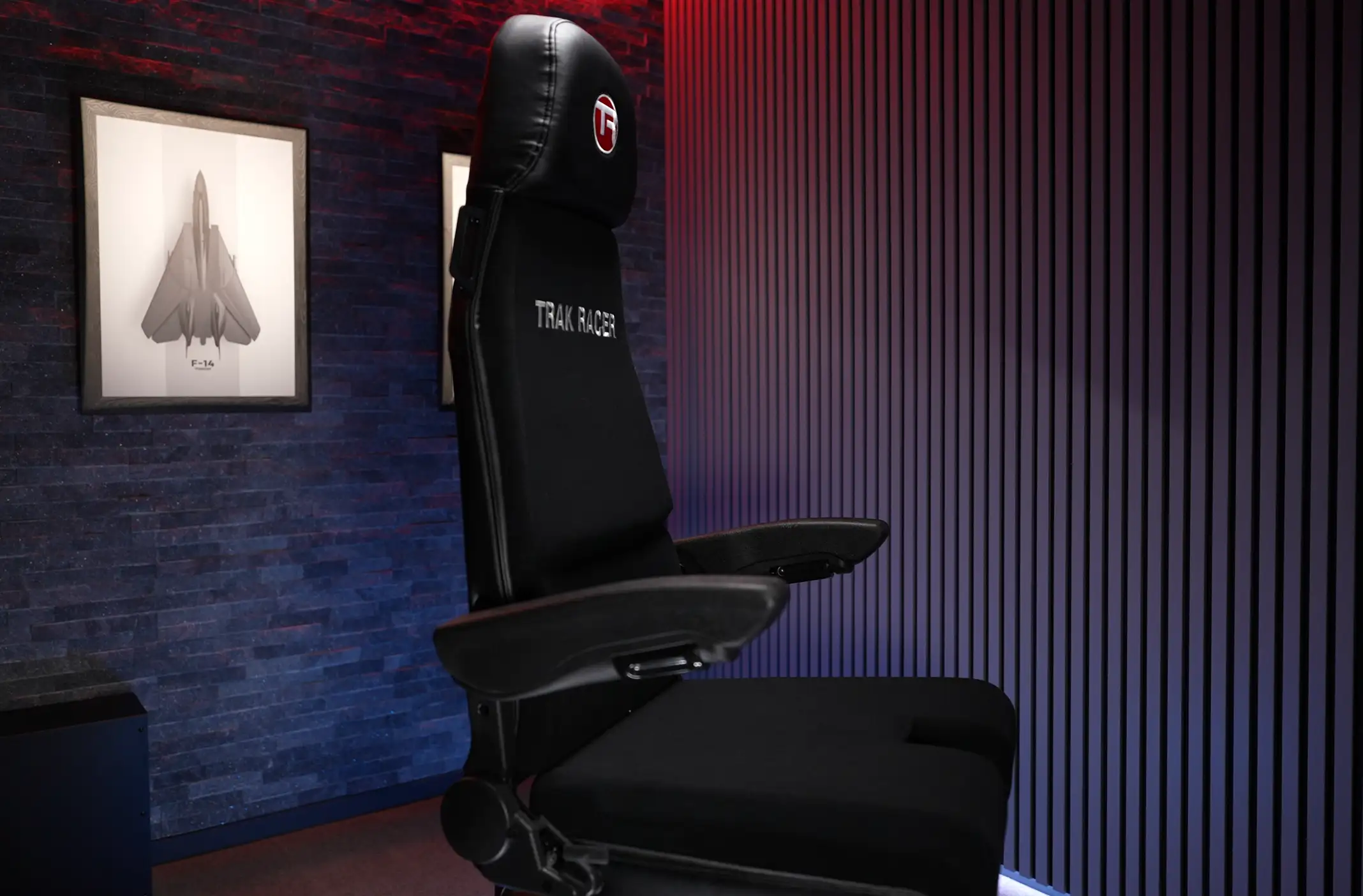
If you’re building a flight simulator cockpit, one of the most overlooked parts of the setup is the seat. Yokes, throttles, rudder pedals, and flight sticks tend to get all the attention, but the thing you’re actually sitting on matters just as much during longer sessions. That brings us to the Trak Racer Flight Simulator Seat, one of the more affordable seats in the Trak Racer range and one designed specifically for flight sim use.
Unlike a typical racing seat adapted for flying, this one includes a centre stick cutout, adjustable arm rests, seat belt mounting points, and a reclining backrest. On paper, it offers a lot for the money. The real question is whether this is a genuinely good-value budget flight simulator seat, or just a compromise that leaves you uncomfortable halfway through a long session.
Have our Trak Racer reviews helped you decide what the best sim racing gear is for you?

Please consider using the links on this page to make your purchase.
By doing so you’ll be supporting Boosted Media at no additional cost to you! This option is available for a huge range of Sim Racing gear.
Pricing
The Trak Racer Flight Simulator Seat retails for $299 AUD or $269 USD. At the time of review, Australian buyers could pick it up for $249 AUD during a sale, while international pricing appeared to remain unchanged. Shipping is additional.
That places it at the cheaper end of the Trak Racer lineup, which makes it an attractive option for simmers looking to build a dedicated cockpit without blowing the budget.
What’s in the Box
The seat arrives well packaged and reasonably well protected. Assembly is required, but the process is fairly straightforward and should be manageable for anyone who has put together an office chair or sim rig seat before.
In the box you get:
- Seat back with adjustable arm rests already attached
- Metal seat base with centre stick cutout and dual recline mechanisms attached
- Left and right inclined seat fixing brackets with around 5 degrees of tilt
- 4 U-shaped brackets
- Left and right plastic recliner mechanism covers
- Assorted hex screws, bolts, washers, and tools
- A card linking to the Trak Racer manuals repository
The manual is simple enough to access either through the included card or directly via the Trak Racer product page. The process takes around ten steps across five pages and is easy enough to follow.
Assembly Experience
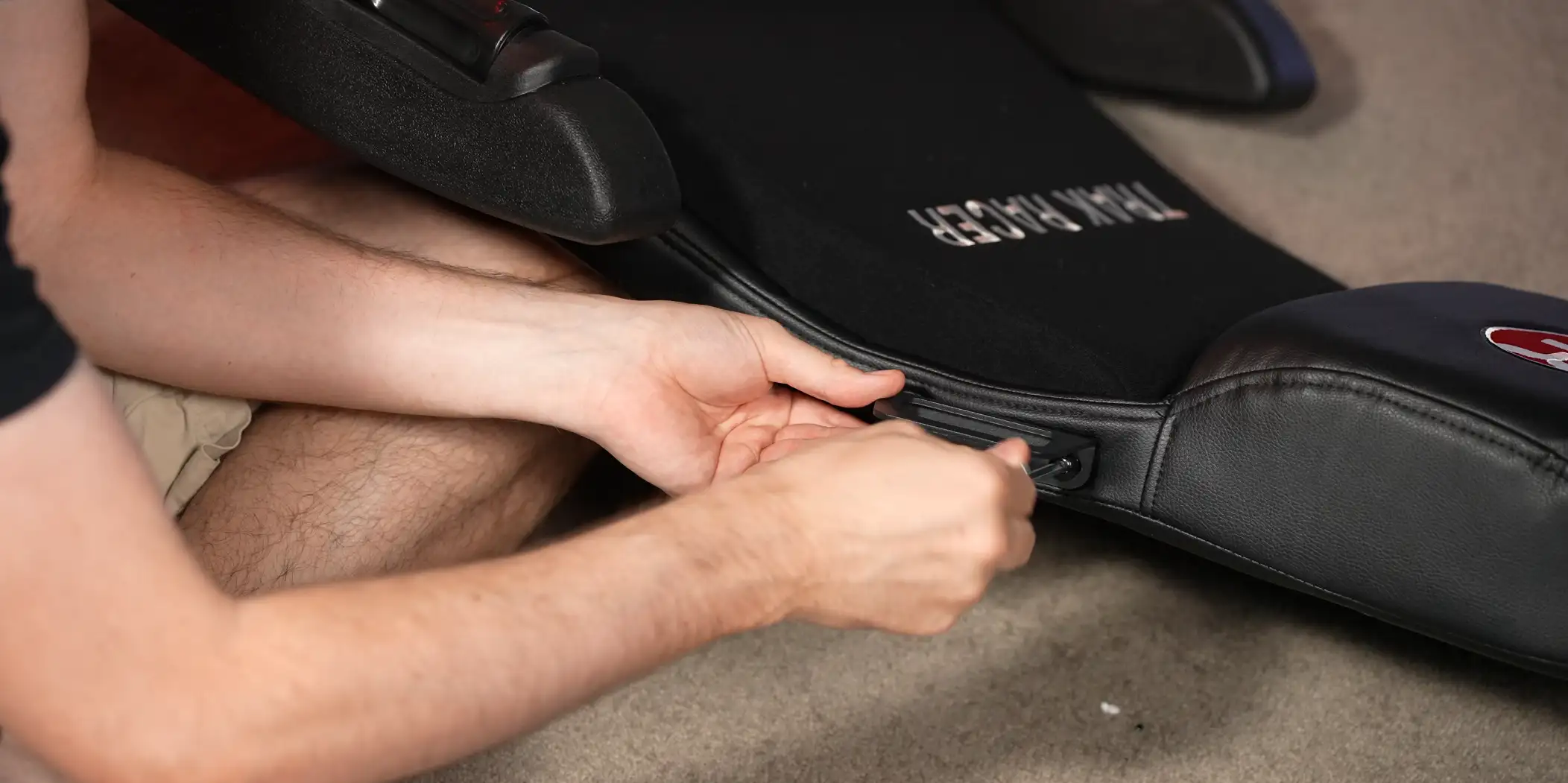
Assembly is mostly straightforward. The reclining mechanism comes pre-attached to the backrest, so the main part of the job is lining up the lower seat section and securing it in place. Once built, mounting the seat onto rails is also simple, requiring four bolts, one at each corner.
One thing worth noting is that, on my review unit, the reclining mechanism had not been fully tightened from the factory. After an initial sit test, I had to remove the plastic covers and go back over the bolts to properly secure everything.
That aside, installation was easy. Because I use a seat slider on my rig for easier entry and exit, I only used the included inclined seat fixing brackets and did not need the extra U-shaped brackets.
Build Quality
For the money, the overall build is decent, but there are definitely some compromises.
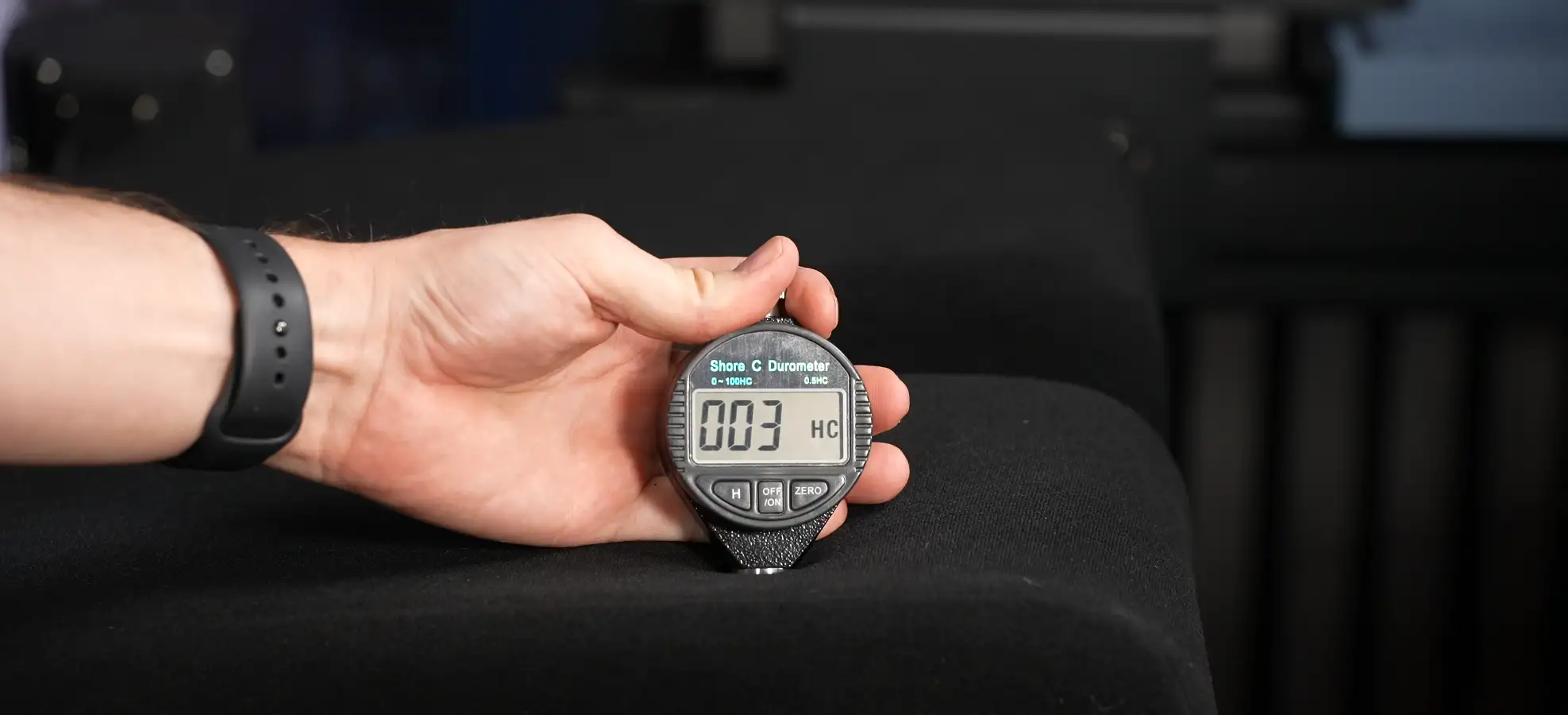
The seat base cushion and backrest cushions are one-piece foam pads covered in a felt-like fabric. It is slightly firmer than some other Trak Racer seats I’ve used. Using a durometer, or what I jokingly called the Numb-Bum Index, both foam cushions measured 3.5, compared to 2.5 on my older Trak Racer Recliner Sim Racing Seat. That makes this seat noticeably firmer.
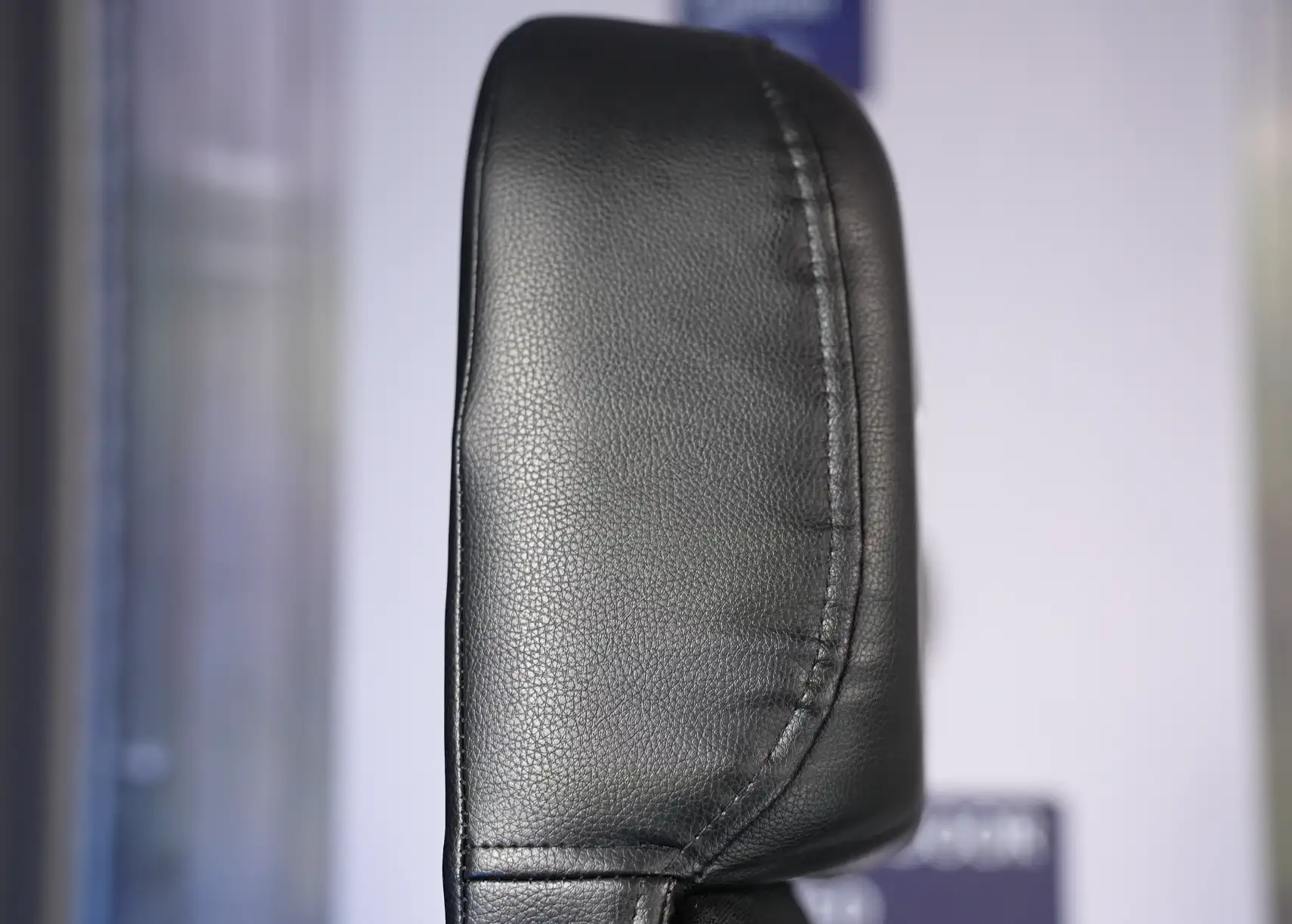
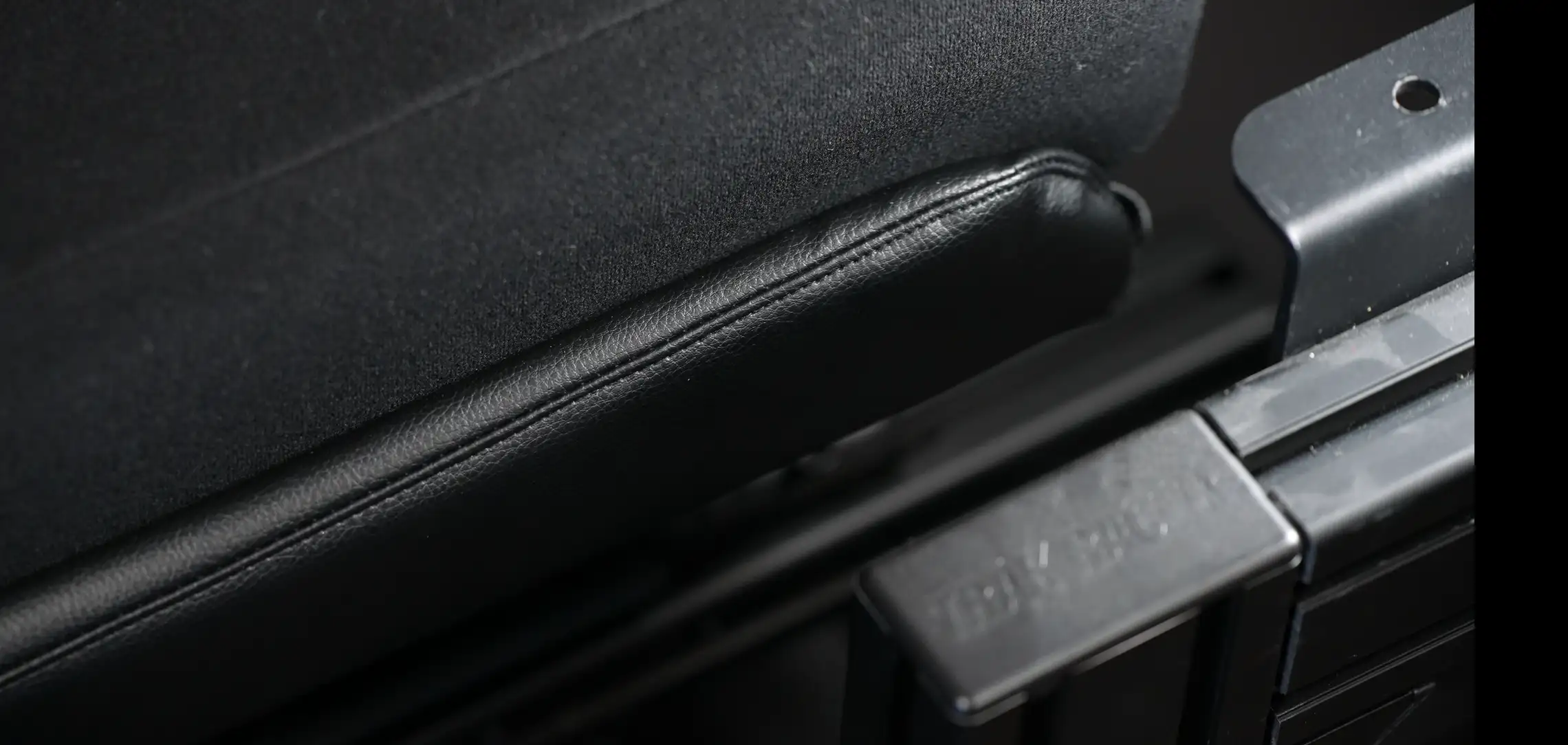
The synthetic leather used around the sides, back, and headrest feels similar to the polyurethane-coated material commonly found on cheaper gaming chairs. The good news is that it is placed in areas that do not see huge amounts of flex, which should help with durability. The bad news is that it still feels like a budget material.
The headrest itself is firm, measuring 9 on the squishometer, though still softer than the seat it replaced.
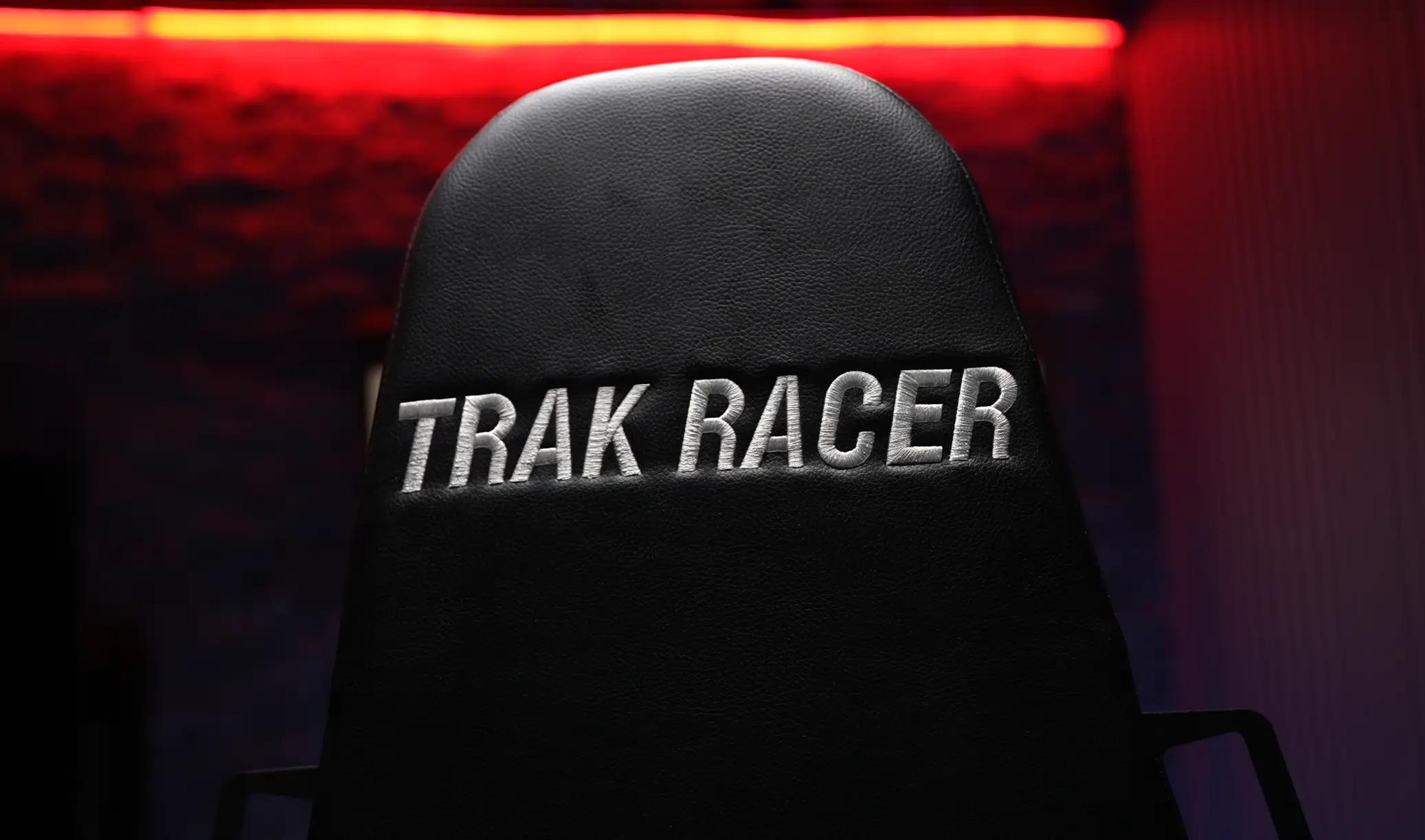
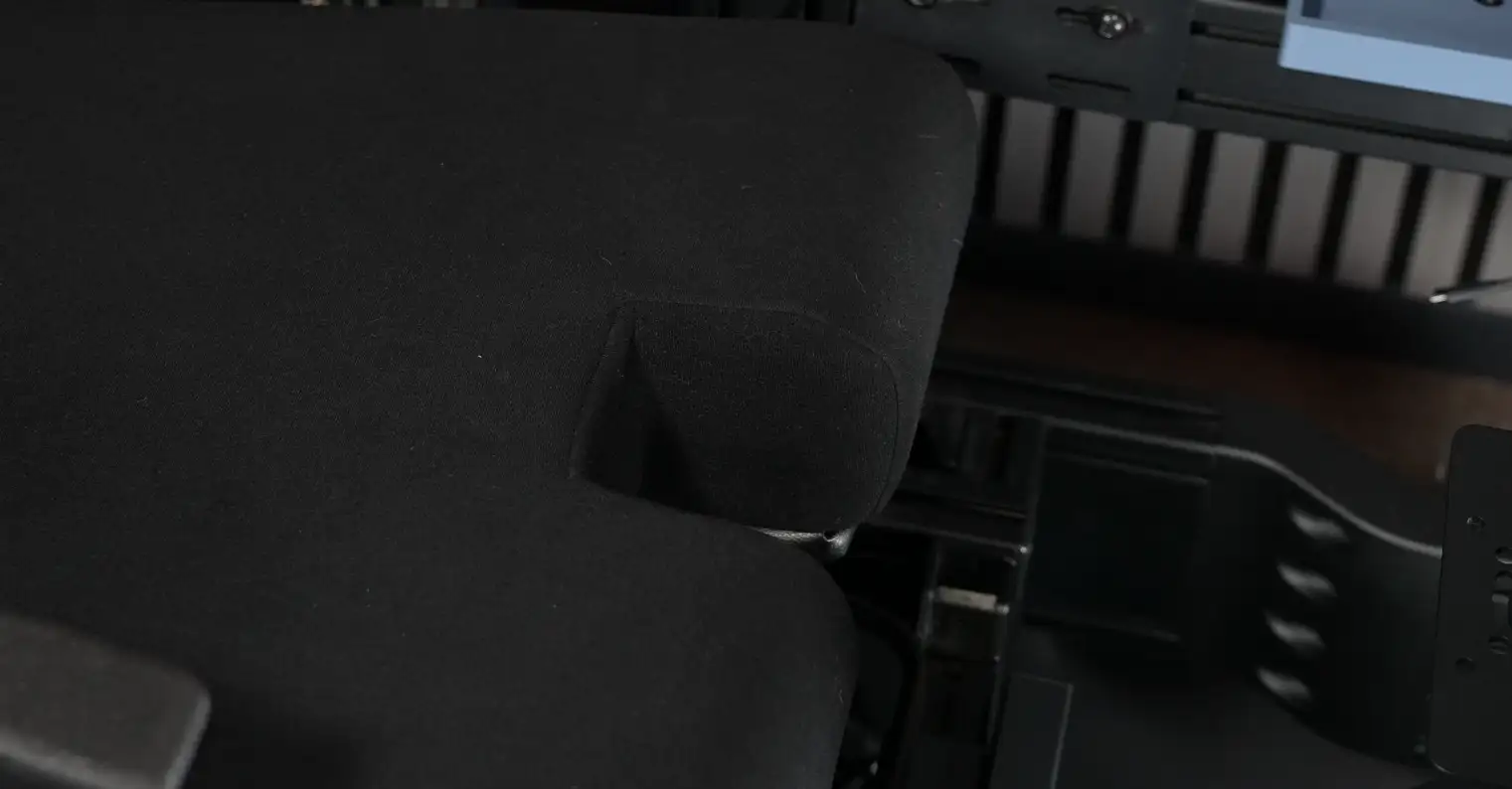
In terms of finish, the stitching is generally acceptable around most of the seat, but quality drops off around the rounded upper headrest area. There is some uneven stitching and visible creasing there, particularly under strong studio lighting.
Arm Rests and Seat Belt Mounting Points
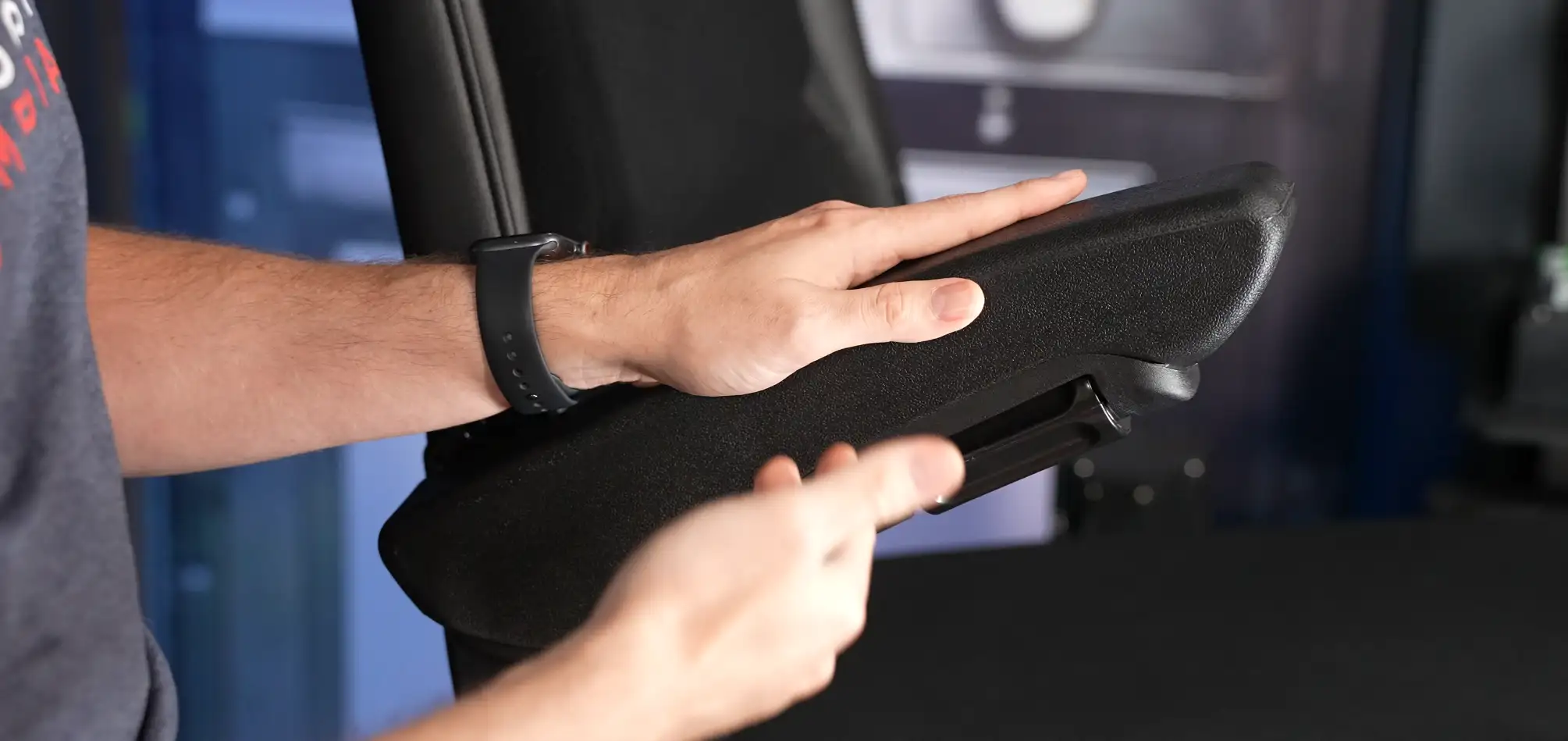
One of the stronger features of the Trak Racer Flight Simulator Seat is the inclusion of adjustable arm rests. These measure 37 cm long, or around 14.5 inches, and sit almost flush with the backrest when folded up. When raised, you can adjust their angle using the rotating mechanism built into the mount.
For flight sim use, they work well. Whether flying with a side stick or simply wanting somewhere to support your arm while using a throttle, the arm rests help reduce shoulder strain during longer sessions.
The side openings in the seat are also not grab handles, but dedicated seat belt mounting points. This is a smart addition, as it gives you the option to add harnesses without needing to modify the seat.
Recline Mechanism and Flex
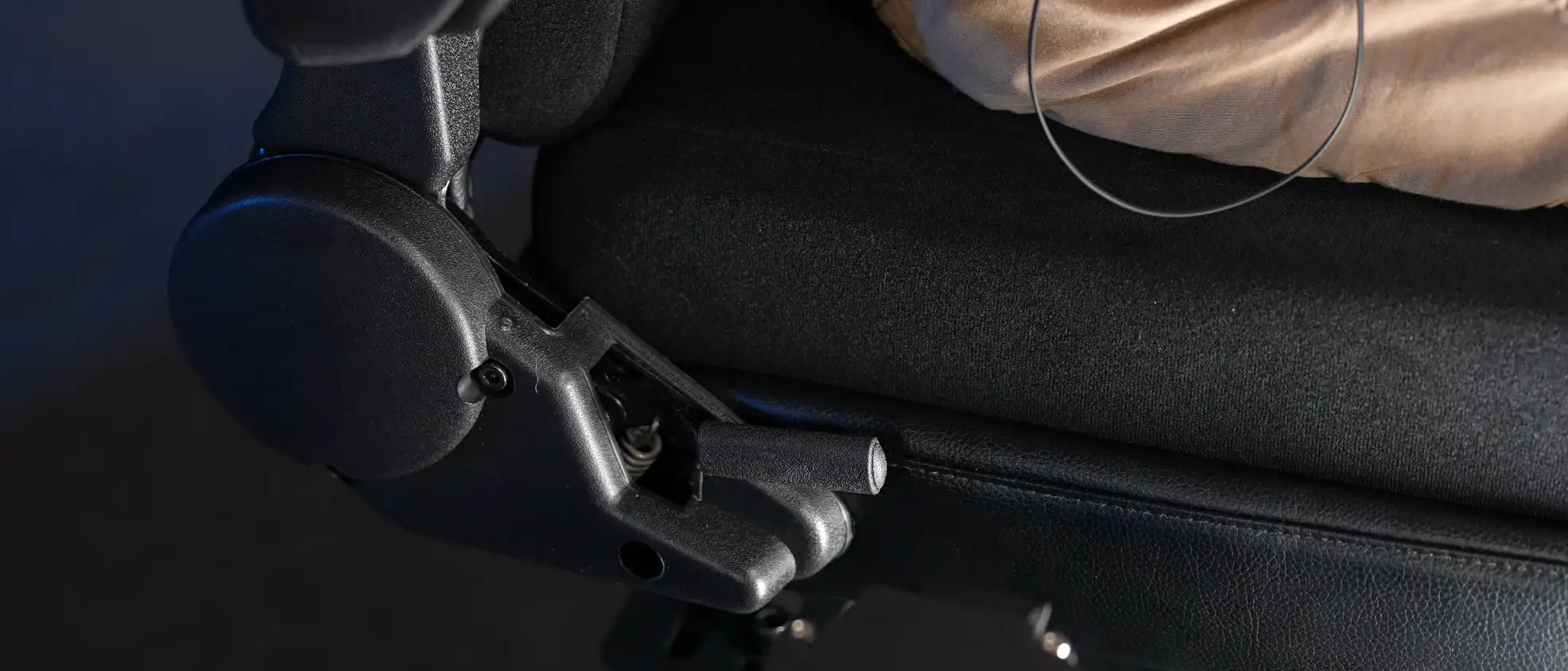
The backrest is supported by dual spring-loaded recline mechanisms, one on each side. To adjust the seat, you need to lift both plastic handles and use your back to move the backrest into position.
This works, but it is not the most user-friendly system. The handles are small, sit in a fairly tight space, and can be awkward to reach, especially if you have larger hands. Compared to a single-sided recline release, this setup feels fussier than it needs to be.
The springs themselves are strong enough to return the backrest to the upright position from any angle, and the seat can recline fully flat with a bit of effort.
There is also some flex in the seat back under heavier load. In normal flight sim use, it is not especially noticeable. Under stronger braking forces in a racing sim setup, though, you would definitely feel it.
Centre Stick Cutout: A Key Feature for Flight Sim Use
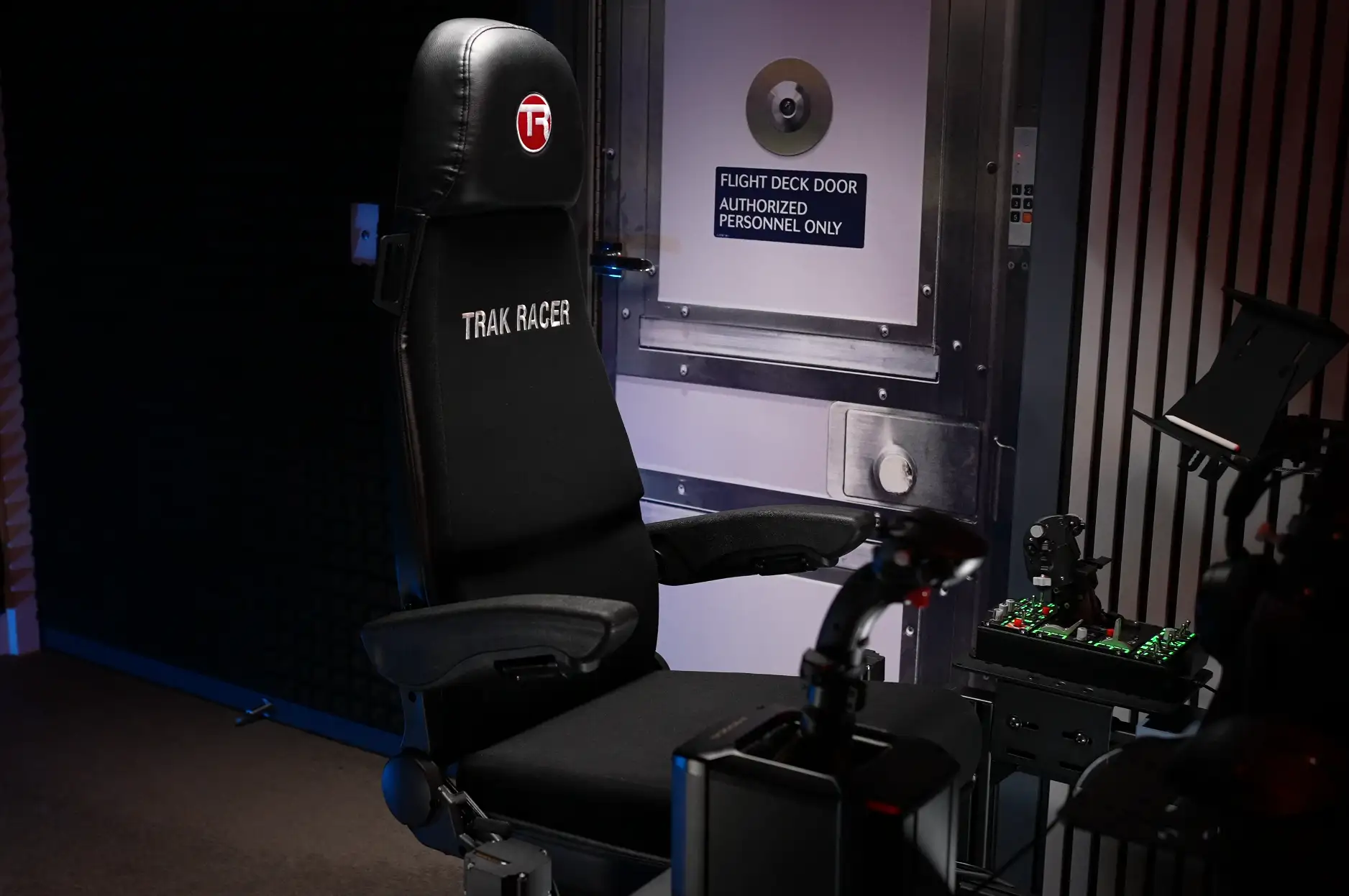
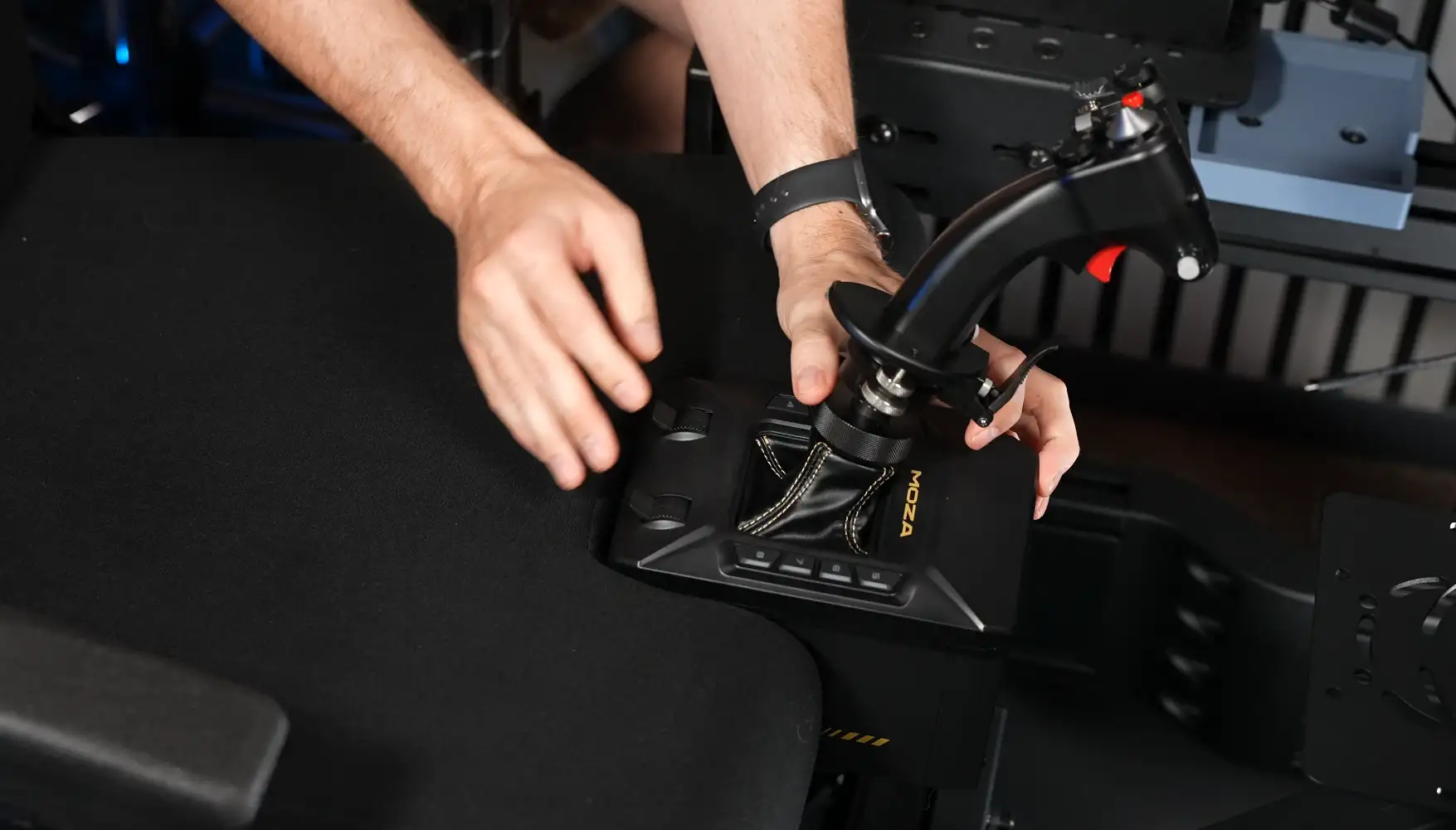
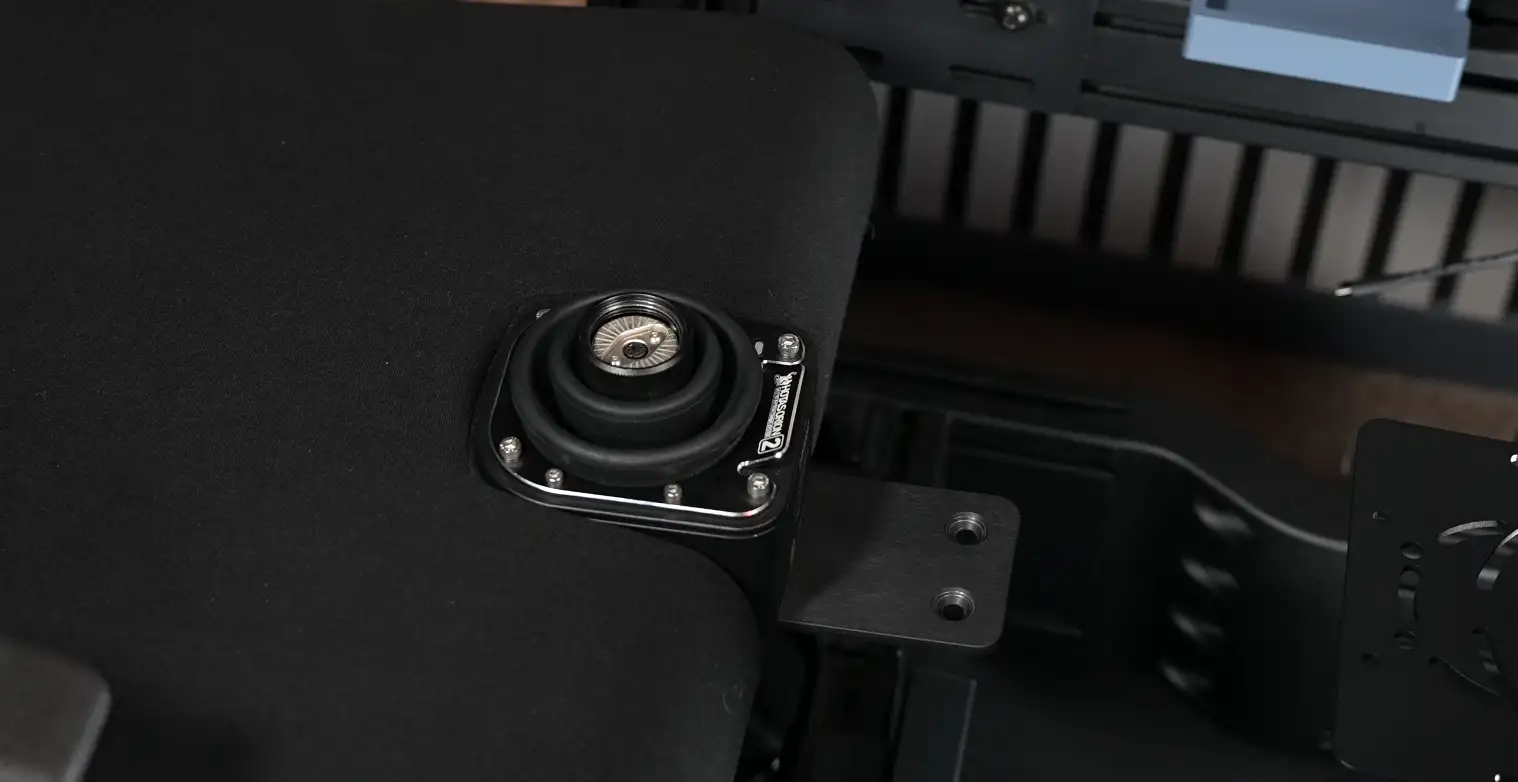
The main feature that separates this seat from a standard racing seat is the centre stick cutout. This is designed specifically for mounting a central joystick between your legs, making it more suitable for military aircraft, helicopters, and other aircraft that use a centre-mounted control stick.
The dimensions of the cutout are:
- 9.5 cm wide
- 12 cm deep
- 14.5 cm high from the metal base to the top of the uncompressed cushion
This gives you a useful opening for a variety of joystick bases, though compatibility does depend on the size of the base you are trying to install.
Joystick Base Compatibility
In testing, some joystick bases fit very well.
The WINWING Orion 2 looks almost made for this cutout.
The Thrustmaster AVA Base also fits comfortably.
The Thrustmaster Warthog base fits with even more room to spare.
Larger force feedback joystick bases are a different story. Something like the MOZA AB6 or MOZA AB9 becomes far more difficult to work with. Even if the base fits between the cushions, the limiting factor becomes the metal cutout underneath.
Using Force Feedback Bases Under the Seat
If you want to use a larger force feedback base, one option is to mount it underneath the seat and run a joystick extension through the centre cutout. That does work, but it comes with compromises.
A longer extension increases leverage, which means more precision and more travel, but less force felt at the grip for the same output from the base. In real terms, that means:
- Centering forces feel weaker
- Damping feels less sharp
- Surface effects and texture transmission feel more muted
- The stick feels less punchy overall
So while an extension can make a setup possible, it can also reduce the impact of force feedback effects unless you significantly increase force gain.
Practical Issues With Centre Stick Mounting
For my own setup, the biggest problem with a centre stick arrangement is seat movement. I use a lot of peripherals on my rig, so I need to slide the seat backward to comfortably get in and out. I also like being able to move the seat back during longer sessions to take my feet off the pedals and relax.
That creates a conflict, because the seat slider grab bar runs directly through the area where I would ideally want to mount a centre stick.
There are workarounds. You could mount the stick from the front of the rig using extrusion, or you could use Trak Racer’s Center Flight Stick Sim Mount, which supports both front-mounted and under-seat configurations.
Unfortunately, in my case, that Trak Racer mount plate needs revisiting. I could not get the MOZA AB6 or AB9 to line up with the hole pattern on the mounting plate, which is something Trak Racer should improve.
Comfort During Longer Flights
In longer DCS sessions, I did find myself shifting around a little to search for a better seating position. I suspect that comes down to seat angle more than cushioning. The included brackets provide around 5 degrees of tilt, which is a decent start, but my old seat had a little more rearward incline and felt better supported because of it.
On the positive side, the lower back support is surprisingly good. Thanks to the firmness of the lower cushion, I did not find myself reaching for an extra lumbar pillow, which is something I have needed with other seats.
The arm rests also help a lot over longer periods, especially by reducing shoulder strain while using side-mounted controls or resting an arm during cruise or longer flying sessions.
Final Thoughts
The Trak Racer Flight Simulator Seat does a solid job for the money. It is not just a racing seat pretending to be a flight seat. The centre stick cutout is genuinely useful, the included mounting hardware adds flexibility, the arm rests are well designed for sim use, and for standard flying it is comfortable enough for a decent session.
That said, it is not perfect. The materials are clearly budget-focused, the stitching quality is inconsistent in places, the recline mechanism is more awkward than it should be, and the centre cutout is not a perfect solution for every joystick base, especially larger force feedback units.
Still, at the discounted Australian price in particular, it makes a strong case for itself as a budget flight simulator seat. It is not the last cockpit seat you will ever want to buy, and it is certainly not a luxury throne worthy of a Gulfstream, but for a dedicated flight-focused seat at this price, it gets a lot right.
Score: 7/10
A good-value flight simulator seat with useful flight-specific features, decent comfort, and thoughtful arm rests, but held back by average materials, some flex, and limited compatibility with larger centre-mounted force feedback bases.
NEWSLETTER
Stay up to date with new releases And major updates
Thanks. Please check your email to confirm your subscription.
Sim RACING
Discount Codes
Related Articles
Thrustmaster TPR Pendular Rudder Pedals – DETAILED REVIEW
What is it? The Thrustmaster TPR Pendular Rudder is a suspended high quality pendular mechanical rudder system for flight simulation. Featuring Hall Effect magnetic sensors
MOZA MA3X Side Stick – DETAILED REVIEW
What is it? The MA3X is an Airbus inspired side stick providing an airline experience to the AB9 MOZA Base. Built from composite and ABS
MOZA AB9 BASE Review
What is it? The MOZA AB9 Base is a high-performance flight simulator base designed to reproduce a realistic and immersive flight experience. Armed with dual
Thrustmaster Viper TQS Mission Pack Review
What is it? The Thrustmaster Viper TQS Throttle offers F-16 Viper enthusiasts a detailed replica, while the Mission Pack version enhances functionality with additional buttons,

Thrustmaster AVA FA-18 Hornet Flightstick Review
What is it? The Thrustmaster AVA FA-18 Hornet Flightstick is a well crafted 1:1 scale replica of the famous FA-18 flight stick. Priced from $950
ReShade Guide – Brighten External Displays
What is ReShade? ReShade is a post-processing injector of effects for video games and has been around since 2017 with a highly active community of
MORE REVIEWS and Discounts




















If these Sim Racing Reviews have helped you find the best racing simulator gear for your sim rig, please consider using the affiliate links on this website. By purchasing through these links, a small commission will come back to Boosted Media at no additional cost to you. This is how Boosted Media keeps providing content to the Sim Racing community.