A beautifully engineered, console-compatible flagship pedal set with serious performance intent, but its “Alien Spec” brake setup might not be for everyone.
Fanatec’s Podium range has had a very obvious gap in it for a long time. Ever since the company split its sim racing hardware into CSL, ClubSport and Podium tiers, there has been a clear space waiting for a true flagship pedal set to sit alongside its high-end wheelbases and wheels.
That gap has finally been filled with the Fanatec Podium Pedals.
We have spent countless hours putting them through the full review process, covering build quality, mounting, software, adjustability, throttle feel, brake feel, and plenty of driving time across different cars and sims to find their true strengths and weaknesses.
What quickly becomes clear is that these are not simply a more expensive version of Fanatec’s existing pedals. They follow a different philosophy. The Podium Pedals are clearly aimed at committed and competitive sim racers who have the time and skill to master this style of pedal.
But despite being “Alien Spec” pedals out of the box, there is more to the story, because a very simple change could open these pedals up to a much wider audience.
Fanatec Podium Pedals Ratings
If any of our reviews have helped you find the best sim racing gear for your need, consider supporting Boosted Media by using the links and discount codes on this page. This option is available across a huge range of brands and gear.
By purchasing through links on this page you’ll be supporting Boosted Media at no additional cost to you! This option is available for a huge range of Sim Racing gear.
VALUE:
At launch, the Fanatec Podium Pedals are priced at €699.95, US$699.99, CA$1,099.99, and AU$1,150 including GST. For a Podium-branded pedal set, that is actually less than many people expected.
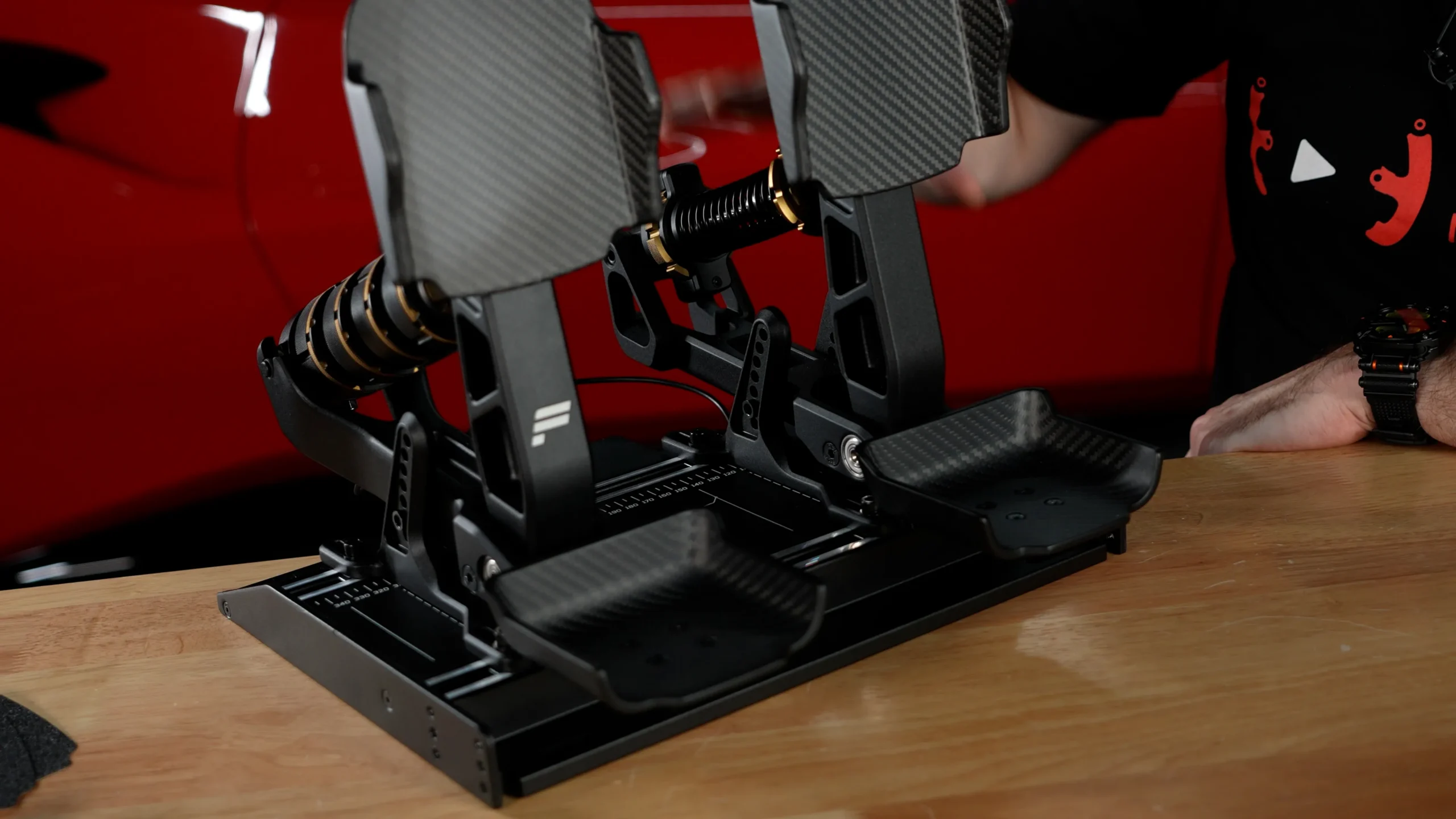
Originally, Fanatec planned to launch them as a three-pedal set, but the clutch has been delayed. As a result, the first version available is the two-pedal Formula package, which includes carbon fibre pedal plates and heel cups. Fanatec has told us the clutch module will follow later, with current pricing communicated at €199.95.
The slightly unusual part is that this two-pedal Formula package costs the same as the upcoming three-pedal set with standard aluminium pedal plates. Fanatec has said early Formula sets will include the standard aluminium pedal plates as well, but even so, it would have been cleaner to offer a lower-cost two-pedal set and make the carbon fibre parts optional.
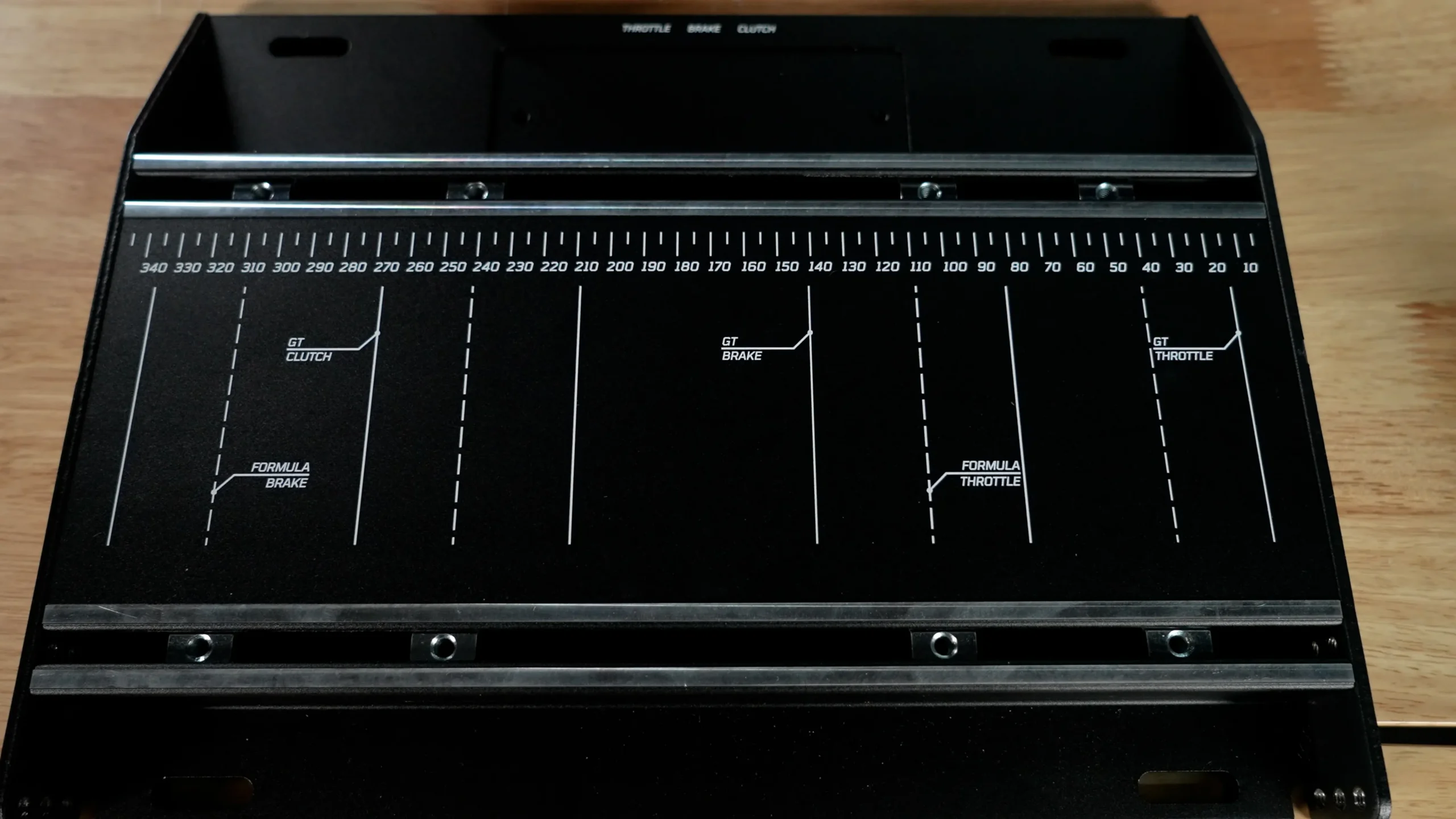
The optional Podium Pedals mounting plate is also not included, although many users with aluminium profile rigs or solid pedal trays may not need it.
So judged on materials, presentation, software, and Fanatec ecosystem compatibility, the price is fair. For PlayStation and Xbox users in particular, the value argument is much stronger because there are very few truly high-end, native console-compatible pedal options. For PC users, or anyone judging purely by driving feel, the value is more nuanced, with plenty of options available both below and above this price point.
CSL Elite Pedals V2
CSL Elite Pedals V2
Price History
ClubSport Pedals V3
ClubSport Pedals V3
Price History
Podium Pedals
Podium Pedals
Price History
Build Quality:
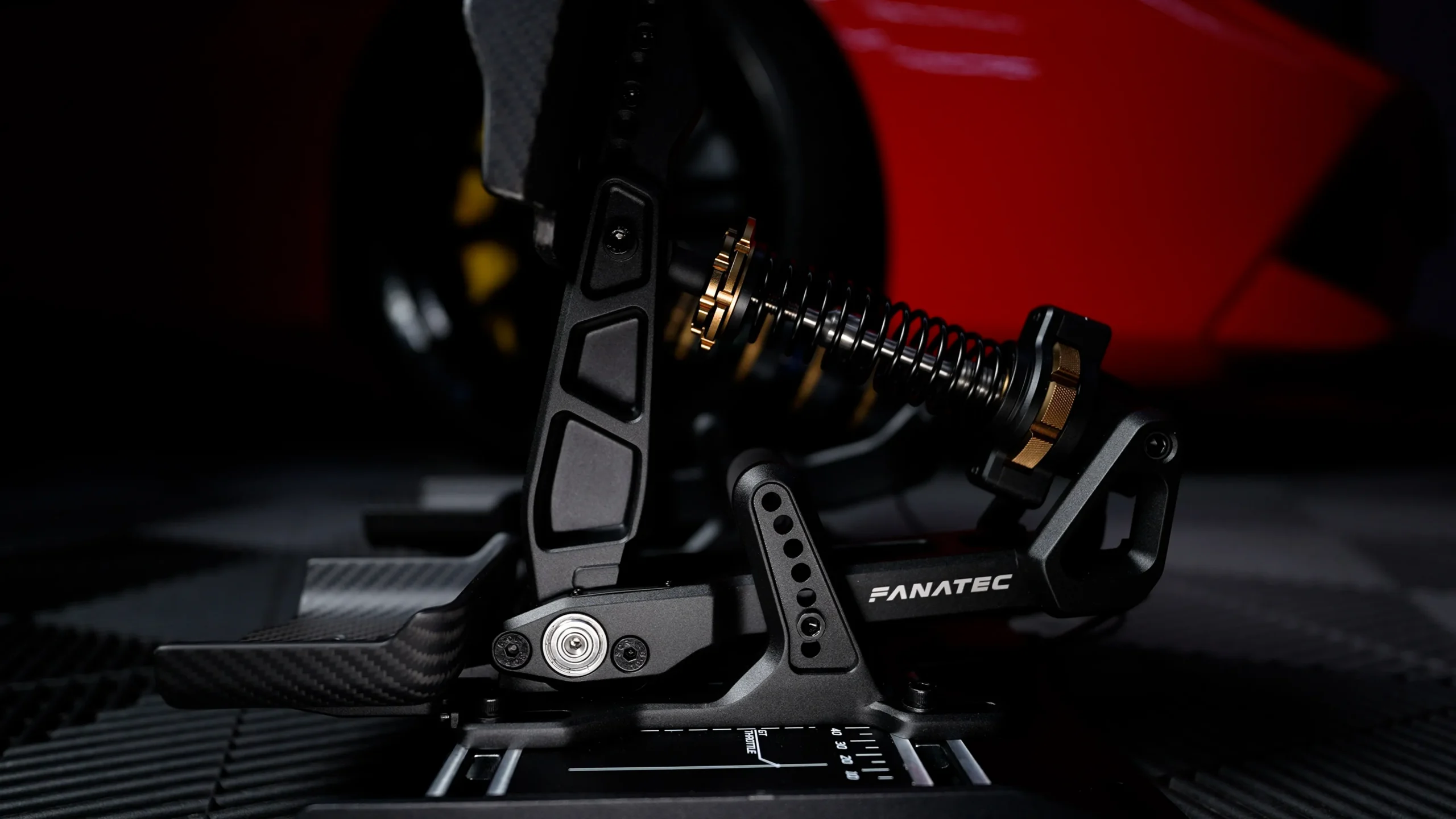
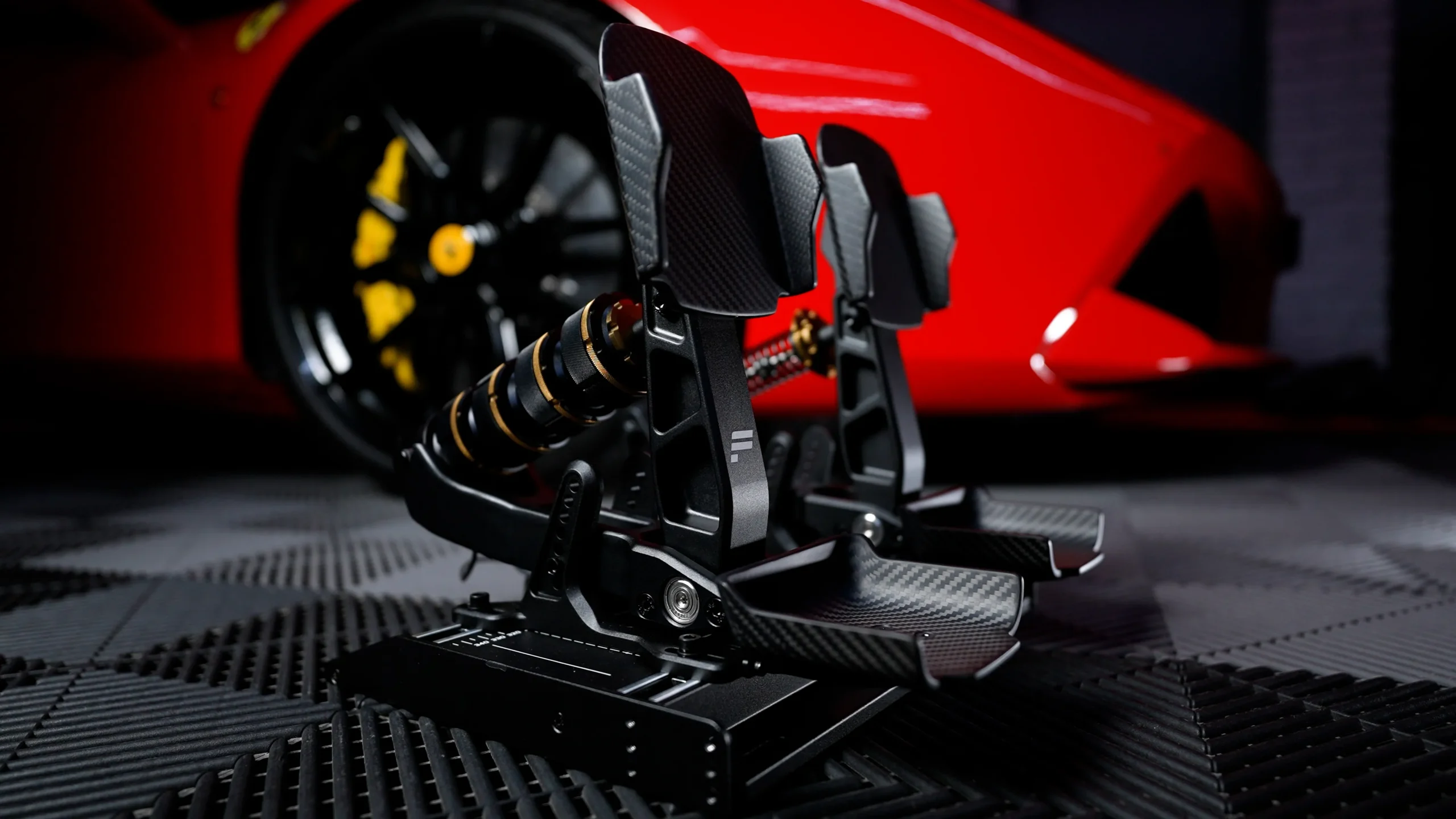
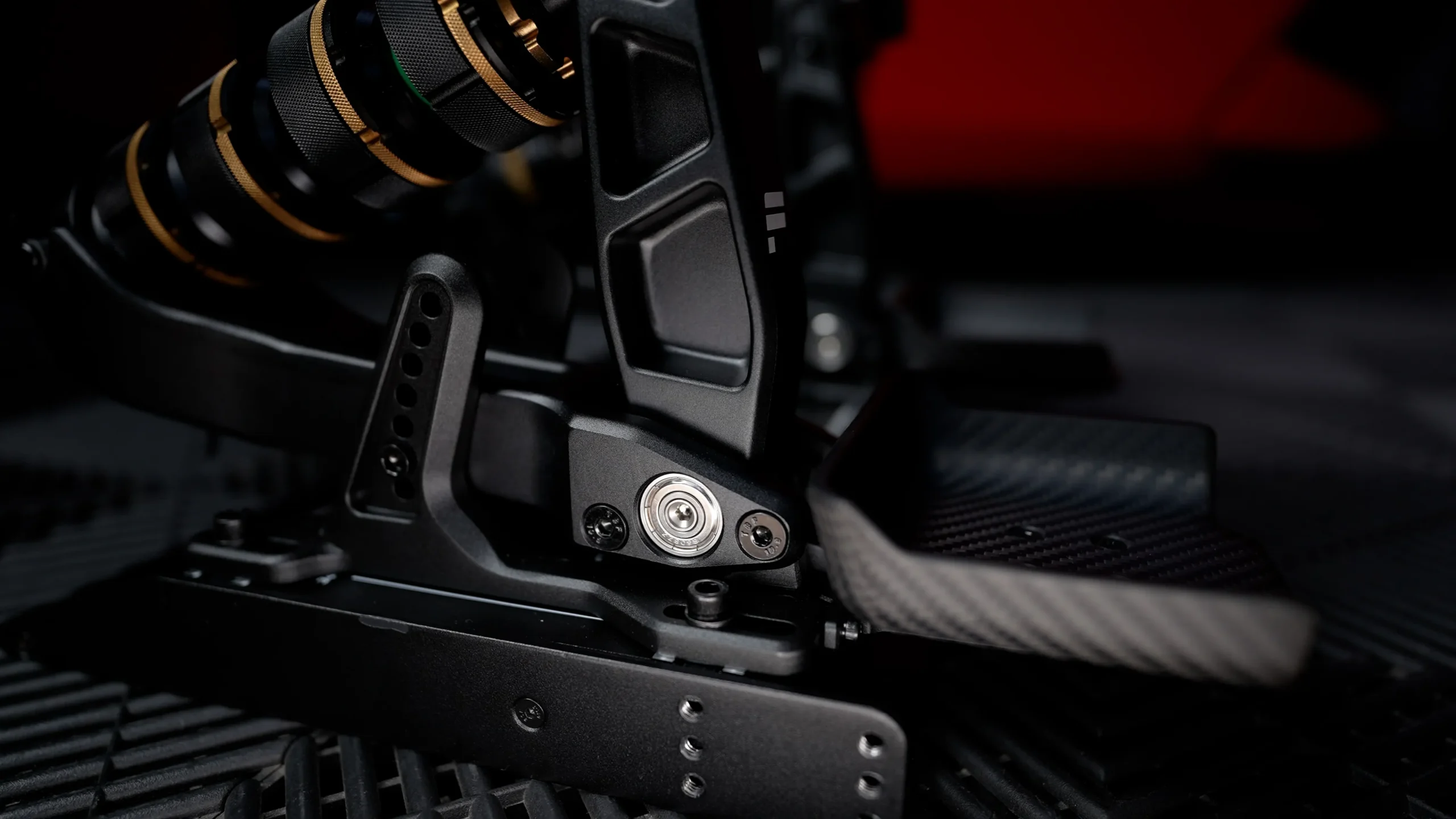
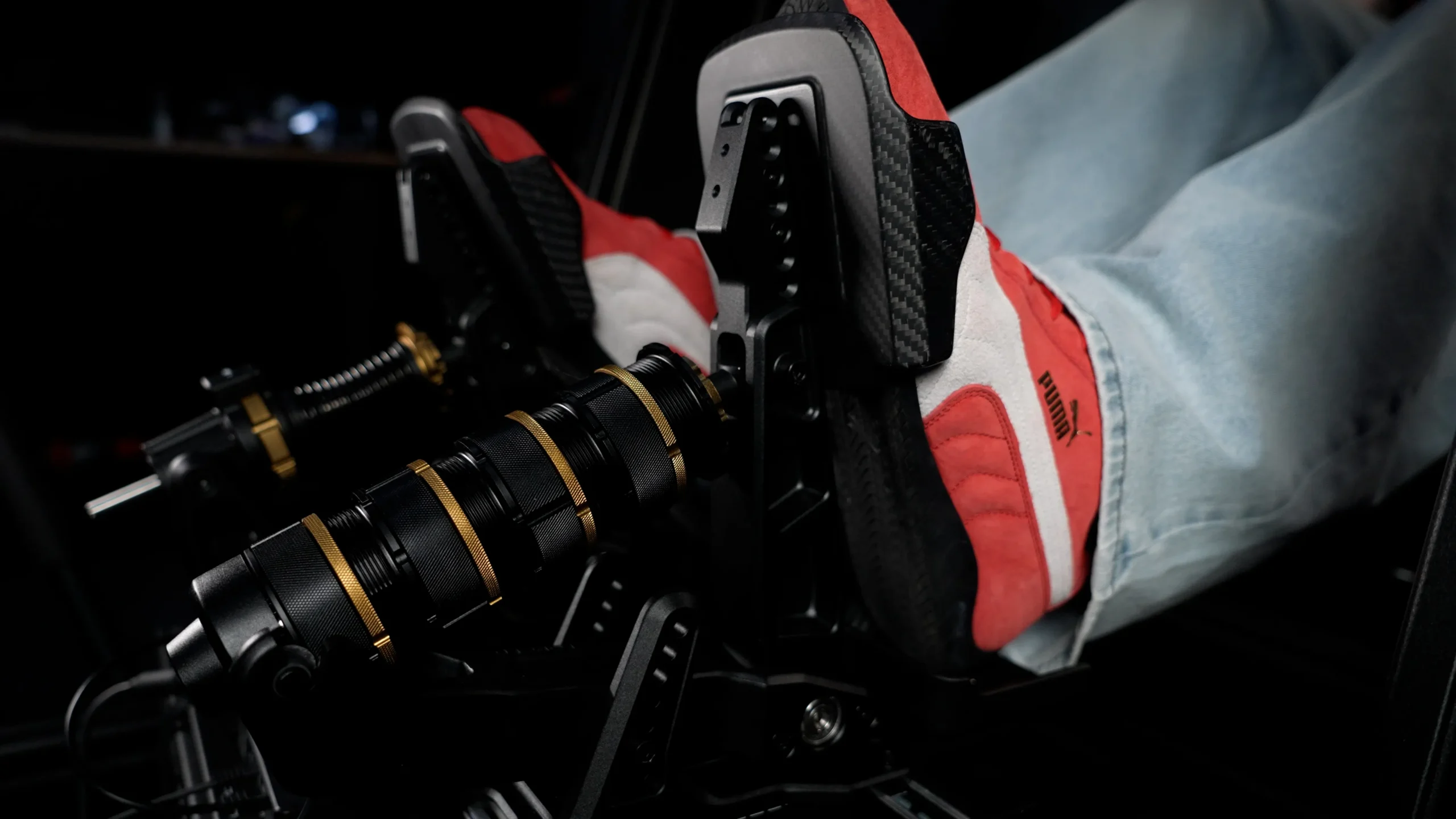
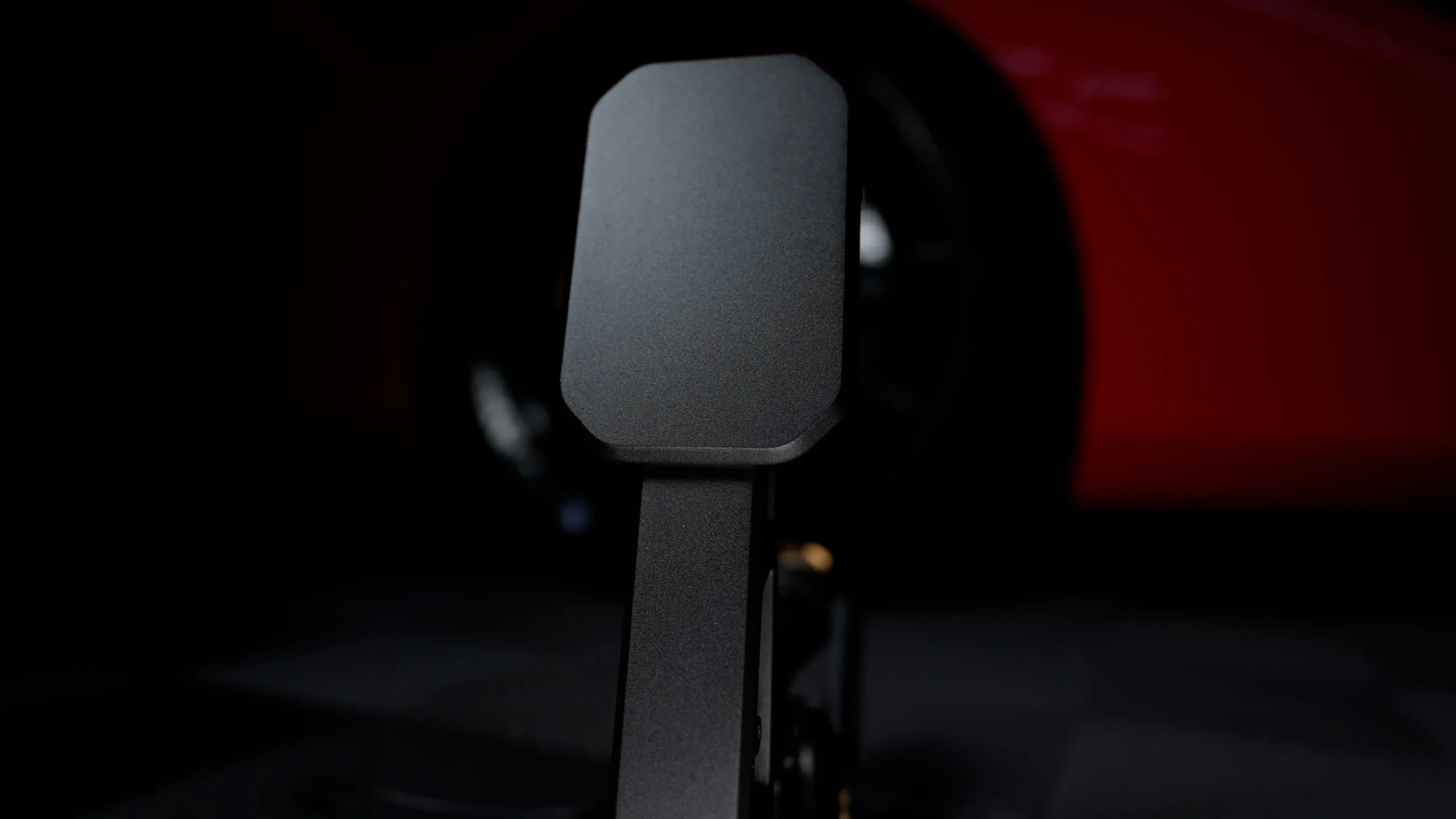
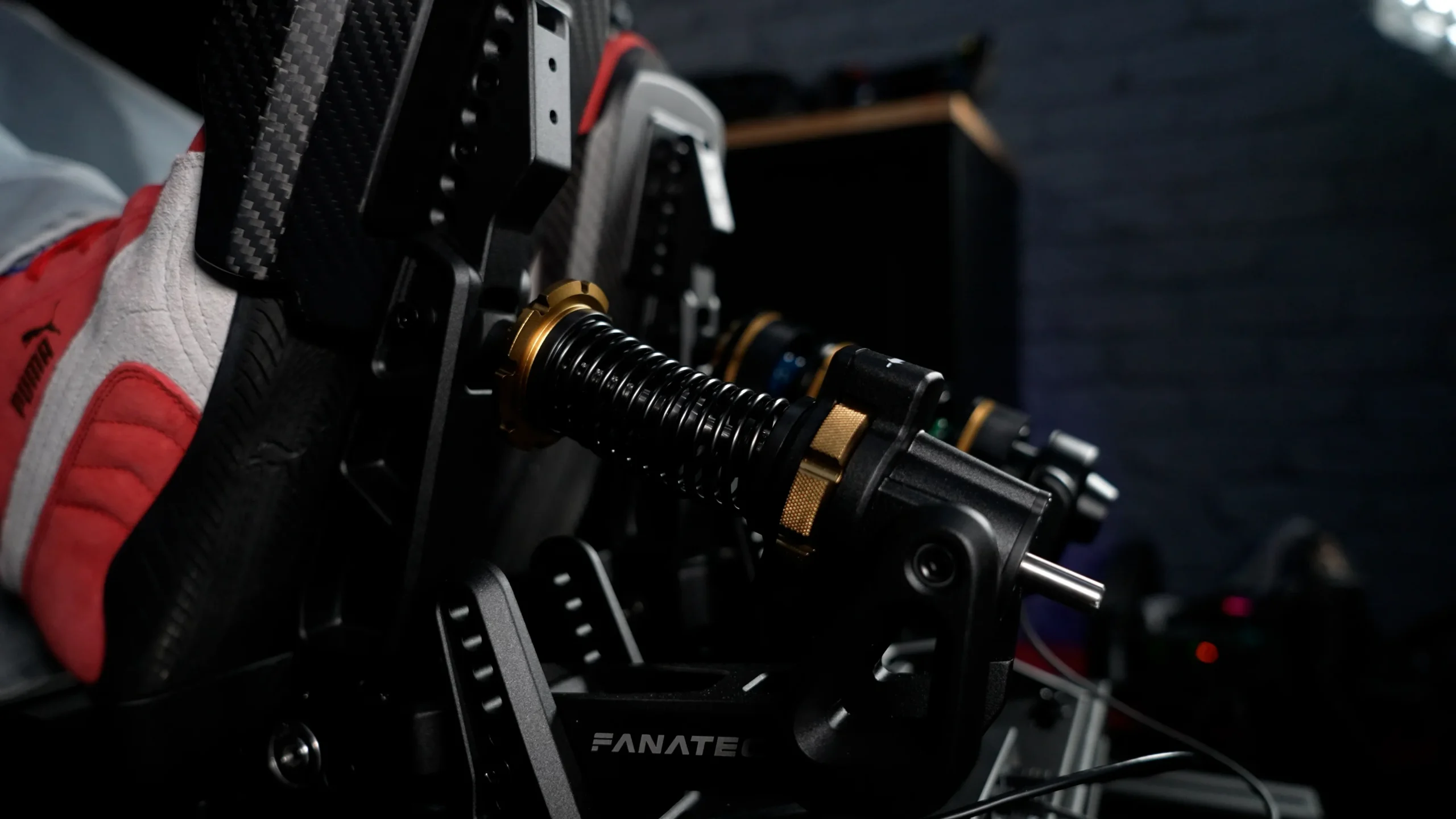
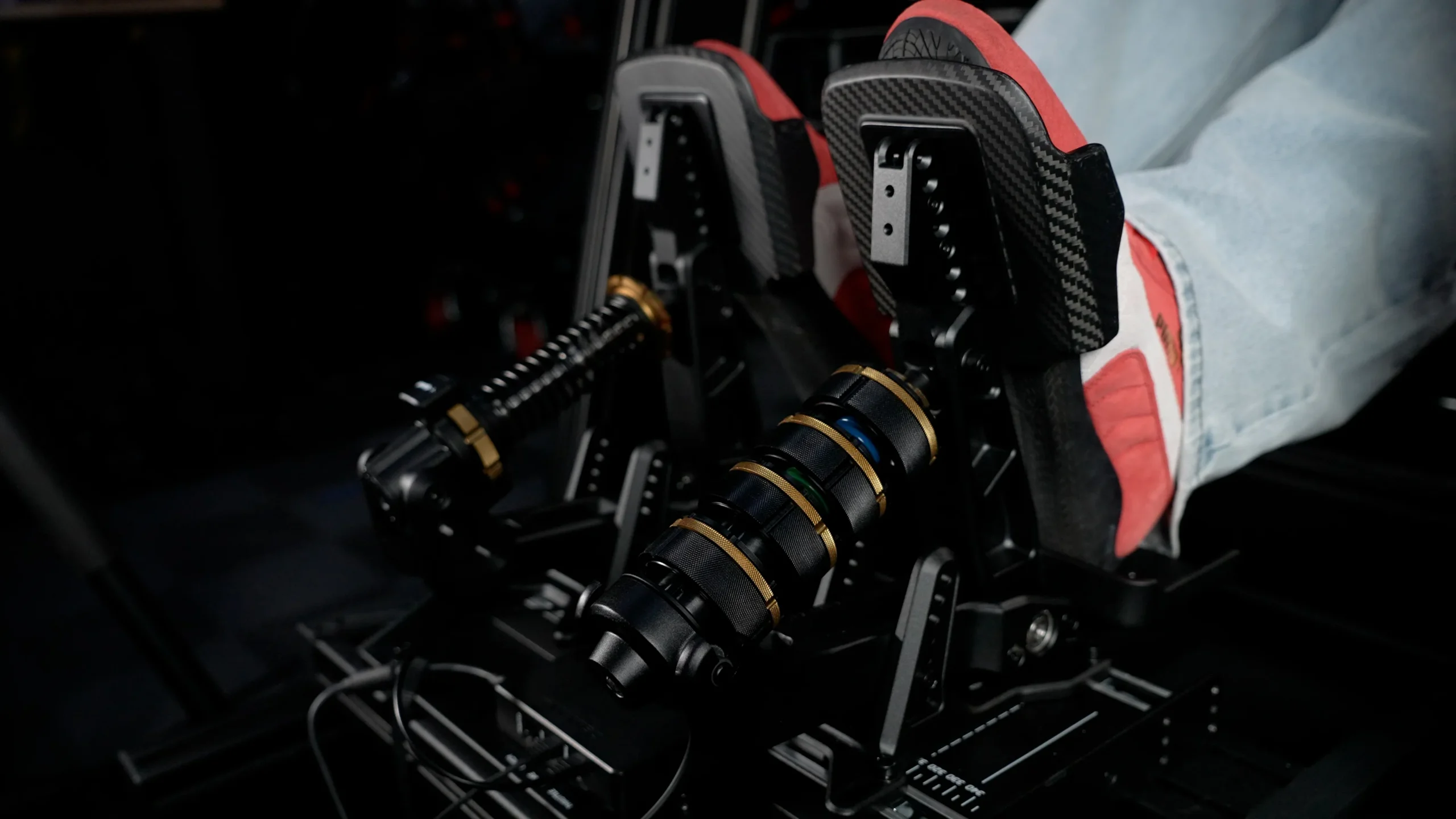
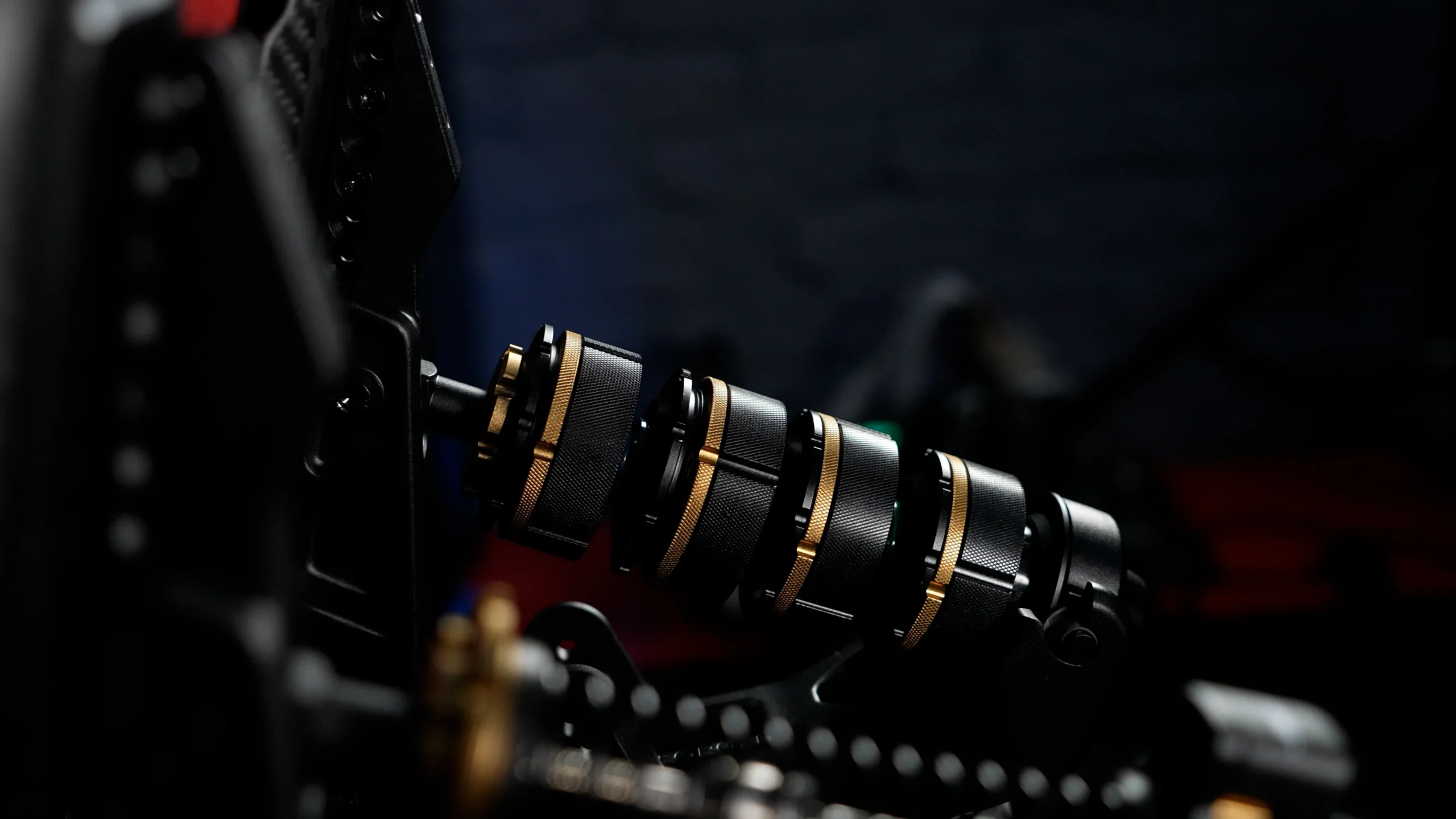
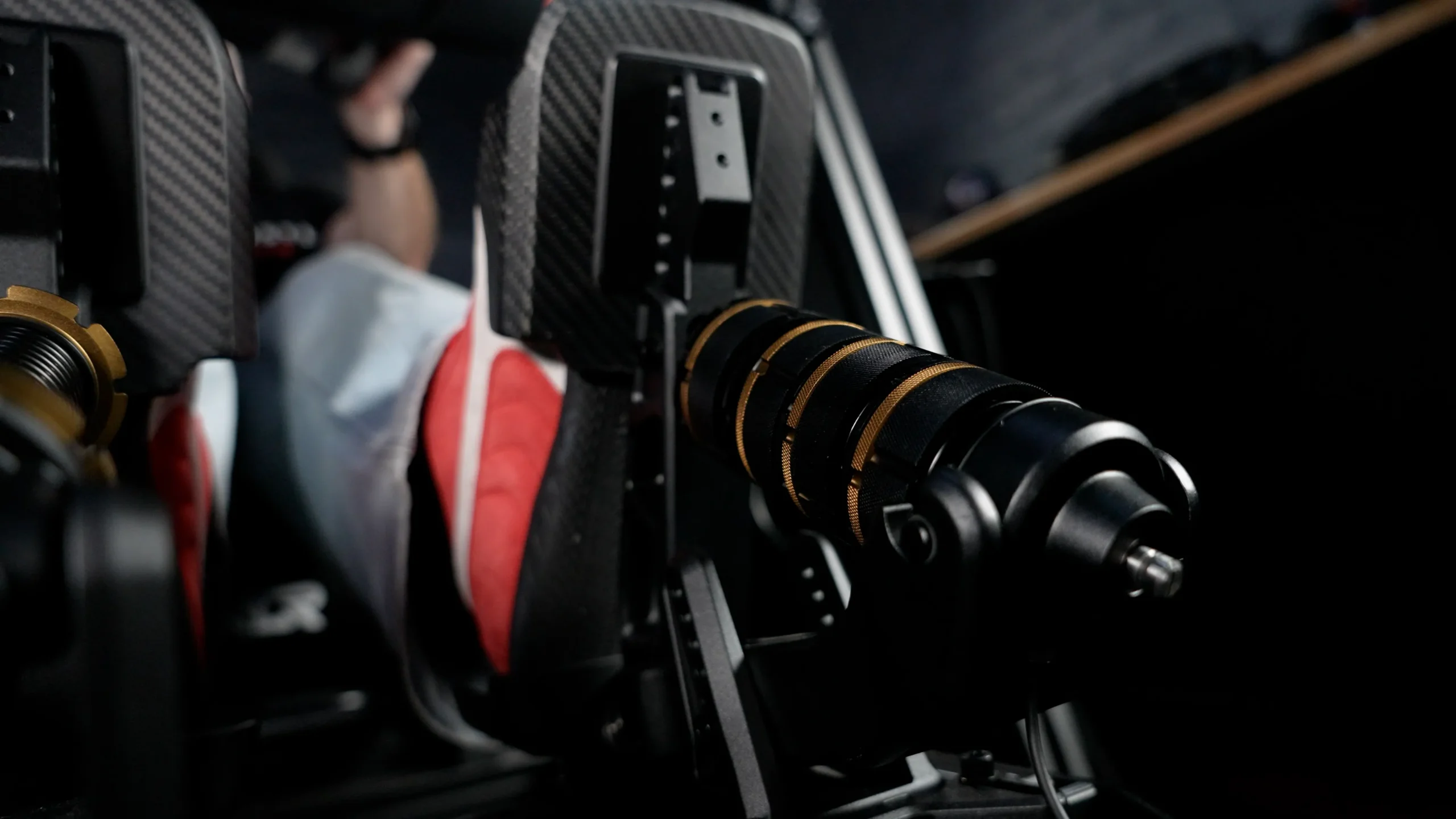
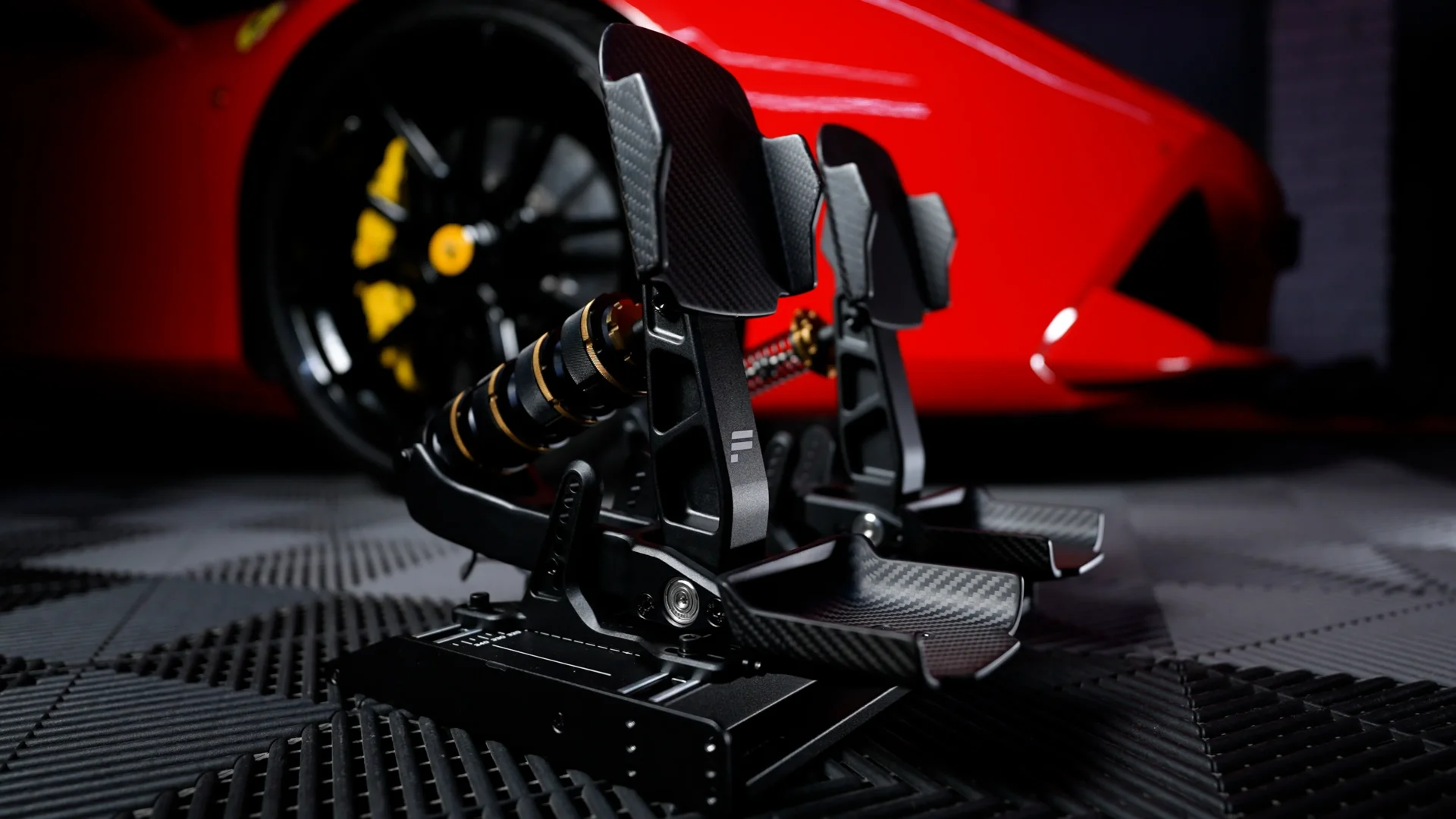
Build quality is one of the strongest parts of the Podium Pedals package. All pedals are constructed almost entirely from CNC-machined aluminium, with the brake pedal using forged aluminium for additional strength.
In use, they feel every bit as solid as that suggests. We found no noticeable flex, bending, side-to-side play, front-to-back movement, bearing noise, or slop through the pedal arms. That is not something we can say about every high-end pedal set we have tested, many of which cost much more than these.
The brake uses a 200kg load cell, with Fanatec rating force at the pedal face up to 150kg depending on pedal pad position. Even pushing far harder than we would ever use while driving, the pedal structure felt completely unfazed.
The only real concern is the bolts. Similar to the issues found with the ClubSport V3 pedals, some of the small fasteners, particularly around the pedal plates, are quite soft, and we did manage to strip one during setup. On a Podium-branded product, we would have liked to see higher-quality bolts used throughout.
So overall, the main structure, machining, and presentation are excellent. The fasteners are what stop this from feeling as bulletproof as it otherwise could.
Adjustability:
Adjustability is where the Podium Pedals are both brilliant and frustrating.
For physical positioning, the range is very good. Pedal angle, pedal plate height, heel cup position, and pedal spacing can all be adjusted, and the optional mounting plate gives you clear reference marks for two- and three-pedal layouts. The pedals can also be mounted directly to aluminium profile rigs or many existing pedal trays, so there is plenty of flexibility in how they fit into a rig.
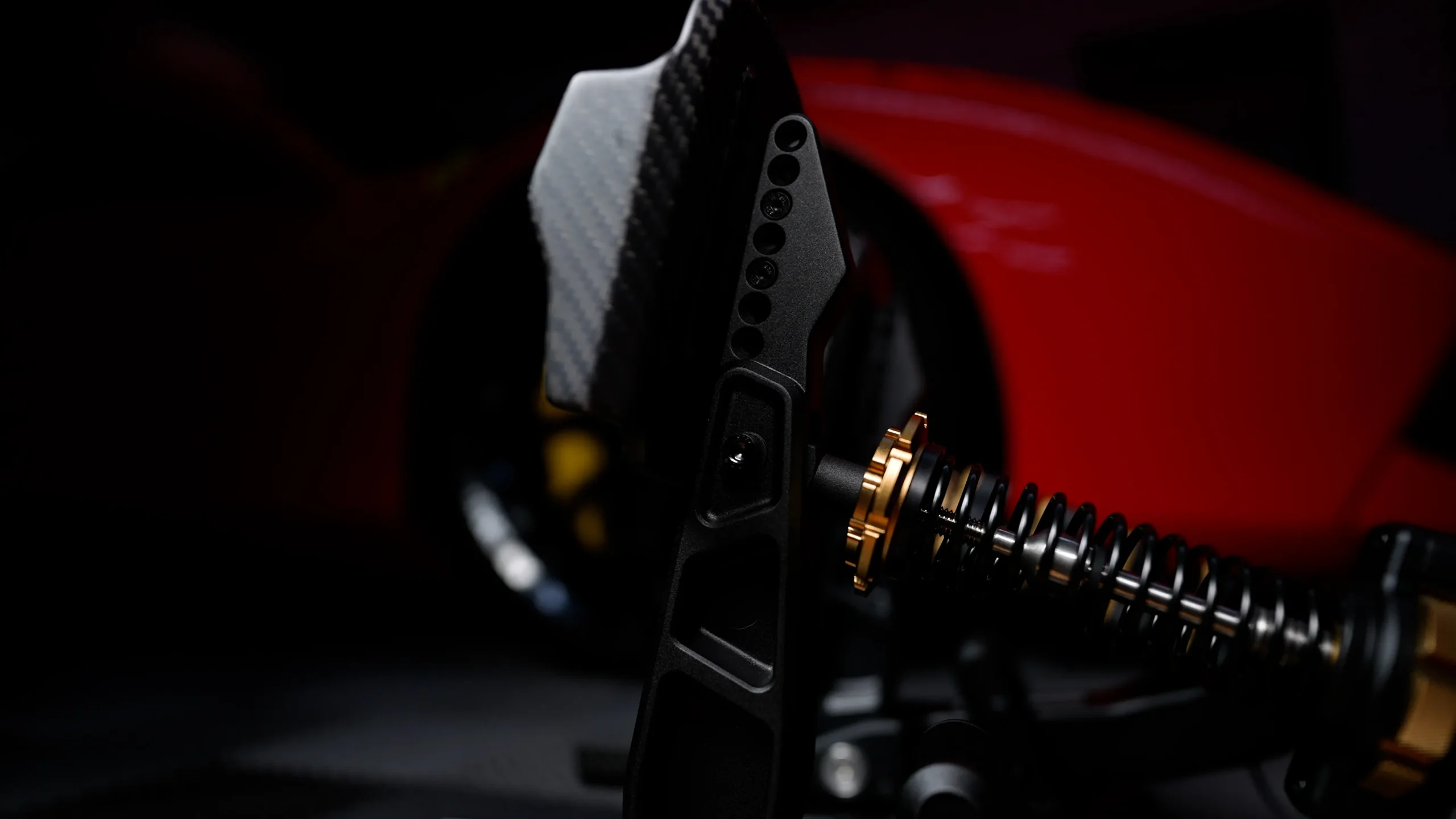
Pedal feel adjustment is where things get more interesting. The throttle offers easy-to-use preload and travel adjustment. It uses a moderately stiff spring that cannot be replaced easily, so it may take some getting used to. There is also some compromise required when adding pre-load to make sure the spring does not fully compress before the pedal reaches its true end-stop.
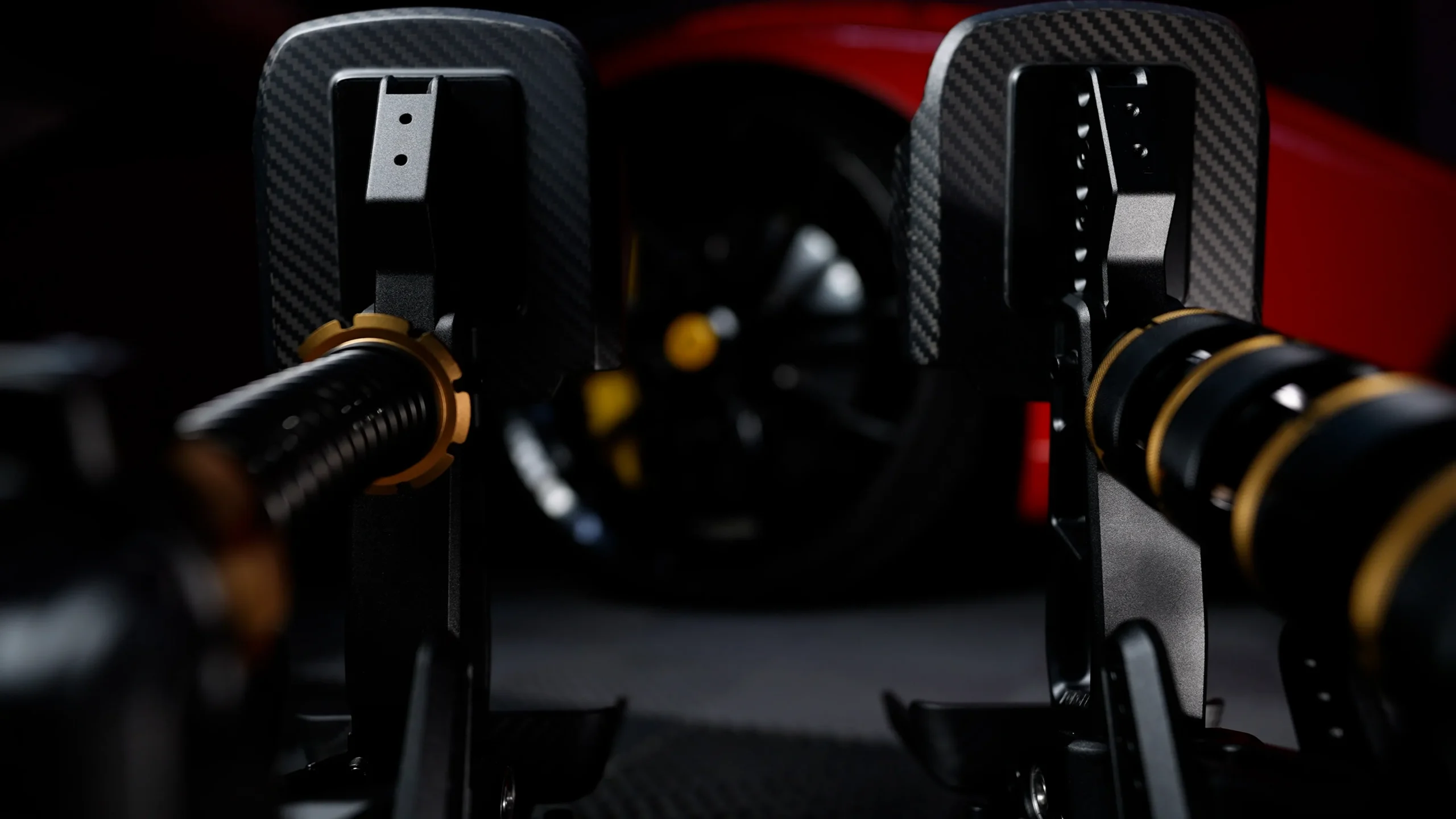
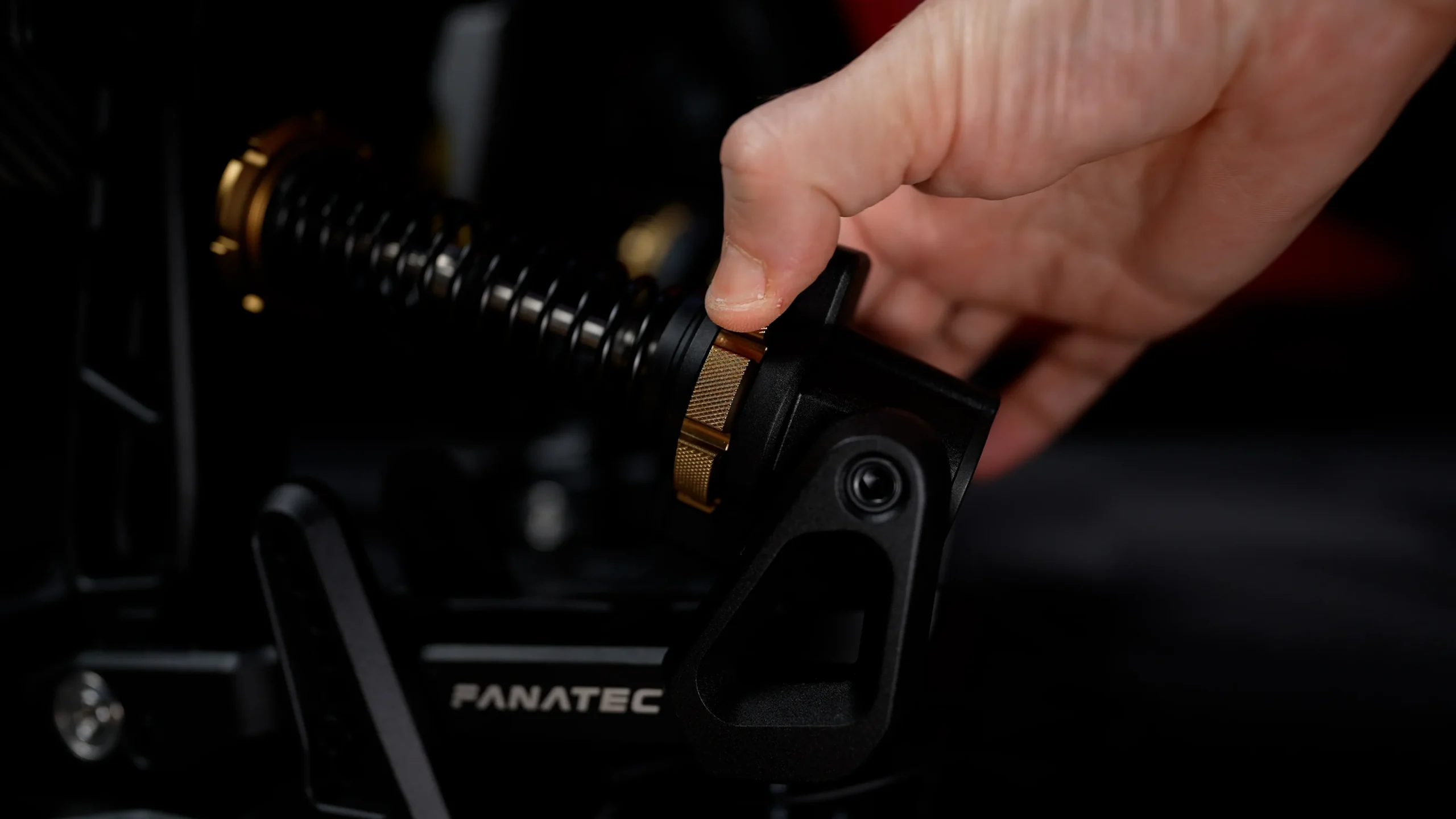
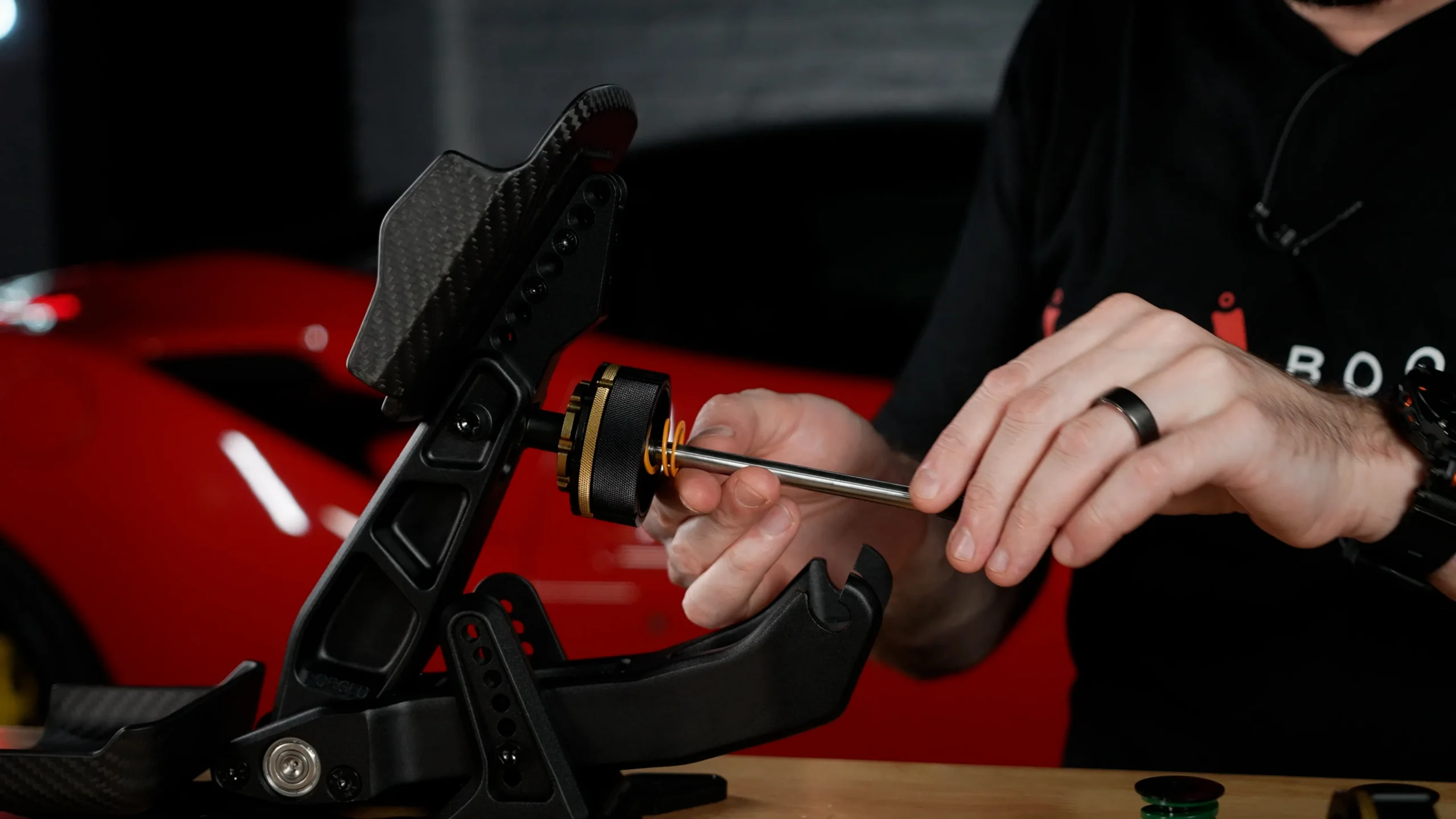
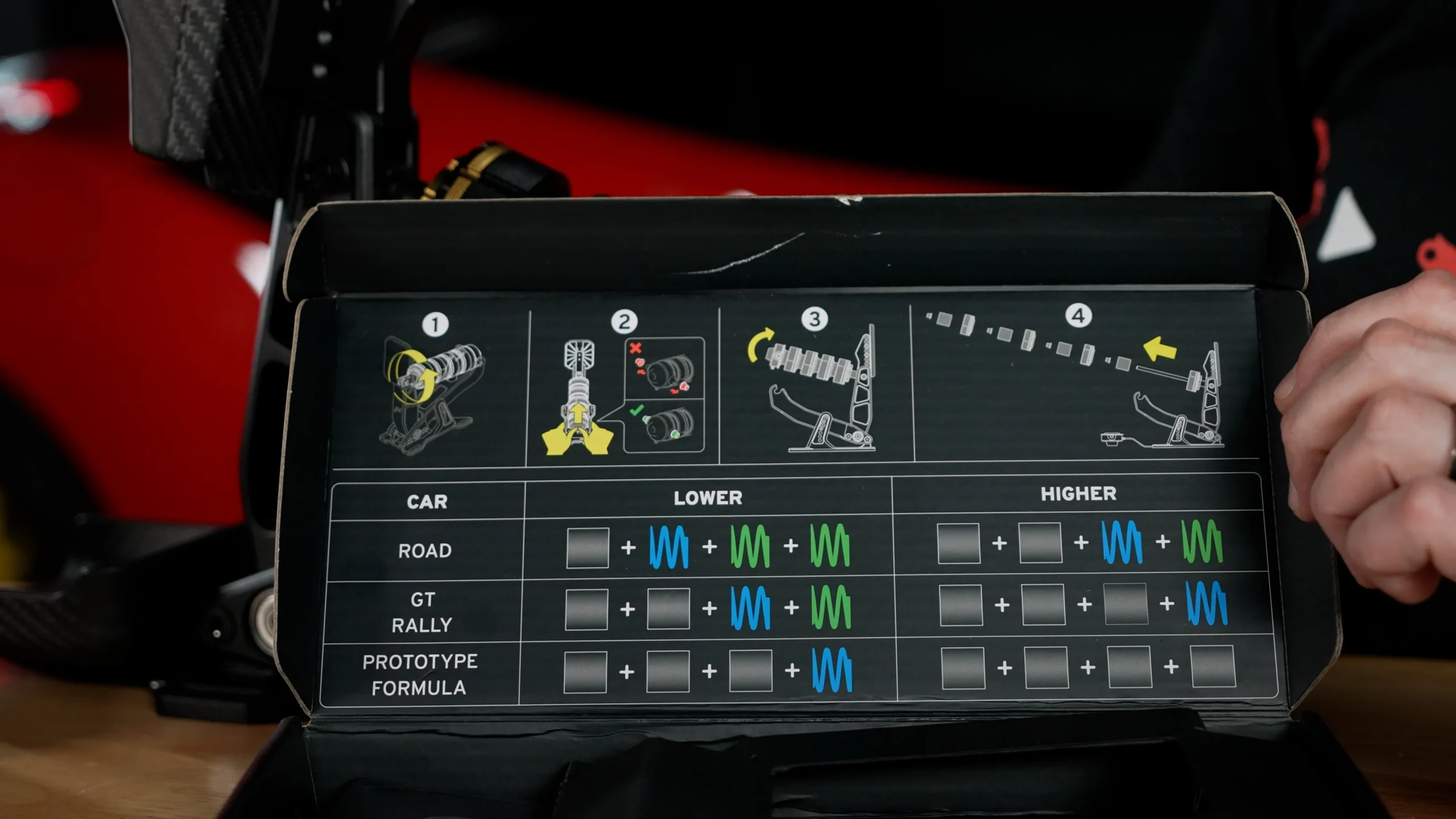
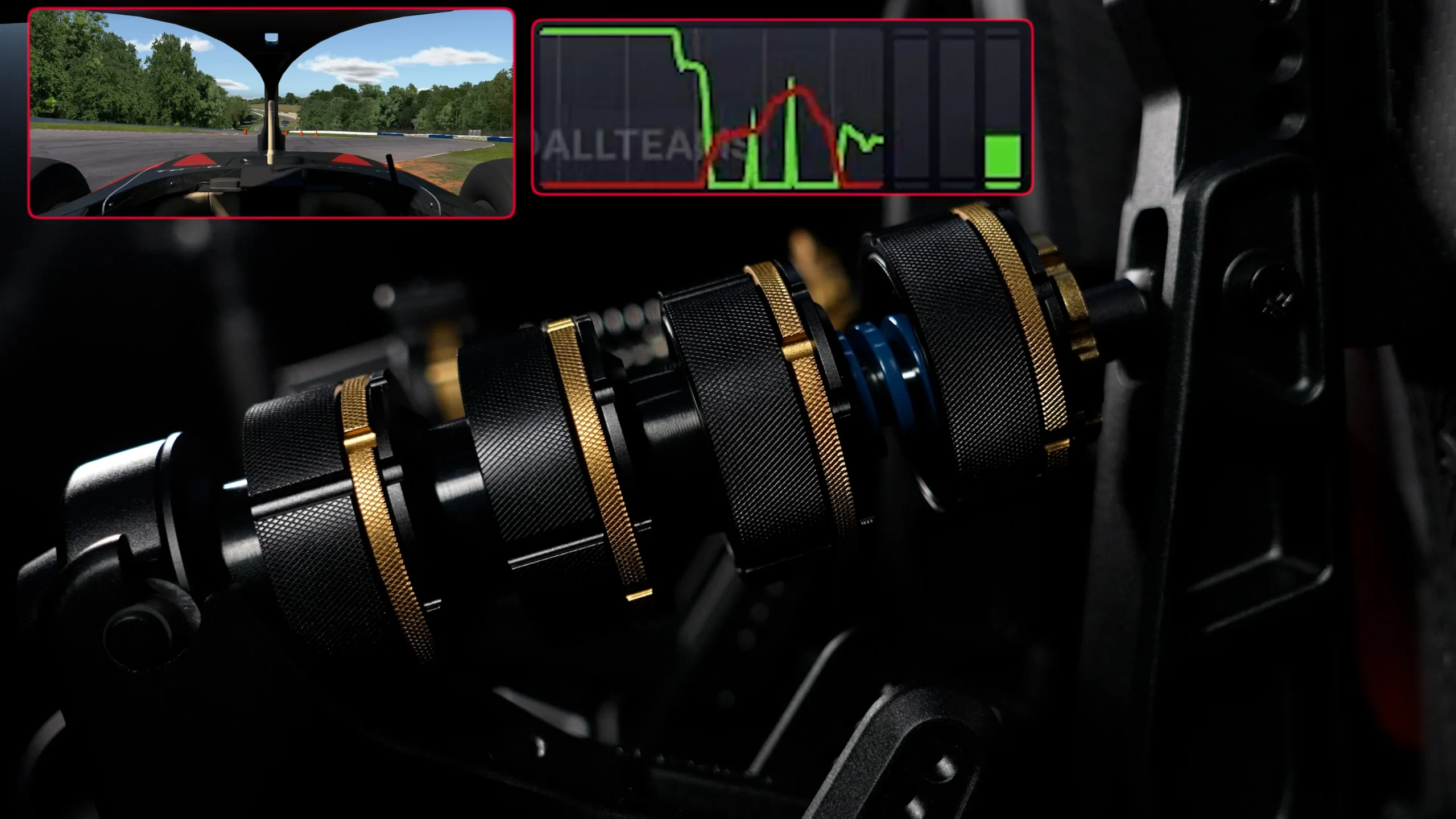
The brake is one of the more clever load cell designs we have seen. Overall preload can be adjusted, and each stage of the spring and elastomer stack can be mechanically limited. That gives you extremely granular control over how much each part of the stack compresses before the load is transferred further through the system.
In theory, that should make these pedals incredibly tunable whether you want a firm brake, a longer-travel brake, or something with more defined stages through the pedal stroke. The design itself has the potential to suit a wide range of users with simple yet detailed adjustments.
But the problem is not the design. The problem is what Fanatec includes in the box.
The supplied springs and elastomers are simply too limited, and too similar in feel, to unlock the full potential of the brake pedal. Even the softer “road” configuration is still very firm, meaning the available range is mostly from very firm through to brick wall, rather than offering truly different brake characters.
That is what makes this so frustrating. A few extra springs, particularly softer initial-stage springs, would dramatically change what users could do with this pedal. We tested this ourselves using a softer spring from a MOZA pedal set, and the brake immediately gained a much more defined two-stage feel, with a clearer transition into the main braking force.
So the adjustability score needs context. Mechanically, this is a 9/10 design. As supplied, it is more like a 7/10 package, because Fanatec has built a very clever adjustment system and then failed to include the cheap parts needed to make the most of it.
SOFTWARE:
Software is one of the strongest parts of the Podium Pedals experience, and Fanatec deserves credit for how far this side of the ecosystem has come over the last couple of years.
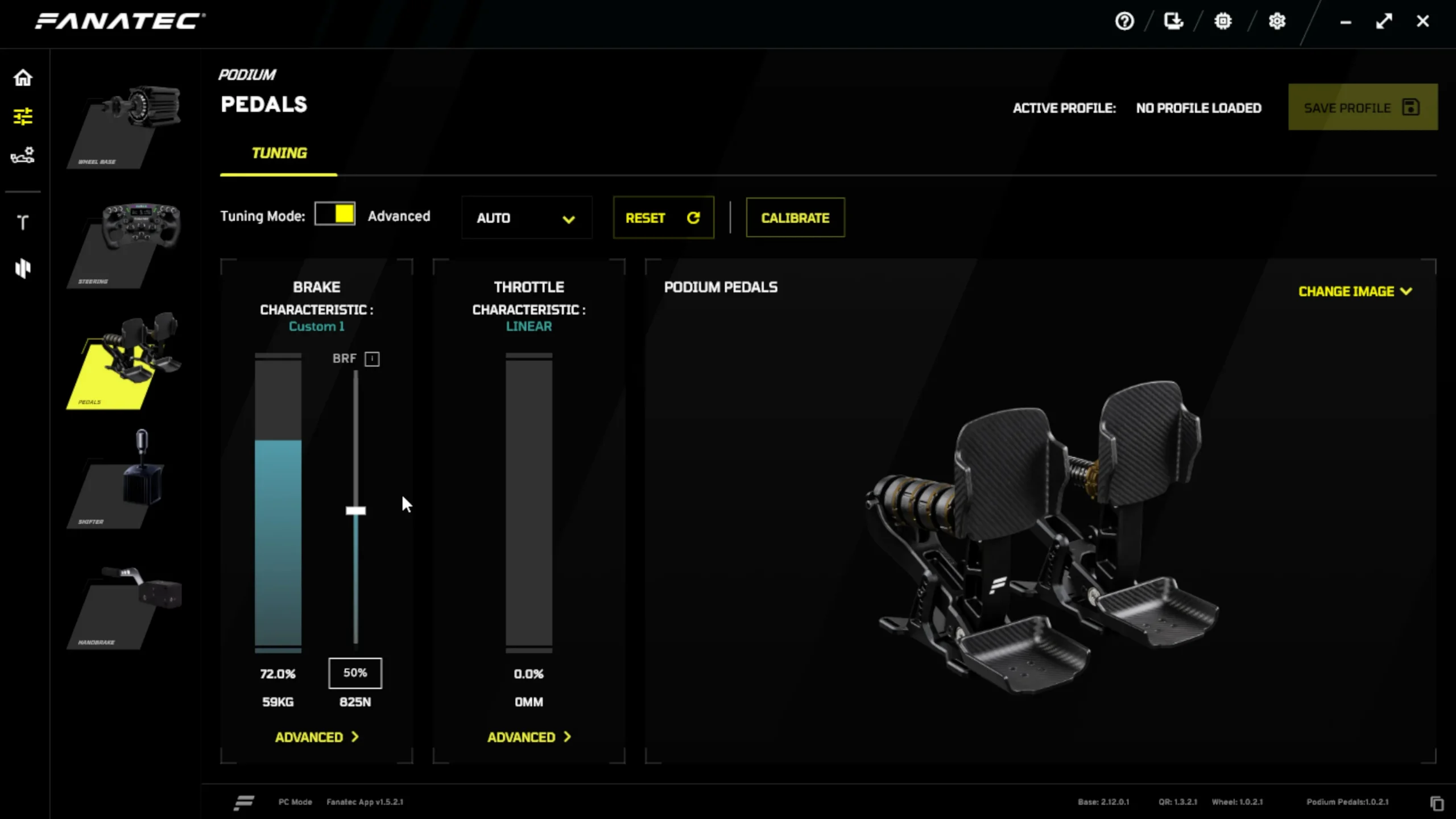
The pedals are configured through the Fanatec app, where they sit alongside the rest of your connected Fanatec hardware. From there, you can calibrate each pedal, adjust brake force, set dead zones, create response curves, and save multiple profiles for different cars, sims, or driving preferences.
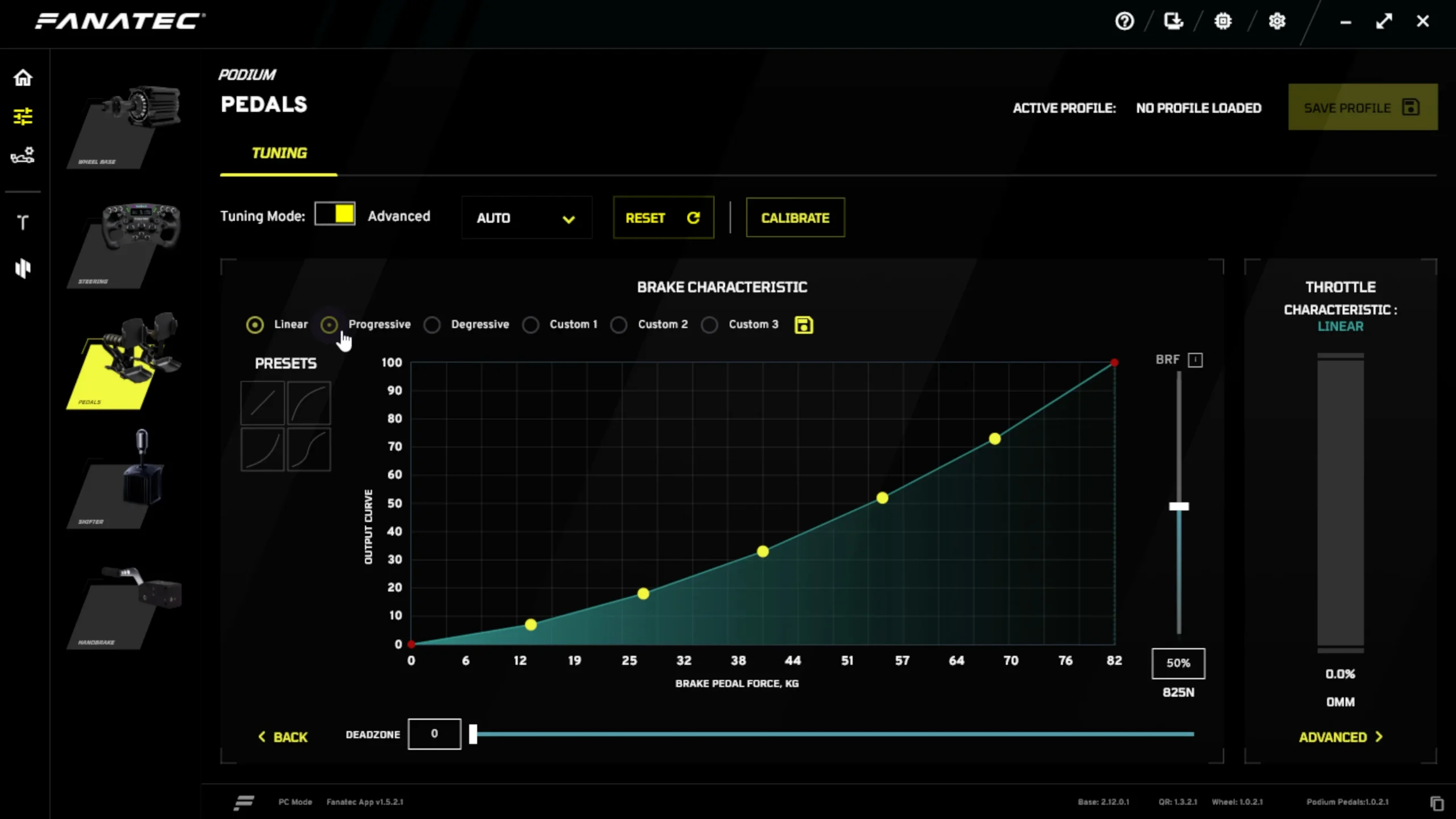
Throttle and brake response can be set to linear, progressive, digressive, or custom curves, with three custom presets available. For the brake, this allows you to tune how pressure is translated in-game. For the throttle, it can help tame more sensitive rear-wheel-drive cars or sharpen response in lower-powered cars.
There is also a useful console workflow. The pedals can be connected to a Fanatec wheelbase via RJ12 and to a PC via USB at the same time. The pedals prioritise the wheelbase connection, but if you power the base off, you can configure curves on PC, save them to the pedal memory, then power the base back on and use those profiles on console.
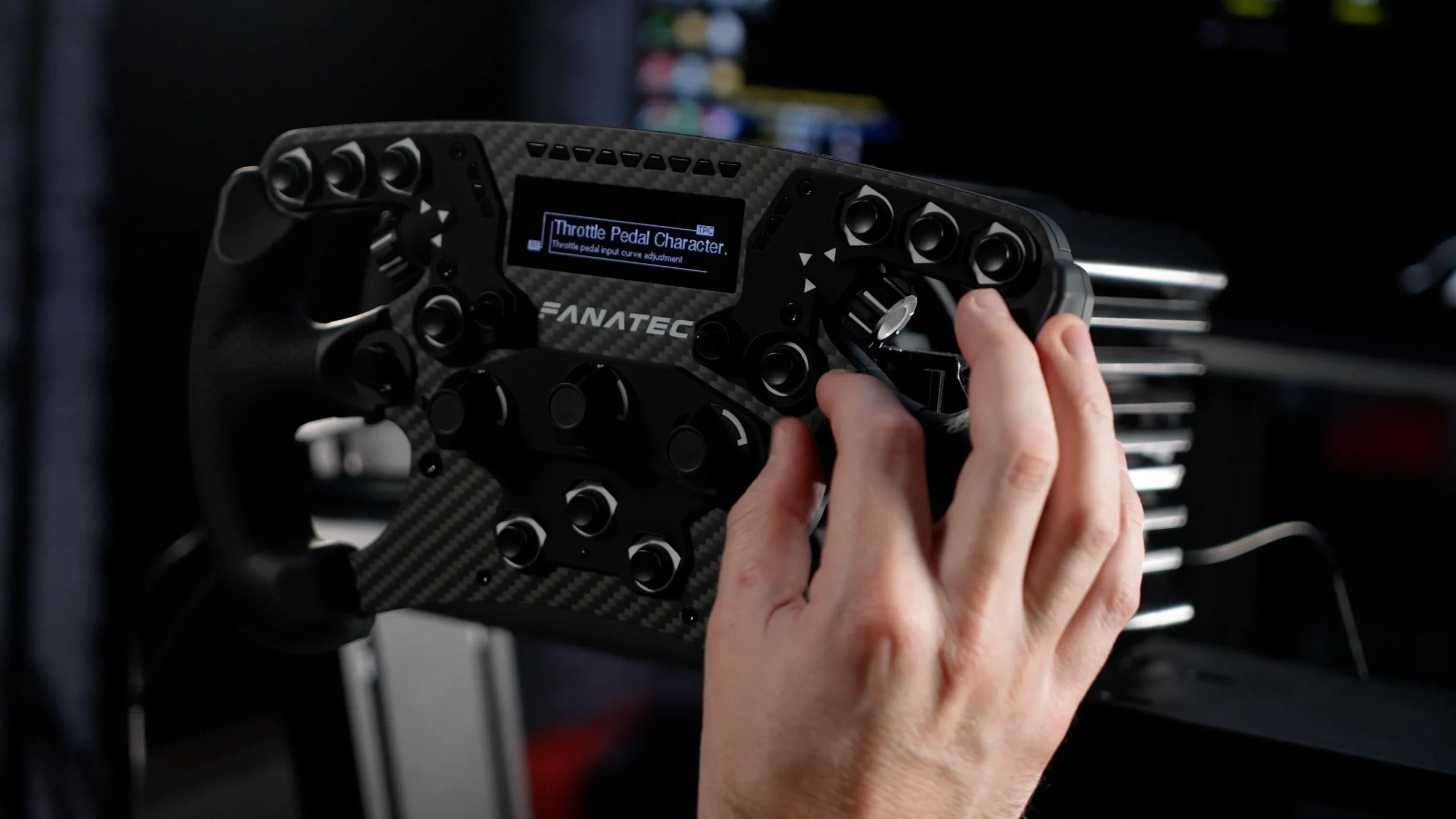
Brake force adjustments can also be made through the wheel tuning menu, which is important for PlayStation and Xbox users. PC users can also select pedal response presets stored on the pedals through the wheel’s tuning menu.
Overall, this is a very strong software package. It is clear, flexible, and well integrated into the Fanatec ecosystem. There is nothing groundbreaking here that gives it a clear edge over competitors, but for a pedal set likely to appeal heavily to console users as well as PC users, it is a clean and powerful implementation.
Driving Experience:
The throttle is the easier part to summarise. It is smooth and quite firm for a throttle, with enough resistance to give you good control throughout the pedal stroke. Some drivers may find it heavier than expected at first, especially coming from entry-level or softer pedal sets, but we did not find that to be a problem once settled in. The action is clean, the response is consistent, and there were no issues with calibration drift or precision.
The brake is where the character of these pedals really shows. Out of the box, it is firm, direct, and very linear. That works well if you like a stiff brake and are prepared to build muscle memory around pressure alone. It feels like a setup aimed at very committed drivers who spend a lot of time in the same cars, paying close attention to the finest of details.
That is the “Alien Spec” side of the Podium Pedals. They do not feel soft, forgiving, or broadly road-car-like out of the box. They are tuned for drivers who want a serious, high-force pedal and are willing to put in the hours to adapt to it.
The upside is that the brake is capable and confidence-inspiring once you are used to it, and there is nothing here that feels like it would hold a fast driver back. The downside is that it took longer to settle into than some other pedals with a more clearly defined threshold point, and we were not as immediately consistent as we can be on pedal sets that provide clearer two or three-stage braking.
So the driving experience is very good, but specific. For the right driver, especially a competitive sim racer who likes a firm, direct brake, the Podium Pedals make a lot of sense. For someone who wants a more progressive, approachable, or easily varied brake feel across lots of different cars, the supplied springs simply do not give you that range.
CONCLUSIONS:
The Fanatec Podium Pedals are worthy of the Podium name, but not in the simple “more expensive means better for everyone” way you might expect.
As a piece of hardware, there is a lot to like. The construction is excellent, the pedals feel extremely solid under load, the software is mature and flexible, and the console compatibility gives them a very real point of difference in the high-end pedal market. For PlayStation and Xbox users, these are the most serious pedal option currently available.
So the final verdict is context-dependent. If you are a competitive sim racer on console and you want a premium, serious, very solid pedal set, the Podium Pedals are easy to recommend.
Likewise, if you are on PC, despite the huge range of options available. If this is the kind of brake feel you are after, then the Fanatec Podium Pedals deliver outstanding performance, quality, and style.
But for us mere mortals who do not have the pinpoint accuracy of an esports professional, the story is more complicated. If you want the benefits of a two or three-stage brake to help hit your threshold points consistently without investing thousands of hours to reach Alien status, or if you want the versatility to make your brake pedal feel like anything from a street car to an F1 car, the Fanatec Podium Pedals are not as well suited to you.
Unless, of course, Fanatec were to include some softer spring options. Then it would be a very different story.
Pros
- Excellent build quality and rigidity through the main pedal structure
- Native console compatibility through the Fanatec ecosystem
- Mature, flexible software with strong profile and curve control
- Clever brake design with huge adjustment potential
- Smooth, precise throttle with good resistance
- Strong mounting flexibility, especially with aluminium profile rigs
- Premium presentation and styling
Cons
- Supplied brake springs and elastomers are too limited
- Stock brake feel is very firm and not suited to everyone
- Clutch not available at launch
- Small fasteners feel too soft for a Podium product
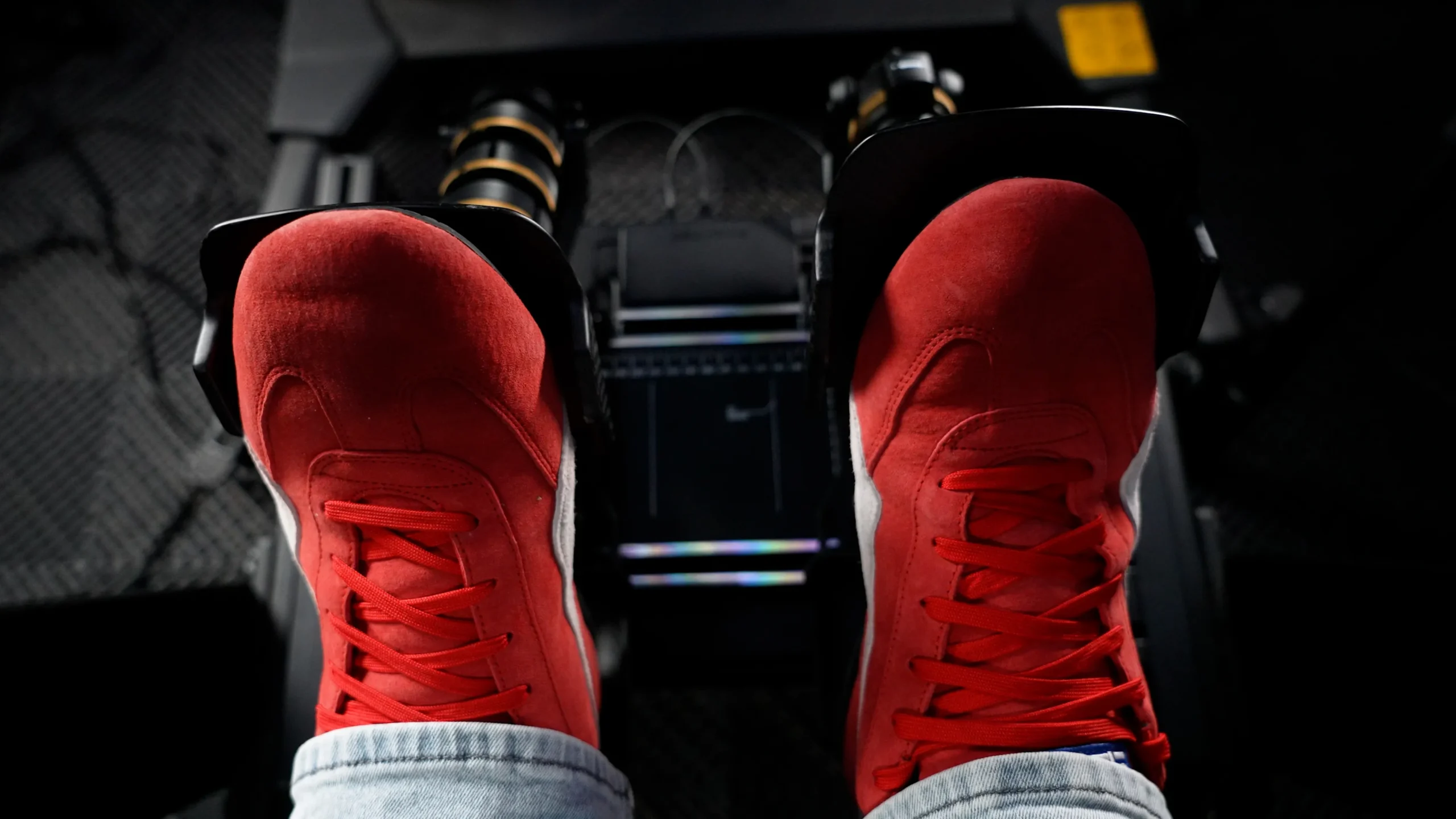
- Carbon fibre pedal cups are likely to scratch without protection
- Fixed-width pedal cups may not suit wider shoes
NEWSLETTER
Stay up to date with new releases And major updates
Thanks. Please check your email to confirm your subscription.
Sim RACING
Discount Codes
By purchasing through links on this page you’ll be supporting Boosted Media at no additional cost to you! This option is available for a huge range of Sim Racing gear.
Related Articles

Simworx Pro GT V3.2 Simulator Pedal Set – REVIEW
Australian made Simworx PRO GT V3.2 are a no expense spared Sim Racing pedal set with Load Cell brake designed for “high-end professional motorsport use”

Thrustmaster T598 – DETAILED REVIEW
The Thrustmaster T598 with Direct Axial Drive technology is claimed to be “A new era of Sim Racing” providing a “Perfect clear wheel rim motion”!

FANATEC’S FUTURE REVEALED
I recently sat down for a chat with Andy Paul, CEO of Corsair who have recently aquired Fanatec. In this video we discuss the events

Simucube ActivePedal Pro: Detailed Review
Simucube’s ActivePedal is one of the most unique and technically impressive products in sim racing. The idea of a fully motorised, force-feedback pedal that can
MOZA CRP2 – Load Cell Sim Racing Pedals
The MOZA CRP2 Load Cell Sim Racing pedals are a much needed update to their predecessors. As the MOZA ecosystem has expanded and continued to
Pineapple Grips Fanatec Wider Wheel Mod – Review
There’s no doubt that Fanatec’s Formula style wheels are some of the most popular in sim racing, but at 270mm, they’re not the most versatile
MORE REVIEWS and Discounts
If these Sim Racing Reviews have helped you find the best racing simulator gear for your sim rig, please consider using the affiliate links on this website. By purchasing through these links, a small commission will come back to Boosted Media at no additional cost to you. This is how Boosted Media keeps providing content to the Sim Racing community.