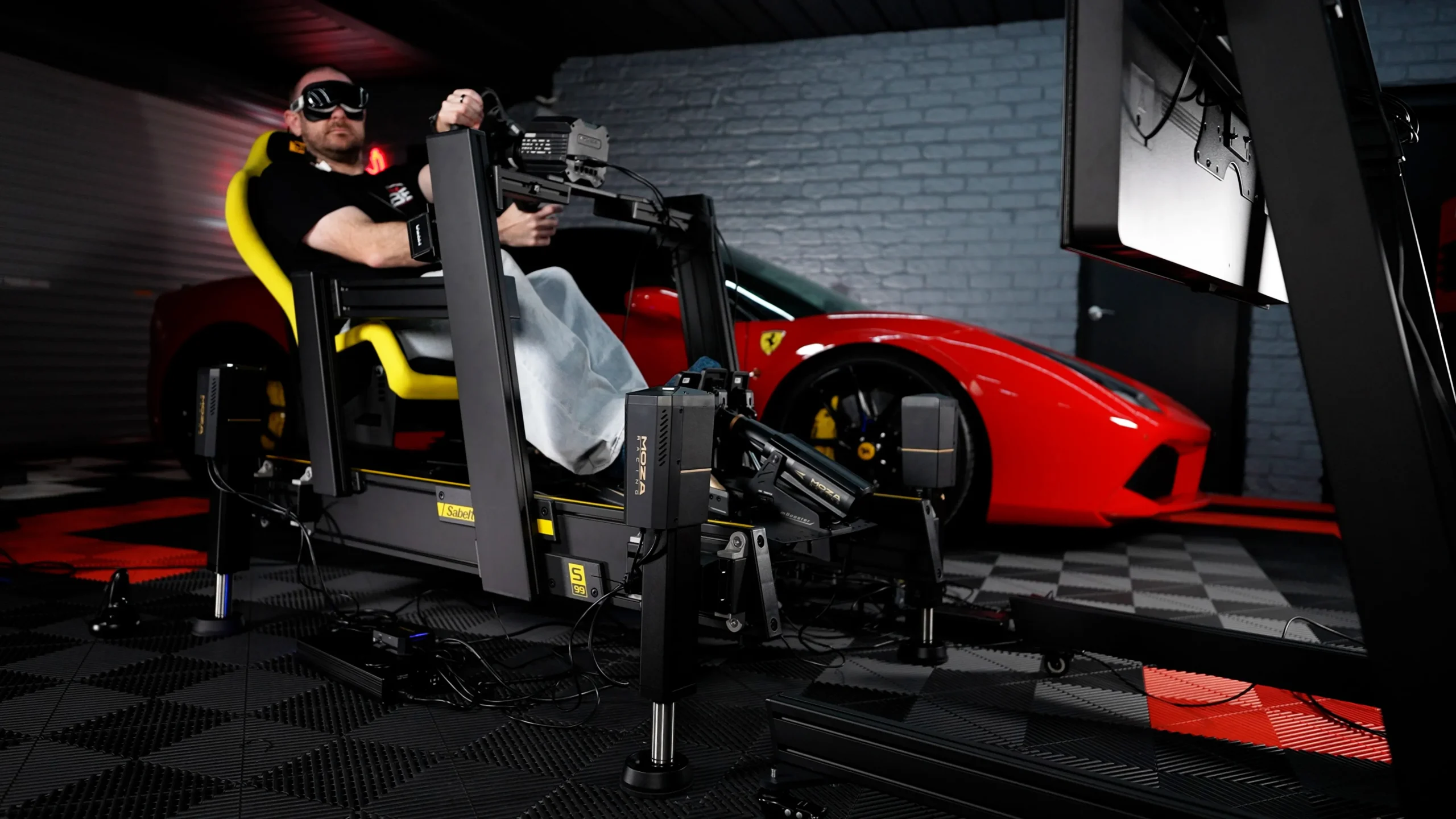
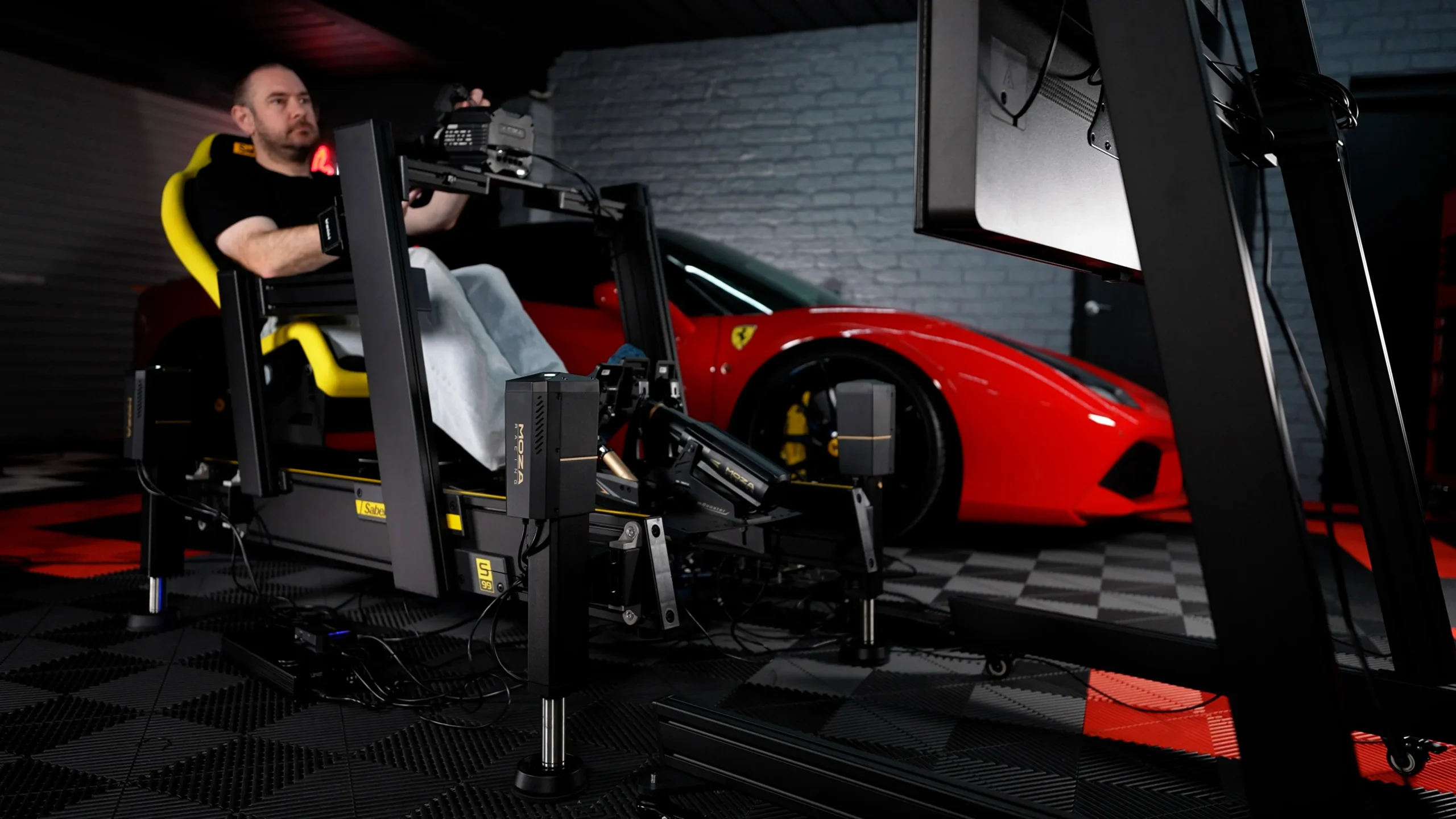
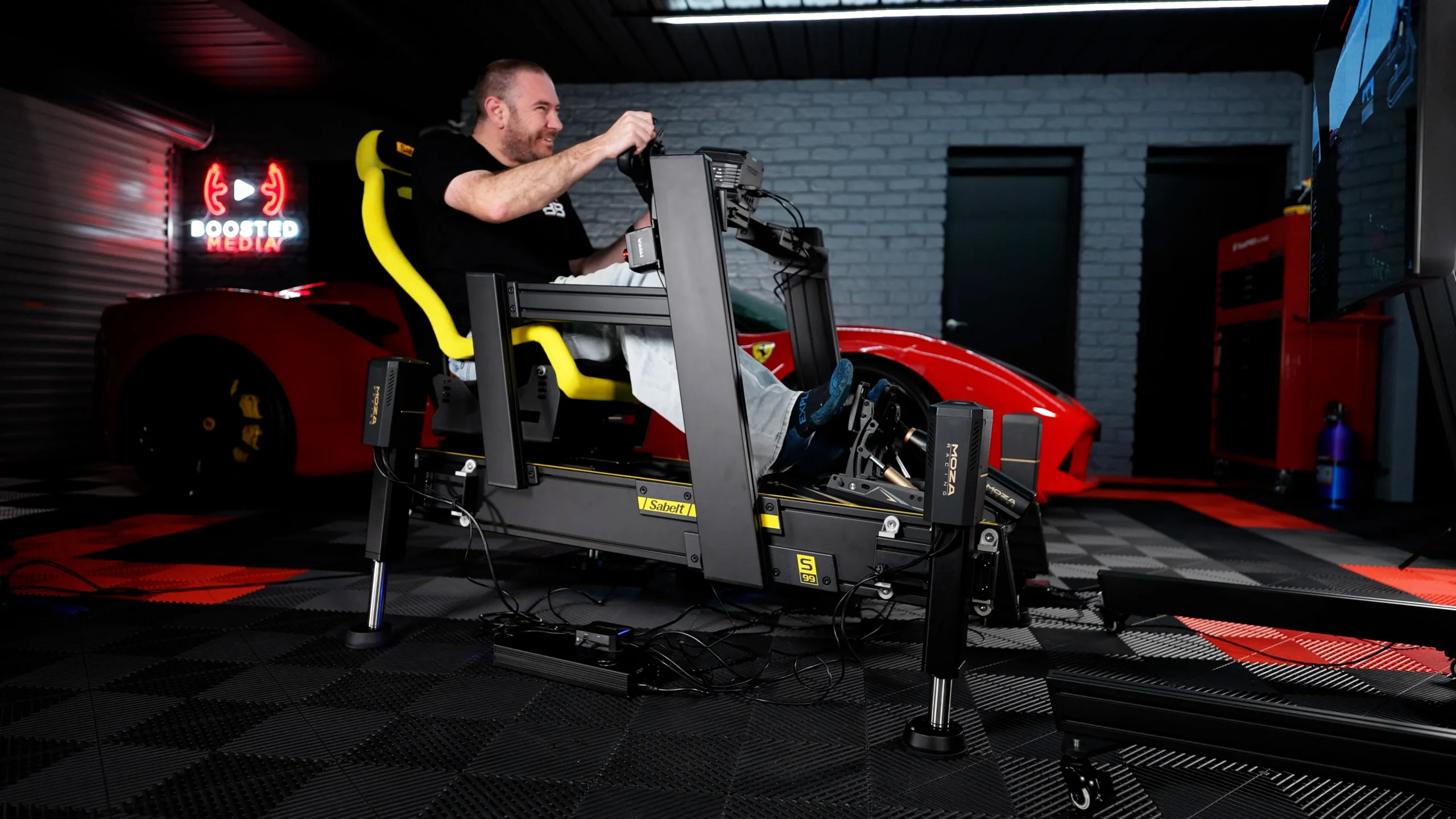
VALUE: 8/10
Flagship-level specs for around half the usual price
Pricing and Setup Considerations
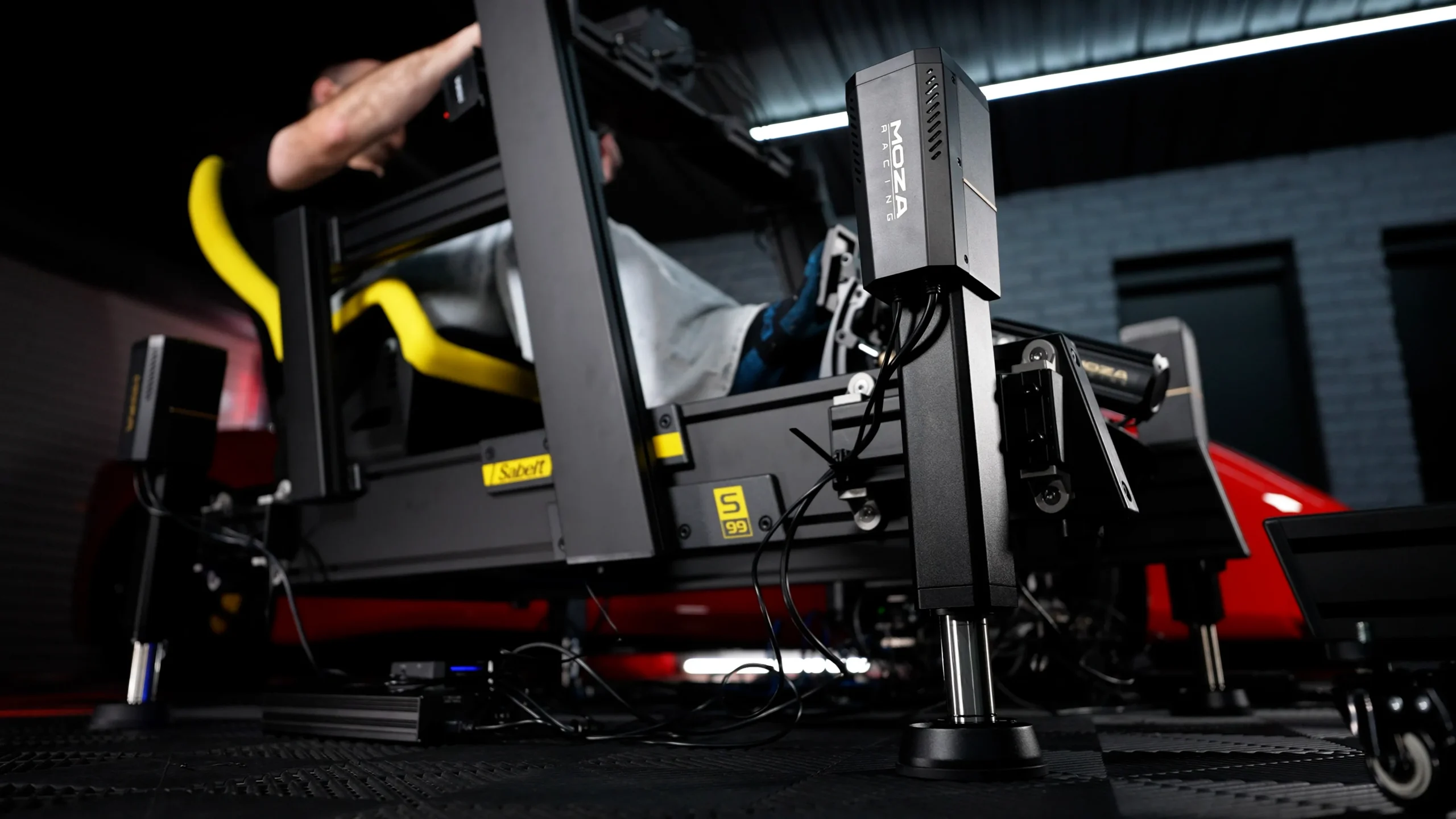
At $2,999 USD (AUD $5,499) at the time of this review, the HMA150 isn’t cheap, but it’s a lot cheaper than other motion systems with similar specs. Here in Australia, it lands at roughly half the price of a D-Box G5 system, and it’s over $2,200 USD less than the MotionHouse Haptic4 was when we reviewed it. Plenty of the motion systems we’ve tested have cost more than twice as much — and we certainly wouldn’t say any of them were twice as good.
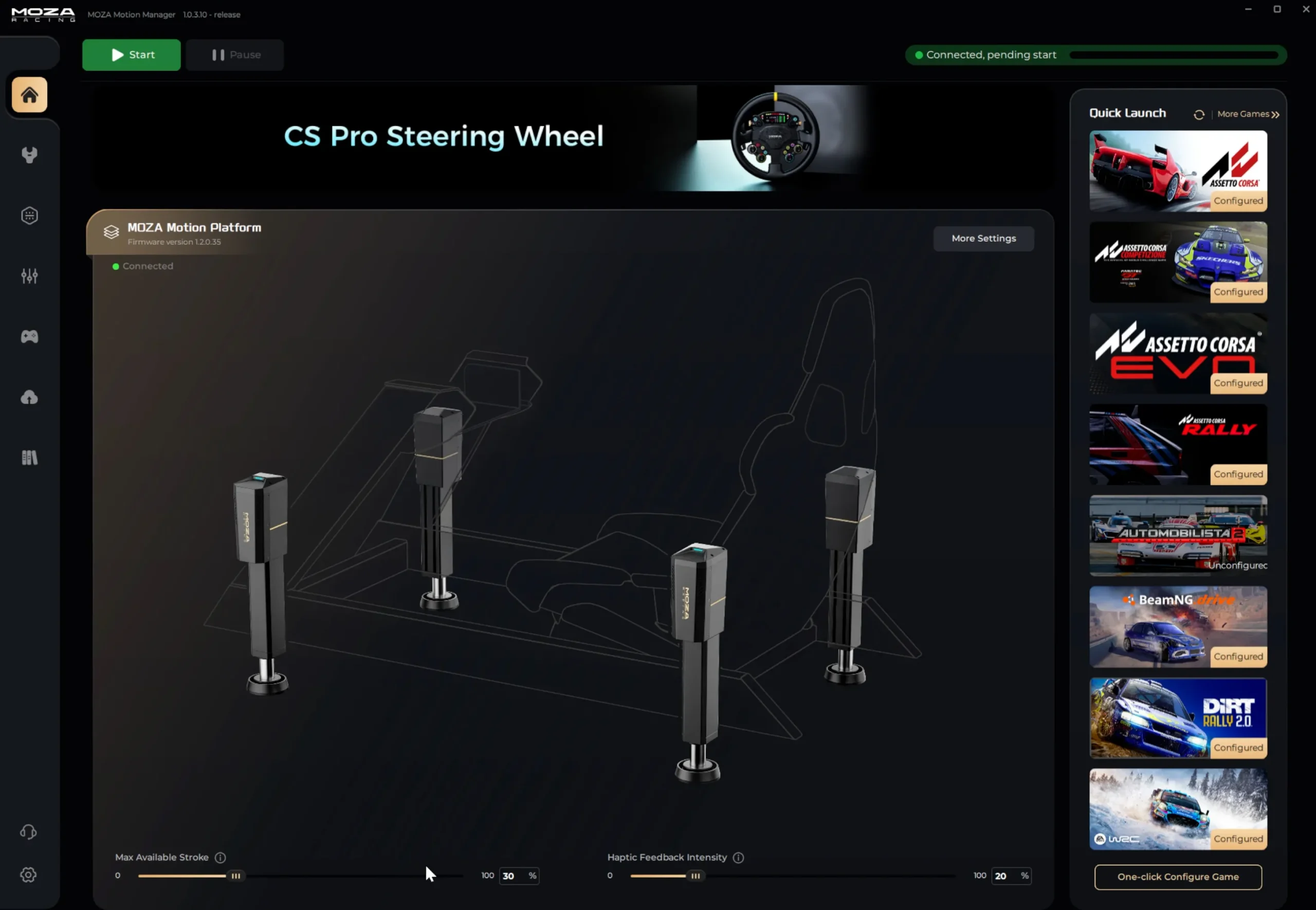
The bigger question is whether you need everything you’re paying for. We ran the motion sliders at 30% or less for a realistic feel, and even MOZA’s default profiles limit overall movement to 30% of the available stroke. If you want big, rally-style immersion, it’s outstanding bang for buck. If you’re after precise seat-of-pants feedback, you may be paying for travel you’ll never use.
Build Quality and Engineering: 6/10
Compact, simple and tougher than it looks — with an EMI asterisk
The HMA150 doesn’t scream premium in the way some of the more over-engineered systems we’ve tested do, but it gets the job done. The mounting brackets are cast aluminium rather than the CNC-machined aluminium or steel some competitors use, yet we abused the system at settings far beyond anything we’d ever recommend and nothing broke or came loose.
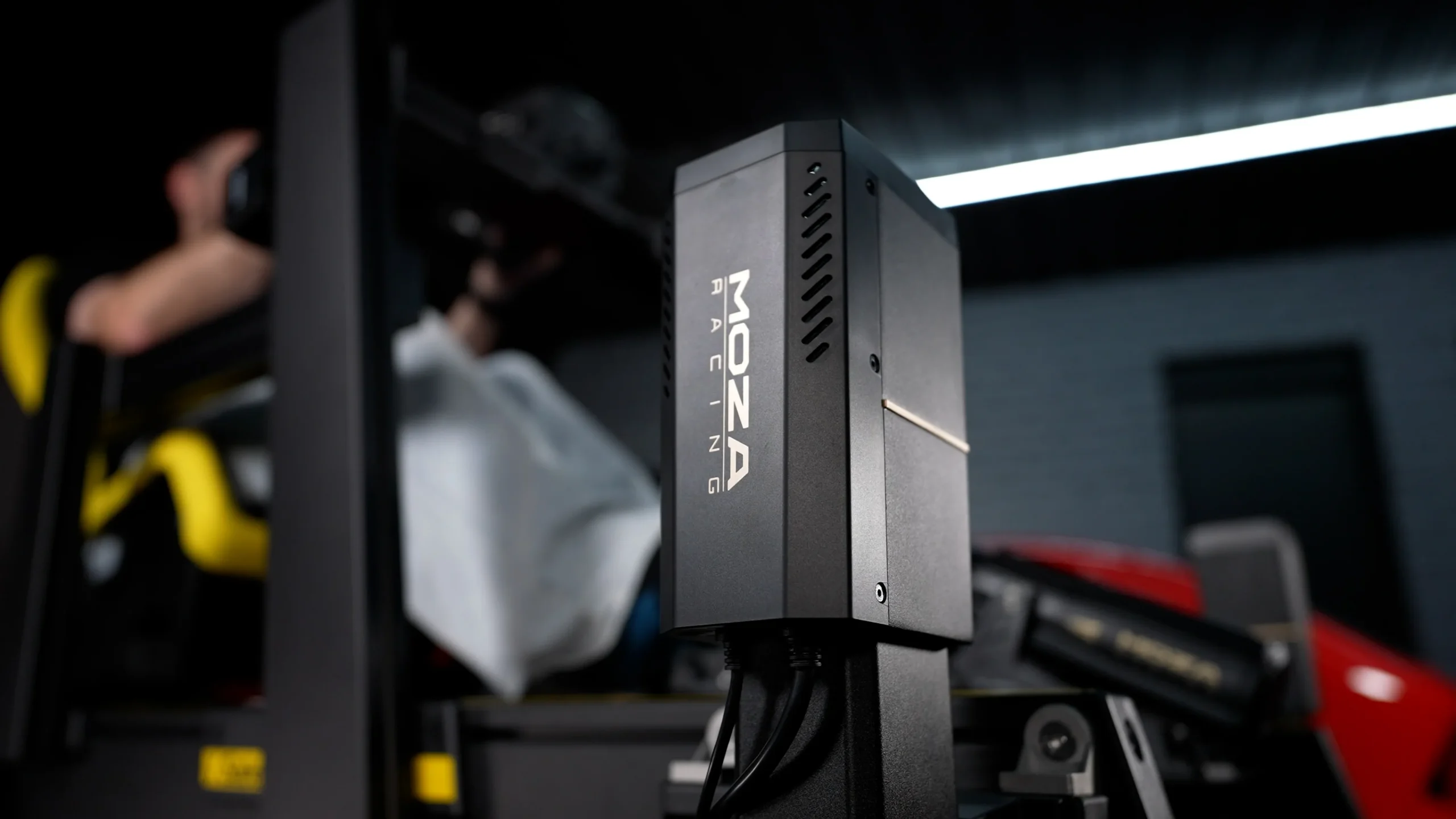
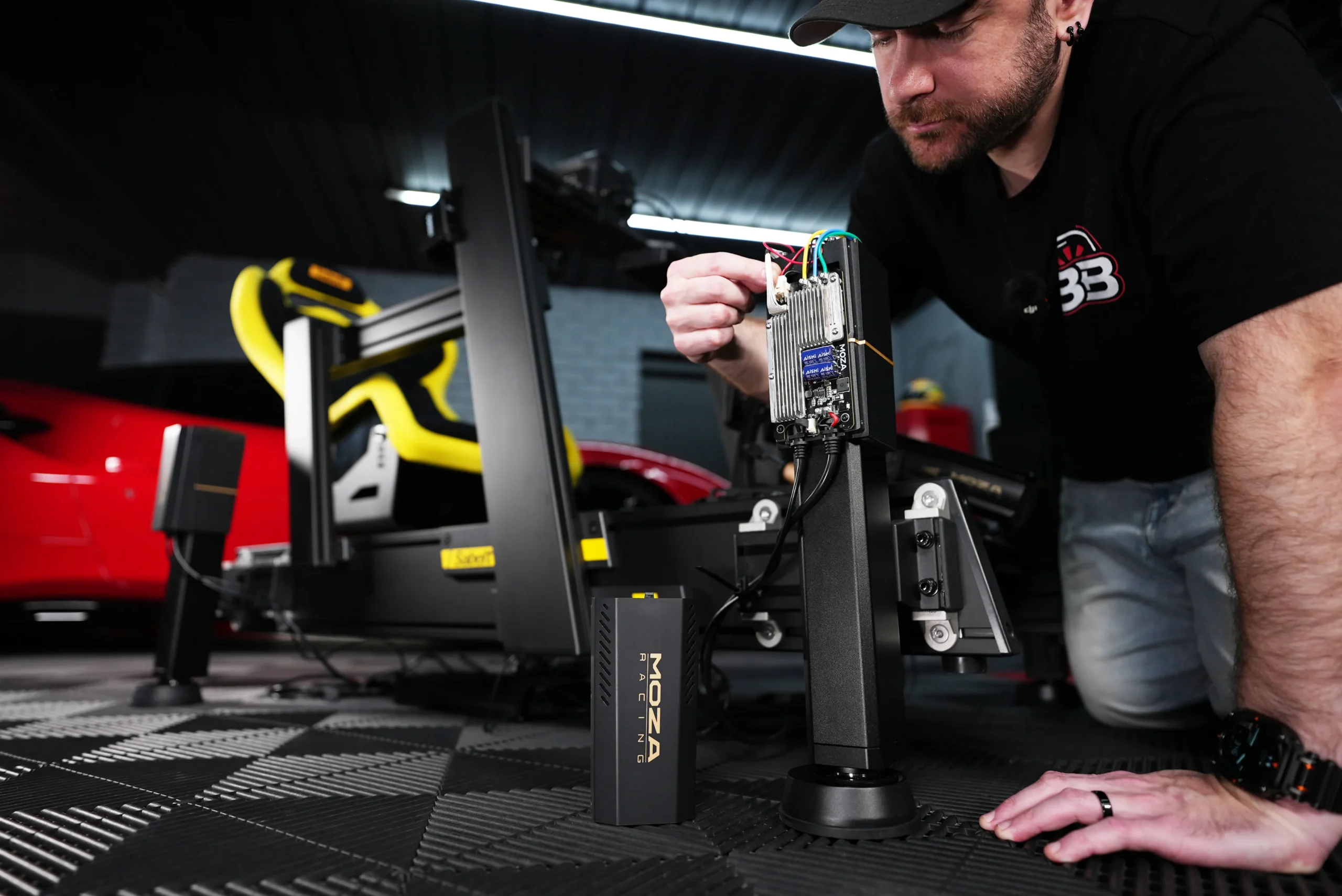
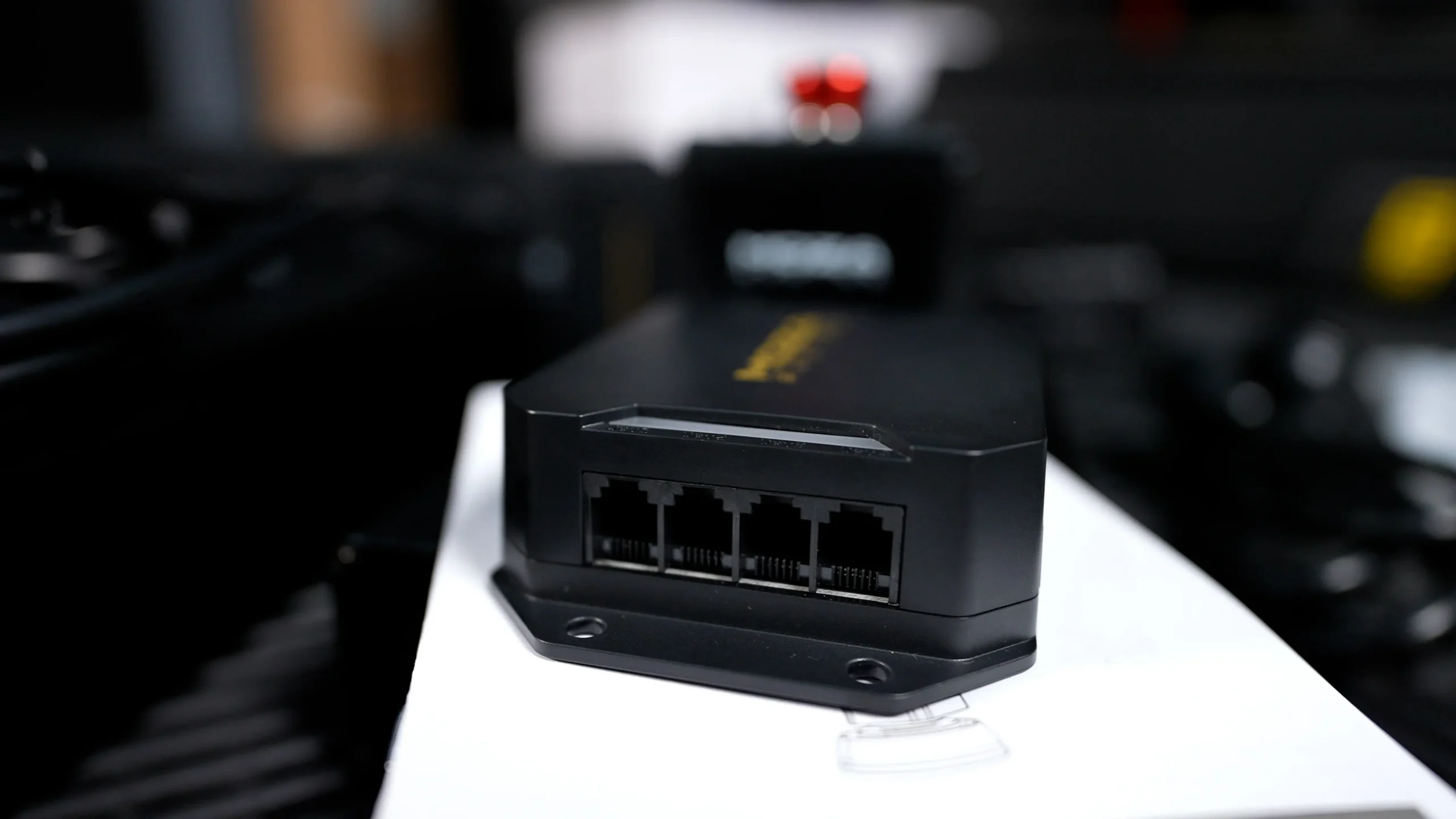
What impressed us most is how compact it all is. Instead of the giant control box and power supply many motion systems ship with, you get a 330mm x 130mm x 50mm power brick and a small control module with eight ports. MOZA says the architecture is designed for future upgrades to six or seven axes and full 6DOF. The switch-mode supply runs on both 110V and 240V mains and peaks at around 1500W, so a standard 10 amp household circuit handles it easily, no 15 amp or three-phase upgrades required.
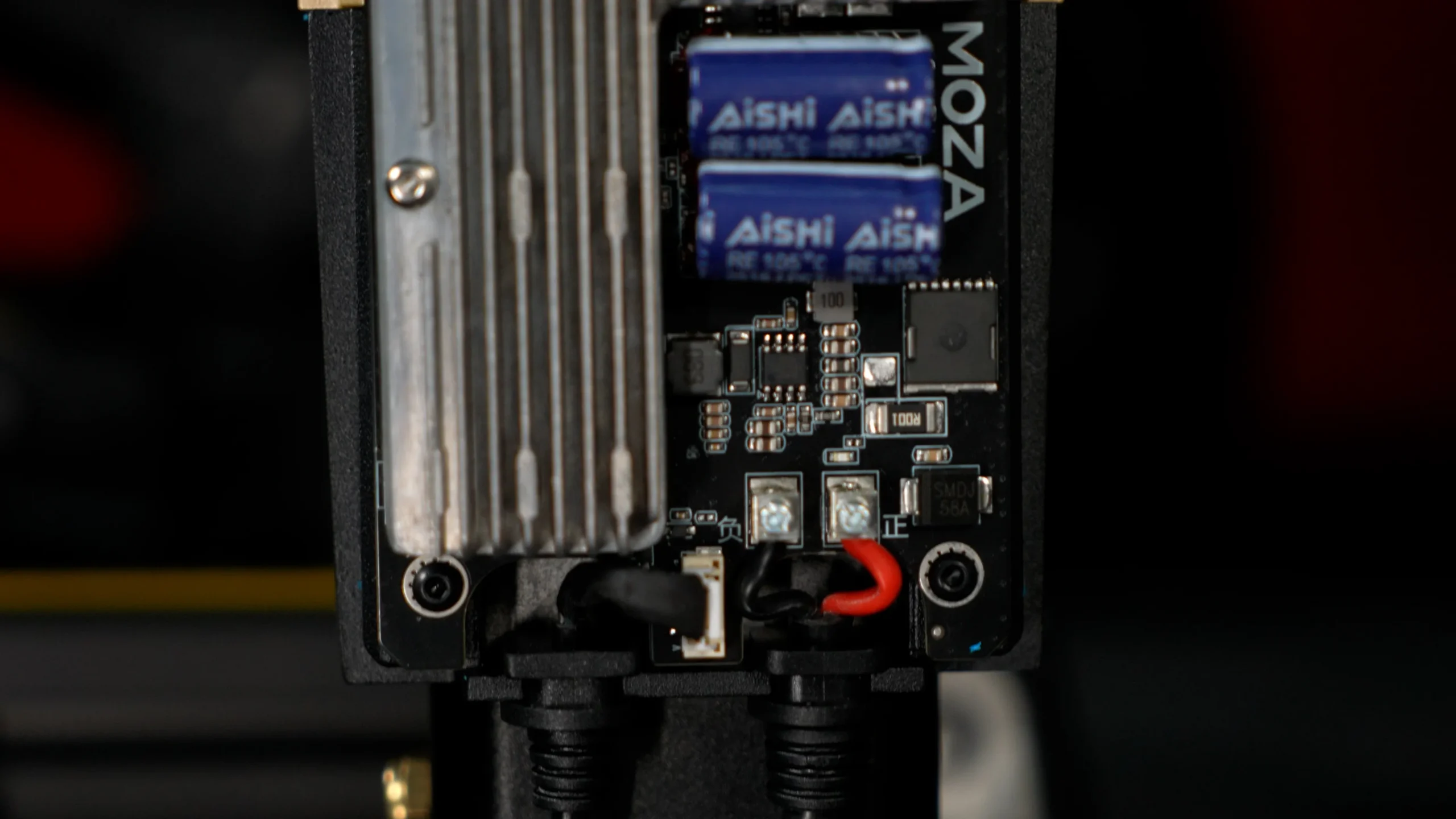
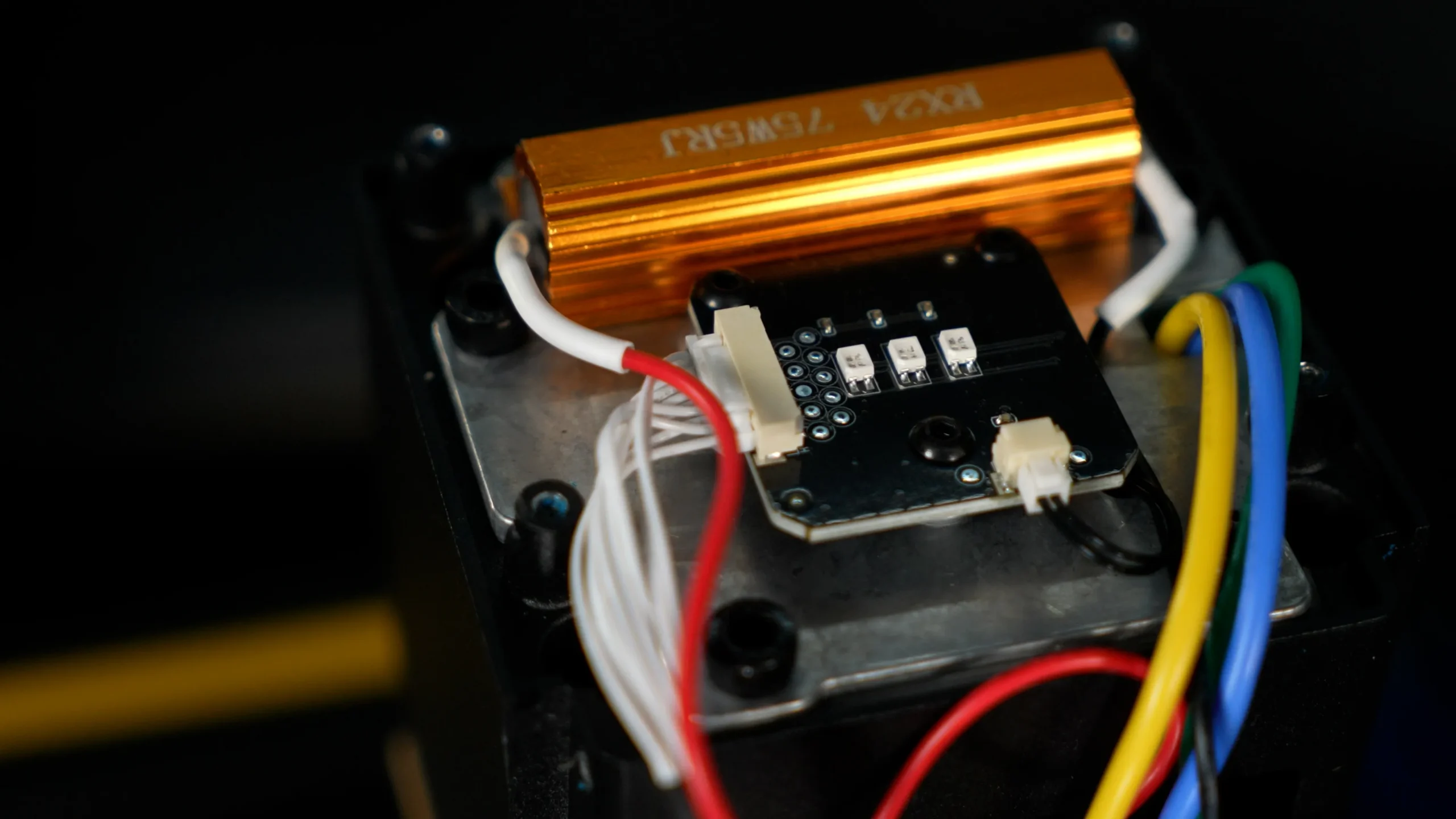
Inside, each actuator’s motor control and power delivery board sits under a heatsink, alongside a braking resistor that dumps the current the motor generates as it spins down, and a Hall effect sensor at the back of the motor shaft. After running at 100% in 20°C ambient, the electronics were barely warm to the touch. Our only build quality gripes are some unnecessarily long internal cables which is a bit of a MOZA trait, and no shielding or ferrite choke on the power cabling, something high-end brands spend serious money on.
That last point may matter. Our wireless keyboard stopped responding whenever it sat within the footprint of the system’s electronics, and our wireless microphone suffered interference that dropped off sharply when we switched the HMA150 off. We’ve never experienced that with any other product we’ve reviewed. We can’t measure it scientifically, but it may be a factor if your setup relies on wireless devices.
Installation & Integration: 8/10
Genuinely painless
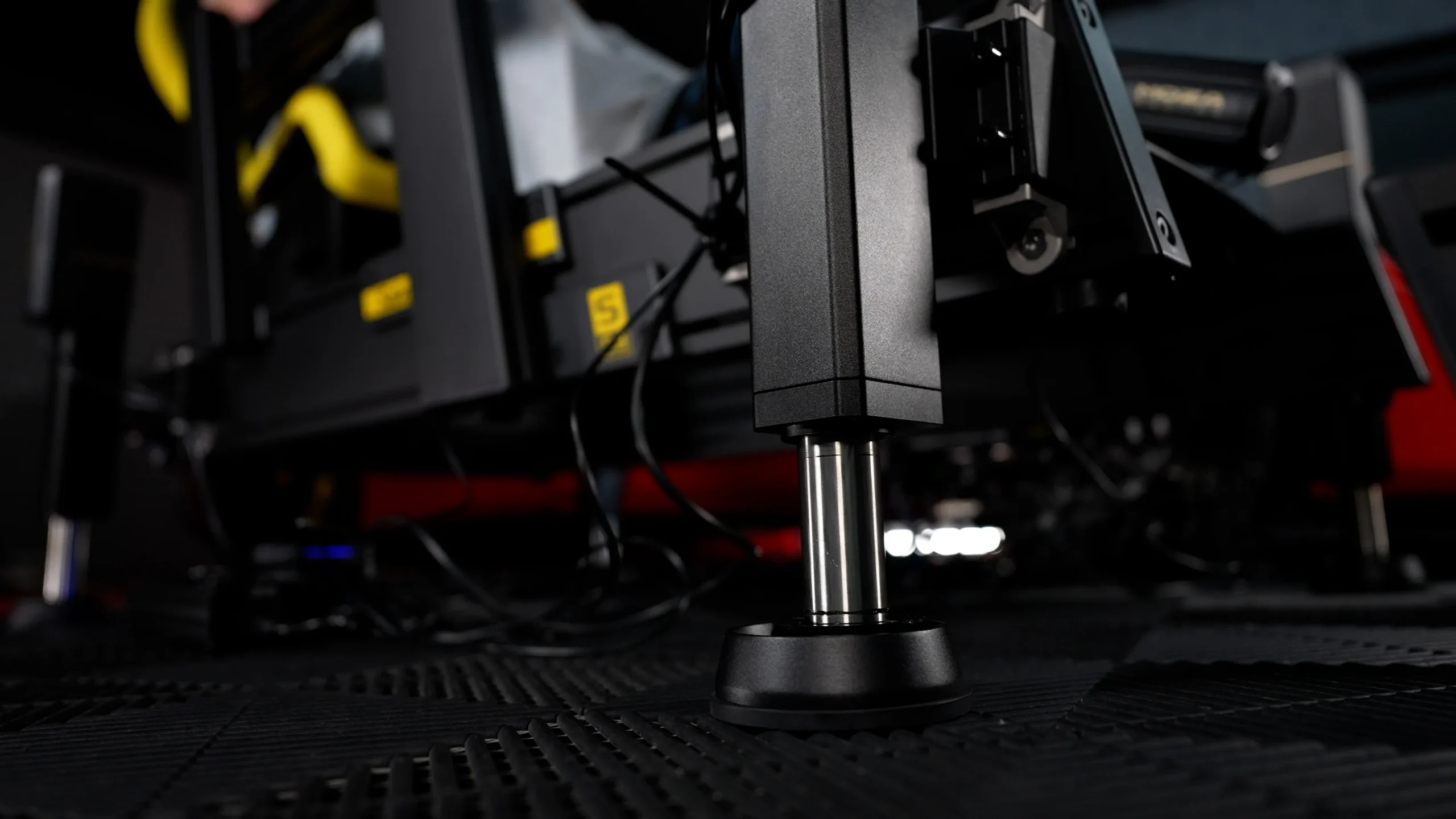
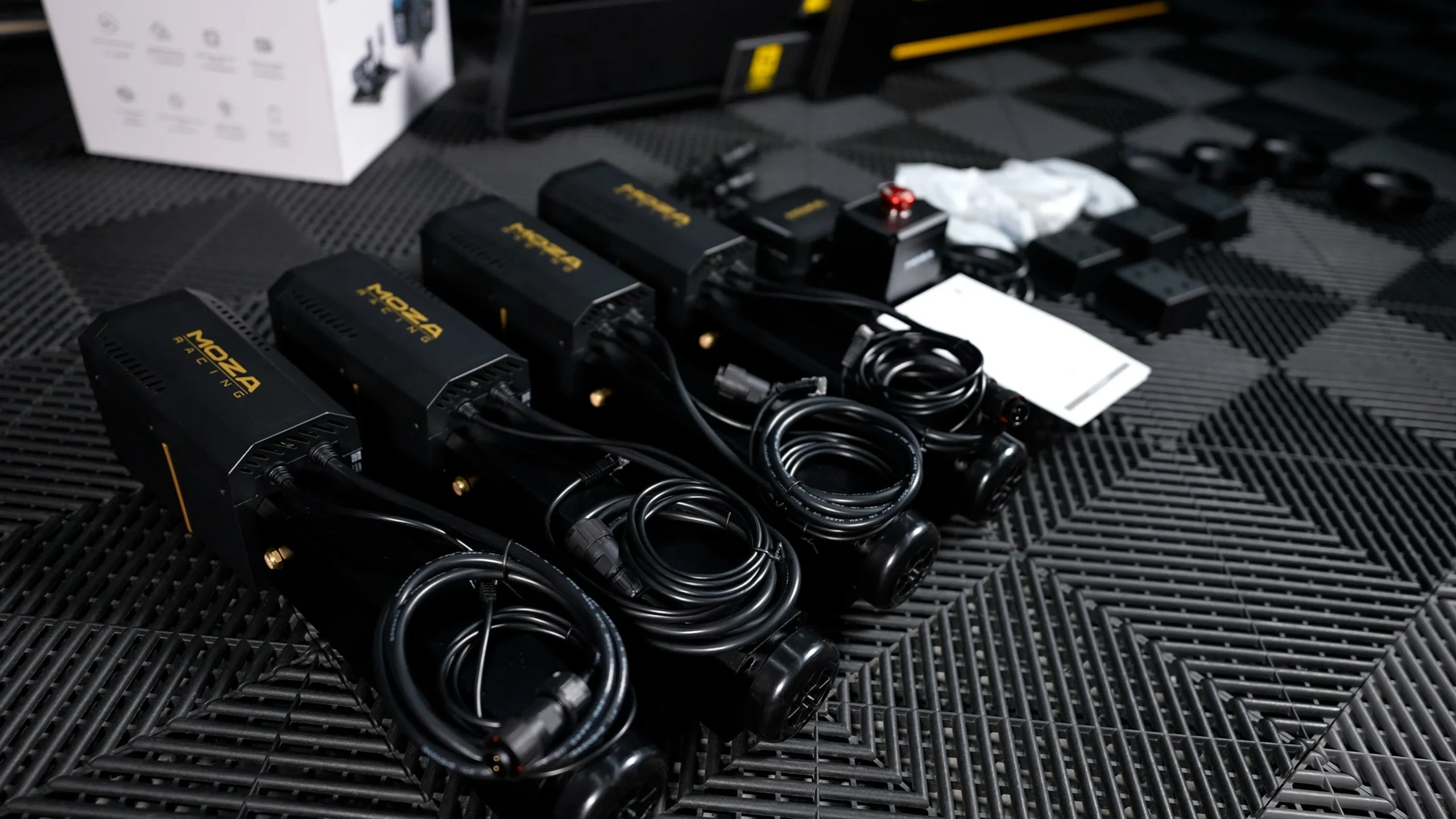
Installation was one of the HMA150’s nicest surprises. Everything arrives cleanly presented: four actuators, caster cups to stop the rig skating around under heavy movement, mounting brackets and hardware, an emergency stop button with a nice, solid action, and even cable management clips and removable, reusable zip ties. Without dealing with filming at the same time, we’d have had it all up and running in around three hours.
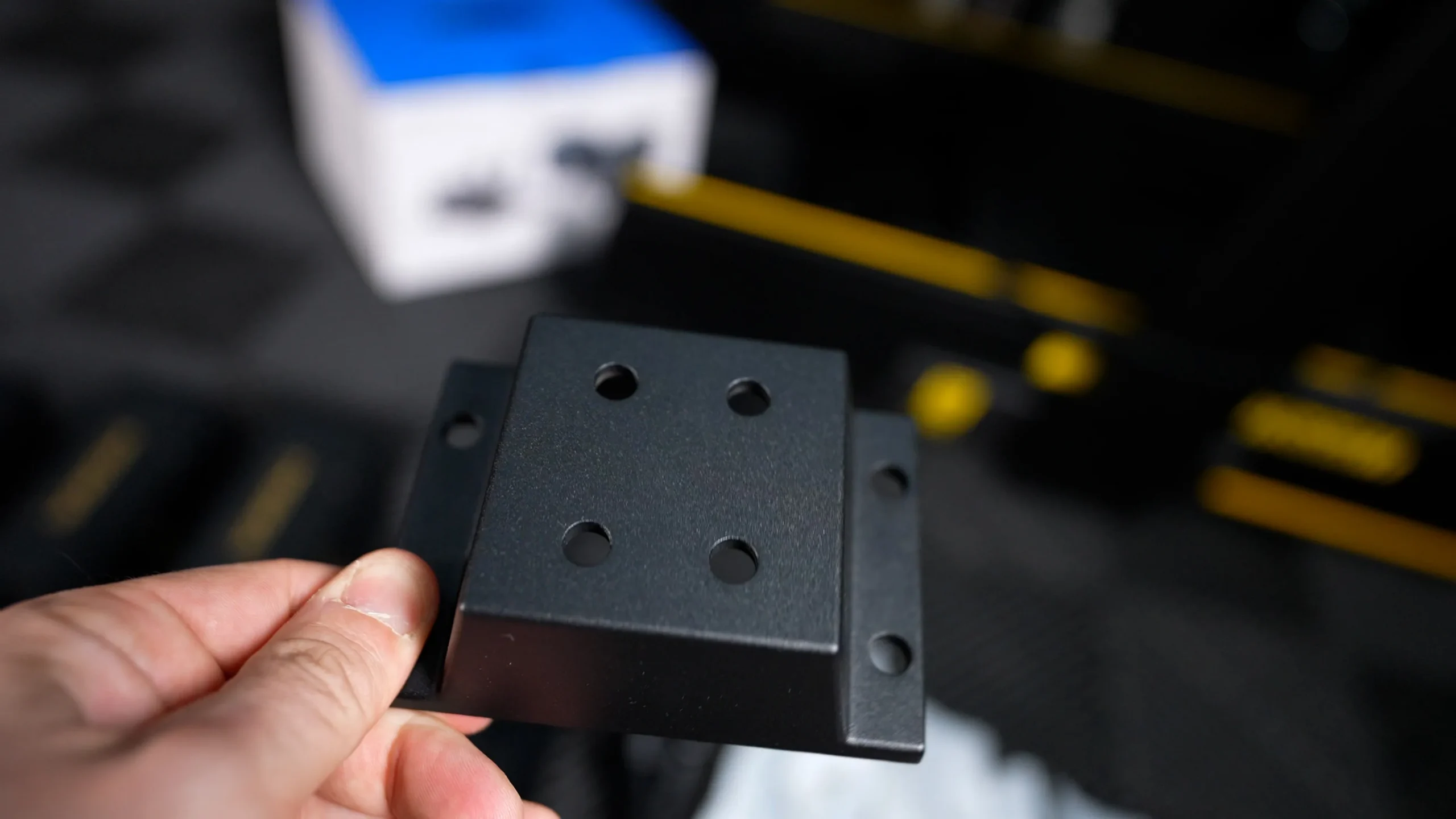
The included brackets suit 40×80 profile, our 40×160 cockpit has no centre channel, so we fabricated our own brackets, which worked perfectly. MOZA sells its HMA Profile Adapter Kit for exactly this situation, so check your cockpit before you order. MOZA recommends 1.2m of front-to-back spacing between actuators, but a calibration tool in the software adjusts for other spacings.
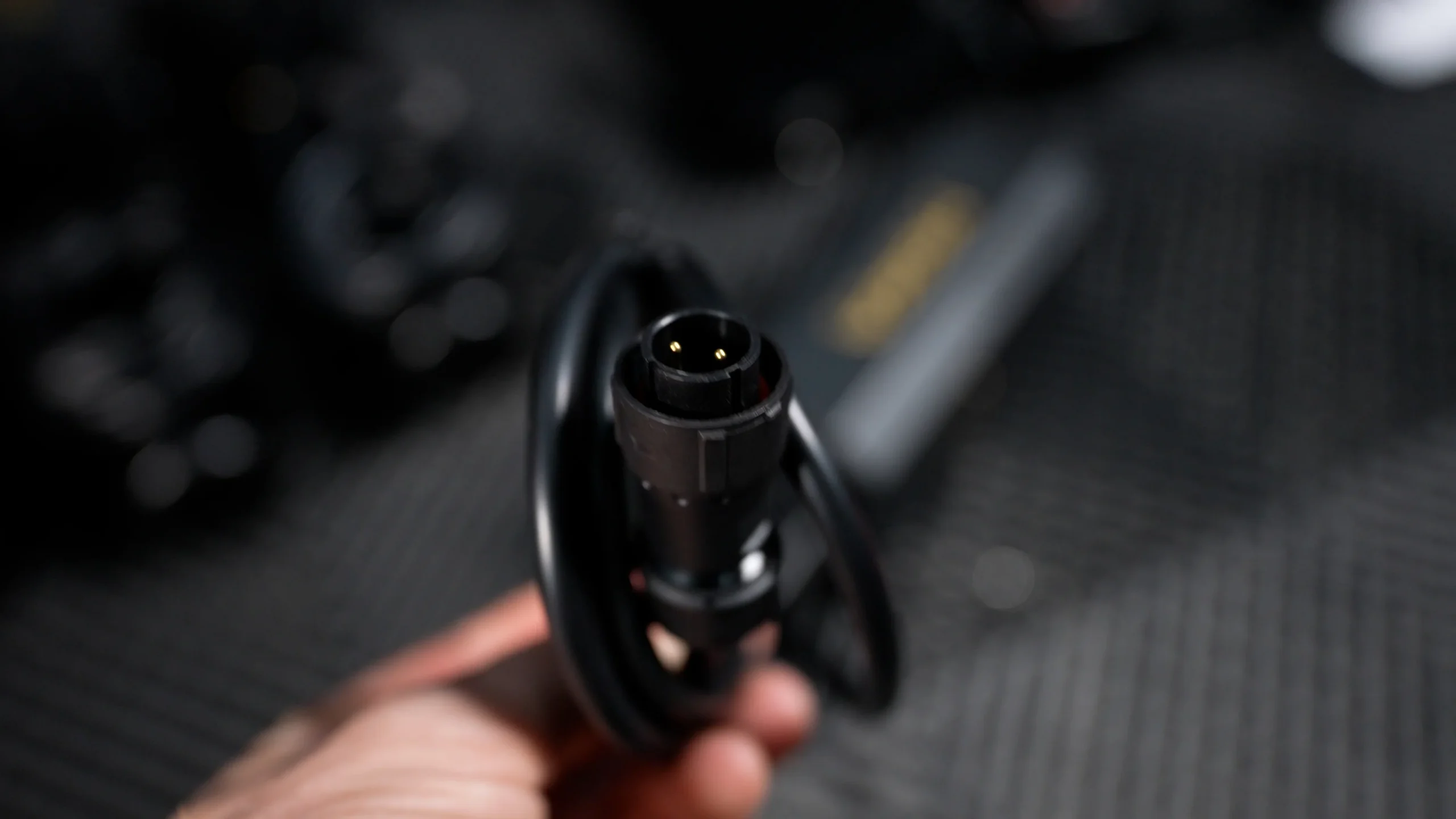
The control module bolts to your profile with the included M6 hardware, but the power brick has no mounting provision, so it’ll likely live on the floor. Each actuator runs a power cable from the brick, with a waterproof connector at that end, plus a cable back to the control module, which connects to your PC via USB-C and to the e-stop via an RJ cable. The power cable is wired directly into the actuator, though, so damaging one means a disassembly job to replace it.
Which brings us to cable routing. During our install, one cable slipped under the moving section of an actuator and was pinched as it lowered. It kept working, but we were lucky not to short out and fry both the power supply and the actuator. Use the included cable management and keep everything well clear of moving parts. Beyond that, the software installed without a hitch, and after a quick firmware update (more on that below), everything just worked.
Software & Tuning Flexibility: 7/10
Clean and approachable, but missing VR motion compensation
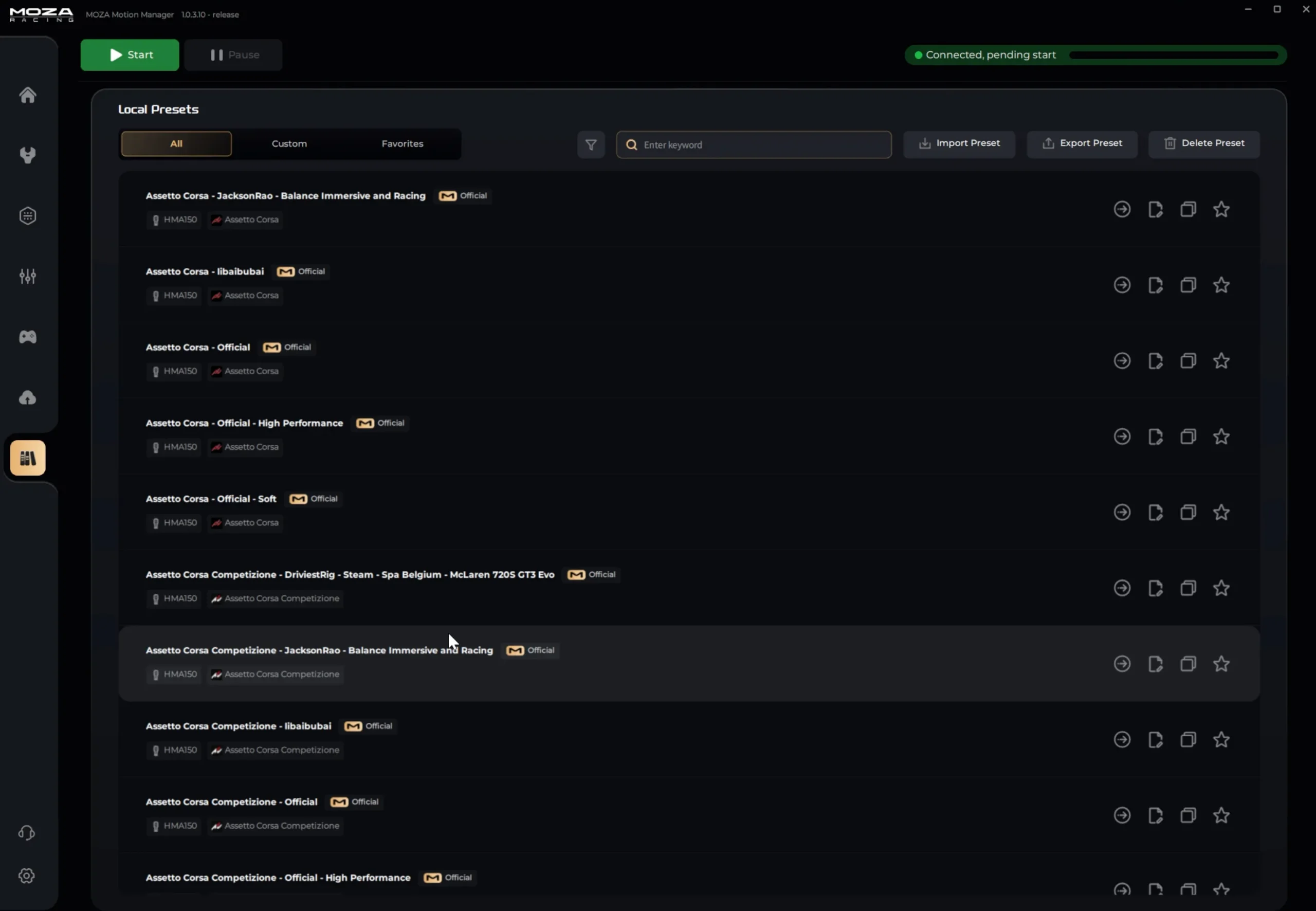
Motion is so subjective that software can make or break a system, and MOZA Motion Manager gets a lot right. It’s separate from Pit House because the platform isn’t limited to sim racing, but it’ll feel instantly familiar if you’ve used Pit House. Profiles switch automatically when you load a game or specific car and any per-title setup is handled right from the games list.
Calibration is well thought out. It doesn’t matter which control module port each actuator uses, and the automatic position calibration measures your actuator spacing for you. This worked consistently to within about 5mm across repeated runs. This is important, because few rigs are a perfect square, and without that compensation, pitch and roll effects end up mismatched.
Our only slight hiccup was firmware: one actuator arrived on a different version to the other three, so the system wouldn’t run until we’d updated it.
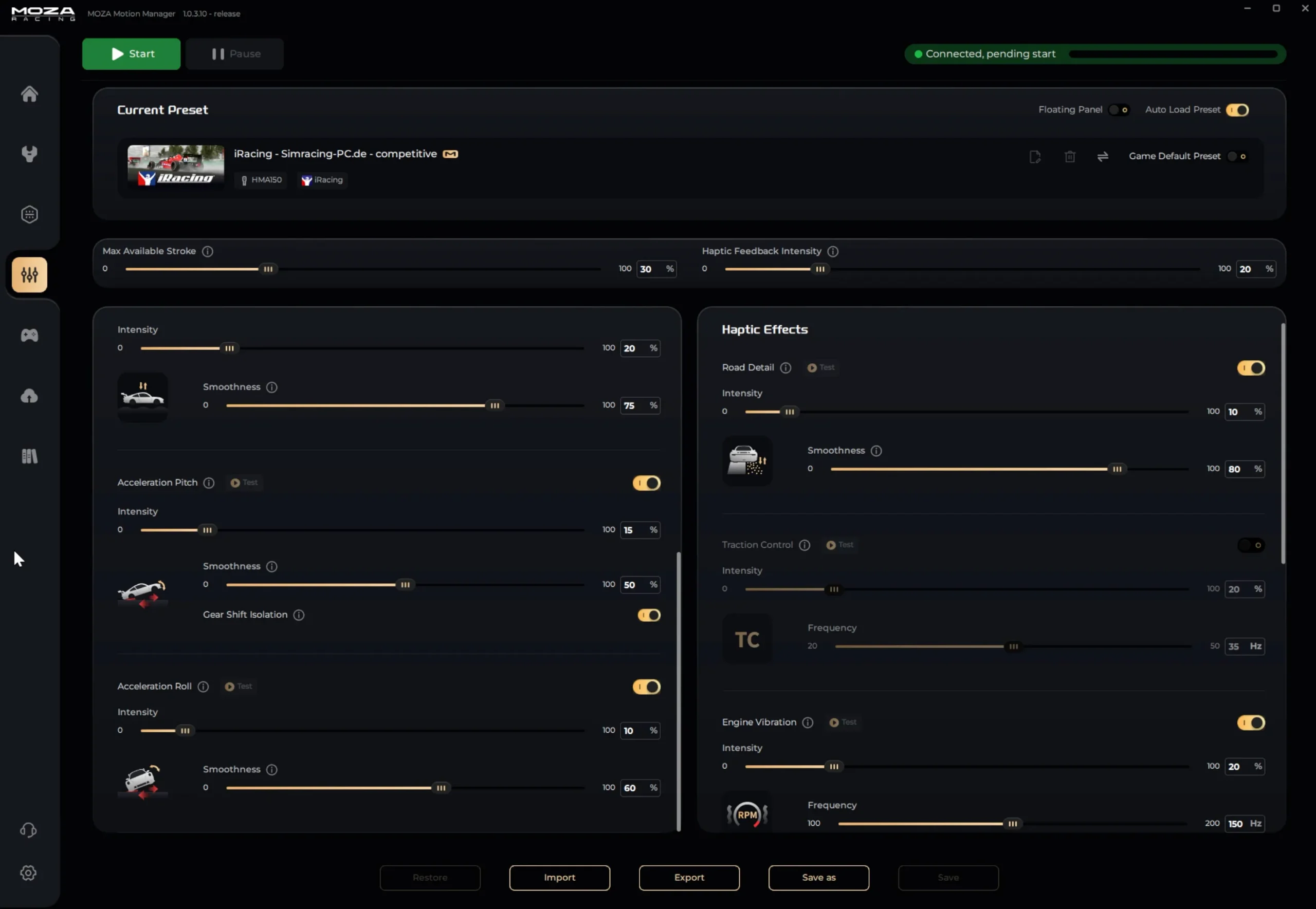
Tuning trades depth for accessibility. Each motion and haptic effect gets intensity and smoothness sliders with tooltips, and a floating panel puts quick adjustments and on/off toggles in one place. There are nowhere near as many settings as in the high-end Qubic Systems or D-Box software, but it’s far less overwhelming because of that.
The big omission is VR motion compensation. Without it, your headset can’t separate platform movement from head movement, so it feels like you’re floating around inside the cabin. At low motion settings like ours, it’s noticeable but not a deal breaker; with big rally, off-road or truck-style movement, it’s a bigger issue. Some headsets offer a workaround. Pimax for example, can track a controller mounted to your rig, and third-party software exists, though it may cost extra and adds complexity.
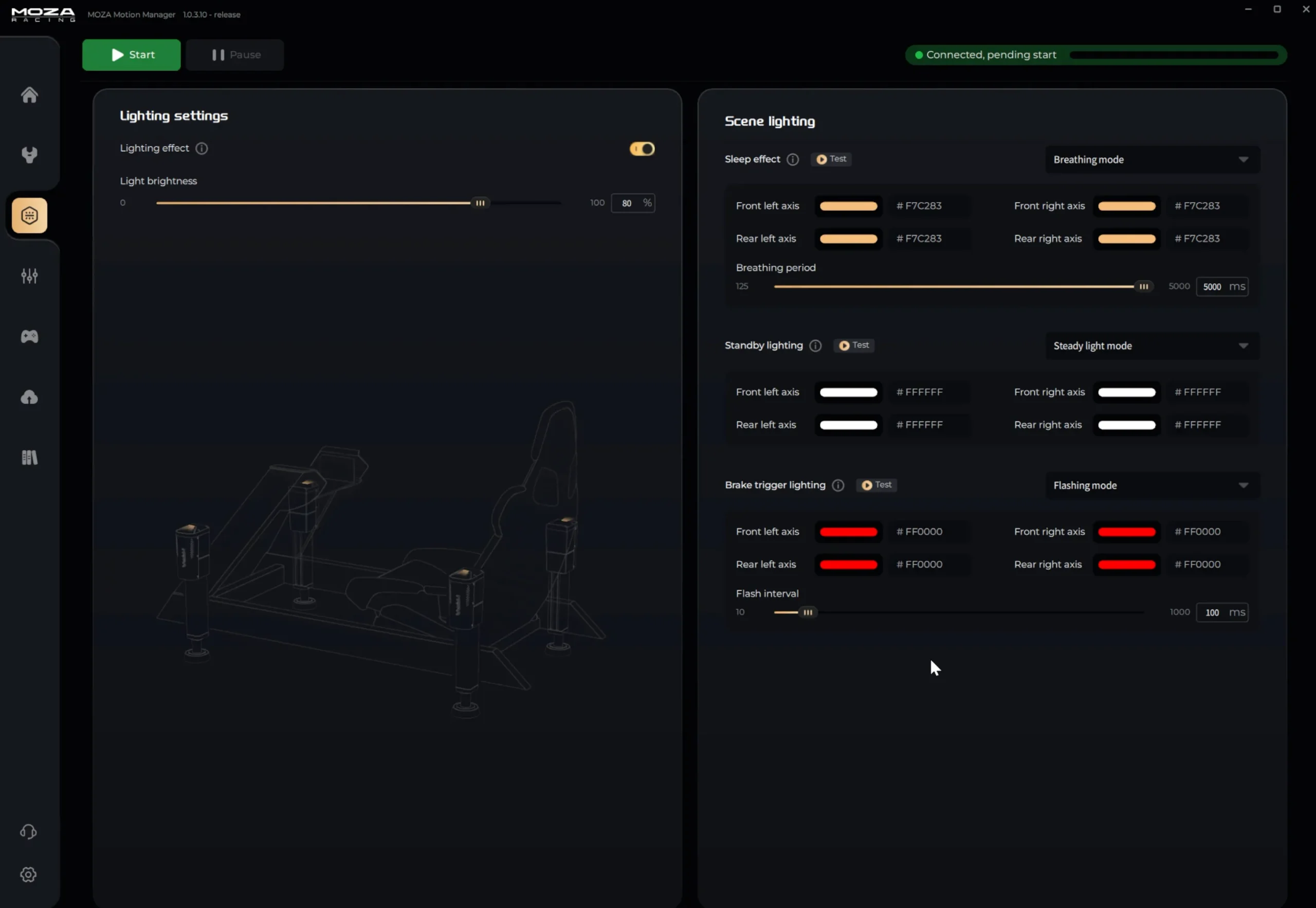
Smaller niggles include no cloud-based profile sharing yet, though you can import and export profiles, and LEDs on top of each actuator that are hard to see while driving, with only idle, standby and brake-trigger effects for now. ABS or spotter lights could make them genuinely useful in a dark environment.
Haptic Feedback & Response: 6/10
Capable hardware, limited by game support
Not every motion system can do detailed haptics, but the HMA150 can. Alongside its larger movements, its actuators produce high-frequency vibration up to 200Hz. In simple terms, up to 200 tiny pulses per second. That’s enough to render road texture, rumble strips and engine vibrations: the kind of fine detail you’d usually run through a ButtKicker or pedal vibration motors.
Motion Manager splits this into individual effects. Road detail, traction control, engine vibration, gear shifts, ABS, wheel slip and more, and in practice, they do a pretty good job. They’re not necessarily realistic, but they give your brain genuinely useful cues about what the car is doing underneath you. And because effects stay clearly separated, you can lean more heavily on haptics than movement if lap times matter more to you than immersion.
The limitation is game support. Not every sim provides the telemetry for every effect: iRacing was one of the better-supported titles during our testing, while Assetto Corsa EVO had most haptic effects greyed out, with only gear shifts working. Support will change over time, so check MOZA’s website for the latest.
Motion Quality: 6/10
Remarkably smooth and quiet — but not quite as precise as the best
Two things stood out straight away: how smooth and how quiet the HMA150 is. Most motion systems, even very expensive ones, have a slight texture you can feel as the platform rises and falls. There’s a little here too, but it’s far from the roughest we’ve felt. At our daily settings, the actuators were quieter than the shifters on most steering wheels. Push the motion harder and you’ll get some clunking and thudding as weight shifts between actuators, which can carry through timber floors or into neighbouring apartments, so be mindful if you race above a kid’s bedroom. This is of course true for any motion system of this style.
With every slider at 100%, the HMA150 is literally undrivable, but once properly tuned, each effect is clearly defined so the motion helps you drive the car, rather than the car driving you. As a 3DOF system, it’s limited to heave, pitch and roll, with no yaw, sway or surge, but I generally prefer 3DOF anyway: it delivers most of what you want from motion without overloading your senses.
Where it falls short of more expensive systems is precision. There’s a slight sense of disconnection, and at times what we felt didn’t line up with what we expected from the car. Occasionally enough to make driving errors and lose time or crash. Heave over big compressions, like those at the Nürburgring, delivered a convincing pit-of-your-stomach drop, but it sometimes arrived with a small delay that varied from lap to lap. A few effects also felt disproportionate no matter how we tuned them: rolling to a stop at walking pace had the rig practically doing wheelies.
None of it is deal-breaking, and firmware updates could tighten things up. MOZA has had a number of products that did not impress us in their first generation but saw huge improvement through firmware and hardware revisions.
Like any consumer motion system, it can’t produce sustained g-force. Once it runs out of travel through a long corner, it can only hold, and the return to centre can feel like the car is floating. A seatbelt tensioner can help fill that gap: see our
Qubic System QS-BT1 review.
Overall Rating: 7/10
A genuinely impressive first-generation product from MOZA — though it may be more than most sim racers need.
Conclusion
We didn’t expect the HMA150 to be this good. MOZA’s first-generation products haven’t historically impressed us. Our
MOZA wheelbase and
active pedal reviews tell that story, but this one genuinely did. Installation is painless, the software is clean and approachable, the hardware is compact and capable, and the motion is smoother and quieter than some of the systems we’ve tested.
It’s not perfect. The motion isn’t quite as precise or consistent as more expensive systems, the limited software adjustment can’t fully tame some effects, there’s no VR motion compensation yet, and the interference we saw with wireless devices is worth weighing up. Many motion systems we’ve reviewed are arguably over-engineered for home use, but we never had those issues with them.
Whether you need what it offers is another matter. Even at around half the price of a
D-Box G5, it’s still a lot to spend on a hobby, and realistic settings use only a fraction of its 150mm stroke. Like most tech brands, MOZA has form for launching at the top of a range and following up with cheaper models. For example, the R21 Ultra wheelbase arrived before more affordable options further down the range. We have no inside information, but a 50mm version of the HMA150 would be an easier recommendation of they were able to bring the price down even more.
If you want big, immersive motion, the HMA150 is outstanding value. If you’re after a finely tuned tool for seat-of-pants feedback, think carefully about whether you’ll use what you’re paying for.