

Playseat Challenge DD F1 Edition: Detailed Review

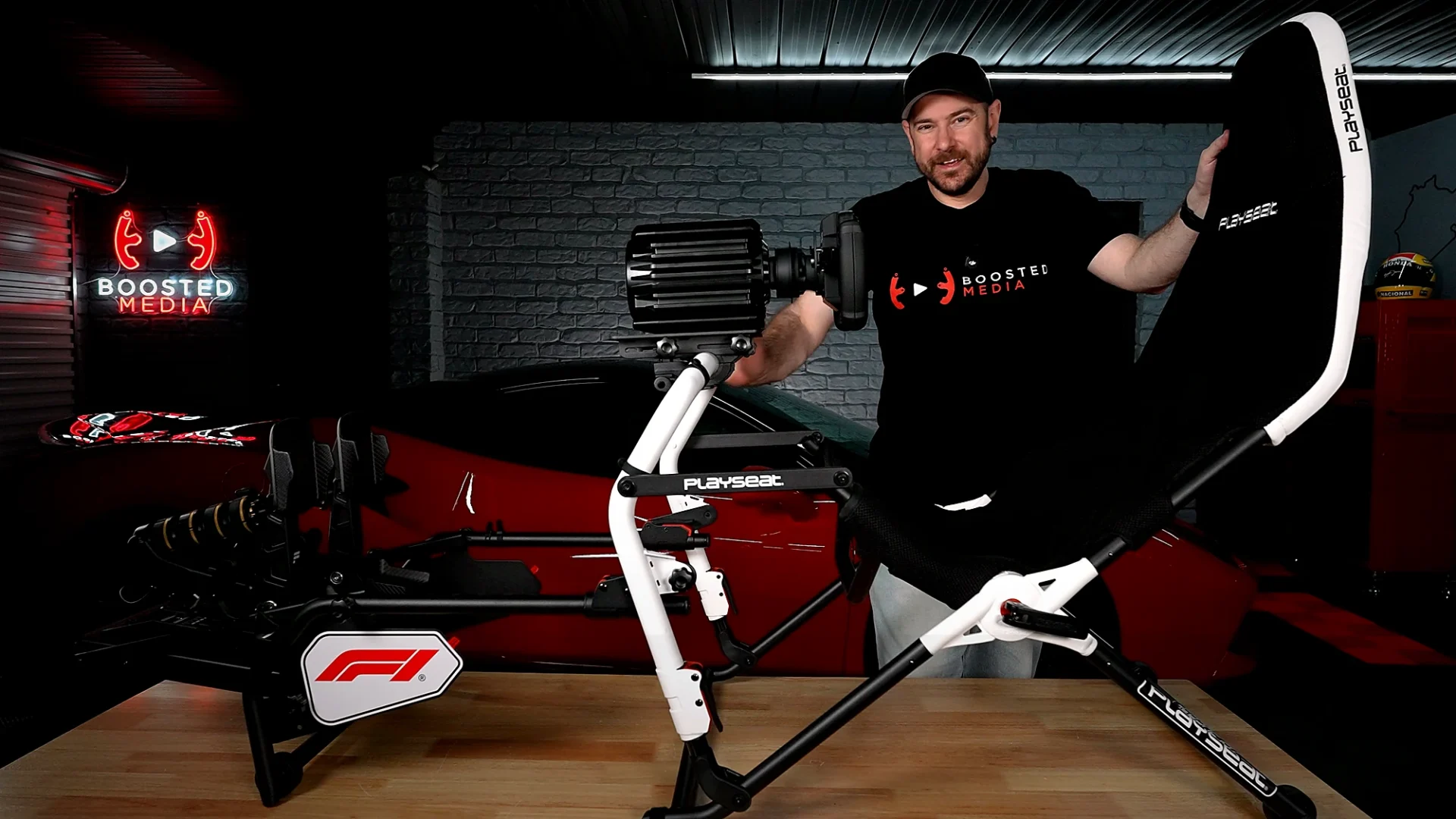
We revisit Playseat with the Challenge DD F1 Edition, a folding tube-frame cockpit built to handle direct drive wheels and high-end pedals while still packing away when you’re done. Here’s what we found.

A couple of years ago we reviewed the Playseat Trophy and asked a simple question: why would anyone choose a tube-frame cockpit over a similarly priced aluminium profile rig? That video ended up becoming the most-watched review we’ve ever published, by a huge margin, so clearly a lot of you are wrestling with the same question.

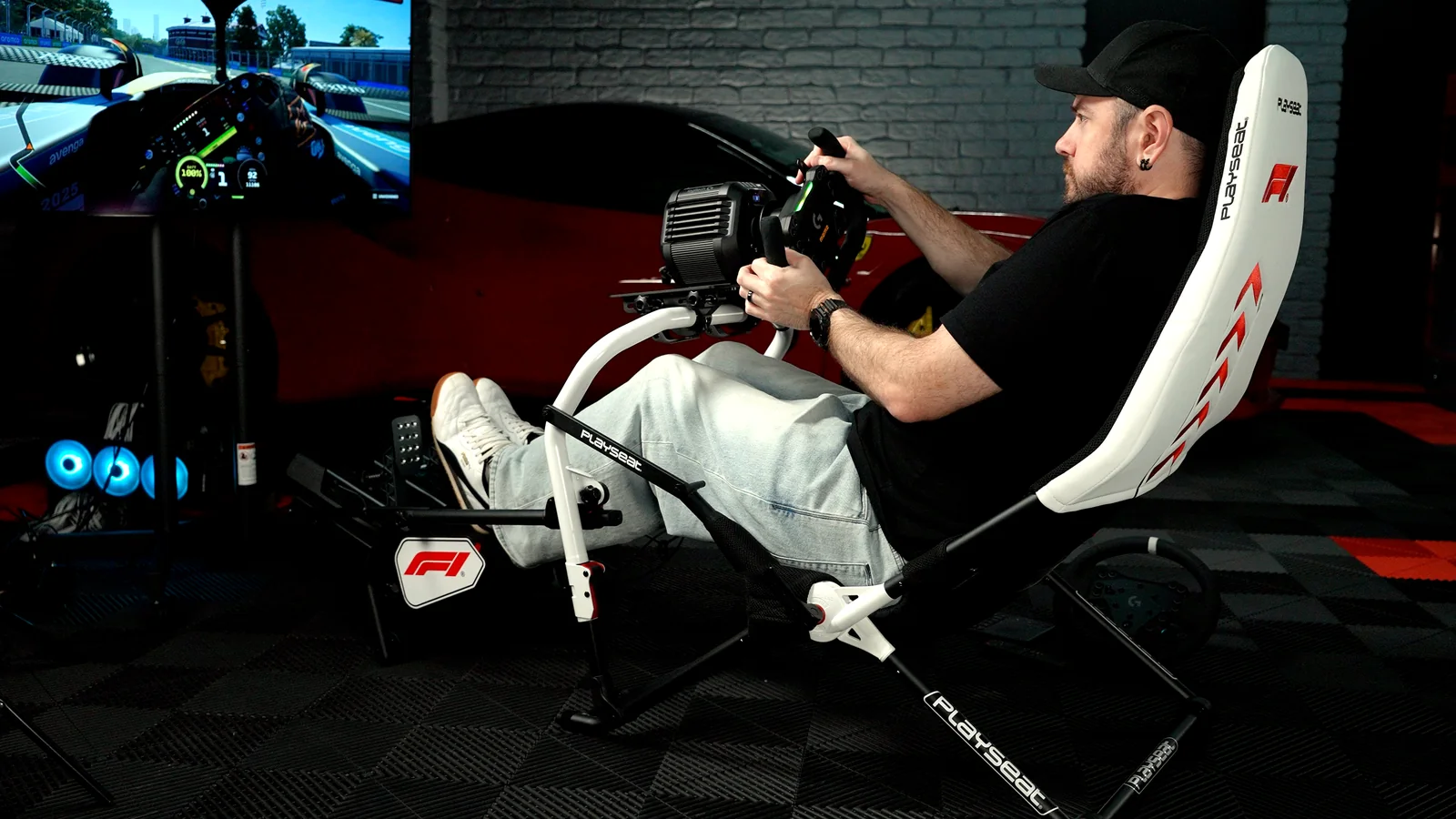
The Challenge DD F1 Edition sits in a more interesting part of the market to us than the Trophy did. It’s designed to be strong enough for modern direct drive wheelbases, while still being practical enough to fold away, adjust between driving positions, and hand off between different drivers. On paper, that’s a compelling combination, so we put it to the test in assembly, adjustment, and driving, to see whether it holds up to it’s claims in the real world.

Playseat Challenge DD F1 Edition Ratings

playseat-challenge-review-will-at-desk-HERO

Reseller
Affiliate links

If our reviews have helped you decide what the best sim racing gear is for you, please consider using the links on this page to make your purchase.  By doing so you’ll be supporting Boosted Media at no additional cost to you!  This option is available for a huge range of Sim Racing gear.

Discount Code: BOOSTED
Ships Globally from Spain
Availability
may vary
Ships from
Montreal, CA

A quick disclosure before we get into it: Playseat sent us this cockpit to review, and as always, anything we compare it against in this review was supplied to us under the same conditions. No third party has any input into our observations or opinions here. Everything in this review is based purely on our own hands-on testing.

Who is this cockpit for?

Before getting into scores, it’s worth being upfront about what this rig is and isn’t. This isn’t a sim rig you bolt a motion platform to, and it isn’t designed to carry button boxes and accessories bolted on everywhere. It’s built to sit in a corner, fold away when it’s not needed, and be shared easily between family members or friends without dominating a living room.

It’s also worth noting that this is focused on a formula-style seating cockpit rather than one that adjusts between an upright street car position and a reclined formula position. There’s lots of adjustment on offer, but in our testing it was much more about dialling the rig in to fit your body size than about switching between driving styles. If you’re after a cockpit that swaps between upright and reclined seating, this isn’t the one. But if you want something that folds away, isn’t obtrusive, and still delivers a proper direct drive experience that can easily switch between kids and adults, it’s worth serious consideration.

VALUE: 6/10

Well equipped for the price, with broad retail availability

Playseat has a well-established network of resellers worldwide, so it’s worth shopping around locally rather than relying solely on direct shipping, since you may save on freight and import duties. Officially, retail pricing sits at $399 USD / €399 / £349 in the UK, while in Australia it retails at $799 AUD.

The important thing to call out here is that, unlike a lot of cockpits at a similar price point, this comes with everything you need to get racing straight out of the box, bar a wheel, wheelbase, and pedals. You won’t be paying extra for a bucket seat or other add-ons that some competing cockpits treat as optional extras. Going in, we expected this to feel a little overpriced. That opinion changed quickly once we got hands-on with it.

Assembly: 9/10

Genuinely one of the easiest builds we’ve tested

The Challenge DD F1 Edition arrives flat-packed and well packaged, and we had no shipping damage to speak of. There were a few small scuffs in the white paint that looked more like production or packaging marks than transit damage. Worth keeping an eye out for quality control, but not a major issue.

Assembly itself was impressively straightforward. To prove the point, we let nine-year-old Benny build the entire thing by himself, and he managed it with only a little help squeezing in the press-fit metal pushpins on the side panels. Everything lined up correctly first time, with no misaligned holes and no need for drilling or adjustment. If you’ve ever put together flat-pack furniture, you won’t have any trouble here. It took him around an hour, but could probably be done in under half an hour by an adult. It took longer to dial in the seating position and mount a wheel, wheelbase, and pedals afterwards than it did to build the frame itself.

Caster wheels are fitted as standard and can be removed for a slightly more rigid, fixed setup if you don’t need to move the rig often.

Adjustability and seating position: 5/10

Playseat’s marketing claims include “the authentic F1 racing position,” which we’d call embellished for most body types. Genuine F1 seating has your knees near your chin and the tops of your feet roughly in line with your eyes, and few drivers will replicate that here. What the marketing gets right, though, is “performance meets everyday practicality.” The wheel deck position feels accurate enough that VR users shouldn’t notice a jarring disconnect between their physical hands and their in-game hands, even if it isn’t a true F1 seating position.

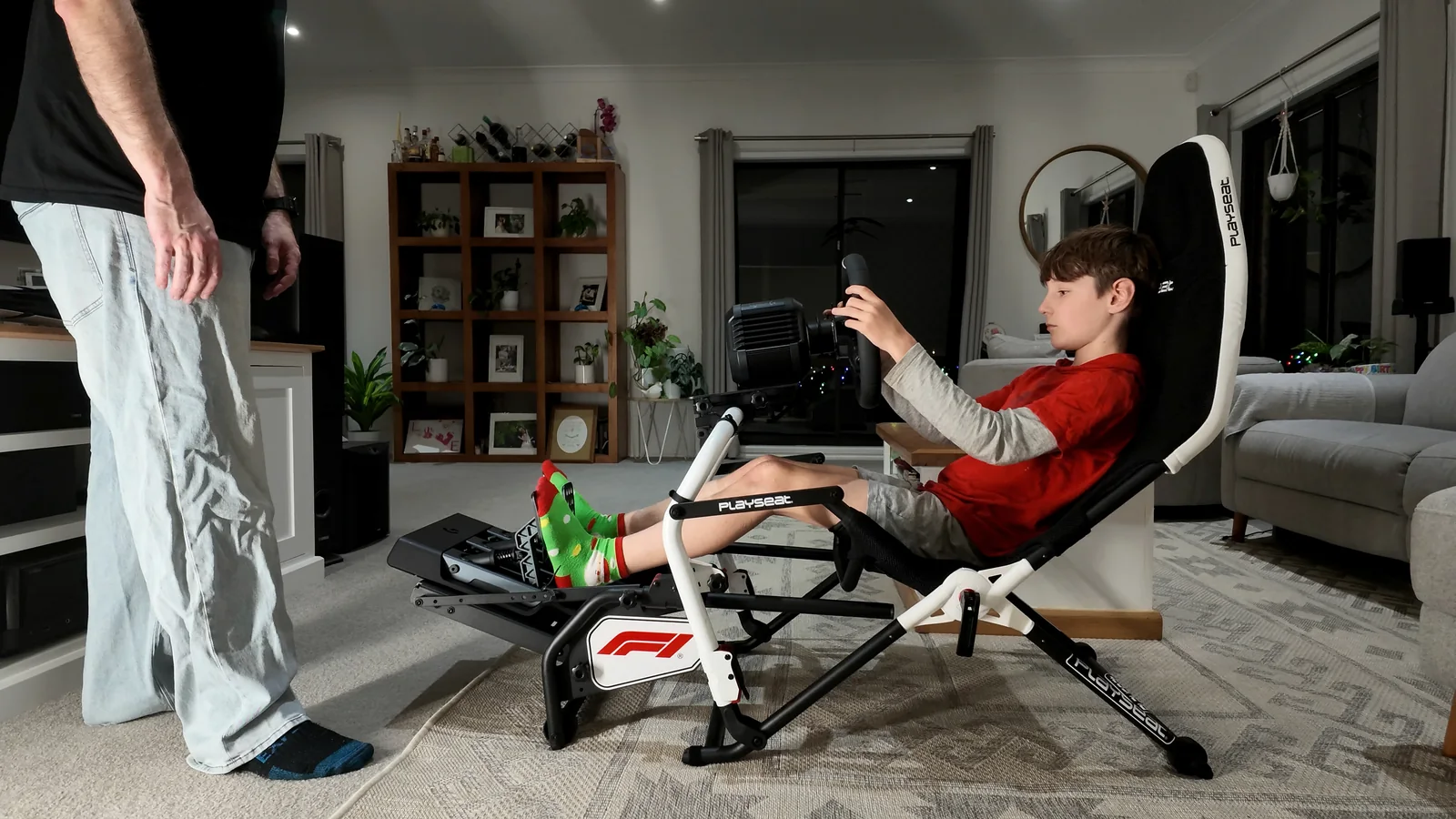
Where this cockpit really earns its keep is the sheer number of adjustment points you can operate while actually sitting in the rig: pedal distance, pedal height and angle, steering height, steering angle, and steering distance are all within reach. That’s a genuine advantage for households sharing a rig between drivers of different sizes, including kids. Our nine-year-old (147cm) test driver could reach the pedals without issue, and while usable, the wheel deck was a little high for him.

The trade-off is that these adjustments aren’t independent. Moving one point often has a knock-on effect elsewhere, which is the nature of this style of cockpit rather than a flaw unique to Playseat. The end result is a compromised but very usable range of adjustments for a wide range of driver. Playseat claim a minimum height of 120cm and maximum of 220cm, which I think could be being a bit generous.

Folding and Storage: 7/10

Genuinely practical to fold, move, and store away. But it’s still very big.

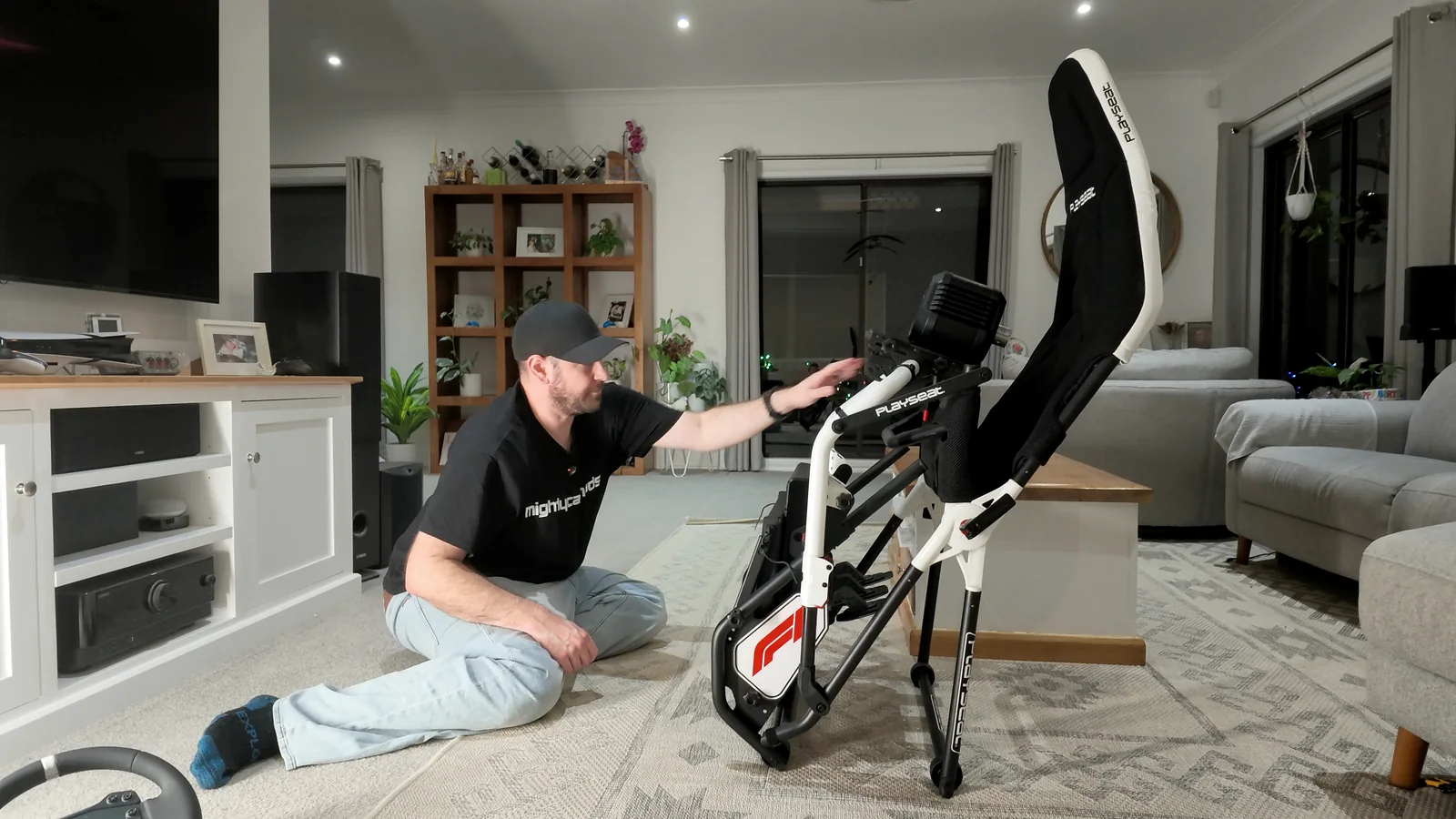
Playseat’s marketing describes a “refined folding system” for quick, solo-friendly setup and storage, plus built-in casters for moving the rig even with a wheel and pedals attached. In practice, we found this claim holds up. Folding the rig down is as simple as sliding the pedal tray in, releasing two quick-release levers, folding the back of the chair towards the wheelbase, then flipping the pedals up to tuck them in. The whole process takes under a minute once you know the steps.

Moving the rig around when folded is reasonably easy on the caster wheels however folding and moving the rig would be a bit of a challenge for kids with potential pinch points for little hands to get caught in. 

Fully folded it is about 50cm long (front to back) x 62cm wide x 130cm tall depending on the hardware installed. It’s not going to slide under a couch or bed, or fit in a standard cupboard, but it will hide away behind a couch or against a wall with reasonable ease.

Wheel Deck: 7/10

Genuinely Direct Drive-proof

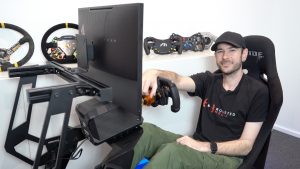
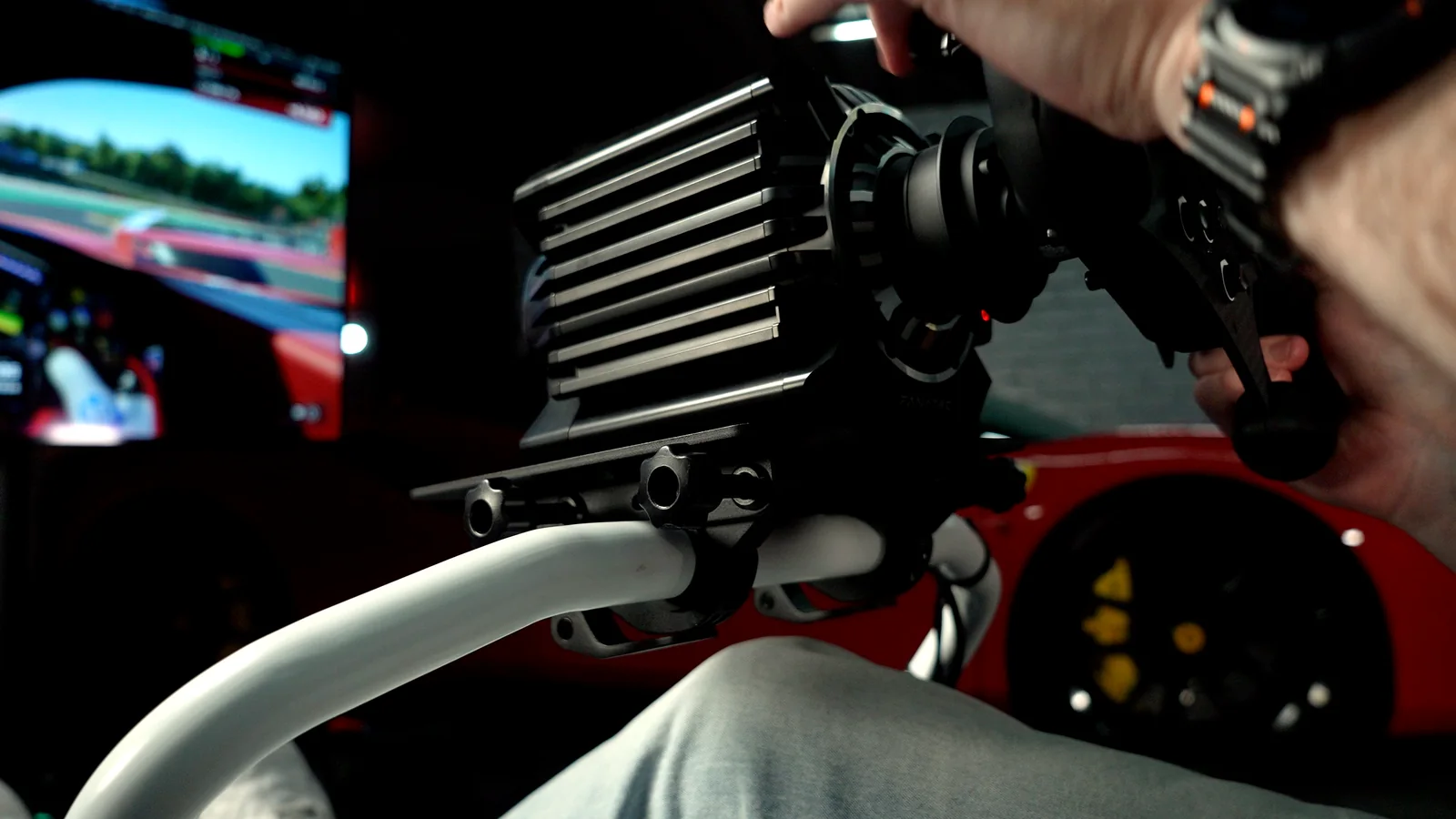
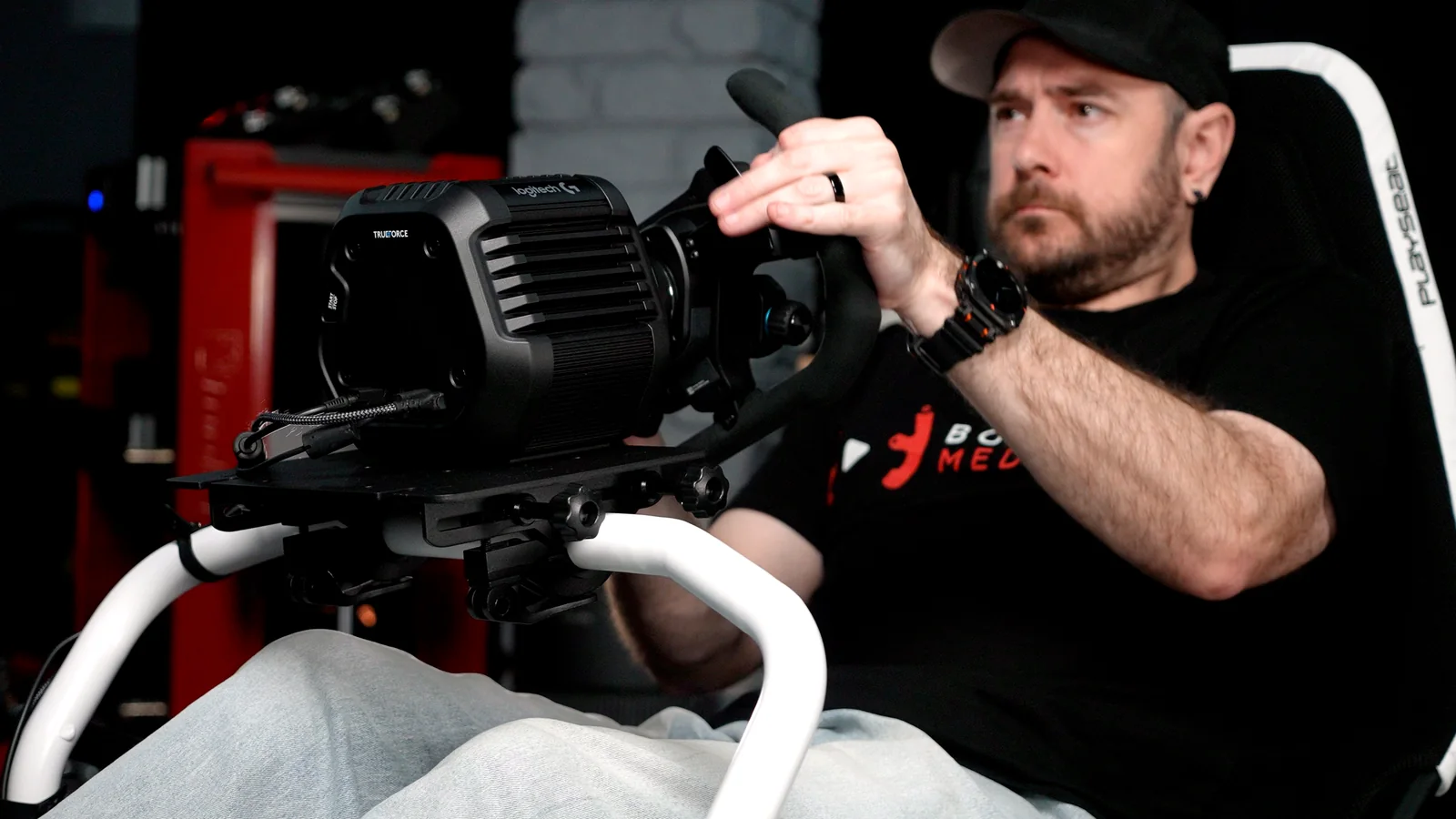
The wheel deck offers three points of adjustment: a forward/back slide giving 60mm of adjustment, tilt adjustment via two quick-release levers at the base, and height adjustment that is linked to the pedals and seat, which is the trade-off you accept with this style of cockpit compared to an aluminium profile rig. Raising the wheel deck height brings it closer to you, so the higher you go, the more cramped things can feel with the wheel in your lap. At six foot tall, we found the deck a little close for comfort even with our test wheelbase pushed as far back on its mounting plate as it would go. The tilt adjustment, on the other hand, offers more range than anyone running a formula-style seating position will realistically need.

The wheel deck provided better than expected rigidity even when using the 33nm Fanatec Podium DD wheelbase at 100% (the most powerful wheelbase available for consoles).  There is definitely some flex and movement present, which will take away from some of the fidelity of your wheelbase, but given what this cockpit is trying to achieve, it is impressively solid and up to the task of mounting high-end direct drive wheelbases with minimal compromise. 

Pedal Deck: 4/10

Excellent adjustability let down by flex under hard braking

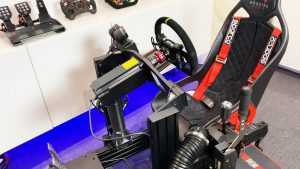
The pedal tray offers a huge range of indipendant adjustability which does not impact the position of the wheel deck or seat. The tray slides forward and back with a 30.5cm scope of adjustment. This is the main reason the Playseat Challenge DD F1 Edition is so well suited to sharing between kids and adults.

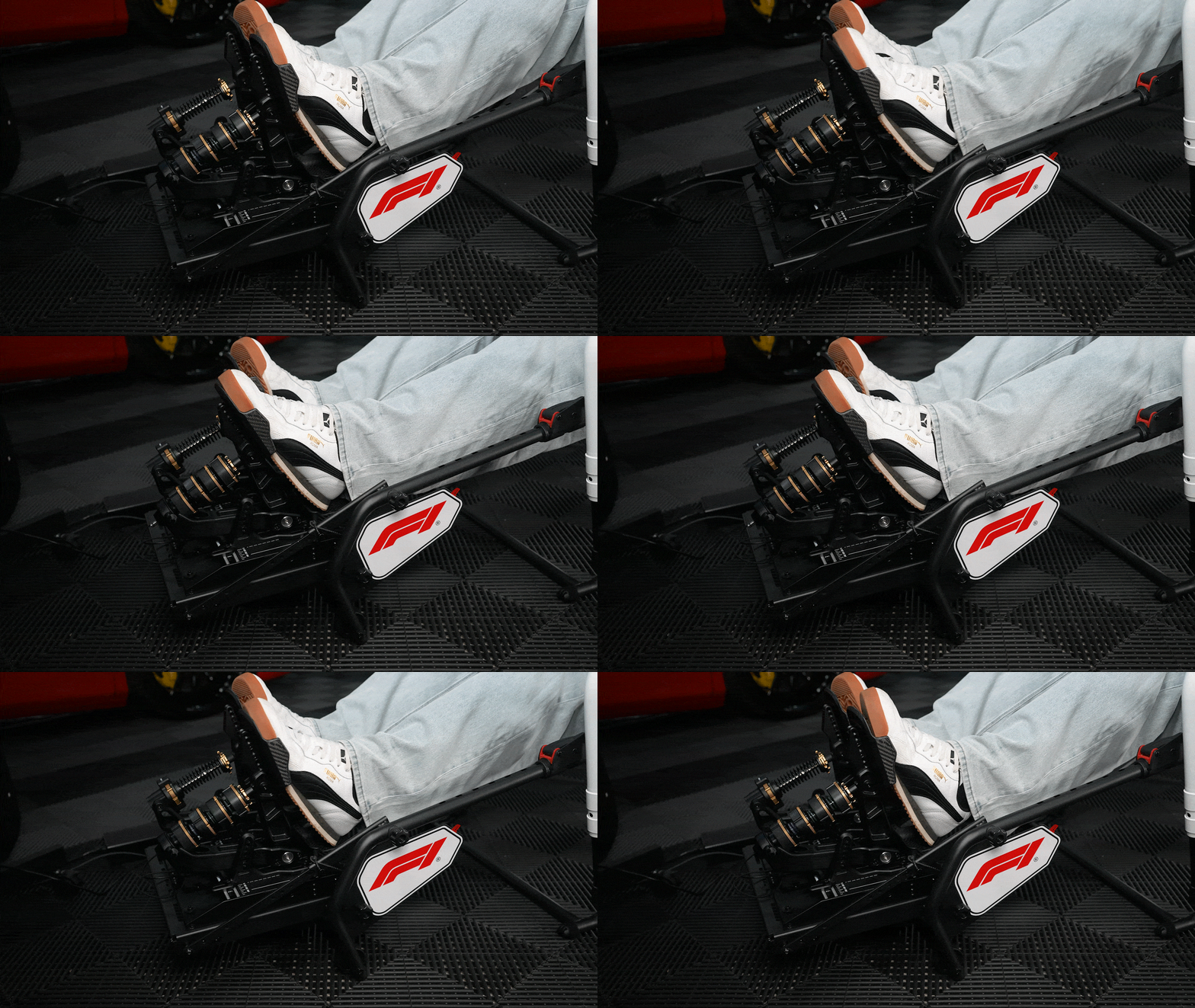
There’s also a clever pedal angle adjustment: rubber retainers on either side release, a locking pin comes out, and you can reposition the pedal face through a range of angle settings to suit different pedal sets. More upright pedals like Fanatec’s Podium pedals want a different angle than something like Logitech’s more laid-back entry-level pedals, and this system accommodates both nicely. There’s also a separate pivot adjustment for a higher or lower pedal position relative to the seat.

Where the pedal deck loses points is rigidity. Under hard braking with stiffer pedal sets, there’s noticeable flex in the pedal tray itself, which is the weakest point in the metal construction overall. It didn’t cause problems with softer pedal configurations or entry-level pedal sets, but with genuinely stiff, high-end pedals, it’s enough to affect brake consistency and accuracy. Thicker material or some internal ribbing here would go a long way.  While this could be a deal breaker for esports pros and the most extreme enthusiasts chasing every millisecond of lap time, for casual racers it is not going to cause significant issues.

Playseat-Challenge-DD-F1-Edition-Pedal-Flex-with-Fanatec-Podium-Pedals

NEWSLETTER

Stay up to date with new releases And major updates

Sim RACING
Discount Codes

Seat: 4/10

Comfortable and breathable, but short on rigidity and back support

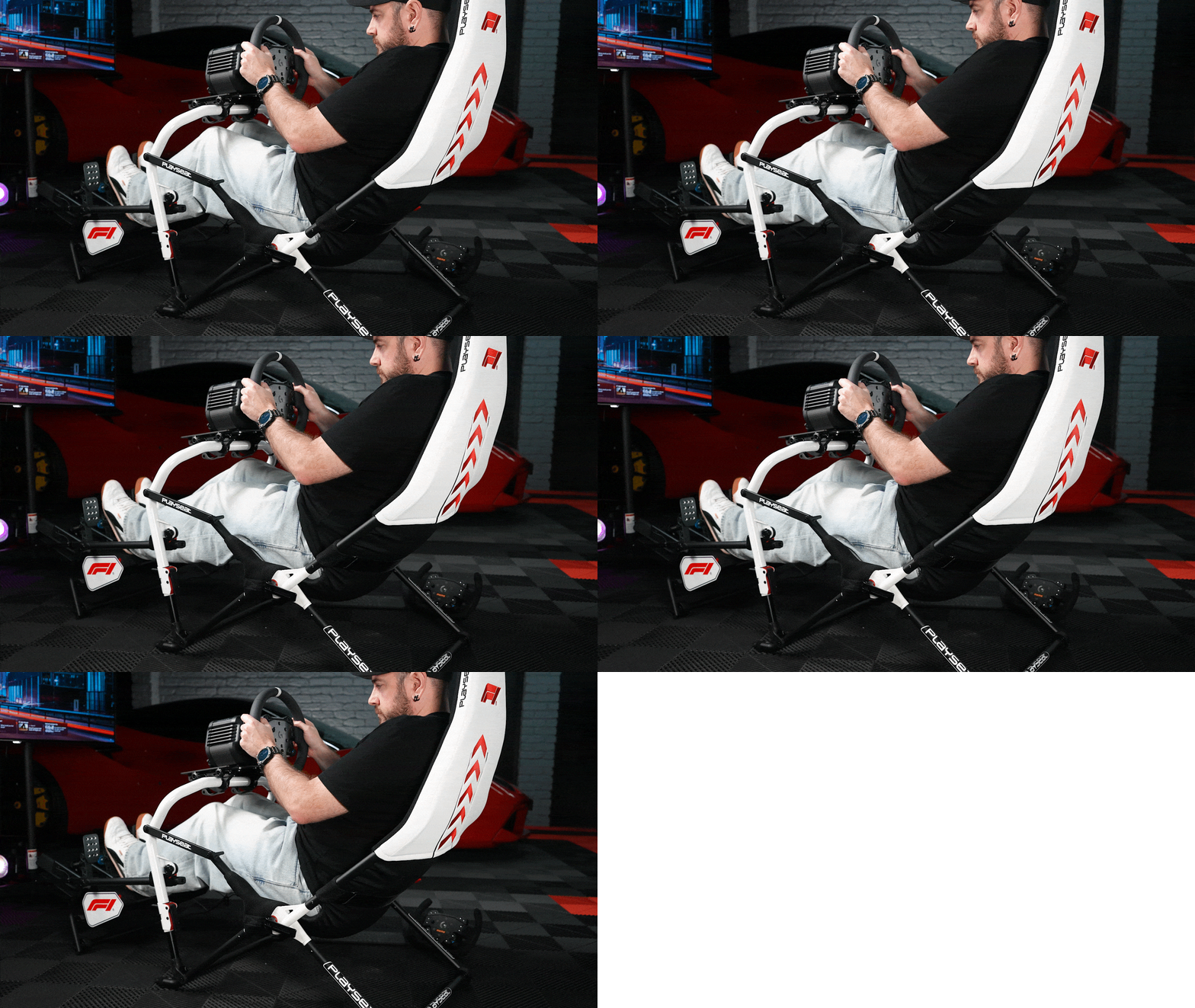
The seat uses a honeycomb-style breathable material similar to what we’ve seen on actively cooled sim racing seats, and airflow is genuinely good. We didn’t have issues with clamminess during testing. Velcro straps around the back allow you to tighten the material for more lumbar support and a higher seating position, or loosen it for a lower, more relaxed seat that can drop your seating height by an inch or two.

As with most banana-lounge-style seats, it doesn’t offer anywhere near the lower back or shoulder support of a dedicated sim racing bucket seat, and we did find our backs getting sore after a couple of hours of continuous driving. That’s a fairly predictable trade-off for a seat that needs to fold away, and results will vary a lot depending on body shape and size.

The bigger issue is flex. Since the amount of force going into the seat back under braking is roughly equivalent to the force going through the pedal, the seat needs to be just as rigid as the pedal tray, and this is where the design falls a little short. There’s noticeable give in the seat back, which translates to a slightly spongy feel under braking. We were able to adapt to it, but found it harder to match lap times we’d normally set with the same wheelbase and pedals on a fully rigid rig.

A secondary adjustment point that let the seat back tilt independently of the rest of the frame would be a worthwhile addition in a future revision to cater for different body shapes and sizes.

Playseat-Challenge-DD-F1-flex-test

Conclusion

We went into this review expecting more compromise than we found. The Challenge DD F1 Edition delivers a genuinely practical, foldable cockpit that handles high-end direct drive hardware better than we anticipated, without demanding a huge sacrifice in driving feel. Assembly is about as painless as this category gets, the amount of adjustment reachable from the driver’s seat is excellent for shared or multi-driver setups, and the pricing is fair once you account for everything that’s included in the box. The compromises are real but predictable: the seat back and pedal tray both introduce some flex under hard braking, and none of the adjustment points are fully independent of one another, so dialling in a perfect fit takes a bit of trial and error. If you fall into the audience this cockpit is designed for (someone who wants a rig that folds away, doesn’t dominate a living room, and can be shared between drivers of different sizes), we have no hesitation recommending it. If you need a rig you can bolt accessories to indefinitely, or you’re chasing every last thousandth of a second with top-tier load cell pedals, an aluminium profile cockpit will still serve you better.

Pros

Cons

Reseller
Affiliate links

If our reviews have helped you decide what the best sim racing gear is for you, please consider using the links on this page to make your purchase.  By doing so you’ll be supporting Boosted Media at no additional cost to you!  This option is available for a huge range of Sim Racing gear.

Discount Code: BOOSTED
Ships Globally from Spain
Availability
may vary
Ships from
Montreal, CA

Playseat Challenge DD Formula Edition FAQ

Is the Playseat Challenge DD F1 Edition worth it?

Yes, for the audience it's built for. If you want a cockpit that folds away, handles direct drive hardware, and can be shared between drivers of different sizes, it's fairly priced and delivers on those claims. If you're chasing maximum rigidity for competitive lap times, an aluminium profile cockpit is still the better investment.

How does the Challenge DD F1 Edition compare to the Playseat Trophy?

The Trophy is a fixed cockpit with greater rigidity and comfort with fewer compromises, but it doesn't fold away or reconfigure between drivers as easily. The Challenge DD F1 Edition sacrifices a little of that settled feel for portability and direct drive compatibility.

Does the Playseat Challenge DD F1 Edition have assembly problems?

We didn't encounter any structural assembly issues: no misaligned holes, no drilling required. A nine-year-old built the entire frame solo in about an hour, with adult help needed only to squeeze in a couple of press-fit metal pushpins.

Is the Playseat Challenge DD F1 Edition genuinely compatible with direct drive wheelbases?

Yes. We tested it with both an entry-level Logitech G RS50 and G Pro pedal setup and Fanatec's high-torque Podium wheelbase and pedals. It handles direct drive hardware with only a minor, predictable compromise in feel, mainly around seat back and pedal tray flex under hard braking.

Related Articles

MORE REVIEWS and Discounts

If these Sim Racing Reviews have helped you find the best racing simulator gear for your sim rig, please consider using the affiliate links on this website. By purchasing through these links, a small commission will come back to Boosted Media at no additional cost to you. This is how Boosted Media keeps providing content to the Sim Racing community.

About The Author

  • Tom Ford

    Tom Ford operates Boosted Media with his brother Will and produces all Boosted Media sim racing videos and written articles. A true motorsport fanatic with a professional background in engineering and media, he works closely with Will across testing and analysis, turning extensive product evaluations into clear, practical reviews and buying advice for sim racers.