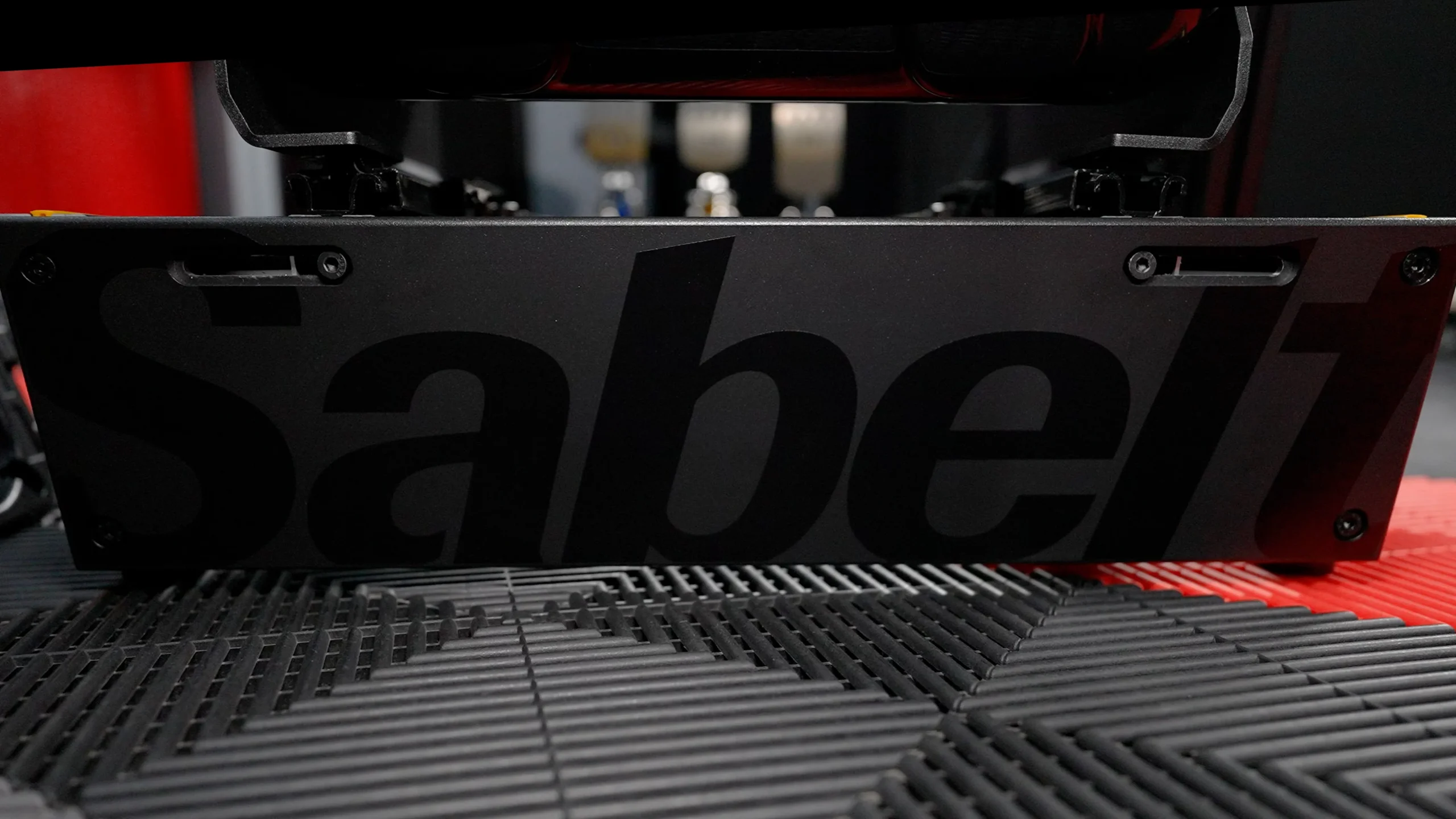
Sabelt brings genuine motorsport pedigree to sim racing with the S99, the cleanest aluminium profile cockpit we’ve reviewed. But is it worth paying a premium over what the established sim racing brands already offer?
Sabelt shouldn’t need much introduction to anyone who has watched a car race. The brand has been part of the motorsport scene since 1972, making restraint systems and harnesses for the likes of Formula One and the World Rally Championship, and later moved into sports seats for OEMs such as Ferrari. It’s always good to see brands with real motorsport pedigree moving into sim racing, and in our opinion it legitimises the whole hobby a little more.
The S99 is part of Sabelt’s GT-style S series, one of three models in its cockpit lineup. Aluminium profile cockpits are always a challenge to review, because they’re all trying to achieve much the same thing, and there’s only so much you can do with aluminium extrusion to create a unique product. So we judged the S99 on the three things we always look for in a profile rig: adjustability, expandability and rigidity.
We won’t pretend otherwise: it’s very expensive. Cockpits that look pretty much equivalent on paper from Sim-Lab, Advanced SimRacing, Next Level Racing and Trak Racer cost around 30% – 50% less depending on shipping costs and how you option them. There’s undoubtedly a level of prestige and legitimacy that comes with the Sabelt name, so the real question is whether you’re just paying for a label, or does real life motorsport pedigree actually treanslate to a better sim racing experience?
Sabelt S99 Ratings
A quick disclosure before we get into it: Sabelt provided the sim racing gear for this review, and every product we compare it against was supplied to us under the exact same conditions. No third party has any input into our observations or opinions. Everything here is based purely on our own hands-on testing over several weeks.
We also want to thank Matt at Clutch Racing, the official Sabelt Sim Racing distributor in Australia, who sent us extra accessories and helped us work through a few of the issues covered below. Clutch Racing is now one of Boosted Media’s official reseller partners, so you’ll find their links on this page along with affiliate links for other resellers.
Who is this cockpit for?
The S99 is a GT-style cockpit. Sabelt’s P series is built to a similar spec but centred on formula-style driving, with a more reclined seat and a more upright pedal tray, while the X series which is designed for a more upright position. If the ability to switch between GT and a proper Formula position is important to you, this range probably isn’t for you.
Where it makes sense is for someone who wants a clean, legitimate-looking rig that does the job well, carries real motorsport branding, and for whom price isn’t the deciding factor. If you’re shopping on value, or you plan to bolt a motion system and lots of accessories to your rig, there are cheaper and more flexible options, and we’ll explain why below.
VALUE: 4/10
Beautifully presented, but the extra money does not translate into a better driving experience
Each Sabelt model is sold in stages. You can buy the raw frame on its own, or step up to Stage 1, which adds a pedal tray and wheel deck; Stage 2, which adds an integrated monitor stand and a seat; or Stage 3, which adds side mounts for your shifter and handbrake plus a standalone triple screen mount. Pricing can change, so check boostedmedia.net for the latest live pricing and our price trackers.
There’s no way around it: this is very expensive gear.
Sabelt also sells a range of accessories, including seat inserts, keyboard trays, cable management kits and sim racing gloves, which are very nice to drive with. They quickly became our go-to during testing, and we’re not short of gloves in the studio. But some of those extras, cable management in particular, arguably should be included in the price of the cockpit, and the same goes for the tools you need to build it.
To be fair to Sabelt, the S99 is expensive, but it’s certainly not the most expensive cockpit out there by a long shot, and it’s better value than some of the crazy bespoke cockpits you see at sim racing expos. Judged against the established sim racing brands, though, it doesn’t offer anything unique enough to justify such a large premium.
Assembly: 5/10
Excellent hardware, let down by confusing instructions and a frustrating seat install
Everything arrived safely with no damage, well wrapped in mostly recyclable cardboard with minimal plastic, although the packaging was a little excessive in places: one box held nothing more than a few T-nuts, a small bag of screws and a couple of button box mounts. A few tapped profile ends had some metal shavings, but nothing like the cockpits we’ve had to hose off before we could bring them inside. There were no badly tapped threads or holes in the wrong place, and the bolts and nuts are on par with, or exceed the highest quality we’ve seen from other brands.
The weak point is the instructions, or more specifically the quality control around them. Sabelt’s 3D animated CAD assembly guides look great, but the labels on the hardware bags often don’t line up with the instructions, and in quite a few cases neither do the contents: some steps called for tapered bolts, but the bolts in the bag weren’t tapered. You only build a cockpit once, but having built close to 30 aluminium profile cockpits, we know the build can make the difference between loving a product and never wanting to see it again. Next Level Racing is the best example we can give of outstanding instructions, where nothing is left to guess, and at this price Sabelt should be much closer to that standard.
The seat install really tested our patience, and ironically the cause is one of the S99’s strengths. The 5mm thick seat mounting brackets are quite a bit thicker than on most profile cockpits, so unlike thinner rails, they don’t bend to conform to the taper of the seat as you tighten them. With the optional seat slider, you need to tighten the rail bolts before the seat goes in, because you can’t reach them afterwards, but you can’t know the right angle and width until the seat is in place. We took the seat in and out around 30 times over about four hours before landing on the fix: mount the seat high in the top holes, tighten everything underneath at the correct angle, then drop the seat into its final position.
Threaded nuts welded into the rails, rather than T-nuts screwed in from underneath, would make the whole job far easier. That’s a problem with every seat rail we’ve tested, not just Sabelt’s, but maybe Sabelt can be the one to solve it. Once mounted, there were no flex issues whatsoever.
The anodised profile has a smoother finish than the powder coating many cockpits use, and we prefer it, but it scratches very easily. Even being as careful as we possibly could, we ended up with quite a few marks, and it would be near impossible to build one without marking it. Next Level Racing includes felt pads on its higher-end cockpits, which still cost a lot less than this one, to let parts slide without scratching the profile. Sabelt doesn’t include any tools either, not even a shallow Allen key to reach under the seat in its lower position, when nearly every other cockpit we’ve reviewed comes with the tools you need to build it. For the price, there’s no excuse.
Cable management is an optional extra too, which seems greedy when everyone is going to need it, and Sabelt’s kit is overengineered. The clips bolt to the profile with a T-nut and bolt, where a twist-in plastic clip costing a couple of cents would do the job, and they aren’t wide enough to pass the Velcro straps through, so you still need cable ties. It feels more like a dress-up kit than genuine cable management, although we have pinched a few of the straps for our daily driver rig. The split sleeve is smarter, wrapping around your cables without passing the connectors through and running down inside the profile. But unless the rig is raised on the optional adjustable feet or a motion system, the base sits almost on the floor, so there’s no way to get the cables out without drilling. Something a lot cheaper would do the job better.
Build Quality: 8/10
The cleanest profile cockpit we’ve reviewed, with some rough edges in the details
Presentation is where the S99 stands apart. The smooth anodised profile, uniform brackets, painted and machined parts and blank cover plates make it the cleanest-looking aluminium profile cockpit we’ve reviewed, and probably the nicest cockpit we’ve ever reviewed in terms of overall presentation.
It’s substantial where it counts, too. The seat brackets and keyboard tray use 5mm thick material, the monitor stand uses 10mm thick brackets wherever it needs to be solid, and the bolts and nuts are high quality throughout.
The shortcomings are in the details rather than the structure: a finish that scratches easily, a keyboard tray without a lip, a keyboard pocket with no foam lining, and pedal tray bolts that worked loose over time. None of them are serious on their own, but they stand out on a cockpit at this price.
Adjustability & Seating Position: 7/10
Easy to share between drivers, but built for GT rather than formula
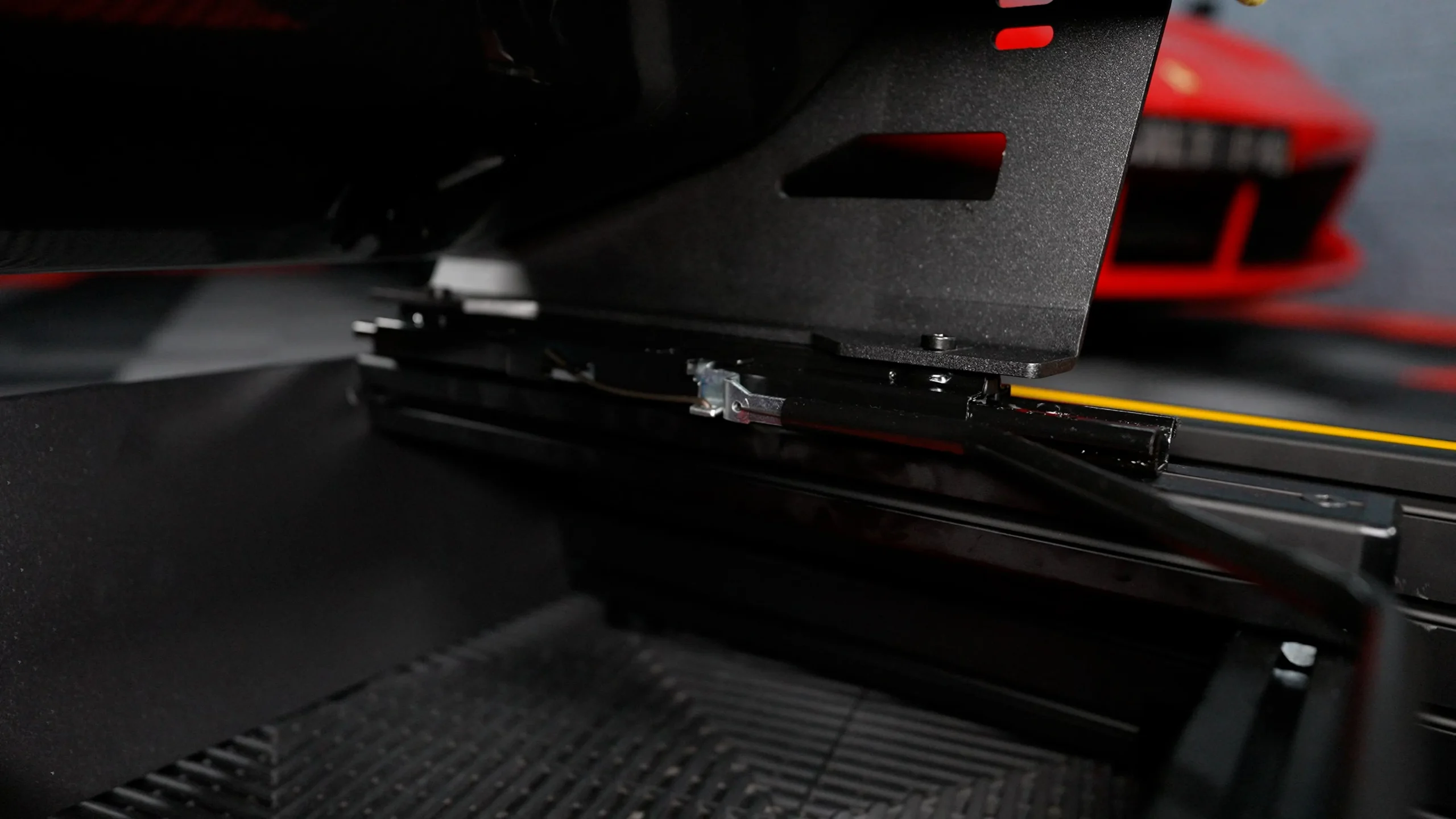
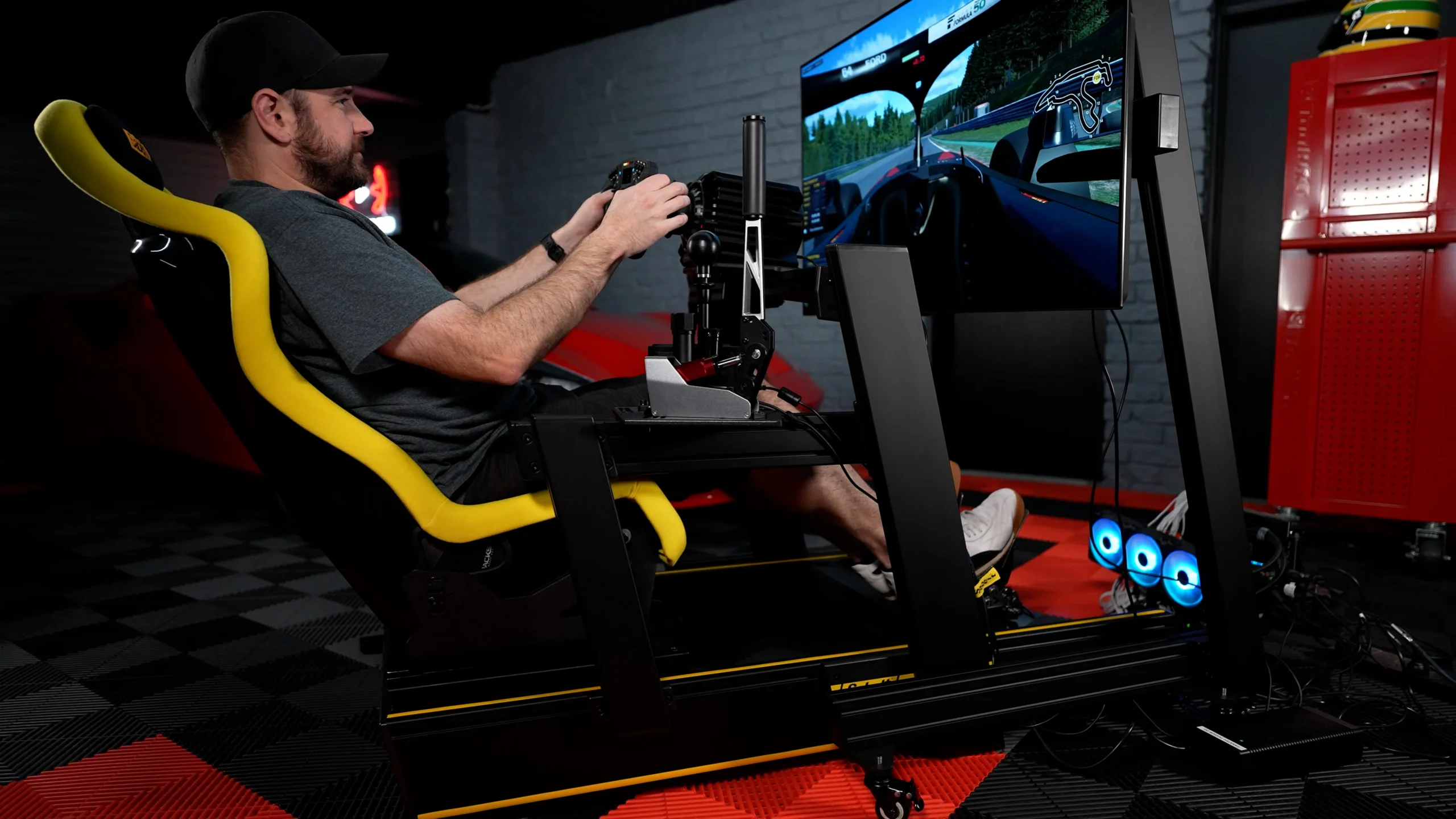
Starting at the back, the optional seat slider works just like the one in your road car: pull a lever and slide the seat from almost underneath the steering wheel all the way back. The sliding rails can also be mounted further forward or back on the base profile, and slots at the rear let you move them in and out. Unfortunately, those slots got badly chewed up while we were fighting to line up the seat.
Seat height and angle adjust too, from a very upright position through to well reclined. Getting the seat into a low position takes the top-down approach described above, because you need access to the bolts underneath. With our feet in a normal driving position, we ran the seat quite reclined with our wrists lined up properly, and switching between drivers is as easy as sliding the seat forward. Many other profile cockpits run a length of profile across the back of the frame, which adds adjustment scope and mounting options, but the S99 doesn’t.
There’s plenty of adjustment for a GT position, but a more formula-style setup, with a reclined seat back and your feet higher, will be a struggle with the standard pedal tray. That’s no real surprise, as the S series isn’t designed for it.
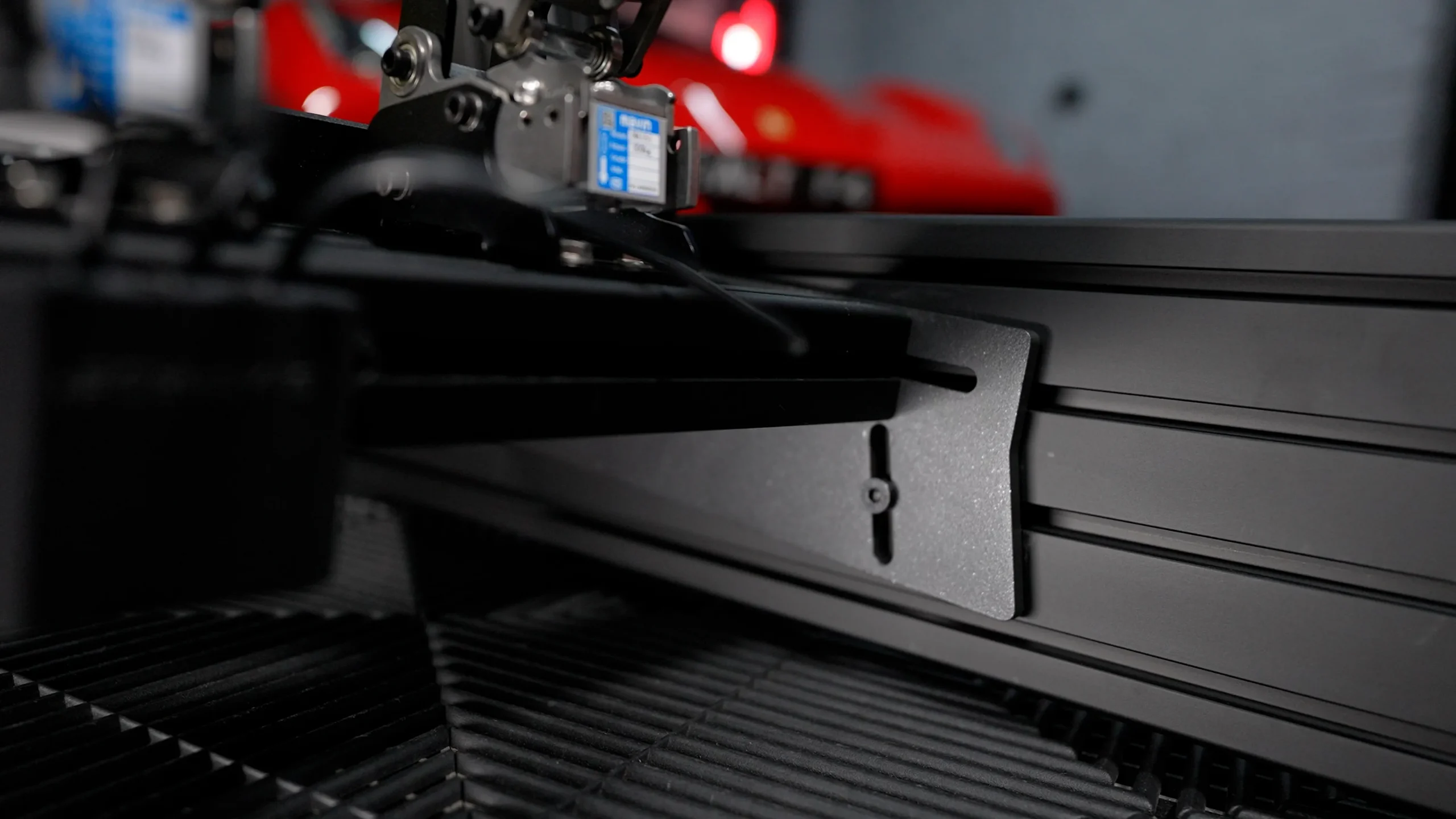
The optional shifter and handbrake side mounts can be dropped lower or moved forward, and two bolts let you slide the whole plate forward or back to line up with your wheel and wheelbase. A single mount is also available if you only run a shifter or a handbrake. You can buy part of the mount on its own, but set up that way there’s quite a bit of twist, so if you want a side mount we’d recommend the full arrangement.
In practice there’s less adjustment than it looks. With our Simagic H-pattern shifter and hydraulic handbrake, there was really only one position where everything bolted in at the right angles, so it became a case of “where it fits is where it sits”. To be fair, designing a mount that suits every combination of shifter and handbrake on the market is very difficult, and we can’t come up with a better design ourselves. But if we were buying an S99, we’d probably skip it, get a piece of aluminium cut at a local metal fabrication shop, drill some holes and be done with it. Many shifters and handbrakes come with their own brackets or bolt straight to profile, so check what your gear includes before you decide.
Wheel Deck: 8/10
On par with the best factory wheel decks, held back only by its sloped uprights
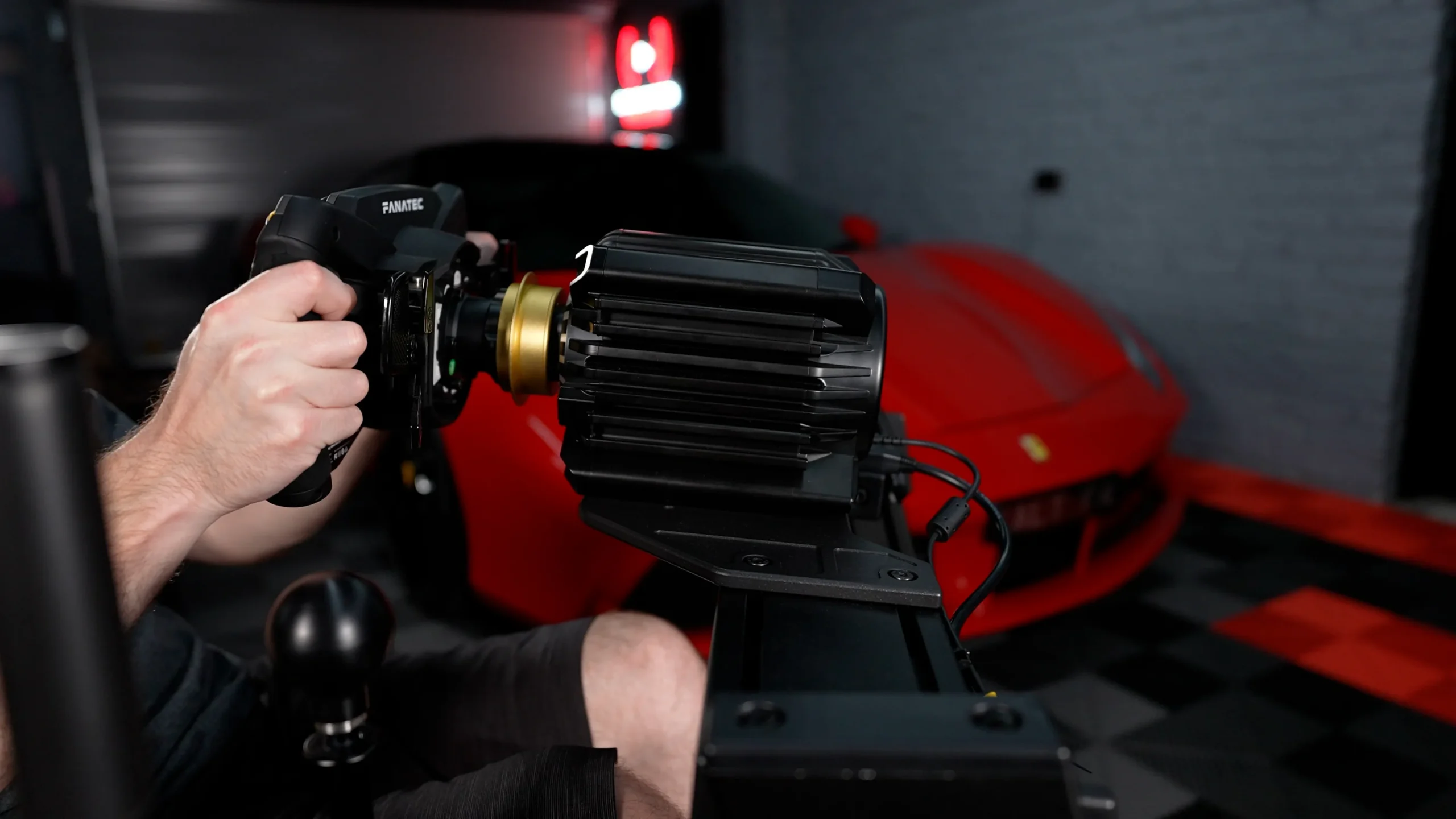
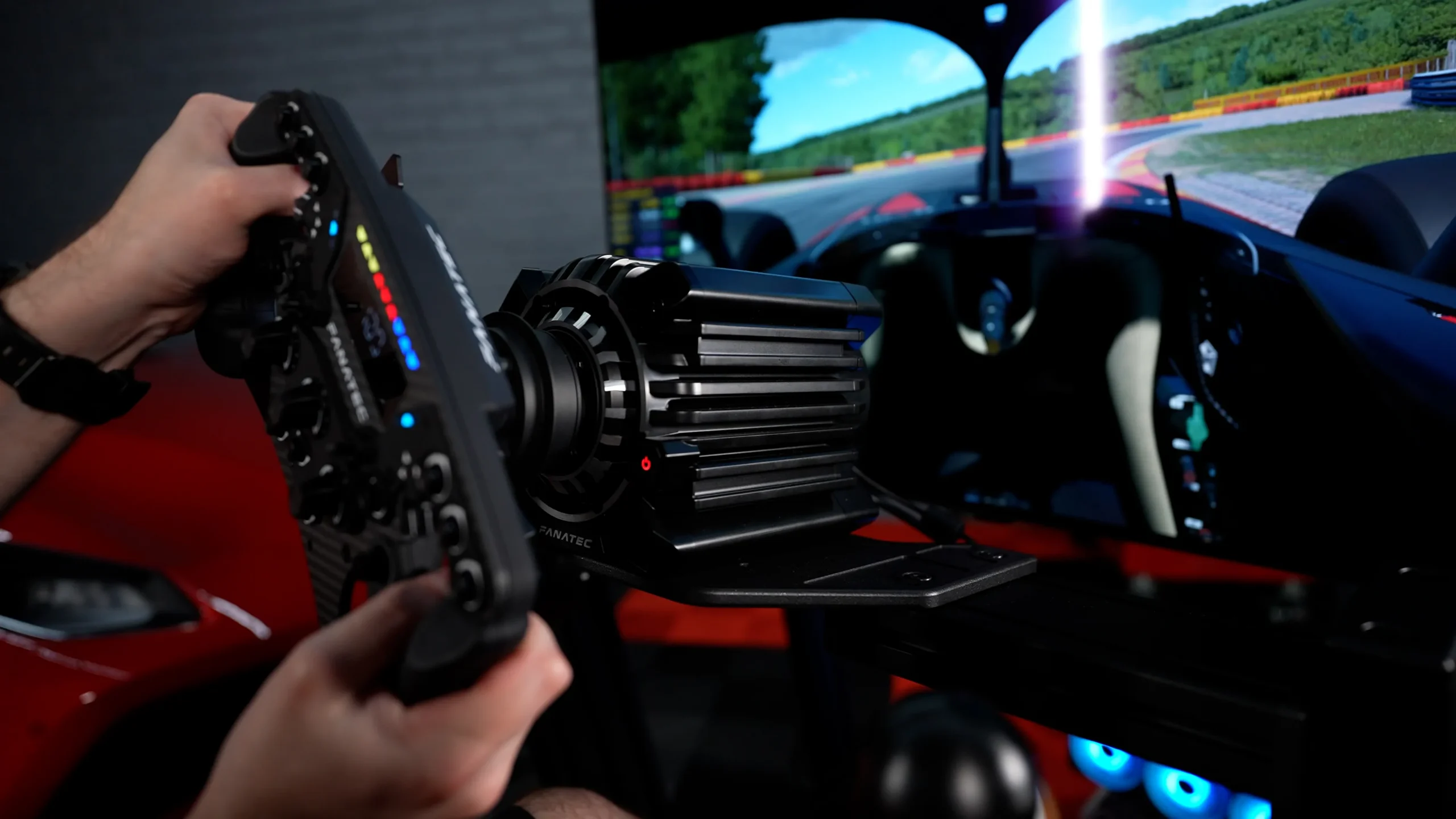
Sabelt offers a front mount option for Simucube-style wheelbases, a front mount for Fanatec bases, and the standard wheel plate we tested, which is pretty much universally compatible.
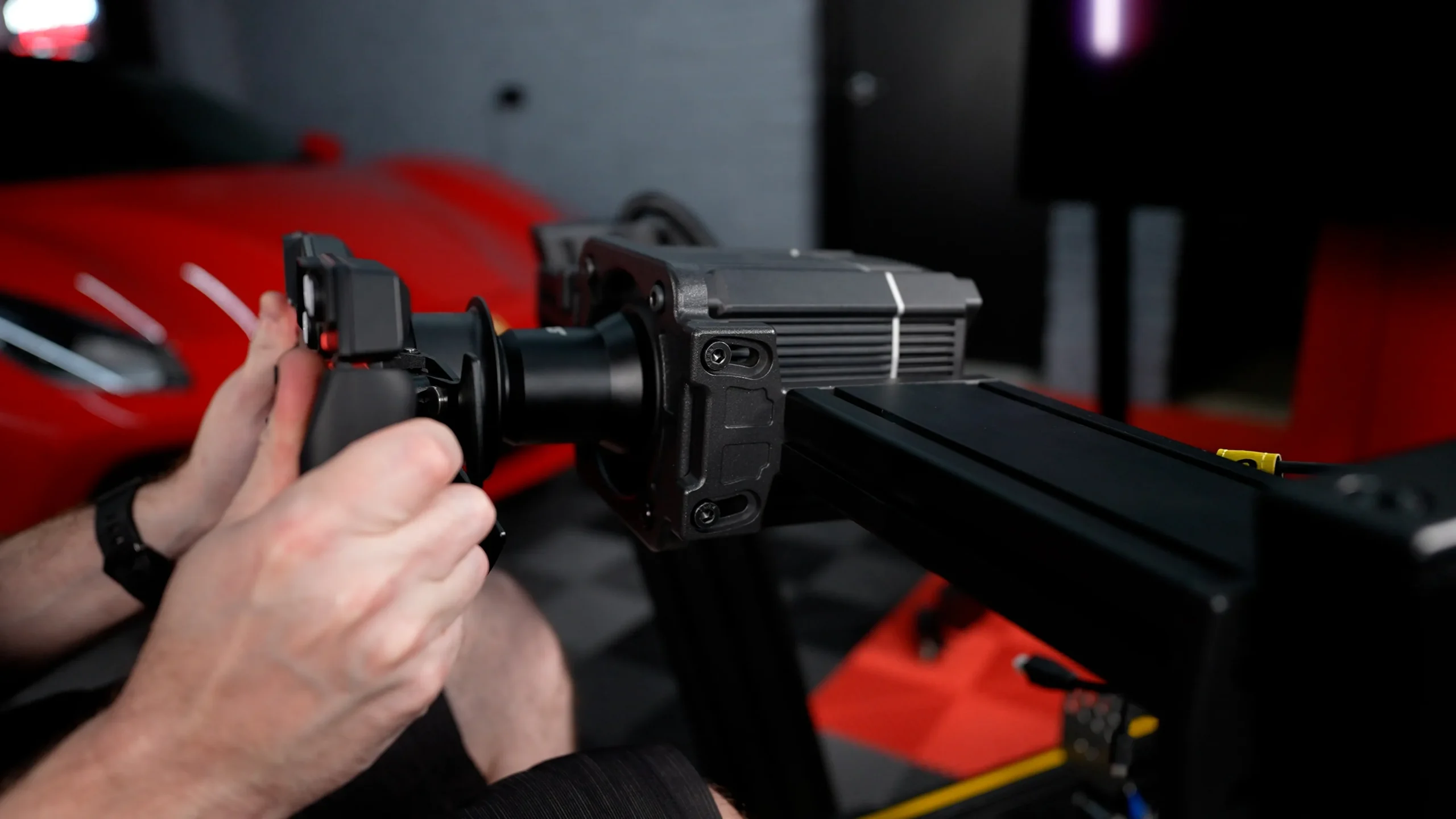
Adjustment is simple. The deck slides forward and back on rails underneath, height adjusts via slots in the uprights, and you can tilt it pretty much to your heart’s content. The plate itself uses holes rather than slots, but we actually like that choice: slotted plates add adjustment, but they can also introduce flex.
Our one real frustration is the angle of the uprights. Like a lot of cockpits now, they’re sloped, which looks good and makes it a little easier to get in and out of the rig. The trade-off is that raising the wheel deck brings it closer to you and lowering it moves it further away, so a two-dimensional adjustment becomes a three-dimensional one, which can be quite frustrating. The seat slider meant we could still get everything positioned the way we wanted, but we’d much prefer straight vertical uprights, so the height of the wheel deck doesn’t change its distance from you.
The two pieces of profile under the deck aren’t joined underneath, and we would have expected a single length running across for rigidity. There’s a good reason for it: the front mount adapters bolt directly into the ends, which makes for a more universal design. In practice, rigidity is excellent. If we really pulled on the wheel as hard as we possibly could, we could see a little movement, which looks more like the plate bending on top of the profile than the profile itself moving. But there was nothing at all we could perceive while driving.
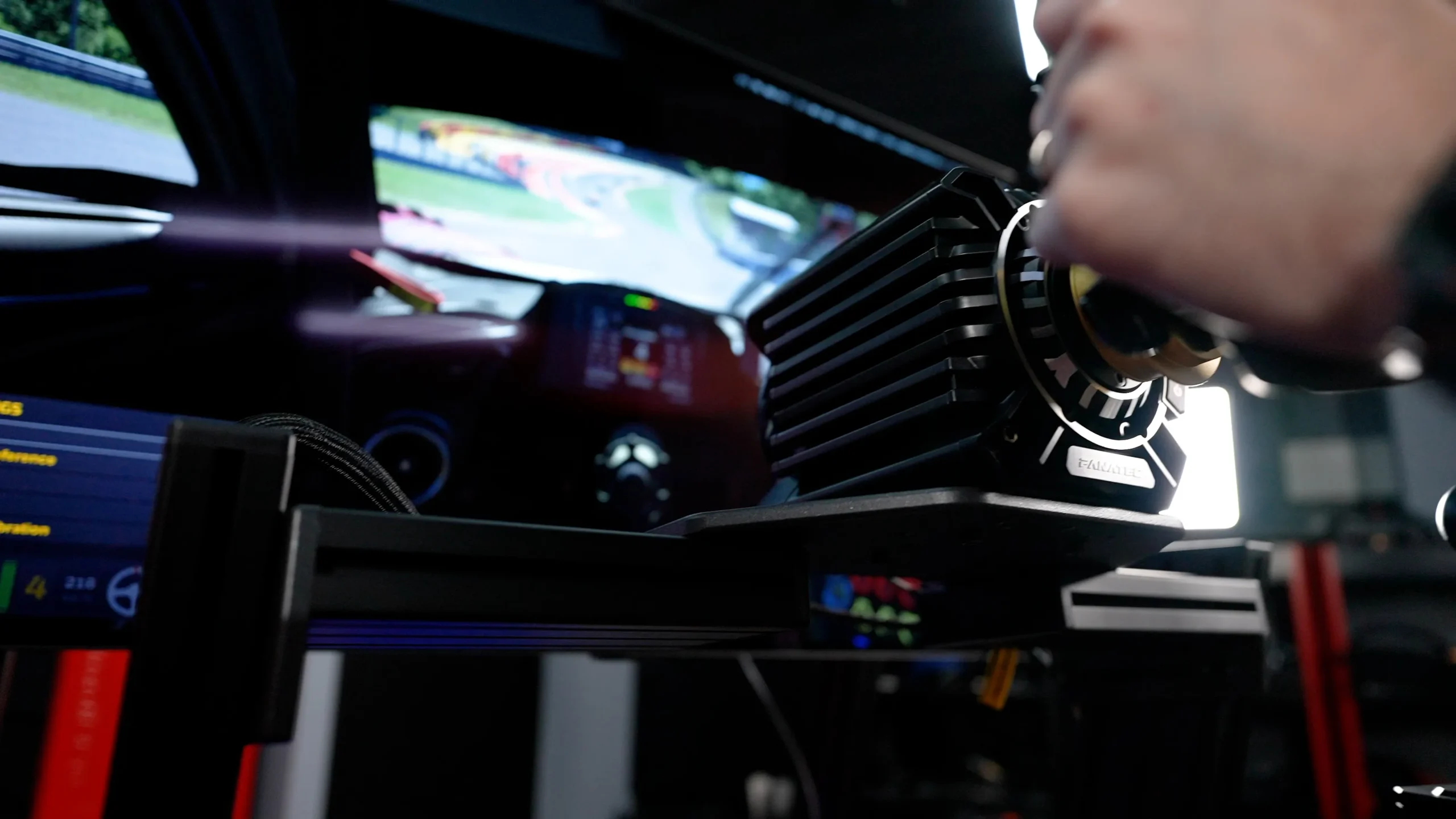
That matters, because any flex in a wheel mount has a measurable damping effect on force feedback, especially the fine, granular detail from modern wheelbases with features like TRUEFORCE (Logitech) or FullForce (Fanatec). We’ve tried other mounts back to back that have no flex at all, and couldn’t feel any difference in force feedback. A continuous length of profile might make it slightly more rigid again, but we really are nitpicking. This is on par with the best of the best in terms of factory wheel deck flex. Some aftermarket wheel decks we’ve tested on other brands’ rigs have been a little more solid, but they’ve also been extremely expensive.
Pedal Deck: 7/10
A clever, simple design, but not as solid as the price demands
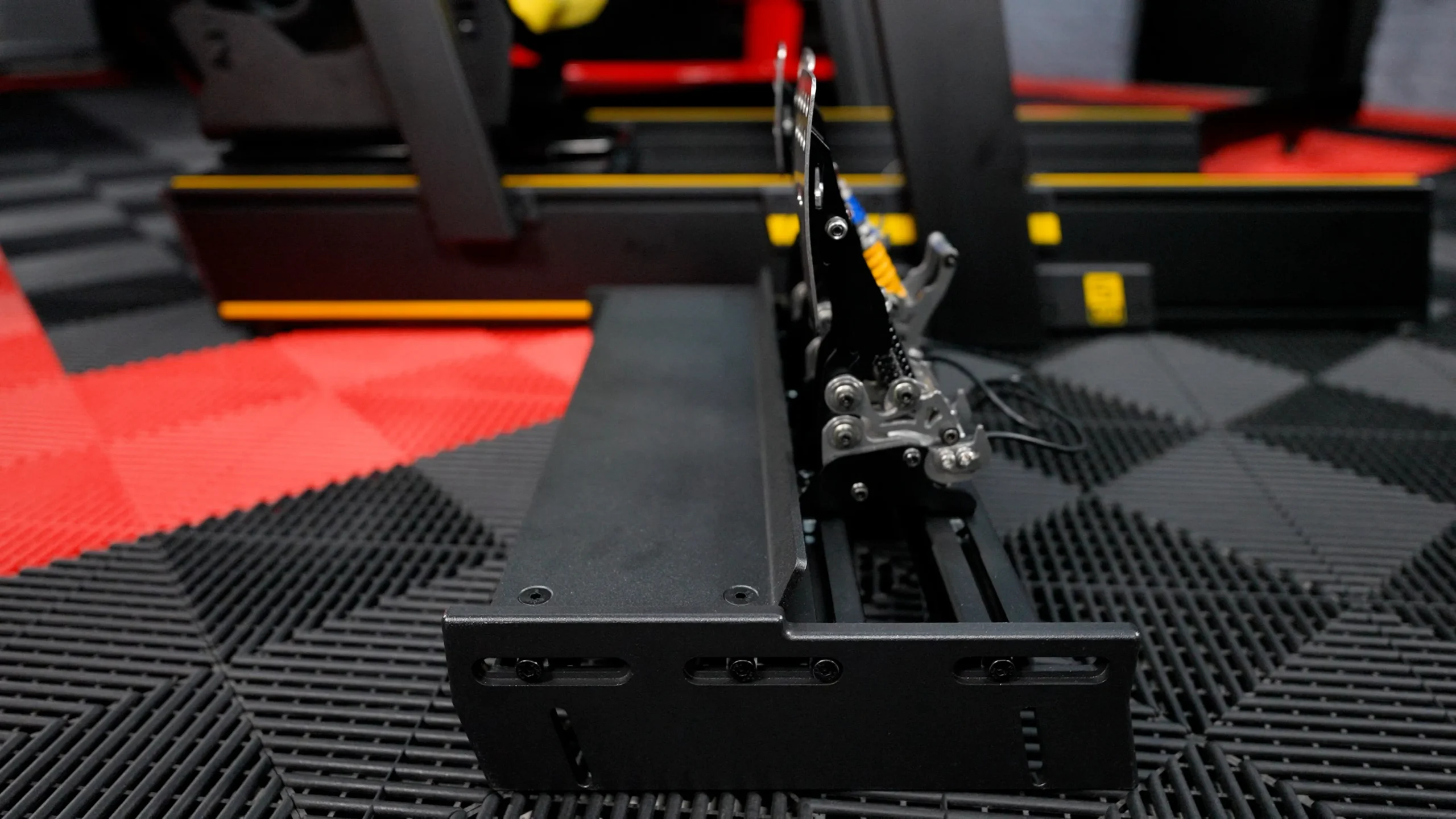
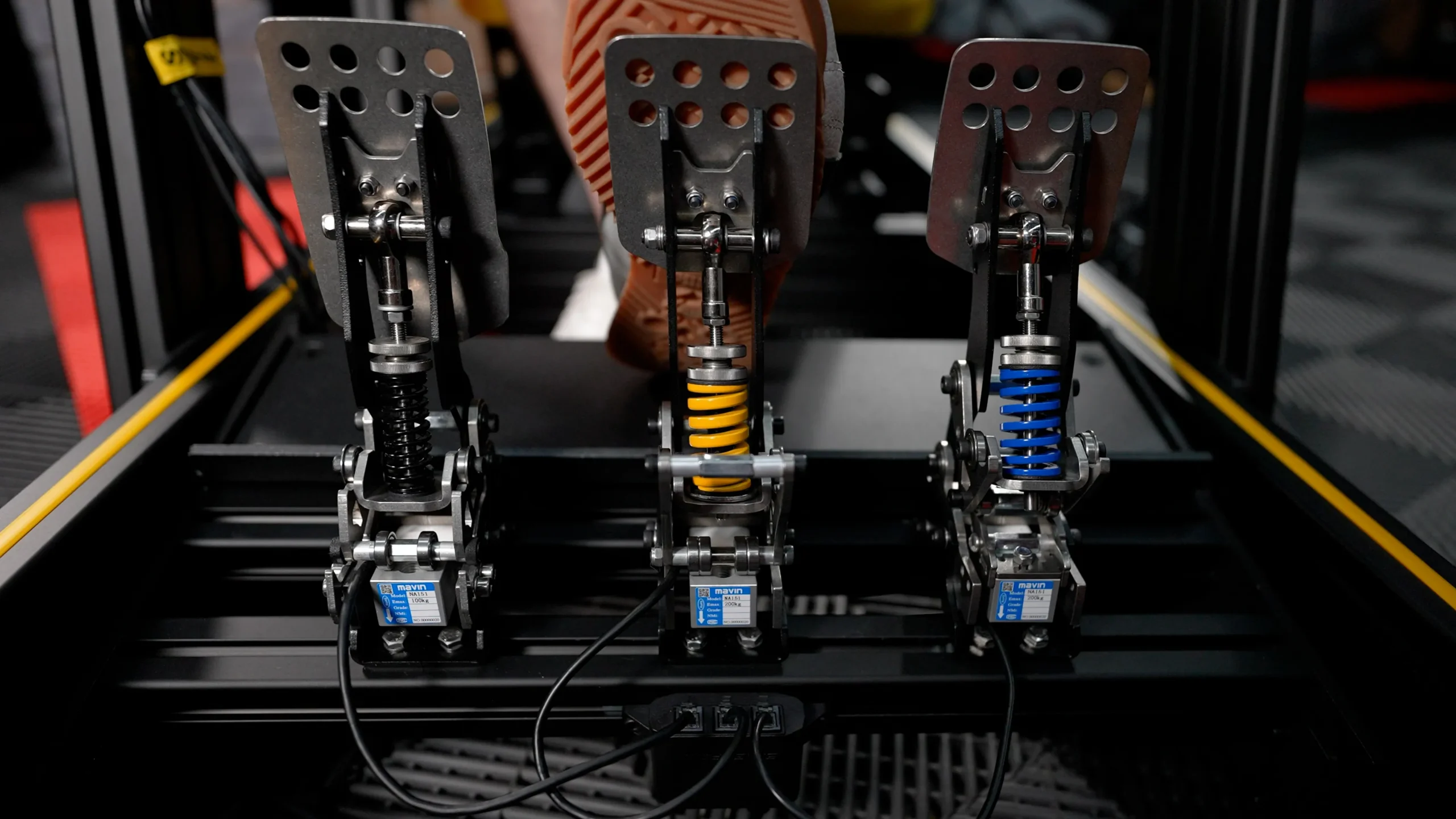
Sabelt offers several pedal mounts: the adjustable pedal mount we tested, a larger ultra pedal mount (which we believe comes with the formula-style cockpit), an inverted pedal mount, and an active pedal adapter that adds the extra support long active pedals need. We also tested the optional heel rest. We only had the adjustable mount, so we can’t comment on the others.
The adjustable mount uses three lengths of profile, a 40×40, a 40×80 and another 40×40, each individually adjustable in slots, so you can set the spacing to suit pretty much any pedal set. If your pedals come with their own integrated tray, you simply space the profiles to bolt it on. The whole assembly drops into four slots spaced 40mm apart to set its height, with further slots for up and down adjustment and tilt. It’s a clever, simple design. We’ve seen some over-complicated designs from other companies, and a lot of designs that use a steel or aluminium plate without enough reinforcement underneath to stop it dipping under braking. Our one wish is for Teflon liners or something similar in the channels, as sliding parts around left some pretty nasty scratches in the profile.
Rigidity is where the pedal deck falls short of our expectations. Pedal and seat rigidity are intrinsically linked: if you’re braking properly, pushing with your thigh rather than your ankle, an equal amount of force goes into the seat back, so both need to be equally solid. Any flex introduces inconsistency, and consistency is absolutely key to building the muscle memory you need to brake the same way lap after lap.
With our configuration, there’s a little dip under braking, with the back piece of profile buckling ever so slightly downwards. We couldn’t perceive it while driving, but we could see it with the naked eye. The side bolts that secure that profile also worked their way loose over time. A little Loctite would easily fix it, but none is included in the kit. How much you notice will depend on your pedals, as sets with an integrated tray spread the load over a wider area and reduce flex overall.
For context, the pedal tray on the original Sim-Lab P1-X had no flex whatsoever and was absolutely rock solid. At the other end of the scale, the original V1 Trak Racer TR160 had a lot of flex, and although Trak Racer added extra ribbing after our review, it still wasn’t as solid as the S99 (we haven’t tested the more recent versions). If the S99 were half the price, we’d call this a negligible amount of flex. At this price, we expect it to be as good as or better than anything we’ve tested, and that isn’t the case.
Seat: 9/10
The most solid seat slider we’ve tested, and a seriously comfortable seat
The seat is where the S99 really shines. Every other cockpit we’ve tested with a seat slider used a Sparco slider or a copy of one, and out of probably 20 or 30 sets of rails, every one had some play or slop. Sitting in the seat you could rock back and forth and feel the rails moving, and under heavy braking the whole seat would bend backwards on them. For that reason, we usually recommend skipping a seat slider altogether if you’re the only person driving the rig.
Sabelt’s slider is a different design, and it’s the only one we’ve ever tested that doesn’t introduce excessive slop, play or flex. It isn’t completely flex-free, and our footage shows a little movement, but nothing we could perceive while driving, and it’s certainly the most solid setup we’ve experienced with a seat slider installed. We’re happy to leave it fitted on this rig. Because it’s universally compatible, it’s also the best seat slider we’ve tried if you run a different cockpit.
The thick seat mounting brackets that made installation such a headache pay off here. Once mounted, they’re absolutely solid, with no bending forwards or backwards and no issues with the backrest popping. That’s what you’d expect from Sabelt’s motorsport experience, but it isn’t a given: we’ve previously tested a Trak Racer seat (since revised, we believe) where the back literally popped out when you pushed on the brake.
Comfort is excellent. There’s no meaningful twist when you put your shoulder into the side of the seat, and for my body shape and size, it’s probably the most comfortable seat I’ve ever used. For the price, it ought to be.
Sabelt also sells custom-moulded seat inserts. You pop a bag inside, squish the fluid around, wedge the insert where you want it, then sit for 15 to 20 minutes while it solidifies. The S99’s seat was comfortable enough that we didn’t feel the need for them, though slimmer drivers may benefit more. We also tried them on the harder Lusomotors seat in our daily driver rig. The seat insert was fine, but the back insert pushed us forward out of the seat a little too much and felt uncomfortable. The inserts work in any seat, so if yours needs a little extra support, they’re an option.
NEWSLETTER
Stay up to date with new releases And major updates
Thanks. Please check your email to confirm your subscription.
Sim RACING
Discount Codes
Also Sells
Ascher Racing, Gomez Sim Industries, SRBReseller For
Ascher Racing, Asetek, AWIN, BDH, Brook, ButtKicker, Conspit, Dayton Audio, D-BOX, Fanatec, Heusinkveld, MotionHouse, MOZA, Nitro Concepts, Pimax, PlaySeat, Qubic System, Rexing, Sabelt, Simagic, Sim-Lab, Simucube, VNM, VPGReseller For
Pro Simrig, Simagic, Qubic System, Cobra, SparcoReseller For
BavarianSimTec, Sabelt, Qubic System, MME SimSportAlso Sells
Fanatec, MOZA Racing, 3DRap, Another Way, Ascher Racing, Asetek SimSports, Asus, Bavarian SimTec, BDH Race Sim, Brook Raslution, ButtKicker, Conspit, Cooler Master, Cube Controls, D-BOX, Dayton Audio, Delta Sim-Tech, DOF Reality, Elgato, Esportsim, GSI, Heusinkveld, HORI, KGL Creation Lab, Leoxz, MME Motorsport, MOZA FlightSim, Next Level Racing, Nitro Concepts, Novus, O-Rouge, Overpower, P1SIM, Pimax, Playseat, Prosimu, PXN, Qubic System, Racing Components, Res-Tech, Rexing, Sabelt, SG Racing, Sim Factory, Sim-Lab, Sim Racing Studio, Simagic, Simforge, Simgrade, SimRep, Simucube, Simufy, Simtrecs, SimXPro, Soelpec, Sparco, Thrustmaster, TREQ, Venym, VIRPIL Controls, VNM Simulation, VPG Sim, VRSReseller For
Fanatec, Next Level Racing, Cube Controls, Thrustmaster, Asetek, Moza, Buttkicker, BJ Racing, Turtle BeachAlso Sells
Alien Mods, Asetek, Buttkicker, Cammus, Conspit, Cube Controls, D-Box, Heusinkveld, LeoXZ, Moza Flight Gear, Moza Racing, Racebox, Simagic, Sim Motion Premium Chassis, SimNet, Unreal Racing, VNM SimulationsAlso Sells
Ascher Racing, Base Performance Simulators, BDH Race Sim Hardware, Buttkicker, Cube Controls, D-BOX Technologies, Delta Sim-Tech, Gomez Sim Industries, Heusinkveld, IgniT0N Controls, Max Papis Innovations, MME Motorsport, Moza Racing, P1Sim, Playseat, Precision Sim Engineering, Qubic System, Simucube, Sparco, Thrustmaster, VNM Simulation, VPG SimReseller For
Cube Controls, Asetek SimSports, Conspit, Outlet ItemsAlso Sells
BavarianSimTec, Conspit, Cooler Master, Cube Controls, DOF Reality, Moza, Pimax, Qubic System, Racebox, Restech, Sigma Integrale, SimucubeAlso Sells
Cube Controls, D-Box, Meca Sim Hardware, Moza Racing, RichD-PC, Sigma Integrale, Simagic, Simucube, Playseat, Conspit, Imsim, GTRacing, Elgato, PimaxExpandability: 6/10
A clean look that comes at the cost of flexibility
Expandability has always been one of the key advantages of aluminium profile: if you can imagine it, you can build it. The trade-off is that profile isn’t the cleanest-looking thing, and Sabelt has tackled that by using profile that replaces channels with flat surfaces in strategic places, a trend we’ve seen over the last three to four years. It’s probably the cleanest-looking aluminium profile rig we’ve tested to date, but there’s a cost. With no channels on the outer sides, you’re out of luck if you want to mount an arm for a button box or bolt on a wind sim there, and anything mounted to the angled uprights moves closer or further away as you adjust its height. Some people will happily make that trade for a cleaner-looking rig, but it is a sacrifice.
The same applies to the base, which uses 40×160 profile with the two middle channels blanked out. Many motion systems only come with brackets designed for 40×80 spacing, using those two middle channels, so you’ll need an additional mounting plate or a length of profile bolted across, and a lot of the systems we’ve tested simply won’t bolt straight onto this rig. It’s the same criticism we made of the Sim-Lab P1X Pro, so it’s only fair to make it here too. The plate across the back looks great as well, but fitting a seat belt tensioner means drilling holes.
Sabelt’s own accessories show the same mix of polish and odd decisions:
- Mounting arms bolt to the profile and articulate into position, but built the way the instructions show, they have a flat top surface, so you can’t bolt anything to them.
- The keyboard tray is nice and solid, but has no lip, so if you angle it your keyboard will slide off every single time. Frankly, that’s a baffling design choice. Its articulating joint also scrapes against the material when mounted the way Sabelt shows in its product photos, although you can bolt the joint to the end of the profile instead, which comes pre-tapped with an M8 thread.
- The keyboard pocket, which is now on our daily driver rig, looks great but could really use a piece of foam in the bottom so your keyboard isn’t sitting on bare metal. Without a shallow Allen key, we also couldn’t tighten its bolts, as there are no access holes at the front.
We don’t mean to sound overly critical, but these details matter when you’re paying such a premium. Brands that have been in sim racing much longer are a lot cheaper and offer a wider range of accessories that, while not quite as flash, are in our experience a little more functional. That can change as Sabelt’s range grows, and because this is aluminium profile, you’re not limited to Sabelt’s accessories anyway.
Monitor stands
The triple monitor mount is an add-on to the single mount, with two extra arms that bolt onto the sides, and Sabelt rates the triple configuration for monitors up to 32 inches. A quad mount adds a fourth screen overhead. It’s well designed, with 10mm thick brackets everywhere it needs to be absolutely solid, and our monitor sat nice and flush with no sagging. Its wide stance fits nicely over a rig, so we’ve fitted our own caster wheels (from an old Trak Racer rig) and will use it as our testing monitor stand going forward.
There are a few catches. The stand only has a standard 100mm VESA pattern, so our 49-inch monitor needed an adapter plate from Amazon, and because the uprights are angled, a large monitor mounted low can bump into the profile. There’s a little angle adjustment through a 10mm slot on either side, but no micro-adjustment mount like those from Sim-Lab and (we believe) Trak Racer’s V2 for lining up triple screens. For the price, we’d like to see one.
Rigidity: 7/10
Excellent wheel deck and seat, with some flex in the pedal tray and side mounts
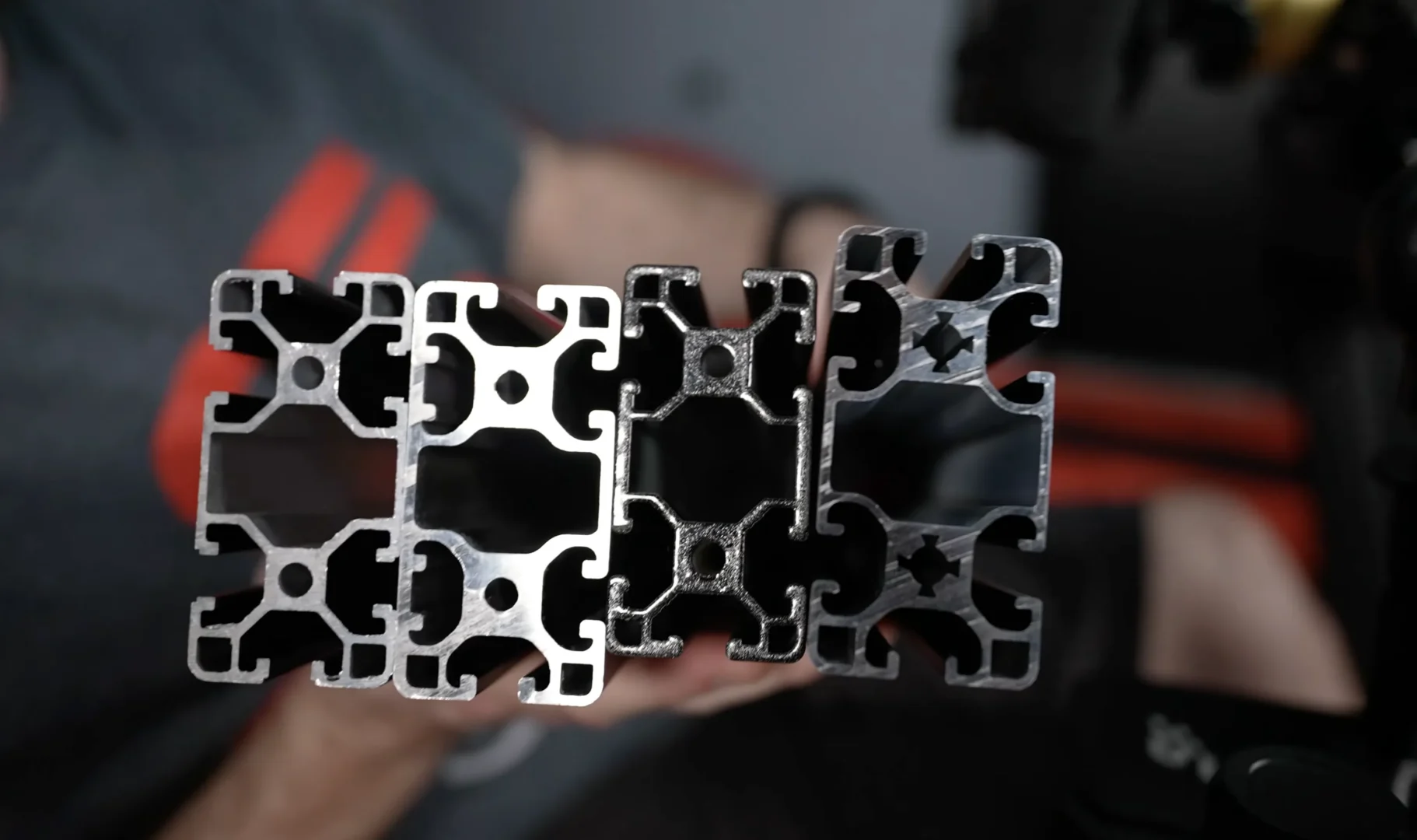
Not all aluminium profile is created equal. Beyond the outside dimensions (the S99 uses 40×160, 40×120, 40×80 and 40×40 profile in different places), wall thickness can vary significantly between brands. Comparing samples side by side, Sabelt’s profile has a very similar core structure to Advanced SimRacing’s, while Sim-Lab’s profile from the original P1X cockpit we tested back in 2019 is quite a bit heavier with noticeably thicker material (interestingly, the more recent P1X Pro uses thinner profile), making it stronger overall but less practical and more expensive to ship. What that means in the real world is debatable at best. We’ve never had a rig where the profile itself bent or sagged, even on some very high-end motion systems, and even the original Trak Racer TR120, with joins in its lower profiles, was never an issue. It’s often used as a reason why one brand is better than another, but we just don’t see it being a major factor.
Where we did find flex was the optional shifter and handbrake mount. There’s no secondary reinforcement under the mounting plate (on our own fabrications we like to add angle brackets underneath), and with a heavy hydraulic handbrake there’s quite a bit of bend towards you, enough to perceive when driving. We did plenty of drifting and rally driving in testing and felt it most when quickly grabbing the handbrake. It’s the entire arm assembly moving rather than the plate on the profile, and even with the full arrangement fitted, there’s a little movement. Depending on your handbrake it may not be noticeable at all, and it’s within acceptable tolerances rather than a deal breaker, but it’s not the best we’ve tested: the shifter arm on our original Sim-Lab P1-X had no flex whatsoever.
The wheel deck, pedal deck and seat each have their own rigidity story, covered in their sections above. In short, the wheel deck and seat are among the most solid we’ve tested, while the pedal tray has a small but visible amount of dip.
Overall Rating: 7/10
A great cockpit that’s simply too expensive for what it is
Conclusion
The Sabelt S99 is the cleanest aluminium profile cockpit we’ve reviewed, and probably the nicest cockpit we’ve ever reviewed in terms of overall presentation. The smooth anodised finish, uniform brackets and blank cover plates give it a polish few profile rigs can match. Its wheel deck is on par with the best factory designs, and its seat slider is the most solid we’ve tested.
It’s not without its flaws, from the mismatched instructions, easily scratched finish and missing tools to the pedal tray dip and the flexing side mount. The blank plates that make it look so clean also limit where you can mount accessories and motion systems.
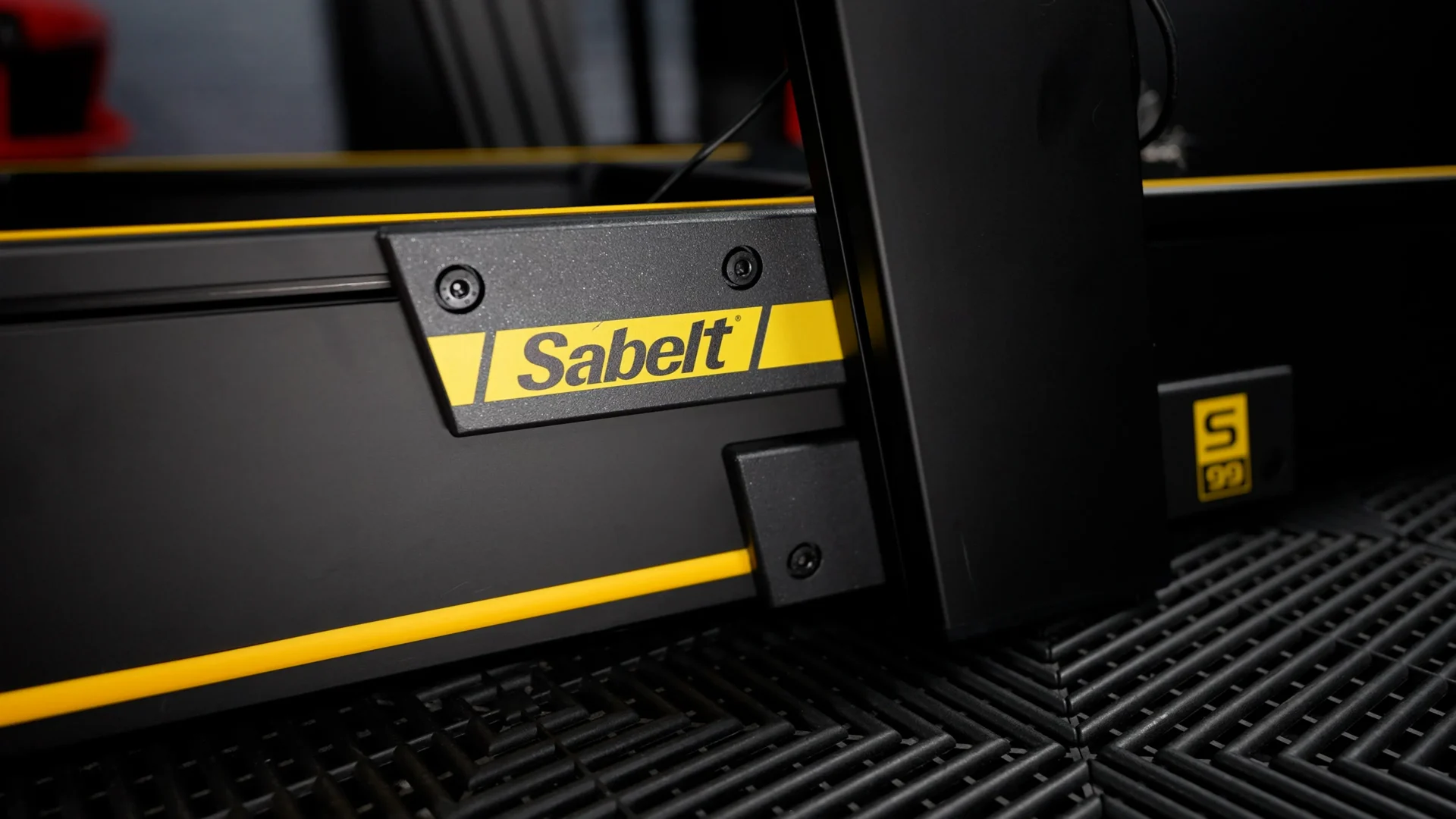
There’s also an emotional side that’s hard to ignore. Coming down and seeing the yellow Sabelt branding on the rig gives me a bit of a spark. It reminds me of my favourite races as a kid, seeing the Sabelt logos on the drivers’ racing harnesses. That’s a big part of why so many sim racing brands partner with real motorsport companies, like Trak Racer with Alpine, or Thrustmaster with Ferrari. Something that comes from a genuine motorsport company has a certain cool factor, and some people will see real value in that.
But removing emotion entirely, which is our job as reviewers, it’s not objectively good value. Is it worth 30% to 50% more than what others are offering in this space? Not to us.
It’s a great cockpit and a great experience overall, but outside of branding, it doesn’t offer anything unique enough to justify the price premium over well-established alternatives from Sim-Lab, Advanced SimRacing, Next Level Racing, Trak Racer, etc. We personally couldn’t justify it, which is quite disappointing. Sabelt doesn’t rely on sim racing to stay afloat, but at this price we don’t see the S99 being perceived as a threat to the established sim racing brands.
Sabelt has a real opportunity to use its motorsport clout to dominate the high end of sim racing, perhaps through strategic partnerships that turn it into a complete turnkey solution. For now, if money is no object and you want a clean setup that does the job well and looks legit with real motorsport branding, the S99 definitely won’t disappoint. If value is your priority, the established alternatives offer much the same for a significantly lower price, which makes this very difficult to recommend.
Pros
- The cleanest-looking aluminium profile cockpit we've reviewed, with a smooth anodised finish
- The most solid seat slider we've tested, and universally compatible
- A very comfortable seat, mounted on thick, solid brackets
- Wheel deck rigidity on par with the best factory designs
- Simple, clever pedal deck that suits pretty much any pedal set
- High-quality bolts, nuts and brackets throughout
- Genuine motorsport branding and pedigree
Cons
- Around double the price of comparable profile cockpits
- Instructions and hardware bag labels don't match
- No tools included, and cable management is an optional extra
- Anodised profile scratches very easily during assembly
- Blank plates limit accessory mounting, and the base doesn't suit many motion system brackets
- Visible dip in the pedal tray under braking, and flex in the shifter and handbrake mount
- Sloped uprights make wheel deck and accessory adjustment three-dimensional
Sabelt S99 FAQ
Is the Sabelt S99 cockpit worth it?
Only if price isn't a major concern. It's the cleanest aluminium profile cockpit we've reviewed, with an excellent seat slider and wheel deck, but you are definitely paying a premium for the brand name. Removing emotion from the equation, it's not objectively good value.
What's the difference between the Sabelt S, P and X series?
The S series is Sabelt's GT-style cockpit. The P series is built to a similar spec but designed around formula-style driving, with a more reclined seat and a more upright pedal tray, and the X series sits above both as the flagship. Each is sold as a raw frame or in Stage 1, 2 and 3 bundles that add more components.
Is the Sabelt S99 hard to assemble?
The hardware is excellent and everything bolts together cleanly, but the instructions often don't match the labels or contents of the hardware bags, and no tools are included. Mounting the seat with the optional slider was the hardest part, and the anodised profile scratches easily, so take your time.
Can you mount a motion system to the Sabelt S99?
Yes, but it may not bolt straight on. The base uses 40x160 profile with the two middle channels blanked out, and many motion systems come with brackets designed for 40x80 spacing, so you may need an additional mounting plate or a length of profile bolted across the base.
Related Articles

QUICK TIPS – How to set up Correct Seating Position in a Driving Simulator Cockpit
The position you sit in when driving a simulator (or a real car) is vitally important. Get it right, and you’ll not only be a

BUILDING MY DREAM SIM RACING RIG – Sim-lab P1-X Cockpit Assembly & First Impressions
The day I’ve been waiting for for the better part of 18 months is finally here! Today we begin the build of my new Sim-lab

Next Level Racing F-GT Lite Review + GIVEAWAY!
Not all of us have the space for a full cockpit set-up, but most of the portable style cockpits on the market include some pretty

$400 SIM RIG BUILD – Next Level Racing Wheel Stand Racer Review
A little while back I put together a “budget” sim rig using Next Level Racing’s Challenger cockpit and a Fanatec CSL Elite. A lot of

Next Level Racing Challenger Cockpit – Assembly and First Impressions
Welcome to Part 2 in our mini-series on building a budget simulator cockpit! Today we assemble and take a look at the newly released Next

Next Level Racing Free Standing Keyboard & Mouse Stand – Assembly & Quick Review
Today we have the opportunity to take a look at the Free Standing Keyboard & Mouse Stand from Next Level Racing before they hit the
MORE REVIEWS and Discounts
If these Sim Racing Reviews have helped you find the best racing simulator gear for your sim rig, please consider using the affiliate links on this website. By purchasing through these links, a small commission will come back to Boosted Media at no additional cost to you. This is how Boosted Media keeps providing content to the Sim Racing community.
About The Authors
-
Tom Ford operates Boosted Media with his brother Will and produces all Boosted Media sim racing videos and written articles. A true motorsport fanatic with a professional background in engineering and media, he works closely with Will across testing and analysis, turning extensive product evaluations into clear, practical reviews and buying advice for sim racers.
-
Will Ford operates Boosted Media with his brother Tom and is the on-camera host and technical lead behind the channel’s sim racing hardware reviews.
With a background in electrical engineering, adult education, and automotives, he combines hands-on product evaluation with practical technical analysis and a passion for motorsport and sim racing to explain how sim racing hardware performs in the real world, and is one of the most experienced people on the planet when it comes to reviewing Sim Racing Hardware.