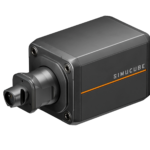
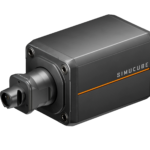
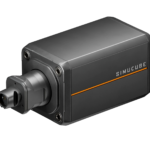
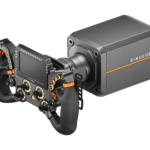
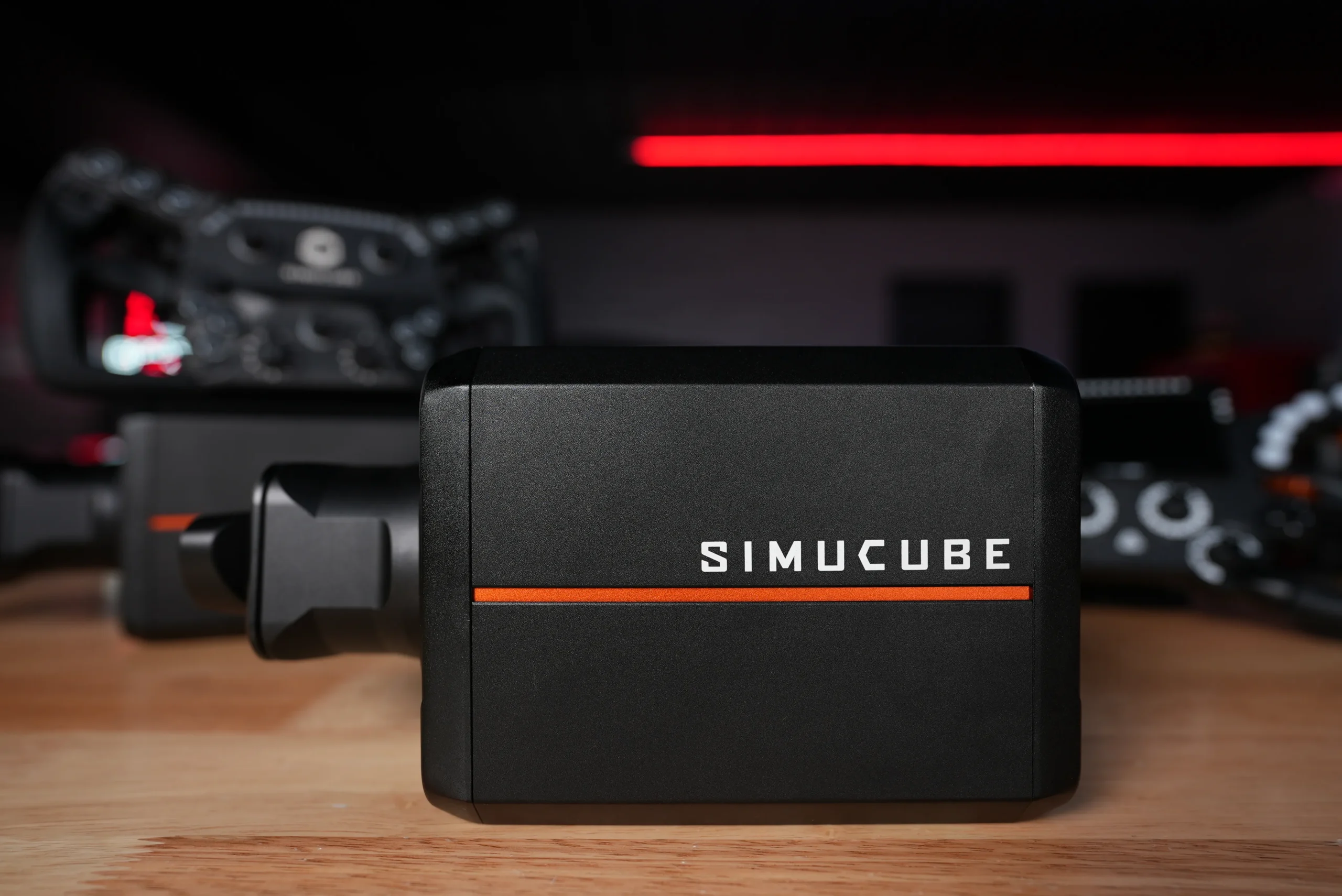
The Simucube 3 Sport, Pro and Ultimate deliver the most refined force feedback there is, but their premium price and more closed ecosystem make them a very specific kind of recommendation.
After six months of testing and daily use, the Simucube 3 Sport and Pro have turned out to be two of the most interesting, impressive, and difficult-to-summarise wheel bases we have reviewed in quite some time. Now add the incredibly expensive Ultimate to the mix, and expectation are even more lofty.
On track, they deliver the best overall force feedback quality we have experienced from any direct drive wheel base to date. Not because of a single revolutionary new feature, but because of how well they combine detail, smoothness, responsiveness, and consistency, with no compromise between those core force feedback characteristics.
But that is only half the story.
Simucube has taken a very deliberate direction with the Simucube 3 ecosystem. The Link Hub, Light Bridge wheel connection, proprietary quick release system, and deeply integrated Simucube Tuner software are all designed around creating a more controlled and cohesive experience. In the right setup, that works extremely well. In the wrong one, especially if you already own a collection of third-party USB wheels or value maximum ecosystem openness, it can be a major limitation.
Simucube 3 Ratings
SC3 Sport

SC3 Sport
Price History
SC3 Pro

SC3 Pro
Price History
SC3 Ultimate

SC3 Ultimate
Price History
If our SIMUCUBE reviews have helped you decide what the best sim racing gear is for you, please consider using the links on this page to make your purchase. By doing so you’ll be supporting Boosted Media at no additional cost to you! This option is available for a huge range of Sim Racing gear.
VALUE
Premium pricing where Value depends heavily on your priorities.
There is no way to frame the Simucube 3 Sport and Pro as value-first wheel bases in the conventional sense. At the time of filming, the 15Nm Sport was priced at €1,405.60 with the required Link Hub, or €1,303.95 without it. The 25Nm Pro was €1,623.60 with the Link Hub, or €1,523.60 without and the Ultimate was €3464.80 with the Link Hub and €3362.15without. See pricing above for current prices.
BavarianSimTec Delta Pro SC x Simucube 3 wheelbase
Price History
That places both firmly in premium territory, especially when products like the Simagic Alpha Evo Pro offer more peak torque than the Simucube 3 Sport for significantly less money, while still delivering excellent force feedback quality and a much wider, more open ecosystem. For Simucube, the total spend also adds up quickly once you factor in accessories, particularly the new quick release at €153.11 each if you own multiple wheels.
So the value question really comes down to what you are paying for. If you want the most torque, the most open ecosystem, or simply the most bang for buck, the Simucube 3 is not that.
But while the Simucube 3 Sport and Pro are expensive, they are not expensive for no reason. For anyone who specifically wants the most refined force feedback experience available, the value case becomes much stronger, and there is a clear sense that you are getting something meaningfully different for the money.
However… If you are genuniely looking for the best available, that now comes at twice the cost with the SC3 Ultimate. It is an absolutely wild price, and does have some benefits over the SC3 Pro in terms of FFB Quality. But for this price we would be expecting more features like USB passthrough and perhaps a discount voucher for ActivePedals!
FFB Quality
The new benchmark for force feedback refinement, with the Ultimate pushing the driving experience even further into wildly diminishing returns.
The Simucube 3 Sport, Pro, and Ultimate deliver the best overall force feedback quality we have experienced from any direct drive wheel base platform to date. That is not because they reveal some completely new category of information through the wheel, but because of how well they combine the qualities that matter most: detail, smoothness, responsiveness, consistency, and control.
With many direct drive wheel bases, even very good ones, there is usually some kind of trade-off between detail and smoothness. If you tune the base to bring out more road texture and fine detail, it can start to feel grainy, sharp, or slightly robotic. If you smooth that out, you often lose some of the immediacy and texture that makes the car feel alive.
The Simucube 3 bases stand out because they largely remove that compromise. They feel immediate, responsive, and extremely detailed, but also unusually smooth and natural in the way forces build, release, and transition. Kerb strikes and rapid direction changes have a more mechanical, connected feel rather than the sudden robotic jerk that can show up on some other low-inertia direct drive bases.
That was especially noticeable in testing at tracks like Sebring and the Nürburgring, where aggressive kerbs can quickly expose whether a wheel base is delivering useful information or just hitting your hands with sharp force spikes. With the Simucube 3, the detail is still there, but it feels more like being connected to a real steering rack than being pulled around by an electric motor.
The Sport and Pro share the same core character, with the main difference being dynamic range. The Sport’s 15Nm peak output will be enough for many people, but with our preferred settings it sat close enough to the limit that we occasionally saw minor clipping in heavy impacts or particularly aggressive kerb strikes. The Pro gives more room to work with, and importantly, we did not find any obvious downside in feel when running it at lower force feedback levels.
The Simucube 3 Ultimate takes that same character and pushes it further again. It feels even sharper and more responsive than the Sport and Pro, to the point where, at its full capability, it can almost feel hyperactive. Importantly though, it does not fall apart when you turn the strength down. Some cheaper high-torque wheel bases can start to feel a little lazy or disconnected when they are not being driven hard, but the Ultimate still feels extremely crisp, immediate, and composed at more realistic force feedback levels.
The most impressive part is not just the extra strength, but the control. Over large kerbs at Sebring and the Nürburgring, you can really feel the car lurching up and over the kerb, but the base remains composed when the car comes back down. It does not feel like it is overshooting or snapping back the other way just to show off how much power it has. That extra authority gives the Ultimate a slightly more convincing sense of mass and mechanical connection in those bigger moments.
So in terms of the pure driving experience, calling the Ultimate a “final 1%” improvement probably undersells it. There is a real difference there. The issue is that it costs more than double the Pro, and it is nowhere near twice as good. The Pro already sits so deep into the point of diminishing returns that the Ultimate becomes very difficult to recommend unless money genuinely is not a concern.
For most serious sim racers, the Simucube 3 Pro is likely the sweet spot in this range, while the Sport still delivers the same fundamental force feedback character with less headroom. The Ultimate is the best of the three from a pure feel perspective, but it is also the least rational purchase. It does not transform what force feedback is, but it does deliver the most complete and controlled version of it that we have tested so far.
Build Quality:
Premium construction, solid mounting, and one of the most mechanically secure quick releases.
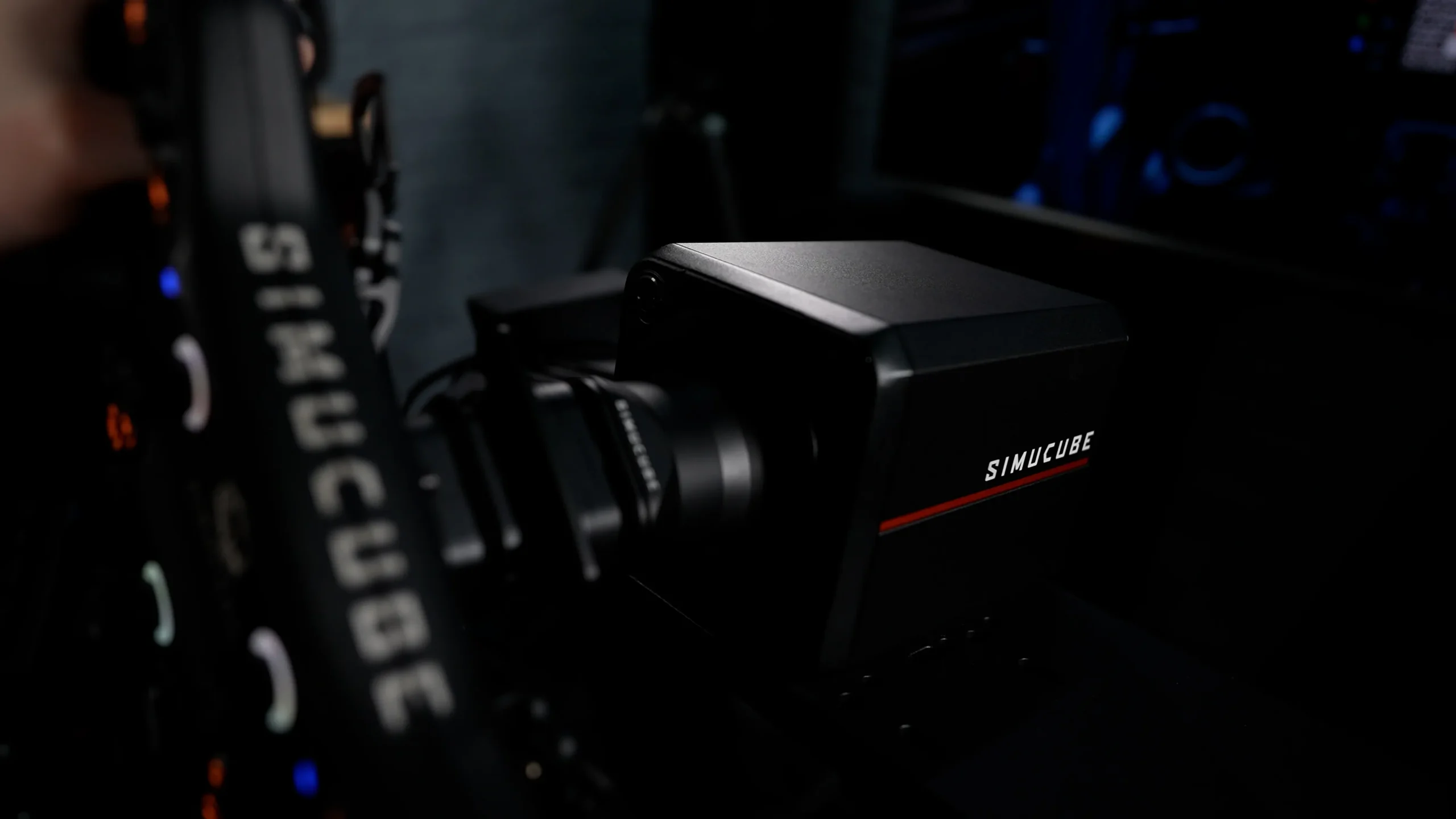
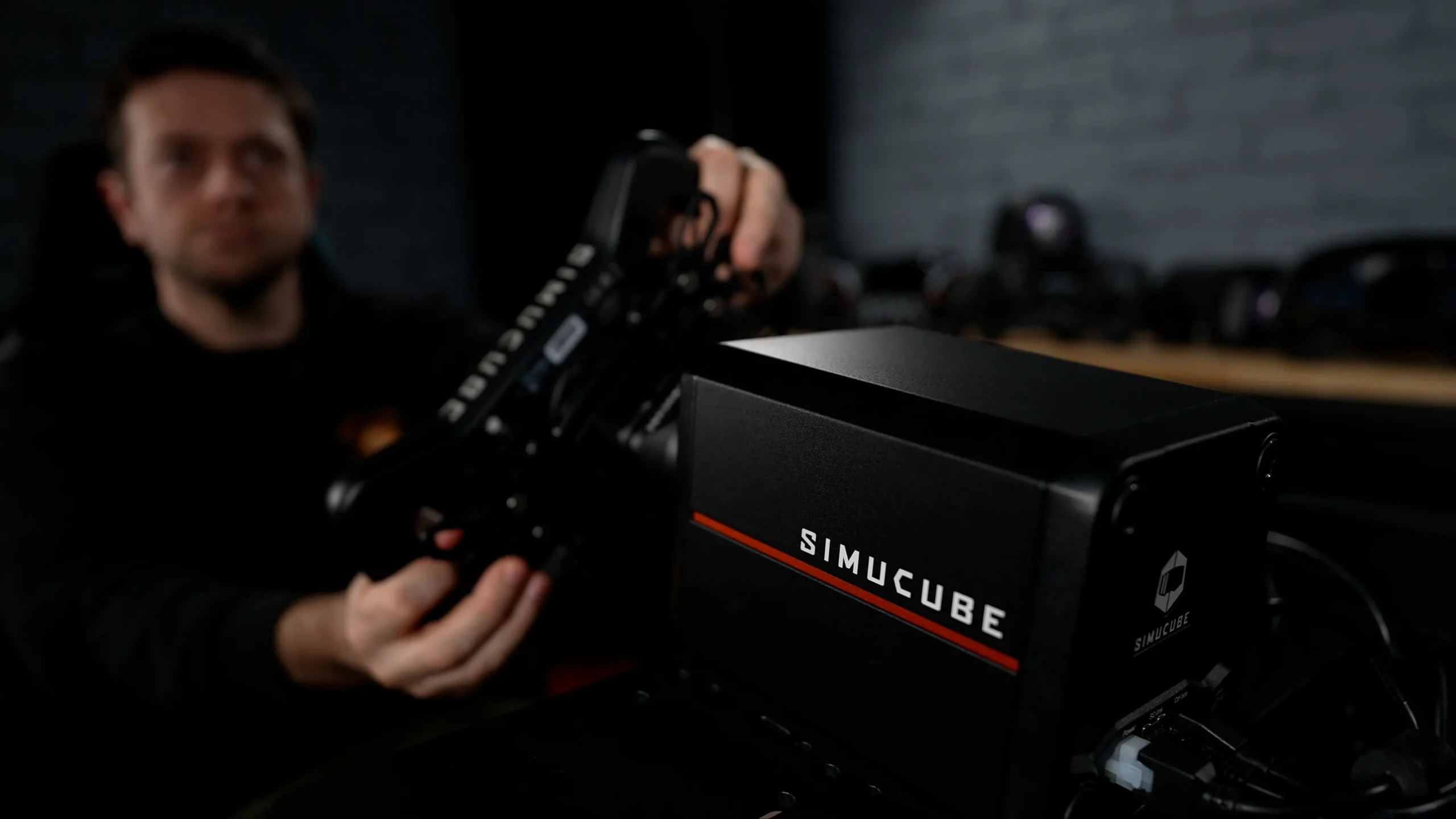
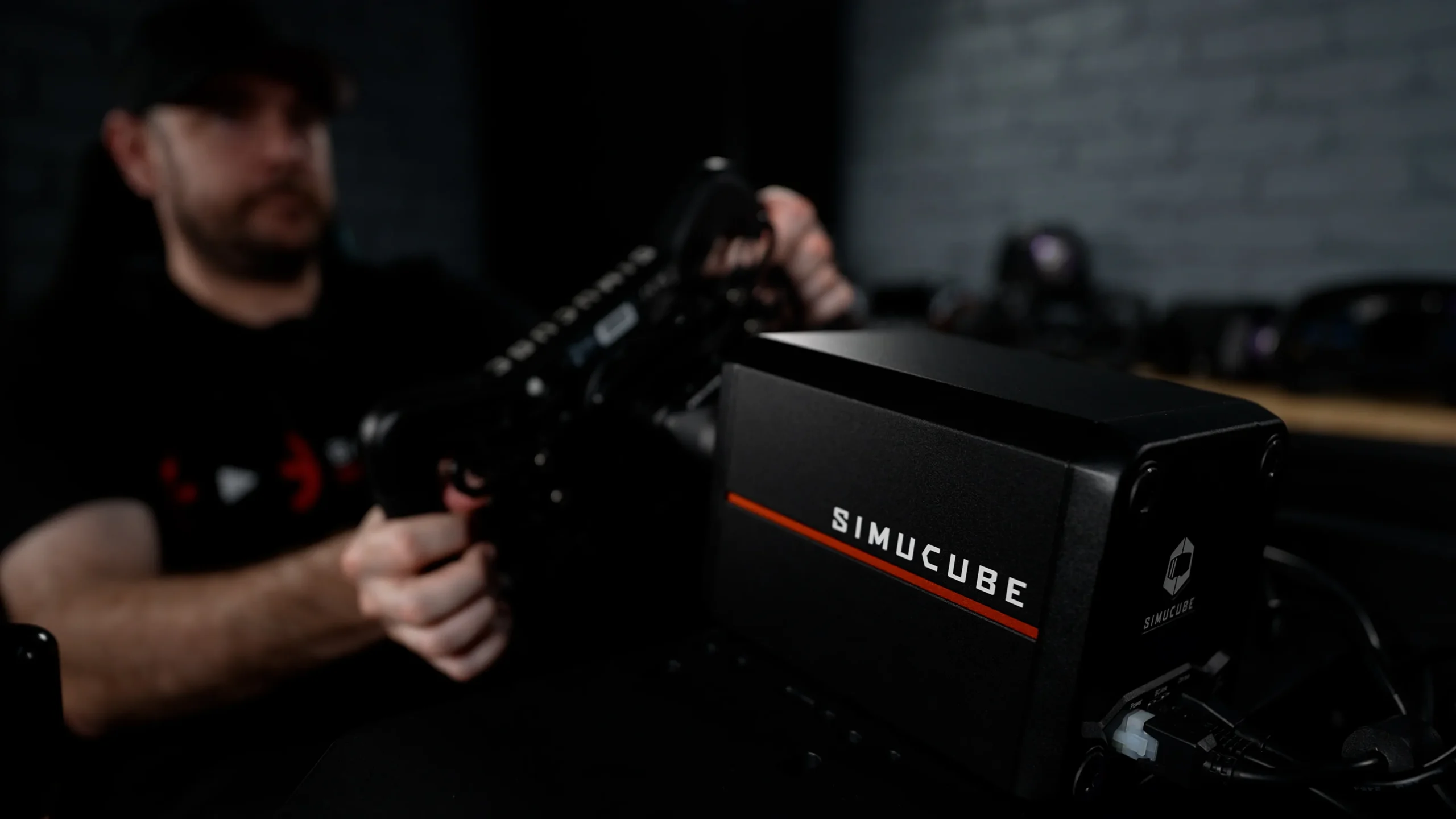
The Simucube 3 wheelbases follow the same general high-end construction standard we have come to expect from Simucube. Both bases use an all-metal housing, feel extremely solid, and have a fairly similar footprint to the Simucube 2 Sport although the Simucube 3 bases are slightly shorter front-to-back.
One very welcome change is the addition of bottom mounting. Simucube has used the standard Fanatec mounting width, with T-Nut slots, which should make installation much easier across a wide range of cockpits, provided the rig itself is strong enough for the torque these bases can produce. The front mounting pattern has also changed compared with the Simucube 2, with the hole spacing now 10mm narrower, so existing front-mounting setups may need checking before upgrading.
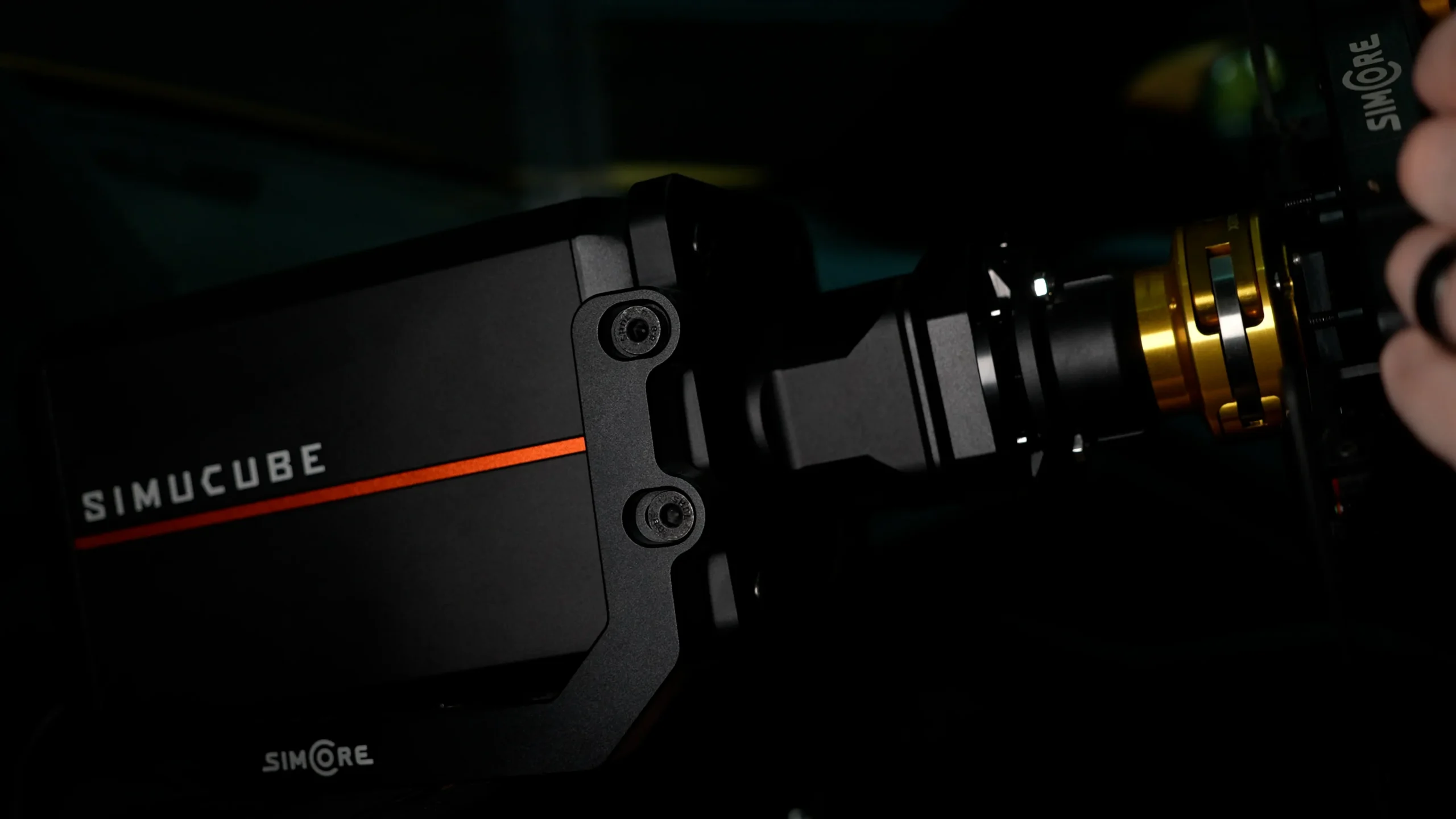
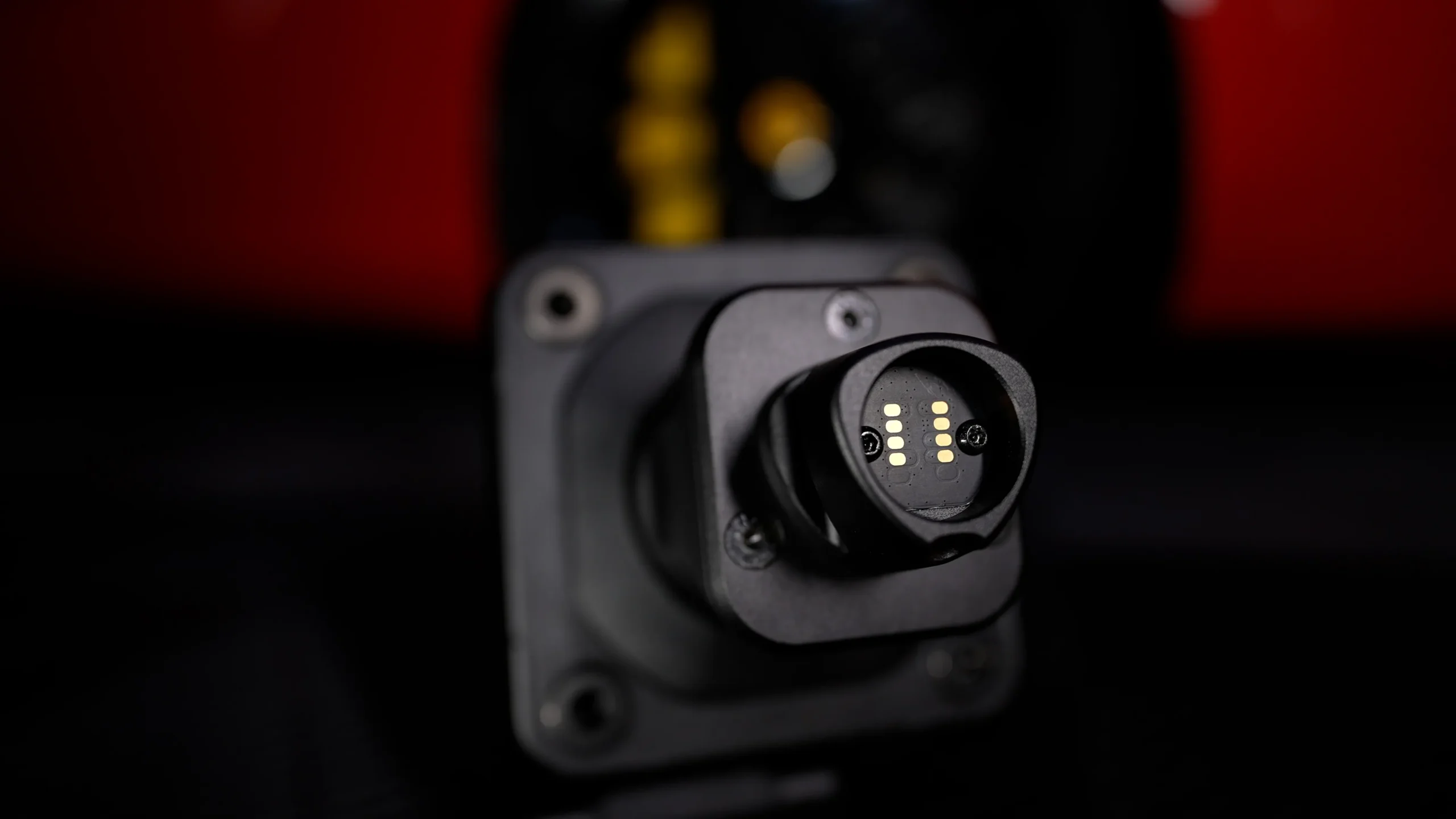
The new P3G polygon quick release is also mechanically excellent. It is self-centring, locks in very securely, and distributes torque evenly across the mating surface. In use, we had no issues with flex, movement, or slop. It is exactly the kind of solid mechanical connection you want on a high-end direct drive wheel base.
There are a couple of practical notes, though. The quick release was quite stiff when new and took some time to loosen up. The release tabs can also be slightly awkward to grab, particularly with some wheels where your hand naturally ends up pressing against the screen or where a rear USB cable exits close to the mechanism.
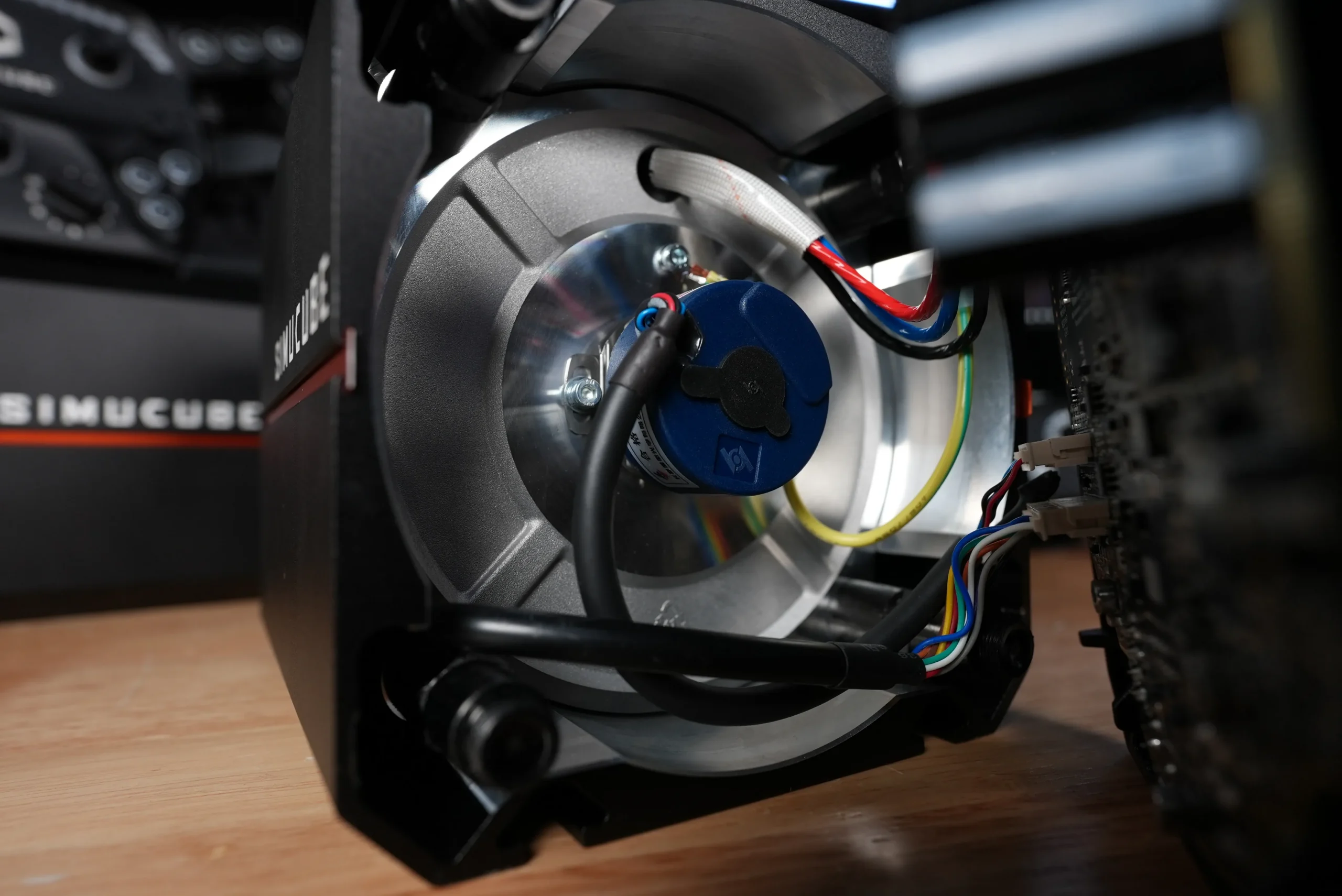
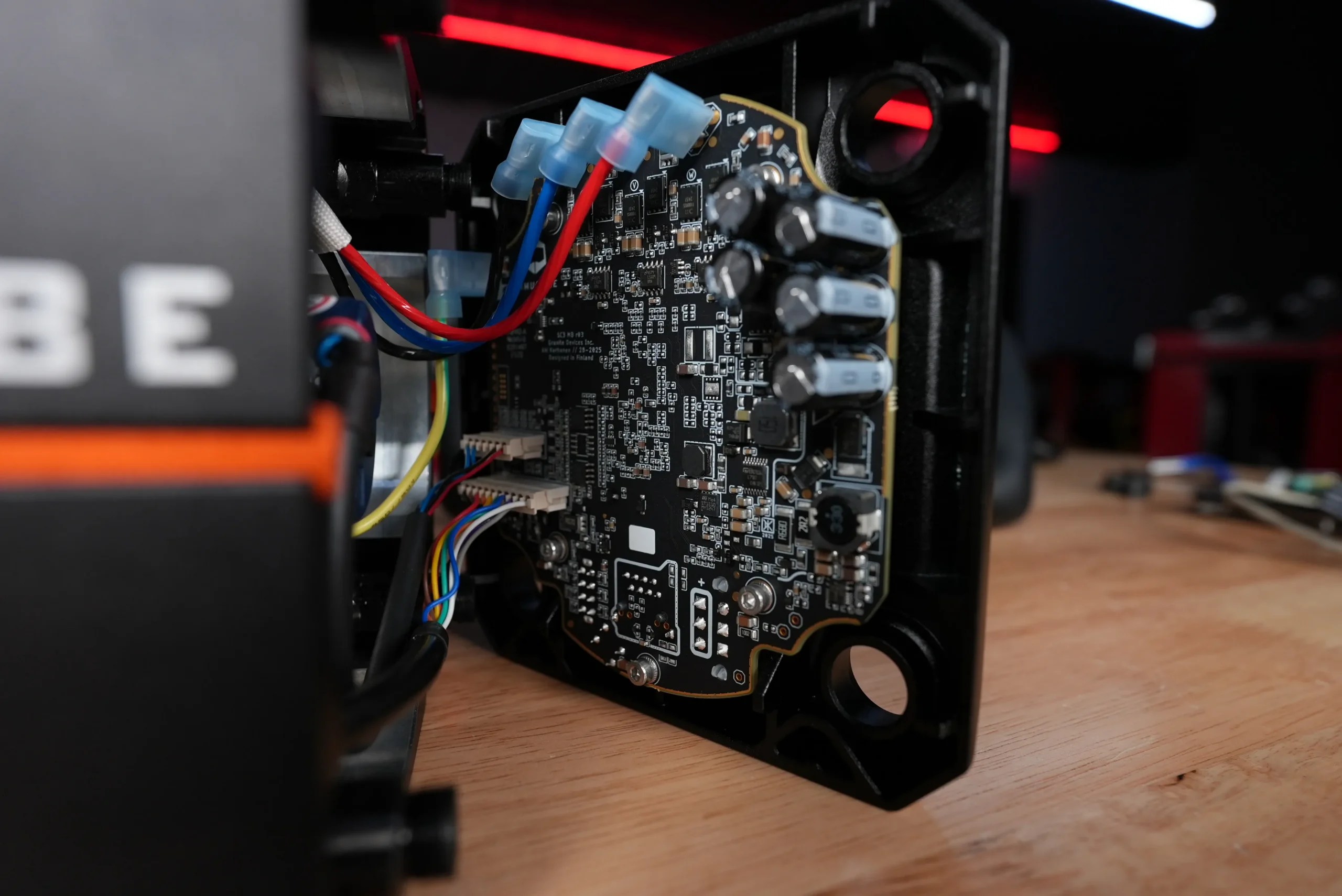
Internally, the layout is clean and relatively simple. There is no active cooling, and in our testing neither the Sport nor the Pro became particularly warm, even when running at full strength. The bases are also exceptionally quiet in operation, which lines up with Simucube’s focus on efficiency and refinement.
Overall, build quality is not an area of concern. The Simucube 3 Sport and Pro feel every bit like premium wheel bases, with strong materials, a very solid quick release, and thoughtful mounting options.
Software:
Deep, polished, and genuinely useful, without forcing every advanced setting into your face at once.
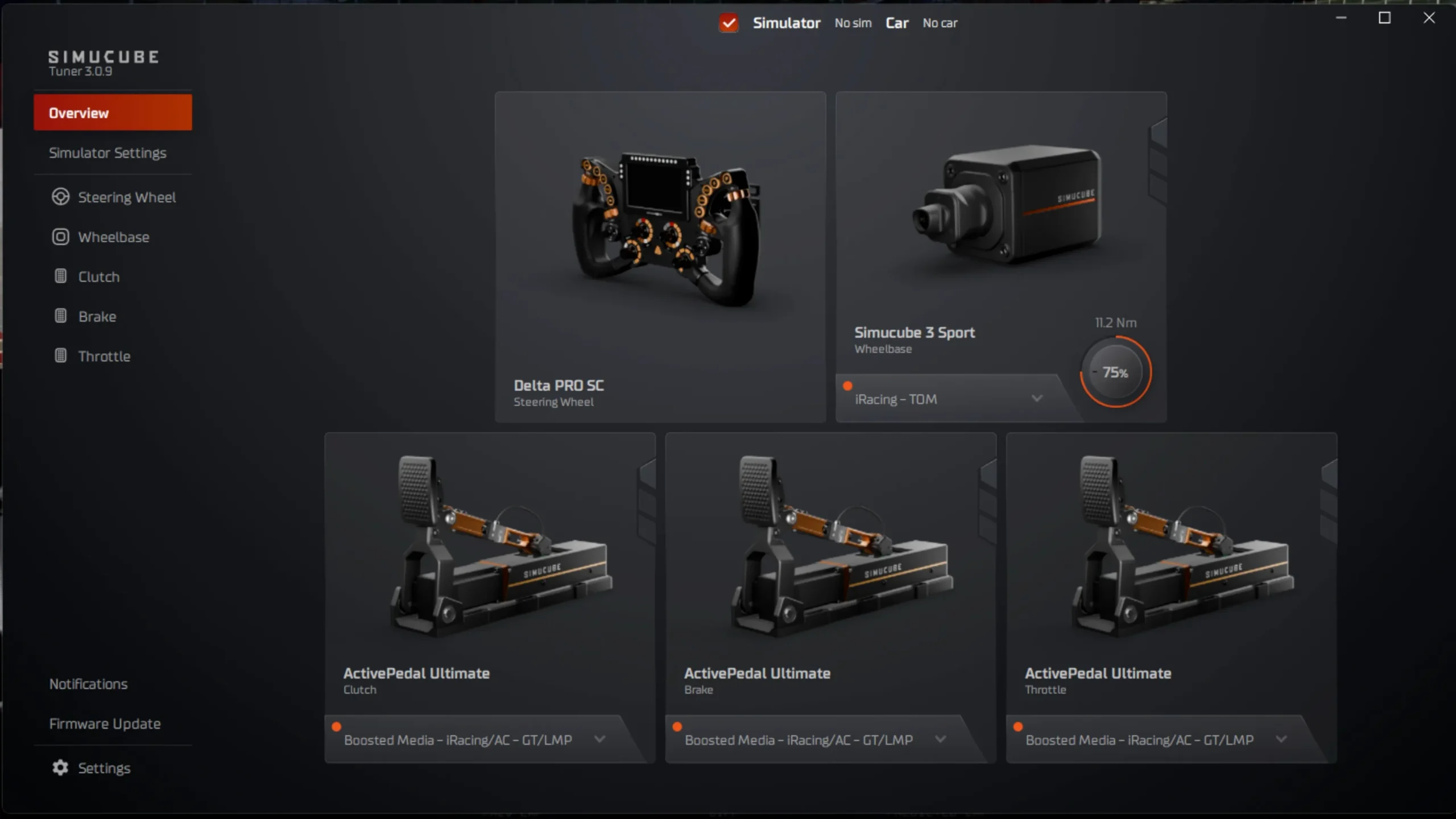
The Simucube Tuner software is a major part of the Simucube 3 experience, and in many ways it explains the direction Simucube has taken with this ecosystem. Rather than treating each device as a separate product, Tuner brings the wheel base, compatible wheels, ActivePedals, firmware updates, profiles, and force feedback tuning into one clean interface.
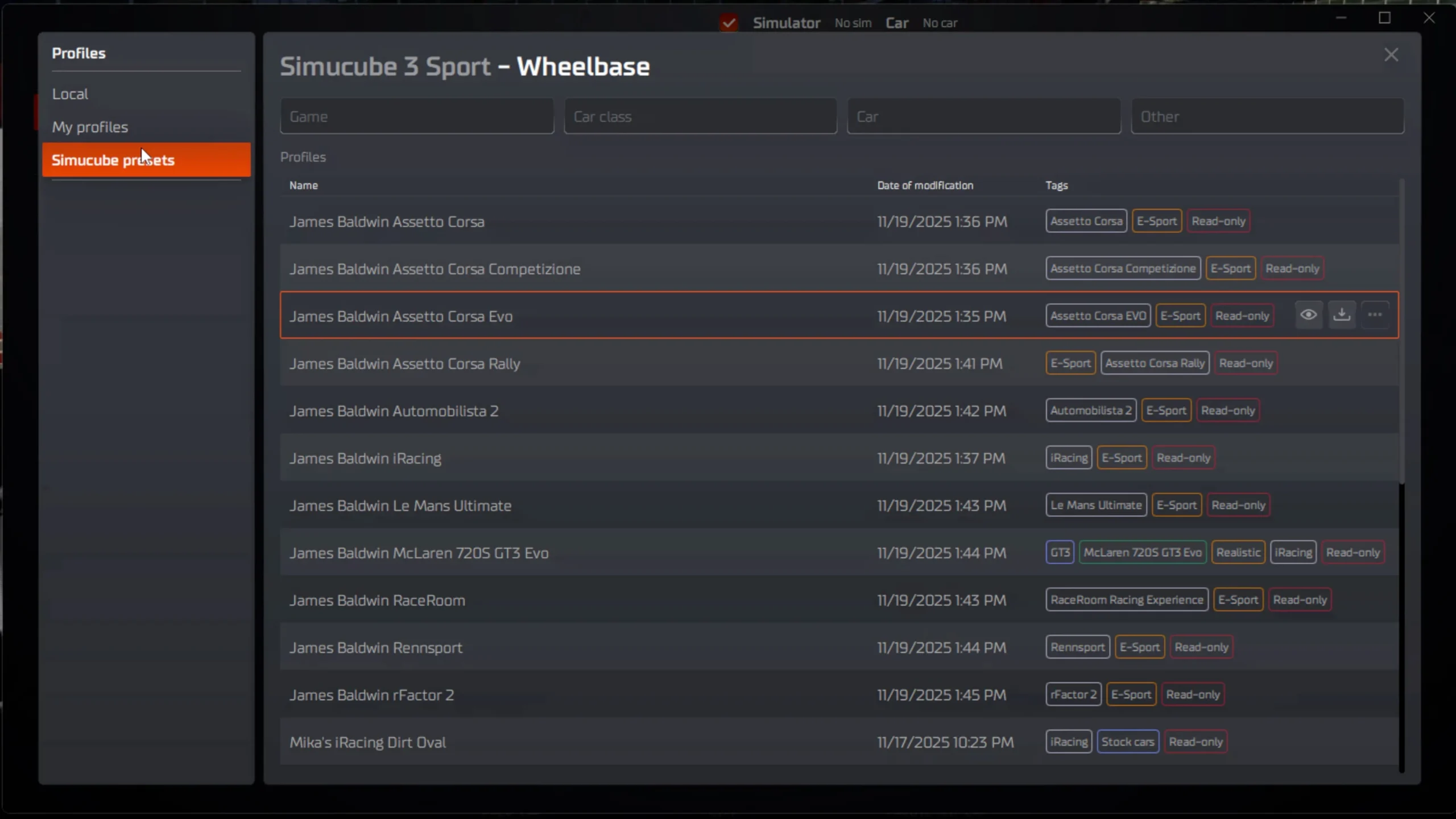
Profile management is particularly strong. There are built-in profiles from drivers and engineers, the ability to save and filter your own profiles by sim, class, or car, and automatic profile switching for both the wheel base and pedals. The old cloud profile sharing system from the Simucube 2 software does not appear to be integrated yet, but profiles can still be imported and exported manually.
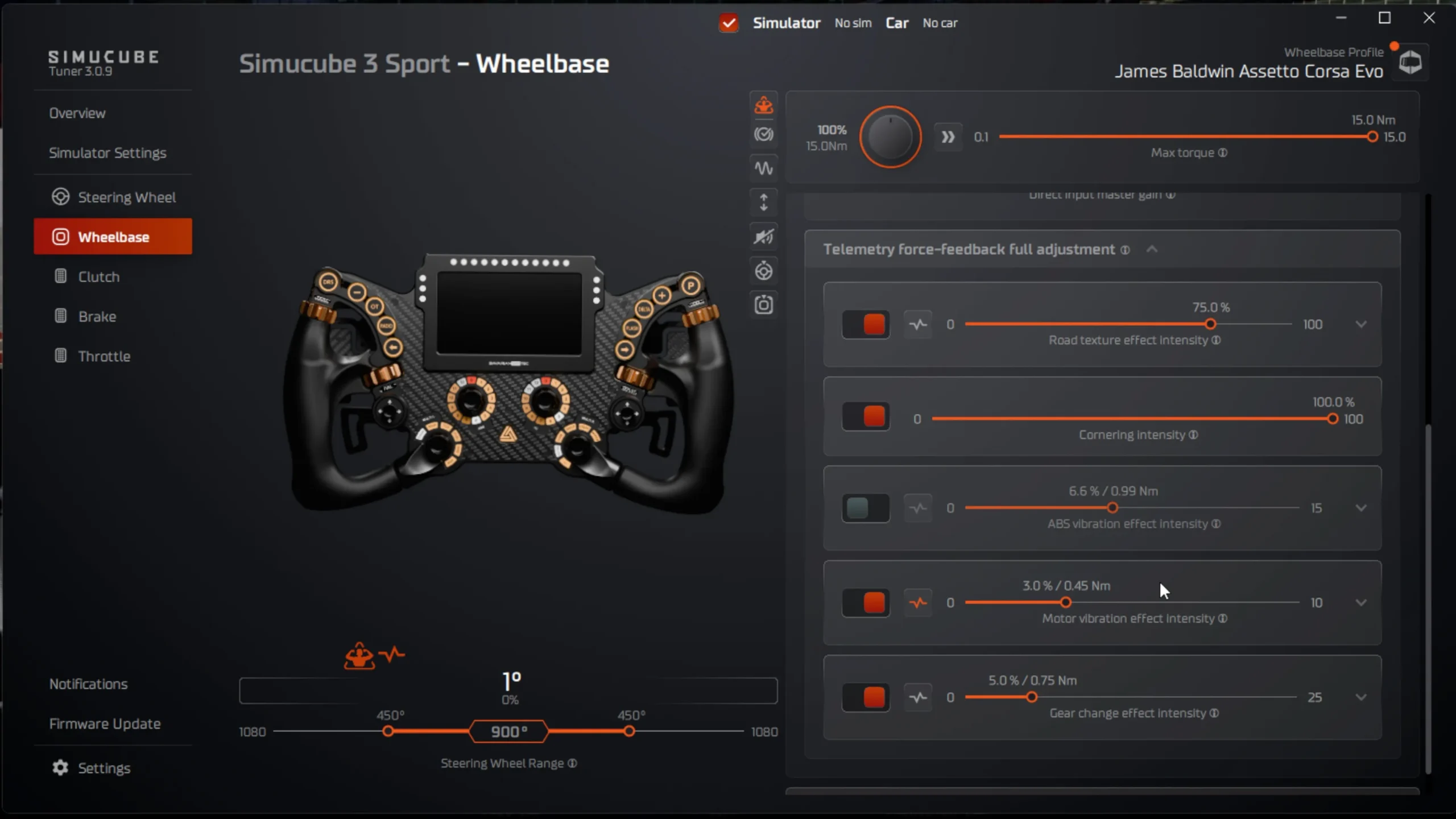
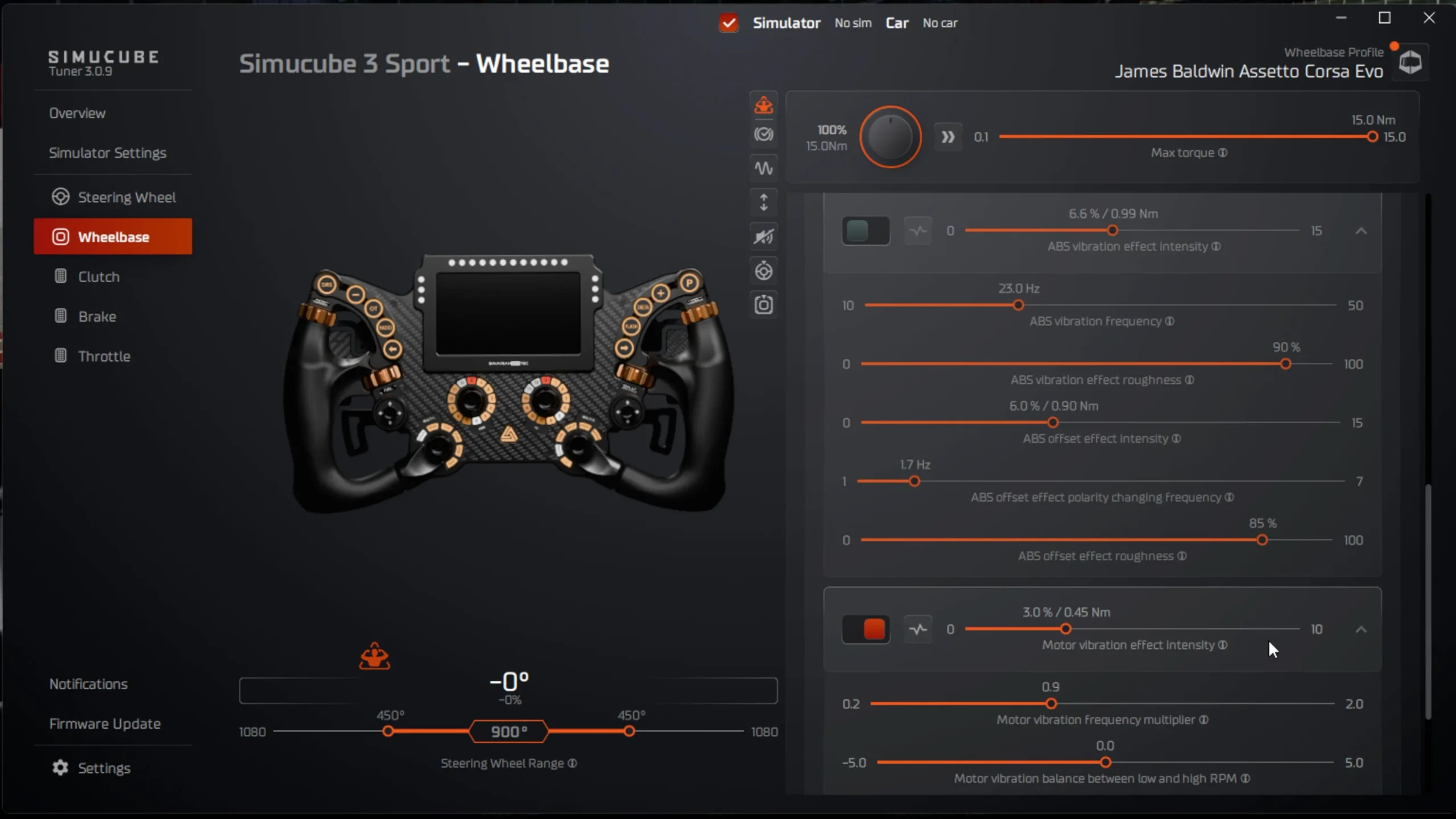
The force feedback tuning is also handled well. Simucube gives you simple preset-style controls if you just want a starting point, but you can also dig much deeper into damping, friction, inertia, frequency balance, wheel angle-based attenuation, static force reduction, bump stops, and separate direct input and telemetry-based force feedback levels. It is still a technical system allowing a huge amount of control, but it is presented in a way that feels much more approachable than earlier Simucube software.
The telemetry-based force feedback implementation is one of the more interesting parts of the system. Rather than relying on a proprietary API that game developers need to support, Simucube uses telemetry data already being output by supported sims. That means effects such as road texture, cornering forces, ABS, RPM, and gear change can be generated and adjusted within the software, with individual gain and deeper tuning available for each. In our testing, we did not notice any latency from this system.
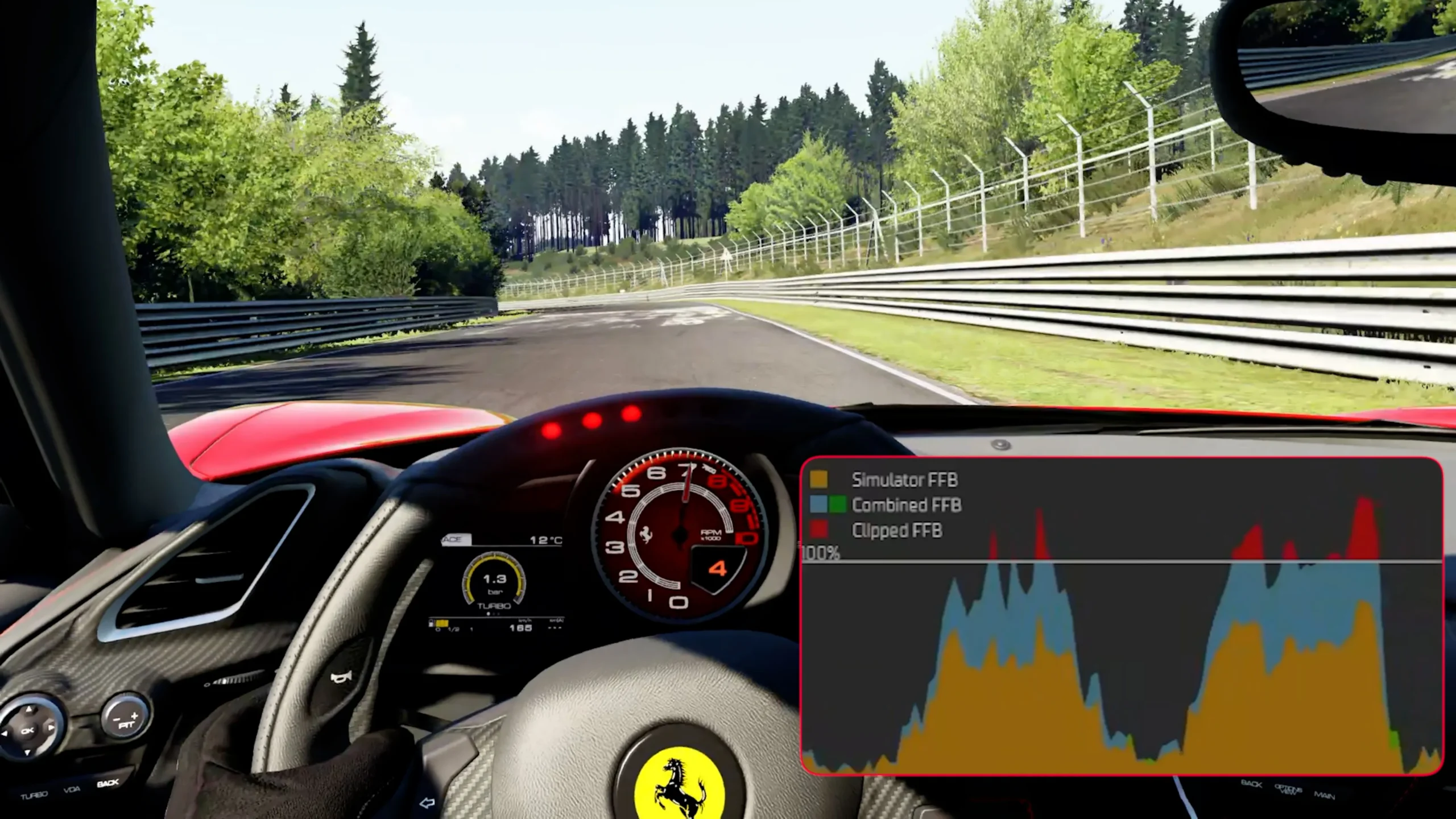
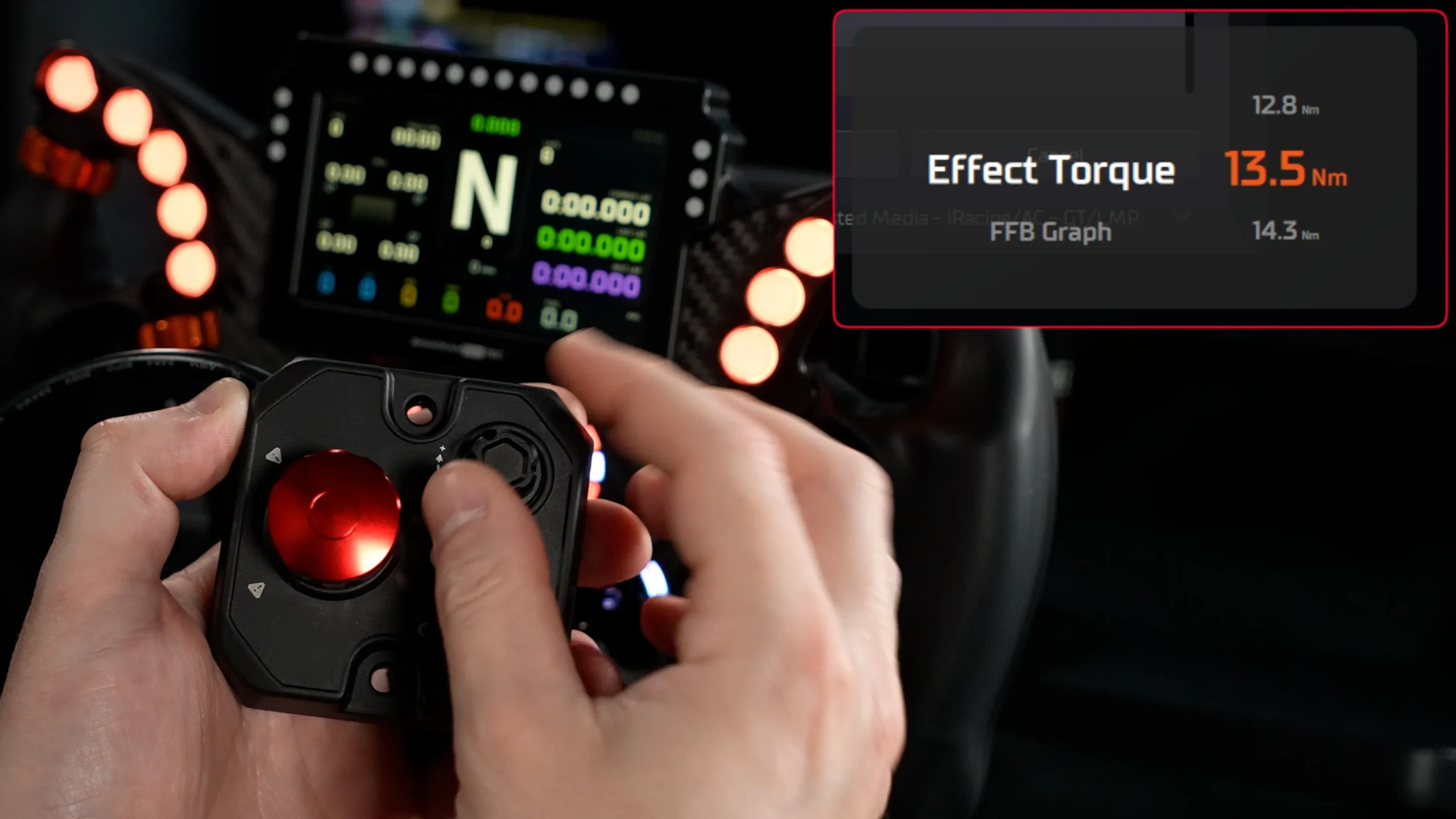
The new control module and overlay are also genuinely useful. The rotary encoder can bring up an on-screen overlay, letting you adjust torque, view force feedback and pedal graphs, and check for clipping without alt-tabbing out of the sim. The force feedback graph is especially helpful because it shows both direct input and telemetry-based forces, which makes tuning much easier. The only notable limitation is that, at the time of testing, the overlay required windowed or borderless windowed mode rather than exclusive fullscreen.
Wheel integration is clean as well. Compatible Simucube and partner wheels appear automatically in Tuner, with settings changing depending on the connected wheel. Buttons, clutches, LEDs, brightness, and effects can all be adjusted from the same software. It is not as open or deeply customisable as something like SimHub, particularly for dashboard layouts, but it is much simpler and more cohesive.
Overall, Simucube Tuner is one of the strongest parts of the Simucube 3 package. It offers a lot of depth, but the way it is organised makes the system feel manageable rather than overwhelming.
Ecosystem:
Technically clever and highly integrated, but less open than many sim racers will want.
The Simucube 3 ecosystem is one of the most important things to understand before buying either of these wheel bases. Simucube has clearly moved in a more controlled direction here, with the Link Hub, Light Bridge wheel connection, new quick release, compatible wheels, ActivePedals, and Simucube Tuner software all designed to work together as one system.
Instead of each device connecting directly to your PC by USB, Simucube 3 devices connect through the Link Hub using RJ45-style network connections. If you only have one device, it can connect directly to the Link Hub. If you are running multiple Simucube Link devices, such as ActivePedals and a Simucube 3 base, you will need to add a network switch between them. The Link Hub then connects to the PC over USB.
That might sound slightly odd given the discussion around USB limitations, but from a consumer point of view it makes sense. Running Ethernet directly to the PC could be cleaner technically, but it also creates more setup friction with network ports, configuration, and potential user error. The Link Hub approach gives Simucube more control over the connected devices while keeping the PC connection relatively simple.
Light Bridge is the other major part of the ecosystem. It provides contactless wireless power and data through the quick release, which allows compatible wheels to work without a physical USB cable or traditional electrical contacts through the rotating shaft. From a technical perspective, it is a neat solution, and it fits Simucube’s goal of creating a reliable, controlled experience.
The trade-off is openness. There is no USB passthrough, and based on the design of the base and quick release, that does not appear to be something that can simply be added later. You can still adapt the Simucube 3 to other quick release systems, and force feedback is not locked out when you do that, but any wheel that depends on Light Bridge will lose that integration if you move away from the Simucube quick release.
That makes this ecosystem quite polarising. If you are buying into Simucube’s own hardware, or compatible partner wheels, the experience is clean, cohesive, and easy to manage. If you already own a collection of third-party USB wheels, or you want the flexibility of an open quick release with USB passthrough, the Simucube 3 can feel unnecessarily limiting compared with some competitors.
The same applies to software and wheel customisation. Compatible wheels are detected automatically and can be configured neatly inside Simucube Tuner, which is great if you want everything in one place. But dashboard customisation, at least on the Light Bridge wheels tested, is more limited than what you can achieve with a generic USB wheel running through SimHub.
So the ecosystem is neither simply good nor bad. It is a deliberate design direction. Simucube has prioritised reliability, integration, and a more controlled user experience. For the right buyer, that will be a major strength. For anyone who values maximum hardware flexibility, it may be the biggest reason to look elsewhere.
Overall
The best force feedback we have tested, but not the obvious choice for every high-end sim racer.
Conclusion
The Simucube 3 range delivers the best overall force feedback quality we have tested so far. The Sport and Pro are already exceptionally refined, responsive, smooth, and composed, while the Ultimate pushes that even further with more sharpness, authority, and control.
But the buying decision is not just about force feedback. These are expensive wheel bases, the quick releases are expensive, and the ecosystem is more closed than some sim racers will want. There is no USB passthrough, Light Bridge only benefits compatible wheels, and anyone with several third-party USB wheels may find the direction frustrating.
That makes the Simucube 3 range a very specific recommendation. If you want the most refined force feedback experience available, are happy buying into the Simucube ecosystem, and value a clean integrated setup over maximum hardware flexibility, these bases are exceptional. They also make a lot of sense for professional drivers, training rigs, commercial simulators, and high-end setups where consistency and polish matter more than value.
For most serious sim racers, the Pro is the one we would choose. The Sport gives you the same fundamental character with less headroom, but the Pro has more dynamic range without any obvious downside in feel. The Ultimate is the best of the three from a pure driving perspective, but it is deep into diminishing returns. It is better, but nowhere near twice as good as the Pro, despite costing more than double.
So the verdict is simple: the Simucube 3 range is not the best value option, the most open ecosystem, or the easiest purchase to justify on specs alone. But if your priority is the best, most complete force feedback experience we have tested, this is currently the benchmark.
NEWSLETTER
Stay up to date with new releases And major updates
Thanks. Please check your email to confirm your subscription.
Sim RACING
Discount Codes
Pros
- Benchmark force feedback refinement
- Outstanding smoothness, detail, responsiveness, and consistency
- Excellent force feedback transitions over kerbs and rapid direction changes
- Pro offers useful extra headroom without an obvious downside at lower strengths
- Very quiet operation
- Excellent all-metal construction
- Solid P3G quick release with no flex or slop
- Bottom mounting with T-Nut rails
- Strong Simucube Tuner software experience
- Excellent profile management and automatic profile switching
- Useful control module and on-screen overlay
- Smart telemetry-based FFB implementation
- Clean integration with compatible Simucube and partner hardware
Cons
- Very expensive
- Quick releases are expensive, especially for multiple wheels
- More closed ecosystem than many competitors
- No USB passthrough
- Light Bridge benefits only apply to compatible wheels
- Adapting to other quick releases sacrifices Light Bridge functionality
- Quick release tabs can be awkward with some wheels
- Some third-party wheel cables/connectors may interfere with the QR release mechanism
- Dashboard customisation is limited compared with SimHub
- Overlay does not work over exclusive fullscreen at time of testing
- Early launch issues were significant, even though they now appear resolved
Related Articles
Logitech G RS50 Direct Drive Wheelbase – Detailed Review
The RS50 is Logitech’s first serious alternative to the Fanatec GT DD Pro for PlayStation users in this price category.—and offers a superior driving experience
Asetek Initium Entry Level Direct Drive Bundle – Detailed Review
When it comes to value, the Asetek Initium range makes a strong case as either a first step into direct drive or an upgrade from
PXN VD Series Direct Drive Wheel Bases – Detailed Review
PXN’s new VD Series marks the company’s first serious step into the direct drive wheelbase market. The lineup consists of three bases – the VD4,

VRS Direct Force Pro 15 (DFP15) Review
VRS are best known for their load cell pedals, driver development tools, and coaching systems — but their original DirectForce Pro 20Nm wheelbase also made

Fanatec CSL DD Review 2026: Is It Still the Best Entry-Level Direct Drive Wheel Base?
When the Fanatec CSL DD launched, it redefined expectations in the entry-level direct drive segment. Offering up to 8Nm of torque with the optional Boost

Best Direct Drive Wheelbases 2026
Direct Drive wheelbases have exploded in popularity over the past few years, with the technology becoming more affordable, more compact and therefore more accessible for
MORE REVIEWS and Discounts
If these Sim Racing Reviews have helped you find the best racing simulator gear for your sim rig, please consider using the affiliate links on this website. By purchasing through these links, a small commission will come back to Boosted Media at no additional cost to you. This is how Boosted Media keeps providing content to the Sim Racing community.