



A smart and versatile evolution of Moza’s entry-level load cell pedals, with meaningful improvements in the right areas
Second-generation products are always interesting, because they tend to show how much a brand has learned from its earlier hardware. That is exactly what makes the Moza SRP2 pedals worth a closer look.
When the original SRP pedals launched, Moza was still a relatively new player in sim racing. They showed promise, but there were also some obvious areas that needed refinement. The SRP2 does not try to reinvent the formula. Instead, it focuses on improving the fundamentals, with more adjustability, more versatility, and a clearer understanding of how these pedals are actually going to be used.
That makes them an important product for Moza, and an interesting one for buyers as well. The key question is not whether these pedals transform the category, but whether they improve on the original in the areas that matter most, while still offering strong value in a very competitive part of the market.
MOZA Racing SRP2 Pedal Ratings
Have our MOZA reviews helped you decide what the best sim racing gear is for you?
Please consider using the links on this page to make your purchase.
By doing so you’ll be supporting Boosted Media at no additional cost to you! This option is available for a huge range of Sim Racing gear.
VALUE:
At $149 USD / €159 / £139 / $299 AUD for the two-pedal set, the Moza SRP2 is priced competitively for a versatile entry-level load cell pedal set. Even with the optional clutch and rear support bracket, the overall package remains fairly sensible.
The value here comes from versatility more than outright wow factor. These pedals offer enough adjustment to work across a wide range of driving styles and setups, whether you are on the floor, a wheel stand, or a cockpit, and that makes them easy to justify as a first serious pedal set.
They are not especially premium, and they are not a must-upgrade product for existing SRP owners. But for new buyers, they are well priced for what they deliver.
Build Quality:
Build quality is solid overall, even if the SRP2 is not especially premium in the way it presents itself.
One thing worth pointing out straight away is that Moza’s marketing is a little confusing here. While some of the product material refers to aerospace-grade CNC machined aluminium, the bulk of the pedal structure is actually high-strength steel, which is easy enough to verify and is also reflected further down in the spec sheet. In practical terms, though, that is not really a problem. These pedals feel structurally sound, with no meaningful flex or obvious weaknesses when mounted properly.
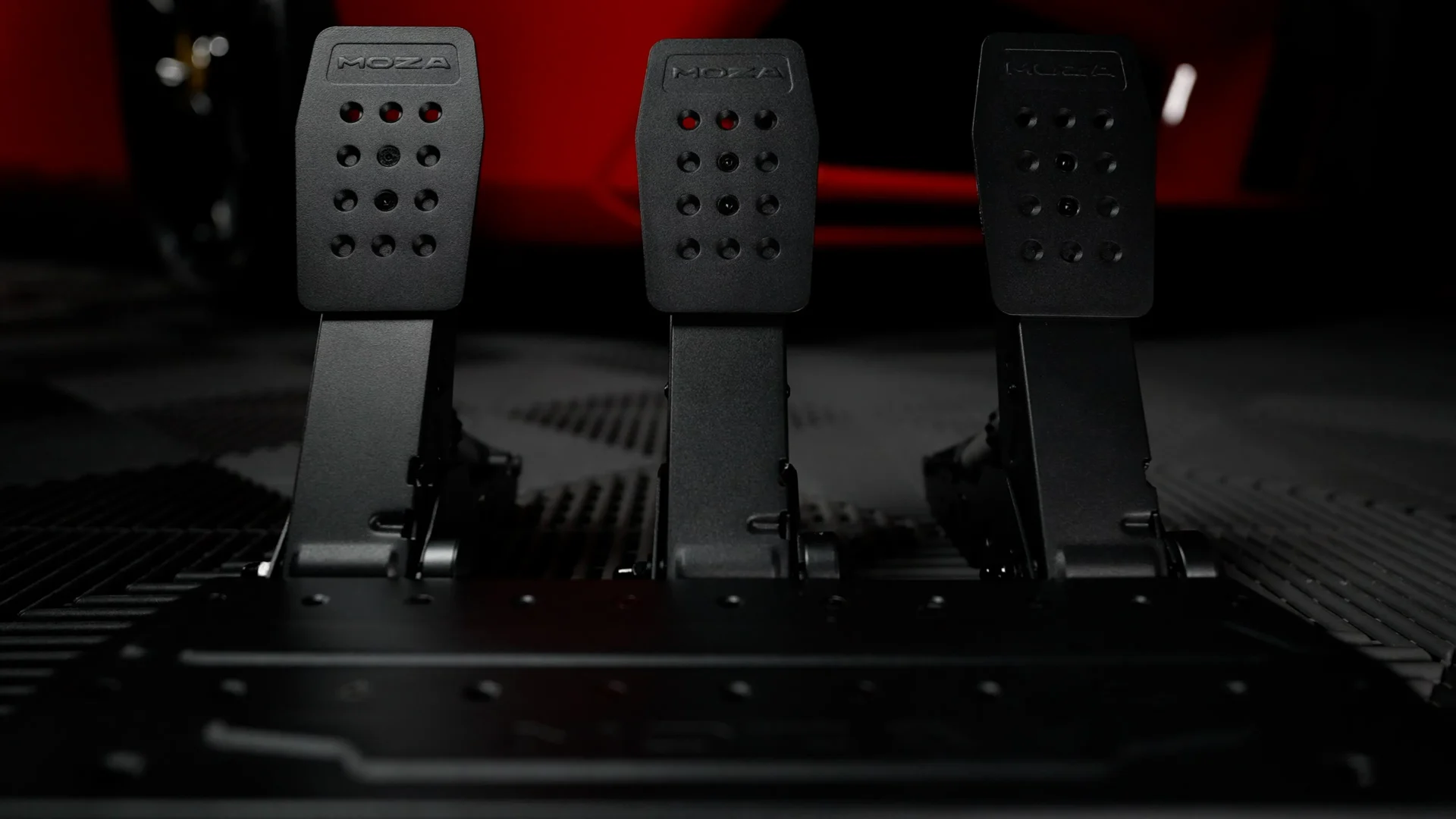
Where the cost-saving is more obvious is in the pedal pads themselves. Compared to the original SRP pedals, the move from machined aluminium pads to pressed steel ones is a bit of a visual downgrade, even if it does not really hurt the driving experience. If anything, the new pads are slightly grippier, but this is clearly an area where Moza has chosen function and cost control over a more premium finish.
That really sums up the SRP2’s build quality as a whole. It feels well made where it matters, with solid structure and no real concerns from a durability point of view, but it is not trying to impress with expensive materials or flashy finishing. For the price, that feels like a fair trade-off.
Adjustability:
Adjustability is one of the areas where the SRP2 makes its biggest gains over the original SRP.
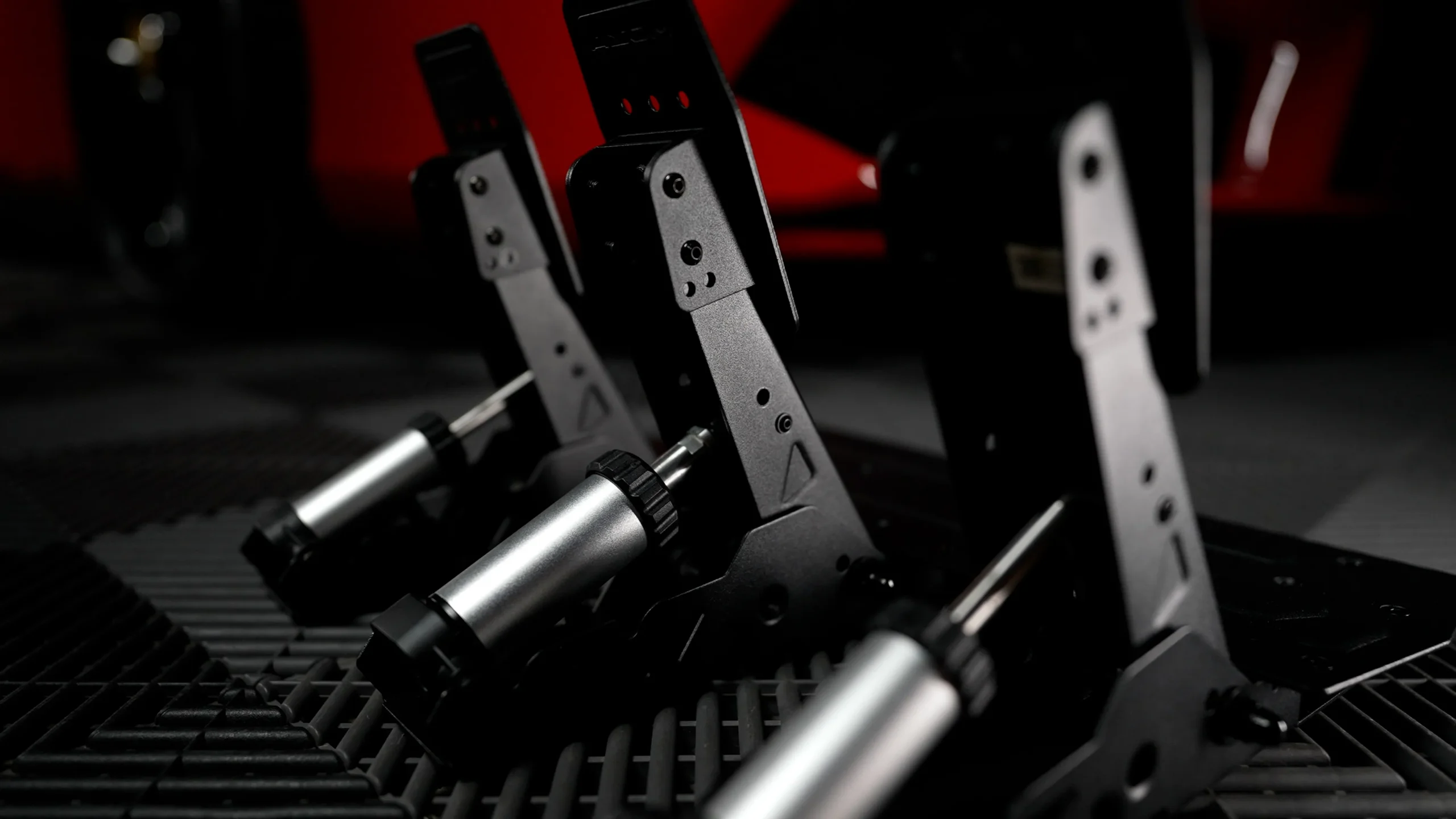
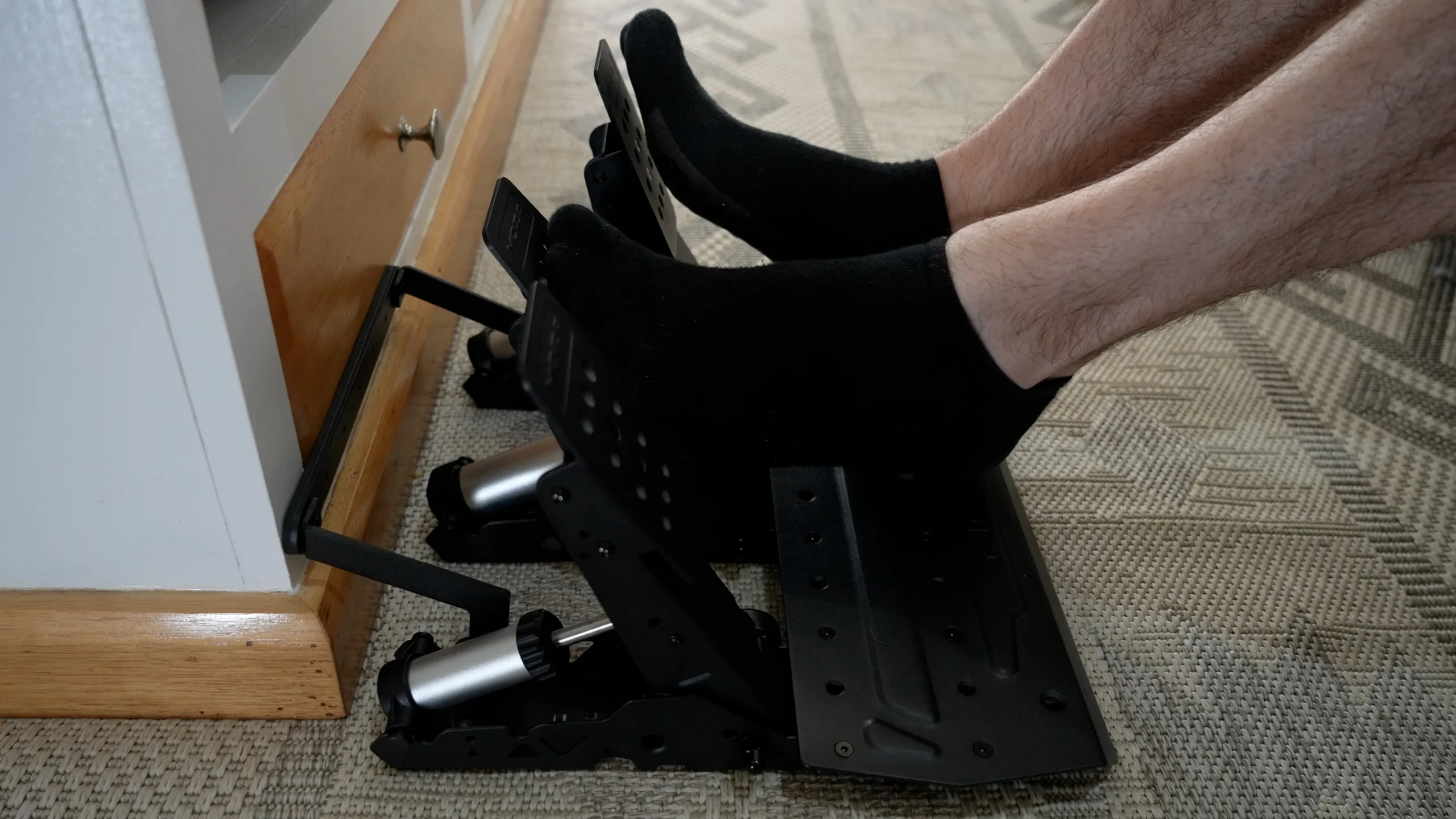
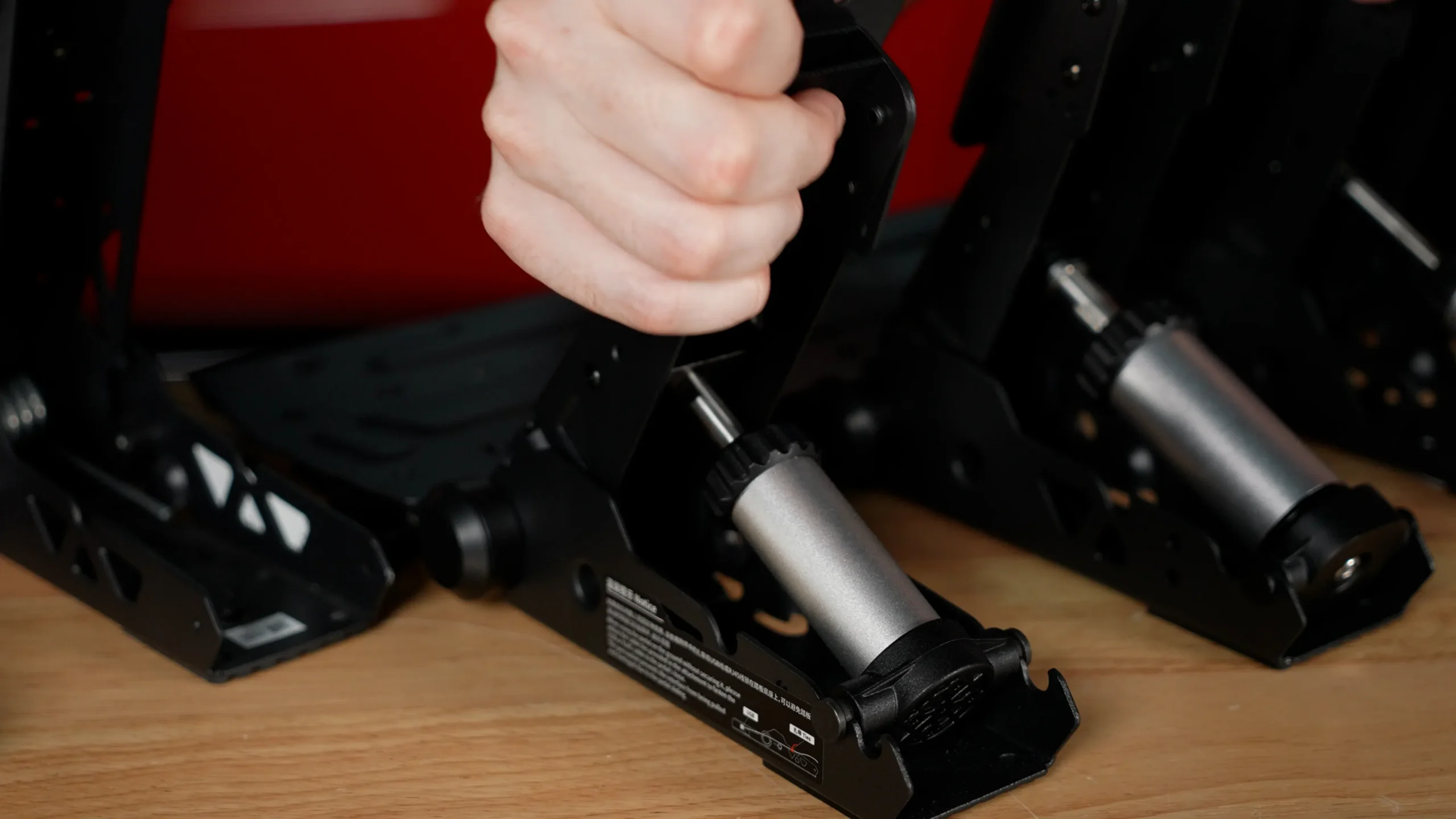
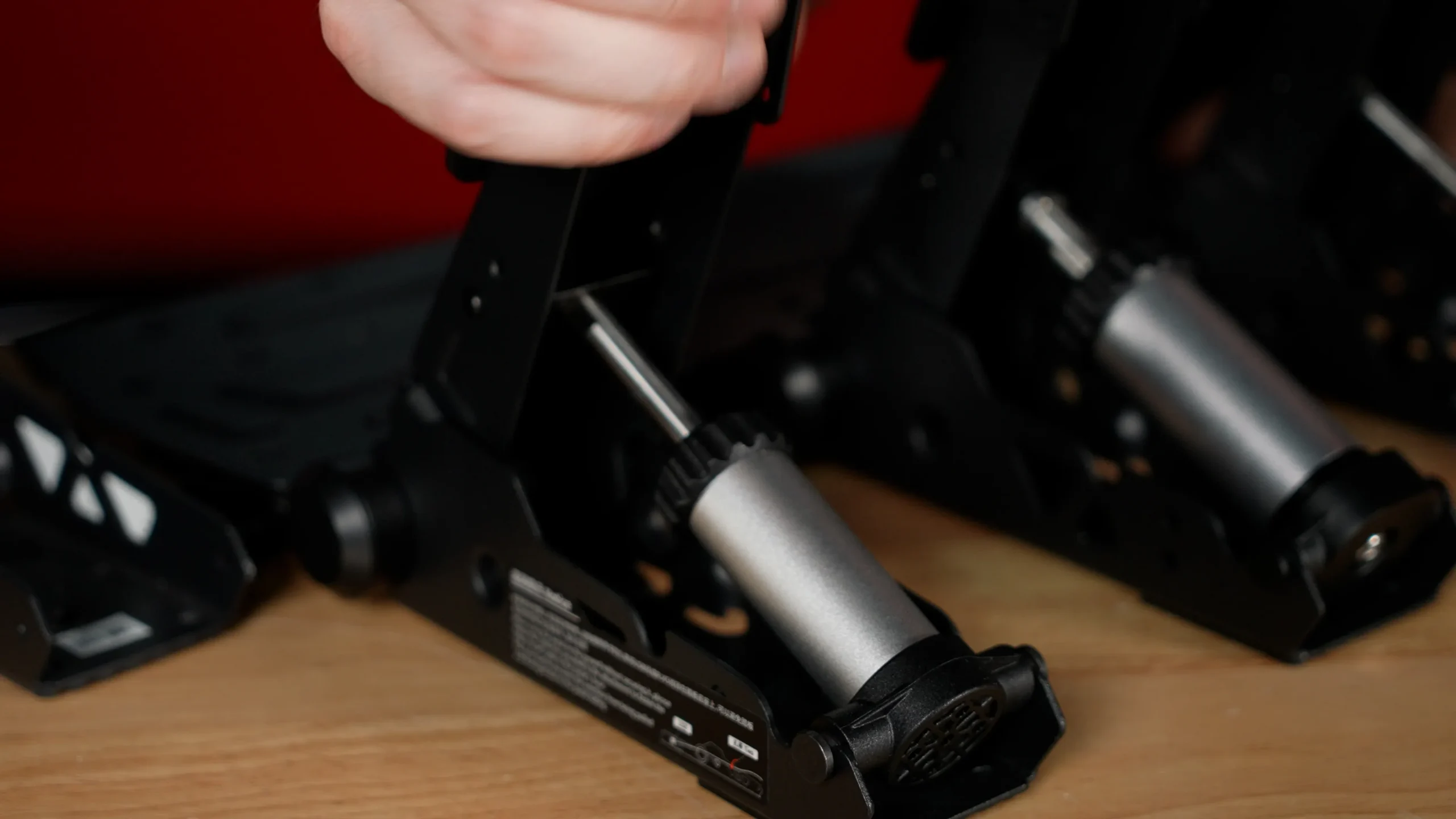
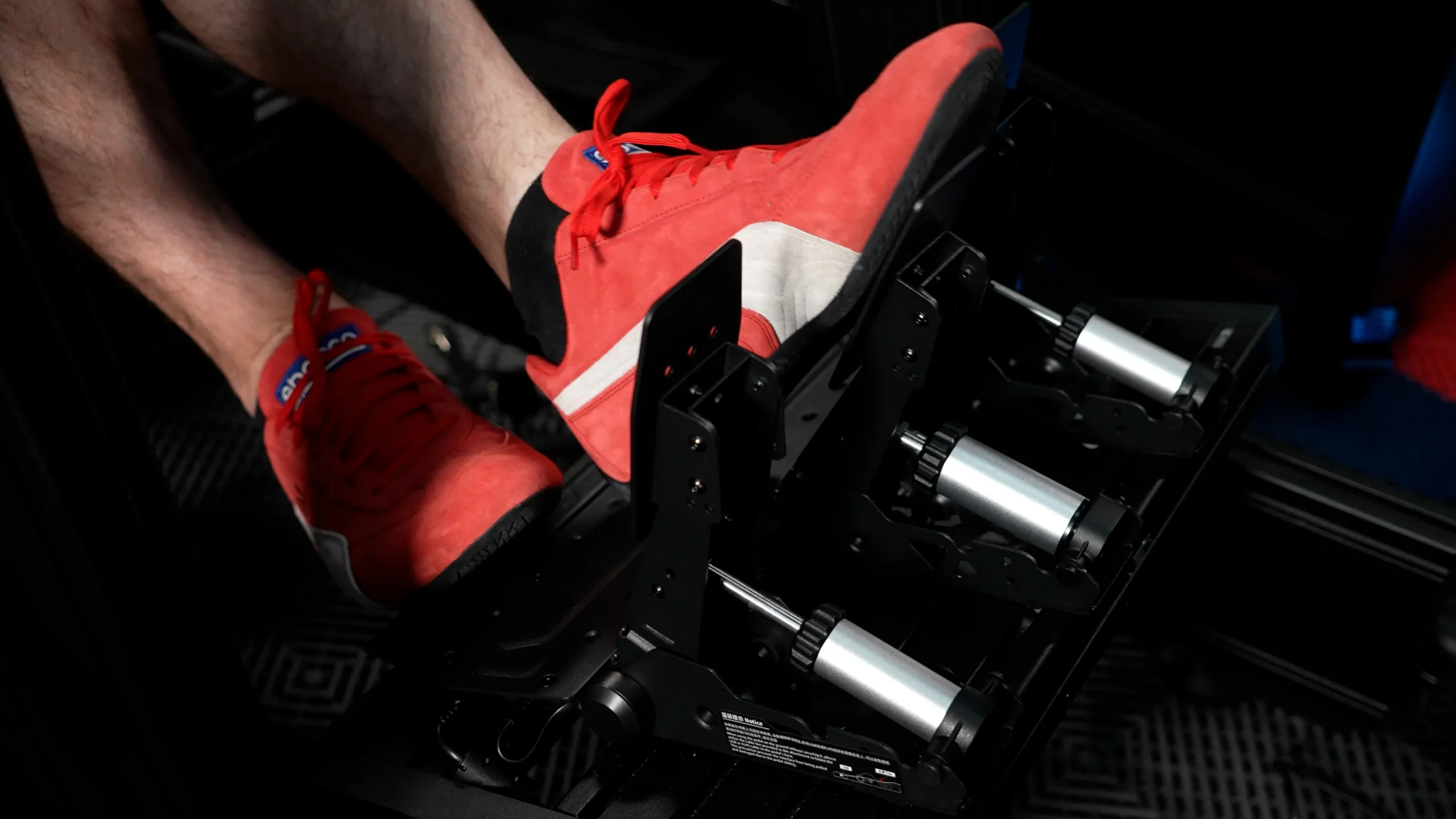
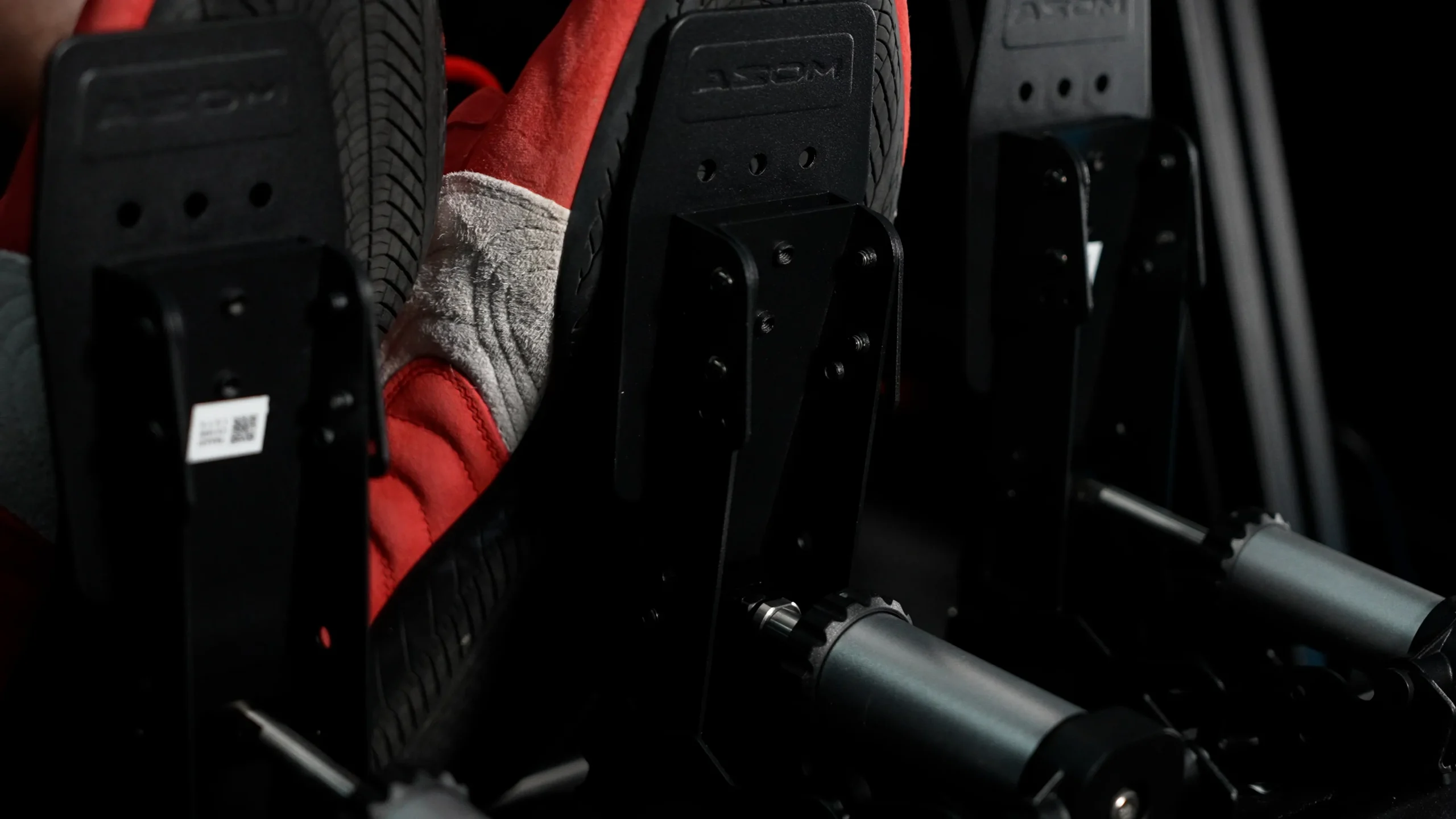
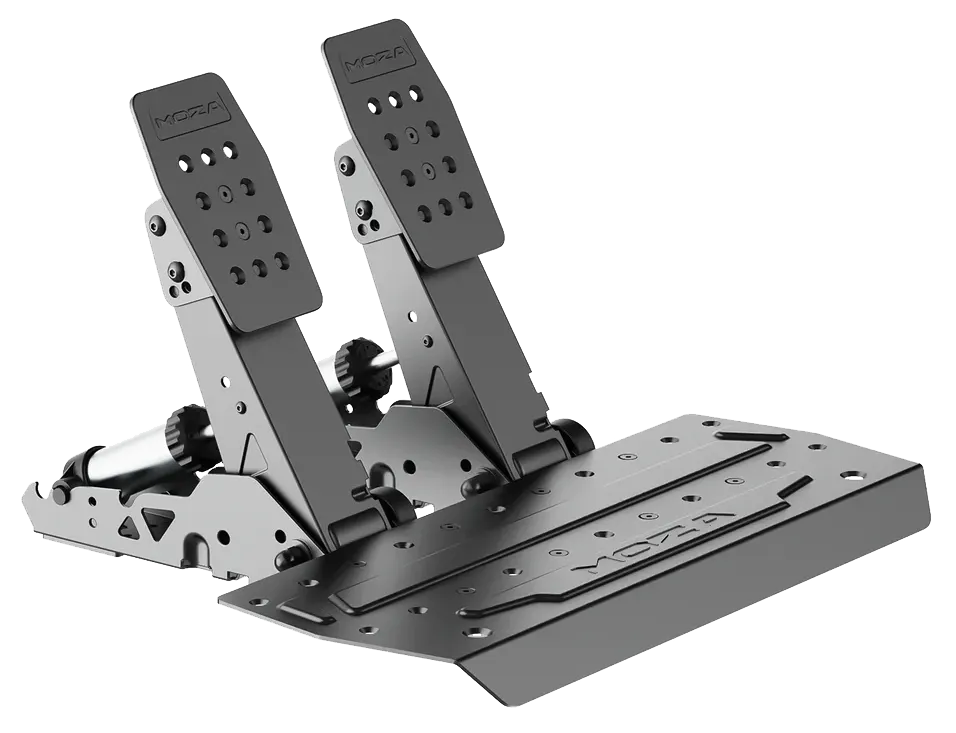
At a basic level, you still get the expected pedal spacing adjustment across the base, but Moza has gone further this time around by adding more meaningful tuning elsewhere. The pedal faces can now be moved side to side, raised or lowered, and there is also angle adjustment available, which immediately makes the SRP2 more adaptable to different rigs and seating positions than the original version.
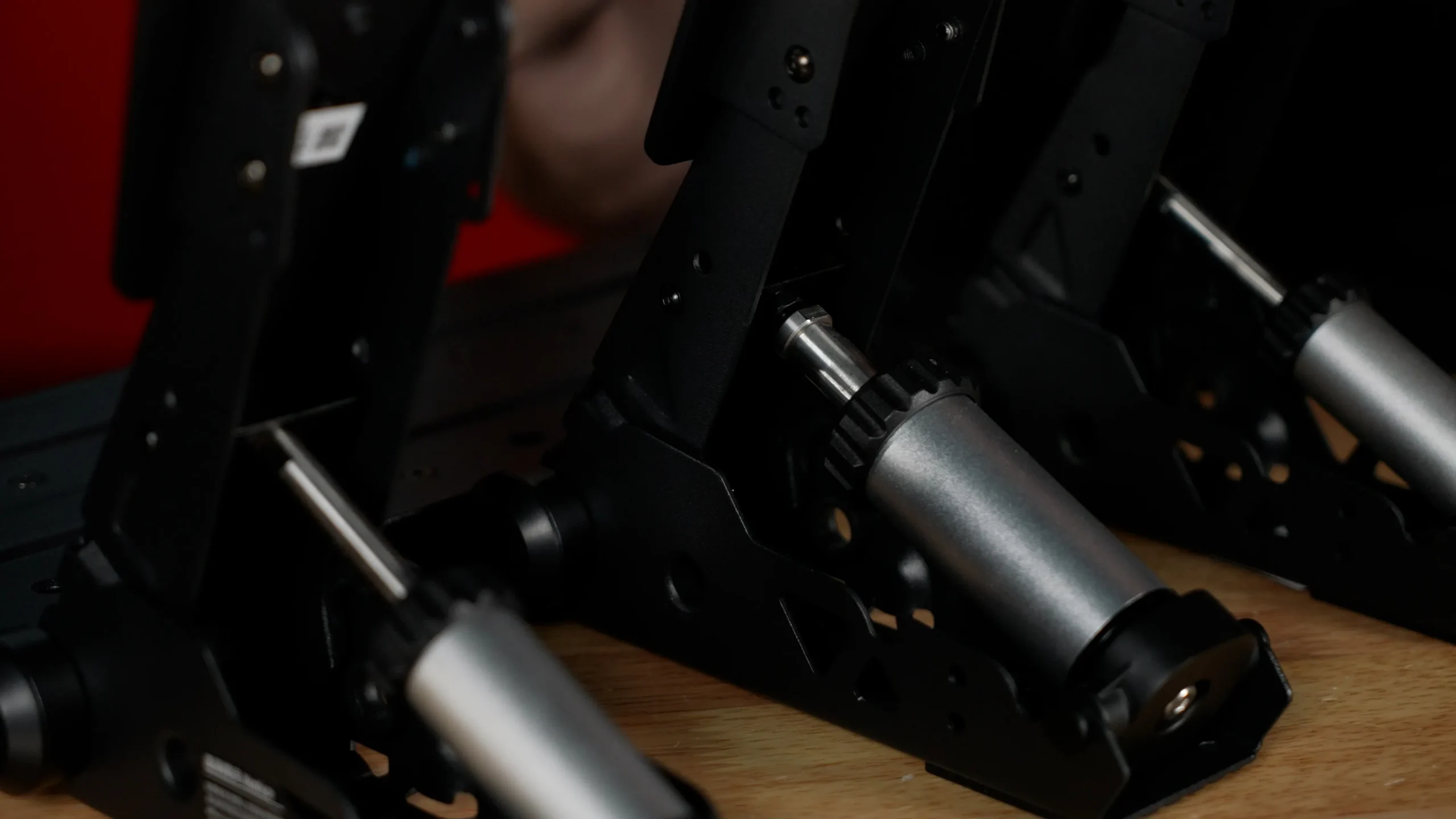
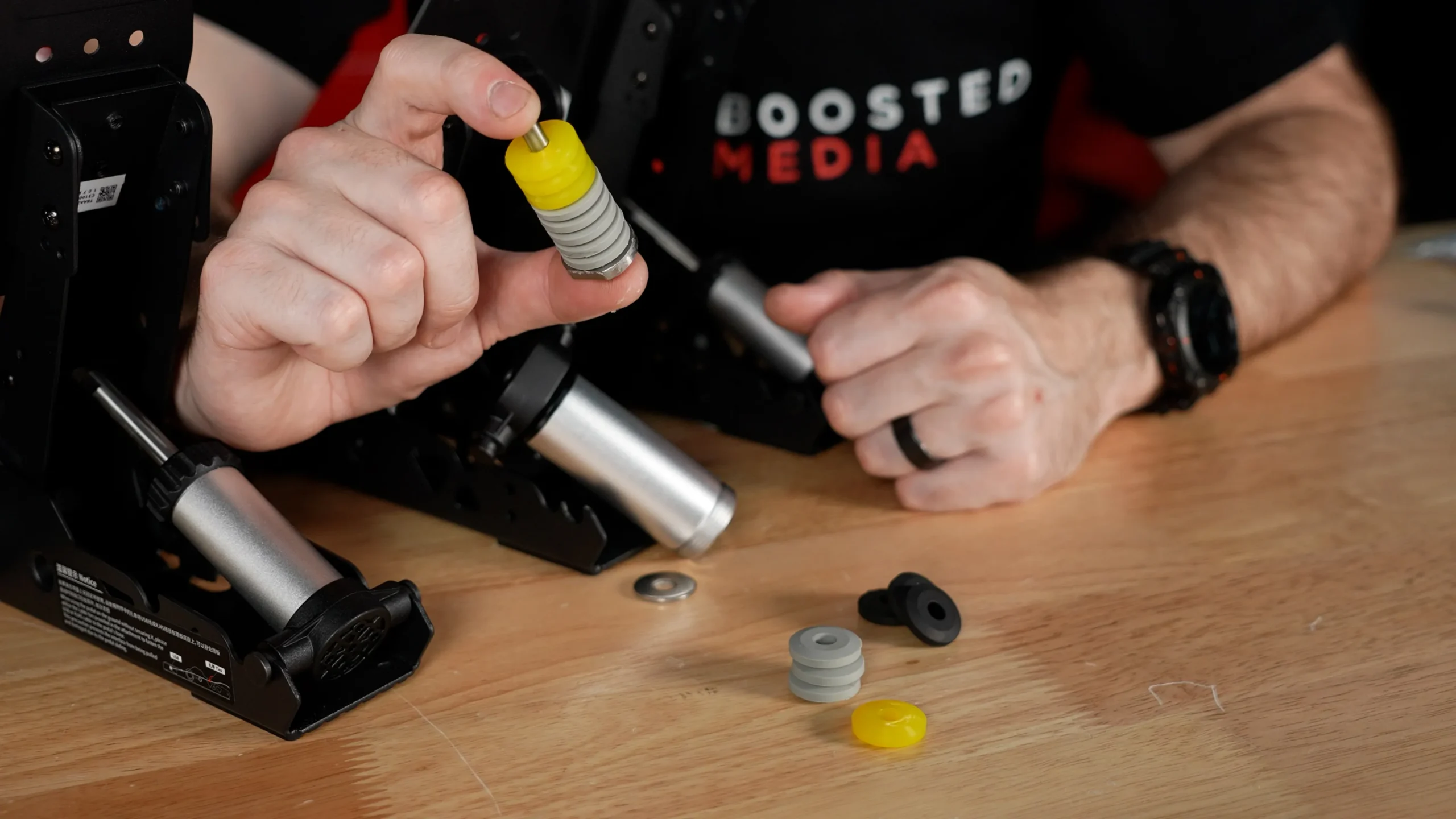
The throttle and clutch also get preload adjustment, which is a useful improvement even if the difference in feel is not dramatic. The bigger story is the brake, where Moza has moved to a much more granular elastomer-based system. Rather than being limited to a smaller number of broad spring and elastomer combinations, you now get a wider range of individual elastomers that let you tune the brake feel more precisely, from something softer and more road-car-like through to a firmer, more race-focused setup.
That added flexibility is important, because it helps the SRP2 work across a broader range of use cases. Whether you are using them on the floor, a wheel stand, or a full cockpit, there is enough here to dial in a setup that feels appropriate without making the pedals overly complicated to live with. The fact that most of the resistance adjustment is also tool-less only adds to that sense of practicality.
The main limitation is that there is still no throw adjustment on any of the pedals, so while the SRP2 is clearly more adjustable than before, it is not infinitely tunable. Even so, for this part of the market, the overall range of adjustment feels well judged and genuinely useful.
SOFTWARE:
On the software side, the SRP2 is competent and easy enough to work with, even if it is not doing anything especially groundbreaking.
Everything runs through Moza’s Pit House software, which keeps the pedals neatly integrated within the broader Moza ecosystem. From there, you get the expected essentials, including calibration, min and max adjustment, response curve tuning, preset saving, and the ability to assign presets for specific sims. In other words, it covers the basics well and gives you the tools most people are realistically going to need.
There are also a couple of more useful touches here. The brake uses both a load cell and a Hall sensor, which means you have the option of blending the two signals if needed. In practice, most people will probably stick with the load cell, but the hybrid option is there if you want to smooth out any unusual behaviour from the elastomer stack. It is not a headline feature, but it is a sensible one to have.
Response curve adjustment is available for all three pedals as well. That can be useful in some scenarios, particularly on the clutch, though as always, it is more of a fine-tuning tool than something that transforms the pedal set.
So while the software is not a major selling point on its own, it does exactly what it needs to do. It complements the hardware well, adds some useful tuning flexibility, and gives the SRP2 a solid, well-rounded user experience.
Driving Experience:
On track, the SRP2 delivers exactly what it sets out to. This is a pedal set that is versatile, predictable, and easy to get comfortable with across a wide range of cars and driving styles.
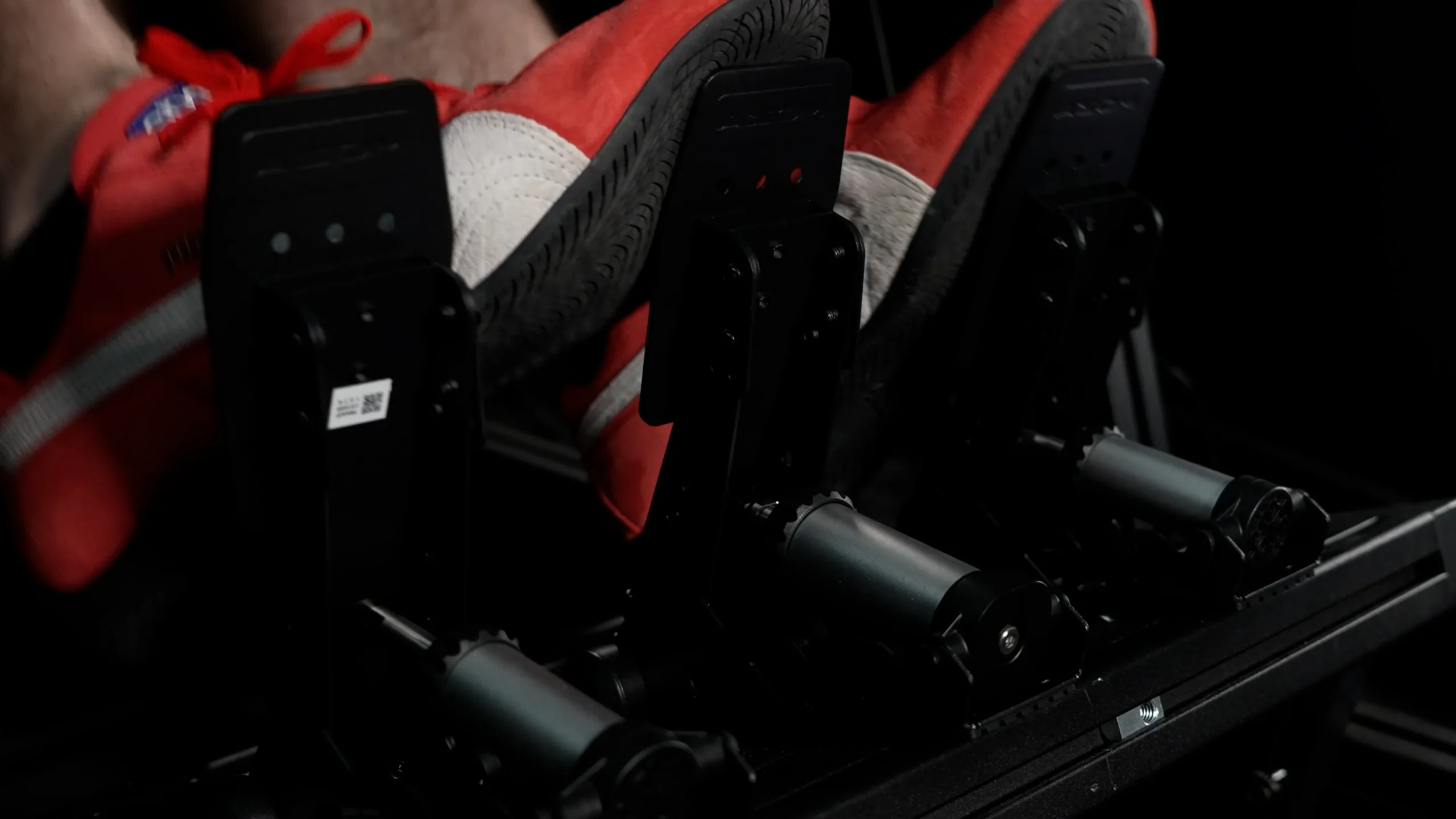
Whether it was formula cars, GT cars, road cars, or heel-and-toe, the SRP2 handled everything well. That versatility is one of its biggest strengths, because these are not pedals that feel compromised in trying to suit different setups. They are soft enough to remain usable for people driving on the floor, but still adjustable enough to work well in a more serious cockpit setup too. That balance is not always easy to get right at this end of the market, but Moza has done a good job here.
A big part of that comes down to the brake. The load cell is integrated properly, which means you are not just relying on pedal travel alone. Once you reach that threshold point, you can still continue to modulate braking force through pressure, rather than simply hitting a hard stop and running out of control. That gives the SRP2 a much more natural and usable braking feel than cheaper position-based alternatives, particularly when it comes to threshold braking and trail braking.
The main limitation is that there is no throw adjustment, so if you are particularly fussy about pedal travel, that may be something to keep in mind. But in practice, it never really felt like a major weakness during testing. These are not pedals that stand out because of some dramatic character or ultra-premium feel, but because the fundamentals are solid enough that they simply get out of the way and let you drive.
That is really the best way to sum up the driving experience. The SRP2 does not reinvent anything, and it is not trying to. What it does offer is a pedal set that is consistent, versatile, and good enough that for most drivers, it is very unlikely to be the thing holding them back.
CONCLUSIONS:
The Moza SRP2 pedals are a smart and well-executed update to the original SRP design. They do not reinvent the category, and they are not the kind of product that dramatically resets expectations, but they do improve in some important areas.
The biggest gains are in versatility and adjustability. Moza has done a much better job here of creating a pedal set that can work across a broad range of setups and driving styles, without feeling overly compromised in any one area. That is backed up by a solid load cell brake implementation, sensible software, and pricing that remains competitive for what is on offer.
That does not mean the SRP2 is without limitations. Build quality is functional rather than premium, there is no throw adjustment, and if you already own the original SRP pedals and are happy with them, there is no compelling reason to rush out and upgrade. The improvements here are real, but they are incremental rather than transformative.
But judged for what they are actually trying to be, the SRP2 gets far more right than wrong. For buyers looking for a first serious load cell pedal set, or a versatile option that can work on the floor today and a cockpit tomorrow, these make a strong case for themselves. They are not endgame pedals, but they are a very solid package for the money, and a clear sign that Moza has a much better handle now on the fundamentals that matter most.
NEWSLETTER
Stay up to date with new releases And major updates
Thanks. Please check your email to confirm your subscription.
Sim RACING
Discount Codes
Pros
- Competitive pricing for a versatile load cell pedal set
- Strong brake adjustability with a much more granular setup than the original SRP
- Good versatility across floor, wheel stand, and cockpit setups
- Useful pedal position and angle adjustment
- Properly integrated load cell brake with good modulation
- Solid all-round driving experience across a wide range of cars
Cons
- Pedal pads feel like a downgrade from the original SRP
- No pedal throw adjustment
- Brake assembly cable is a little too short
- Not especially premium in materials or finish
Have our MOZA reviews helped you decide what the best sim racing gear is for you?
Please consider using the links on this page to make your purchase.
By doing so you’ll be supporting Boosted Media at no additional cost to you! This option is available for a huge range of Sim Racing gear.
Related Articles

VNM Simulation Ecosystem Overview
From the moment we started our review of the VNM Simulation Pedals V1, it was clear that this Vietnamese hardware manufacturer knew exactly what was

Simworx Pro GT V3.2 Simulator Pedal Set – REVIEW
Australian made Simworx PRO GT V3.2 are a no expense spared Sim Racing pedal set with Load Cell brake designed for “high-end professional motorsport use”

Thrustmaster T598 – DETAILED REVIEW
The Thrustmaster T598 with Direct Axial Drive technology is claimed to be “A new era of Sim Racing” providing a “Perfect clear wheel rim motion”!

Simucube ActivePedal Pro: Detailed Review
Simucube’s ActivePedal is one of the most unique and technically impressive products in sim racing. The idea of a fully motorised, force-feedback pedal that can
MOZA CRP2 – Load Cell Sim Racing Pedals
The MOZA CRP2 Load Cell Sim Racing pedals are a much needed update to their predecessors. As the MOZA ecosystem has expanded and continued to
MOZA Racing – Vision GS Wheel Review
A GT-Style Sim Racing wheel with an integrated dash which rotates as you turn the wheel sounds like a very good idea! Something that Fanatec
MORE REVIEWS and Discounts
If these Sim Racing Reviews have helped you find the best racing simulator gear for your sim rig, please consider using the affiliate links on this website. By purchasing through these links, a small commission will come back to Boosted Media at no additional cost to you. This is how Boosted Media keeps providing content to the Sim Racing community.