
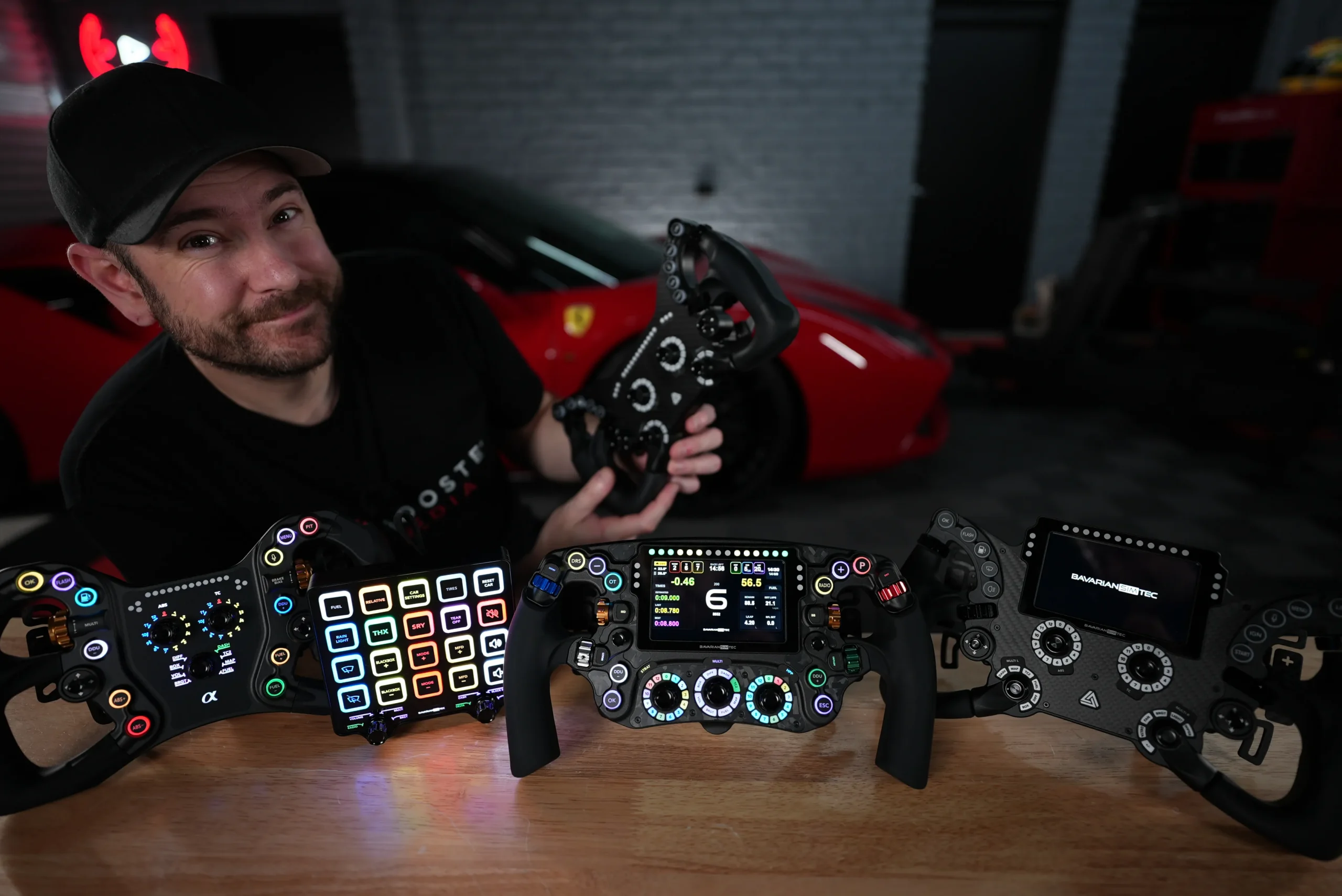
Bavarian SimTec’s wheels don’t try to do anything clever. After six months with the Alpha, Delta Pro, Delta Pulse, and Omega PRO V2, that restraint turned out to be the primary appeal.
There is no shortage of high-end sim racing wheels with aluminium construction, carbon fibre, magnetic shifters and more inputs than most of us will ever use. At this sort of money, getting those basics right is expected. The more useful question is how all of it comes together once you stop reading the feature list and start using the wheel every day. That’s what we’ve spent the last six months trying to answer. We’ve had most of the Bavarian SimTec range here since early in the year, deliberately mixed in with other gear rather than tested in isolation, which is the best way to get a real sense of what living with something is like. That covers all four wheels: the Alpha, Delta PULSE, Delta PRO and Omega PRO V2 along with the DD5 dash, the Control Center button box and a few of the smaller accessories. What comes through across all of it is restraint. Bavarian SimTec haven’t tried to fill every available space with another feature, and there’s no headline gimmick here to separate them from the pack. They’ve worked out which functions sim racers actually reach for mid-race, and then put their effort into making those feel right and sit within reach. The real question isn’t whether these wheels are good. They are. It’s whether that refinement on its own is worth premium money when GSI and Ascher Racing are already operating at a similar level. Bavarian SimTec supplied the equipment for this review. The competing products discussed in the video were also supplied for review under the same conditions.If our reviews have helped you find the right sim racing gear, using the links on this page is a great way to support us at no extra cost, and you may even save with our discount codes. This is available across a huge range of brands and gear we’ve reviewed.


Alpha Standard
Alpha Advanced

Delta Pulse
Delta PRO

Delta PRO SC
Omega pro
COMPATIBILITY and WHAT YOU NEED
Start with how these wheels attach to your setup. Bavarian SimTec use a removable mounting plate that accepts any quick release with a standard 70mm bolt pattern, and four bolts then hold that plate to the wheel. It’s a small thing, but a good one. If you run more than one wheel and only want to own one quick release, you can move the plate across in about a minute instead of rebuilding the whole mounting arrangement every time you swap.
What that doesn’t guarantee is clearance with every combination of hardware. On our Alpha, the VRS quick release adapter fouled the clutch paddles. We didn’t see the same issue on the other three wheels, and it comes down to the depth of that particular adapter rather than anything wrong with the wheel itself. A spacer resolves it. Still, if you’re ordering an Alpha and you intend to use its clutch paddles, check the thickness of the quick release you’re planning to pair it with before you commit.
When it comes to the electronics. wheels with built-in displays and extensive RGB lighting draw considerably more current than quick releases with integrated USB are often designed to pass, and that’s a constraint across this whole category rather than anything particular to Bavarian SimTec. We ran into it intermittently with the Delta PRO and Omega PRO V2 through the pass-through arrangements on our Asetek and Simagic setups, while the VRS wheelbase had no trouble at all. Treat that as an observation from the combinations we happened to test rather than a diagnosis that applies to every adapter on the market, but if you’re planning to run a display wheel through an integrated-USB quick release, it’s worth knowing the limitation exists.
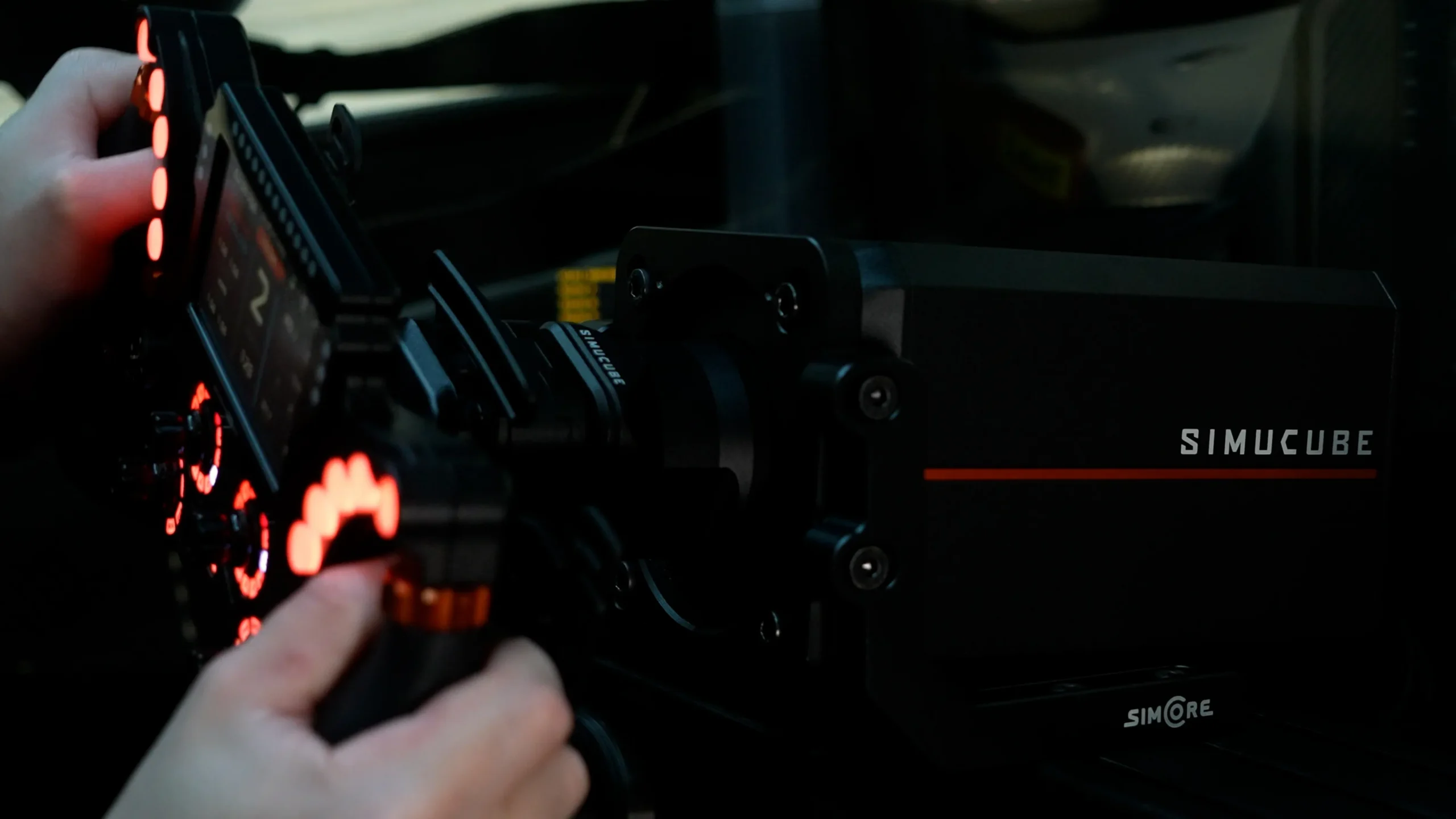
The Delta PRO SC needs to be treated separately. This is the version built around Simucube Link, and as far as we’re aware it was the first steering wheel to use it. It ships with the Simucube 3 quick release fitted and there’s no USB connection on the back at all, because everything runs through Simucube’s dashboard system rather than SimHub. The current product listing also offers a version without the quick release, so check which configuration you’re actually buying.
Owning a Simucube 3 doesn’t automatically make the SC the right choice. For most people I’d still lean towards the standard Delta PRO, simply because SimHub compatibility leaves you more room to move later. The SC makes more sense if you specifically want Simucube’s dashboards, or if the appeal is keeping everything inside one software environment with one less cable to think about. That simplicity would suit a commercial installation particularly well.
VALUE
These are premium wheels, priced in the same general territory as GSI and Ascher Racing. That sets the standard they have to meet, and it means good materials and magnetic paddles on their own aren’t enough to make them stand out. Everything at this level already has those.
What you’re paying for here is judgement. Bavarian SimTec haven’t tried to fill every available space with another feature. There’s a clear understanding of what you’re likely to need while you’re actually racing, followed by a lot of attention to how those functions feel and how quickly you can get to them.
Where you should spend depends on the cars you drive and whether you want a display on the wheel. The Omega’s extra inputs earn their place if you spend most of your time learning every function in one particular car. If you move between cars regularly, as I do, the Delta layout already gives you more than enough to work with, and the decision comes down to whether the integrated screen justifies the step from PULSE to PRO.
You certainly don’t need to spend this much to enjoy sim racing, and if your priority is the greatest number of features for every dollar, there are other brands I’d point you towards first. The case for these wheels is narrower than that. It’s the refinement of the functions you use most, and six months of never once being annoyed by any of them, rather than a breakthrough that leaves the other premium brands behind.
Features
All four wheels are butterfly-style and share most of their core hardware. The same buttons, the same rotary encoders and the same seven-way switches appear across the range, so what separates the models is layout, materials and how many inputs you get, rather than any difference in the quality of the parts you’re actually touching. The one real hardware split is in the paddles: all four use magnetic shifters, but the Deltas run Bavarian SimTec’s newer QuickShift mechanism while the Alpha and Omega use a snappier, louder design.
Alpha
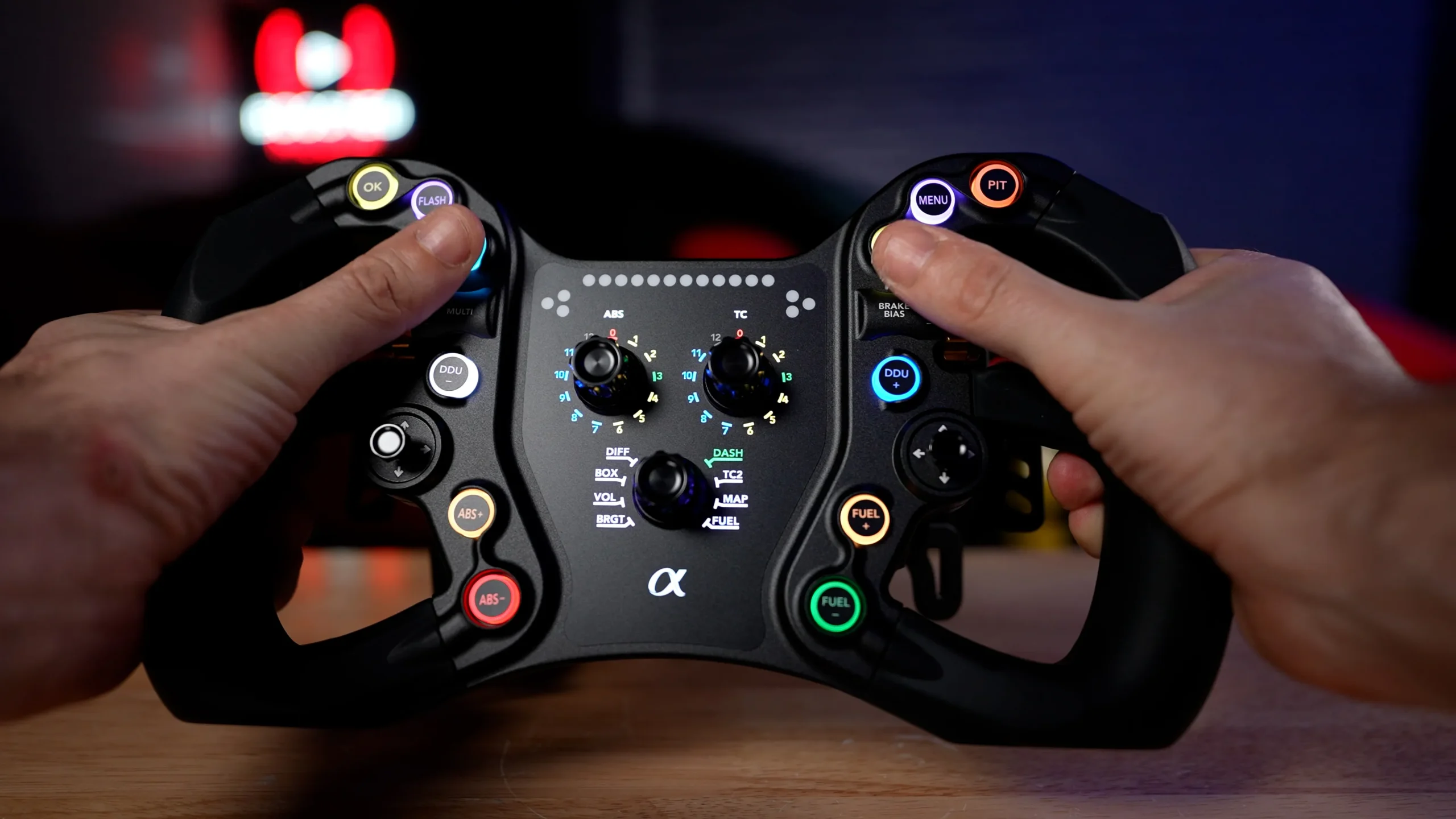
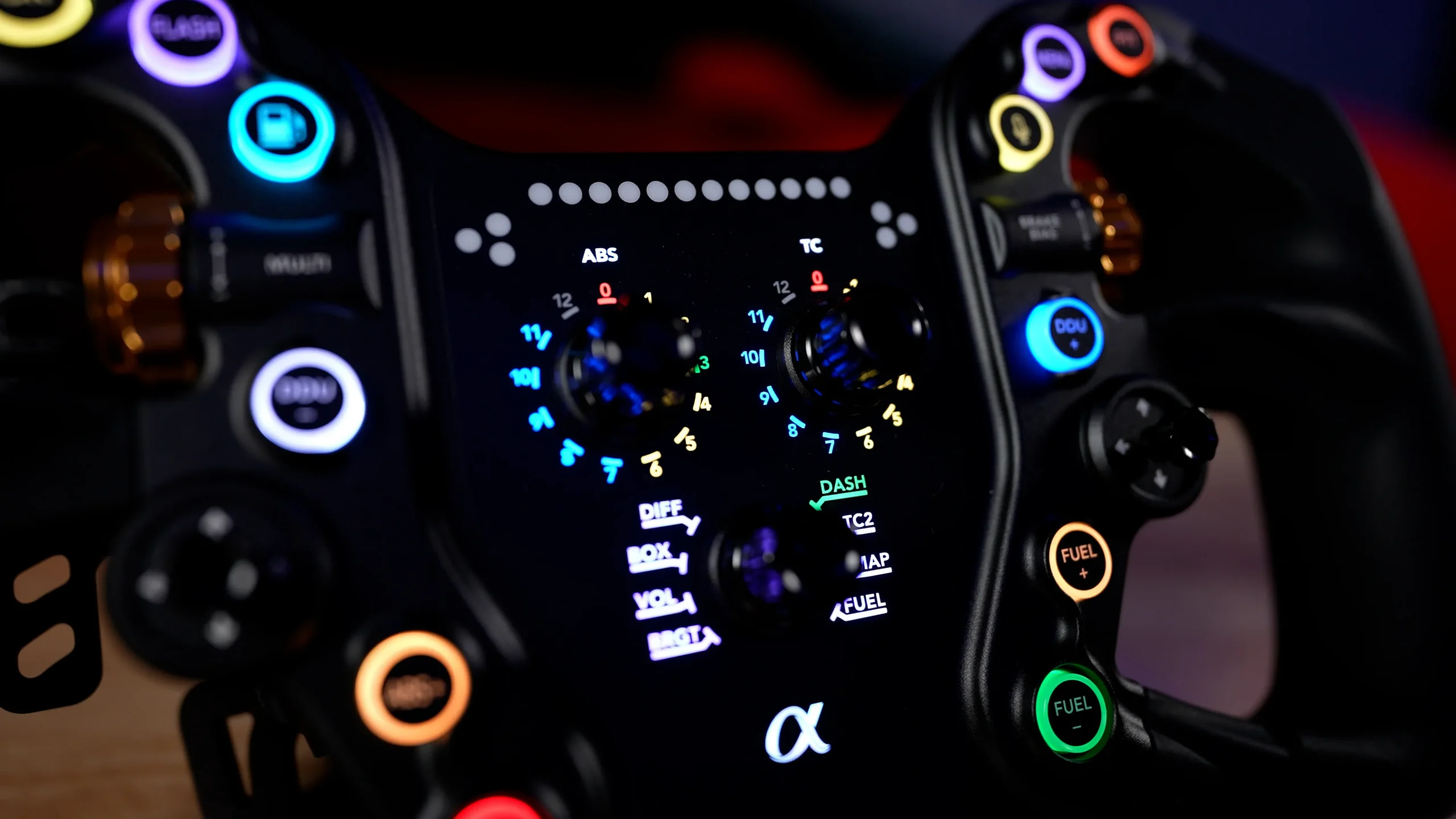
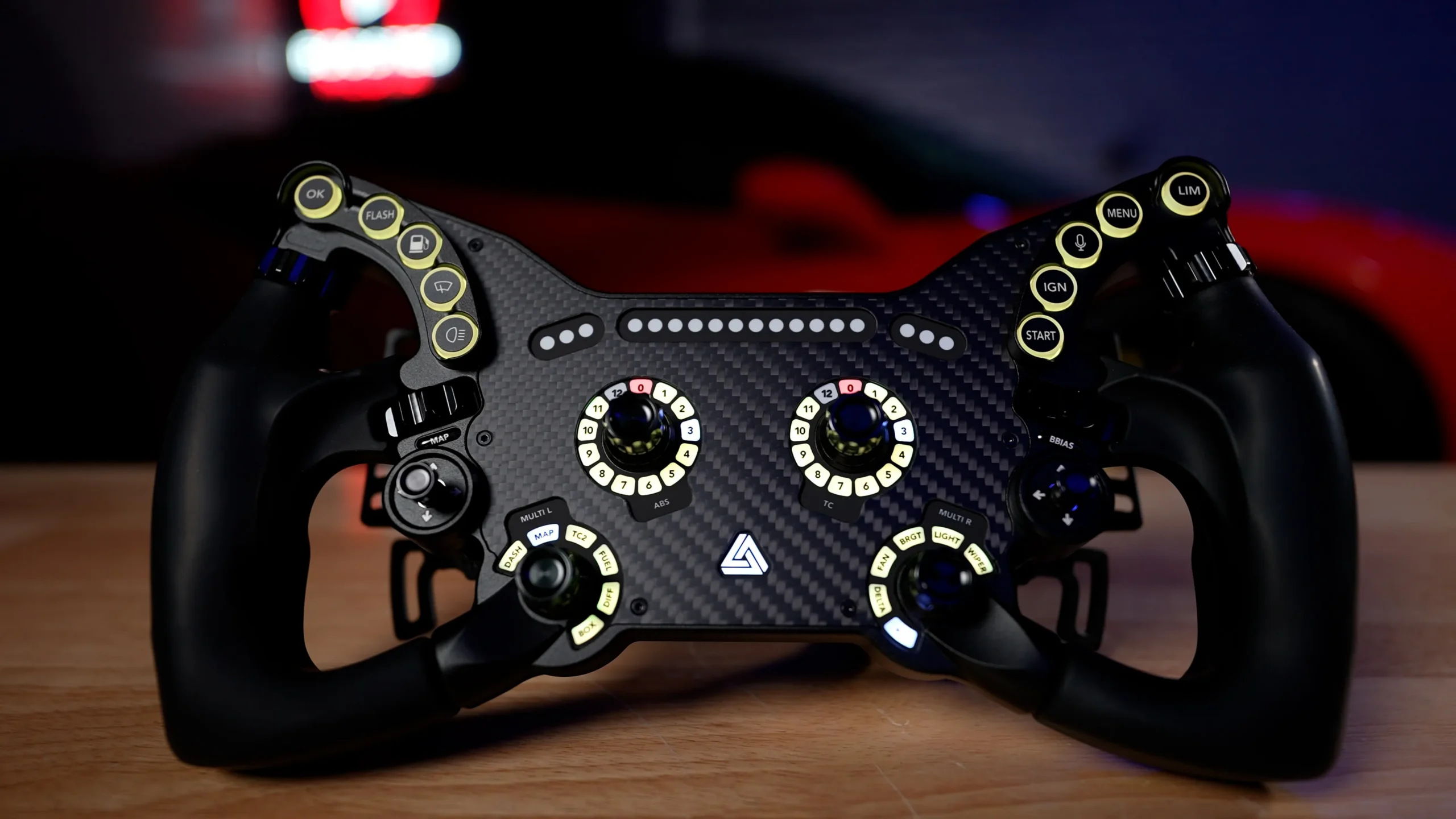
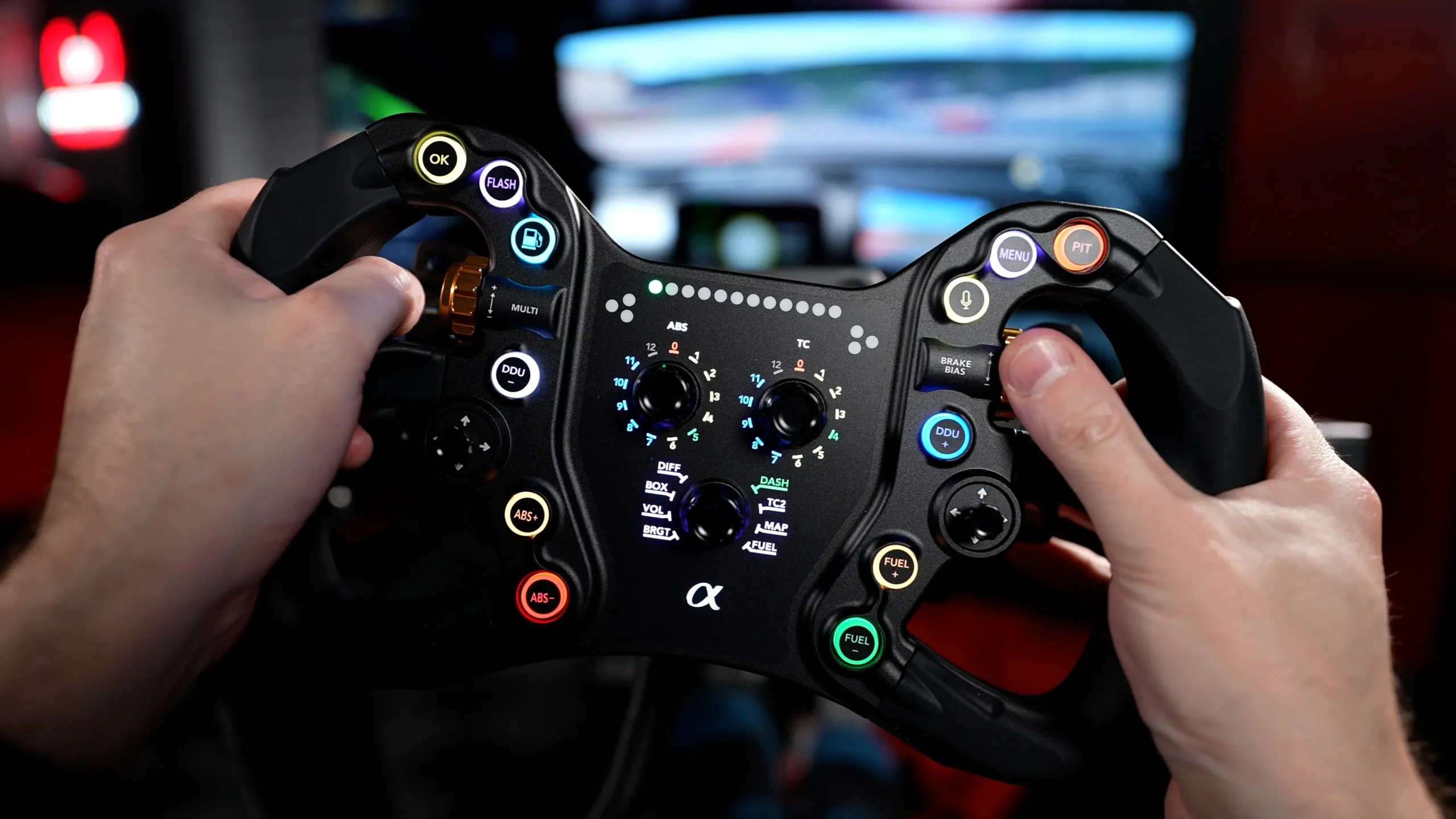
The Alpha is a 295mm wheel with a full aluminium face and no carbon inlays, which makes it the plainest looking of the four. It has two thumb encoders, three front rotary controls with assignable push functions, and two seven-way switches for menu and black-box navigation. The buttons and rotaries are the same parts used on the more expensive wheels, so nothing here feels like a lower tier of hardware.
It’s offered in two configurations: the Alpha Standard with two paddles, and the Alpha Advanced with six.
Despite sharing its 295mm width with the Delta models, it feels slightly more cramped to me. I can’t point to one definitive reason for that, and it may partly be the visual design rather than anything measurable. It isn’t a complaint about the grips, which are excellent, but it is a reminder that width alone doesn’t tell you how a wheel will fit your hands.
Delta PULSE, Delta PRO, and Delta Pro SC
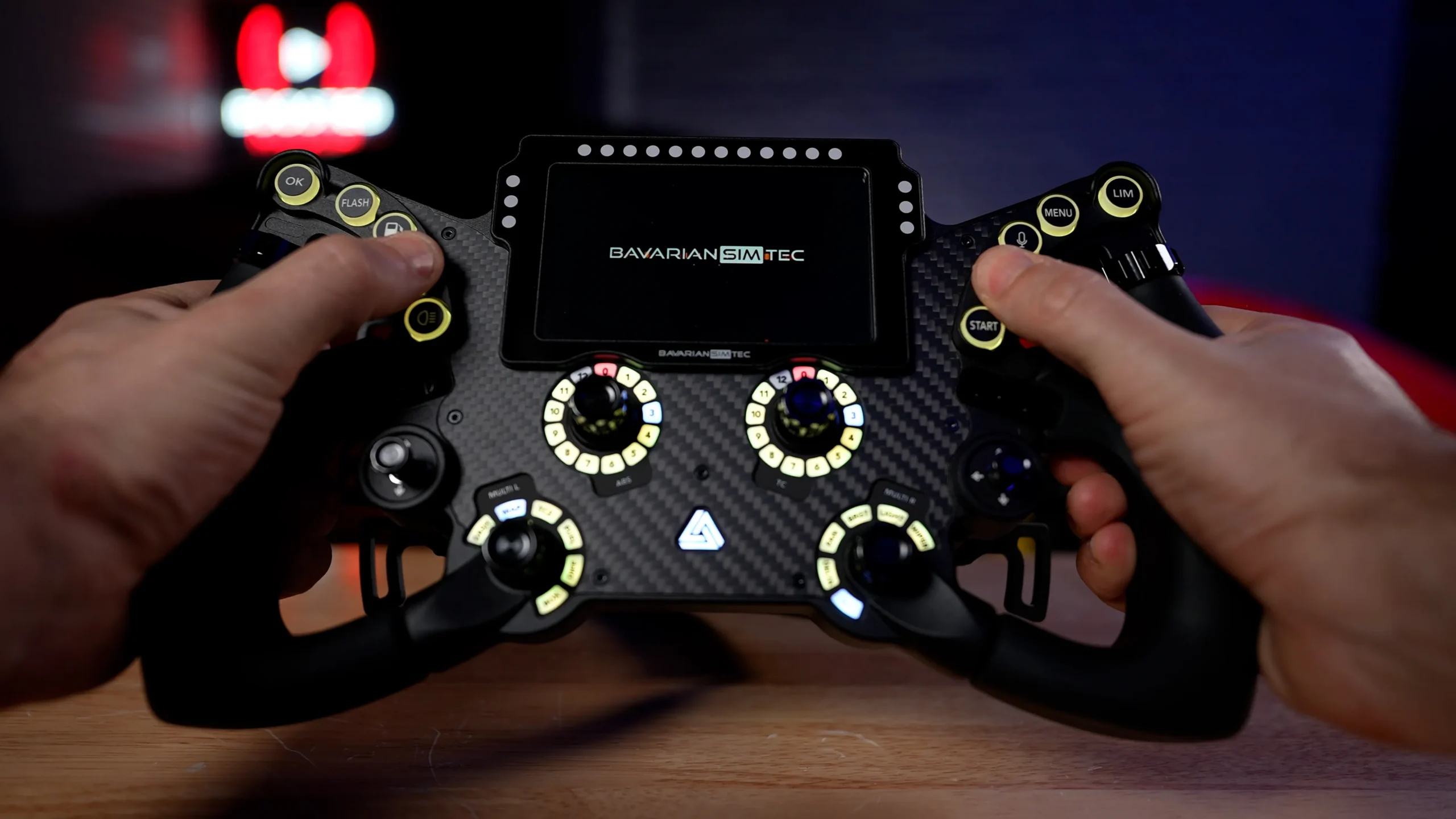
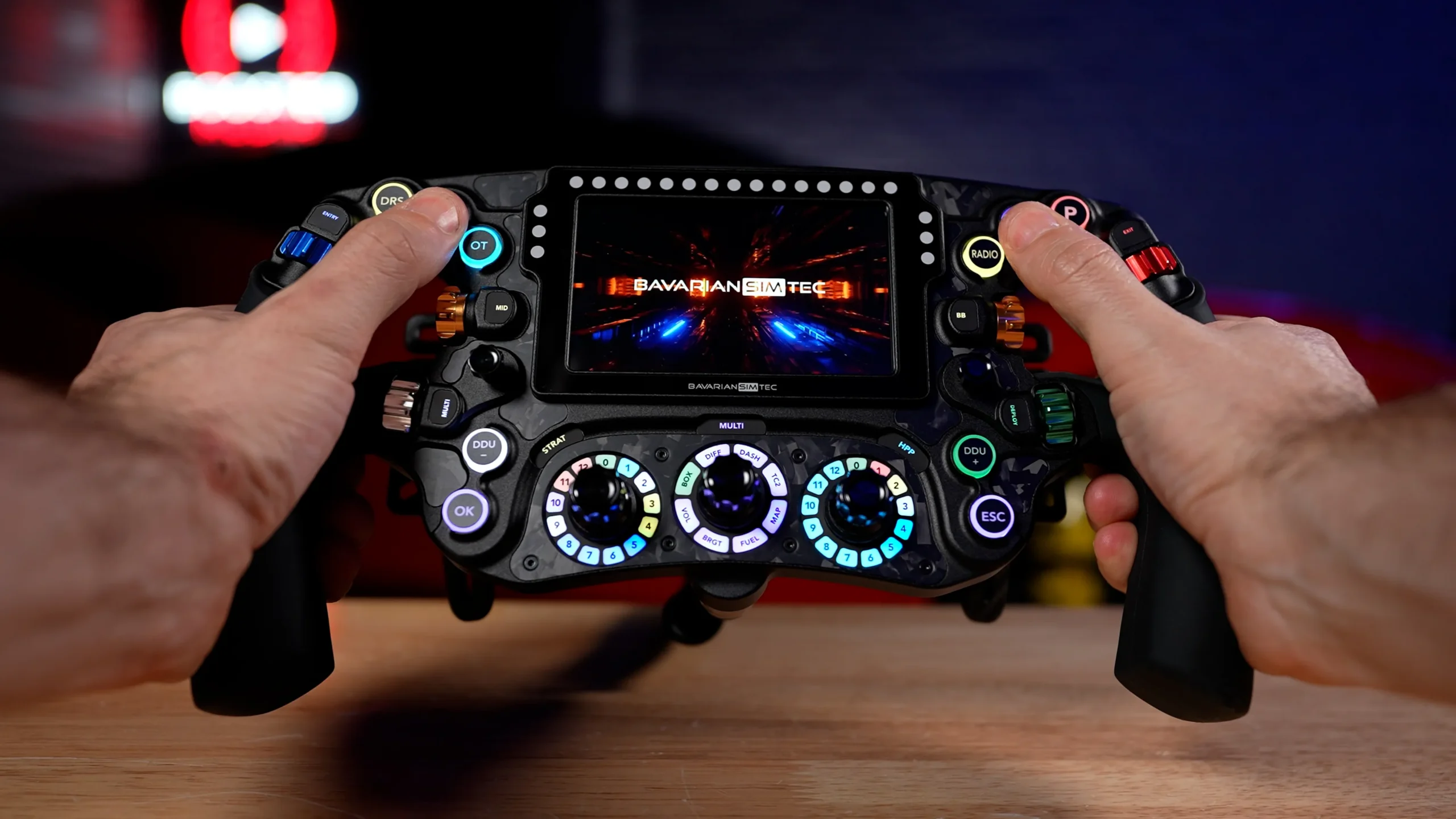
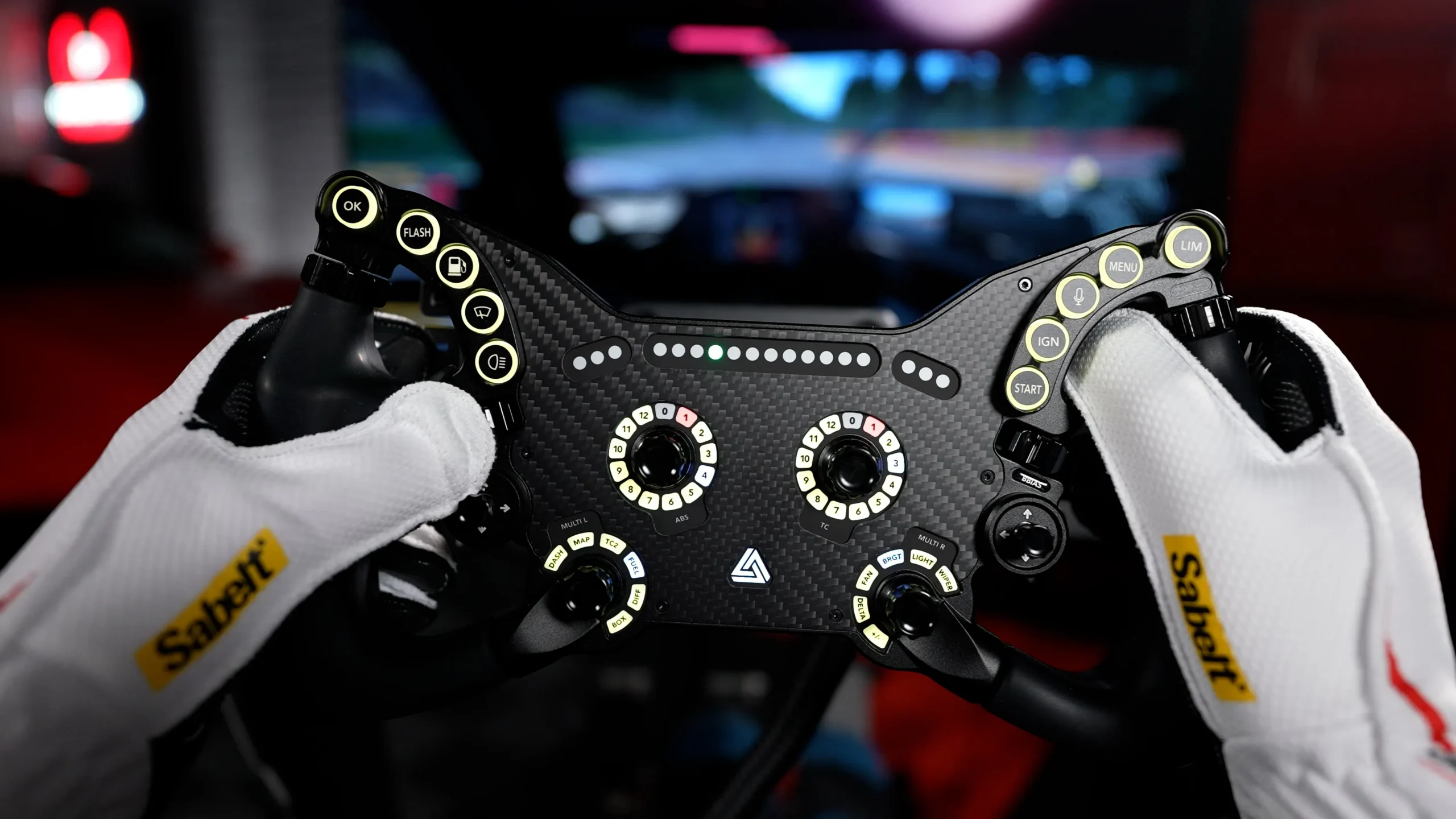
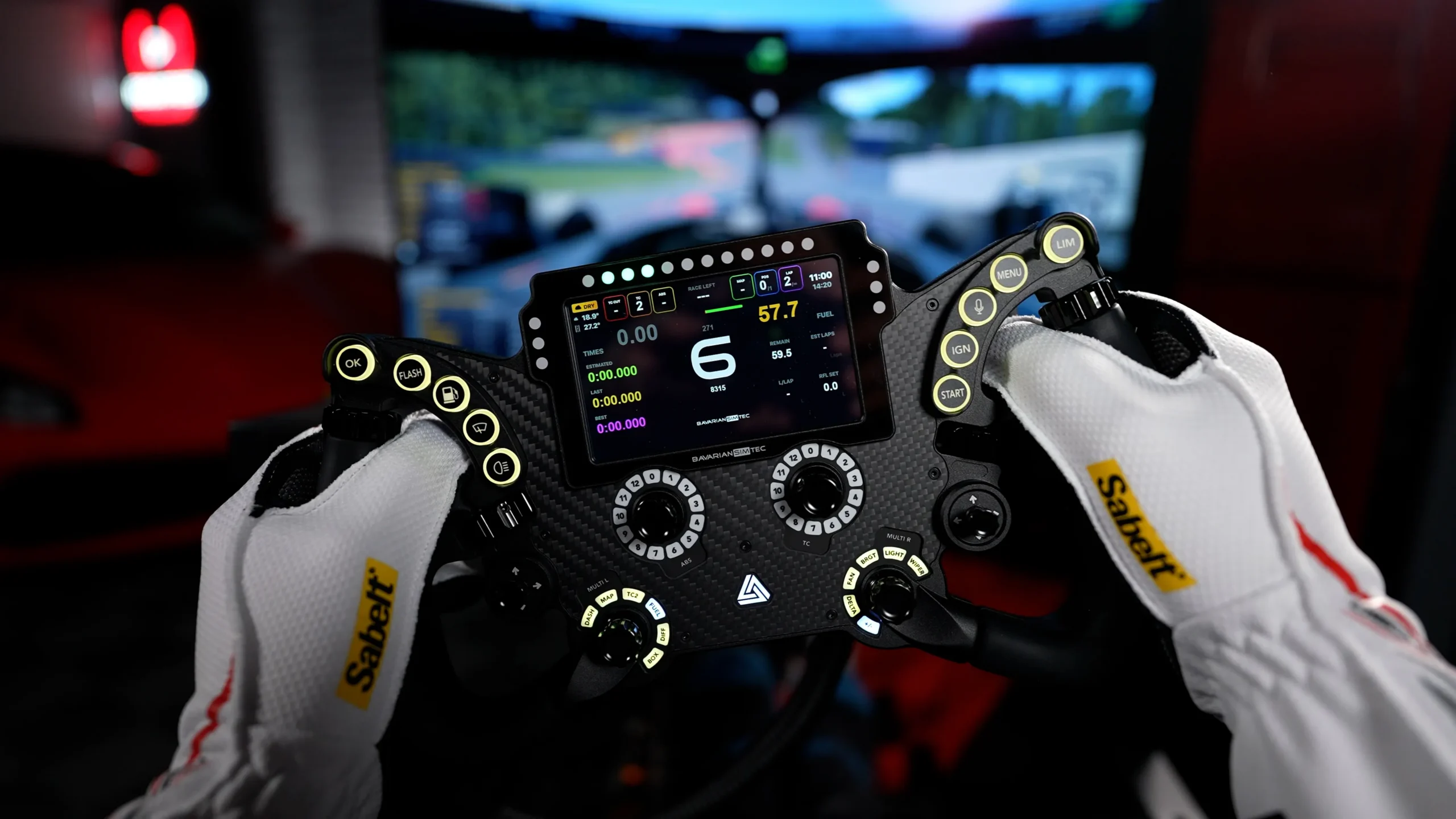
The two Delta models share the same GT-style layout and 295mm width, and the obvious distinction between them is the integrated 4.3-inch display on the Delta PRO. The PULSE gives you the same wheel without the screen.
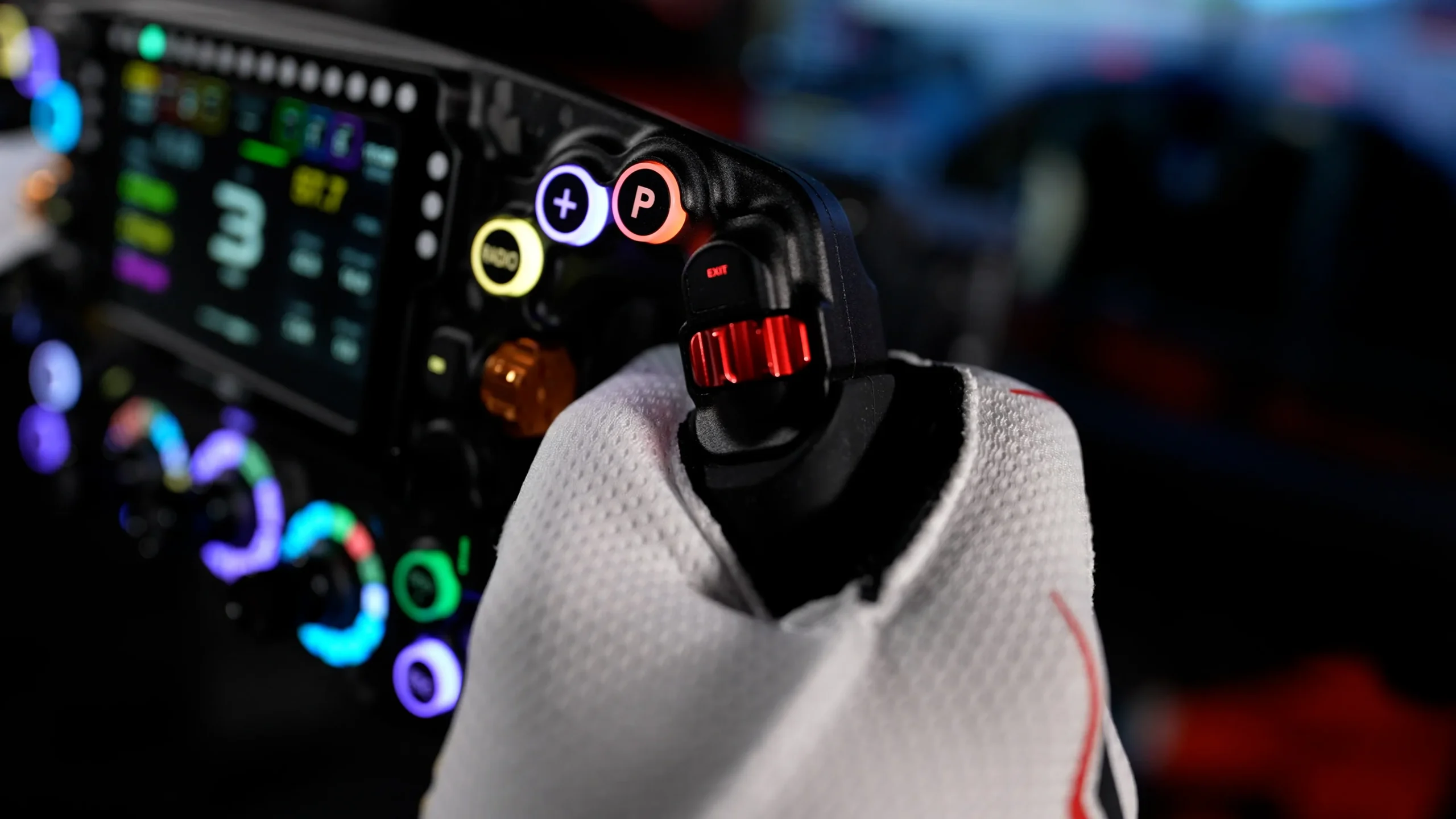
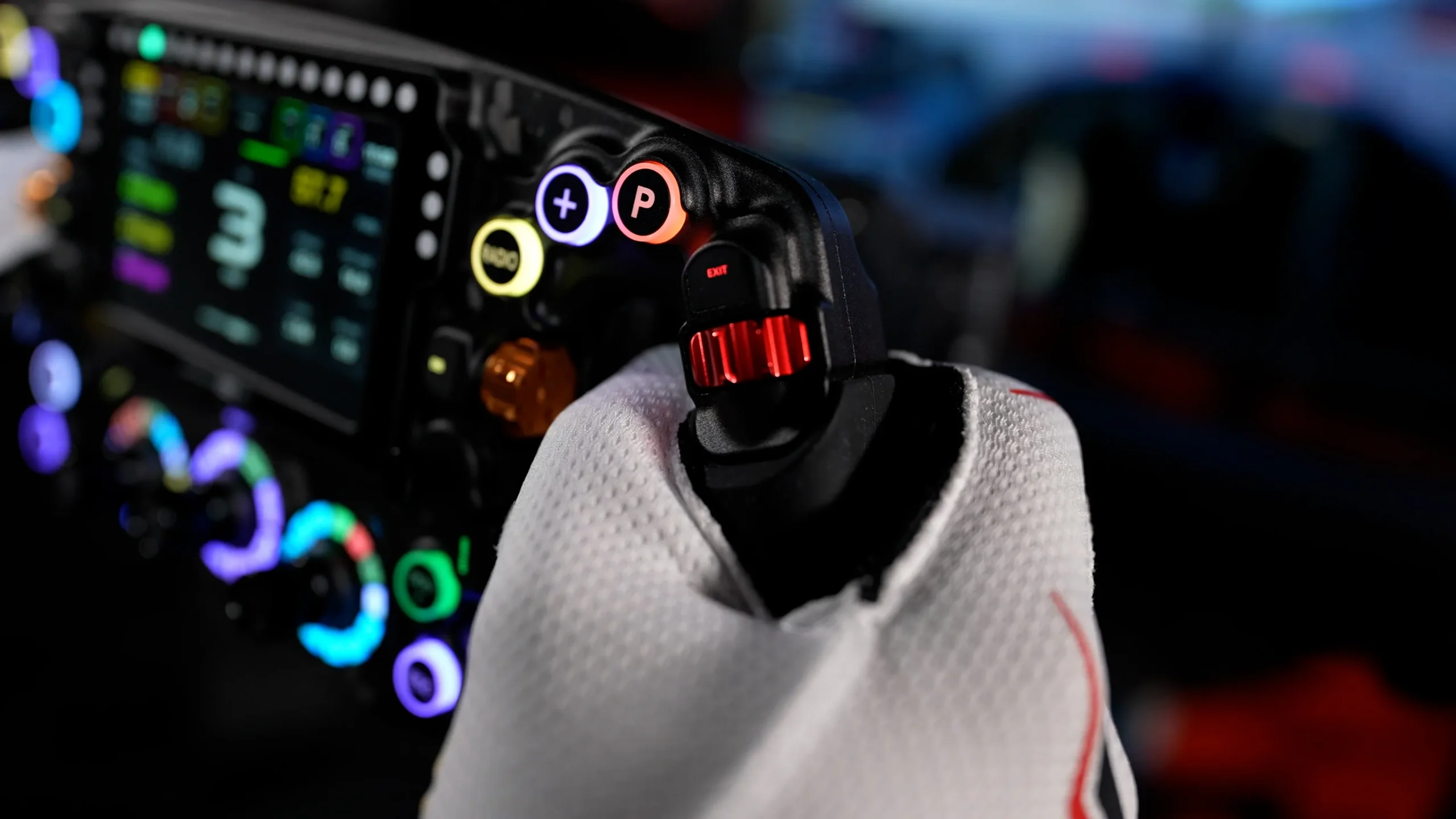
One detail here is worth calling out properly. The Delta thumb encoders wrap all the way around the wheel, so you can operate them from the front or reach around from the back depending on where your hands happen to be. It’s a small piece of design thinking that gives you noticeably more freedom in how you make adjustments mid-corner. There are four thumb encoders in total, along with four front rotary controls with assignable push functions.
The Deltas also use Bavarian SimTec’s newer QuickShift paddles. They have a shorter action and they’re noticeably quieter than the shifters fitted to the Alpha and Omega. If paddle noise matters in your room, that’s a more meaningful difference than it appears on a specifications page.
There’s a third Delta to be aware of. The Delta PRO SC is built around Simucube Link rather than USB, which means there’s no USB cable running from the wheel at all. It connects through the Simucube 3 quick release instead, and there’s no USB port on the back.
Its display is also advertised at 60Hz “High-Res” where the standard PRO’s isn’t specified that way, though if there’s a difference on paper it isn’t one we could pick in use. Everything else carries across: same layout, same grips, same QuickShift paddles. The choice between the two comes down to whether a cable-free installation inside the Simucube environment matters more to you than SimHub’s flexibility.
Omega PRO V2
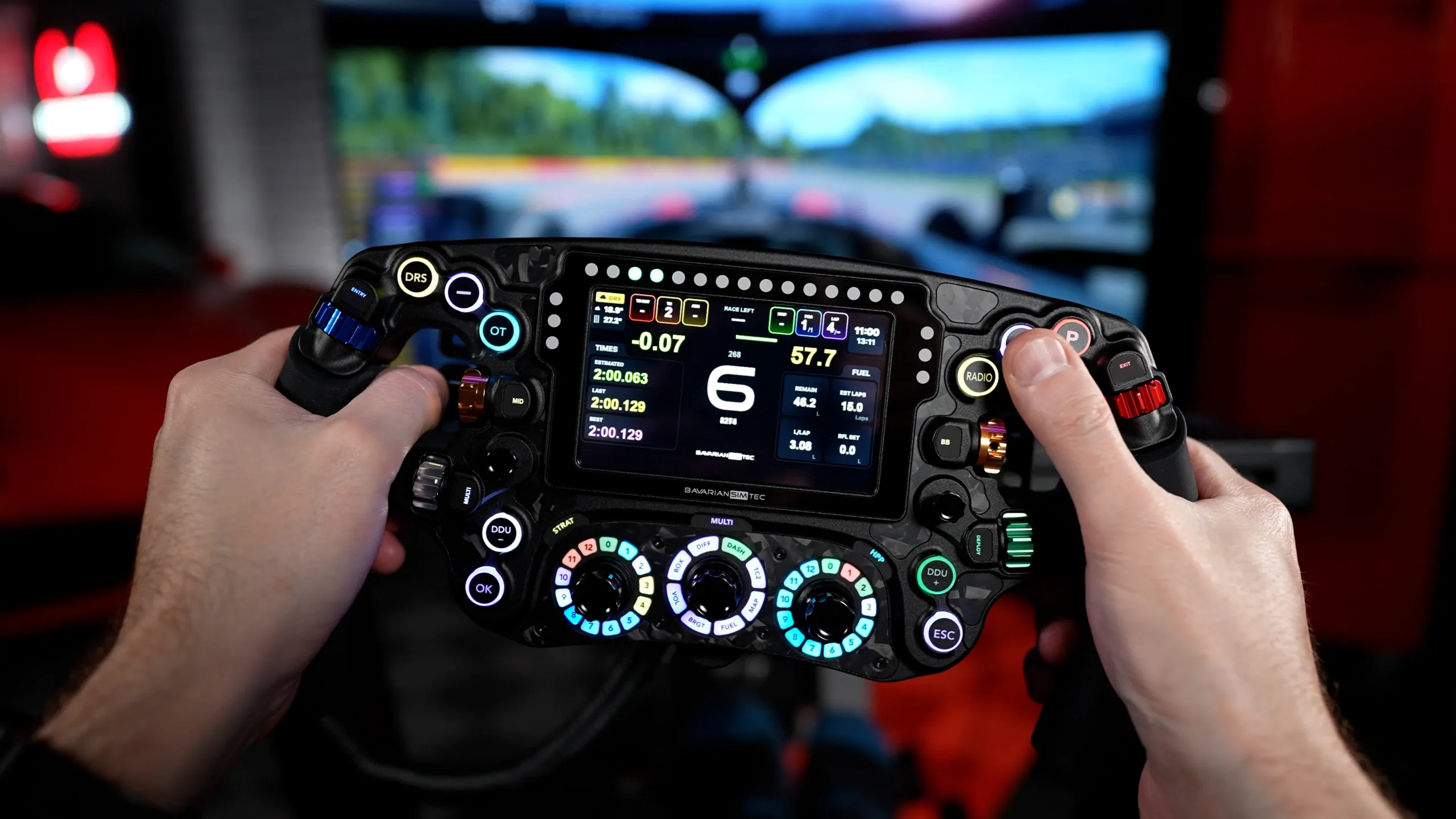
The Omega PRO V2 is the formula-focused option and the most heavily equipped wheel in the range. You get six thumb encoders, three front rotary controls, and two additional push buttons on the back that none of the other wheels have.
That extra access makes sense for someone who uses a lot of in-car adjustment. I don’t often find myself needing more than the Deltas offer, but a driver who specialises in one car and knows every function available may get considerably more out of it. Some of the controls are also more of a stretch for my thumbs than they are on the Delta layout, which is the trade-off for fitting that many of them on one wheel.
Visually it’s the most distinctive of the four, with forged carbon inlays in place of the conventional carbon fibre used on the Deltas. Subjectively, I like the balance the whole range strikes here. They look like purposeful racing equipment without needing decorative plastic to establish an identity, which is something plenty of wheels at this price get wrong.
Dimensions and weight
The Alpha and Delta models are 295mm wide with the Omega at 300mm. Anywhere between roughly 280 and 300mm is the sweet spot for versatility as far as I’m concerned, and all four sit inside it. In use, that 5mm difference matters far less than the shape of the grips and where the controls sit. All four layouts are versatile enough for a range of GT and formula cars, provided a butterfly-style wheel suits the driving you’re doing.
| Model | Width | Grip diameter | Weight shown in review |
|---|---|---|---|
| Alpha Standard | 295mm | 39mm | 1,250g |
| Alpha Advanced | 295mm | 39mm | 1,340g |
| Delta PULSE | 295mm | 42mm | 1,230g |
| Delta PRO | 295mm | 42mm | 1,320g |
| Delta PRO SC | 295mm | 42mm | 1,370g |
| Omega PRO V2 | 300mm | 41mm | 1,250g |
Beyond the Wheels
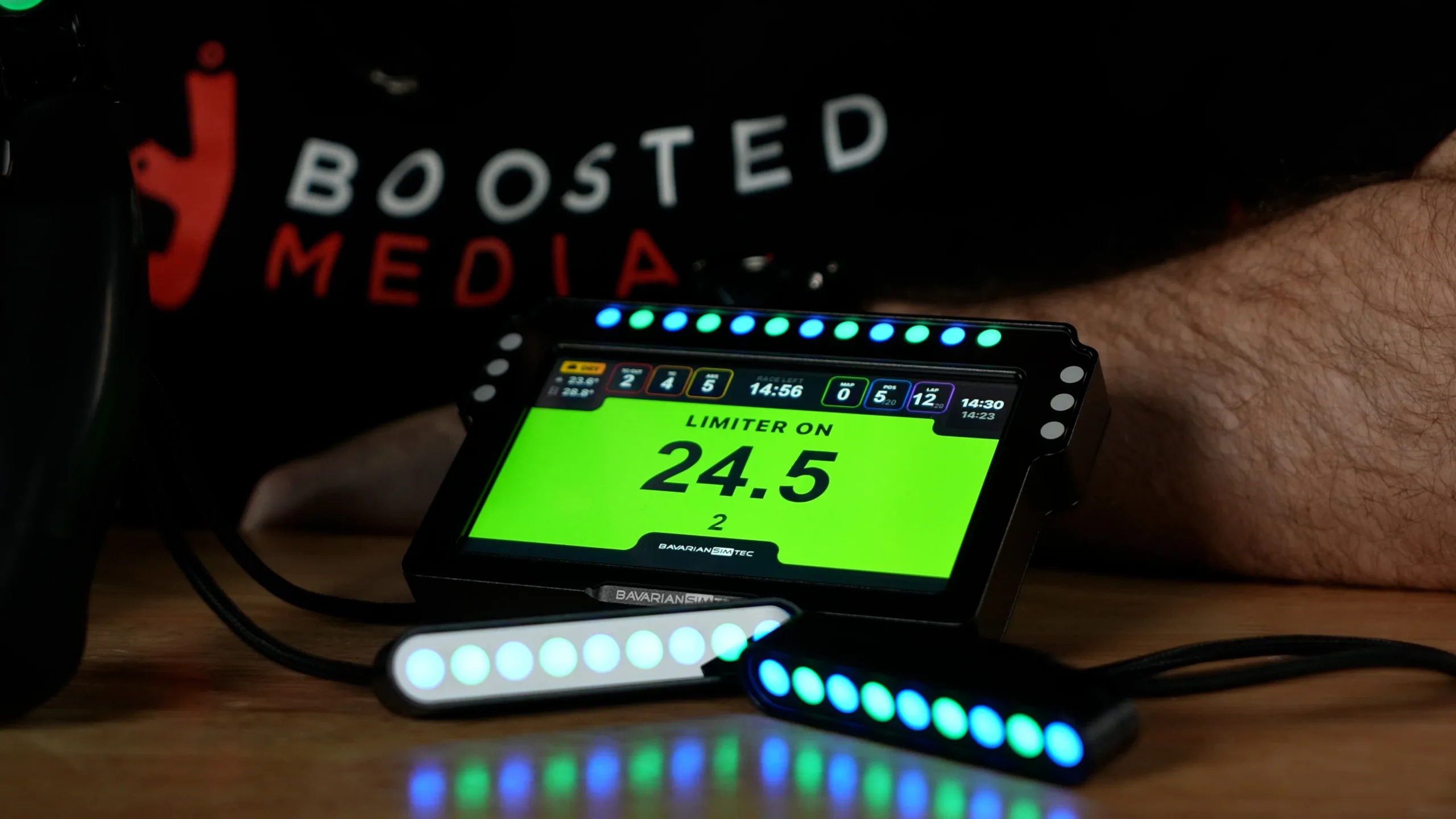
The range extends past the wheels themselves. The DD5 is a standalone dash, a slightly larger version of the display built into the Delta PRO and Omega PRO V2, and it works with both SimHub and PitStopApp. On the back it carries a couple of extra USB-C ports alongside the connection to your PC, which are there for Bavarian SimTec’s beacon lights, small rig-mounted units you can use for spotter and flag information.
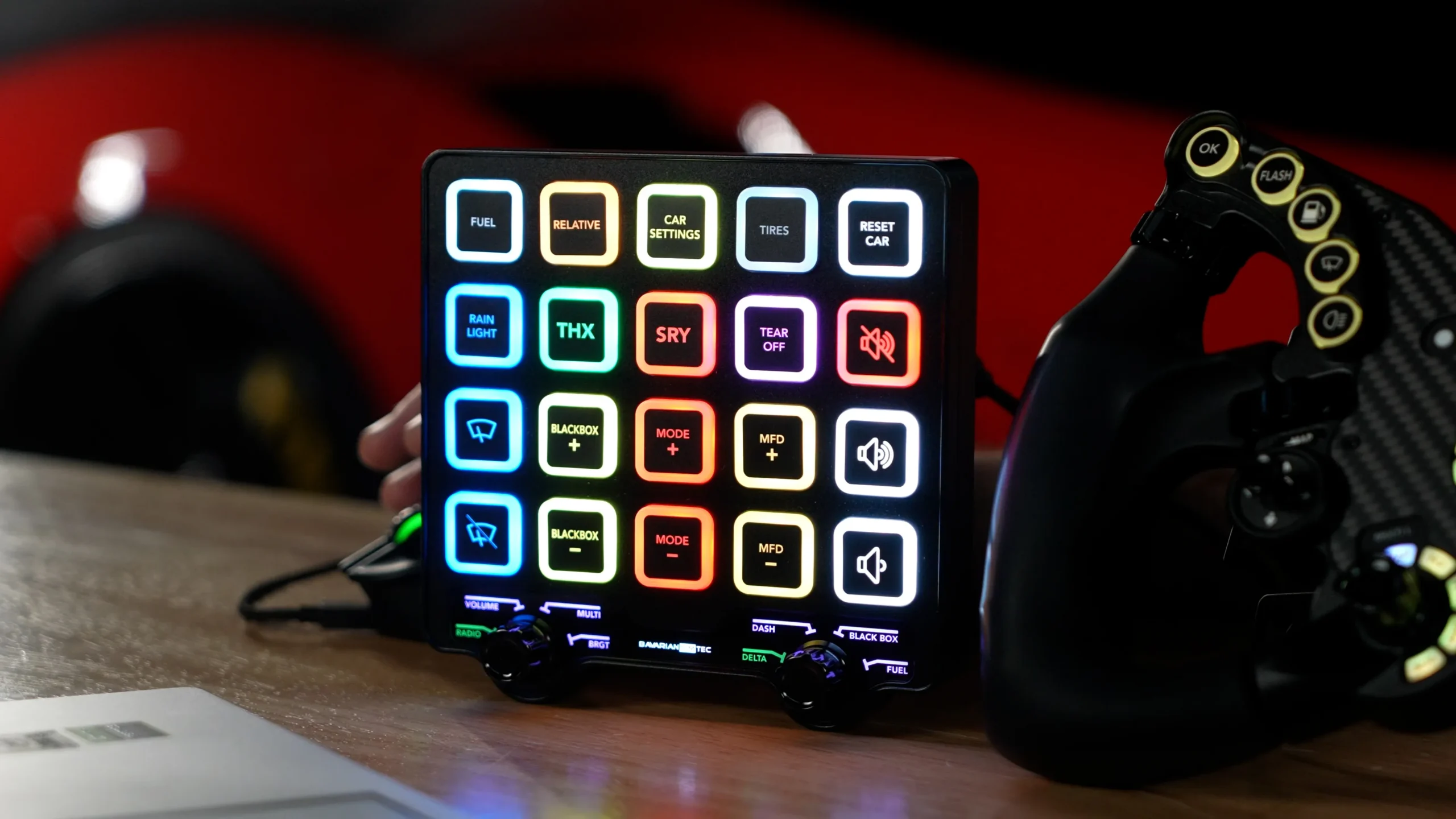
The Control Center is a nicely presented button box that ships with sticker sheets so you can label the buttons however you like, then assign functions and flash behaviour to match. It can also work as a track status indicator for the pit limiter, flags and so on.
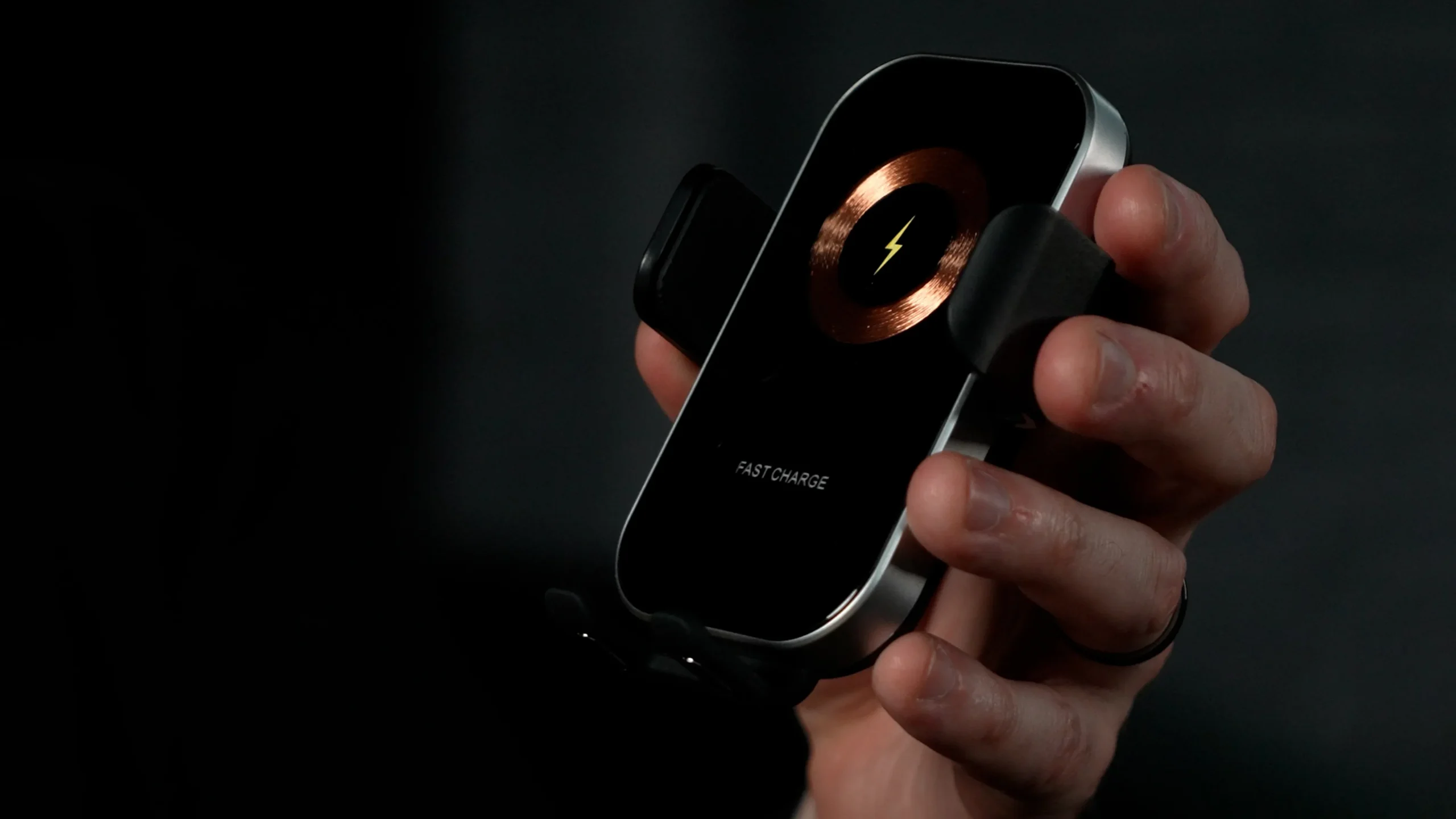
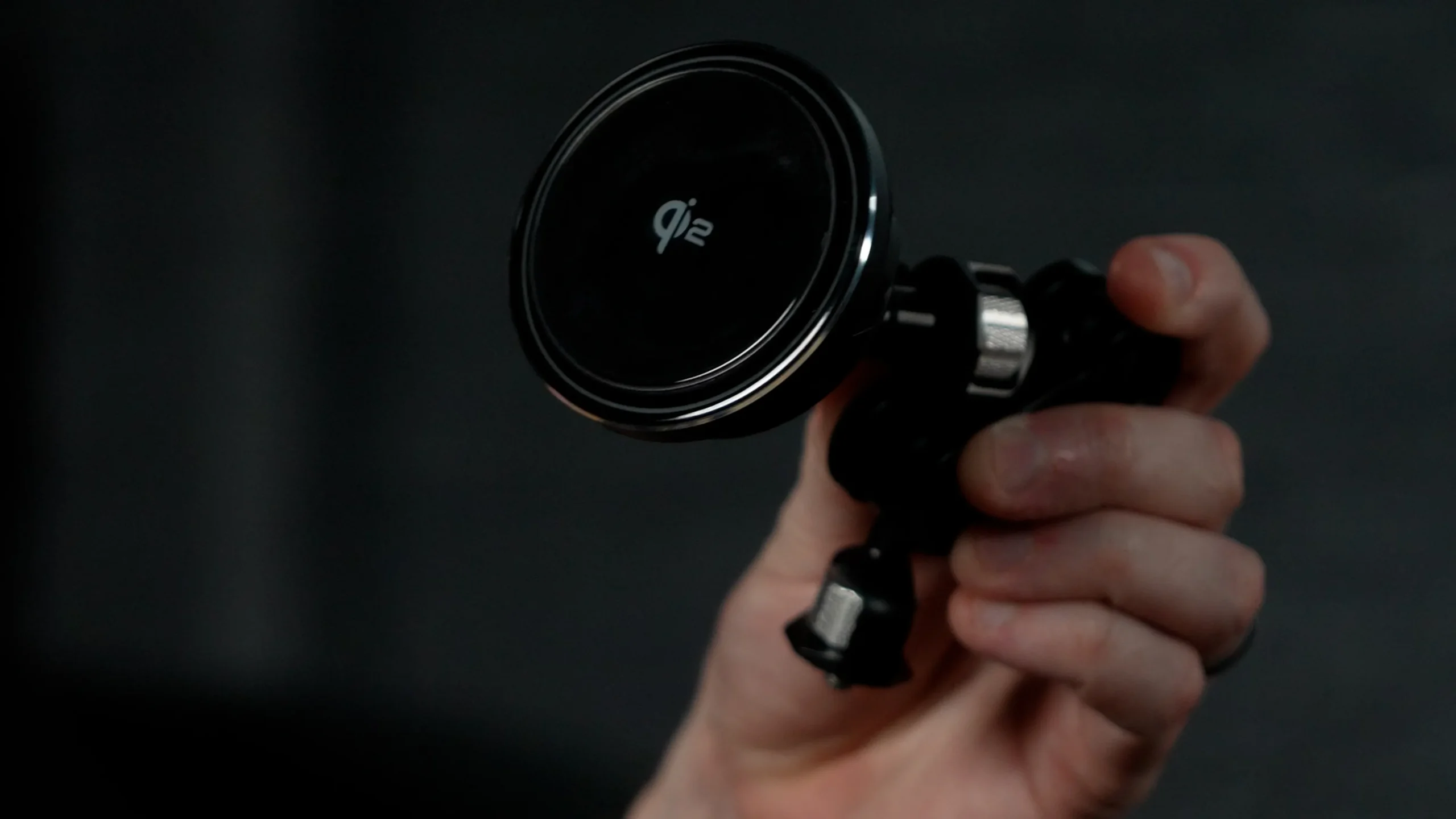
There are also two wireless phone chargers, the PitPower Auto Lock and a MagLock version. Both mount to your rig using the same articulating aluminium hardware the rest of the accessories use: a T-nut bolts to your rig, the mount screws into that, and you can then position it in almost any direction. The mounts are anodised aluminium like everything else, though the charger assemblies themselves are generic units.
Build Quality
All four wheels use CNC-machined aluminium bodies and they are properly rigid. We paid particular attention to the Omega here, since open-bottom designs are where twist tends to show up first, and while you can find a little movement in the grip material itself if you go looking for it, there’s nothing in the structure of the wheel. No flex, no creak, nothing to report over six months.
The weights strike a good balance too. There are lighter carbon-bodied wheels available, but these sit comfortably below the 1.5 to 1.8kg range that some similarly equipped wheels we’ve tested push into. They feel substantial and well balanced without being unnecessarily heavy.
Weight matters more on a lower-powered wheelbase, where the additional rotating mass takes some of the liveliness out of the force feedback. At this price, though, most buyers will be pairing these with a fairly powerful direct drive base, and in that context I’m happy with where Bavarian SimTec have landed. I’m not fond of very light wheels in any case. They tend to feel flimsy in the hands no matter how well they’re made.
The face materials are the main visual difference between the models: plain aluminium on the Alpha, conventional carbon fibre inlays on the Deltas, forged carbon on the Omega. Plenty of manufacturers try to establish a point of difference at this level by adding plastic trim and decorative details, and it usually pulls the wheel further away from looking like something you’d find in a real race car. Bavarian SimTec haven’t gone down that road, and the whole range is better for it.
Buttons and rotary controls
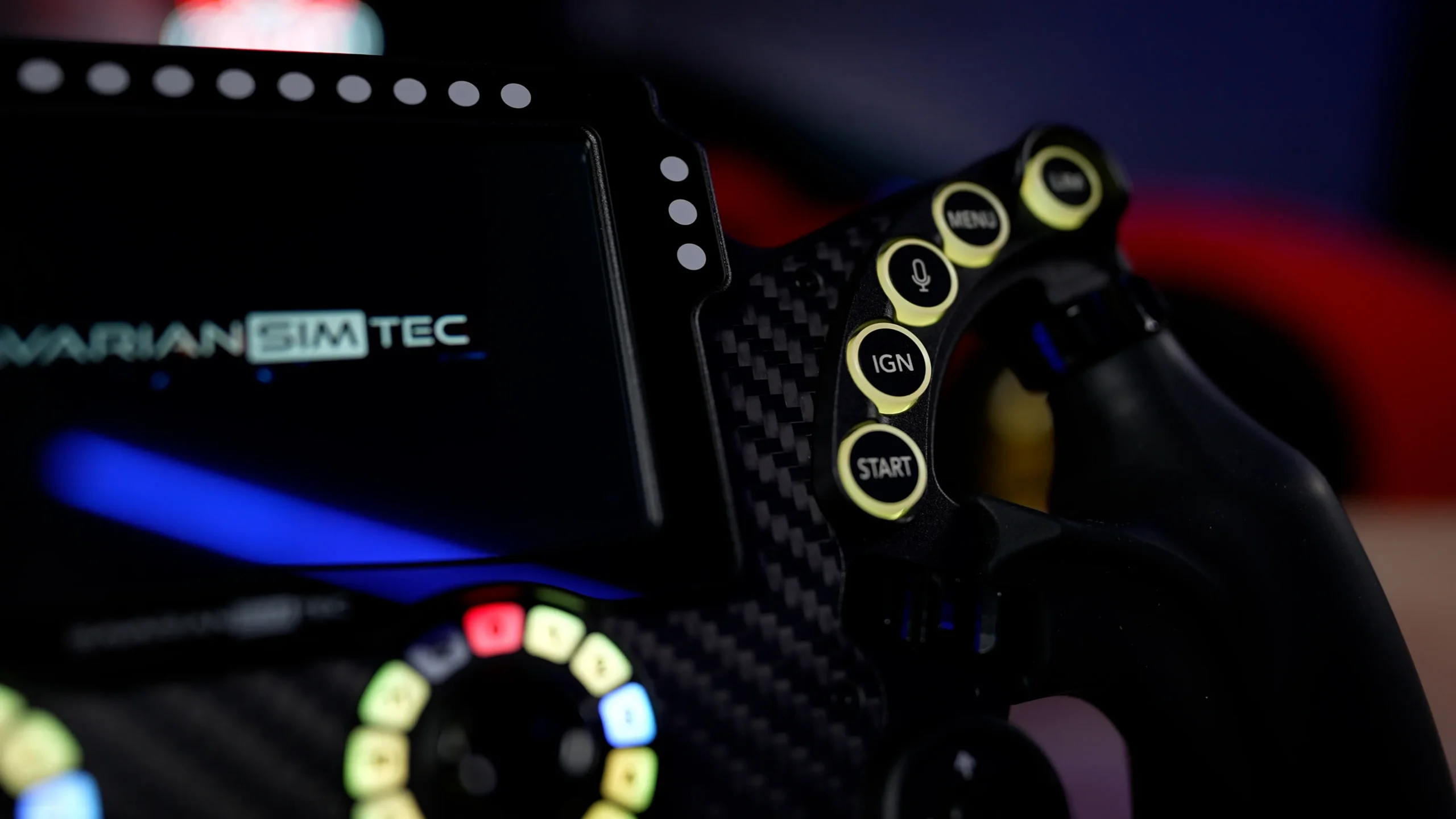
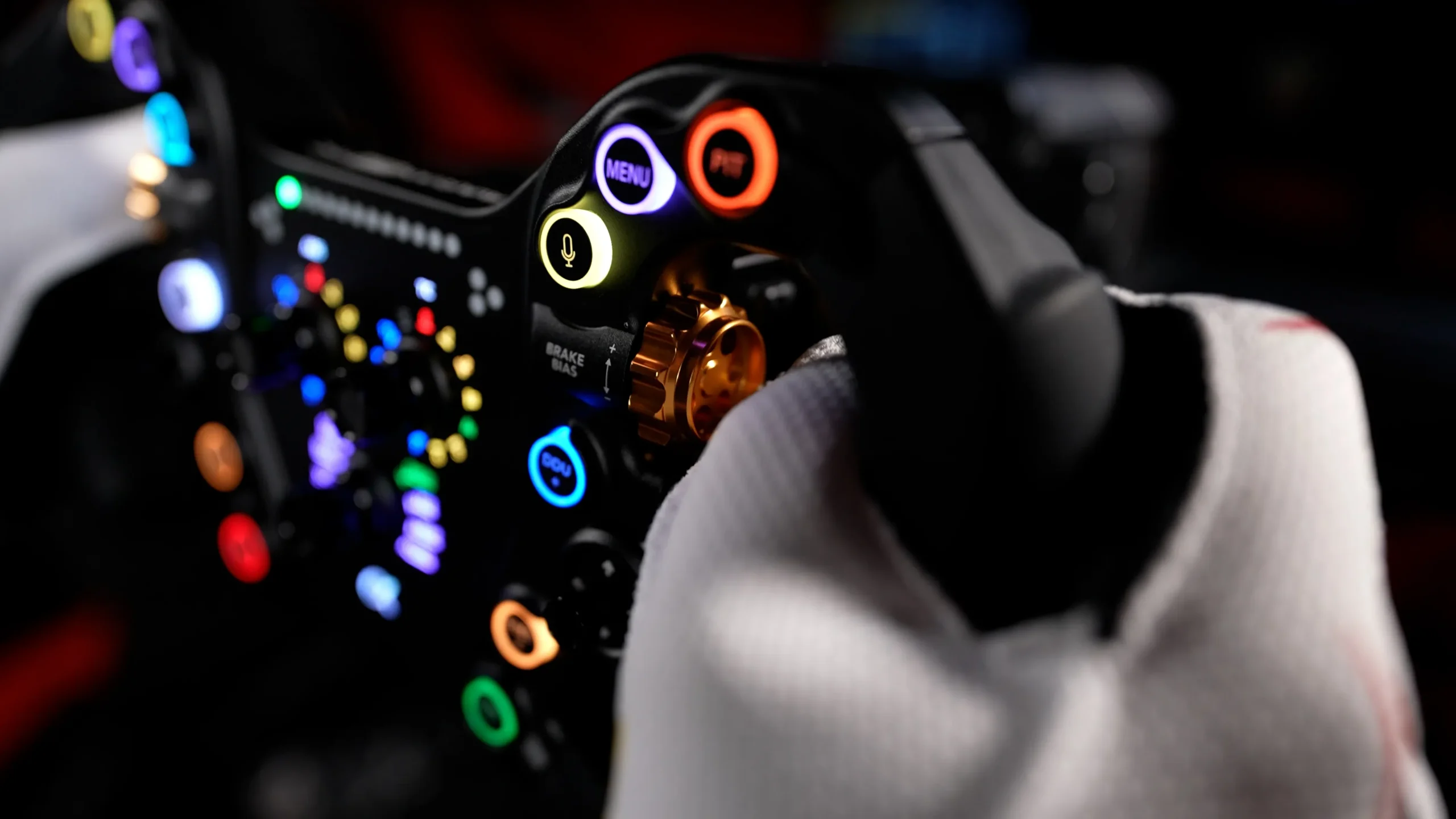
The buttons have a short, positive action with a satisfying click and roughly a millimetre of travel. There’s a little movement in the caps, but nothing that gave us any reason to complain about them in use. They’re RGB backlit, and the caps are replaceable — you can buy spares from the website and swap them around or move them to different positions. That does mean separating the two halves of the wheel, but it isn’t a difficult job. There are sticker sheets for the button faces as well, so you can label everything however you like.
The thumb encoders are a highlight of the entire range. Each position is clearly defined, with movement rolling into a firm stop rather than fighting a harsh click, closer to a thud than a clunk or click. It’s a difficult sensation to describe and an easy one to appreciate, but I’d say they are the best thumb encoders I’ve used on any wheel for my personal preference.
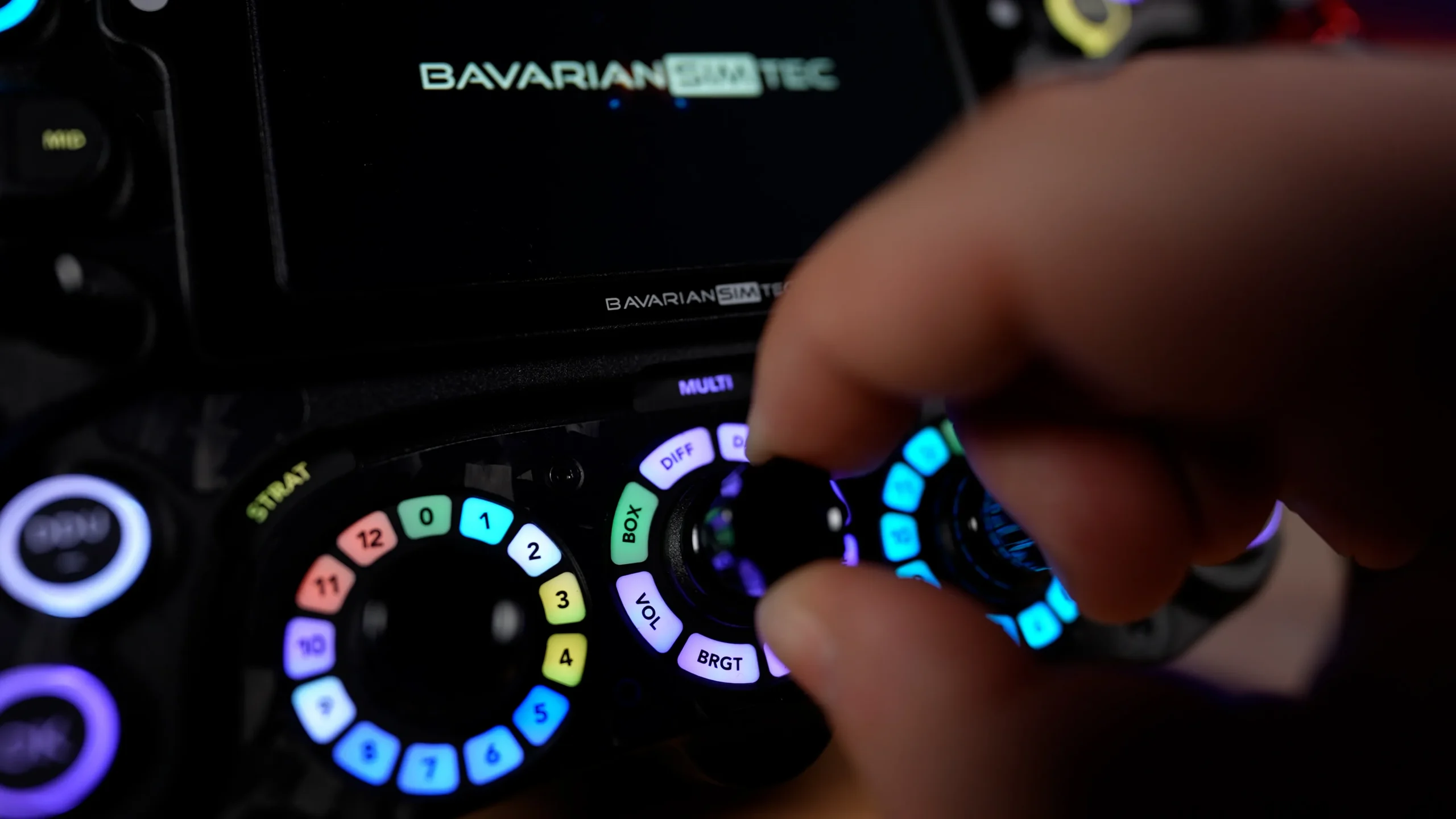
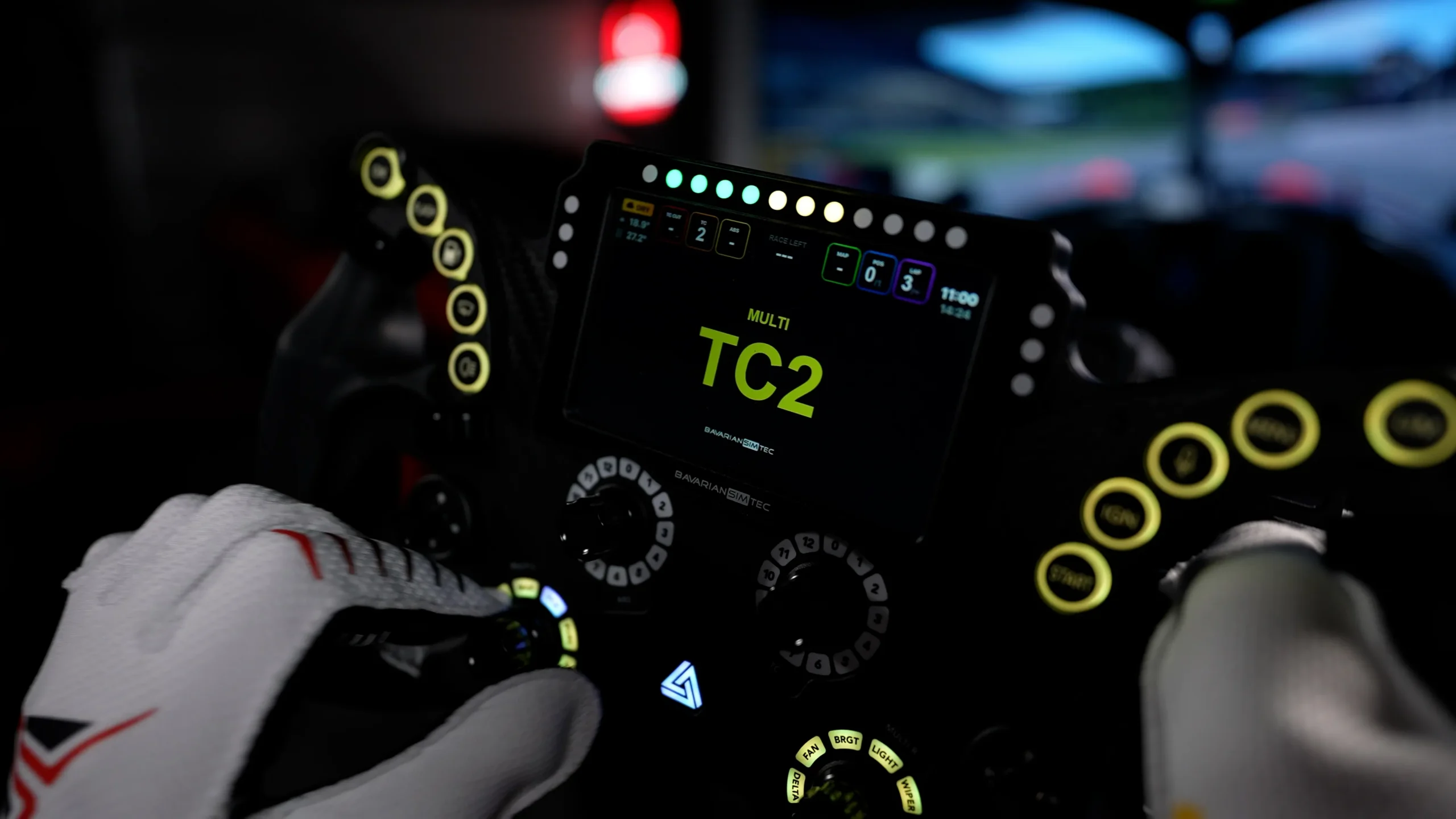
The front rotary controls have a slightly firmer action, which is exactly right for a control you’re turning deliberately to select a specific setting. You want those to snap into a position rather than roll through it. They’re up there with the best as well. Both types use aluminium touch points, which is a detail plenty of wheels at this money still skip.
Push functions are assignable on all four encoders on the Delta models and on three of them on the Alpha and Omega. All four wheels also carry two seven-way switches. I generally use one for black boxes and the other for menus, which keeps me off the keyboard and mouse for most of a session. That isn’t unusual at this price now, but it’s implemented well here.
Shifters and paddles
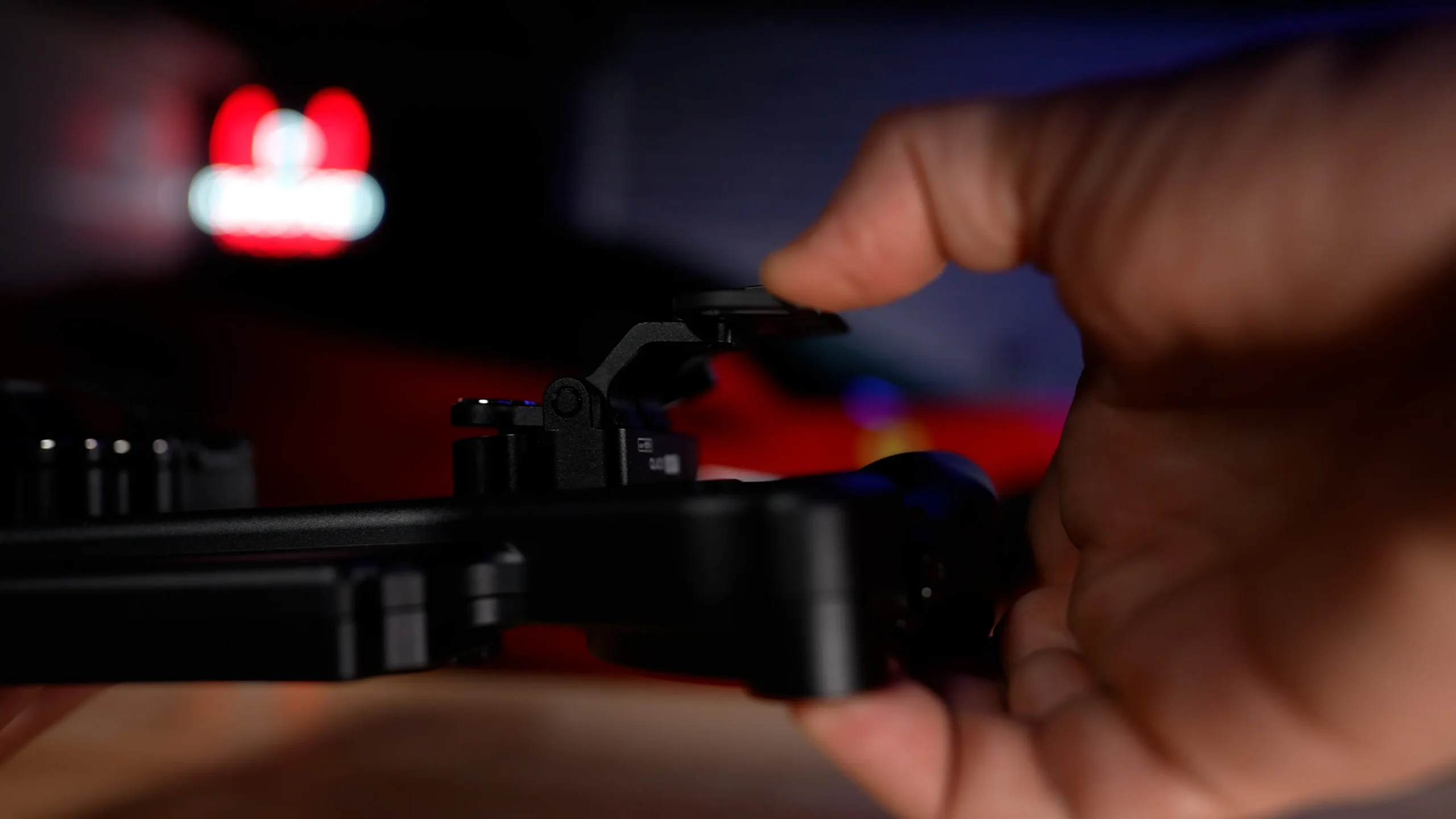
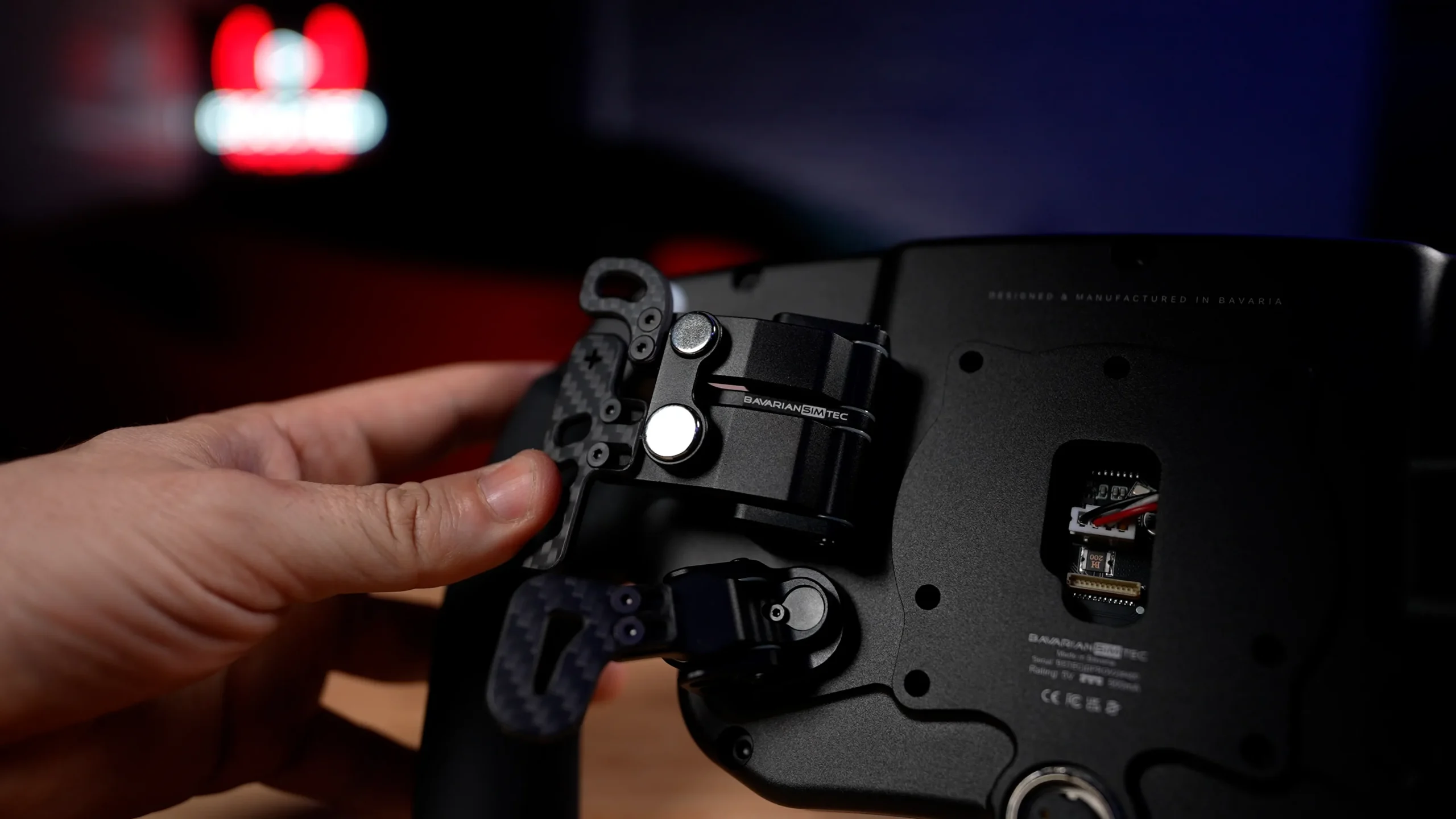
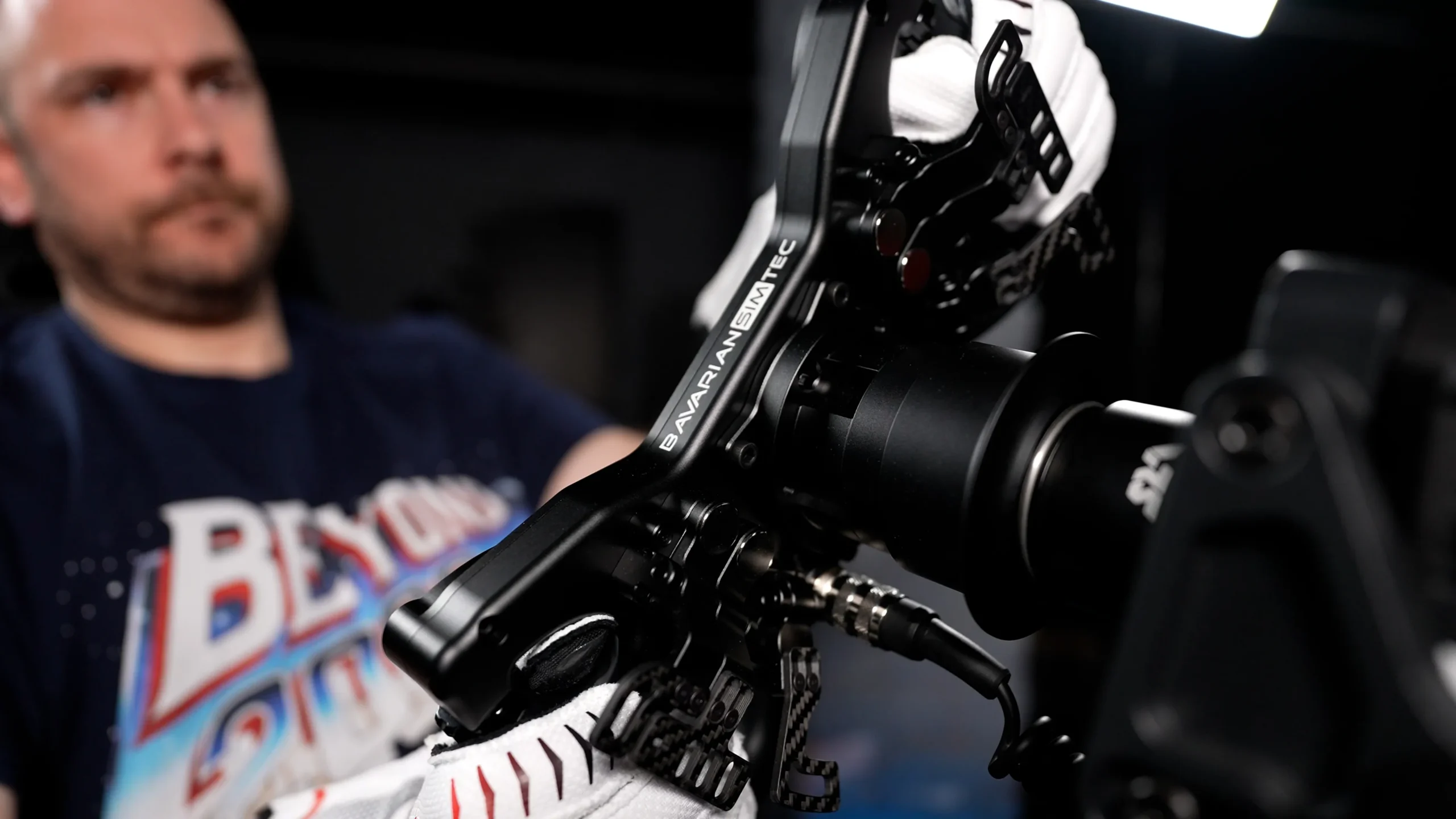
All four wheels use magnetic shifters with a good action, and there’s some adjustment available to bring the paddles further out if you have smaller hands. I was comfortable with the default position.
The Alpha and Omega have the snappier, louder action. The Deltas need a little less movement and make noticeably less noise. Bavarian SimTec also include a sheet of small damping stickers, cut from the same material as the button labels but sized to the magnets, which you stick to the back of the magnet to reduce metal-to-metal contact. They take some of the volume out, though not dramatically, and importantly they don’t change how the paddle feels.
At the time of testing, the Delta and Omega models were only offered in the six-paddle configuration, while the Alpha comes in two-paddle or six-paddle form. Configurations do change, so it’s worth checking the website at the time you’re reading this.
Quality-wise, this is where I’d expect it to be alongside competing premium wheels. I wouldn’t choose Bavarian SimTec purely because of the shifters, since several manufacturers have this part very well sorted now. The quieter Delta action is the more useful distinction, and it’s one that helps you choose within the range rather than a reason to pick this brand over another.
DRIVING EXPERIENCE
Comfort is one of the strongest parts of these wheels. The grips are substantial, and the ergonomic shaping is detailed enough that they mould to your hands properly rather than just being a thick section of rubber. Across all four, the main controls sit within reach of your thumbs without needing to reposition your hand, which is the thing that actually matters once you’re mid-stint and no longer thinking about it.
I’m not always a fan of the rubberised grip materials used on modern sim racing wheels, particularly the way a lot of them turn sticky during longer sessions with bare hands. These strike a good balance. They collect a bit of skin debris, as most of them do, but they never became unpleasantly clammy for me, and there’s enough grip without that slimy feeling once your hands inevitably get sweaty. I’m comfortable using them with or without gloves, which isn’t something I’d say about every wheel at this price.
The 295 and 300mm sizes all work across GT3, GT4 and formula cars, and the choice between these wheels comes down to whether you need the additional inputs far more than it does to a 5mm change in width.
One thing I came to appreciate specifically about the Alpha is how well it suits a push-and-pull steering style. With formula driving in particular, where the wheel sits close to you, you tend to push the wheel up and down with your elbows rather than making steering inputs from your shoulders. I found myself naturally resting a hand on the lower or upper part of the grip and pushing it around, and it felt comfortable straight away. Whether that’s a good habit or a bad one I couldn’t tell you, but the Alpha’s grip shape encourages it more than the others do.
Across six months and a lot of different cars, the ergonomics are the part of these wheels I have the least to say about, which is just about the highest compliment I can pay them. Nothing about any of the four made me want to change how I was sitting, how I held them, or reach for a different wheel.
SOFTWARE
The standard USB wheels give you a choice between SimHub and Bavarian SimTec’s own PitStopApp. SimHub is the familiar route for configuring lighting and, on the display-equipped models, running whichever dashboard you prefer. Every RGB LED across the range is fully addressable there, and the wheels, the Control Center and the DD5 all appear as separate devices the way you’d expect. PitStopApp covers the same ground without needing third party software at all.
Bavarian SimTec have told us that part of the reason they built it was criticism aimed at wheels which offered nothing beyond SimHub compatibility. That’s a criticism I’ve made plenty of times. SimHub support is important, but a product that depends entirely on a third party to deliver its core functionality is one bad week away from being fundamentally broken if anything happens to the people maintaining it. At this price, having your own software isn’t a luxury. It’s insurance.
PitStopApp is fairly basic in presentation, but the workflow is clean and logical. Connected devices are listed down the left with a green indicator against whatever’s currently plugged in, and the same general approach carries across the wheels, the button box and the separate dash, with the available settings changing to suit the hardware. Basic presentation doesn’t mean basic capability, and there’s considerably more depth here than the interface first suggests.
Lighting and Profiles
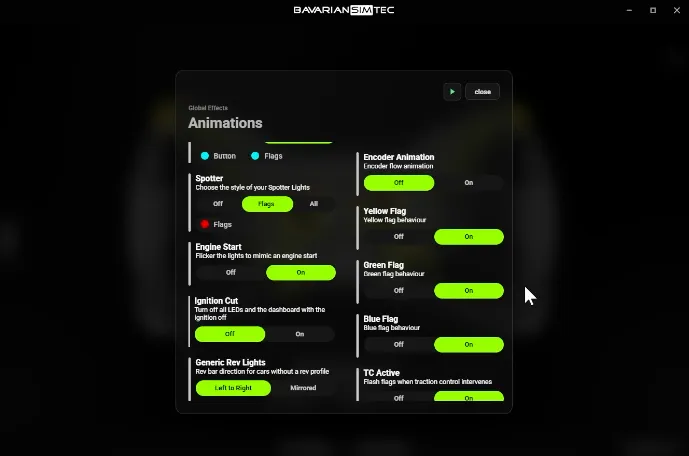
Within PitStopApp You can start with a preset colour profile or build your own, and switching between them loads onto the wheel instantly. Brightness is adjustable independently for different groups of LEDs, which is genuinely useful if you want bright shift lights without equally bright buttons.
Animations cover the pit limiter, with subtle, medium and disco settings, along with a flasher, spotter, engine start, ignition cut and generic red lights. A second set is tied to telemetry: yellow, green and blue flags, traction control and ABS activation, and low fuel. Colours are adjustable for each, and there’s a preview so you can see what you’re setting up without needing to be in a session. Individual buttons, encoders and selectors can all be customised as well, with an icon and colour per button, the option to sync a colour across all of them, and separate colours per segment of the wheel.
One detail worth mentioning is that Bavarian SimTec have put real effort into baking in RPM profiles for different cars and sims, so the rev strip actually matches the car you’re driving.
The Control Center button box works the same way. You assign an icon, colour and press behaviour per button, and it gets the same global effects and brightness controls as the wheels. It will also run track status animations for the pit limiter, chequered flag and green, blue and yellow flags, along with a left or right spotter indicator, which is a useful thing to have sitting in your peripheral vision.
Encoder Behaviour and Thumb Controls
Encoder pulse duration is one of those settings you may never think about until you need it. It sets how long an input is held when you move an encoder. Too short and a sim can miss the adjustment entirely, leaving you clicking the same encoder three times to get one change. Too long and it can register more than once. Being able to change that timing gives you a way to fix either behaviour instead of living with unreliable inputs, and it’s something we’ve been asking manufacturers to include for years. Most people will find a sweet spot and never touch it again.
The thumb-link function is the other one worth understanding. In the Delta configuration, a selector changes which set of inputs a chosen thumb encoder sends to the game. Instead of one encoder giving you a simple up and down, you effectively get six pairs, or twelve outputs, from a single control: you pick the function first, then turn the encoder. You can only link one encoder per side at a time, since there’s a single selection dial, but left and right are configured independently.
Clutch Settings
The configuration covers dual-clutch operation, bite point adjustment, master and slave selection, a dead zone and paddle calibration. The dead zone is there to make sure you reliably reach 100% and don’t pick up accidental clutch input if your calibration drifts, though that isn’t something we ran into.
The one omission is the ability to change the bite point from the wheel itself. We’ve seen that on other wheels and it’s a useful convenience when you’re perfecting a launch, so it would be good to see added.
Dashboards
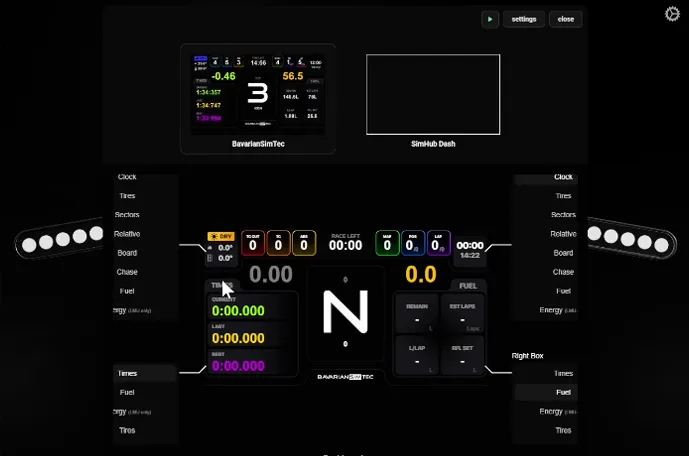
PitStopApp’s dashboard lets you assign telemetry to different areas of the display and configure up to four pages you can switch between while driving. You can set the idle appearance too, including a driver name and race number, a custom colour or image, and a selection of pre-baked animations. Pop-ups appear for adjustments such as ABS and traction control, and there are configurable eyebrows along the top.
It works well, but it doesn’t give you the freedom to build a completely custom dash the way SimHub does. I expect plenty of people will still run something like Lovely Dashboard through SimHub, which is far easier to get going than it once was. That’s fine, and it isn’t really the point. The value of PitStopApp isn’t that it beats SimHub. It’s that the wheel is fully functional without SimHub.
Conclusion
After six months with the Bavarian SimTec range, the word I’d use is refined. The controls are excellent, the ergonomics are very good, and the software is simple without being limited. Almost nothing about living with these wheels required any thought at all, which isn’t something I can say about many products I’ve tested for this long.
There’s no significant quality gap between these and competing GSI or Ascher Racing wheels for example. They’re operating at a similar level, and I want to be clear that preferring the feel of Bavarian SimTec’s knobs and encoders is a subjective preference on my part rather than evidence that the other products are built to a lower standard. They aren’t.
The problems over six months amount to two, and neither is serious. The Alpha’s clutch paddles fouled our VRS quick release adapter, which a spacer resolves and which won’t affect every adapter. And we saw the intermittent USB pass-through behaviour that affects display wheels across this category generally rather than these specifically. That’s a short list for half a year of use.
For someone moving regularly between different cars, the Delta layout gives you the controls you’ll actually reach for, and the choice between PULSE and PRO comes down to whether you want the integrated screen. The Omega’s additional inputs are easier to justify if you specialise in a car that makes use of them. The Alpha is worth considering for its grip shape and the push-and-pull steering style it encourages, provided the mounting clearance works with your quick release. For most Simucube 3 owners I’d still favour the standard Delta PRO for its software flexibility, with the SC making sense when a cable-free installation inside the Simucube environment is what you’re after.
These wheels get a big thumbs up from me. Nothing here is game-changing compared to the other high-end brands, but I don’t believe that’s what Bavarian SimTec were aiming for. They set out to build the best quality products they could and get the fundamentals right, and on that basis they’ve succeeded. At this price good hardware is the baseline expectation. It’s the combination of functionality, comfort and completely straightforward day-to-day use that’s made these so easy to keep coming back to.
Pros
- Rigid CNC-machined aluminium construction with a well-balanced feel
- The best thumb encoders we've used on any wheel, with excellent rotary controls to match
- Comfortable grips that work equally well with or without gloves
- Quieter QuickShift paddles on the Delta models
- PitStopApp gives the hardware its own software foundation alongside SimHub support
- Quick release shim lets you move one adapter between wheels in minutes
- Very little friction in everyday use across an extended review period
Cons
- Alpha clutch paddle clearance is tight with thicker quick release adapters, though a spacer resolves it
- No on-wheel clutch bite point adjustment at time of testing
- Alpha and Omega shifters are noticeably louder than the Delta paddles
- PitStopApp dashboards don't offer the customisation freedom of SimHub
- No significant advances on what the other premium brands already offer


Related Articles

SIMAGIC Zeus Formula, GT & Sport Detailed Review
A clever modular wheel ecosystem with strong hardware, useful dash-sharing, and broad driving style coverage… BUT it got weird. Simagic’s Zeus Series is one of
MOZA CS Pro and KS Pro Sim Racing Wheels – Detailed Review
Two feature rich mid-level MOZA wheels that cover a huge range of driving styles, with strong ergonomics, good software depth, but a few details that
Fanatec Wheel Hub: A Useful Fix For A Self-Created Problem
What Is The Fanatec Wheel Hub? The Fanatec Wheel Hub is a QR2-based adapter for fitting third-party steering wheels to Fanatec wheel bases. It does
Fanatec ClubSport Formula V3 – Detailed Review
A smarter and more usable evolution of Fanatec’s long-running Formula wheel, even if it still is not the bigger leap many sim racers had been
Simagic Alpha Evo Direct Drive Wheel Bases – Detailed Review
The Simagic Alpha Evo wheel bases are arguably one of the most exciting direct drive lineups to hit the market in quite some time. With
MOZA Racing Lamborghini Revuelto Sim Racing Wheel – DETAILED REVIEW
Officially licensed and instantly recognisable, the MOZA Racing Lamborghini Revuelto wheel brings genuine road car character to sim racing. MOZA has been releasing products at
NEWSLETTER
Stay up to date with new releases And major updates
Thanks. Please check your email to confirm your subscription.
Sim RACING
Discount Codes
Also Sells
Ascher Racing, Gomez Sim Industries, SRBReseller For
Pro Simrig, Simagic, Qubic System, Cobra, SparcoAlso Sells
Alien Mods, Asetek, Buttkicker, Cammus, Conspit, Cube Controls, D-Box, Heusinkveld, LeoXZ, Moza Flight Gear, Moza Racing, Racebox, Simagic, Sim Motion Premium Chassis, SimNet, Unreal Racing, VNM SimulationsAlso Sells
Fanatec, MOZA Racing, 3DRap, Another Way, Ascher Racing, Asetek SimSports, Asus, Bavarian SimTec, BDH Race Sim, Brook Raslution, ButtKicker, Conspit, Cooler Master, Cube Controls, D-BOX, Dayton Audio, Delta Sim-Tech, DOF Reality, Elgato, Esportsim, GSI, Heusinkveld, HORI, KGL Creation Lab, Leoxz, MME Motorsport, MOZA FlightSim, Next Level Racing, Nitro Concepts, Novus, O-Rouge, Overpower, P1SIM, Pimax, Playseat, Prosimu, PXN, Qubic System, Racing Components, Res-Tech, Rexing, Sabelt, SG Racing, Sim Factory, Sim-Lab, Sim Racing Studio, Simagic, Simforge, Simgrade, SimRep, Simucube, Simufy, Simtrecs, SimXPro, Soelpec, Sparco, Thrustmaster, TREQ, Venym, VIRPIL Controls, VNM Simulation, VPG Sim, VRSReseller For
BavarianSimTec, Sabelt, Qubic System, MME SimSportReseller For
Cube Controls, Asetek SimSports, Conspit, Outlet ItemsAlso Sells
Ascher Racing, Base Performance Simulators, BDH Race Sim Hardware, Buttkicker, Cube Controls, D-BOX Technologies, Delta Sim-Tech, Gomez Sim Industries, Heusinkveld, IgniT0N Controls, Max Papis Innovations, MME Motorsport, Moza Racing, P1Sim, Playseat, Precision Sim Engineering, Qubic System, Simucube, Sparco, Thrustmaster, VNM Simulation, VPG SimAlso Sells
Cube Controls, D-Box, Meca Sim Hardware, Moza Racing, RichD-PC, Sigma Integrale, Simagic, Simucube, Playseat, Conspit, Imsim, GTRacing, Elgato, PimaxAlso Sells
BavarianSimTec, Conspit, Cooler Master, Cube Controls, DOF Reality, Moza, Pimax, Qubic System, Racebox, Restech, Sigma Integrale, SimucubeReseller For
Fanatec, Next Level Racing, Cube Controls, Thrustmaster, Asetek, Moza, Buttkicker, BJ Racing, Turtle BeachMORE REVIEWS and Discounts


If these Sim Racing Reviews have helped you find the best racing simulator gear for your sim rig, please consider using the affiliate links on this website. By purchasing through these links, a small commission will come back to Boosted Media at no additional cost to you. This is how Boosted Media keeps providing content to the Sim Racing community.
About The Authors
-

Will Ford operates Boosted Media with his brother Tom and is the on-camera host and technical lead behind the channel’s sim racing hardware reviews.
With a background in electrical engineering, adult education, and automotives, he combines hands-on product evaluation with practical technical analysis and a passion for motorsport and sim racing to explain how sim racing hardware performs in the real world, and is one of the most experienced people on the planet when it comes to reviewing Sim Racing Hardware.
-
Tom Ford operates Boosted Media with his brother Will and produces all Boosted Media sim racing videos and written articles. A true motorsport fanatic with a professional background in engineering and media, he works closely with Will across testing and analysis, turning extensive product evaluations into clear, practical reviews and buying advice for sim racers.