
Two feature rich mid-level MOZA wheels that cover a huge range of driving styles, with strong ergonomics, good software depth, but a few details that still need refinement.
MOZA has been releasing new sim racing hardware at a pace that is getting genuinely difficult to keep up with. The CS Pro and KS Pro steering wheels continue that trend, and at first glance they might not look like a dramatic departure from wheels we have seen from MOZA before.
In many ways, that is true. These are not radical reinventions of the wheel. But they do bring some meaningful upgrades in the areas that matter most: overall usability, build quality, lighting, software configuration, and the addition of a 2.99-inch full-colour display on both wheels.
That screen is going to be the headline feature for a lot of people, especially with the KS Pro inevitably being compared to Fanatec’s recently released ClubSport Formula V3 and Conspit 300GT.
The MOZA CS Pro and KS Pro are not trying to compete with ultra-premium wheels costing significantly more. They are trying to offer a broad, practical, feature-rich package for MOZA users who want something more serious than an entry-level rim without stepping into genuinely high-end pricing.
And for the most part, that is exactly where they land.

By purchasing through links on this page you’ll be supporting Boosted Media at no additional cost to you! This option is available for a huge range of Sim Racing gear.

MOZA KS Pro Steering Wheel
2 Reseller Offers
MOZA CS Pro Steering Wheel
1 Reseller Offer
VALUE
At the time of filming, both the MOZA CS Pro and KS Pro are priced at US$329, or AU$589. That puts them in a competitive mid-level position: noticeably more serious than entry-level wheels, but still well below the genuinely premium end of the market.
The key value consideration is ecosystem fit. These are PC-only wheels at the time of filming, and while they can be used outside the MOZA ecosystem with additional adapters and mechanical workarounds, they make the most sense for people already running a MOZA wheel base.
For those users, the CS Pro and KS Pro offer a strong step up without needing to spend significantly more or move into a different ecosystem. Outside MOZA, the value is less clear once extra hardware, compatibility, and integration are factored in.
So the value equation is simple: for MOZA users, both wheels are very competitively priced and make a lot of sense. For everyone else, they are still interesting, but less obviously compelling.
Features
Feature-wise, the CS Pro and KS Pro are best understood as two different wheel formats built around a similar core electronics package.
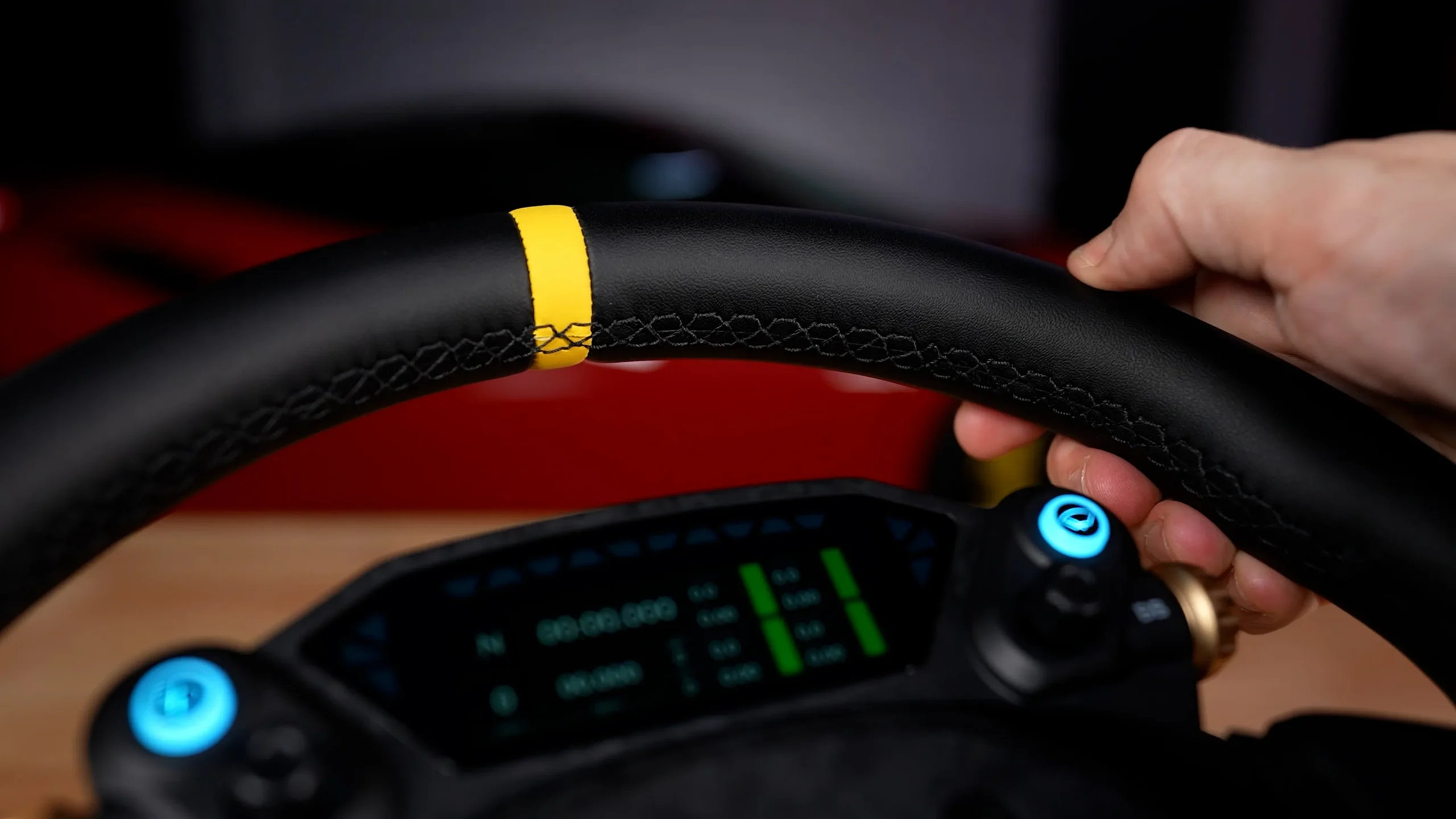
The KS Pro is the 300mm butterfly-style wheel, aimed more naturally at formula cars, GT3, GT4, prototypes, and other modern race cars. The CS Pro is the larger 325mm round wheel, which makes it the more versatile option for road cars, rally, drifting, and anything where a full round rim is more appropriate.
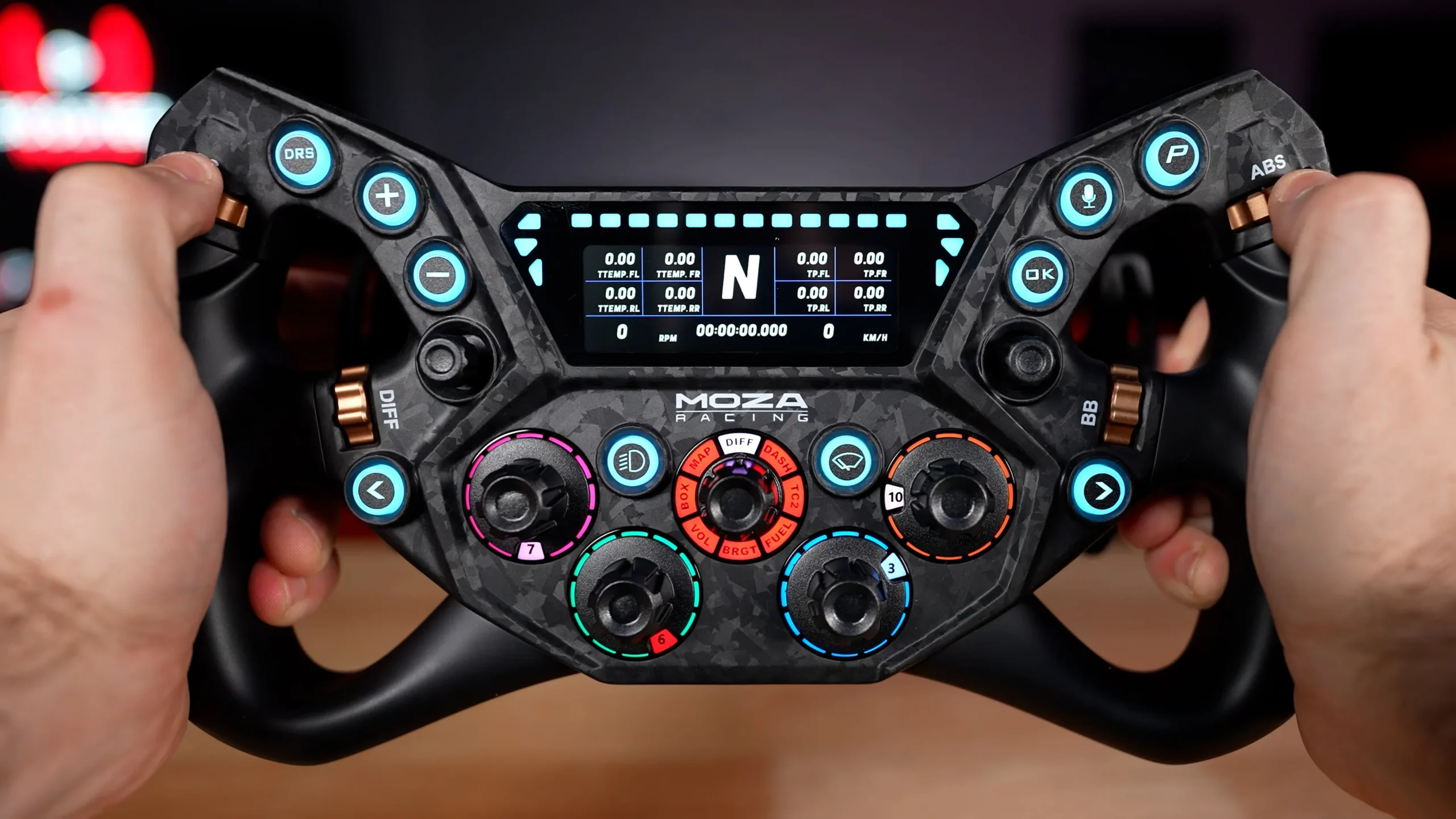
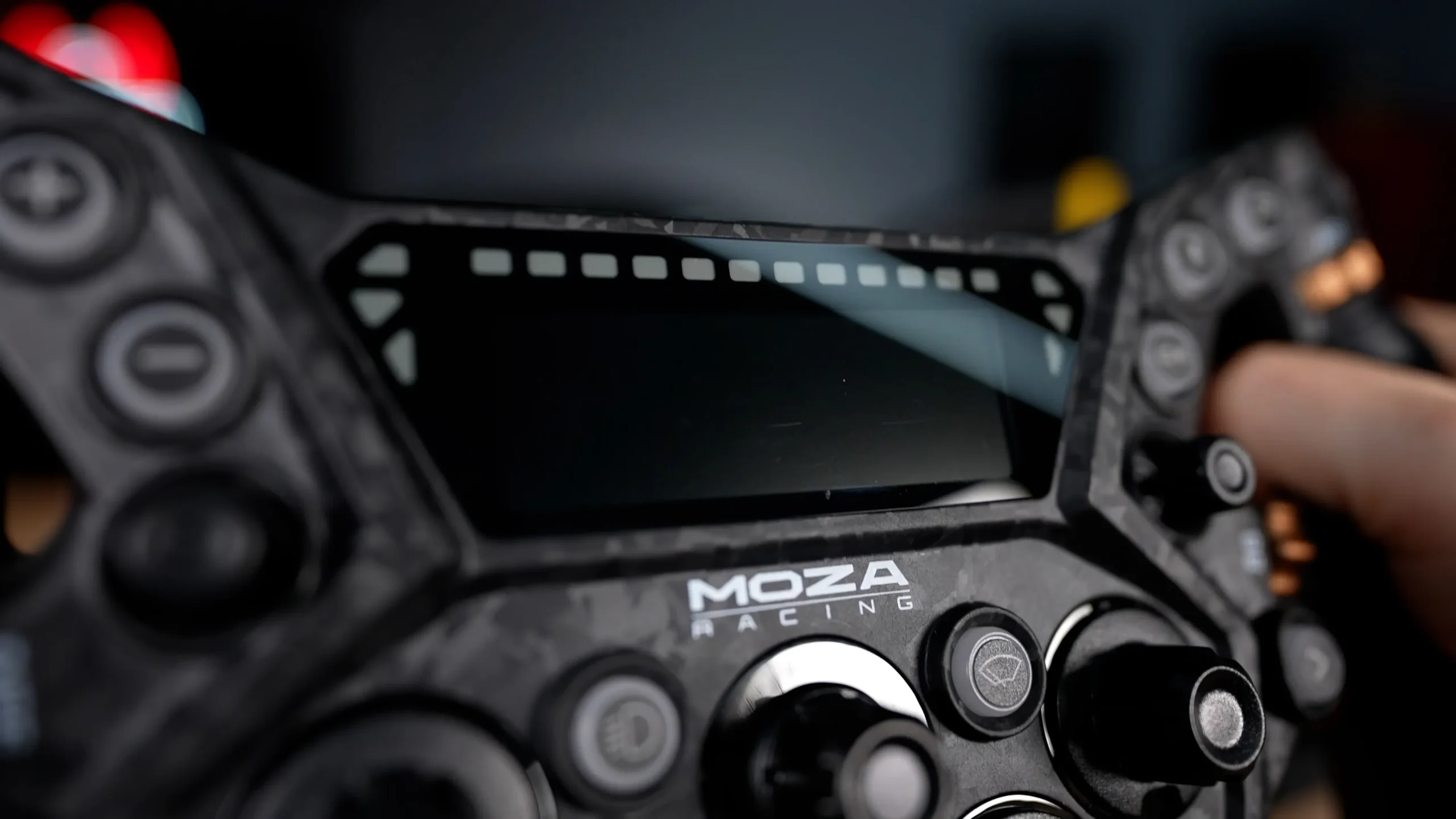
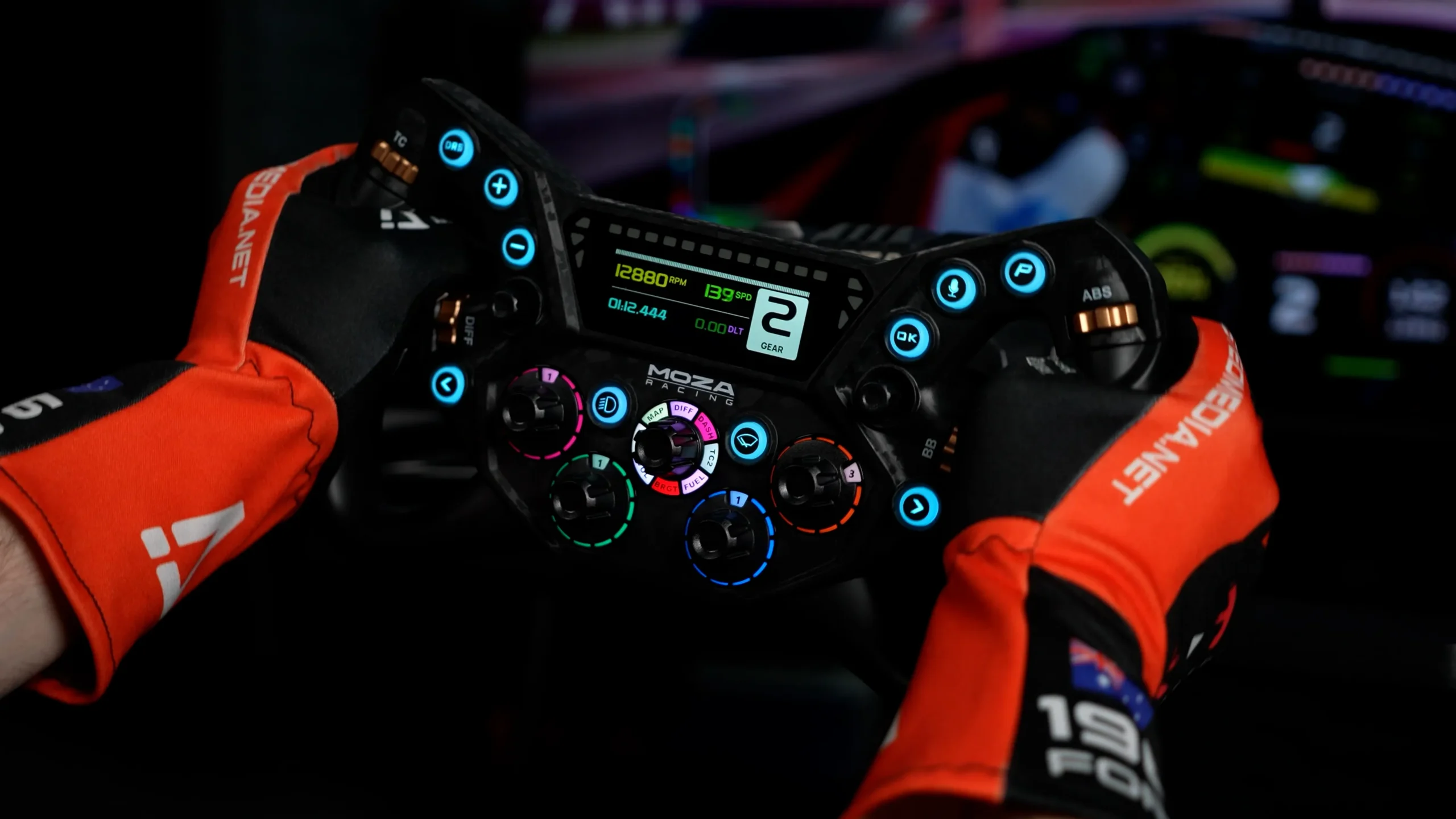
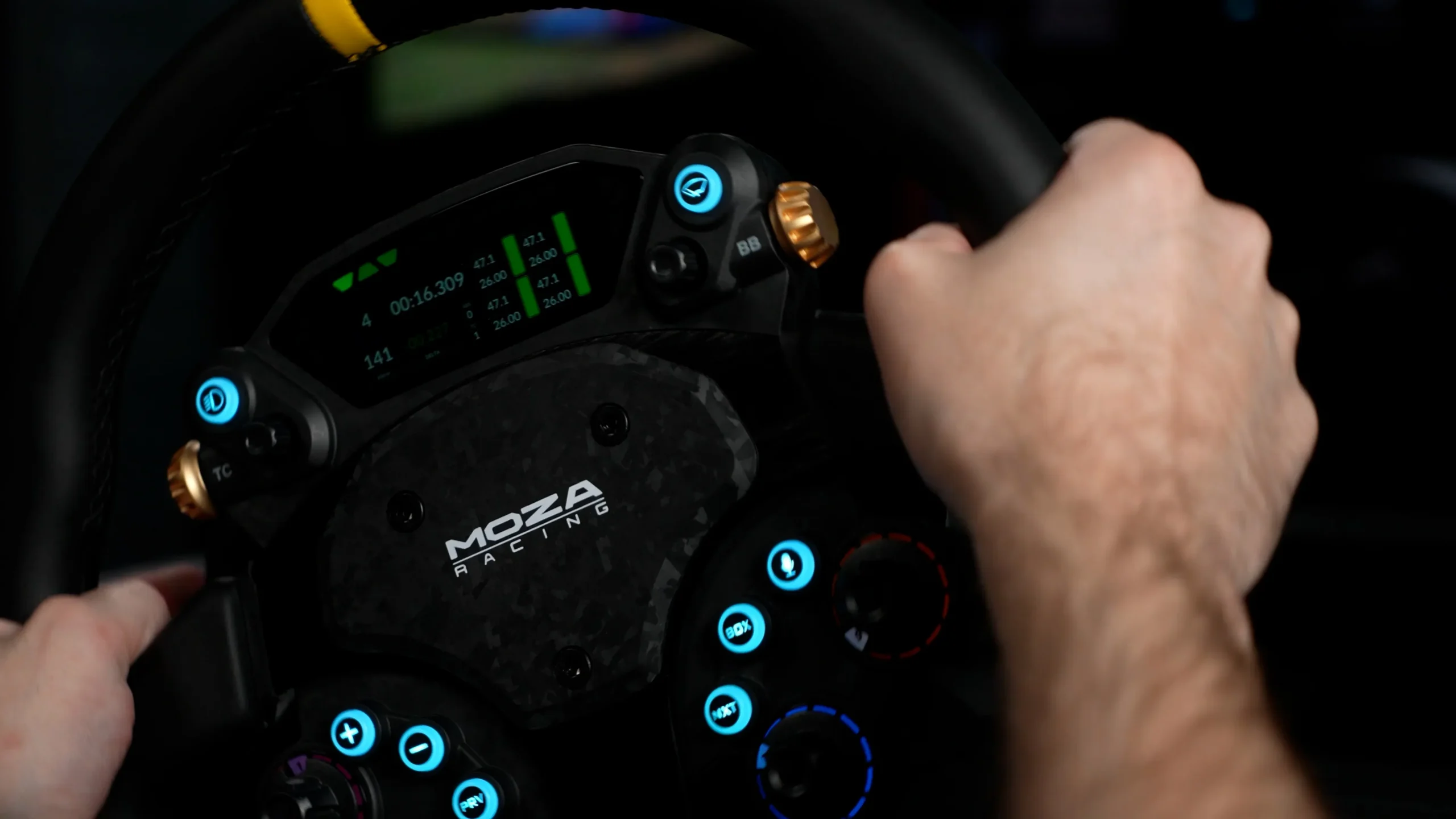
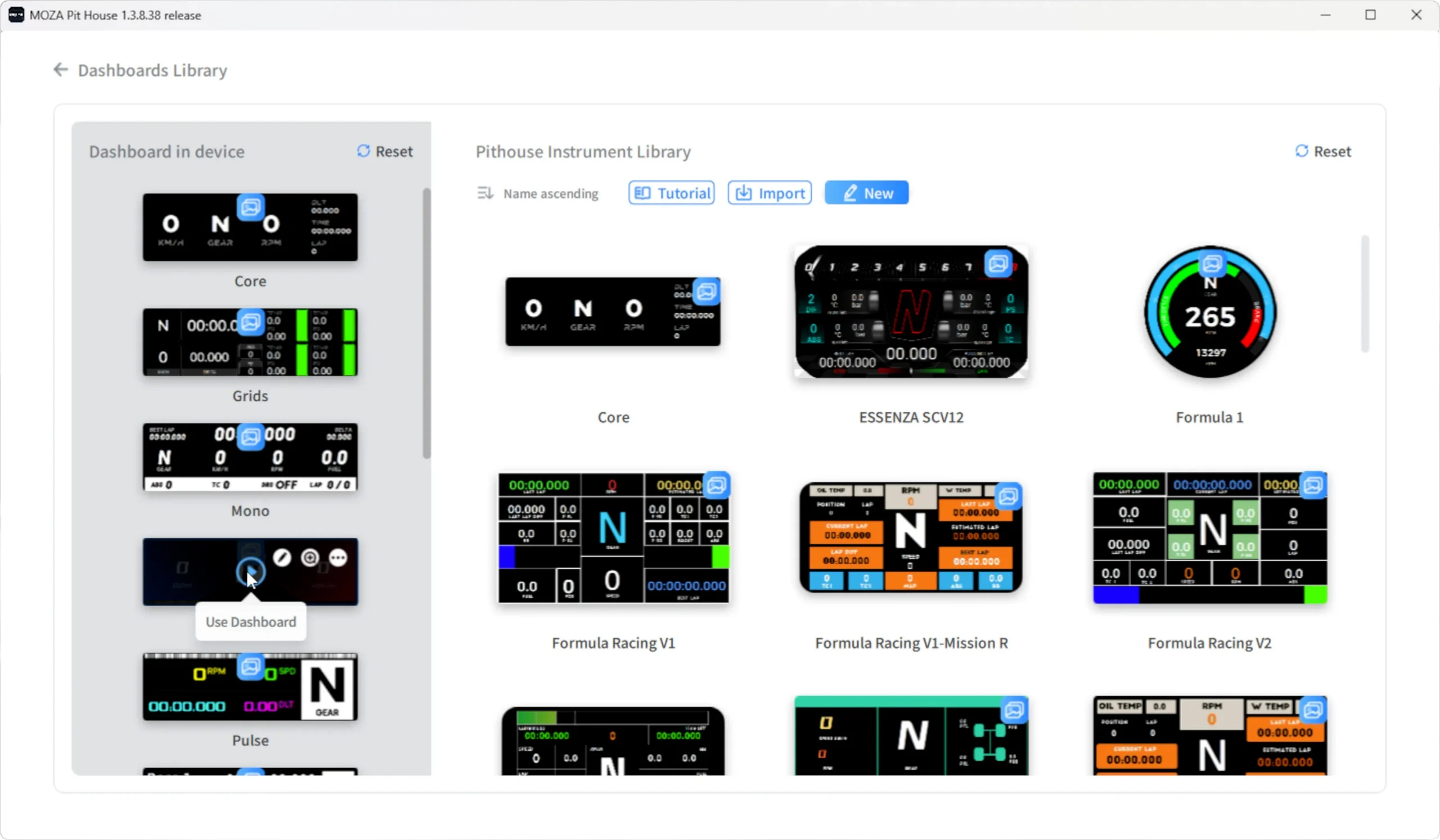
Both wheels include a 2.99-inch full-colour display. This is one of the headline additions here, especially compared with wheels that rely on simpler monochrome displays or no wheel-mounted display at all. The display is not SimHub-compatible, which will matter to some users, but MOZA’s own dashboard system does allow a decent amount of customisation through Pit House.
Both wheels also include RGB rev strips, flag LEDs, and RGB backlit buttons. These can be configured through MOZA Pit House, including telemetry-based effects such as RPM, fuel, pit limiter, wheel spin, wheel lock, ABS, traction control, and spotter indicators for cars alongside you.
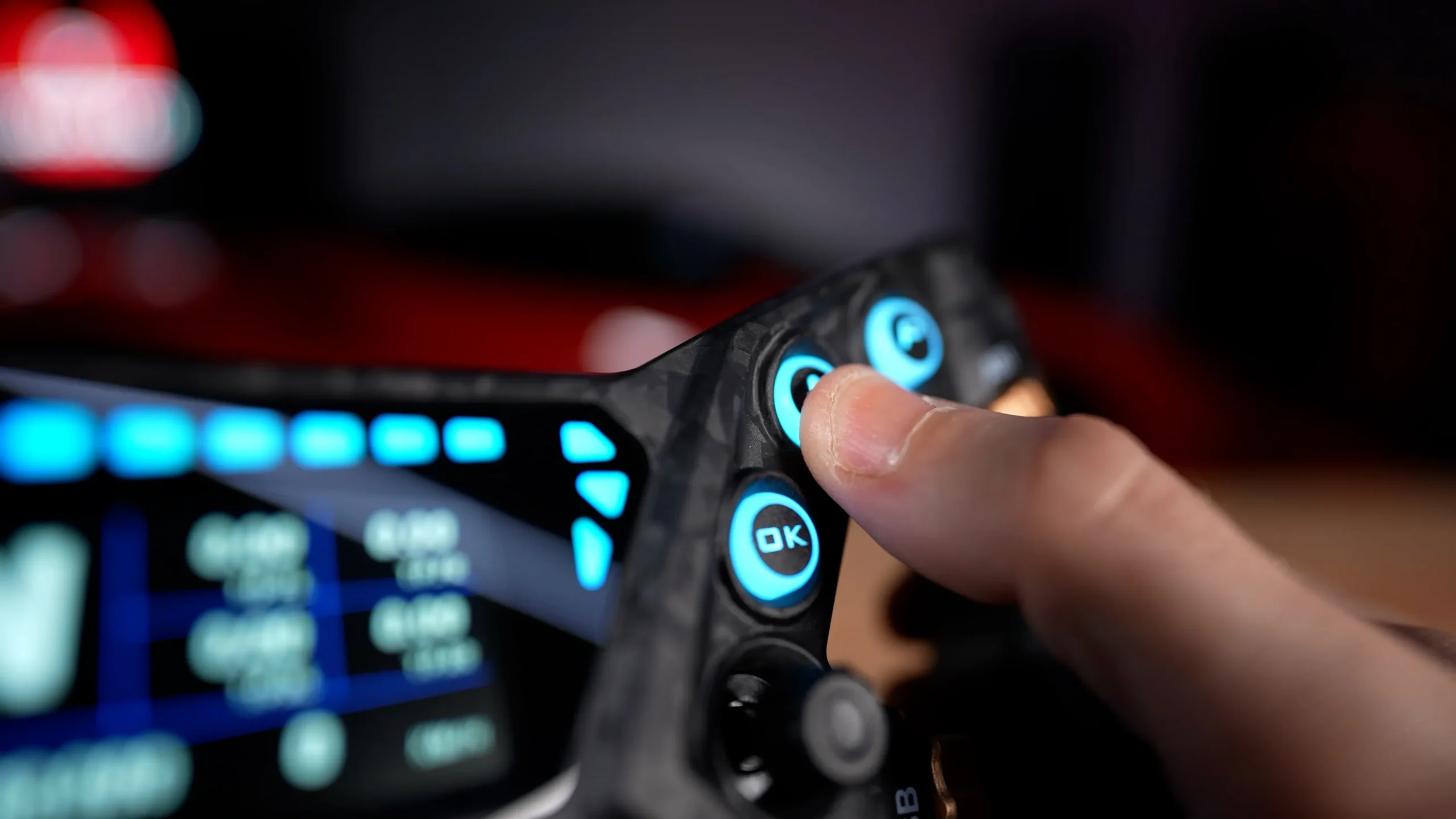
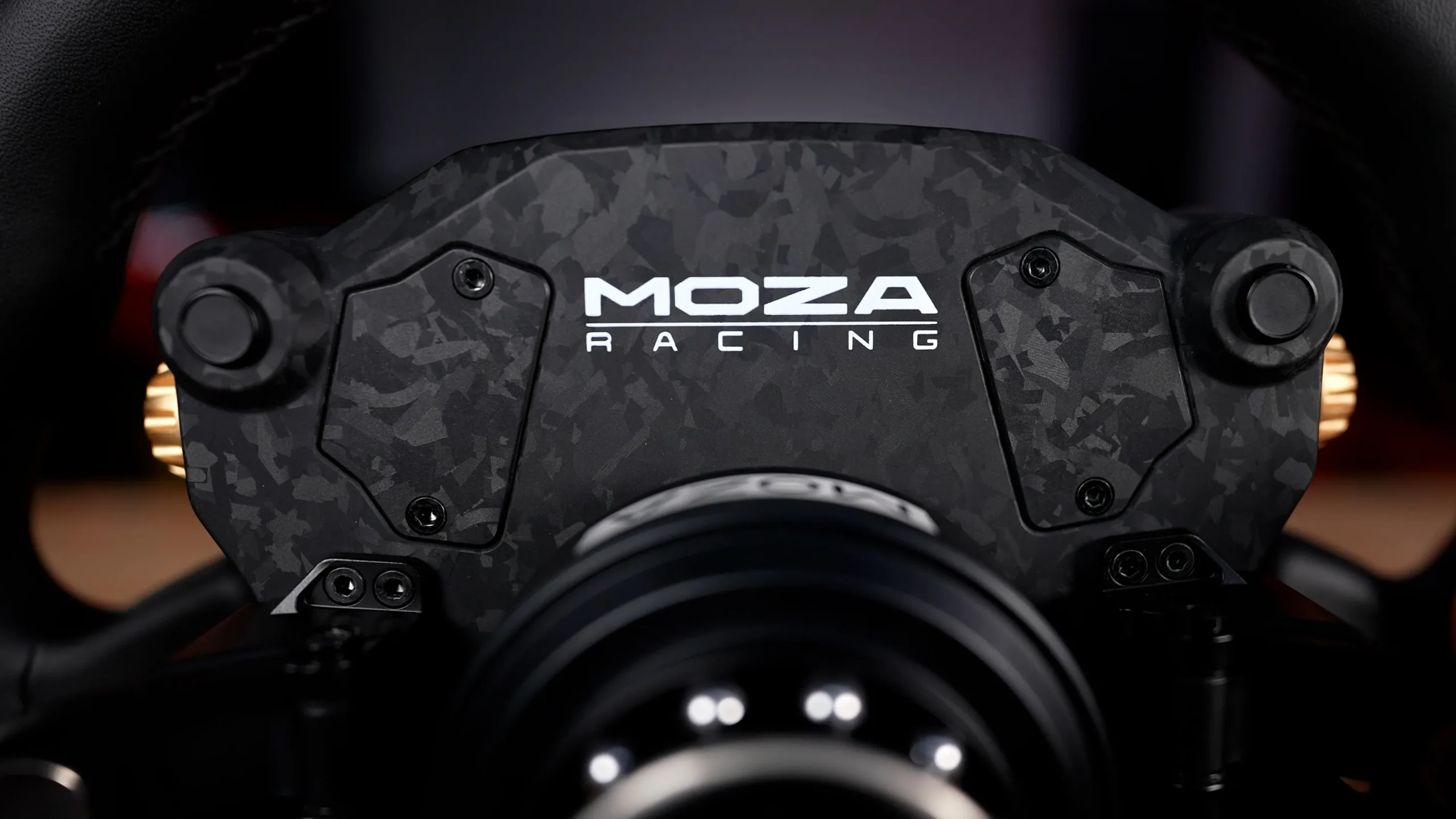
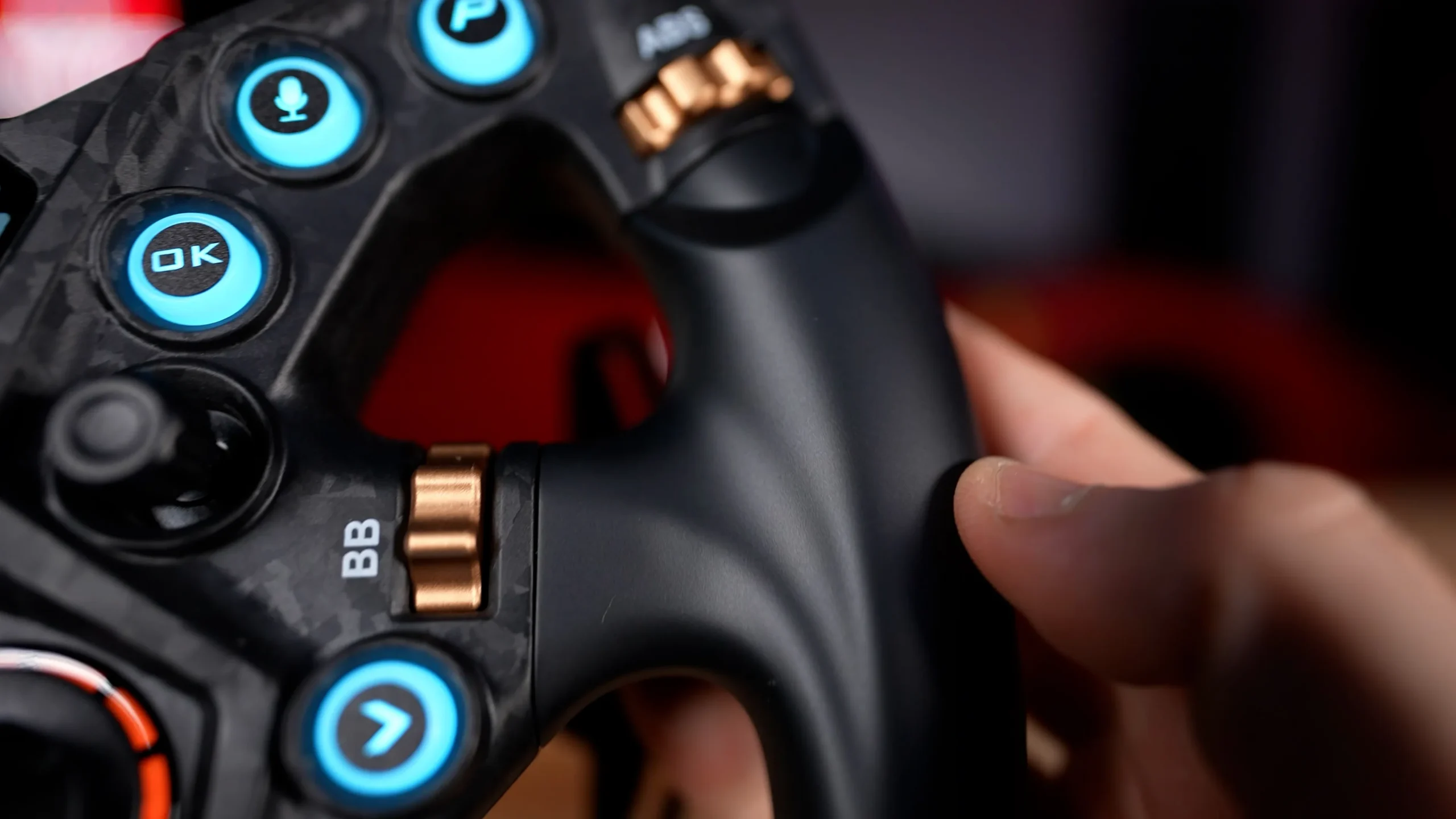
Control layout is where the two wheels start to differ. The KS Pro has ten front-facing push buttons, plus two additional rear buttons. The CS Pro has eight front-facing buttons. Both wheels include dual seven-way switches, which is a welcome move away from MOZA’s previous analogue-style hat switches that were effectively treated as digital inputs in software.
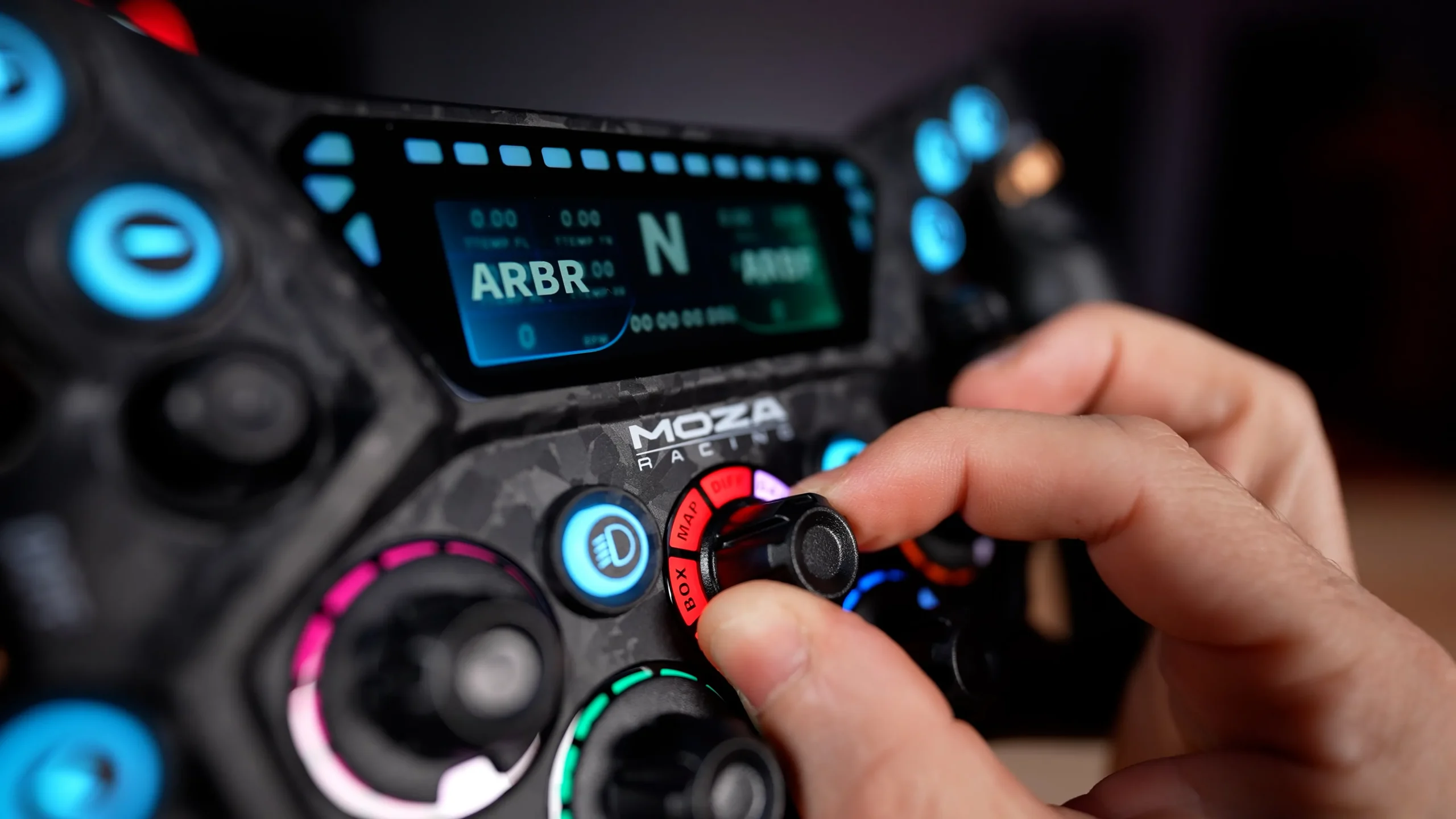
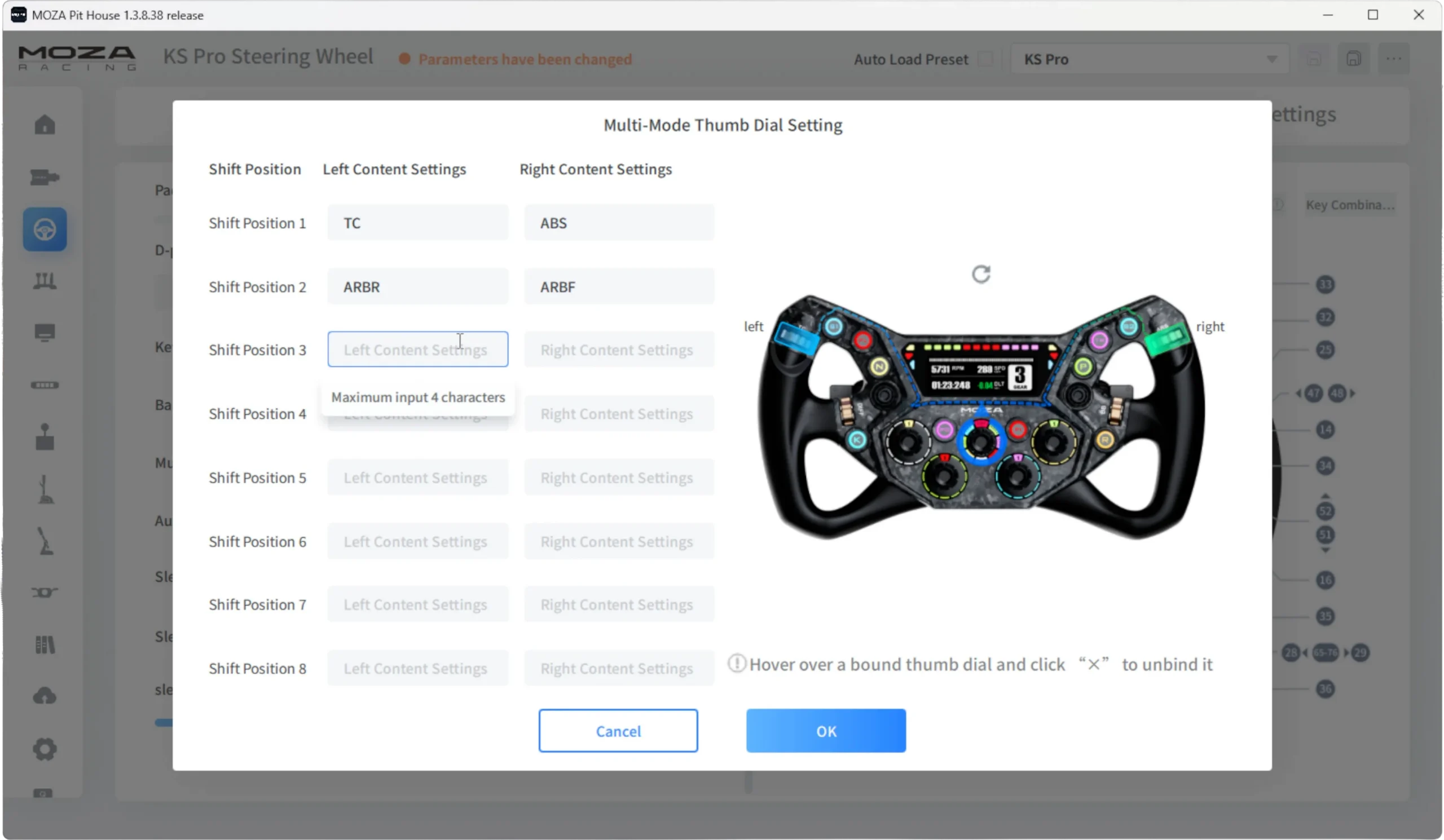
Both wheels also include rotary controls and thumb encoders. The thumb encoders are anodised aluminium, and the KS Pro adds extra functionality through its multi-mode thumb dial system. That allows the top thumb encoders to change function depending on the selected centre dial mode, so they can be mapped to different in-car adjustments such as traction control, ABS, anti-roll bars, brake balance, or engine map.
MOZA also includes a good selection of button stickers, and the sticker areas are slightly recessed, which should help keep them in place over time.
Both wheels use MOZA’s standard quick release, which remains one of the stronger parts of the ecosystem. For MOZA users, it keeps swapping wheels simple and consistent, while also making third-party rim use on MOZA bases relatively straightforward compared with more proprietary systems.
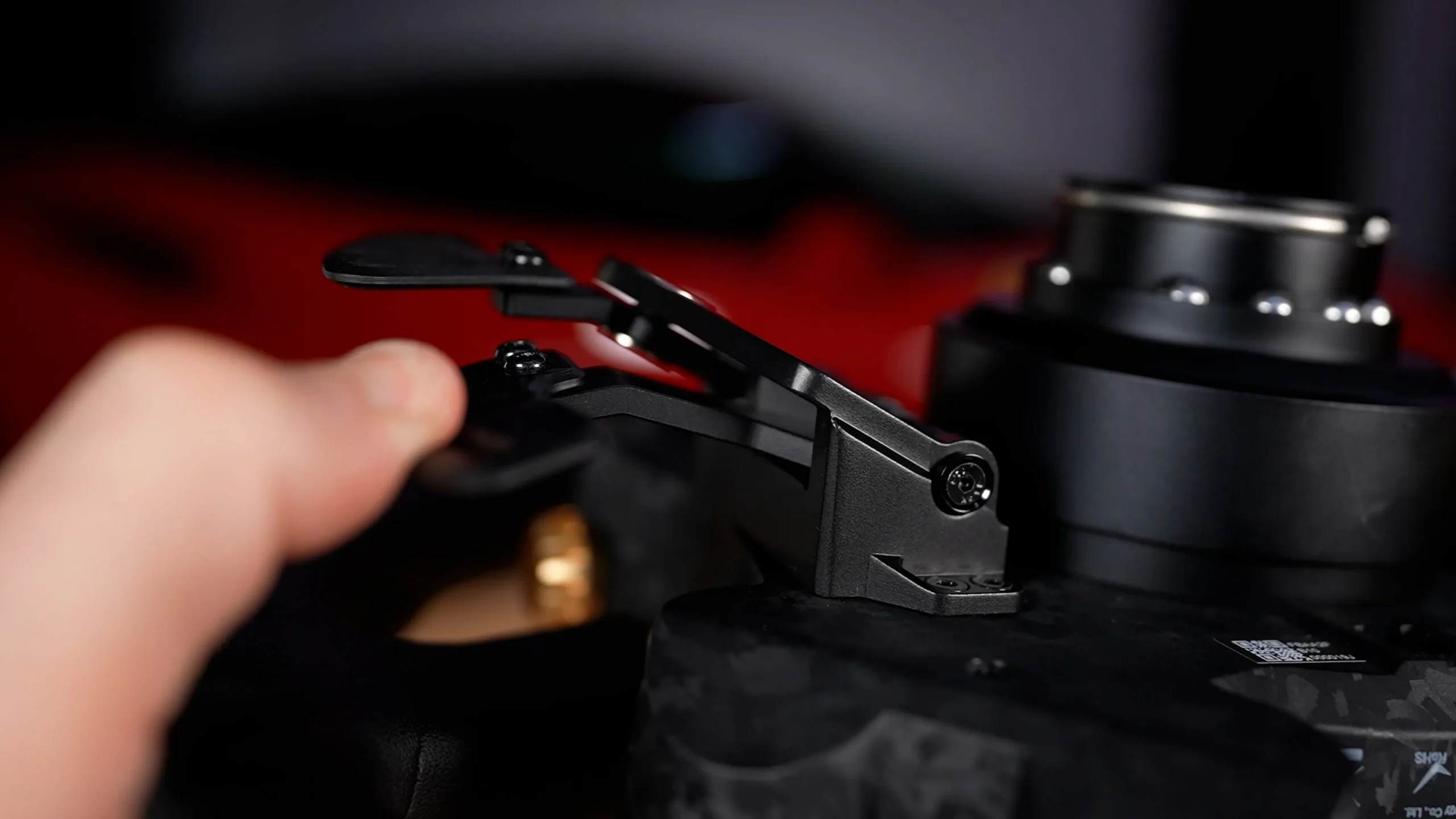
Shifter and paddle functionality is also consistent between the two wheels. Both include magnetic shifters and analogue paddles, with the analogue paddles able to operate in combined-axis dual clutch mode, split-axis mode, or button mode depending on how you want to configure them.
So in terms of outright features, the package is strong. You are getting a display, configurable lighting, plenty of inputs, dual clutch functionality, and MOZA ecosystem integration at a price point that still sits well below genuinely high-end wheels.
Build Quality
Build quality is generally very good for the price, but it is also clear where MOZA has made sensible compromises to hit this part of the market.
The carbon fibre reinforced composite material gives both wheels a more premium look and feel than basic plastic, while keeping costs below what would be possible with genuine carbon fibre construction throughout. It looks good, feels solid, and in the case of the KS Pro, delivers excellent rigidity.
The CS Pro’s rim flex is worth mentioning, but not overstating. If you twist the wheel deliberately, you can see and feel movement in the rim. That is not ideal if you are comparing it to expensive standalone rims from brands like Momo, but those rims alone can cost as much as this complete steering wheel. In normal driving, the flex is unlikely to be a meaningful issue.
The grip choices are also appropriate for the price. The KS Pro’s TPE rubber is firm and not especially luxurious, but it avoids the unpleasant sticky feel that can make some rubber grips age poorly. The CS Pro’s faux leather is perfectly serviceable, with the main caveat being that the stitching can feel a little abrasive when the wheel is moving quickly through your hands, but it is great that they have made sure there is no stitching where your thumb wraps around the wheel in a standard grip position.
Switchgear is mostly on par with what we would expect from MOZA at this level. The buttons are snappy, the seven-way switches are useful, the rotary controls feel positive, and the aluminium thumb encoders are a nice step up in tactile quality. They are not high-end motorsport-grade controls, but they do the job well for the price.
The magnetic shifters are one of the stronger parts of the build. They are crisp and quiet. The analogue paddles are also well built for the budget.
The screen scratching issue is the one build quality concern that is harder to brush aside. A display is a very visible part of the product, and if it marks easily from normal cleaning, that is something owners will need to be careful about from day one.
Overall, though, both wheels feel like they have been built to a price without feeling cheap. That is the key distinction. They do not feel like high-end wheels, but they also do not feel like compromised budget products.
DRIVING EXPERIENCE
On track, the main thing that stands out with the CS Pro and KS Pro is just how broadly usable they are as a pair.
The KS Pro is the natural choice for GT, formula, prototype, and similar cars. At 300mm, it is large enough to avoid feeling overly nervous, but still compact enough to preserve that direct, responsive feel people expect from a butterfly-style wheel. The control layout is easy to reach, and the extra thumb encoder functionality gives you a lot of flexibility for cars where you want quick access to multiple in-car adjustments.
The CS Pro is the more versatile wheel overall. At 325mm and fully round, it suits road cars, rally, drifting, and anything where you need to let the wheel move through your hands. That round shape is a smarter choice than a D-shaped rim if versatility is the goal, because it avoids the awkwardness that can come from trying to catch or slide a shaped wheel during drifting or rally driving. It does however raise the question of useful a screen on a wheel is for those driving styles.
Ergonomically, both wheels are well judged. The controls are easy to reach, the grip transitions are smooth, and there are no sharp edges or awkward misalignments that get in the way while driving. The rear buttons on the CS Pro are less useful than on the KS Pro because you need to roll your hands around to reach them, but that will depend heavily on the type of car and how you map the wheel.
The four thumb encoders are a real strength, particularly because many wheels at this price still only provide two. For GT and formula-style driving, having that many easily reachable rotary inputs makes a practical difference. The KS Pro’s ability to reassign functions based on the centre dial gives it even more flexibility, although the labelling around that system is not as clean as it could be with fixed labels which may not reflect your desired mapping.
The actual driving feel is also helped by the fact that neither wheel feels compromised in the areas that matter most. The KS Pro is rigid, the CS Pro’s rim flex is not something you are likely to notice in normal use, and the shifters and paddles feel snappy without being too loud.
There is one caution though, the screen material appears to scratch very easily. In testing, the screen on one wheel picked up noticeable marks from an extremely light wipe with a brand-new microfibre towel. That is a bit disappointing, many higher-end wheels use more scratch-resistant glass. If you buy one of these, be extremely careful when cleaning the display.
For GT3 and GT4-style driving on the KS Pro, the display can be genuinely useful. For road car, rally, or drifting with the CS Pro, it may be less important, particularly if your sim rig already has a physical dashboard or your in-game dash is visible.
So the screen is useful, but it should not be treated as automatically essential. Its value depends heavily on the way your rig is set up and the type of cars you drive.
SOFTWARE
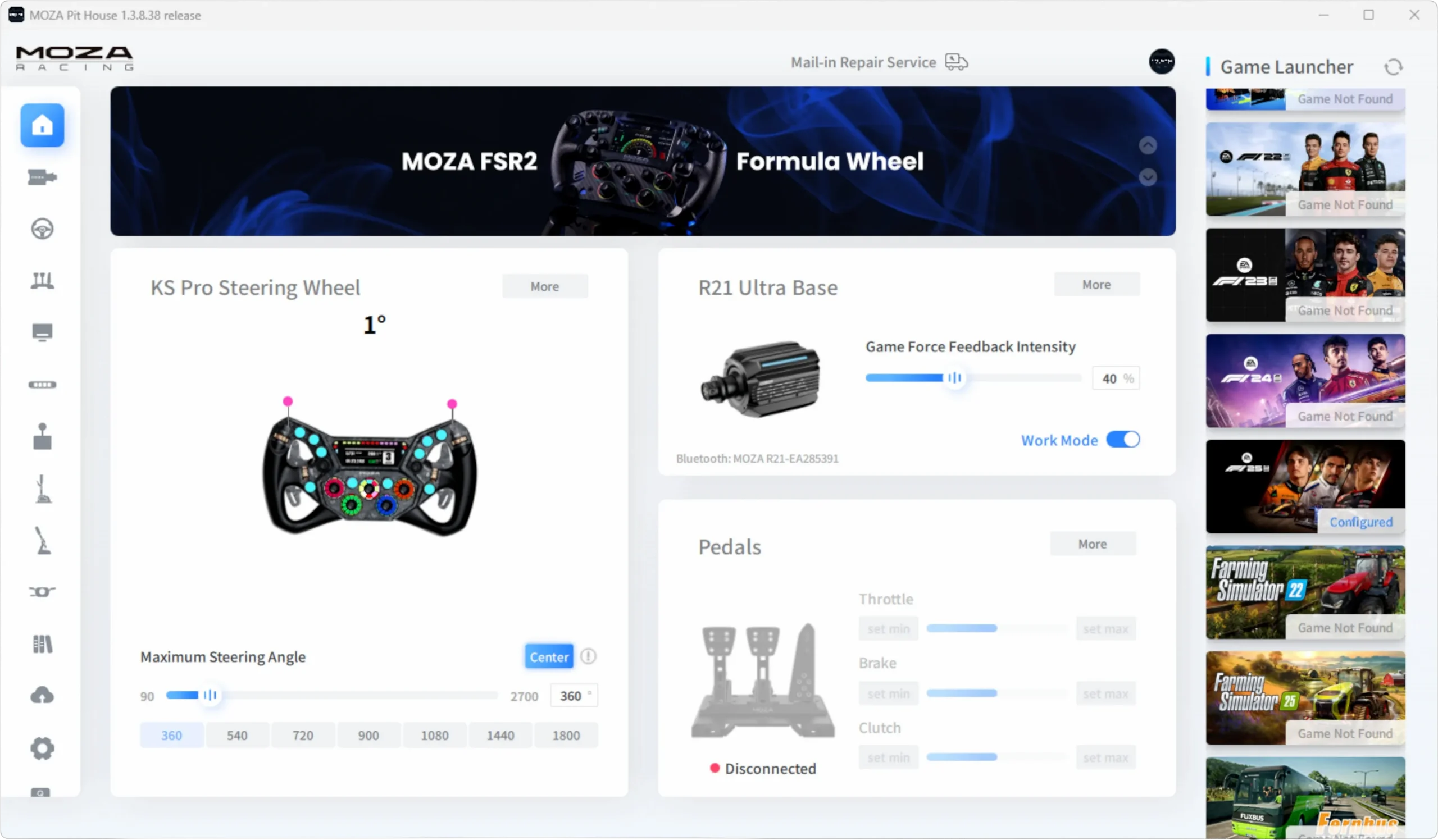
Software is handled through MOZA Pit House, which keeps the wheel base, steering wheel, pedals, and other MOZA peripherals managed in one place. For users already inside the ecosystem, that is convenient and generally works well.
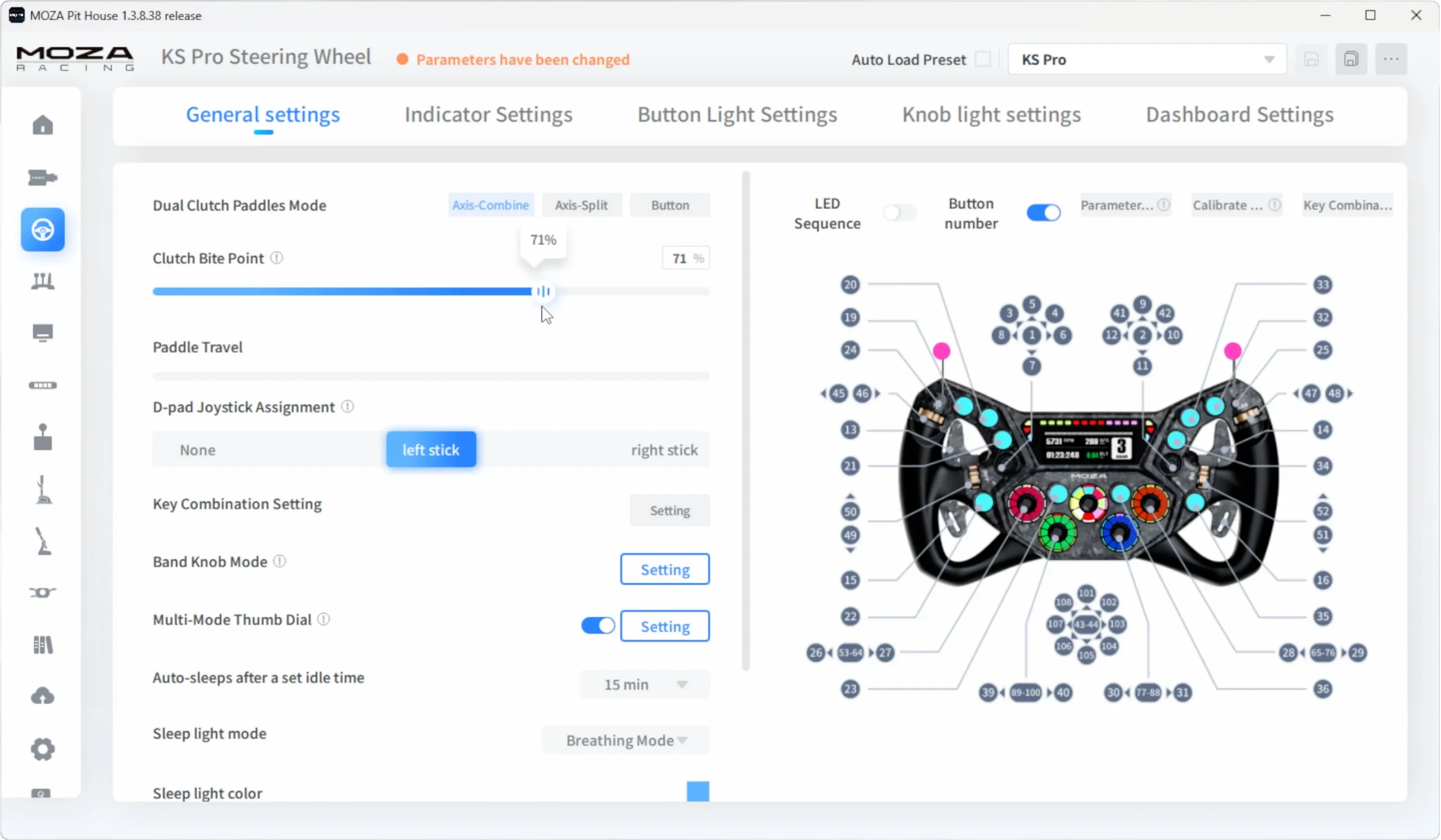
The main settings for these wheels cover clutch mode, lighting, button backlighting, knob lighting, and dashboard configuration. There is a lot of useful functionality here, but the interface is starting to feel busy as MOZA continues adding more features.
The dual clutch paddles can be configured in combined-axis mode, split-axis mode, or button mode. The one downside is that the clutch bite point does not appear to be adjustable directly from the wheel, so you need to use Pit House or the mobile app instead.
Lighting configuration is one of the stronger parts of the software. The RGB rev strips, flag LEDs, button lights, and knob lights can be mapped to telemetry-based effects such as RPM, traction control, ABS, wheel lock, pit limiter, fuel, and spotter alerts. You can also adjust priority order, colours, and behaviour, which makes the lighting genuinely useful rather than just decorative.
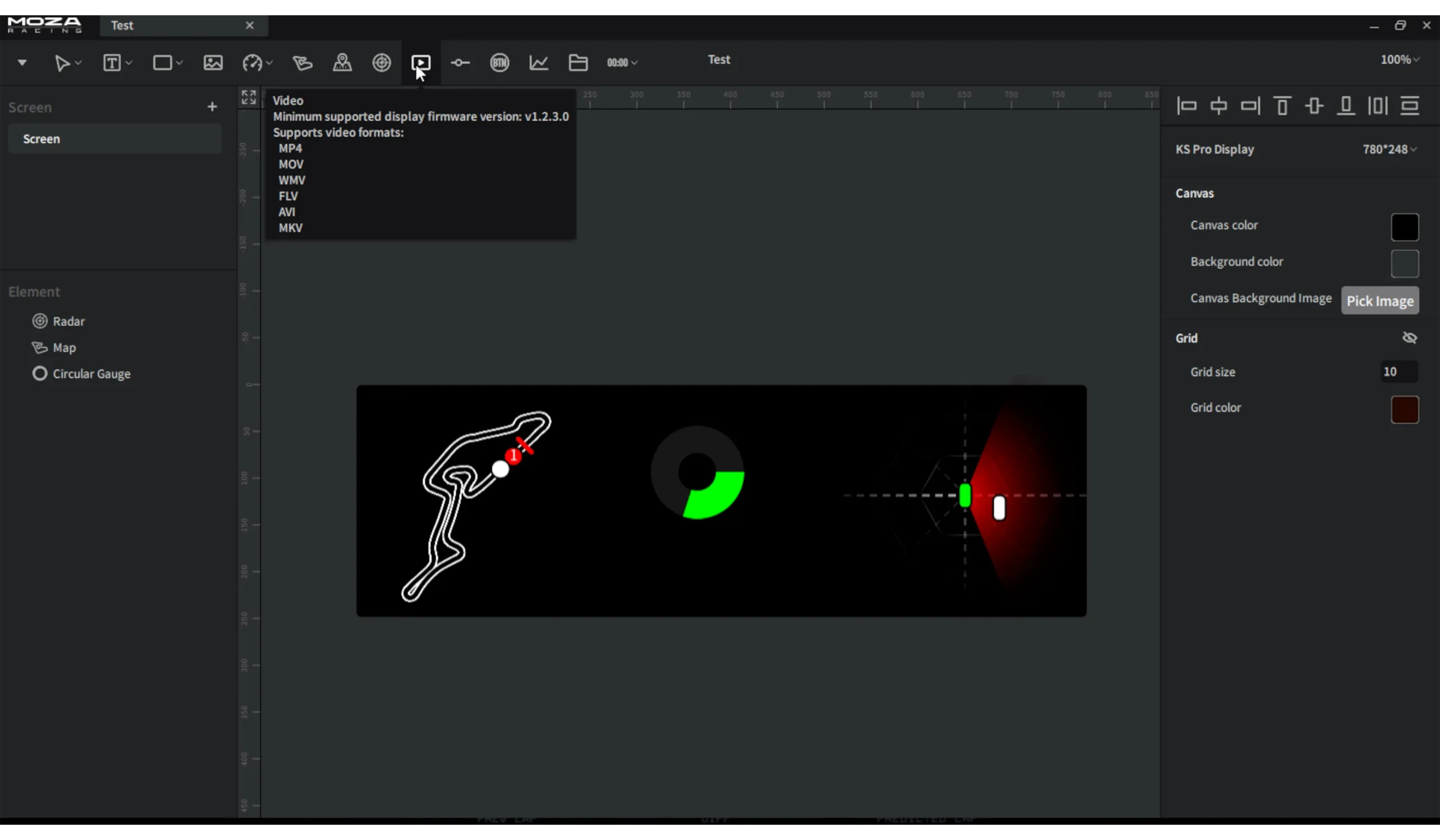
Dashboard customisation is also more capable than expected. There are pre-built dashboards, but you can also create custom layouts with gauges, dynamic text, track maps, radar, graphs, images, videos, and more. Dashboards can also be imported and exported, which should help if the community builds useful templates.
The main limitation is the lack of SimHub compatibility. MOZA’s own system is capable, but users who want maximum third-party dashboard control will see that as a downside.
Overall, Pit House gives these wheels a lot of depth. It could be cleaner, and the lack of SimHub support matters, but for most MOZA users the software side is strong enough to support the hardware well.
Conclusion
The MOZA CS Pro and KS Pro are not perfect, but they are very well judged for the price and for the part of the market they are targeting. The KS Pro is the more focused wheel, best suited to formula, GT, prototype, and modern race car use. It has a strong control layout, a useful 300mm diameter, good rigidity, plenty of input options, and a clever software-driven thumb encoder system. The centre dial labelling could have been handled better, but the underlying functionality is genuinely useful. The CS Pro is the more broadly versatile option. Its 325mm round rim makes it a better choice for road cars, rally, drifting, and anything where a full round wheel simply makes more sense. There is some rim flex if you go looking for it, but in normal driving it is unlikely to be a major issue. Both wheels benefit from MOZA’s solid quick release, good magnetic shifters, capable RGB lighting, analogue paddles, and a 2.99-inch full-colour display. The software is deeper than expected, especially around lighting and dashboard customisation, although the lack of SimHub compatibility will matter to some users. The main criticisms are fairly specific. The screens are easy to scratch while cleaning, the Pit House interface is getting a little cluttered, the clutch bite point adjustment could be more convenient, and the KS Pro’s printed dial labels do not line up neatly with the flexibility of the software. But none of that changes the broader verdict. For MOZA users wanting a pair of feature-rich mid-level wheels that cover all major driving styles, the CS Pro and KS Pro make a lot of sense. They are built to a price, but not in a way that undermines the driving experience. For the right buyer, that makes them very easy to recommend.Pros
- Strong value for MOZA ecosystem users
- Full-colour 2.99-inch display on both wheels
- KS Pro covers formula, GT, prototype, and race car use well
- CS Pro round 325mm rim is highly versatile for road, rally, and drift driving
- Good ergonomics and easy-to-reach controls
- Four thumb encoders are very useful in practice
- Clever multi-mode thumb encoder functionality on the KS Pro
- RGB shift lights, flag LEDs, button lighting, and knob lighting are highly configurable
- Useful telemetry-based lighting effects, including spotter functionality
- Good magnetic shifters with quiet operation
- MOZA quick release remains a strength of the ecosystem
- Software dashboard customisation is more capable than expected
Cons
- PC-only at the time of filming
- Best suited to MOZA ecosystem users; third-party use requires extra adapters
- Displays are not SimHub-compatible
- Screen material is easy to scratch
- Pit House interface is becoming cluttered in places
- Clutch bite point adjustment cannot be handled directly from the wheel
- KS Pro centre dial labels do not neatly match the flexible software mapping
- CS Pro rim has noticeable flex if deliberately twisted
- Some controls and materials feel built to a price rather than truly premium
By purchasing through links on this page you’ll be supporting Boosted Media at no additional cost to you! This option is available for a huge range of Sim Racing gear.


Related Articles

Bavarian SimTec Alpha, Delta and Omega PRO V2 – Detailed Review
After six months with most of BavarianSimTec’s range, we look at what separates the Alpha, Delta and Omega PRO V2 wheels, and if they live up to the hype and price.

SIMAGIC Zeus Formula, GT & Sport Detailed Review
A clever modular wheel ecosystem with strong hardware, useful dash-sharing, and broad driving style coverage… BUT it got weird. Simagic’s Zeus Series is one of
Fanatec Wheel Hub: A Useful Fix For A Self-Created Problem
What Is The Fanatec Wheel Hub? The Fanatec Wheel Hub is a QR2-based adapter for fitting third-party steering wheels to Fanatec wheel bases. It does
Fanatec ClubSport Formula V3 – Detailed Review
A smarter and more usable evolution of Fanatec’s long-running Formula wheel, even if it still is not the bigger leap many sim racers had been
MOZA Racing SRP2 Pedals – Detailed Review
A smart and versatile evolution of Moza’s entry-level load cell pedals, with meaningful improvements in the right areas Second-generation products are always interesting, because they
MOZA Racing Lamborghini Revuelto Sim Racing Wheel – DETAILED REVIEW
Officially licensed and instantly recognisable, the MOZA Racing Lamborghini Revuelto wheel brings genuine road car character to sim racing. MOZA has been releasing products at
NEWSLETTER
Stay up to date with new releases And major updates
Thanks. Please check your email to confirm your subscription.
Sim RACING
Discount Codes
Also Sells
Ascher Racing, Gomez Sim IndustriesAlso Sells
Ascher Racing, Base Performance Simulators, BDH Race Sim Hardware, ButtKicker, Cube Controls, D-BOX, Delta Sim-Tech, Gomez Sim Industries, Heusinkveld, ignitiON Controls, Max Papis Innovations, MME Motorsport, Moza, P1Sim, PlaySeat, Precision Sim Engineering, Qubic System, Simucube, Sparco, Thrustmaster, VNM Simulation, VPG SimAlso Sells
Alien Mods, Asetek, ButtKicker, CAMMUS, Conspit, Cube Controls, D-BOX, Heusinkveld, LeoXZ, Moza, Racebox, Simagic, Simnet, Unreal Racing, VNM SimulationAlso Sells
3DRAP, ANOTHER WAY, Ascher Racing, Asetek, BavarianSimTec, BDH Race Sim Hardware, ButtKicker, Conspit, Cooler Master, Cube Controls, D-BOX, Dayton Audio, Delta Sim-Tech, DOF Reality, Elgato, ESPORTSIM SRL, Fanatec, Gomez Sim Industries, Heusinkveld, HORI, KGL Creation Lab, LeoXZ, MME Motorsport, Moza, Next Level Racing, Nitro Concepts, NOVUS, O-ROUGE, P1Sim, Pimax, PlaySeat, Prosimu, PXN, Qubic System, Raslution, ResTech, Rexing, Sabelt Sim Racing, SG Racing, SIM FACTORY, Sim Racing Studio, Sim-Lab, Simagic, SIMFORGE, SIMGRADE, SimRep Engineering, SIMTRECS, Simucube, Simufy, SIMXPRO, SOELPEC, Sparco, Thrustmaster, VIRPIL, VNM Simulation, VPG Sim, VRSAlso Sells
BavarianSimTec, MME Motorsport, Qubic System, Sabelt Sim RacingAlso Sells
Ascher Racing, Asetek, BDH Race Sim Hardware, ButtKicker, Conspit, D-BOX, Dayton Audio, Fanatec, Heusinkveld, Moza, Nitro Concepts, Pimax, PlaySeat, Qubic System, Rexing, Sabelt Sim Racing, Sim-Lab, Simagic, Simucube, VNM Simulation, VPGAlso Sells
Cobra, PRO SIMRIG, Qubic System, Simagic, SparcoAlso Sells
Asetek, BJR, ButtKicker, Cube Controls, Fanatec, Moza, Next Level Racing, Thrustmaster, Turtle BeachAlso Sells
Asetek, Conspit, Cube ControlsAlso Sells
BavarianSimTec, Conspit, Cooler Master, Cube Controls, DOF Reality, Moza, Pimax, Qubic System, Racebox, ResTech, Sigma Integrale Motion Systems, SimucubeAlso Sells
Conspit, Cube Controls, D-BOX, Elgato, Moza, Pimax, PlaySeat, Sigma Integrale Motion Systems, Simagic, SimucubeMORE REVIEWS and Discounts


If these Sim Racing Reviews have helped you find the best racing simulator gear for your sim rig, please consider using the affiliate links on this website. By purchasing through these links, a small commission will come back to Boosted Media at no additional cost to you. This is how Boosted Media keeps providing content to the Sim Racing community.
About The Authors
-

Will Ford operates Boosted Media with his brother Tom and is the on-camera host and technical lead behind the channel’s sim racing hardware reviews.
With a background in electrical engineering, adult education, and automotives, he combines hands-on product evaluation with practical technical analysis and a passion for motorsport and sim racing to explain how sim racing hardware performs in the real world, and is one of the most experienced people on the planet when it comes to reviewing Sim Racing Hardware.
-
Tom Ford operates Boosted Media with his brother Will and produces all Boosted Media sim racing videos and written articles. A true motorsport fanatic with a professional background in engineering and media, he works closely with Will across testing and analysis, turning extensive product evaluations into clear, practical reviews and buying advice for sim racers.