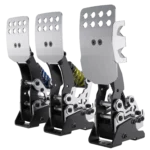
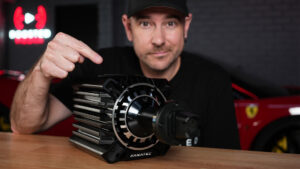
Compact, cleverly engineered load cell pedals with a huge range of adjustment, let down mainly by fiddly washers and basic software.
For about as long as we can remember, almost every pedal review we’ve published has prompted the same question: what about the Simgrade VX-PRO? This is the answer.
The VX-PRO is a three-pedal load cell set designed, manufactured and sold out of Finland. It’s aimed at sim racers who want relatively high-end pedals at a relatively affordable price, at least compared to a lot of the market.
Rather than a quick test, we’ve lived with these pedals for about 18 months, across a couple of different hardware iterations. We’ve used them on and off on our test rigs, mixing and matching them with other pedal sets, to see how they perform and how they hold up over time.
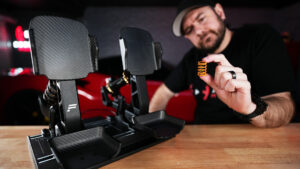
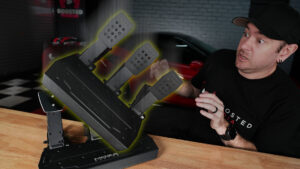
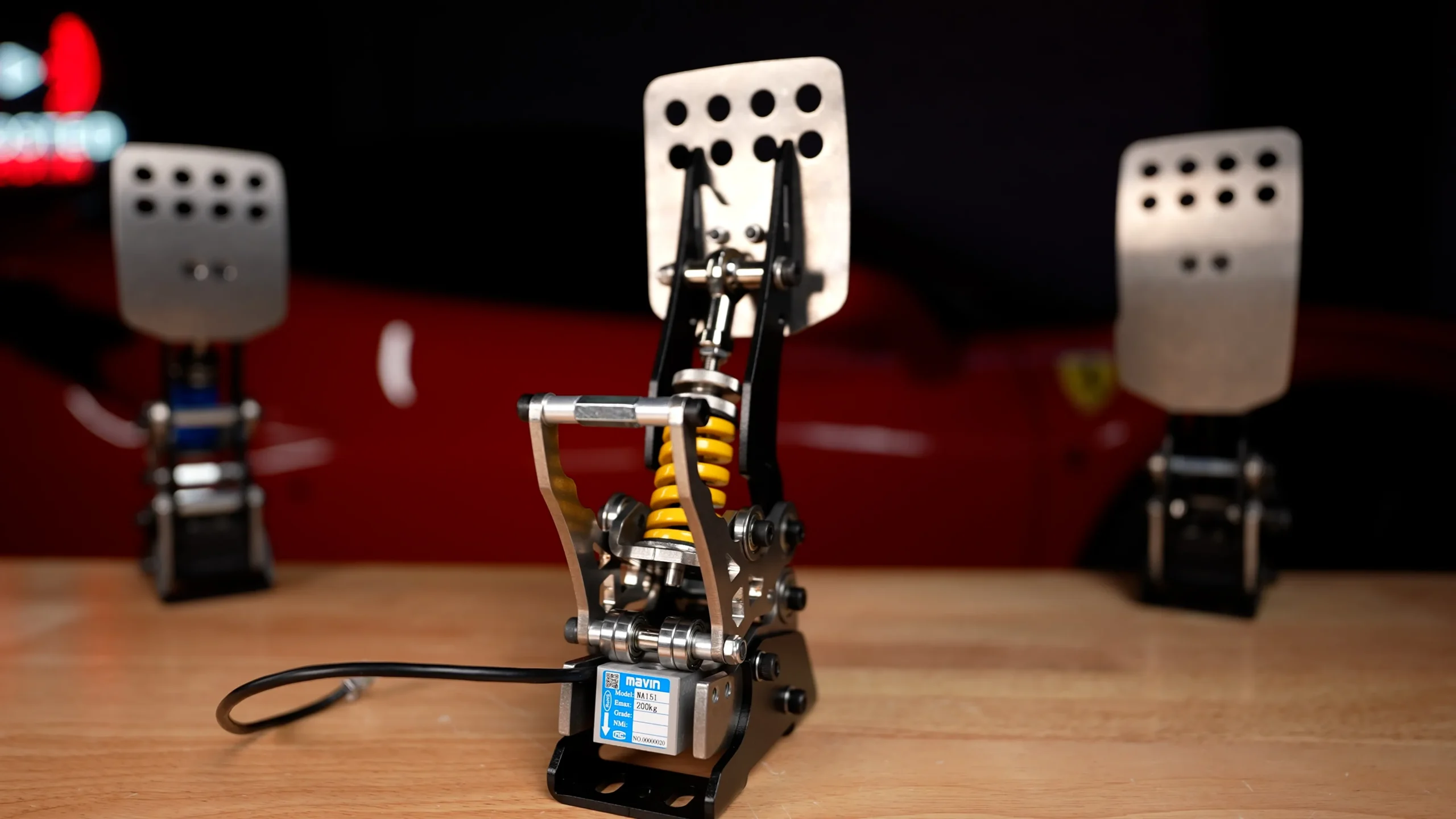
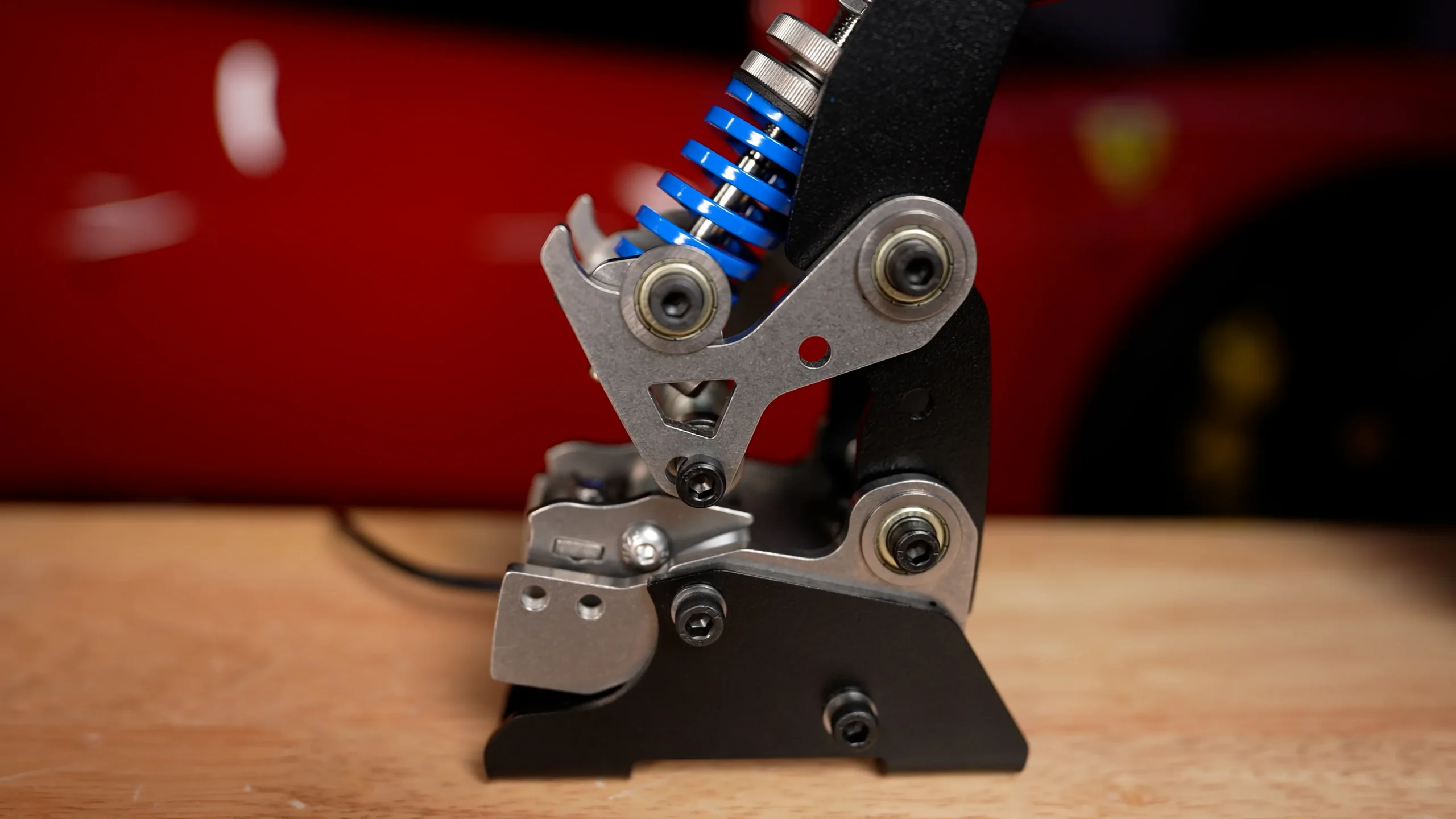
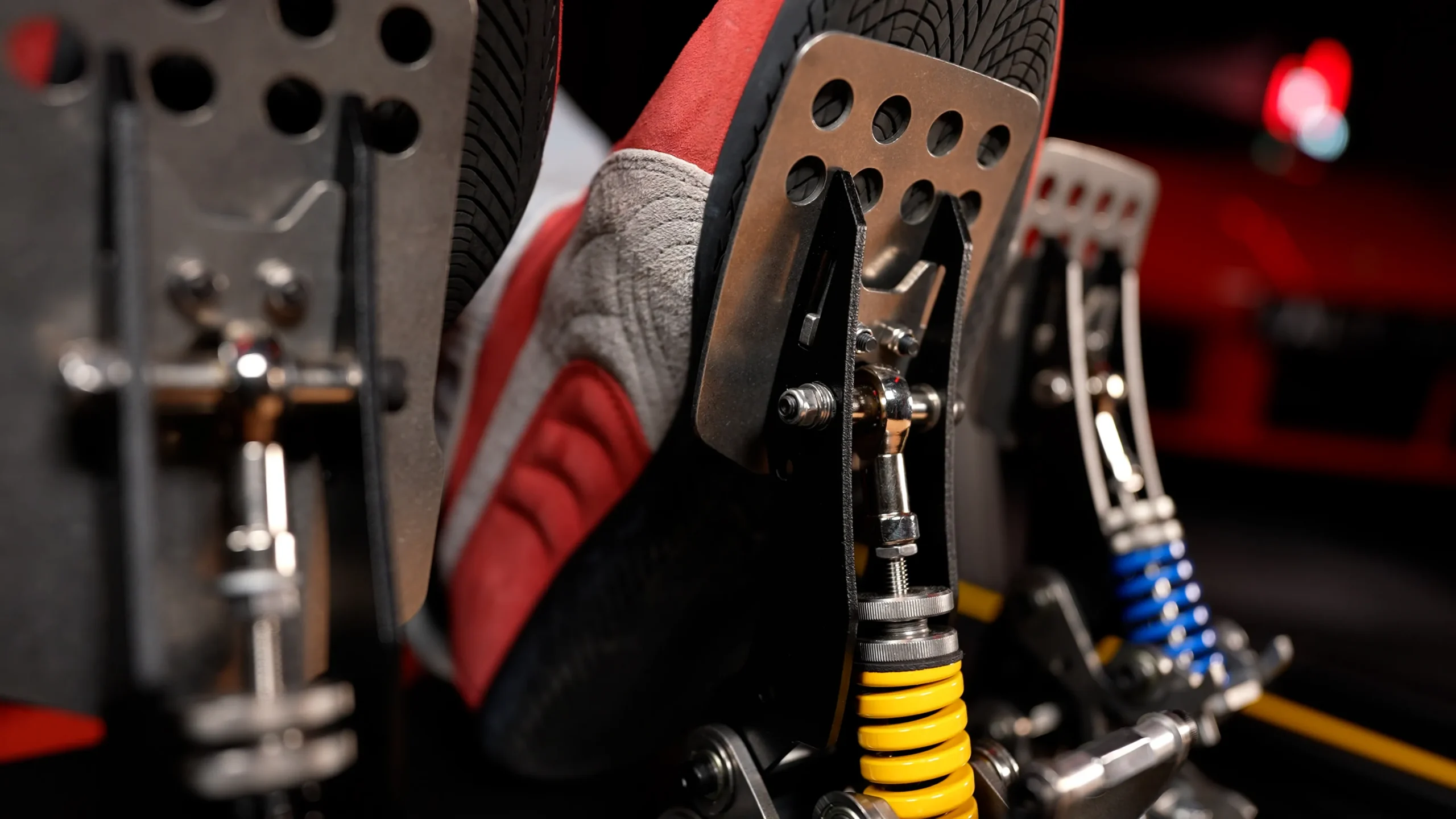
At a glance you might take them for another set of Heusinkveld copies. They’re not. All three pedals use load cells, the brake gets its huge adjustment range without a single elastomer, and the brake takes up about half the footprint of a VRS DirectForce Pro brake pedal.
Simgrade sent us the pedals for this review, and every product we compare them against was supplied under the exact same conditions. No third party, including Simgrade, has any input into our opinions.
SIMGRADE VX-PRO Pedal Ratings
If any of our reviews have helped you find the best sim racing gear for your needs, consider supporting Boosted Media by using the links and discount codes on this page. This option is available across a huge range of brands and gear.
Have our reviews helped you decide what the best sim racing gear is for you?
Please consider using the links on this page to make your purchase.
By doing so you’ll be supporting Boosted Media at no additional cost to you! This option is available for a huge range of Sim Racing gear.
VALUE:
At the time of filming, the VX-PRO was priced at €398.33 for the throttle and brake set, or €533.07 for the full three-pedal set with clutch. If you start with two pedals and add the clutch later, it costs €158.57 on its own. On top of that you’ll need to factor in shipping and taxes, which vary depending on where you live.
For pedals that look and feel this high-end, that’s competitive. Much of the saving comes from the compact design, which uses a lot less material than other pedal sets of this quality. The Heusinkveld Sprint is quite similar in overall performance and adjustability, at slightly higher price. The VNM three-pedal set was about €629 at the time of filming, and the VRS three-pedal set was €756 on discount, which is significantly more expensive. You’ll find the full price comparison in our Best Sim Racing Pedals guide.
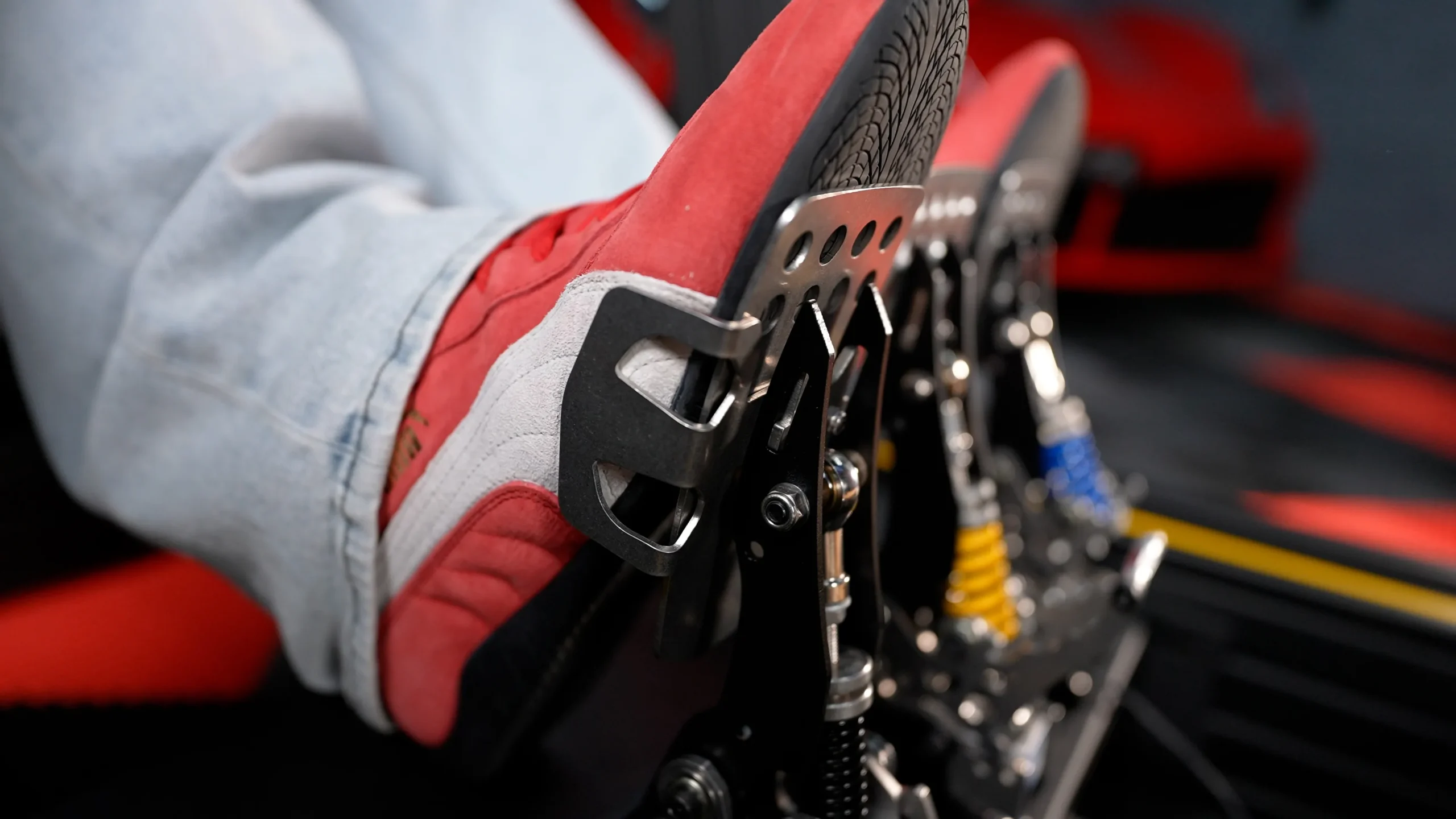
Simgrade also sells a range of accessories, though we’d be selective. We didn’t get along with the tilting heel rest (€62.95) at all, because it tilts as you press the throttle. Maybe it’s just my anatomy, but I personally couldn’t recommend it. The side support (€23.11) gives your foot a resting spot on the edge of a pedal, but it has quite a sharp edge that will wear through socks or boots, and can cause blisters, if you rest against it regularly. Unless you have a particular need for it, we probably wouldn’t recommend that either.
There’s also a pedal base plate (€78.88) with a matching heel support (€31.08), which makes for quite an expensive combo, and a heel stopper (€27.89). Fortunately, many sim rigs won’t need the base plate, because the pedals bolt directly to an existing pedal tray.
Finally, the Brake Kit V1 at €39.04 isn’t a performance upgrade as such. It adds two extra springs and replacement rails whose positions sit in between the standard ones, so it simply extends the adjustment range. We were happy with what came in the box, and we think most people will be too. Unless shipping it later would cost a fortune where you live, don’t assume you need it.
SIMGRADE VX-PRO Pedals — Throttle, Brake, Clutch
1 Reseller Offer
SIMGRADE VX-PRO Pedals — Throttle & Brake
1 Reseller Offer
SIMGRADE VX-PRO Clutch Pedal (Upgrade)
1 Reseller Offer
Build Quality:
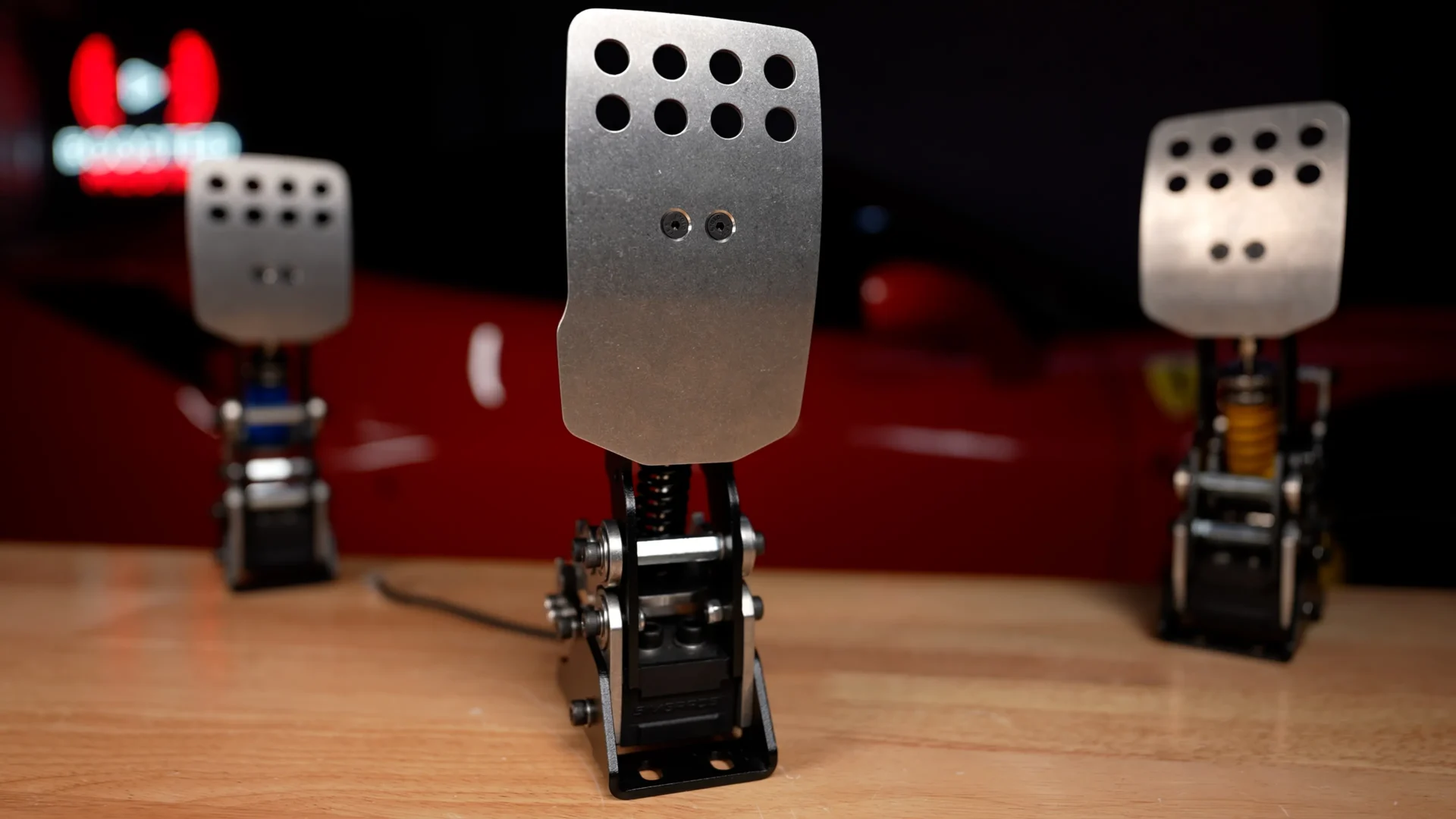
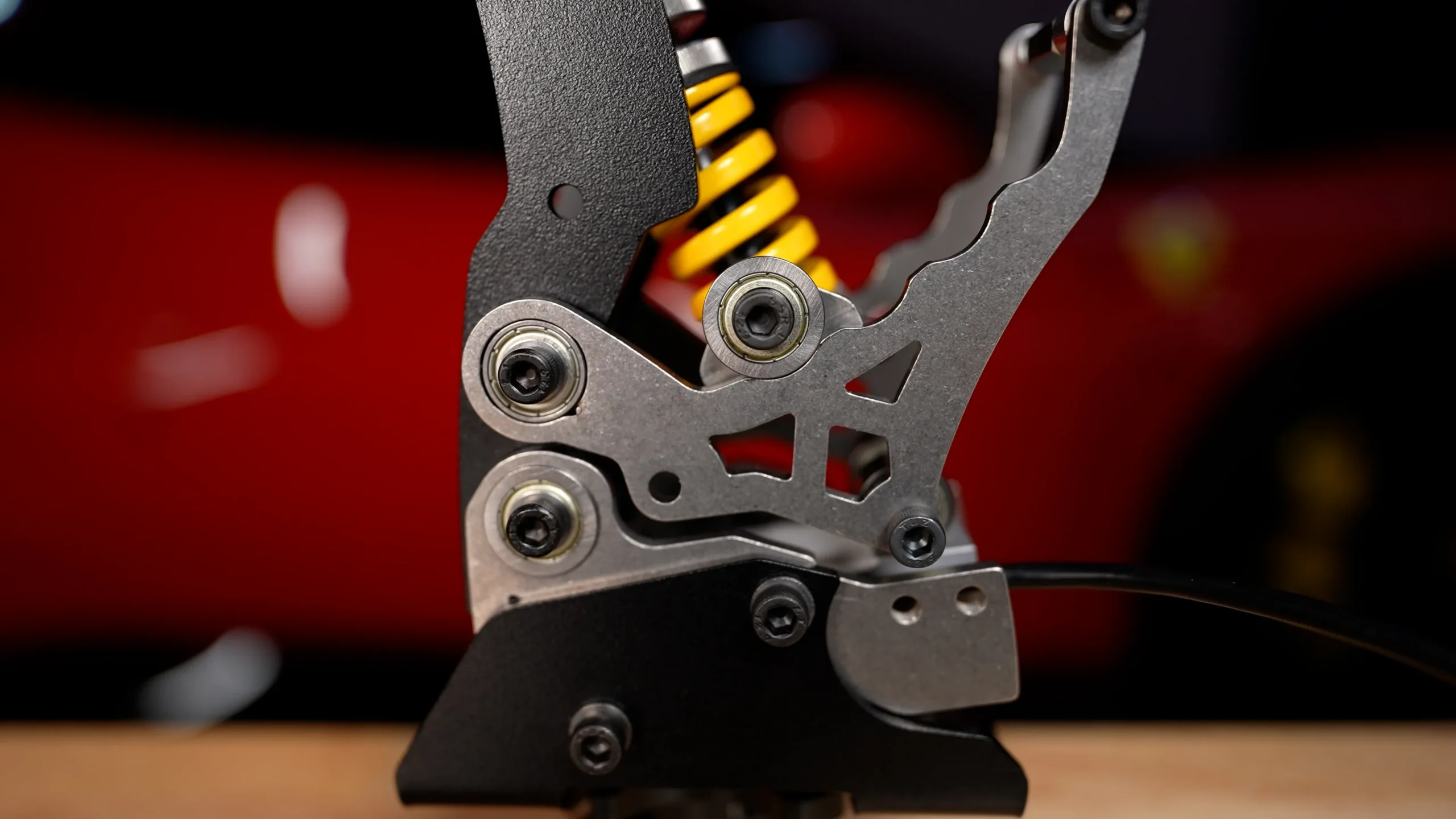
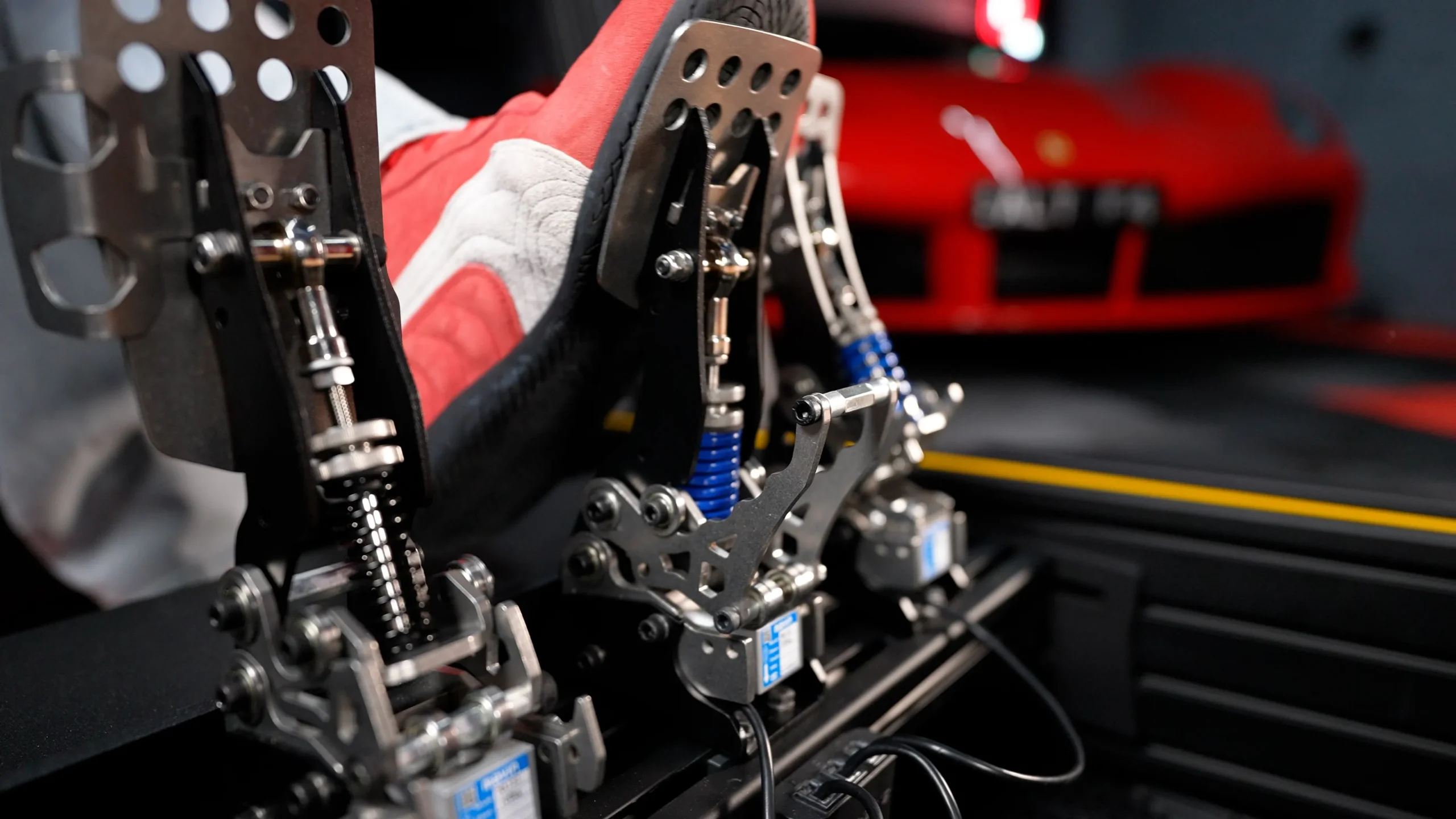
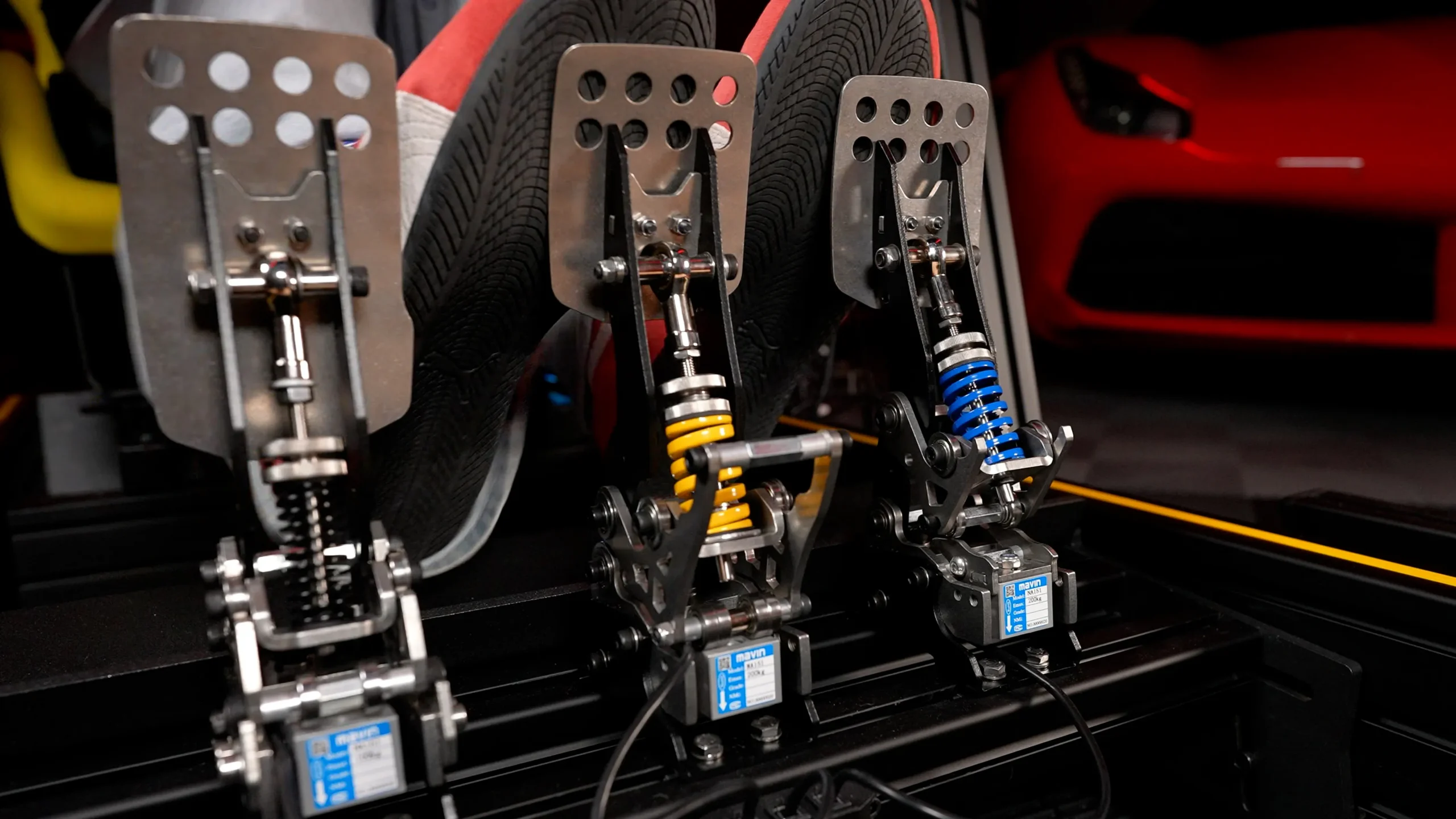
The quality of the componentry is absolutely top notch. Sealed metal ball bearings are used on pretty much every rolling part and pivot point, so these pedals need less maintenance than a lot of sets we’ve tested, with no greasing required. Even small details like the clevis joining the pedal upright to its shaft have no rattle or play at all, with a ball bearing inside.
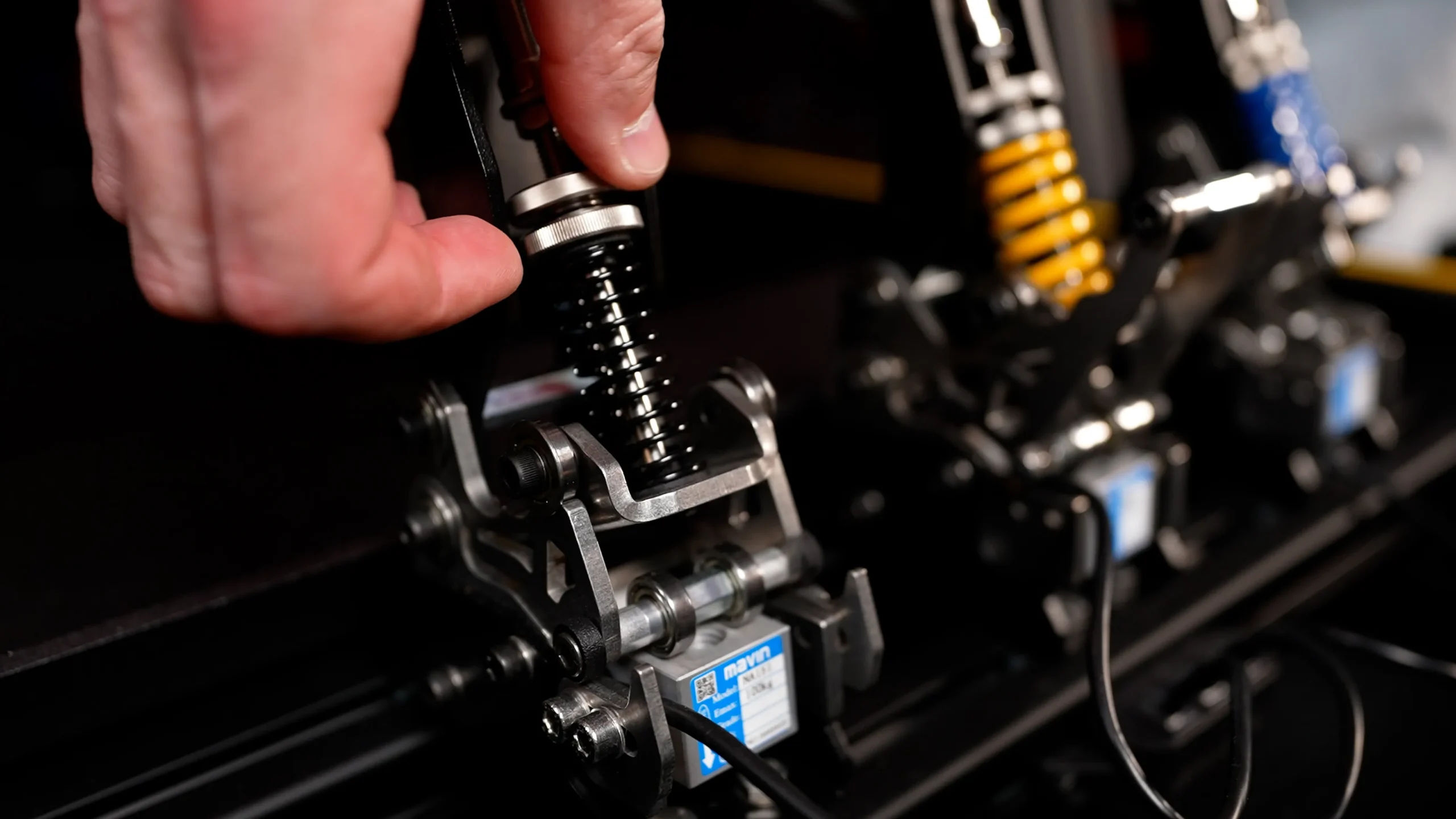
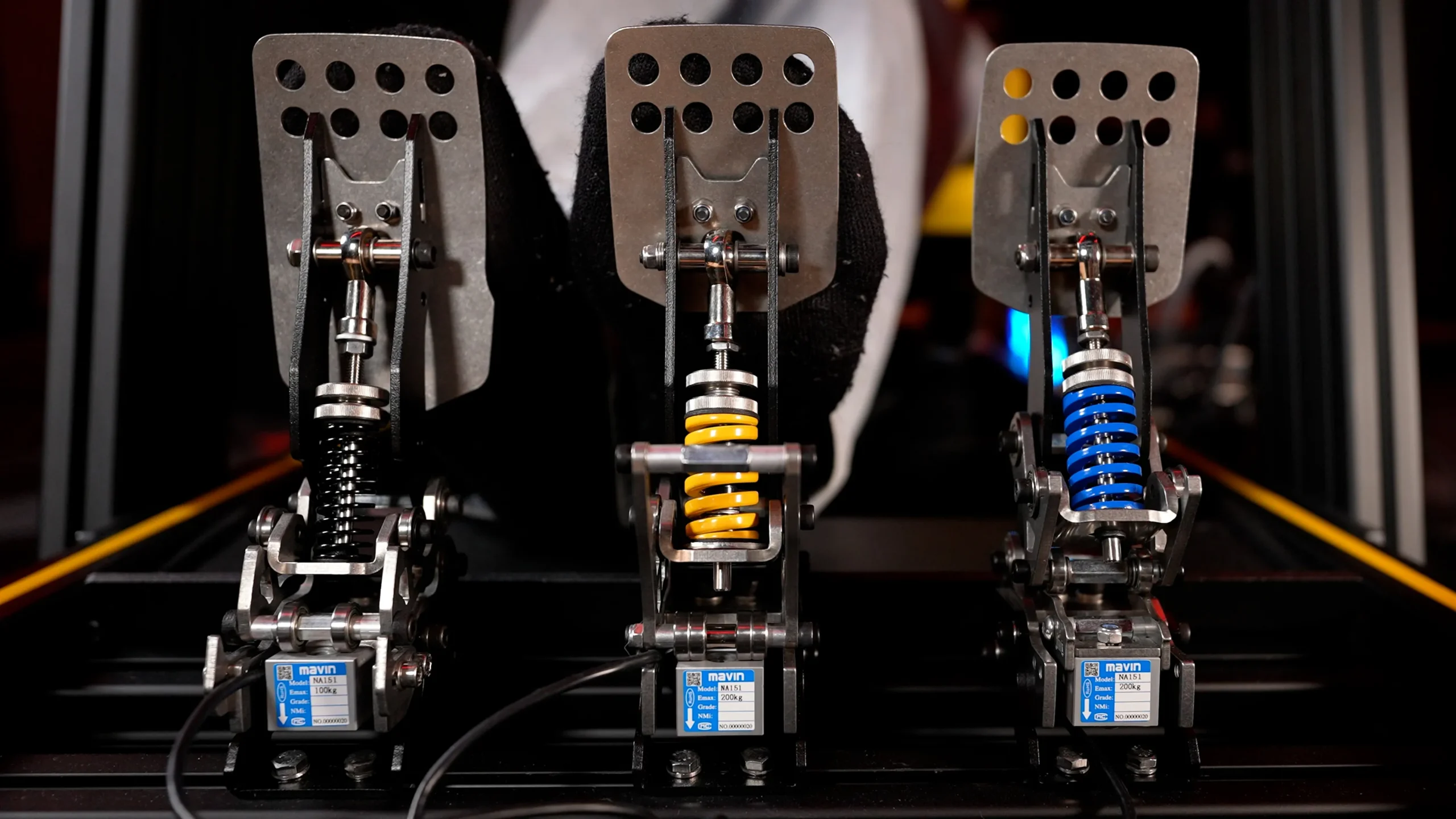
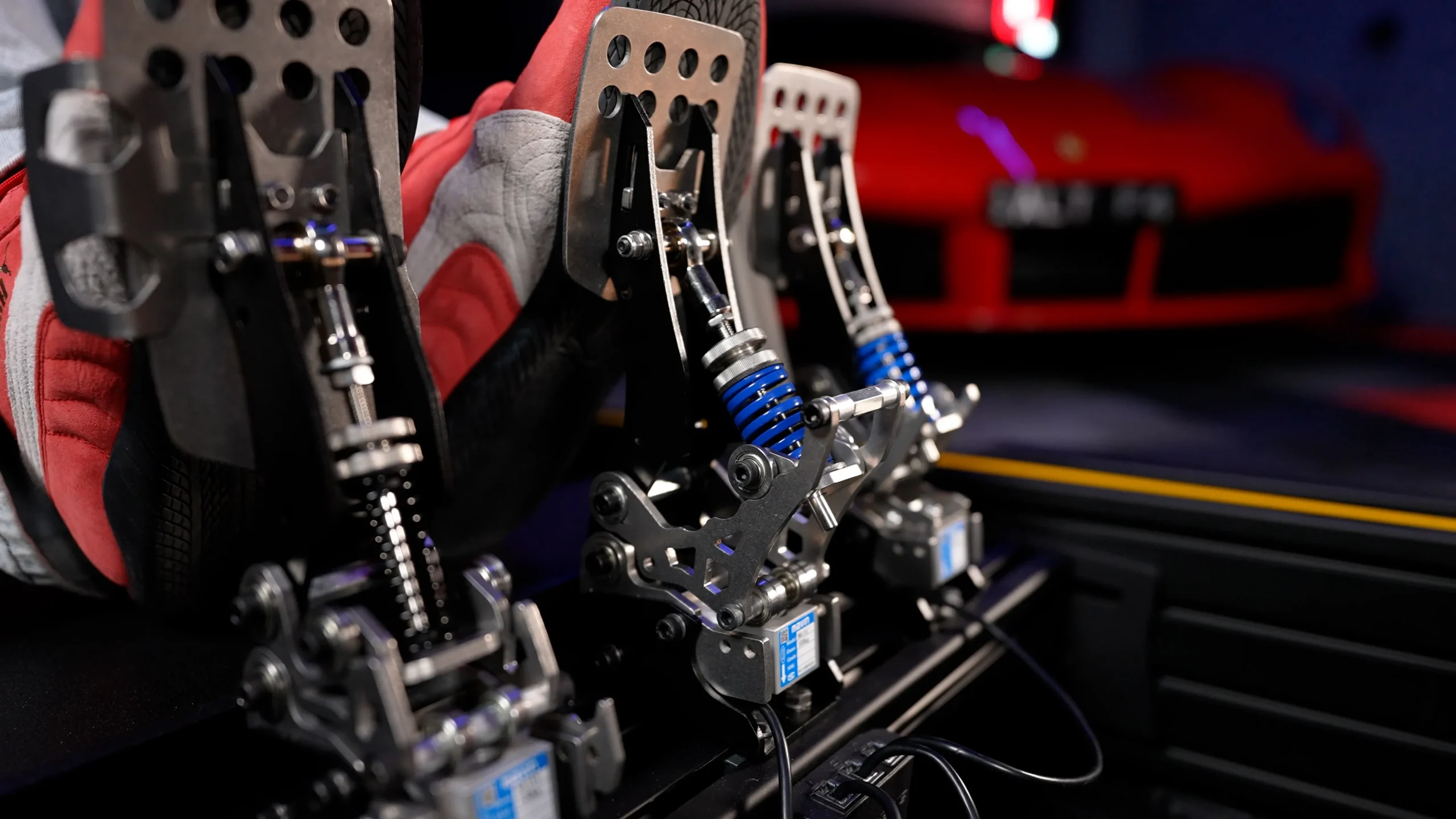
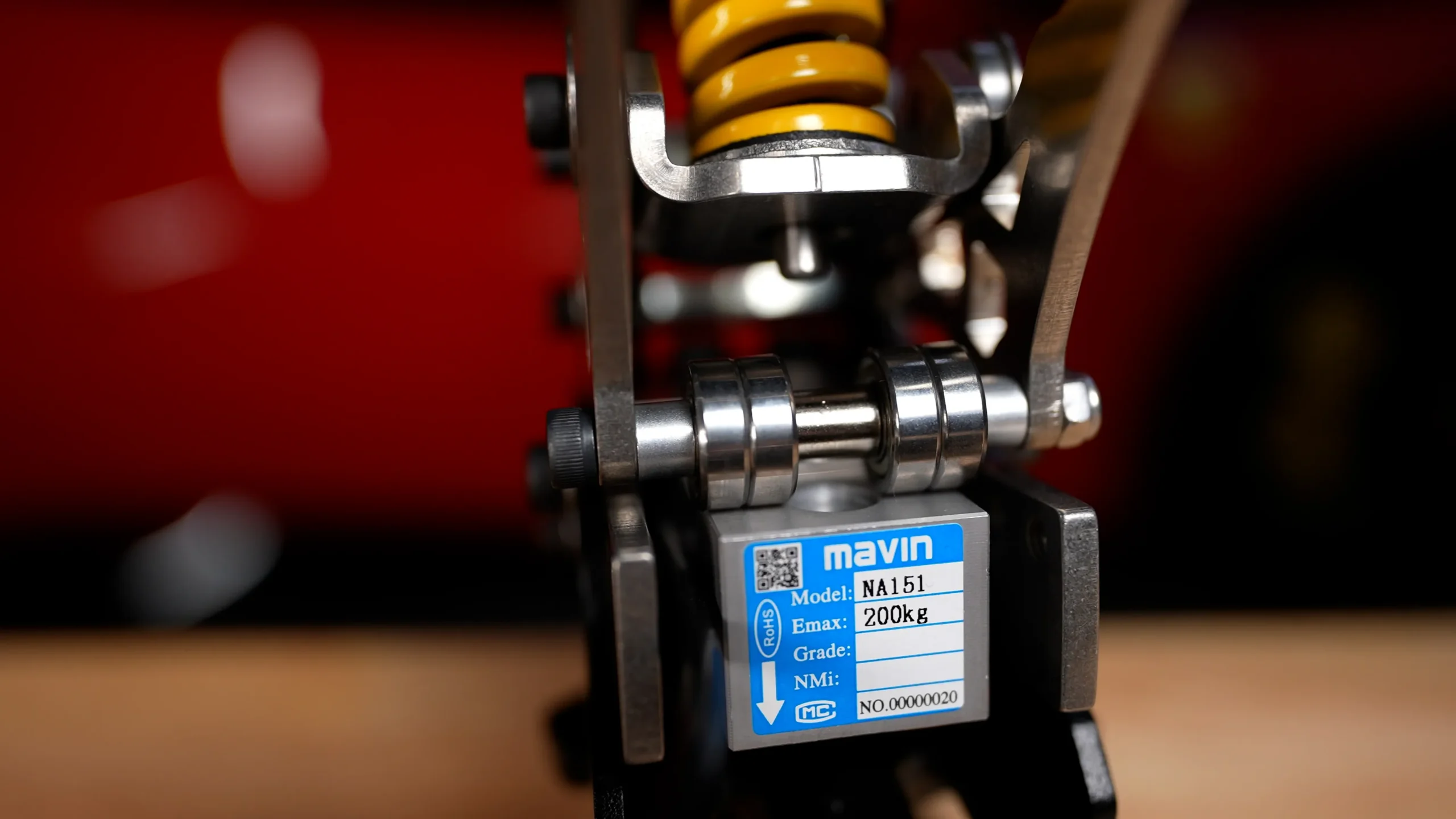
The most unusual part of the design is that all three pedals use load cells. Not many pedal sets use a load cell for the throttle and clutch. That isn’t inherently better than a potentiometer or Hall effect sensor, but potentiometers can take on dirt and wear over time, while a load cell is more of a solid-state device. On the throttle and clutch, two sealed ball bearings roll across the load cell as you press the pedal, so the same position always produces the same force. The result is a very stable signal that your sim sees exactly as it would from a position sensor. It’s a clever way to get the job done in such a compact package.
The brake and clutch use 200kg load cells and the throttle a 100kg unit. Simgrade rates the brake to 90kg at the pedal face, which is more than the Heusinkveld Sprint is rated for. Simgrade also offers a three-year warranty, compared with the one year that’s standard for most brands, which is reassuring for something that cops as much abuse as a set of pedals.
The compact design keeps material and cost down without necessarily reducing the overall quality. The VX-PRO brake takes up about half the footprint of a VRS DirectForce Pro brake pedal, and the set looks very clean installed. On the Sabelt cockpit we tested them on, they integrated really nicely.
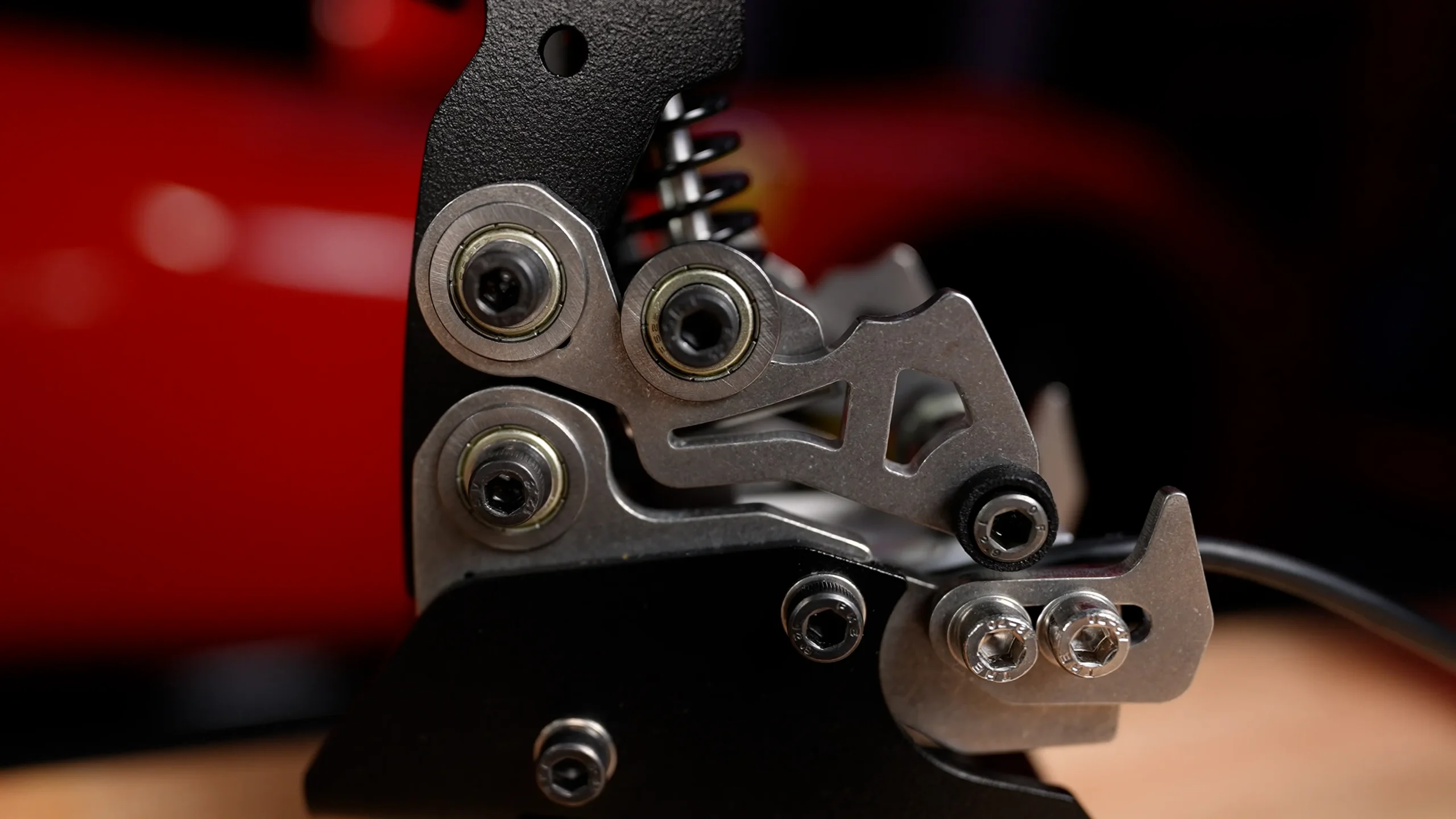
Despite the near all-metal construction, Simgrade has used plastic rollers where the throttle reaches the end of its travel, and the return forks stop against a 3D printed plastic housing. You get a firm stop with no metal-on-metal clatter, and in normal driving we never once had an issue with noise. These won’t be the loudest thing on your rig.
We deliberately tested them for an extended period to find any long-term problems, and none came up that we haven’t seen on other pedals of a similar design. The one recurring issue was the tool-less retainers working loose, mostly on the throttle and less so on the brake. It happened a couple of times over 18 months, and it caused a rattle rather than a noticeable change in feel. Cranking them down with pliers stops it, but then you need pliers every time you want to make an adjustment, because there’s no easy way to get enough finger torque on them.
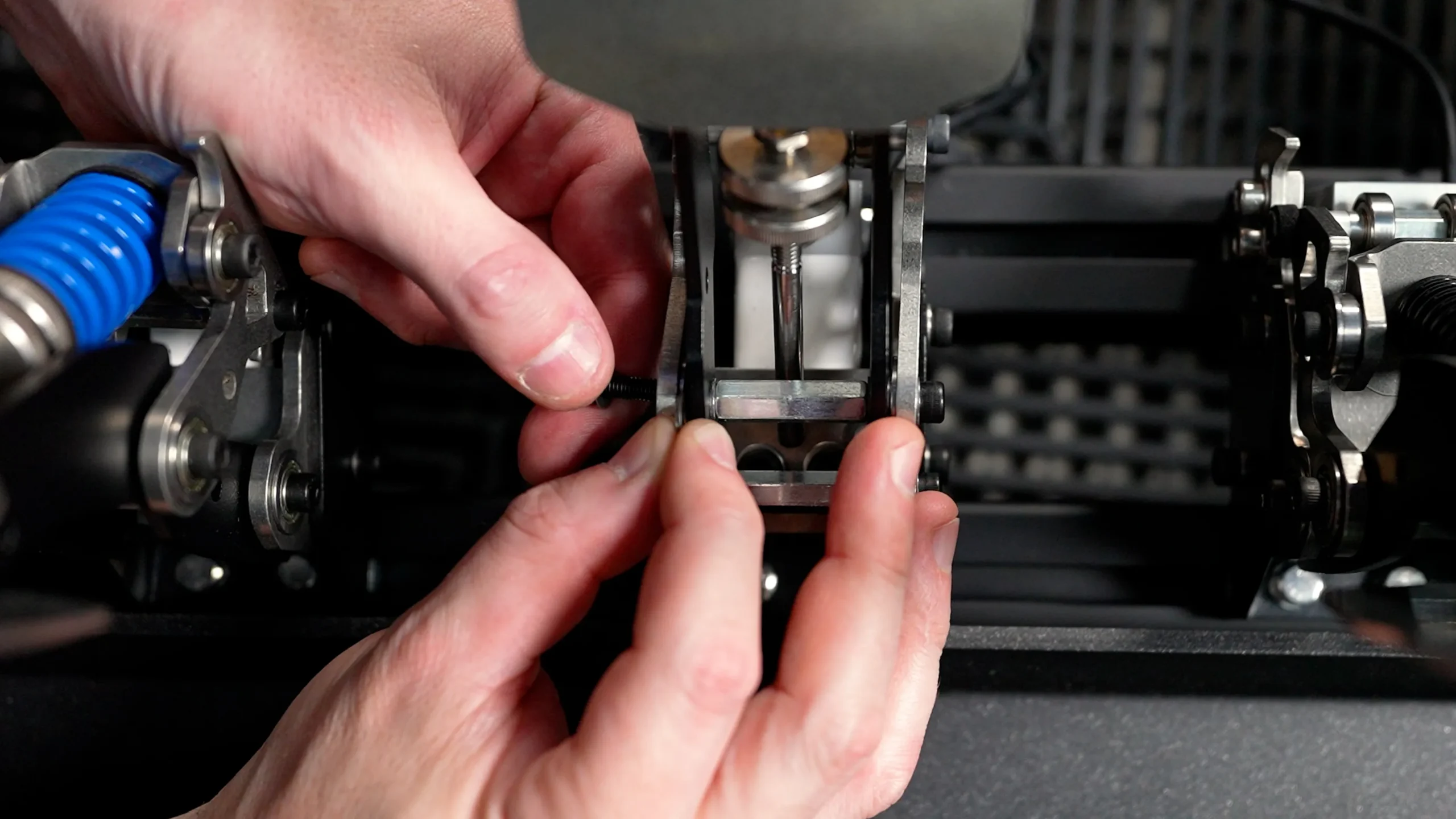
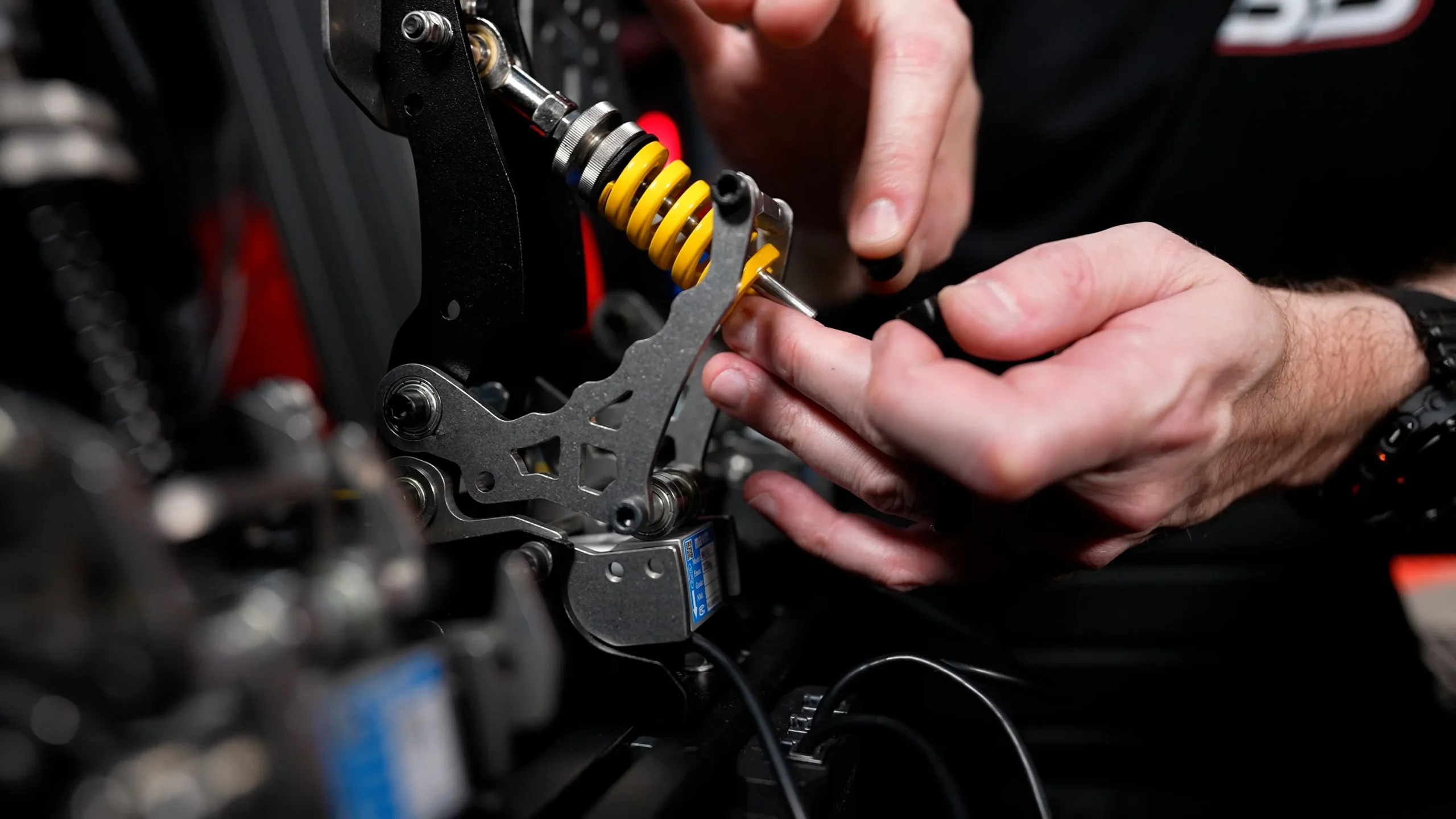
Our bigger gripe is the number of washers used as shims at the adjustment points. When you change springs or fit the brake kit, washers explode everywhere, and there’s no easy way to tell where they came from. We only got everything back together because we had a second pedal to use as a reference. Without it, we’d have been emailing support.
Adjustability:
There’s a huge amount of adjustment on these pedals, and most of it is shared across all three. Physical positioning is covered first. Loosen two nuts and bolts and the pedal plate slides up or down by 14mm. Loosen two more and each pedal reclines by 8.5 degrees. Other pedal sets offer more angle adjustment than this, but most rigs have an adjustable pedal plate anyway, so we don’t see it as a deal breaker. Just check it against your own setup.
All three pedals have preload adjustment, which sets the tension on the spring at rest. Keep enough on to hold the spring captive, otherwise the assembly flops around. The adjusters are a little awkward to reach, but the effect on feel isn’t profound. Preload changes how much force it takes to get the pedal moving rather than its stiffness through the stroke, so it’s mostly set-and-forget.
Stiffness is where the design gets clever. Each pedal has rails with a series of divots that capture the spring’s bearings, and the higher you move the spring, the stiffer the pedal becomes. It’s completely tool-less once you back off the preload, though it’s a little awkward with the stiffer springs, and we never had the spring jump into another position unintentionally. At the top position it’s almost like pushing against a brick wall. At the bottom, with the super-soft blue spring, it becomes extremely vague. It’s one of the more innovative designs we’ve seen on load cell pedals over the years. A stiffer replacement throttle spring is also available, and because the springs are standard ISO 10243 die springs, you can fit any matching spring, softer or stronger.
The brake adds a two-stage system aimed at threshold braking. For sim racing, a consistent threshold point you can hit every time, then modulate around, is the most important characteristic of a brake pedal. In most sims other than ACC, we’d set it mechanically at about 80% braking force. Inside the brake’s spring stack, a set of plastic spacers bottoms out before the spring is fully compressed. Past that point, you’re pushing directly against the load cell with very little movement, which lets you modulate the brake very accurately. You can tune where it happens by adding washers or removing spacers, and the effect is far more pronounced with a soft spring.
Between the preload, the spring position, the second stage and the spring options, the brake can go from a very sloppy street car pedal to the brick wall you’d find in a lot of formula cars. Importantly, it does that without elastomers. Not every elastomer brake fails, but we’ve seen a lot of failures over long periods, and elastomers soften as they warm up. Springs weaken over time too, but in our opinion they provide a more reliable and stable braking platform than elastomers ever will. That sets the VX-PRO apart from most pedal sets we’ve tested. The only other one that comes close in that regard is the VRS pedal set.
The clutch has a rollover characteristic built into the curve of its profile. It starts stiff, softens at the bite point, then stiffens again, much like many real cars. Alternative plates with a flatter profile are included in the box, so you can have a more or less pronounced rollover. Moving a bolt between two holes sets maximum or reduced throw, and a second set of holes changes it again.
The throttle’s throw is adjusted with shims that slide in after loosening two bolts. The two sides aren’t connected and have no notches, so it’s easy to set them slightly offset. If you do, the pedal tends to twist at full travel, which isn’t good for the bearings. Fixed holes would offer less scope, but they’d make that mistake much less likely. On all three pedals, you can also remove a plastic cover for a little extra travel. We didn’t need it, as the default settings were pretty much bang on for our preferences.
The catch is the washers mentioned earlier. Day-to-day adjustments are relatively tool-less, but anything involving the shims is clumsy, and fitting the brake kit was quite challenging. If you’re constantly changing settings between cars, these probably aren’t the pedals for you. Other sets offer a similar amount of adjustability, though not more, and make it a lot more straightforward.
SOFTWARE:
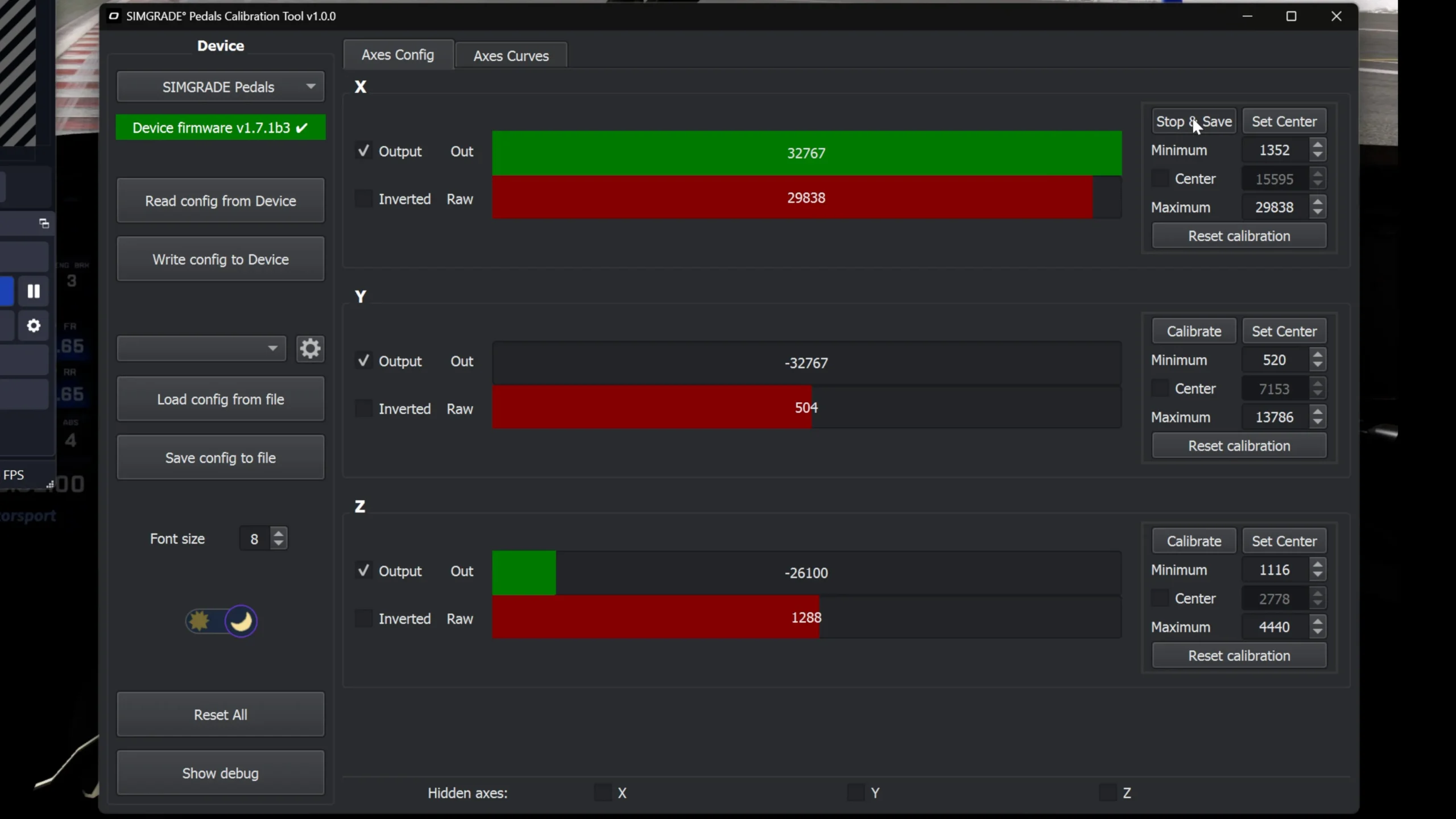
The Simgrade pedal calibration tool gets the job done, but it’s pretty basic. It reminded us of the old DIView software that Heusinkveld pedals used back in the day. The industry has moved on since then, and most software packages are far more automated, so expect a little more engineering than you might be used to.
The good news is that it’s largely set-and-forget. Because the load cells are extremely sensitive to physical changes, you’ll need to recalibrate after any hardware adjustment. Once you’ve done that and written the configuration to the pedals with Write Config to Device, you shouldn’t need to open it again unless you want to change your curves.
The layout is simple. You can select Simgrade devices, check the firmware version, read and write the configuration, and save or load config files to share setups with friends or a Discord community. There’s also a font size option, a day and night mode, Reset All and a debug view, plus one empty dropdown we couldn’t work out. Each pedal is its own axis, and you can switch outputs off. That’s useful on a two-pedal set, because an unused clutch axis can send a noisy signal that makes it hard to calibrate other controls in your sim.
Calibration shows both the raw load cell value and the output the sim sees. You can run an automatic calibration or enter minimum and maximum values by hand. Doing it manually lets you add dead zones, which we’d recommend, because the pedals are so sensitive that simply resting your foot on them registers an input. On the brake, set the minimum just above your resting foot and the maximum at the hardest you ever want to push for 100% braking. There’s no hard stop on the brake, so it doesn’t need a maximum dead zone.
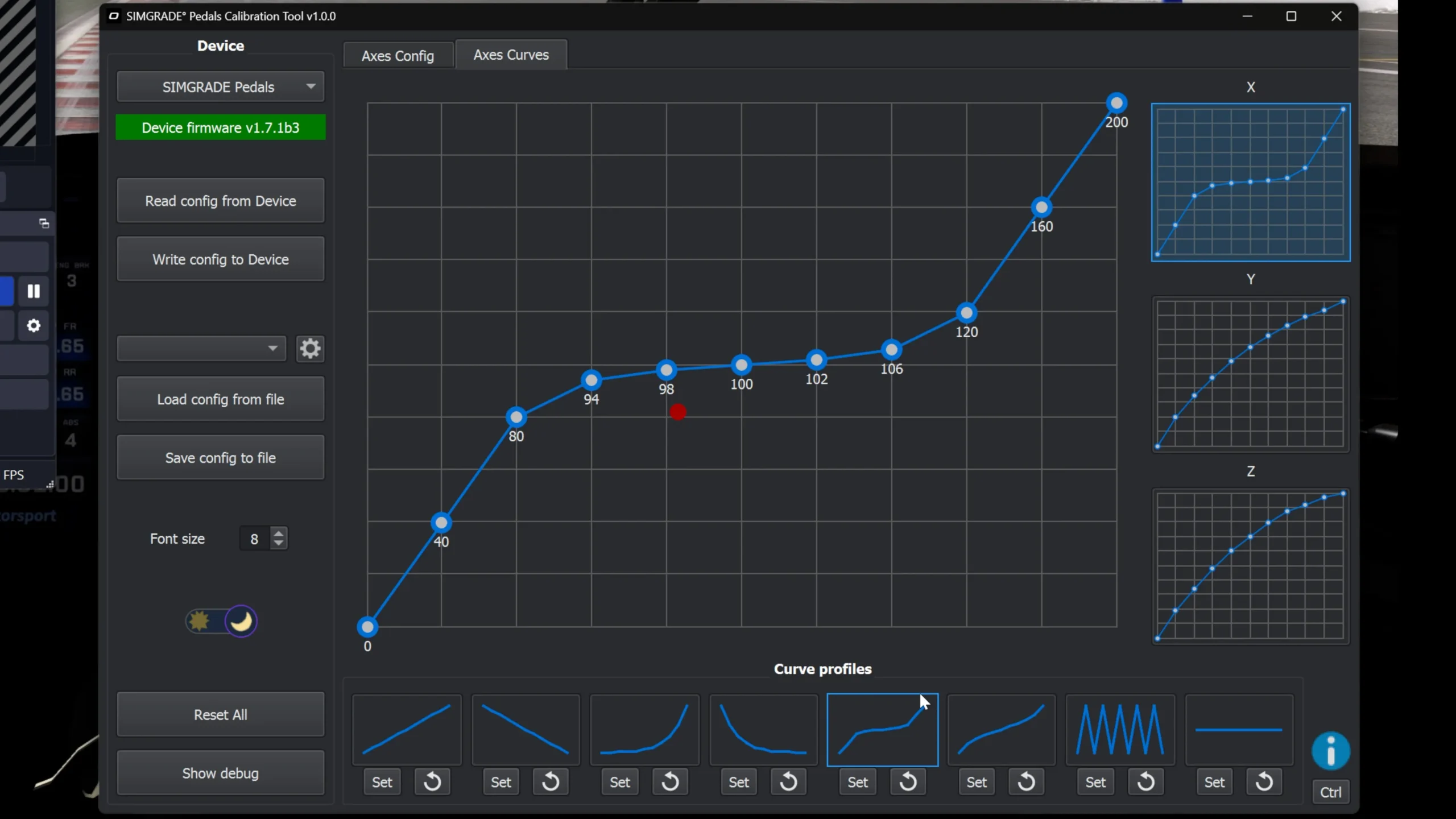
Custom response curves are available for each pedal, which has become pretty much the industry standard. On the clutch, an S-shaped curve lets you match the in-game bite point to the pedal’s mechanical rollover. On the throttle, a softer curve helps tame high-power rear-wheel-drive cars without traction control, like the Porsche Cup car we tested with, while a more aggressive curve suits low-powered cars like an MX-5 or GT86. We don’t like running curves on the brake, preferring to adapt to its mechanical feel.
The presets are strange, though. Several are shapes we would never use for anything, while common shapes are missing entirely. We’re not sure what Simgrade was thinking there, particularly for a product that’s been on the market for so long.
Driving Experience:
After more than a year of driving on these pedals and swapping them with others, the summary is simple: they do an absolutely fantastic job. They’re smooth, with no slop, play or rattle, they aren’t excessively loud, and they perform consistently time after time. Most importantly, the brake has a clearly defined threshold point you can hit every time, race after race, and build your muscle memory around. We had absolutely no problems with threshold braking or trail braking, however we configured them.
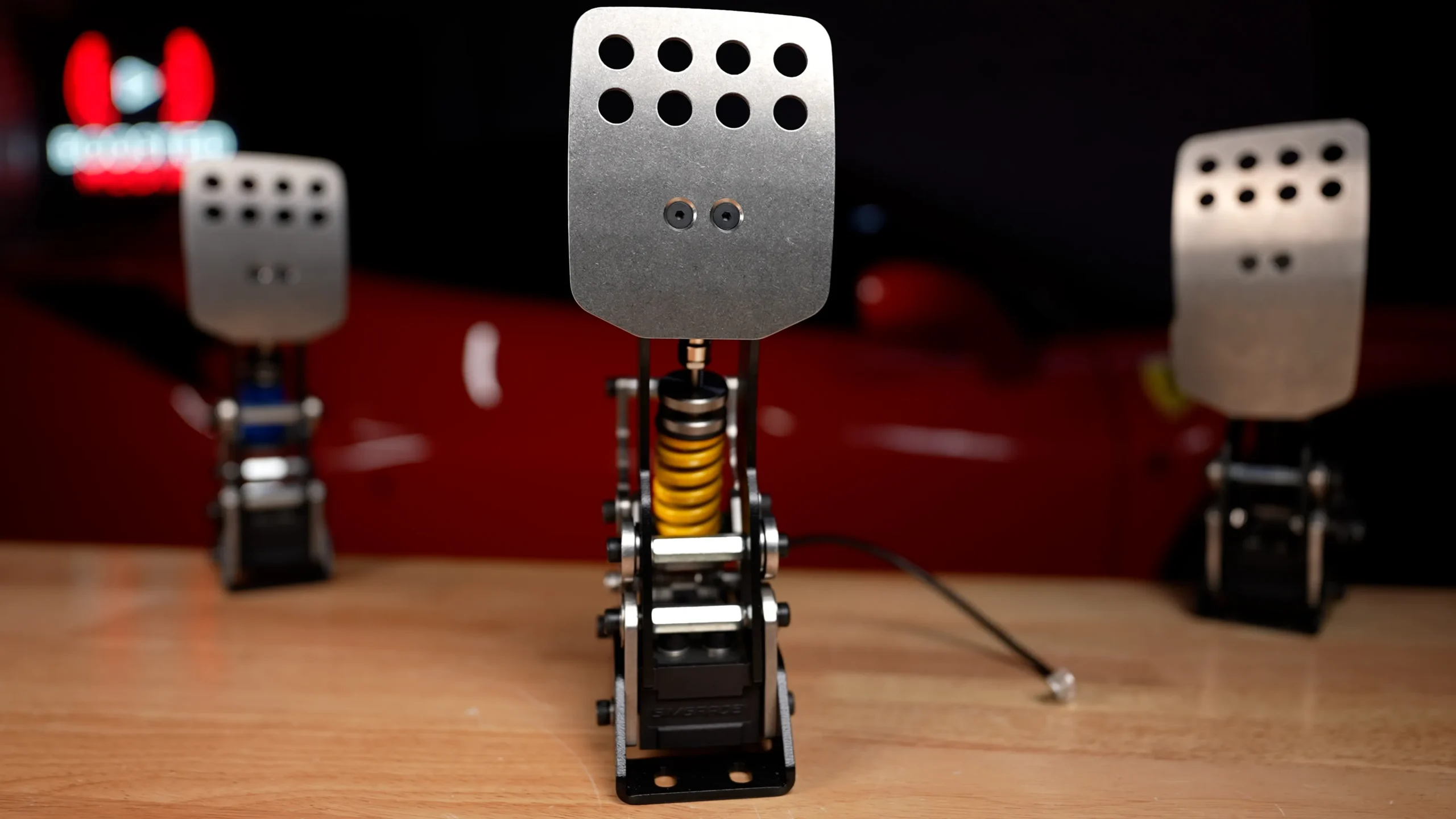
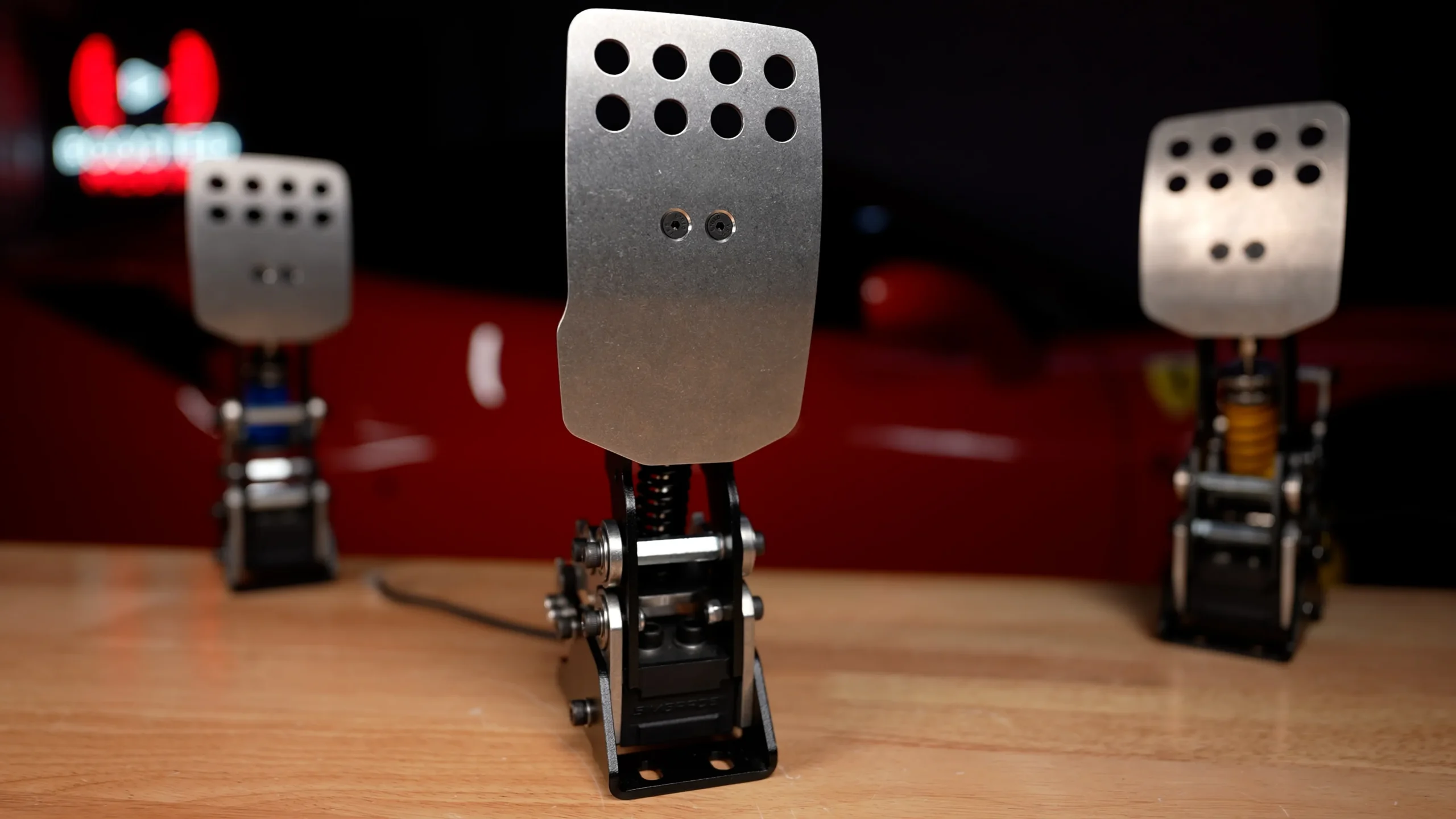
The range of adjustment means there’s no point describing how each spring feels, because everyone will set these up differently. What matters is that, whether you’re driving street cars around in Assetto Corsa or formula cars, the VX-PRO has you covered.
There are a few things to be aware of. Because the throttle and clutch measure position through force, they only use a small window of the 16-bit control board’s resolution. The lower-rated throttle load cell helps, but it’s still nowhere near using the full scale. We didn’t feel any difference while driving, and we don’t think anyone else will, but it is a point of difference from many other pedal sets.
The 90kg pedal face rating on the brake matters more. I’m a pretty heavy-footed braker at around 75–80kg of force in most cars, so it isn’t an issue for me. But when professional racing driver Misha drove our triple screen rig, he was braking at 120kg. For drivers like him, we wouldn’t recommend these pedals. Most sim racers aren’t built like that.
Finally, the small footprint concentrates the load into a smaller area of your pedal plate. On a rig with a weaker pedal plate, you’ll see more flex than you would with pedals that spread the load over a wider area. We’re really nitpicking at this point, and when it comes to the actual driving experience, we don’t have anything to complain about.
CONCLUSIONS:
The Simgrade VX-PRO pedals are certainly not the cheapest pedals on the market, but they’re nowhere near as expensive as a lot of high-end load cell pedals. For that money, you get top-notch componentry, a brake with a clear threshold point, and adjustment that covers everything from a sloppy street car to a formula car, all without relying on elastomers.
Our complaints are minor. The retainers can work loose over months of use, the washers make spring swaps and the brake kit a pain to fit, and the software is basic, with some odd curve presets. If you change your setup constantly between cars, or you brake like a professional driver beyond the 90kg rating, these probably aren’t the pedals for you. For everyone else, there’s no major red flag here.
The best way to sum it up is this. If I had to take my ActivePedals, which cost many times more, off my rig and run these for the rest of my life, I’d miss the haptic feedback. But would I be happy running the VX-PRO on my daily driver? Absolutely, without any hesitation.
We don’t think they’re inherently better to drive than the Heusinkveld Sprint, VNM or VRS pedals we compared them with. Those all do a great job. But from a design and innovation perspective, we prefer the VX-PRO to any of them, and that puts it right at the top of our list for value among high-end load cell pedals. It’s fantastic to see genuine innovation in the load cell pedal space after all these years.
SIMGRADE VX-PRO Pedals — Throttle, Brake, Clutch
1 Reseller Offer
Pros
- Top-notch componentry, with sealed bearings throughout and no play
- Load cells on all three pedals, giving a very stable signal
- Huge, tool-less stiffness adjustment without any elastomers
- Clearly defined, tunable two-stage brake threshold
- Compact, clean-looking design that bolts straight to most pedal trays
- Quiet in use, with no metal-on-metal contact
- Three-year warranty and strong value for high-end load cell pedals
Cons
- Washers used as shims make spring swaps and the brake kit a pain to fit
- Tool-less retainers can work loose over time
- Basic software with some odd curve presets
- Brake rated to 90kg at the pedal face, too low for the heaviest brakers
- Throttle throw shims can be set unevenly and twist the pedal
- Less pedal angle adjustment than some rivals
NEWSLETTER
Stay up to date with new releases And major updates
Thanks. Please check your email to confirm your subscription.
Sim RACING
Discount Codes
Also Sells
Ascher Racing, Gomez Sim IndustriesAlso Sells
Ascher Racing, Base Performance Simulators, BDH Race Sim Hardware, ButtKicker, Cube Controls, D-BOX, Delta Sim-Tech, Gomez Sim Industries, Heusinkveld, ignitiON Controls, Max Papis Innovations, MME Motorsport, Moza, P1Sim, PlaySeat, Precision Sim Engineering, Qubic System, Simucube, Sparco, Thrustmaster, VNM Simulation, VPG SimAlso Sells
Alien Mods, Asetek, ButtKicker, CAMMUS, Conspit, Cube Controls, D-BOX, Heusinkveld, LeoXZ, Moza, Racebox, Simagic, Simnet, Unreal Racing, VNM SimulationAlso Sells
3DRAP, ANOTHER WAY, Ascher Racing, Asetek, BavarianSimTec, BDH Race Sim Hardware, ButtKicker, Conspit, Cooler Master, Cube Controls, D-BOX, Dayton Audio, Delta Sim-Tech, DOF Reality, Elgato, ESPORTSIM SRL, Fanatec, Gomez Sim Industries, Heusinkveld, HORI, KGL Creation Lab, LeoXZ, MME Motorsport, Moza, Next Level Racing, Nitro Concepts, NOVUS, O-ROUGE, P1Sim, Pimax, PlaySeat, Prosimu, PXN, Qubic System, Raslution, ResTech, Rexing, Sabelt Sim Racing, SG Racing, SIM FACTORY, Sim Racing Studio, Sim-Lab, Simagic, SIMFORGE, SIMGRADE, SimRep Engineering, SIMTRECS, Simucube, Simufy, SIMXPRO, SOELPEC, Sparco, Thrustmaster, VIRPIL, VNM Simulation, VPG Sim, VRSAlso Sells
BavarianSimTec, MME Motorsport, Qubic System, Sabelt Sim RacingAlso Sells
Ascher Racing, Asetek, BDH Race Sim Hardware, ButtKicker, Conspit, D-BOX, Dayton Audio, Fanatec, Heusinkveld, Moza, Nitro Concepts, Pimax, PlaySeat, Qubic System, Rexing, Sabelt Sim Racing, Sim-Lab, Simagic, Simucube, VNM Simulation, VPGAlso Sells
Cobra, PRO SIMRIG, Qubic System, Simagic, SparcoAlso Sells
Asetek, BJR, ButtKicker, Cube Controls, Fanatec, Moza, Next Level Racing, Thrustmaster, Turtle BeachAlso Sells
Asetek, Conspit, Cube ControlsAlso Sells
BavarianSimTec, Conspit, Cooler Master, Cube Controls, DOF Reality, Moza, Pimax, Qubic System, Racebox, ResTech, Sigma Integrale Motion Systems, SimucubeAlso Sells
Conspit, Cube Controls, D-BOX, Elgato, Moza, Pimax, PlaySeat, Sigma Integrale Motion Systems, Simagic, SimucubeHave our reviews helped you decide what the best sim racing gear is for you?
Please consider using the links on this page to make your purchase.
By doing so you’ll be supporting Boosted Media at no additional cost to you! This option is available for a huge range of Sim Racing gear.
Related Articles
Fanatec Podium Pedals Detailed Review – Alien Spec Sim Racing Pedals
A beautifully engineered, console-compatible flagship pedal set with serious performance intent, but its “Alien Spec” brake setup might not be for everyone. Fanatec’s Podium range
Fanatec Wheel Hub: A Useful Fix For A Self-Created Problem
What Is The Fanatec Wheel Hub? The Fanatec Wheel Hub is a QR2-based adapter for fitting third-party steering wheels to Fanatec wheel bases. It does
Fanatec ClubSport Formula V3 – Detailed Review
A smarter and more usable evolution of Fanatec’s long-running Formula wheel, even if it still is not the bigger leap many sim racers had been
MOZA Racing SRP2 Pedals – Detailed Review
A smart and versatile evolution of Moza’s entry-level load cell pedals, with meaningful improvements in the right areas Second-generation products are always interesting, because they
CONSPIT Sim Racing Hardware Review
Is CONSPIT OVERHYPED? ARES 20 Platinum, ARES 12, CPP EVO Pedals & Wheels Tested CONSPIT has exploded in popularity recently with a formula that on
Fanatec Podium DD Wheelbase – Detailed Review
The Fanatec Podium DD enters the high-end direct drive wheel base market at a time when competition has never been fiercer. What was once a
MORE REVIEWS and Discounts
If these Sim Racing Reviews have helped you find the best racing simulator gear for your sim rig, please consider using the affiliate links on this website. By purchasing through these links, a small commission will come back to Boosted Media at no additional cost to you. This is how Boosted Media keeps providing content to the Sim Racing community.
About The Authors
-
Tom Ford operates Boosted Media with his brother Will and produces all Boosted Media sim racing videos and written articles. A true motorsport fanatic with a professional background in engineering and media, he works closely with Will across testing and analysis, turning extensive product evaluations into clear, practical reviews and buying advice for sim racers.
-
Will Ford operates Boosted Media with his brother Tom and is the on-camera host and technical lead behind the channel’s sim racing hardware reviews.
With a background in electrical engineering, adult education, and automotives, he combines hands-on product evaluation with practical technical analysis and a passion for motorsport and sim racing to explain how sim racing hardware performs in the real world, and is one of the most experienced people on the planet when it comes to reviewing Sim Racing Hardware.