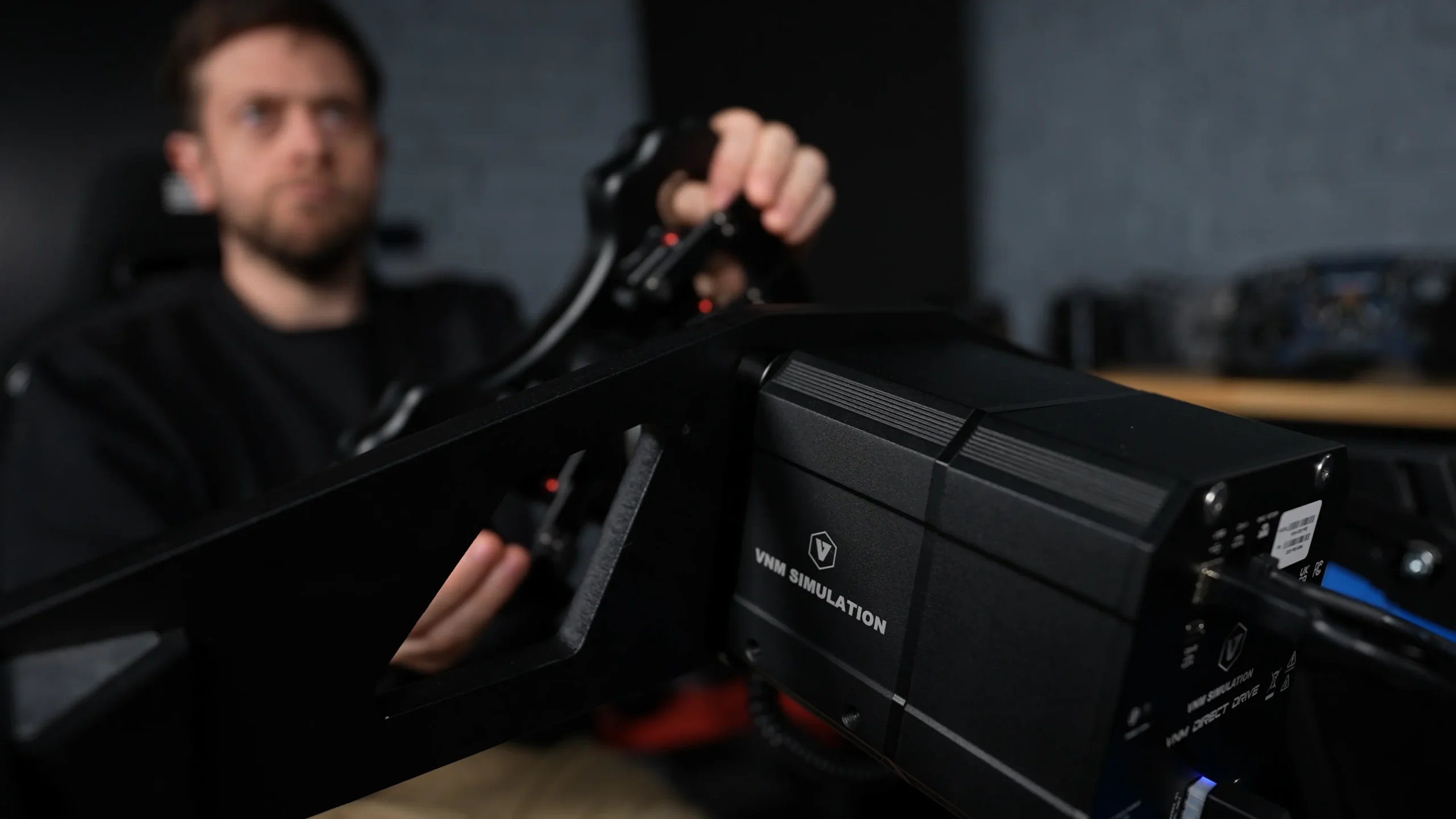
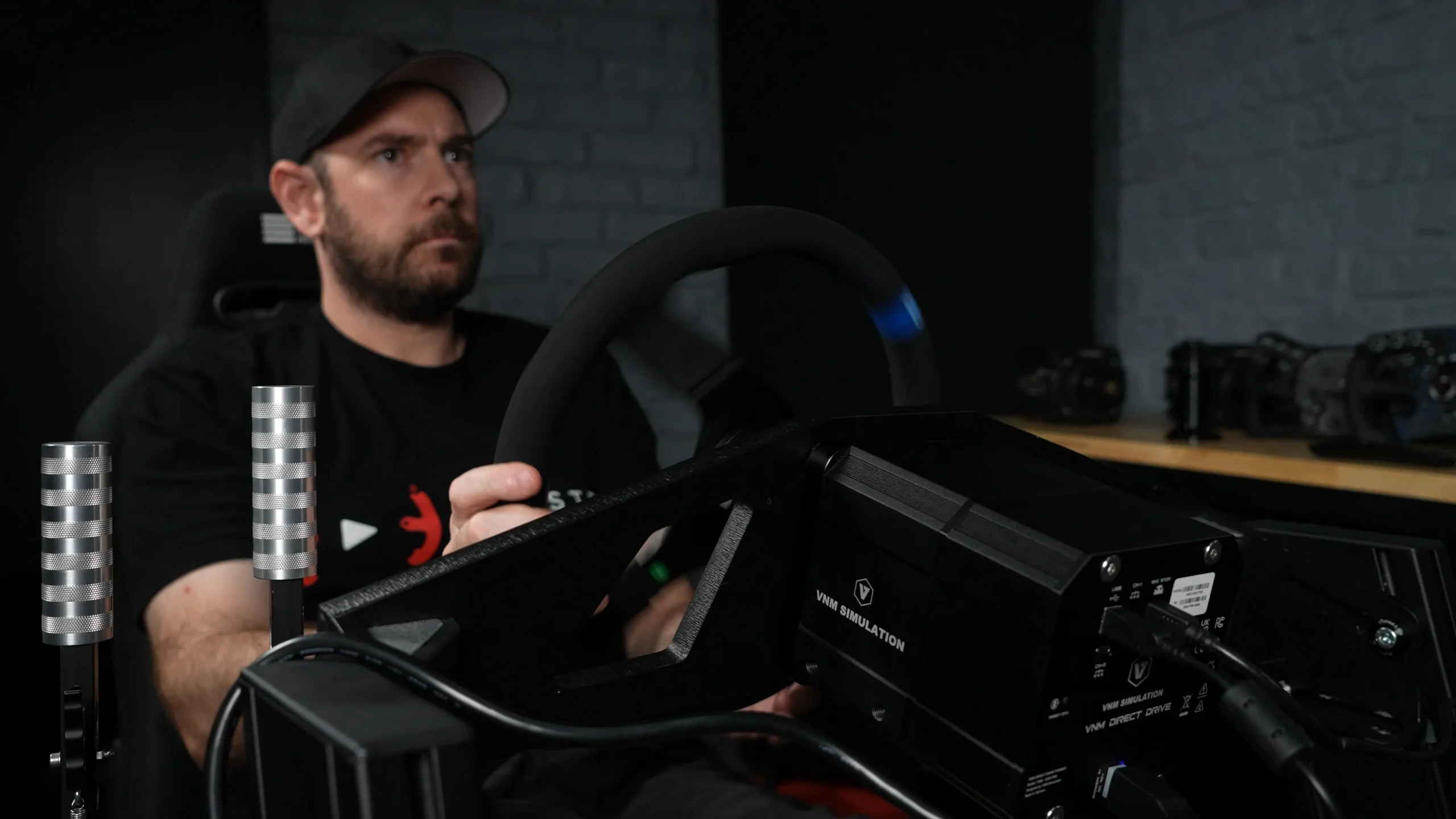
VNM HAS QUIETLY BUILT ONE OF THE MOST INTERESTING DIRECT DRIVE LINEUPS IN SIM RACING — AND IT’S NOT JUST ABOUT TORQUE.
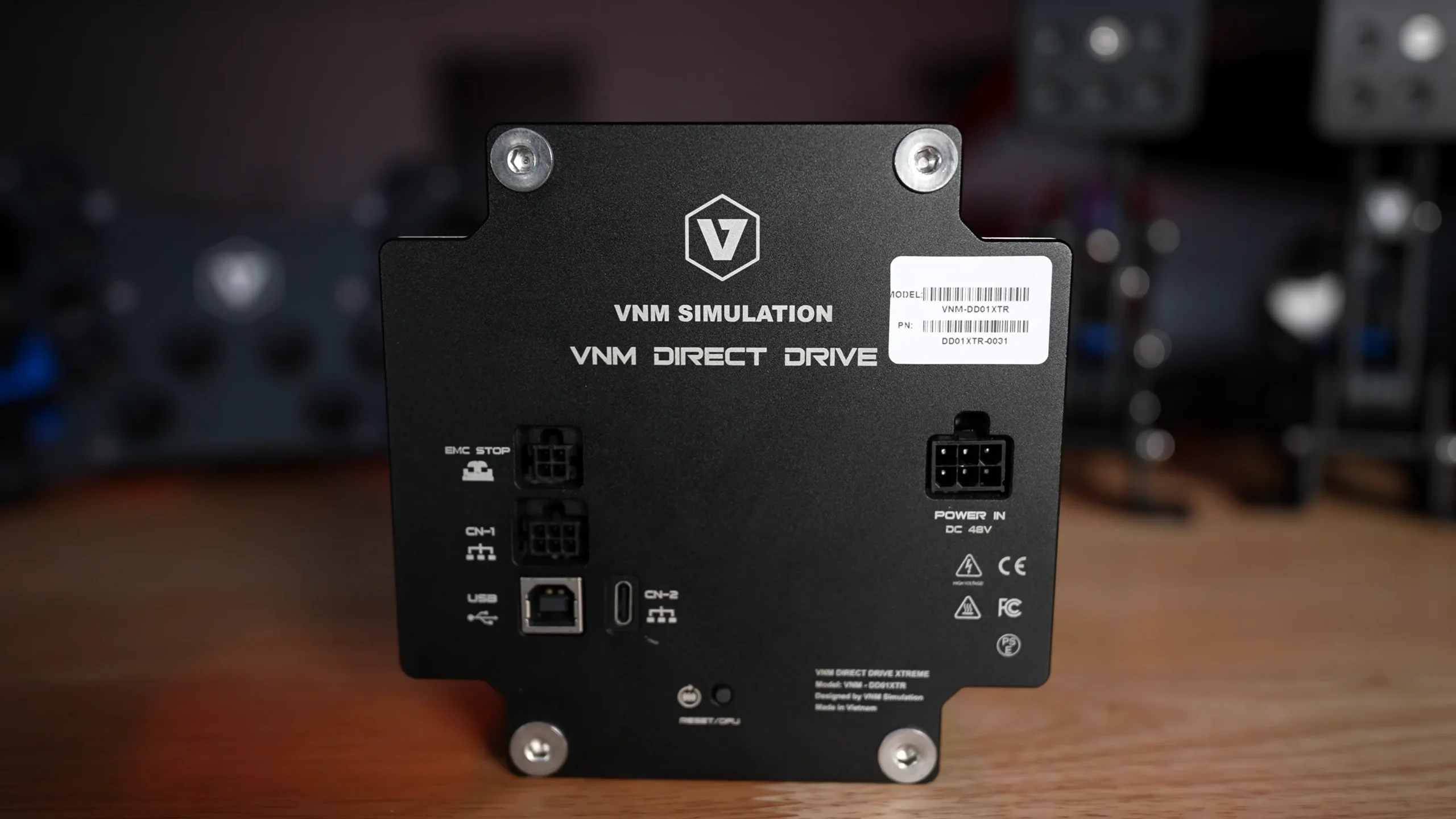
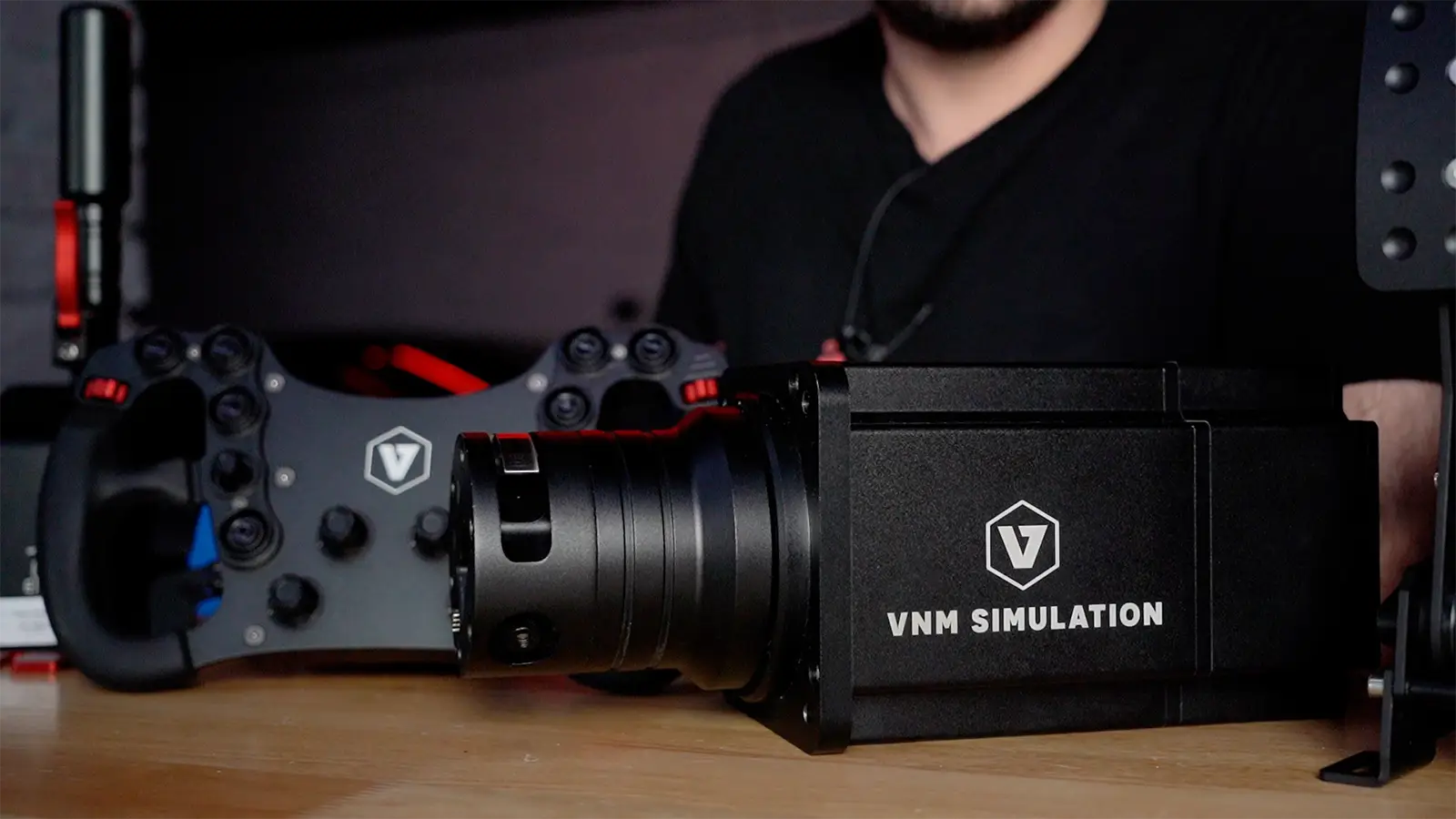
The range now spans four bases from the Premier (13Nm) through to the flagship Xtreme (32Nm), with the Elite (18Nm) and Supreme (25Nm) filling the gaps in between. On paper they look like serious bang for buck, but the real question is whether the driving experience and ownership side of it actually stacks up against the established giants. When we first tested VNM gear in 2024, it delivered genuine best-of-the-best force feedback… but only in very particular conditions. So have they finally overcome the inconsistency that stopped them being a top pick in the high-end direct drive space?
In this review we’re looking at the two VNM bases we’ve extensively tested — the Premier and the Xtreme. We’ll break down what matters most: FFB quality, build quality, software, ecosystem, and value, and answer whether VNM is a smart alternative to the mainstream, or still a brand you choose only if you’re happy to live with a few compromises.
VNM Direct Drive Wheelbase Ratings
If our VNM reviews have helped you decide what the best sim racing gear is for you, please consider using the links on this page to make your purchase. By doing so you’ll be supporting Boosted Media at no additional cost to you! This option is available for a huge range of Sim Racing gear.
Reseller Affiliate links


VALUE
AGGRESSIVE PRICING… BUT HOW MUCH TORQUE DO YOU REALLY NEED?
VNM Simulation Premier (13Nm) — 9/10
VNM Simulation Xtreme (32Nm) — 7/10
To set expectations, we scored the Simagic Alpha Evo as a 10/10 for value because it combines strong performance with a mature, low-friction platform at a price that shook up the market on release. VNM’s pricing absolutely brings them into the same conversation — but the reason they don’t match that perfect score is that you’re still buying into a less polished overall platform experience.
At $599 USD, the VNM Premier (13Nm) is priced to be a direct competitor to the mainstream “sweet spot” bases, and it’s exactly why it scores 9/10 for value. Torque numbers matter, but they’re not the whole story — different platforms appeal for different reasons, and the ownership experience is where the best-established brands still tend to justify their pricing.
While we’ve only extensively tested the Premier and Xtreme, they delivered a very similar overall driving character, just at different strength levels. If that experience scales the way it should across the rest of the range, then you need to be honest with yourself about how much torque you actually need before you spend more just because a higher number exists.
At $1,330 USD, the VNM Xtreme (32Nm) is no longer a bargain disruptor — it’s a proper high-end purchase. And at that money, the comparison shifts hard toward established players that have spent years refining the total ownership experience. The Xtreme can still justify itself on specs and quality, but value-wise the question becomes simple: are you actually going to use what you’ve paid for, or are you buying headroom you’ll never touch?
FFB Quality8/10
WHEN VNM IS “ON”, IT’S UP THERE WITH THE VERY BEST — THE ONLY QUESTION IS HOW OFTEN YOU’LL ACTUALLY GET THAT EXPERIENCE.
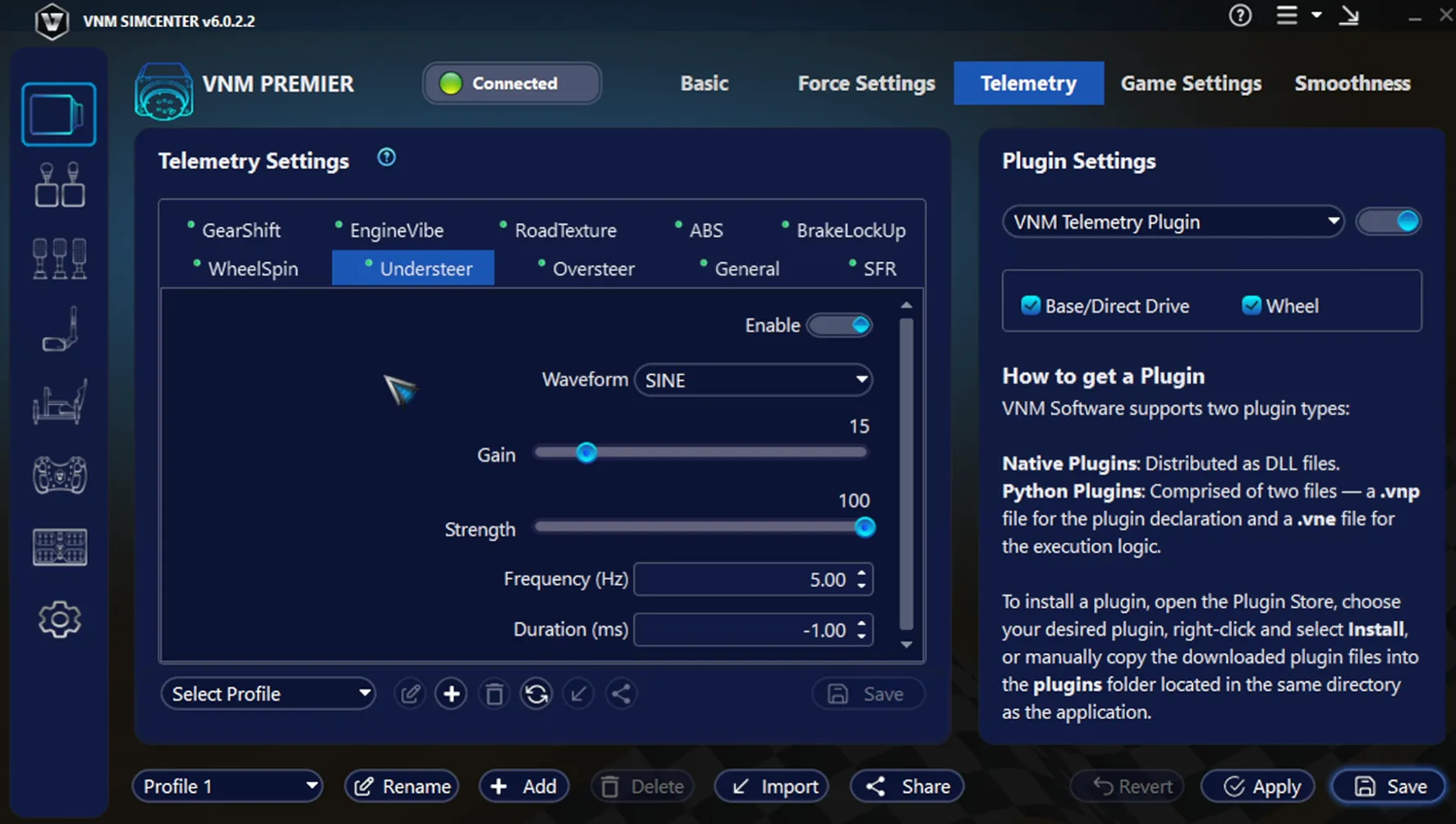
The headline with VNM has always been that in the right scenario, it can deliver a level of detail that’s genuinely special. In our earlier testing in 2024, using VNM’s telemetry-based mode in the right conditions delivered track surface texture detail that was beyond anything we’d experienced before. But the key point there is under certain conditions, in certain scenarios.
Historically, the weakness was consistency. Because the telemetry-based feel depends on what the sim is actually outputting, we found obvious holes: some ripple-strip kerbs on some tracks simply didn’t transmit the texture you’d expect, and dirt in iRacing for example felt loose, numb, and basically devoid of steering feel. The end result was a base that could feel magical in one scenario, then strangely incomplete in another.
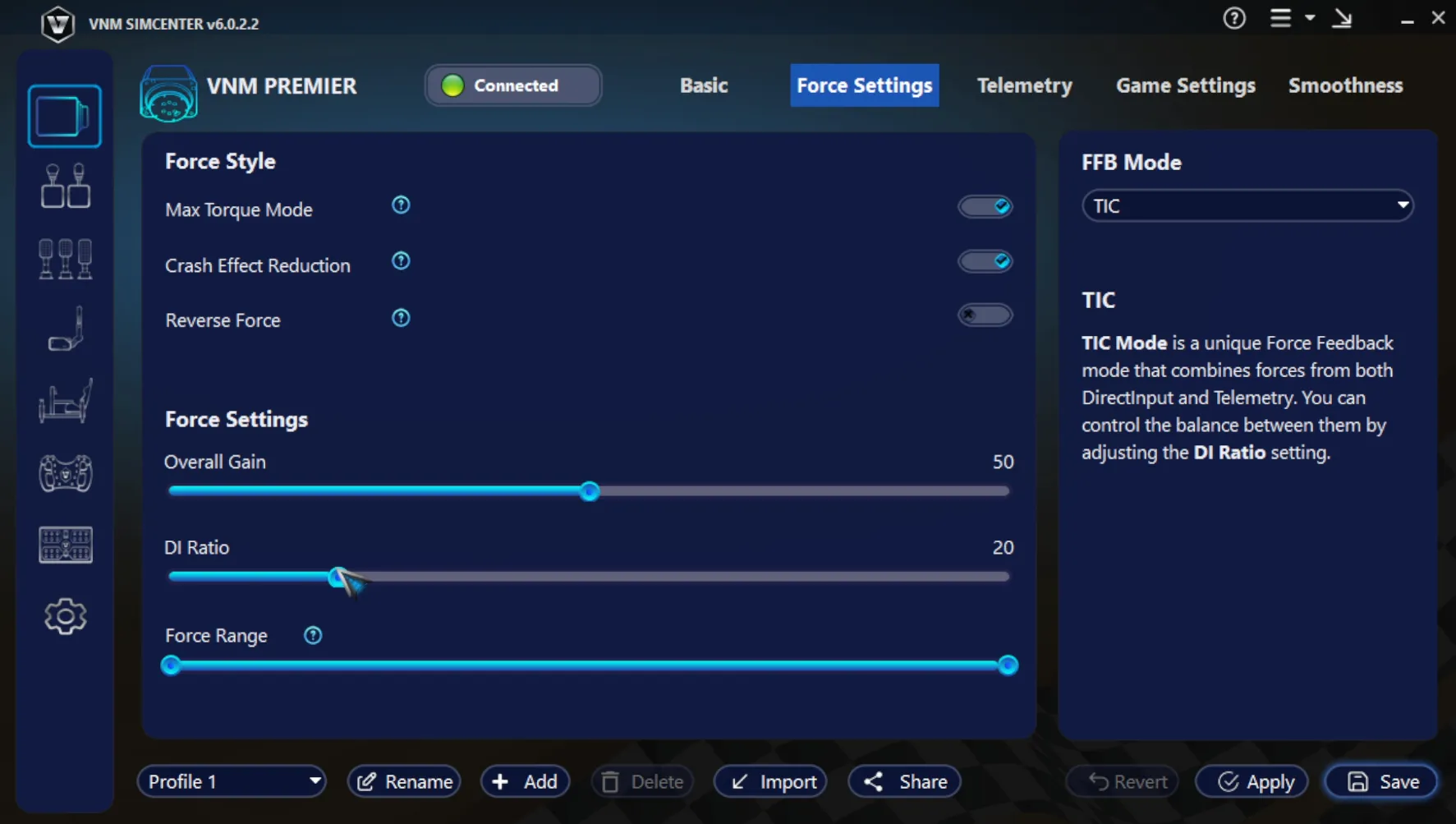
The big improvement now is that you no longer have to make a hard choice between “regular” force feedback (direct input — what most wheelbases use) and telemetry-based effects. VNM’s TIC mode blends the two, and lets you adjust the ratio. That directly addresses what we wanted back in the original experience: keep the extra sizzle that telemetry can add, without losing the fundamentals when telemetry output is patchy.
So why “only” an 8/10? Because even with these improvements, VNM still isn’t the most “set-and-forget” experience. The software and setup can be tricky, and it’s still a platform that tends to reward people who are willing to put in the time to tweak settings between titles, cars and tracks.
As for Premier vs Xtreme, the FFB Quality score is the same because the core character is extremely similar. Matching peak strength between the two bases resulted in a very similar, even indistinguishable driving experience.
Build Quality: 8/10
BUILT LIKE PROPER HARDWARE, NOT A TOY — SOLID, CLEAN, AND HARD TO FAULT.
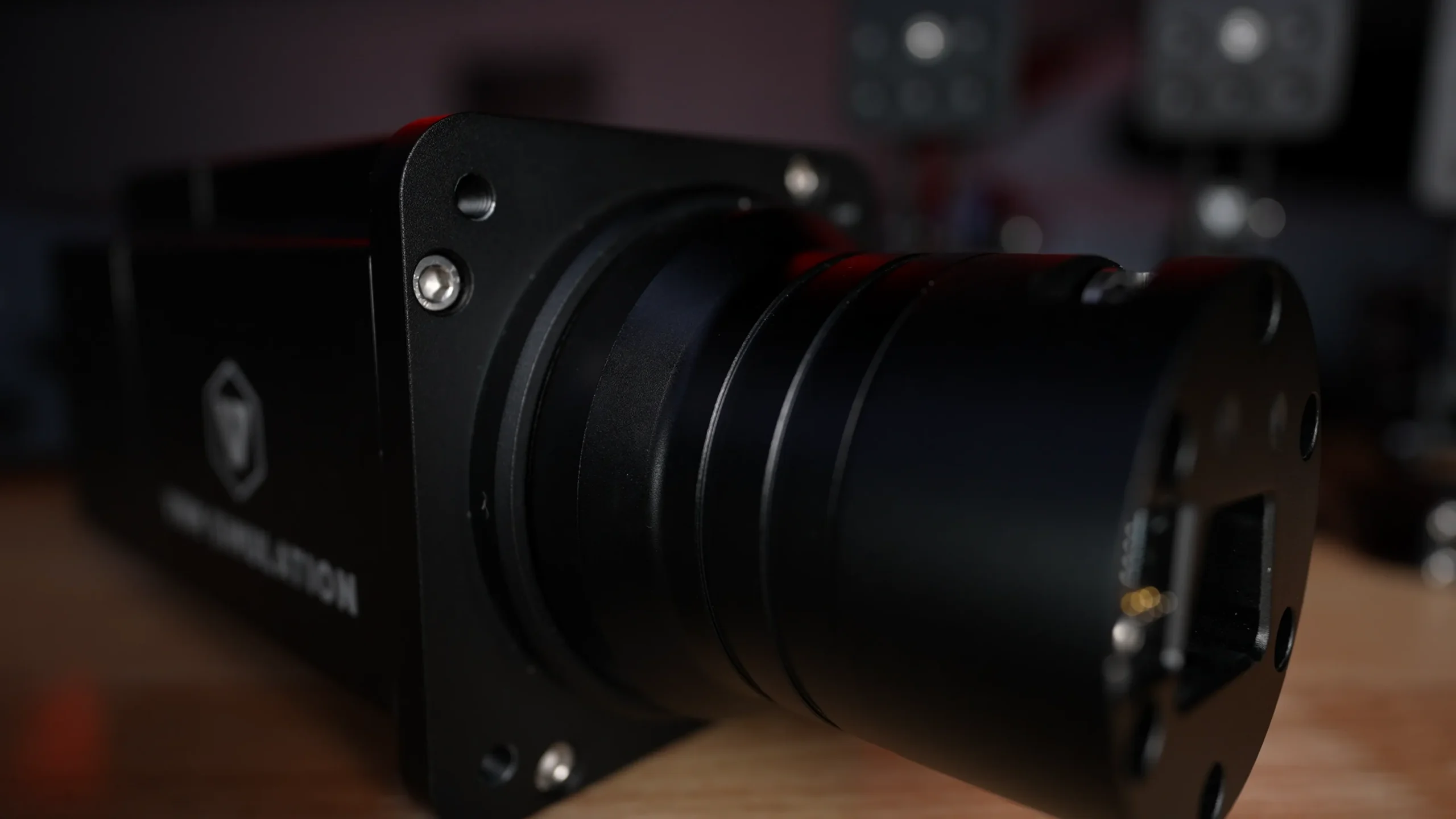
The easiest way to describe both the Premier and Xtreme is “no nonsense”. They feel heavy-duty and purpose-built, with a rigid housing and a general sense that nothing is there just to look pretty. Once mounted, they’re drama-free — no strange noises, flex ,or overheating issues.
Products throughout the entire VNM Ecosystem are clean and well executed, but it doesn’t scream “premium consumer electronics” the way some mainstream brands do. If your rig is in a lounge room and aesthetics are part of the purchase decision, other bases have more showroom appeal (depending on your taste). But if you care more about how it holds up long-term, VNM’s approach makes a lot of sense.
The key point is that the Premier doesn’t feel like the “cheap one”. It shares the same underlying build character as the Xtreme — you’re not stepping down into something flimsy to save money — which is exactly what you want from a lineup where the only real difference should be torque capability. That’s why both land at 8/10: strong, dependable build quality, just without the ultra-polished luxury presentation of the best big-brand hardware.
Software: 7/10
STRONG CAPABILITY WHICH REWARDS TIME AND EFFORT
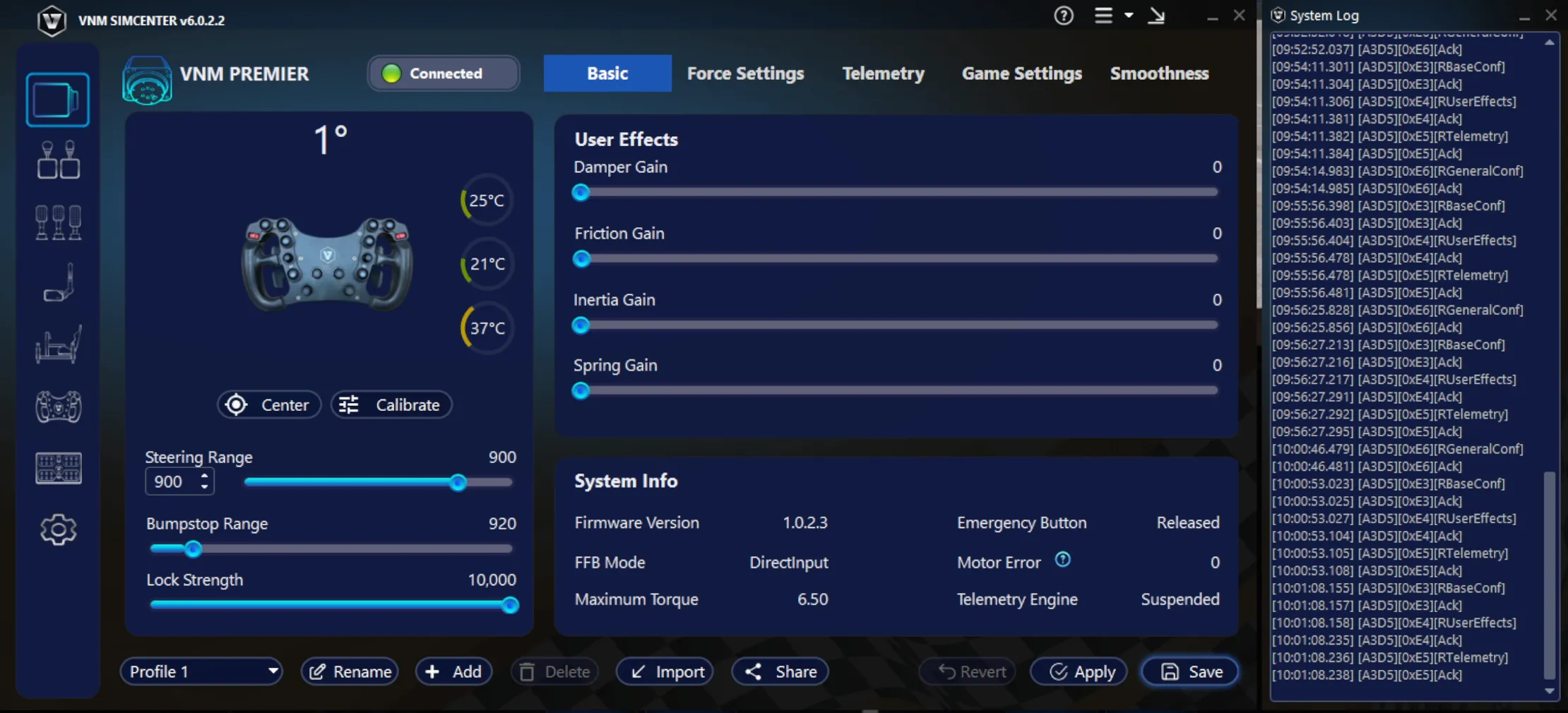
VNM’s software is capable of getting excellent results, and has improved over time. The biggest win is that you’re no longer forced into a hard choice between two completely different FFB approaches — you can now blend the more “traditional” Direct Input force feedback with the Telemetry API data and tune how much of each you want. In practice, that makes the driving experience easier to stabilise across different sims, cars and tracks, and it reduces the odds of the wheel feeling amazing one minute and odd the next.
But a 7/10 reflects the reality that VNM still isn’t the most user-friendly ecosystem to live with day to day. It can take more effort to get dialled than the most polished mainstream options, and you’re more likely to find yourself adjusting settings when you change titles or even jump between cars and tracks. The interface gets the job done, the functionality is there, and once you understand it you can achieve a great result — it’s just not as frictionless, obvious, or “set-and-forget” as the best in class.
Ecosystem: 6/10
VNM’s ecosystem has a strong theme of high quality and value across all products. While there is not a big range of wheel options, accessory depth, or the same “walk in, buy a bundle, everything just works” simplicity you get with brands like Simagic and Fanatec for example, they can get you driving without splitting your peripherals across multiple software packages.
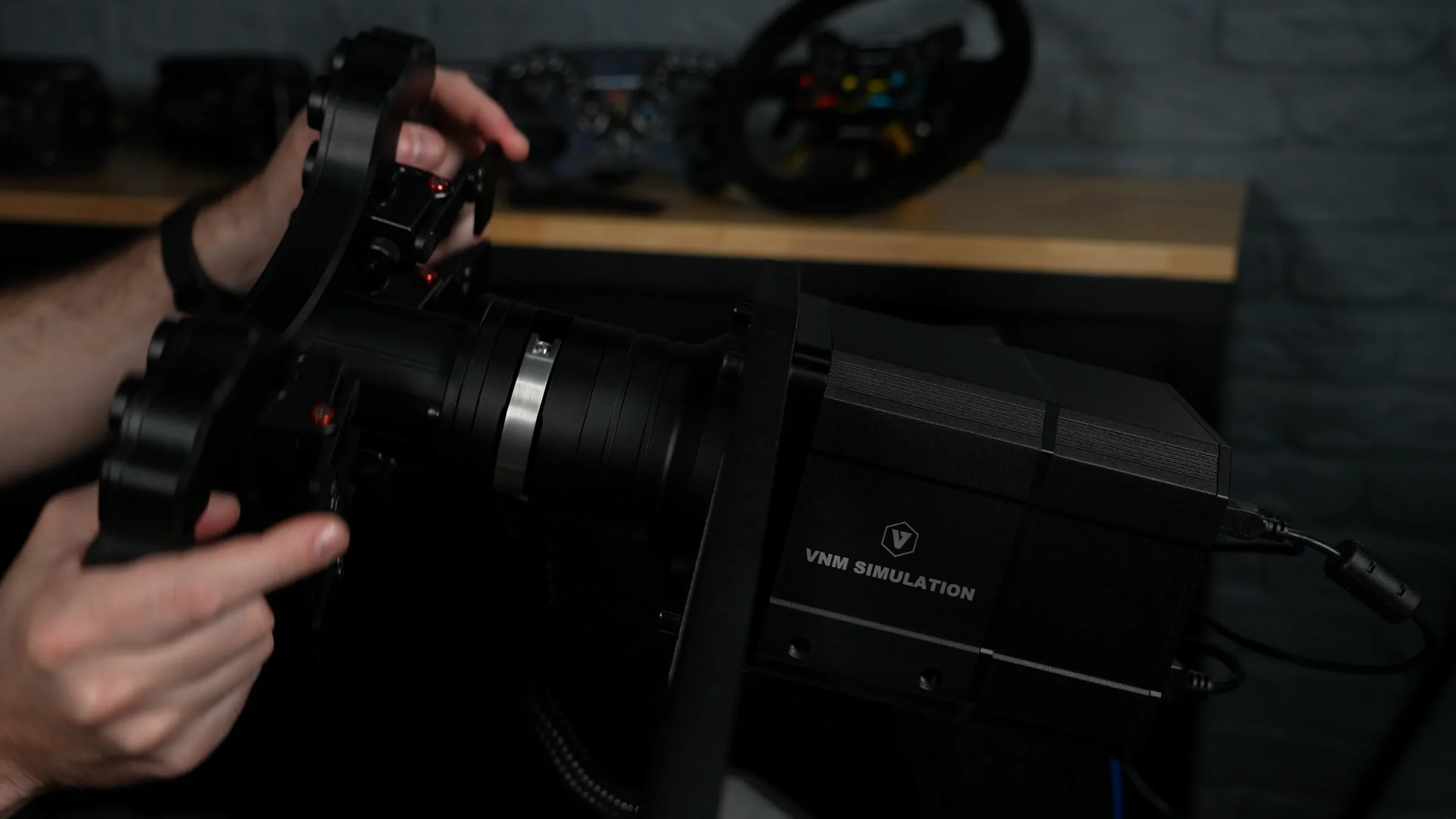
An optional slip ring can be user installed to allow USB power and data through to your wheel without external cables. A great feature to keep your cockpit tidy, but not the cleanest or most straight forward implementation of this feature.
VNM’s ecosystem is coherent and well thought out, but it’s still not the easiest, widest, or most “mainstream-friendly” platform to buy into — and that’s what holds it at 6/10.
Conclusion
VNM is a smart buy for enthusiasts chasing feel and value — just don’t expect it to be effortless.
VNM has reached the point where the driving experience is right up there with the best of the best. When it’s dialled in, the force feedback has that rare combination of sharpness and detail, while still feeling smooth and controlled. And crucially, the overall ownership experience has moved forward enough that we’re no longer looking at it as a “cool idea with potential” — it’s now a genuinely viable option.
But it’s still not for everyone. The biggest caveats haven’t completely disappeared: consistency between sim racing titles can still take work, and you will likely need to spend more time fine-tuning to get the same “plug in and go” confidence that the most polished mainstream platforms deliver. If that sort of tweaking doesn’t bother you, there’s no real issue recommending VNM — especially now that the newer software approach makes it far easier to land on a consistent feel.
The other honest question is torque. For most people, the 12–15Nm range is the sweet spot for dynamic range without stepping into “unnecessary” territory. That’s why the Premier is the standout: it delivers the core VNM experience at a price that makes it incredibly compelling. The Xtreme is still impressive and still good value for a 32Nm base — but at that money, you need to be honest about whether you’ll ever use that headroom, or whether you’d be better served by a more mature platform at a similar price.
VNM is a high-performance, enthusiast-leaning ecosystem that rewards effort. If you want the easiest ownership experience, look elsewhere. If you want a base that can trade blows with top-tier gear and you don’t mind putting in the time to get it perfect, VNM is absolutely in the conversation now.
NEWSLETTER
Stay up to date with new releases And major updates
Thanks. Please check your email to confirm your subscription.
Sim RACING
Discount Codes
Pros
- FFB can be genuinely best-in-class in some situations
- Premier is outstanding value for a high-quality direct drive experience
- Strong build quality with a durable, no-nonsense feel
- TIC mode blending helps stabilise the experience across different sims, cars and tracks
- Coherent ecosystem that can keep your peripherals in one software stack
Cons
- Not a set-and-forget platform — expect to tweak settings between titles, cars and tracks
- Hard work to get properly dialled in
- Ecosystem is smaller and less mainstream-friendly than some
- Ecosystem is smaller and less mainstream-friendly than Simagic/Fanatec
- Slip ring solution isn’t the cleanest or most straightforward implementation
Reseller Affiliate links
Related Articles

CONSPIT Sim Racing Hardware Review
Is CONSPIT OVERHYPED? ARES 20 Platinum, ARES 12, CPP EVO Pedals & Wheels Tested CONSPIT has exploded in popularity recently with a formula that on

VNM Direct Drive Wheelbase Review
VNM HAS QUIETLY BUILT ONE OF THE MOST INTERESTING DIRECT DRIVE LINEUPS IN SIM RACING — AND IT’S NOT JUST ABOUT TORQUE. The range now
Fanatec Podium DD Wheelbase – Detailed Review
The Fanatec Podium DD enters the high-end direct drive wheel base market at a time when competition has never been fiercer. What was once a
Moza R25 Ultra Direct Drive Wheel Base – Detailed Review
Even More Strength Than The R21 Ultra, but is it complete overkill? Moza’s new R21 Ultra and R25 Ultra arrive in an increasingly crowded part
Moza R21 Ultra Direct Drive Wheel Base – Detailed Review
More Strength for the Money Than Anything Else, But Does 21Nm of torque Actually Make the MOZA R21 Ultra a Better Wheelbase? Moza’s new R21
Logitech G RS50 Direct Drive Wheelbase – Detailed Review
The RS50 is Logitech’s first serious alternative to the Fanatec GT DD Pro for PlayStation users in this price category.—and offers a superior driving experience
MORE REVIEWS and Discounts


If these Sim Racing Reviews have helped you find the best racing simulator gear for your sim rig, please consider using the affiliate links on this website. By purchasing through these links, a small commission will come back to Boosted Media at no additional cost to you. This is how Boosted Media keeps providing content to the Sim Racing community.